Affiliate disclosure: This article contains Amazon affiliate links. We may earn a commission from qualifying purchases at no extra cost to you.
Last updated: August 2026
If you need a dehumidifier for a small greenhouse or grow tent, compare actual moisture-removal capacity, drainage, operating temperature, humidity controls, and electrical suitability rather than advertised room size alone. The three compact models below are best suited to micro greenhouses, propagation cabinets, sealed grow tents, and other protected enclosures with light moisture loads. A walk-in greenhouse, dense plant canopy, or setup with heavy overnight condensation usually needs a higher-capacity compressor or desiccant unit plus effective ventilation and air circulation.
Quick Verdict
Choose the LAVTAIOA Auto Small Dehumidifier when you need automatic humidity control in an extremely compact grow tent or cabinet. The Litever Small Portable Dehumidifier is the most convenient option for continuous gravity drainage and has the highest clearly documented removal rate in this lineup. The Eva-Dry EDV-1100 is the simplest quiet plug-in choice for a warm, protected micro-enclosure with a light moisture problem.
How these products were selected
The lineup prioritizes models with a clear small-space use case, identifiable moisture-removal information, practical controls or drainage, and enough documentation to explain important limitations. These are recommendations by use case, not claims of hands-on testing.
Important greenhouse safety note
Most compact consumer dehumidifiers are indoor-rated appliances, not weatherproof greenhouse equipment. Keep the appliance, adapter, plug, and connections away from rain, irrigation spray, dripping condensation, and standing water. Use a receptacle and electrical installation suitable for the location, follow the product manual, and stop using any appliance with a wet or damaged cord, plug, or adapter.
Can a Mini Dehumidifier Handle a Small Greenhouse?
A mini thermoelectric dehumidifier can help in a tightly enclosed, warm micro greenhouse or grow tent when the moisture load is modest. It is less likely to control humidity in a leaky structure, a densely planted tent, or a greenhouse that receives frequent watering and cools sharply overnight. Use a separate hygrometer at plant-canopy height and judge the unit by the humidity change and water collected during a full day and night cycle.
Quick Comparison of Small Greenhouse Dehumidifiers
| Product | Best Use | Stated Moisture Removal | Drainage | Main Limitation |
|---|---|---|---|---|
| LAVTAIOA Auto Small Dehumidifier | Automatic control in tiny grow tents and cabinets | Advertised up to 0.25 L/day for the linked model | Included tubing | Too small for a walk-in greenhouse or heavy plant transpiration |
| Eva-Dry EDV-1100 | Quiet, warm micro-enclosures | About 8 oz/day at 86°F and 80% RH | 16 oz removable tank | No continuous drain and weaker performance in cool conditions |
| Litever Small Portable Dehumidifier | Small protected spaces needing unattended drainage | Up to 360 mL/day at 86°F and 80% RH | 800 mL tank or included 4 ft hose | Still limited to modest moisture loads |
Auto Small Dehumidifier for Confined Spaces
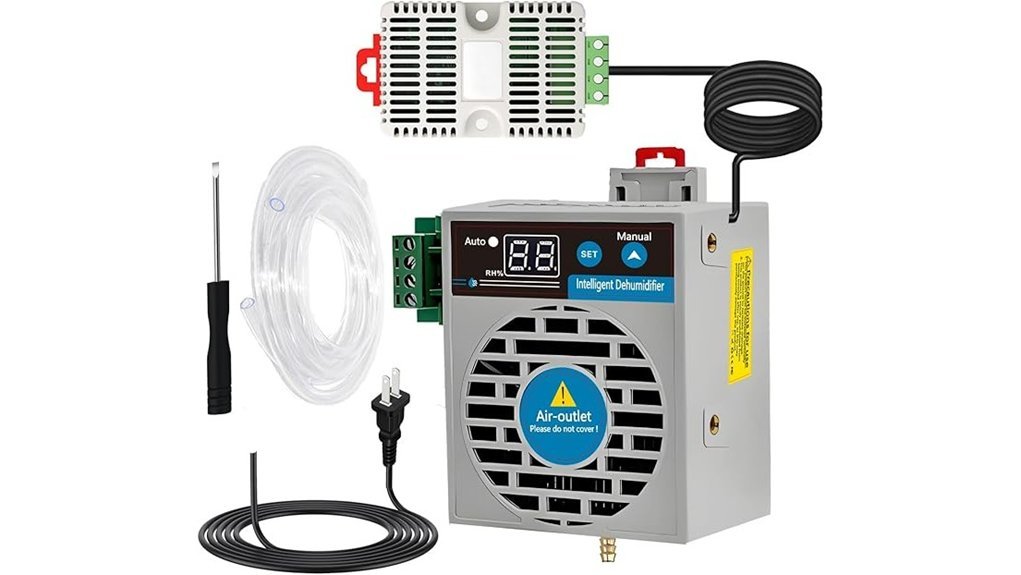
Best for automatic control in tiny grow tents: The linked LAVTAIOA HSCS-25WP is an unusually compact dehumidifier intended for confined spaces such as grow tents, cabinets, safes, and electrical enclosures. Its current listing describes adjustable humidity control, a digital display, automatic operation, included tubing, and an advertised moisture-removal capacity of up to 0.25 liters per day.
Why you’ll like it: This model solves a space problem that a normal tabletop appliance cannot. It can be mounted or positioned in a very small enclosure, while the humidity controls reduce the need for constant manual switching.
Who should buy this: Consider it for a sealed propagation cabinet, micro greenhouse, or compact grow tent where floor space is extremely limited and the moisture load is light.
Who should avoid it: Skip it for a walk-in greenhouse, a large flowering tent, heavy condensation, or any location exposed to irrigation spray. Confirm the current manual, plug arrangement, drainage routing, and installation requirements before ordering.
Pros:
- Purpose-built format for confined grow tents and cabinet-style spaces.
- Adjustable humidity control and automatic operation.
- Compact body preserves valuable plant and floor space.
- Included tubing can route collected moisture away from the unit.
Cons:
- Advertised capacity is suitable only for light moisture loads.
- Requires more installation planning than a basic tabletop model.
- Must be protected from water exposure and blocked airflow.
Eva-Dry EDV-1100 Whisper-Quiet Dehumidifier for Small Spaces
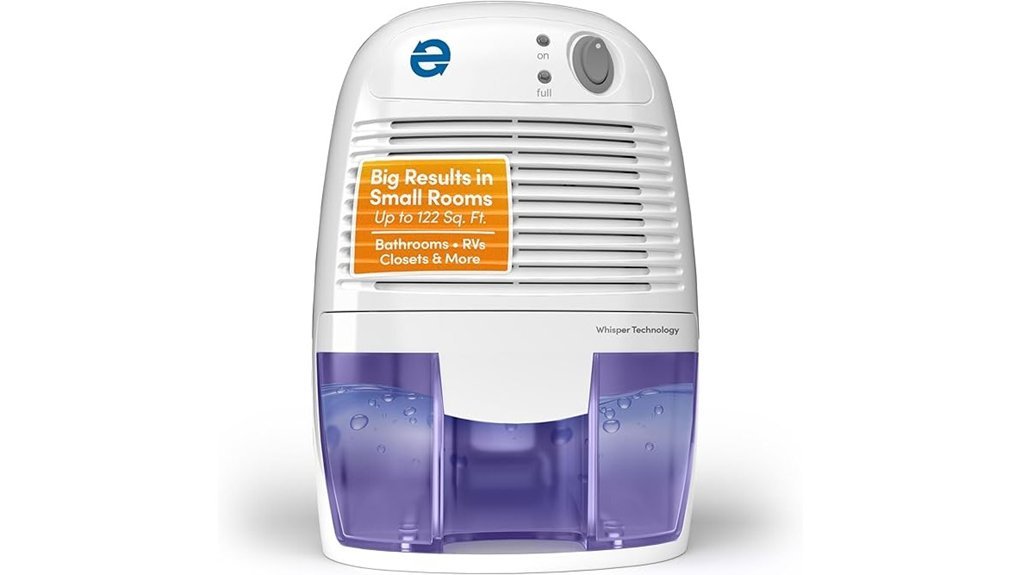
Best quiet plug-in option: The Eva-Dry EDV-1100 is a compact thermoelectric dehumidifier for small enclosed spaces. Its manual lists moisture removal of approximately 8 ounces per day at 86°F and 80% RH, a 16-ounce holding tank, automatic shutoff, and low-power operation.
Why you’ll like it: The simple plug-in design, quiet operation, and removable tank make it easy to use in a protected propagation cabinet, indoor grow area, or warm micro greenhouse. The automatic shutoff helps prevent reservoir overflow.
Who should buy this: It is a practical choice for growers who value quiet operation and do not mind emptying a small tank manually.
Who should avoid it: Do not rely on it as the only humidity-control method in a densely planted greenhouse, in cool conditions, or where condensation forms rapidly overnight. It also lacks a built-in continuous drain.
Pros:
- Quiet thermoelectric operation for noise-sensitive growing areas.
- Simple controls and compact footprint.
- Automatic shutoff when the reservoir is full.
- Clear manual specifications for removal rate and tank capacity.
Cons:
- Low moisture-removal capacity compared with compressor models.
- No built-in continuous drain.
- Thermoelectric performance decreases as temperature and humidity fall.
Litever Small Portable Dehumidifier with Drain Hose
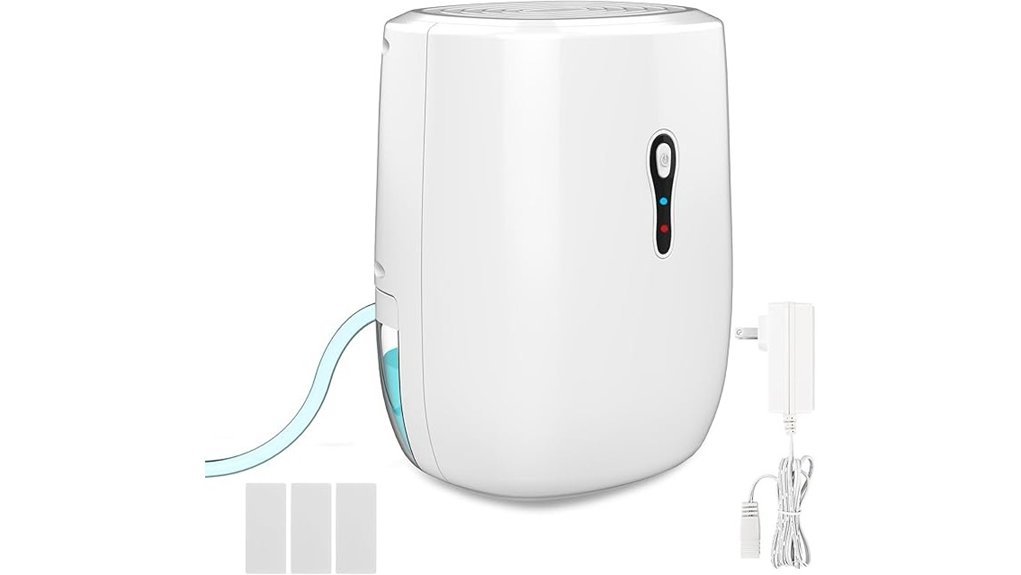
Best for continuous drainage: The Litever Small Portable Dehumidifier includes a four-foot silicone drain hose. Its manual lists moisture removal of up to 360 milliliters per day at 86°F and 80% RH, an 800-milliliter tank, 22-watt operation, and an operating range of 41°F to 104°F.
Why you’ll like it: Continuous gravity drainage can reduce daily tank-emptying, which is valuable when a small greenhouse or grow tent needs long operating periods. The low-voltage appliance body, automatic shutoff, memory function, and compact footprint also make setup more convenient.
Who should buy this: Choose it for a small protected enclosure where you can place a drain or larger collection container below the appliance.
Who should avoid it: Do not expect its room-coverage claim to predict greenhouse performance. Plant density, watering, ventilation, temperature, and outside humidity can create a much larger moisture load than a closet or bathroom of the same floor area.
Pros:
- Included drain hose supports continuous gravity drainage.
- Highest clearly documented removal rate among these three compact options.
- Automatic shutoff and memory function simplify operation.
- Manual provides operating-temperature and test-condition details.
Cons:
- Moisture removal is still limited compared with compressor dehumidifiers.
- The drain hose must maintain a downward slope to a safe discharge point.
- Needs clear airflow and protection from water exposure.
Factors to Consider When Choosing a Dehumidifier for a Small Greenhouse
A greenhouse creates moisture through irrigation, wet growing media, plant transpiration, and temperature changes. Floor-area claims alone do not show whether a unit can keep up. Compare the stated extraction rate, test conditions, operating temperature, drainage method, controls, and electrical suitability for your setup.
Measure the Real Moisture Load
Use an independent hygrometer at plant-canopy height and record humidity after watering, during the day, after lights turn off, and before sunrise. Also note how much water the dehumidifier collects in 24 hours. If humidity remains high while the unit runs continuously, the appliance is undersized, the enclosure is exchanging too much humid air, or the greenhouse needs better ventilation and circulation.
Choose Capacity, Not Just Coverage
The compact products in this article remove roughly 0.24 to 0.36 liters per day under warm, humid test conditions. That is appropriate only for a small enclosure with a modest moisture load. A walk-in greenhouse, dense canopy, frequent watering schedule, or heavy nighttime condensation may require a compressor or desiccant dehumidifier rated in liters or pints per day. Treat advertised square-foot coverage as a rough room-use reference, not a greenhouse sizing formula.
Check Operating Temperature
Thermoelectric units generally collect less water as temperature and humidity fall. Compare the product’s stated operating conditions with the coldest part of the greenhouse cycle. For cool-season operation, a low-temperature desiccant model or a properly specified compressor unit may be more appropriate.
Prioritize Continuous Drainage
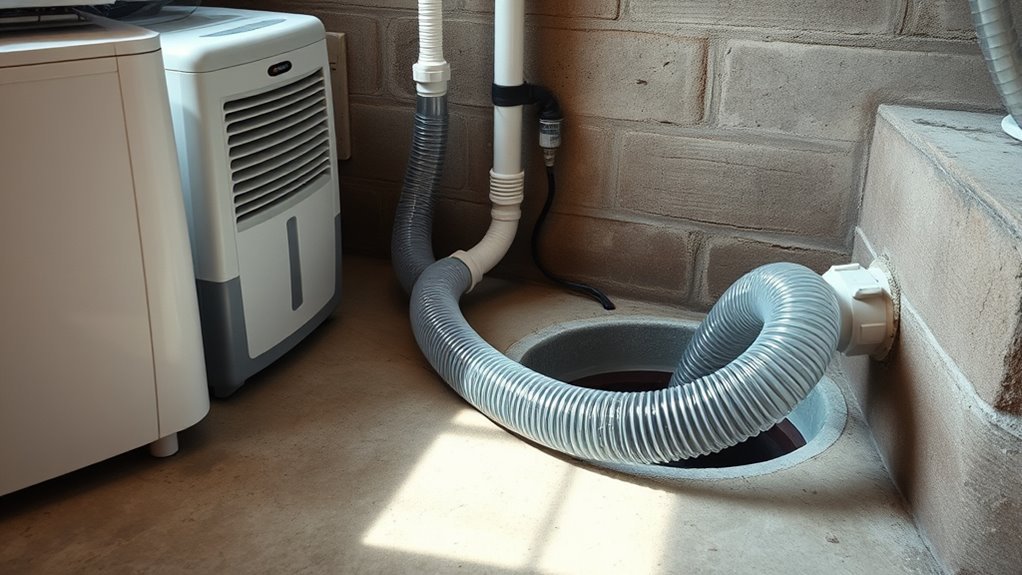
A drain hose can make greenhouse use more practical because the appliance may run for long periods. Confirm that the discharge point is lower than the dehumidifier, the hose maintains a continuous downward slope, and water cannot spill near electrical connections, walkways, or plant roots. A tank-only model requires regular checks and cleaning.
Use a Humidistat and Independent Monitor
A built-in humidity controller can cycle the dehumidifier automatically, but a separate hygrometer helps confirm conditions where the plant canopy actually sits. Humidity needs vary by crop, growth stage, temperature, and disease pressure, so avoid applying one universal setpoint to every greenhouse.
Combine Dehumidification With Airflow
Dehumidification works better when air moves through the plant canopy and reaches the appliance. Use suitable circulation and ventilation to reduce stagnant pockets and leaf condensation. Keep the dehumidifier’s inlet and outlet clear, and follow the required spacing in the manual.
Know When a Mini Unit Is Undersized
- Humidity barely changes after several hours of continuous operation.
- Condensation returns quickly after lights-off or a temperature drop.
- The unit collects water but cannot reach the target humidity.
- Leaves remain wet or stagnant pockets persist inside the canopy.
- You need several mini units to produce a small improvement.
These signs usually point to a larger moisture load than a thermoelectric appliance can handle. Improving ventilation, air circulation, watering timing, and temperature control may help, but a higher-capacity dehumidifier may still be necessary.
Electrical and Water Safety
Use only equipment suitable for the location. Keep indoor-rated appliances away from rain, irrigation spray, leaks, and standing water. Avoid damaged extension cords and improvised adapters, keep plugs and power supplies dry, and follow local electrical requirements for damp locations. Ground-fault protection can reduce shock risk, but it does not make a non-waterproof appliance safe to get wet.
Before You Buy Checklist
- Measure the enclosure’s floor area and approximate volume.
- Track peak humidity through a complete day, night, and watering cycle.
- Estimate whether the moisture load is light, moderate, or heavy.
- Compare removal rates at stated temperature and humidity conditions.
- Check the minimum operating temperature and power requirements.
- Decide whether a tank or continuous gravity drain is more practical.
- Verify the exact model, voltage, plug type, included parts, and warranty terms.
- Plan a dry, stable location with adequate airflow clearance.
- Confirm that the receptacle and electrical installation suit a damp environment.
Frequently Asked Questions
How Do I Maintain My Dehumidifier for Optimal Performance?
Unplug the appliance before maintenance. Empty and clean the tank, keep the air inlet and outlet free of dust, inspect the drain hose for clogs or poor slope, and follow the manufacturer’s cleaning schedule. Never rinse or immerse the powered body, adapter, plug, or cord unless the manual specifically allows it.
Can Dehumidifiers Make a Greenhouse Too Dry?
Yes. An oversized appliance or an aggressive setpoint can lower humidity more than a particular crop needs. Use a reliable hygrometer at canopy height, follow crop-specific guidance, and adjust the setting as temperature, growth stage, ventilation, watering, and plant density change.
What Size Dehumidifier Do I Need for My Greenhouse?
There is no dependable one-size answer based only on square footage. Size the appliance around enclosure volume, plant density, irrigation, air leakage, ventilation, temperature changes, and the amount of water that must be removed. The mini models in this article are intended for micro greenhouses and grow tents with relatively light moisture loads.
Are Low-Watt Mini Dehumidifiers Energy Efficient?
They use little electricity, but low wattage does not automatically mean effective humidity control. Compare power use with actual moisture removal. A mini unit running continuously without reaching the target may be less practical than a properly sized appliance that removes moisture faster and cycles off.
How Often Should I Empty the Water Reservoir?
Check it daily at first, then adjust based on the collection rate. Humidity can change quickly after watering or overnight. A continuous drain reduces manual emptying, but the hose and discharge point still need regular inspection to prevent leaks, kinks, clogs, or backups.
Can I Use an Indoor Dehumidifier in a Greenhouse?
Only when the greenhouse provides a dry, protected location that matches the appliance instructions. Do not expose an indoor-rated unit, plug, adapter, or cord to rain, irrigation spray, dripping condensation, or standing water.
Should the Dehumidifier Go Inside or Outside a Grow Tent?
A mini unit may sit inside a protected tent if the manual permits the operating conditions and the appliance can remain dry with clear airflow. A larger compressor unit is often easier to place outside the tent while treating the surrounding room or supplying drier air through the ventilation system. The best arrangement depends on heat output, space, drainage, and how the tent exchanges air.
Conclusion
For automatic control in an extremely compact grow tent or cabinet, the LAVTAIOA Auto Small Dehumidifier is the most purpose-specific option in this group. Choose the Litever Small Portable Dehumidifier when continuous drainage and a clearly documented 360-milliliter daily test rating matter most. The Eva-Dry EDV-1100 is the simpler quiet choice for a warm, protected micro-enclosure with a light moisture problem.
Whichever model you choose, monitor humidity at plant height and treat the dehumidifier as one part of a complete moisture-control plan. Ventilation, canopy air circulation, watering practices, temperature management, safe drainage, and suitable electrical protection are just as important as the appliance itself.