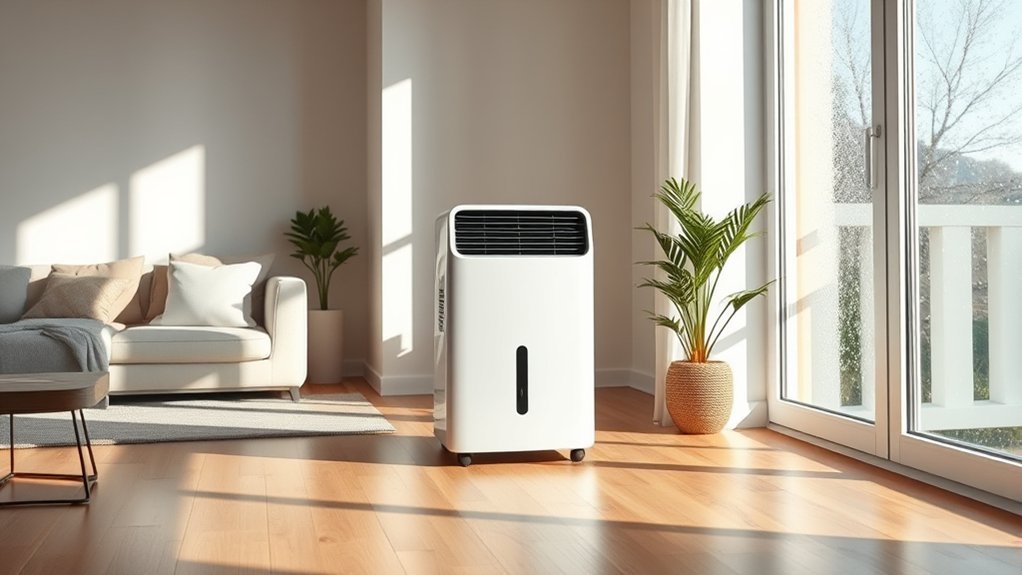
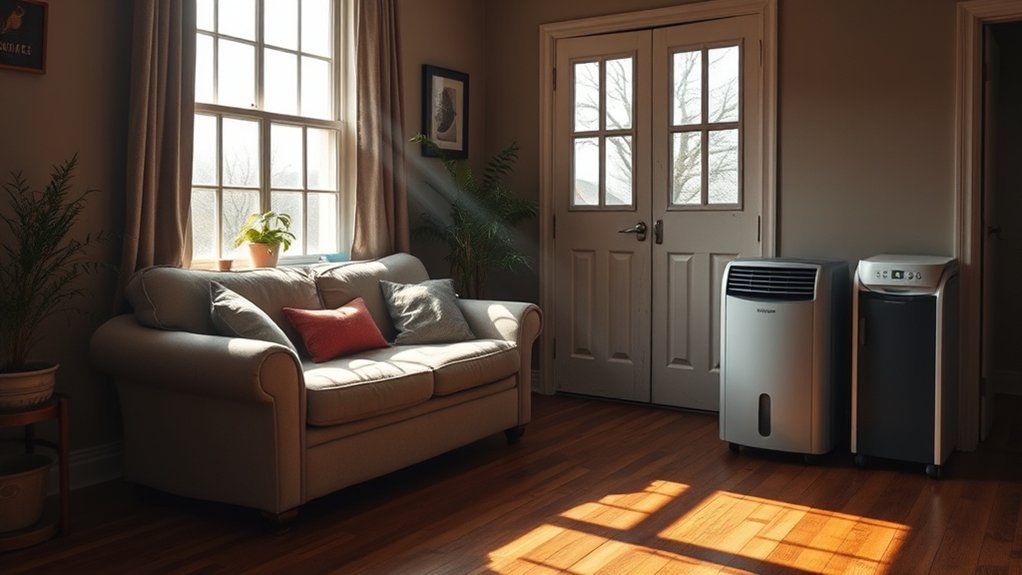
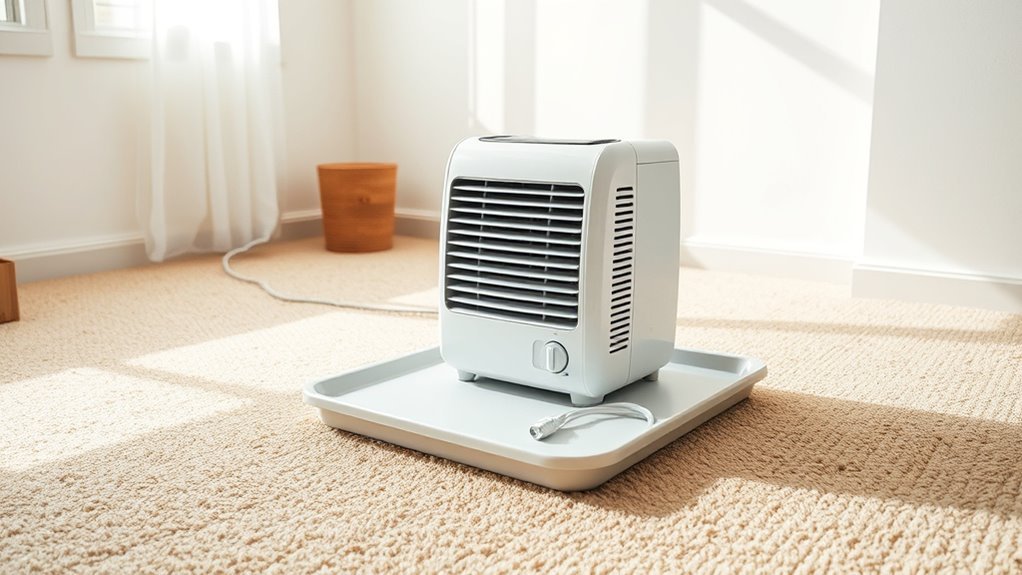
The best dehumidifier for a greenhouse depends less on a broad square-foot claim and more on the actual moisture load, nighttime temperature, plant density, airflow, and drainage setup. For a small grow tent or compact grow room, the MARS HYDRO 38 Pint Compressor Dehumidifier is the most purpose-built choice in this list. For a larger enclosed hobby greenhouse or grow room, the Waykar 80 Pints Energy Star Dehumidifier offers flexible drainage and a higher hot-humidity capacity claim, while the AEOCKY 4500 Sq.Ft Energy Star Dehumidifier is the stronger efficiency-focused alternative.
Quick verdict
- Best for grow tents: MARS HYDRO 38 Pint
- Best for larger enclosed spaces: Waykar 80 Pints
- Best efficiency-focused alternative: AEOCKY 4500 Sq.Ft
Important: These are portable indoor dehumidifiers, not weatherproof commercial greenhouse systems. Use them only in an enclosed, protected area where the unit, plug, and drain connection cannot be sprayed or exposed to rain. Manufacturer square-foot and maximum pint-per-day claims are useful comparison points, but actual greenhouse performance changes with temperature, relative humidity, watering, plant transpiration, ventilation, and air leakage. A dehumidifier should support, not replace, proper airflow and ventilation.
Quick Comparison
| Product | Best For | Capacity Note | Drainage | Main Consideration | Amazon |
|---|---|---|---|---|---|
| MARS HYDRO 38 Pint | Small grow tents and compact grow rooms | Up to 38 pints/day (18 L/day) under manufacturer test conditions | Tank or drain hose | Purpose-built for grow spaces, but compressor heat still needs monitoring | Check Price on Amazon |
| Waykar 80 Pints | Larger enclosed hobby greenhouses and grow rooms | Up to 80 pints/day at 95°F and 90% RH; standardized rating is lower | Tank or continuous drain hose | Home-style coverage claims should not be treated as greenhouse sizing guarantees | Check Price on Amazon |
| AEOCKY 4500 Sq.Ft | Efficiency-focused large-space use | Up to 80 pints/day under hot, very humid conditions; verify the exact model’s standardized rating | Tank or drain hose | Confirm the exact model number, certification record, and drain setup before ordering | Check Price on Amazon |
MARS HYDRO 38 Pint Compressor Dehumidifier
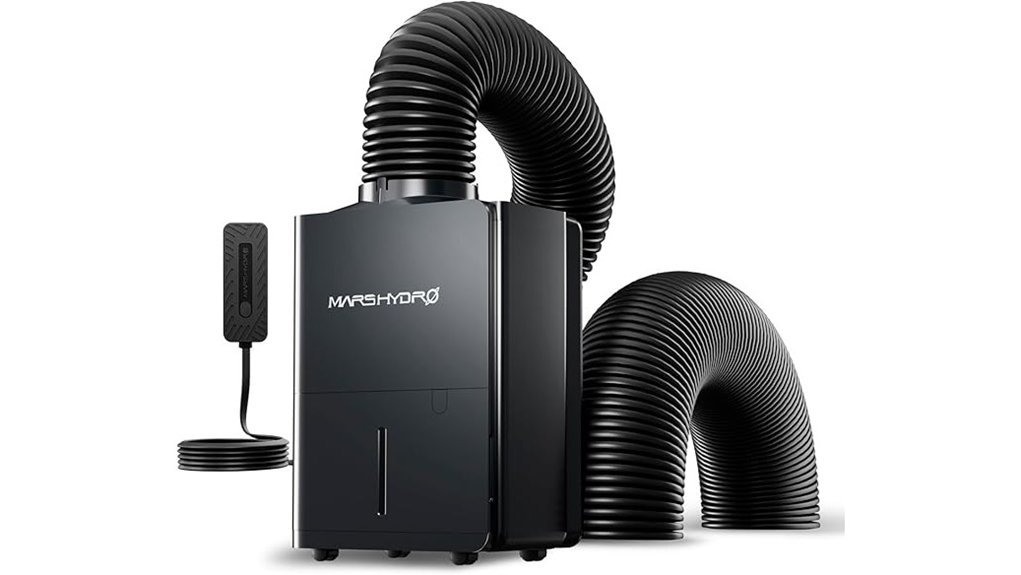
The MARS HYDRO 38 Pint Compressor Dehumidifier is the clearest match for indoor gardeners because it is designed for compact grow-tent and enclosed grow-room use. The manufacturer advertises removal of up to 38 pints, or about 18 liters, per day and positions it for grow tents up to 5 by 5 feet. Its compact format, external duct connections, humidity sensor, tank, and drain-hose support make it easier to manage moisture without placing every component directly beside the plant canopy.
Why You’ll Like It: It solves a common grow-tent problem: removing moisture without relying only on a generic room dehumidifier. The included ducting can support more flexible placement, continuous drainage reduces tank-emptying chores, and automatic humidity control can reduce constant manual adjustments.
Best For: Small grow tents, compact grow rooms, drying spaces, and gardeners who want a grow-focused unit.
Who Should Avoid It: Buyers with a large walk-in greenhouse, an open or leaky structure, or a very high moisture load may need multiple units or a commercial-grade system.
Pros:
- Grow-focused design: Better aligned with compact indoor cultivation than a standard bedroom or basement unit.
- Ducting flexibility: Intake and exhaust connections can make placement easier when tent floor space is limited.
- Automatic moisture control: Built-in sensing helps the unit cycle around a selected humidity target.
- Flexible drainage: Tank and hose options support short-term or continuous operation.
Cons:
- Small-space focus: It may be undersized for a full greenhouse or dense, high-transpiration crop.
- Small tank: The listed tank is about 0.5 gallon, so continuous drainage is preferable during heavy moisture removal.
- Heat output: Like other compressor dehumidifiers, it releases heat that can raise tent or room temperature.
- Maximum rating is condition-dependent: Do not assume 38 pints will be collected every day in cooler conditions.
Waykar 80 Pints Energy Star Dehumidifier for Home
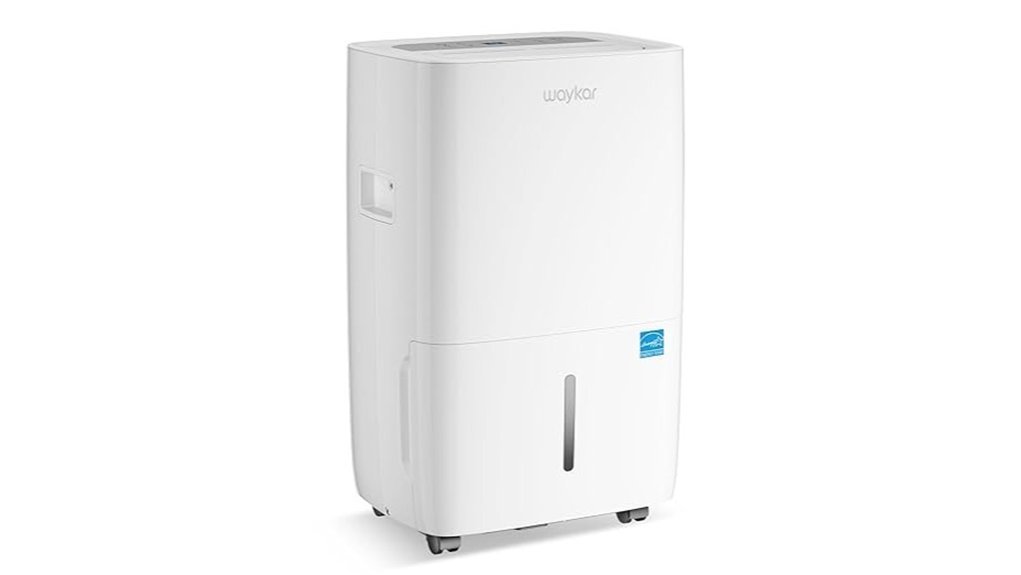
The Waykar 80 Pints Energy Star Dehumidifier is a better fit for a larger enclosed hobby greenhouse or grow room than the compact MARS HYDRO model. Waykar advertises removal of up to 80 pints per day at 95°F and 90% relative humidity, along with adjustable humidity control, automatic swing airflow, a washable filter, auto defrost, and tank or gravity drainage. That hot-humidity maximum should not be confused with the lower standardized capacity used for ENERGY STAR comparisons.
Why You’ll Like It: The tank, drain-hose support, automatic restart, and humidity controls reduce hands-on maintenance. The swing outlet can also help spread drier air, although separate circulation fans are still important around dense plant canopies and under benches.
Best For: Medium to large enclosed grow areas with a nearby drain, stable indoor-style conditions, and enough floor space for a portable cabinet unit.
Who Should Avoid It: Buyers who need a weatherproof, wash-down-safe, ducted, or commercial greenhouse system should choose equipment specifically rated for that environment.
Pros:
- Higher hot-humidity capacity claim: Better suited to a heavier moisture load than a compact grow-tent model.
- Continuous gravity drainage: Useful for long operating periods when the drain hose can maintain a downward slope.
- Convenience features: Automatic humidity control, swing airflow, auto defrost, and a washable filter simplify routine use.
- ENERGY STAR listing: The relevant model family has a verifiable certification record, making efficiency comparisons easier.
Cons:
- Two different capacity numbers: The 80-pint maximum is measured in hotter, wetter air than the standardized ENERGY STAR rating.
- Not greenhouse-specific: It is a portable indoor dehumidifier, so water protection, clearance, and electrical placement matter.
- Coverage is not a greenhouse guarantee: A 5,000-square-foot home claim does not account for irrigation, plant transpiration, or air leakage.
- Bulky in crowded spaces: A larger compressor unit can obstruct aisles or airflow when floor area is limited.
AEOCKY 4500 Sq.Ft Energy Star Dehumidifier
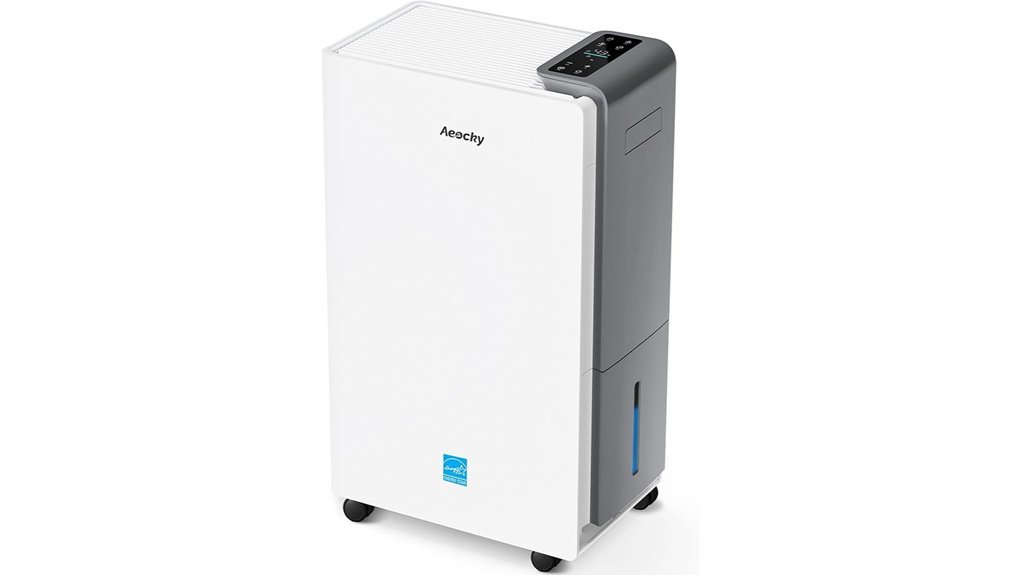
The AEOCKY 4500 Sq.Ft Dehumidifier is another large-space option with a manufacturer-advertised maximum of up to 80 pints per day in hot, very humid conditions. The Rhea-series positioning highlights automatic humidity control, low-temperature defrost support, a low fan setting around 44 dB, drain-hose compatibility, and three-year warranty coverage. It can suit an enclosed hobby greenhouse when it is protected from water exposure and sized for the actual moisture load rather than the square-foot headline.
Why You’ll Like It: It combines large-space positioning with automatic humidity control, a narrow cabinet shape, and an efficiency-focused certification story. It is most appealing to buyers who value quieter low-speed operation and longer listed warranty coverage.
Best For: Larger enclosed growing spaces where quiet operation, automatic control, energy efficiency, and continuous drainage are priorities.
Who Should Avoid It: Buyers who cannot confirm that the Amazon listing’s exact model number matches the certification and warranty information should verify those details before ordering.
Pros:
- Efficiency-focused design: AEOCKY Rhea-series models appear in ENERGY STAR records, including high-efficiency variants.
- Automatic control: A built-in humidistat helps cycle the unit around a selected target.
- Quiet low setting: The manufacturer lists operation around 44 dB on the lowest fan setting.
- Warranty coverage: The manufacturer lists three-year whole-unit coverage for the Rhea-001 model.
Cons:
- Model matching requires care: Similar Rhea model names can have different standardized capacities and certification records.
- Condition-dependent maximum: The 80-pint headline is not the expected output in every greenhouse temperature.
- Marketing-heavy efficiency language: Do not assume a specific dollar saving without comparing the exact model’s IEF, local electricity cost, and runtime.
- General indoor design: It is not a substitute for commercial greenhouse equipment in wet, exposed, or wash-down locations.
Factors to Consider When Choosing a Dehumidifier for a Greenhouse
A greenhouse creates moisture through irrigation, wet growing media, plant transpiration, condensation, and outdoor-air leakage. Ordinary room-size charts are therefore only a starting point. The better choice is a unit that can maintain the crop’s humidity target during the wettest part of the day or night without running outside its safe temperature, drainage, or electrical limits.
Portable Indoor vs. Commercial Greenhouse Units
The three products in this guide are portable indoor units. They can work in protected hobby greenhouses, grow tents, and enclosed grow rooms, but they are not designed for rain, irrigation spray, standing water, or wash-down cleaning. A large commercial greenhouse may need a ducted or purpose-built agricultural system with professional moisture-load calculations.
Dehumidification Capacity and Test Conditions
Dehumidifier capacity is measured in pints of water removed during 24 hours under defined temperature and humidity conditions. Compare standardized DOE or ENERGY STAR capacity when possible. A separate higher “maximum” number may be measured at 95°F and 90% relative humidity, where warm air can hold much more water. For greenhouse sizing, also consider plant density, irrigation volume, outside-air leakage, nighttime temperature drops, and how quickly condensation forms.
- Choose more capacity when leaves stay wet, glazing drips, or humidity remains high overnight.
- Use continuous drainage for heavy moisture loads.
- Confirm the unit’s minimum operating temperature and defrost function for cool-season use.
- Do not size from square footage alone; track how much water the unit removes and whether it reaches the target humidity.
- Consider two smaller units only when they improve airflow coverage and can be placed on safe electrical circuits.
Humidity Target, Dew Point, and Plant Stage
There is no single perfect greenhouse humidity setting for every crop. A range around 50% to 70% relative humidity is a broad starting reference for many plants, but seedlings, flowering crops, tropical plants, and cool-night conditions may require different targets. Crop-specific vapor pressure deficit (VPD), leaf temperature, and dew point can provide better guidance than relative humidity alone. Avoid prolonged leaf wetness and visible condensation, but do not over-dry the space and increase plant water stress.
Energy Efficiency Considerations
An ENERGY STAR-certified dehumidifier can use less electricity than a less efficient comparable model, but actual savings depend on capacity, Integrated Energy Factor (IEF), runtime, local electricity rates, temperature, and humidity. Compare the exact model number and standardized rating rather than relying only on broad annual-savings claims. An adequately sized unit that cycles may be more practical than an undersized unit that runs continuously without reaching the target.
Heat Output and Electrical Load
Compressor dehumidifiers return warmer, drier air to the space. That heat can be useful in a cool greenhouse but can create temperature problems in a warm tent or during summer. Check the unit’s wattage and circuit requirements, avoid overloaded extension cords or power strips, and make sure other grow equipment does not exceed the circuit’s safe load.
Size, Placement, and Portability
Measure the available floor area and leave the clearances required by the manufacturer. Keep the intake and exhaust away from walls, plastic sheeting, foliage, and storage items. Casters or handles help in a flexible grow room, but the unit should remain level and stable while operating. Place a separate humidity sensor near the plant canopy, not directly in the dry discharge stream.
Drainage and Maintenance
Continuous gravity drainage is usually the most practical setup for a greenhouse. Make sure the hose slopes downward without kinks and terminates at a suitable drain. If gravity drainage is impossible, use only a pump arrangement approved for the unit or a compatible external condensate pump. Clean the washable filter on the manufacturer’s schedule, inspect the hose for algae or blockage, and check the condensate tank even when a hose is connected.
Controls and Monitoring
A built-in humidistat, automatic restart, defrost protection, timer, and full-tank shutoff can make operation easier. A separate calibrated hygrometer is still useful for checking whether the unit’s sensor matches conditions at canopy level. Remote monitoring is helpful, but it should not replace regular inspection for leaks, blocked airflow, abnormal temperatures, or a failed drain.
Before You Buy Checklist
- Is the product a true compressor or desiccant dehumidifier, not only a humidity controller?
- Does the standardized capacity match the greenhouse moisture load, not just the advertised floor area?
- Are you comparing capacity numbers measured under the same test conditions?
- Can you connect a reliable continuous drain?
- Will the unit operate at your lowest expected greenhouse temperature?
- Is there enough clearance for intake and exhaust airflow?
- Can the electrical connection stay dry, grounded, and GFCI protected?
- Can the room tolerate the heat added by a compressor dehumidifier?
- Have you confirmed the exact model number, warranty, and certification on the current listing?
Frequently Asked Questions
What Size Dehumidifier Do I Need for a Greenhouse?
Start with the enclosed volume and observed moisture load, not square footage alone. Measure overnight humidity, note whether glazing or leaves stay wet, and track how much water a test unit collects. Choose more capacity when the space is densely planted, frequently irrigated, poorly sealed, or cool enough for condensation to form.
How Often Should I Empty the Dehumidifier’s Water Tank?
Check the tank frequently during the first day of operation because collection rates vary widely. In a humid greenhouse, a small tank may fill in a few hours. For routine use, connect a properly routed continuous drain whenever the product supports it.
Can Dehumidifiers Harm My Plants or Greenhouse Environment?
They can cause problems when the humidity target is too low, the warm exhaust raises the space temperature, or strong dry airflow blows directly onto plants. Use a separate hygrometer, monitor leaf condition, and adjust the set point gradually.
What Is the Ideal Humidity Level for a Greenhouse?
Many plants can be managed within a broad 50% to 70% relative-humidity range, but the best target depends on crop type, growth stage, temperature, leaf temperature, and disease risk. Focus on crop-specific guidance, VPD when appropriate, and preventing prolonged leaf wetness and condensation.
Can I Use a Dehumidifier in a Cold Greenhouse?
Only if the model’s operating-temperature range supports the expected conditions. Compressor units lose capacity as temperatures fall and may frost, even when they include auto defrost. For consistently cold conditions, compare low-temperature specifications or consider a system designed for that environment.
Where Should I Place a Greenhouse Dehumidifier?
Place it on a level, dry surface with the manufacturer’s required intake and exhaust clearance. Keep it away from irrigation spray, standing water, and direct contact with foliage. Use circulation fans to move humid air from the canopy toward the unit, and avoid placing the humidity sensor directly in the warm, dry exhaust stream.
Are There Energy-Efficient Options for Large Greenhouses?
Yes. Compare ENERGY STAR certification, standardized capacity, Integrated Energy Factor, automatic humidistat control, defrost behavior, and drainage options. For a commercial greenhouse, a purpose-built commercial or ducted system may be more suitable than a portable home unit.
How Noisy Are Dehumidifiers When Operating?
Noise varies by compressor size, fan speed, surface vibration, and placement. Some portable units advertise low settings in the low-to-mid 40 dB range, but real sound can be higher at maximum fan speed. Check the exact model specification and avoid placing the unit against lightweight greenhouse panels that may vibrate.
Can a Dehumidifier Replace Greenhouse Ventilation?
No. A dehumidifier can remove moisture, but airflow and ventilation are still needed to reduce condensation, move humid air away from the canopy, manage temperature, and maintain a more even growing environment.
Conclusion
Final recommendation
Choose the MARS HYDRO 38 Pint for a small grow tent where grow-specific ducting and controls matter most. Choose the Waykar 80 Pints for a larger protected grow space when flexible drainage and broad airflow are priorities. Choose the AEOCKY 4500 Sq.Ft when efficiency, quieter low-speed operation, and warranty coverage are higher priorities—but verify the exact model and certification record before buying.
The final decision should be based on standardized capacity, greenhouse moisture load, operating temperature, drainage access, heat output, safe electrical placement, and the humidity needs of your plants. Start with a moderate target, monitor conditions at canopy level, and adjust gradually rather than relying only on a square-foot coverage claim or a maximum pint rating.