
Walking into a muggy bedroom or musty basement can quickly make breathing feel heavier when your airways are sensitive to indoor allergens. If you are wondering, does a dehumidifier help with asthma, the answer depends on whether excess household moisture is actually feeding your specific triggers. Understanding what humidity control can and cannot do helps you protect your lungs without wasting money or straying from your medical care plan.
Quick Answer
A dehumidifier helps with asthma indirectly when damp indoor air fuels mold growth or house dust mites. Keeping relative humidity between 30% and 50% curbs those allergens, but clinical studies show limited direct improvement in asthma outcomes from dehumidifiers alone. Always use one alongside—never instead of—prescribed asthma medications.
Key Takeaways
- Target the 30% to 50% window: House dust mites thrive above 50% relative humidity, while mold growth accelerates once indoor levels stay above 60%.
- Combine with other allergen barriers: NHLBI guidelines recommend pairing humidity control with impermeable mattress covers, HEPA vacuuming, and weekly 130°F (54.4°C) bedding washes.
- Avoid over-drying the air: Pushing relative humidity below 30% can dry out nasal passages and irritate sensitive airways, triggering cough or throat tightness.
- Match capacity to room conditions: Standard compressor units lose efficiency below 65°F (18°C), so cool basements require low-temperature or desiccant models.
- Fix water problems at the source: A dehumidifier cannot clean existing surface mold or replace repairing plumbing leaks and drying wet materials within 24 to 48 hours.
Does a Dehumidifier Help With Asthma?
A dehumidifier helps with asthma indirectly when high indoor moisture supports biological triggers inside your home. Damp rooms allow mold spores to colonize surfaces and help microscopic dust mites multiply in mattresses, carpets, and upholstery. If you are sensitized to either allergen, pulling excess water vapor from the air reduces daily exposure.
However, lower room humidity does not automatically translate into fewer inhalations of reliever medicine. The Cochrane review of dehumidifiers for chronic asthma found little clinical evidence that mechanical dehumidification alone improves symptoms or lung function, though very few trials have been conducted. That gap points to limited research rather than proof that moisture control never helps a damp home.
The National Heart, Lung, and Blood Institute (NHLBI) centers effective asthma management on daily controller medicines, quick-relief inhalers, symptom monitoring, and a written asthma action plan. A dehumidifier belongs strictly in the environmental trigger-reduction part of that strategy.
What Does the Research Say About Dehumidifiers and Asthma?
Clinical studies show that while lowering humidity curbs dampness and allergen levels, simply plugging in a mechanical dehumidifier rarely improves asthma control on its own. Health agencies therefore recommend combining moisture control with broader bedroom and home interventions rather than relying on a single appliance.
At a Glance
| What It Can Do | Lower excess indoor water vapor and curb moisture conditions that allow mold and dust mites to thrive. |
| What Evidence Shows | Moisture control prevents mold growth, but direct clinical evidence that standalone dehumidifiers improve asthma scores is limited. |
| Humidity Target | 30% to 50% relative humidity for most living spaces, tracked with an independent digital hygrometer. |
| Best Fit | Homes or rooms with relative humidity repeatedly above 50%, window condensation, musty odors, or confirmed mold or dust-mite sensitivity. |
The 2013 Cochrane systematic review evaluated two qualifying studies of mechanical ventilation and dehumidification systems. In one small clinical trial in Scotland with 40 participants (13 adults and 27 children with moderate-to-severe asthma), dehumidification lowered house dust-mite counts and antigen levels, yet produced no statistically significant improvement in morning peak expiratory flow, symptom scores, or medication use.
Similarly, the NHLBI 2020 Focused Updates to the Asthma Management Guidelines conclude that single-step allergen interventions rarely change clinical outcomes. When history or allergy testing confirms sensitivity to a specific indoor trigger, NHLBI conditionally recommends a multicomponent, allergen-specific mitigation plan—combining humidity control with physical barriers and targeted cleaning.
How Humidity Affects Asthma Triggers
High indoor humidity affects asthma primarily by transforming fabrics and damp building surfaces into breeding grounds for allergens. In addition, heavy, moisture-laden air can trap stale indoor pollutants and make breathing feel more labored for people with hyper-responsive airways.
The U.S. Environmental Protection Agency (EPA) highlights two moisture-dependent biological triggers inside the home:
- House dust mites: Microscopic arachnids that absorb water directly from humid air. When relative humidity stays above 50%, mites multiply rapidly in mattresses, pillows, upholstered furniture, and carpets. Their shed body parts and fecal droppings provoke allergic airway inflammation.
- Indoor mold and mildew: Microscopic fungi that germinate on damp drywall, wood, bathroom tile, and window sills. Inhaling airborne mold spores or mycotoxins can trigger wheezing, coughing, and acute asthma flare-ups in sensitized individuals.
Conversely, stripping too much moisture from the room causes its own respiratory problems. If relative humidity drops below 30%, dry air can dehydrate the protective mucus lining of your bronchi, leading to dry cough, throat irritation, and bronchospasm.
Note: Moisture is only one piece of the puzzle. Tobacco smoke, pet dander, cockroaches, rodents, nitrogen dioxide from gas stoves, strong cleaning chemicals, seasonal pollen, viral infections, cold air, and exercise also trigger symptoms and will not respond to a dehumidifier. Consult an allergist or pulmonologist to pinpoint your personal triggers.
What Indoor Humidity Level Is Best for Asthma?
The ideal indoor relative humidity level for asthma is 30% to 50% year-round. Both the Centers for Disease Control and Prevention (CDC) and the EPA guide to mold and moisture recommend keeping household humidity strictly below 60%—and ideally between 30% and 50%—to suppress dust mites and mold while keeping airways comfortable.
Instead of guessing by how muggy a room feels, place a standalone digital hygrometer ($10 to $20 at hardware stores) in the bedroom and any damp basement or laundry area. Because moisture pockets vary widely across a house, one hallway thermostat reading never tells the whole story.
- Below 30% RH: Too dry for many people with asthma; pause the dehumidifier if you notice dry nasal passages, scratchy throat, or coughing.
- 30% to 50% RH: The optimal target zone that starves dust mites of moisture and inhibits mold spore germination without drying out airways.
- 51% to 60% RH: The caution zone where dust-mite populations rebound and condensation can form on cool windows or pipes.
- Above 60% RH: High mold and mildew risk; inspect immediately for plumbing leaks, blocked exhaust fans, groundwater seepage, or undersized dehumidification.
For asthma trigger control, the goal is not “as dry as possible.” The goal is steady 30% to 50% relative humidity while you eliminate the underlying moisture source.
How Do Dehumidifiers Fit Into Dust-Mite and Mold Control?
A dehumidifier works best when paired with physical cleaning and source repairs to control dust mites and mold. Lowering ambient humidity slows down new allergen growth, while targeted cleaning removes the proteins and spores already settled in your living space.
Multicomponent Dust-Mite Control
Even after a dehumidifier drops room humidity below 50%, existing dust-mite allergens remain trapped inside bedding and fabrics until you remove them. Following NHLBI and Asthma and Allergy Foundation of America (AAFA) guidance, combine dehumidification with these proven steps:
- Encase bedding: Zip mattresses, box springs, and pillows inside tightly woven, allergen-impermeable dust-proof covers.
- Wash in hot water weekly: Launder sheets, pillowcases, and blankets once a week in water heated to at least 130°F (54.4°C), then dry completely on a hot cycle to kill mites.
- Vacuum with HEPA filtration: Clean carpets and upholstered furniture weekly using a vacuum equipped with a high-efficiency particulate air (HEPA) filter, and wipe hard surfaces with a damp cloth. Have the person with asthma stay out of the room during and shortly after vacuuming.
Moisture Remediation and Mold Cleanup
A dehumidifier prevents new fungal growth on dry surfaces, but it cannot kill or remove mold that has already taken root. EPA mold guidelines emphasize a three-step sequence: fix the water leak immediately, scrub visible mold off hard surfaces with detergent and water, and dry all wet materials within 24 to 48 hours.
Homeowners can safely clean small surface patches covering less than about 10 square feet (roughly a 3-foot by 3-foot area) while wearing gloves and an N95 respirator. If mold covers more than 10 square feet, hides inside wall cavities or HVAC ductwork, or stems from sewage or floodwater, hire a qualified remediation contractor.
Pro Tip: Place your standalone hygrometer at least 6 to 10 feet away from the dehumidifier’s exhaust louver. A sensor sitting right in the machine’s dry discharge airstream will read artificially low and cause the unit to shut off too early.
Can a Dehumidifier Make Asthma Worse?
Yes, a dehumidifier can aggravate asthma if it over-dries the room below 30% relative humidity, circulates spores from a neglected water bucket, or masks an active structural leak. Watching both your hygrometer reading and your cleaning schedule prevents the machine from becoming an indoor irritant.
When standing water sits in a warm collection reservoir for days, mold, mildew, and bacteria can grow inside the bucket and on the intake screen. Whenever the fan runs, the appliance can blow musty odors or bioaerosols back into the bedroom.
In addition, never rely on a portable unit to cover up wet carpet padding, weeping foundation walls, or roof leaks. Hidden structural dampness continues releasing fungal spores into room air regardless of how much water the dehumidifier collects.
Which Type of Dehumidifier Is Best for Asthma Trigger Control?
The best dehumidifier for asthma trigger control depends on your room square footage, baseline dampness, and winter air temperature. Selecting the right technology and daily pint capacity ensures the unit holds 30% to 50% humidity without short-cycling or icing up.
Recommended Products

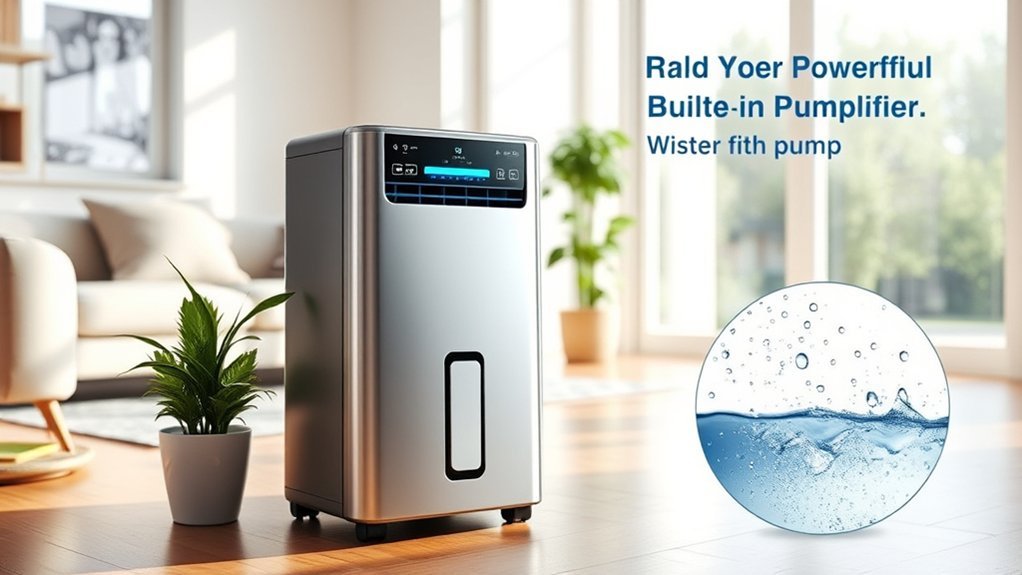
120-Pint/Day Dehumidifier for Large Spaces Up to 6,000 Sq. Ft.: This powerful dehumidifier for basement removes 120 pints/day in humid conditions (95℉, 90% RH) and 90 pints/day in warm, damp environments (86℉, 80% RH). Ideal for spaces up to 6,000 sq. ft., including offices, bedrooms, kitchens, living rooms, garages, and RVs. The ENERGY STAR certified dehumidifier maintains humidity between 30%–80%, providing a wider range than most models, which typically range from 40%–80%.

Semiconductor dehumidifiers use thermoelectric cooling to remove moisture from the air. They create a drier, more comfortable environment by reducing humidity and improving air quality.

【Dual-Function Dehumidifier and Aromatherapy】Our dehumidifier efficiently removes excess moisture using semiconductor condensation technology. Enjoy a fresh, fragrant environment while reducing humidity—ideal for creating a calming bedroom ambiance or refreshing your living space. For optimal results, keep all doors and windows closed during use.
1. Choose the Right Dehumidifier Technology
- Portable compressor (refrigerant) dehumidifier: Best for bedrooms, living areas, and warm basements kept above 65°F (18°C). According to ENERGY STAR, frost can form on standard condensing coils when room temperatures drop below 65°F, sharply cutting efficiency.
- Desiccant or low-temperature dehumidifier: Essential for unheated basements, crawlspaces, or garages that stay between 34°F and 60°F (1°C to 15°C). Desiccant wheels absorb moisture chemically without freezing coils and run quieter than compressors, though they draw slightly more wattage.
- Whole-home ducted dehumidifier: Ideal in humid climates when relative humidity exceeds 50% across multiple rooms in a centrally ducted house.
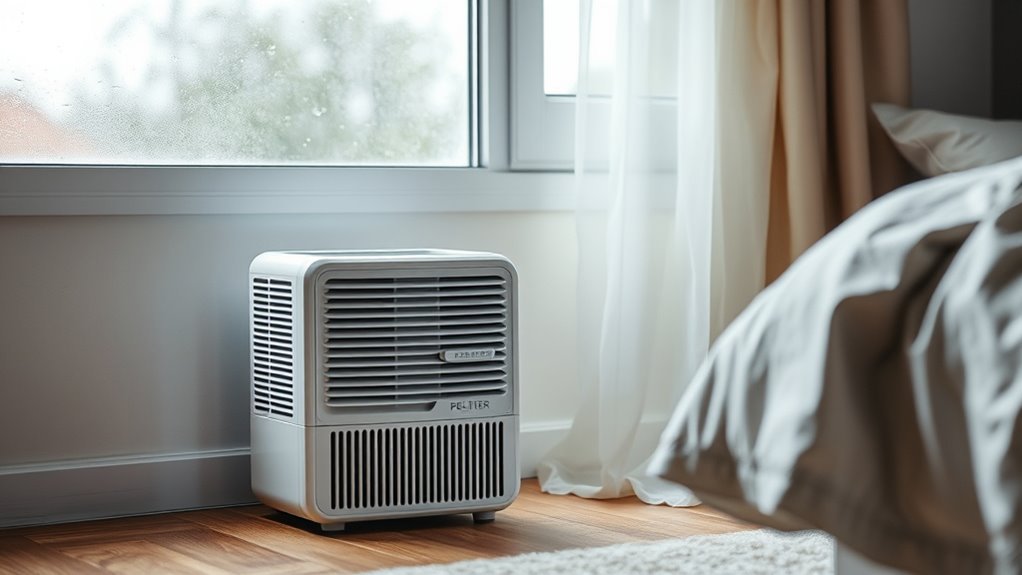
- Small thermo-electric (Peltier) or passive absorbers: Suitable only for tiny enclosed closets or cabinets under 150 square feet; they lack the capacity to drop humidity in a full bedroom or basement.
2. Size Capacity by Room Area and Dampness (ENERGY STAR Guidelines)
Dehumidifier capacity is rated by how many pints of water the unit extracts in 24 hours under current U.S. Department of Energy test standards (65°F room air). Use the official ENERGY STAR matrix below to match capacity to your space:
| Room Condition Without Dehumidification | Typical Relative Humidity | Recommended Capacity (Pints/Day Under 2,000 sq ft) | Recommended Capacity (Pints/Day for 2,000+ sq ft) |
|---|---|---|---|
| Slightly to Moderately Damp: Feels clammy in summer; intermittent musty odor. | 50% to 75% RH | 20 to 30 pints | 30+ pints |
| Very Damp: Consistently smells musty; damp spots appear on walls or floors. | 75% to 90% RH | 25 to 40 pints | 40+ pints |
| Wet: Walls or floors sweat; active seepage or indoor laundry drying. | 90% to 100% RH | 30 to 50 pints | 50+ pints |
How Do You Use a Dehumidifier Safely With Asthma?
Running a dehumidifier safely around sensitive lungs requires setting a conservative humidity target, sealing the room from humid outdoor air, and sanitizing the tank regularly. Follow these seven steps to keep moisture in check without irritating your airways:
- Measure baseline humidity for 48 hours. Set a digital hygrometer at breathing height in your bedroom or damp room before buying or running a unit to confirm levels regularly exceed 50%.
- Set the humidistat between 45% and 50%. Starting near the upper end of the 30% to 50% range curbs dust mites and mold while preventing over-dried air.
- Leave 12 to 18 inches of clearance around air vents. Keep curtains, bedding, and walls away from top or rear grilles so airflow stays unrestricted.
- Close windows and doors while operating. Shutting the room off when outdoor air is muggy stops the machine from endlessly pulling in fresh outside moisture.
- Use continuous drainage in basements. Connect a drain hose directly to a floor drain or condensate pump so standing water never sits in the collection bucket.
- Wash the bucket and air filter every 1 to 2 weeks. Empty daily if using the tank, scrub it with warm water and mild dish soap, dry thoroughly, and rinse the washable mesh filter every two to four weeks.
- Log your asthma symptoms alongside humidity. If coughing or chest tightness increases, raise the humidistat or turn the machine off and consult your healthcare provider.
Recommended Products

Upgrade High Efficient Dehumidification: Dehumidifier utilize semi conductor condensation technology, ensuring quiet operation while effectively extracting moisture from the air. This advanced feature helps keep humidity levels below 45%

Quiet & High-Efficiency Dehumidifier: Featuring next-generation semiconductor cooling technology, this quiet dehumidifier delivers efficient moisture removal while running at ultra-low noise (≤40dB). Stable humidity levels are maintained, making your home environment more comfortable and pleasantly dry.

✔ EASY TO USE: This mini dehumidifier is spill and mess free. Just hang and go! Non-toxic, child and pet safe! Your small rooms will be dry and odor free. Works for areas up to 333 cubic feet.
When Does a Dehumidifier Make Sense for Someone With Asthma?
Buying a dehumidifier makes the most sense when your hygrometer repeatedly reads above 50% and you have confirmed sensitivity to mold or house dust mites. It is also practical when visible dampness—such as sweating cold-water pipes, window condensation, or lingering bathroom steam—persists despite running exhaust fans.
Rooms that benefit most include below-grade basements, bedrooms in humid coastal or summer climates, windowless bathrooms, and indoor laundry rooms. If high humidity spans every floor, ask an HVAC technician to inspect your air conditioner’s sizing or quote a whole-house dehumidifier rather than hauling a single portable unit up and down stairs.
Conversely, skip the dehumidifier if your home naturally sits between 30% and 50% relative humidity or if your flare-ups stem from pollen, exercise, cold winter air, or viral colds. NHLBI guidelines specifically advise against routine allergen-mitigation purchases when a patient is not sensitized to that indoor allergen.
Recommended Products

2500 Sq. Ft High-Efficiency Dehumidifier – The KNKA basement dehumidifier features a quiet, high-performance compressor that removes up to 34 pints of moisture per day (at 95°F, 90% RH). Ideal for basements, offices, bathrooms, bedrooms, kitchens, stockrooms, living rooms, laundry rooms, garages, crawlspaces, or RVs. It helps maintain optimal humidity between 50%–70% for healthier, more comfortable living
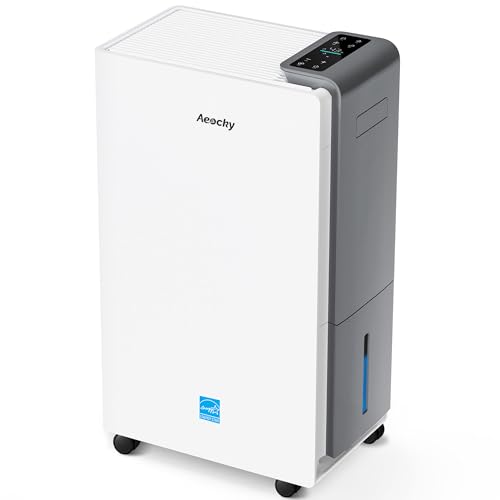
【ENERGY STAR 25 ≠ ENERGY STAR Most Efficient 2025】Don't fall for competitors' word games. With only 2.6% of ENERGY STAR models earning "Most Efficient 2025" title, these options are exceptionally rare on the market. RHEA-001 is one of the few to truly hold this top-tier certification. Many brands use misleading phrases like "Energy Star Efficient 25" or "Energy Star 25" to imply a standard they haven't met. Choosing them is a risk.With AEOCKY, you get verified performance and the peace of mind of authentic, top-tier efficiency.

[The Undisputed Champion — Industry-Leading Dehumidifier Brand] When you choose AEOCKY, you get double market validation. According to data independently verified by Stackline, a leading third-party data analytics company, AEOCKY was an industry‑leading dehumidifier brand on Amazon U.S. in 2025. This means you’re not just choosing a flagship product from a market leader, but a top-performing brand backed by independent market data and trusted by millions of real users, delivering the ultimate combination of performance, quality and trust.
What Can’t a Dehumidifier Do for Asthma?
A dehumidifier only extracts water vapor from room air; it cannot open constricted airways, reduce bronchial inflammation, replace controller or rescue inhalers, or halt an asthma flare-up. Treating an appliance like a medical device delays life-saving care during respiratory distress.
Warning: If you are having an asthma attack, never wait for a dehumidifier to clear the air. Use your prescribed quick-relief inhaler immediately and follow your asthma action plan. Call 911 or local emergency services right away if your reliever medicine does not help, you cannot speak full sentences comfortably, your lips or fingernails look blue or gray, or breathing becomes rapidly harder.
A dehumidifier also does not work like an air purifier. While a dehumidifier condenses moisture, only a dedicated true HEPA air cleaner captures airborne particulates such as pet dander, smoke, pollen, and floating mold spores.
Finally, if you rent an apartment with chronic plumbing leaks, wet drywall, or visible mold, photograph the damage, log your hygrometer readings, and submit a written repair request to your landlord or local housing code enforcement.
Frequently Asked Questions
Do dehumidifiers help people with asthma?
Yes, a dehumidifier can help indirectly if damp indoor air is fueling mold or dust mites that trigger your symptoms. However, clinical trials have not shown strong evidence that mechanical dehumidification alone improves asthma scores, so always use one alongside prescribed asthma medications.
What humidity level is best for asthma?
Aim for 30% to 50% relative humidity in bedrooms and living areas, measured with a digital hygrometer. Keeping humidity below 50% slows dust-mite reproduction and prevents mold growth, while staying above 30% prevents dry, irritated airways.
What is the 4-4-4 rule for asthma?
The 4-4-4 (or 4x4x4) rule is an Australian asthma first-aid protocol for standard blue or grey reliever inhalers: give four separate puffs into a spacer, take four breaths after each puff, and wait four minutes before reassessing. Because inhalers and emergency protocols vary by country and prescription, always follow your personal asthma action plan.
Do air purifiers dry indoor air?
No, air purifiers do not dry indoor air or lower relative humidity. An air purifier pulls room air through a HEPA or carbon filter to trap solid particles and odors, whereas a dehumidifier removes water vapor.
Is a humidifier or dehumidifier better for asthma?
Neither is universally better; choose based on your room’s measured humidity rather than asthma alone. Use a dehumidifier when indoor humidity regularly exceeds 50%, and use a clean humidifier only when winter heating drops indoor humidity below 30% and dries out your airways.
What calms down an asthma attack?
Only your prescribed quick-relief inhaler and medical steps in your written asthma action plan can calm an asthma attack. Sit upright, take your reliever medication as directed, and call emergency services immediately if breathing stays hard or your inhaler does not bring quick relief.
Conclusion
A dehumidifier can be a practical ally when your home consistently sits above 50% relative humidity and dampness is feeding mold or dust-mite triggers. Check problem rooms with an inexpensive digital hygrometer first, and set your humidistat for a steady 45% to 50% rather than stripping the air overly dry.
Pair moisture control with leak repairs, impermeable bedding covers, and regular tank cleaning—and always rely on your prescribed inhalers and written asthma action plan to manage symptoms directly.
Sources
- U.S. Environmental Protection Agency — A Brief Guide to Mold, Moisture and Your Home: Indoor humidity targets (30%–50%, below 60%), 24-to-48-hour drying window, and 10-square-foot mold cleanup guidance.
- U.S. Environmental Protection Agency — Asthma Triggers: Gain Control: Dust mites, indoor mold, weekly hot-water bedding washes, and HEPA vacuuming recommendations.
- Cochrane — Dehumidifiers in the Home for Asthma: Clinical trial evidence (CD003563) showing limited direct asthma outcome improvements from mechanical dehumidification.
- National Heart, Lung, and Blood Institute — 2020 Focused Updates to the Asthma Management Guidelines: Conditional recommendation for multicomponent, allergen-specific indoor mitigation.
- National Heart, Lung, and Blood Institute — Asthma Treatment and Action Plan: Core asthma medical management, controller and reliever therapy, and written action plans.
- National Heart, Lung, and Blood Institute — Asthma Attack: Emergency warning signs and immediate steps when quick-relief medication fails.
- ENERGY STAR — Dehumidifiers: Pint-per-day capacity sizing table by square footage and dampness, whole-home guidance, and the 65°F coil-frost threshold.
- National Asthma Council Australia — Asthma First Aid: Australian 4x4x4 asthma first-aid protocol for blue/grey reliever inhalers and combination inhaler guidance.
- WHO Guidelines for Indoor Air Quality: Dampness and Mould, via NCBI Bookshelf: Epidemiological relationship between indoor dampness, fungal exposure, and respiratory symptoms.
- Centers for Disease Control and Prevention — Controlling Asthma: Federal recommendations on maintaining 30% to 50% household relative humidity to curb triggers.
- Asthma and Allergy Foundation of America — Improving Indoor Air Quality: Guidance on indoor humidity levels, dust-mite control at 130°F (54.4°C), and bedroom allergen barriers.

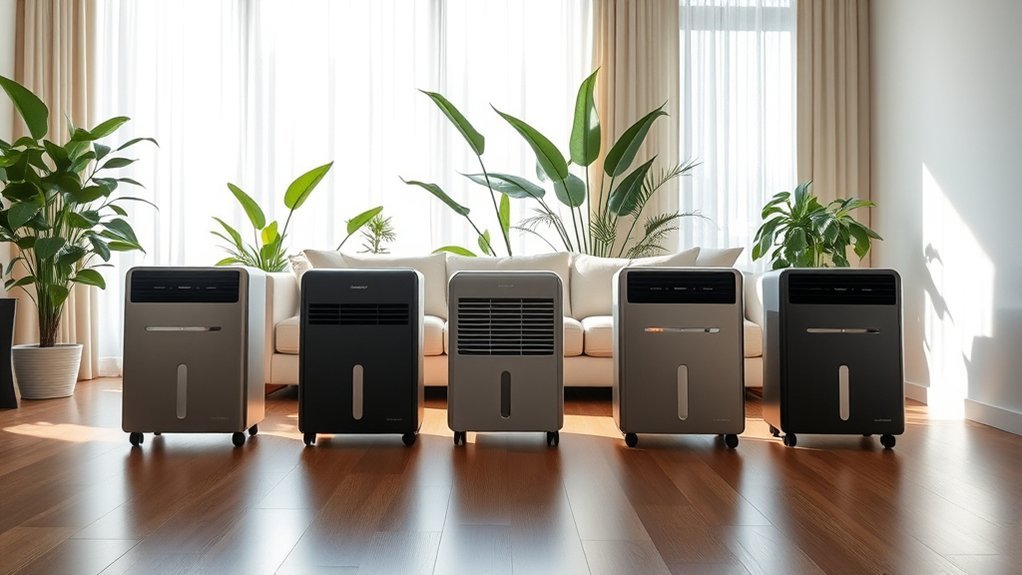

[…] Dehumidifier for Asthma: 30-50% Humidity Safety Guide […]