
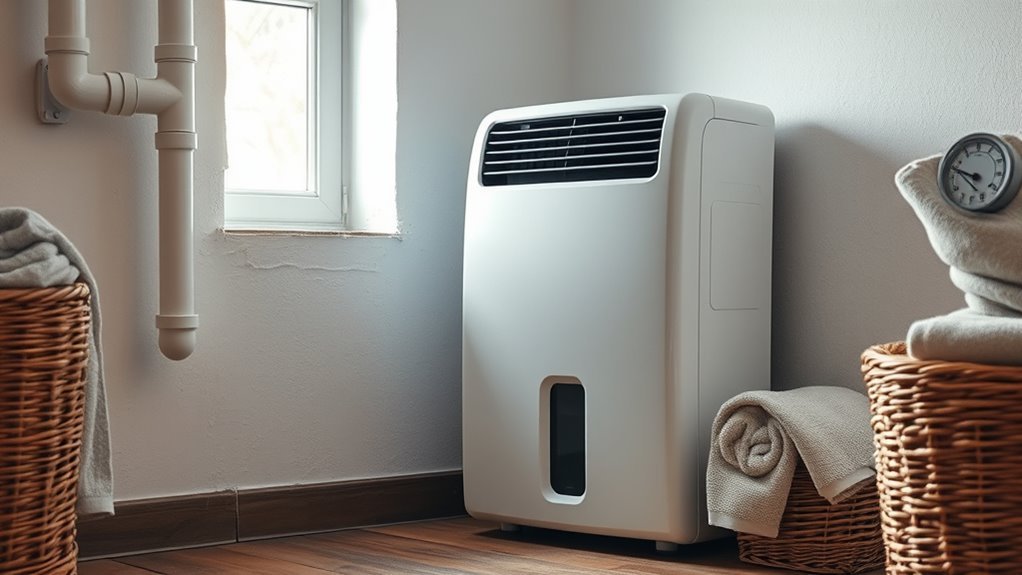
Yes, a dehumidifier dries the air by removing water vapor and lowering relative humidity. In a damp room, this can reduce the sticky feeling, condensation, and musty odors. It does not normally lower the room temperature, remove existing mold, pump out standing water, or purify the air, so correct setup and realistic expectations matter.
Last updated: August 19, 2026
Quick Answer
A dehumidifier dries indoor air by pulling in room air, condensing or adsorbing some of its water vapor, and returning air with less moisture. Aim for roughly 30% to 50% relative humidity, with about 45% to 50% as a practical starting point in many homes. A refrigerant dehumidifier may make the room feel less muggy, but it usually releases slightly warmer air.
Key Takeaways
- A dehumidifier lowers relative humidity; it does not remove all moisture from the air.
- A practical starting target is 45% to 50% RH, adjusted for comfort, climate, and window condensation.
- Most portable compressor models slightly warm the room instead of cooling it.
- A dehumidifier can help prevent moisture problems, but it cannot repair leaks, remove standing water, or remove existing mold.
- Choose capacity by both room size and dampness, then compare current Integrated Energy Factor ratings.
- Use a hygrometer to confirm that the machine is lowering humidity without making the room too dry.
What Can a Dehumidifier Actually Dry?
The word “dry” can mean different things. A dehumidifier directly removes water vapor from the air. It can also help damp materials release moisture into that drier air, but it cannot replace water extraction, leak repair, mold cleanup, or structural drying after serious water damage.
| Moisture Problem | Will a Dehumidifier Help? | What Else Is Needed? |
|---|---|---|
| Humid or muggy room air | Yes. This is its primary job. | Measure RH and control outdoor or indoor moisture sources. |
| Window or pipe condensation | Often. Lower RH can reduce condensation. | Also check insulation, ventilation, air leaks, and unusually cold surfaces. |
| Damp carpet, drywall, wood, or furnishings after a corrected leak | It can assist drying by keeping surrounding air drier. | Remove standing water and damaged materials, increase appropriate airflow, and use professional structural drying when needed. |
| Active leak, seepage, or standing water | Not by itself. | Stop the water source and remove liquid water first. |
| Existing mold growth | No. Lower humidity can help prevent recurrence. | Remove the mold safely and correct the moisture problem. |
What Does a Dehumidifier Do?
A dehumidifier removes water vapor from indoor air. The result is a lower relative humidity, which can make a damp room feel less clammy and reduce conditions that support condensation, musty odors, mold, and dust mites.
Relative humidity, or RH, describes how much water vapor is in the air compared with the maximum amount the air could hold at its current temperature. Because RH changes with temperature, a room can show a different percentage even when the total amount of water vapor has not changed much.
The U.S. Environmental Protection Agency recommends controlling indoor moisture and generally keeping RH between 30% and 50%. In many homes, a setting of 45% to 50% is a sensible starting point. During cold weather, a lower setting may be needed to prevent condensation on cold windows.
Note: “Drier air” does not mean moisture-free air. It means the air contains less water vapor or has a lower relative humidity than it did before.
A dehumidifier is not the same as an air purifier. It does not reliably remove smoke, fine particles, pollen, gases, or all airborne mold spores. It also cannot repair a plumbing leak, seal a damp foundation, or clean mold that is already growing.
How Does a Dehumidifier Dry the Air?
Most household dehumidifiers use a refrigeration process similar to part of an air-conditioning cycle. A fan moves room air through the machine. Moisture condenses on a cold surface, drains into a bucket or hose, and the air passes through a warmer coil before returning to the room.
Moisture Removal Process
- Air intake: A fan pulls humid room air through a grille and filter.
- Cooling: The air passes over a cold evaporator coil.
- Condensation: When the coil is below the air’s dew point, some water vapor changes into liquid droplets.
- Collection: The water falls into a removable bucket or flows through a drain hose.
- Return: The air passes over the warm condenser coil and returns to the room with less moisture.
This cycle continues until the humidistat detects that the selected RH has been reached. The compressor and fan then cycle according to the unit’s controls and the room’s moisture load.
Cooling Coil Action
The cooling coil does not absorb moisture like a sponge. It lowers the air below its dew point, causing part of the water vapor to condense. This is similar to water forming on the outside of a cold drink.
| Step | What Happens | Result |
|---|---|---|
| Intake | Room air enters through the grille and filter. | Humid air reaches the evaporator. |
| Coil contact | Water vapor condenses on the cold coil. | Liquid water leaves the airstream. |
| Drainage | Water enters a bucket or drain hose. | Collected moisture is removed from the room. |
| Return | The air passes over the warm condenser. | Drier, slightly warmer air returns to the room. |
Drier Air Return
After moisture condenses, a compressor dehumidifier returns drier air to the room. Because the machine’s fan, compressor, and condenser release heat, the outlet air is usually warmer than the inlet air. ENERGY STAR notes that a dehumidifier normally warms the area around it slightly.
The room may still feel more comfortable because sweat can evaporate more readily and the air feels less muggy. However, a dehumidifier should not be treated as a substitute for air conditioning when the goal is to lower the room temperature.
A dehumidifier reduces moisture, not heat. The room may feel less clammy even though its temperature stays the same or rises slightly.
Compressor vs. Desiccant Dehumidifiers
Not every dehumidifier removes moisture in exactly the same way:
- Compressor or refrigerant dehumidifiers cool air below its dew point and collect the resulting condensation. They are common in bedrooms, basements, and living spaces.
- Desiccant dehumidifiers pass air over a moisture-attracting material. They can be useful where a manufacturer specifically rates them for cooler operating conditions, but their energy use and capacity should still be checked carefully.
Always follow the unit’s stated operating-temperature range. Many compressor models lose capacity or develop frost in cool rooms. ENERGY STAR warns that coil frosting can occur when room temperature falls below about 65°F, although models with automatic defrost may handle cooler conditions more effectively.
Signs Your Home Needs a Dehumidifier
A dehumidifier may help when a room stays humid despite normal ventilation and moisture-source control. Confirm the problem with a hygrometer instead of relying only on how the room feels.
Common warning signs include:
- RH readings that repeatedly remain above 50% to 55%.
- A persistent clammy or damp feeling.
- Musty odors that return after cleaning.
- Condensation on windows, pipes, ducts, or other cold surfaces.
- Damp spots, peeling paint, water stains, or swollen wood.
- Slow drying of towels, laundry, or damp building materials after the water source has been corrected.
Persistent Condensation
Condensation forms when humid air touches a surface that is cold enough to fall below the air’s dew point. Windows are common locations because indoor glass can become much colder than the surrounding air during winter.
Persistent condensation can point to excessive indoor moisture, but it does not prove that RH is above one fixed percentage. Poor insulation, air leaks, blocked ventilation, cold-water pipes, and unusually low outdoor temperatures can all contribute.
Use a digital hygrometer to measure RH in the affected room. Place it away from the dehumidifier’s outlet, windows, exterior doors, heaters, showers, and cooking areas. If possible, compare readings at different times of day for several days.
Musty Odors And Mold
A musty odor may indicate damp materials, mildew, or hidden mold. Inspect walls, ceilings, closets, furniture, carpets, and areas around plumbing. Also look for leaks, poor drainage, wet insulation, foundation seepage, and condensation inside or behind cabinets.
Warning: A dehumidifier does not remove existing mold or make contaminated materials safe. According to the CDC, visible or odorous mold should be removed and the underlying moisture problem fixed. Large, recurring, sewage-related, or HVAC contamination may require professional assessment.
After the water source is repaired and affected materials are cleaned or removed, a dehumidifier can help maintain a lower RH and reduce the chance of the same moisture conditions returning.
What Indoor Humidity Is Too High?
Humidity that remains above 50% may support mold and dust-mite activity, especially when surfaces or materials stay damp. CDC guidance recommends keeping home humidity no higher than 50% where practical, while EPA guidance commonly identifies 30% to 50% as the preferred range.
A single brief reading above 50% is not automatically an emergency. Focus on repeated readings, visible dampness, condensation, odors, leaks, and how long materials remain wet.
Why Humidity Control Matters
Good humidity control balances two problems. Excessive humidity can support mold, dust mites, odors, corrosion, peeling finishes, swollen wood, and condensation. Air that is too dry can contribute to dry skin, irritated eyes, static electricity, shrinking wood, and discomfort.
For many homes, 30% to 50% RH provides a useful target range. The best point within that range can change with the season:
- Warm, humid weather: A setting near 45% to 50% may control dampness without excessive runtime.
- Cold weather: A setting closer to 30% to 40% may help prevent condensation on cold windows.
- Very dry conditions: Stop or raise the setting if RH falls below about 30% or occupants develop dryness and irritation.
The target should be based on actual hygrometer readings, building conditions, and any medical advice relevant to household members.
How Dehumidifiers Help Your Health and Home
A dehumidifier may help protect a home by keeping surfaces and materials drier. This can reduce conditions that support mold and dust mites, limit musty odors, and lower the chance of moisture-related damage to wood, finishes, fabrics, stored items, and some metal components.
Moisture control may also reduce exposure to environmental triggers associated with dampness. However, a dehumidifier is not a treatment for asthma, allergies, COPD, infections, or other medical conditions. It also does not remove all pollutants from the air.
People with asthma, mold allergy, COPD, weakened immune systems, or other respiratory concerns should follow their healthcare provider’s advice. Seek medical care for worsening wheezing, chest tightness, shortness of breath, fever, or other concerning symptoms rather than relying on an appliance.
Can a Dehumidifier Work With AC?
Yes. A dehumidifier and air conditioner can operate in the same home because they perform different primary jobs. An air conditioner removes heat and also removes some moisture as a by-product. A dehumidifier focuses on moisture removal and normally adds a small amount of heat to the room.
| System | Main Role | Important Limitation |
|---|---|---|
| Dehumidifier | Removes water vapor. | Consumes electricity and normally adds heat. |
| Air conditioner | Lowers air temperature and removes some moisture. | May not control humidity well during mild but damp weather. |
| Combined use | Provides separate temperature and moisture control. | Both systems use energy and must be sized correctly. |
| Moisture control | Helps maintain the selected RH. | Does not repair leaks or remove mold. |
| Efficiency | May improve comfort in suitable humid homes. | Energy savings are not guaranteed. |
A separate dehumidifier is most useful when RH remains high after the air conditioner reaches the thermostat setting, or when the weather is humid but not warm enough to require much cooling. In a consistently humid whole house, an HVAC professional can evaluate whether the AC is oversized, airflow is incorrect, ducts are leaking, ventilation is adding moisture, or a whole-home dehumidifier is appropriate.
How to Choose the Right Dehumidifier
Choose a dehumidifier according to the area being treated, the severity of the moisture problem, room temperature, drainage options, noise tolerance, and energy efficiency. Capacity is measured in pints of water removed per 24 hours under specified test conditions.
Recommended Products

High Capacity Coverage - This 30-pints dehumidifier effectively collects water from damp spaces up to 2,000 Sq.Ft with doors and windows closed. It extracts up to 30 pints of...
Match Capacity to Room Conditions
The current ENERGY STAR sizing guide considers both floor area and the room’s condition before dehumidification:
| Condition Without Dehumidification | Under 2,000 sq. ft. | Over 2,000 sq. ft. |
|---|---|---|
| Slightly to moderately damp: Feels damp; musty odor may come and go. | 20 to 30 pints per day | 30 or more pints per day |
| Very damp: Consistent dampness and visible damp spots. | 25 to 40 pints per day | 40 or more pints per day |
| Wet: Sweating surfaces, seepage, or a high moisture load. | 30 to 50 pints per day | 50 or more pints per day |
Actual performance varies with temperature, starting RH, airflow, air leakage, and the amount of moisture entering the space. A slightly larger unit may reach the target faster and cycle off, while an undersized unit may run continuously without controlling RH.
Compare Current Efficiency Ratings
Do not use EER to compare modern dehumidifiers. The current metric is Integrated Energy Factor, or IEF, expressed in liters of water removed per kilowatt-hour. When comparing units with similar capacity and features, a higher IEF indicates better tested efficiency.
ENERGY STAR Version 6.0 dehumidifier requirements became effective on October 1, 2025. An ENERGY STAR-certified model can make comparison easier, but correct sizing and setup still affect real-world energy use.
Features Worth Checking
- Built-in humidistat: Allows the unit to cycle around a selected RH.
- Clear RH display: Useful for monitoring, although a separate hygrometer can verify accuracy.
- Continuous drainage: Reduces bucket emptying when a safe drain is available.
- Internal pump: Useful when water must travel upward to a sink or drain.
- Automatic defrost: Helpful in cooler basements or storage areas.
- Washable filter: Simplifies routine maintenance.
- Automatic restart: Restarts operation after a power interruption, where appropriate.
- Noise rating: Important for bedrooms, offices, and shared living areas.
- Warranty and support: Check coverage for the compressor, parts, labor, and shipping.
How to Use a Dehumidifier Effectively
- Measure the starting RH. Check the room with a hygrometer before running the machine.
- Correct obvious moisture sources. Repair leaks, vent bathrooms and dryers outdoors, use kitchen exhaust, and improve drainage around the foundation.
- Choose a stable location. Place the unit on a level surface and follow the manual’s clearance requirements.
- Close the treated space. Keep windows and exterior doors closed while it runs so the unit is not continually drying incoming outdoor air.
- Start near 50% RH. Lower the setting gradually only when condensation or dampness persists.
- Check progress away from the outlet. Allow several hours for the room to stabilize and compare readings over one or more days.
- Empty or drain the water safely. Seat the bucket correctly and keep the hose free of kinks. If continuous drainage fails, see why a dehumidifier may not drain through the hose.
- Maintain the unit. Clean the filter, grille, bucket, and drain system according to the manufacturer’s instructions.
Pro Tip: Use a separate hygrometer several feet from the machine. A sensor inside the dehumidifier can be influenced by the drier air immediately around its intake or outlet.
Warning: Plug the unit directly into a properly grounded outlet unless its manual specifically permits another setup. Keep buckets, hoses, drains, cords, and electrical connections separated. Route drain hoses so they cannot leak onto electrical equipment or create a tripping hazard.
Why Is My Dehumidifier Not Lowering Humidity?
If the machine runs but RH stays high, check these common causes:
- The unit is undersized. A small model may not keep up with a large or severely damp space.
- Outdoor air keeps entering. Open windows, exterior doors, duct leaks, or unsealed crawl-space vents can add moisture continuously.
- There is an active water source. Plumbing leaks, seepage, wet concrete, unvented dryers, showers, and indoor laundry may exceed the unit’s capacity.
- Airflow is blocked. Dirty filters, furniture, walls, or stored items may restrict the intake or outlet.
- The room is too cold. Frost on a compressor unit’s coil can sharply reduce water removal.
- The bucket or float is not seated. Many units stop dehumidifying when they detect an incorrectly installed or full bucket.
- The drain hose is obstructed. Kinks, upward slopes, or a clogged fitting can interrupt gravity drainage.
- The humidistat is inaccurate. Compare it with a separate hygrometer placed away from the machine.
- The refrigeration system has failed. If the fan runs but the coil never becomes cool and no water is collected in humid conditions, professional service or replacement may be needed.
Judge performance by the RH trend, not bucket volume alone. The amount of collected water naturally falls as the room dries, and it also changes with temperature and incoming moisture. For a deeper benchmark, see how much water a dehumidifier should collect per day.
Whole-Home Dehumidifiers vs. Portable Units
Whole-home dehumidifiers connect to ductwork or serve a large conditioned area. Portable units treat individual rooms or connected spaces and can be moved when needed. Neither option is automatically best for every home.
| Option | Strength | Tradeoff |
|---|---|---|
| Whole-home dehumidifier | Broad, automatic humidity control. | Higher equipment and installation cost. |
| Portable unit | Flexible placement and lower initial cost. | Limited coverage and possible bucket emptying. |
| Whole-home dehumidifier | Usually drains automatically and can serve several rooms. | Requires correct duct design, sizing, controls, and professional installation. |
| Portable unit | Useful for one basement, bedroom, laundry room, or storage area. | May not control humidity throughout a closed or multi-level house. |
Consider a whole-home system when RH stays above roughly 55% throughout a well-sealed home with central air conditioning. An HVAC contractor should calculate the moisture load, inspect air sealing and ductwork, and verify that the existing AC is correctly sized before recommending equipment.
A portable unit is usually the simpler choice when the problem is limited to one room. Use continuous drainage where practical and safe, or choose a bucket size that you can empty regularly.
Recommended Products

【Reduce humidity - Enhance comfort】:Massive Capacity + Wide Coverage. This dehumidifier has dehumidification capacity ranging 45- 80 pints—outperforming standard units while covering 4,500 sq. ft. of living space. Great dehumidifier for basements, large house, garages, bedroom, bathroom and gyms where excess humidity triggers cause unpleasant odors and discomfort. The result? A noticeably drier, fresher, and more comfortable environment for your entire family.
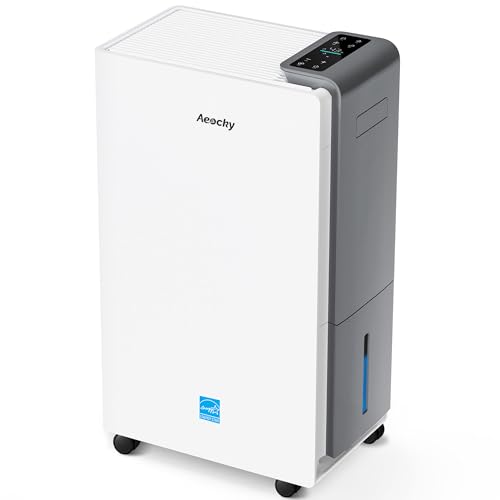
【ENERGY STAR 25 ≠ ENERGY STAR Most Efficient 2025】Don't fall for competitors' word games. With only 2.6% of ENERGY STAR models earning "Most Efficient 2025" title, these options are exceptionally rare on the market. RHEA-001 is one of the few to truly hold this top-tier certification. Many brands use misleading phrases like "Energy Star Efficient 25" or "Energy Star 25" to imply a standard they haven't met. Choosing them is a risk.With AEOCKY, you get verified performance and the peace of mind of authentic, top-tier efficiency.
Dehumidifier vs. AC, Humidifier, and Air Purifier
| Appliance | What It Changes | Use It When |
|---|---|---|
| Dehumidifier | Lowers humidity and usually adds a little heat. | The room is damp or muggy but may not need more cooling. |
| Air conditioner | Lowers temperature and removes some moisture. | The room is too warm and humid. |
| Humidifier | Adds water vapor. | RH is too low, often during heating season. |
| Air purifier | Filters certain airborne particles or gases, depending on its media. | The concern is particles, smoke, pollen, or other supported pollutants rather than humidity. |
Recommended Products

Upgrade High Efficient Dehumidification: Dehumidifier utilize semi conductor condensation technology, ensuring quiet operation while effectively extracting moisture from the air. This advanced feature helps keep humidity levels below 45%

🍃Advanced Small Dehumidifier for Home: Designed for lasting home use, our bathroom dehumidifier works gently and steadily to maintain a balanced humidity level. The large 44 OZ (1.3L) water tank minimizes emptying frequency. Suitable for dorm room, camper, apartment, room, office and living room. No more dampness-just fresh, comfortable air everywhere

UPGRADED HIGH EFFICIENT DEHUMIDIFICATION:Say goodbye to sticky air. This dehumidifier uses semiconductor condensation technology to quietly and efficiently pull moisture from your bedroom, bathroom, or basement. It extracts up to 23 oz (650 ml) of moisture per day under test conditions of 86°F and 60% RH, which helps you enjoy a fresher, more comfortable living space
Frequently Asked Questions
Can a dehumidifier make the air too dry?
Yes. An oversized unit, a very low setpoint, or unnecessary continuous operation can push RH below a comfortable level. Dry skin, irritated eyes, static electricity, shrinking wood, and readings below about 30% are signs to raise the setting or turn the unit off. Use a hygrometer rather than relying only on how the room feels.
Do air purifiers dry indoor air?
A standard mechanical air purifier does not remove a meaningful amount of water vapor. Its job is to move air through filters. The fan may make skin feel drier by increasing evaporation, but the room’s measured humidity should remain nearly unchanged unless the product includes a separate dehumidifying function.
Should you use a dehumidifier if you have COPD?
A dehumidifier may be useful when your home is excessively humid, but it is not a COPD treatment. The American Lung Association lists high humidity as a possible COPD trigger, while very dry air may also be uncomfortable for some people. Monitor RH and ask your healthcare provider what indoor conditions are appropriate for you.
What are the downsides of using a dehumidifier?
Possible downsides include electricity use, fan and compressor noise, added room heat, filter cleaning, bucket emptying, drain maintenance, and the risk of over-drying the room. Incorrect drainage can also create leaks or trip hazards. A correctly sized unit with a humidistat limits unnecessary runtime.
What humidity setting should you use?
Start near 50% RH and monitor the room with a separate hygrometer. Reduce the setting toward 45% if dampness or condensation continues. During cold weather, 30% to 40% may be needed to prevent window condensation. Avoid running below 30% unless a qualified professional has recommended it for a specific purpose.
How long does a dehumidifier take to dry a room?
A moderately damp room may show a lower RH within several hours, but drying wet materials can take days. The time depends on room size, starting humidity, temperature, airflow, unit capacity, air leakage, and whether moisture is still entering. A severe leak or flood requires water extraction, structural drying, and source repair rather than ordinary dehumidification alone.
Can a dehumidifier dry wet walls or carpet?
It can help after the water source has been stopped because drier air allows moisture in materials to evaporate more readily. However, a dehumidifier does not remove standing water or guarantee that soaked drywall, insulation, carpet padding, wood, or wall cavities are fully dry. Significant water damage may require water extraction, removal of damaged materials, moisture measurements, fans, and professional structural drying.
Should a dehumidifier run all day?
Not necessarily. During the first stage of drying a very humid room, a correctly sized unit may run for long periods. Once the selected RH is reached, a model with a humidistat should cycle on and off as needed. If it runs continuously while RH remains high, check sizing, air leakage, active moisture sources, room temperature, airflow, and sensor accuracy.
Conclusion
A dehumidifier does dry the air by removing water vapor and lowering relative humidity. Used correctly, it can reduce clamminess, condensation, musty odors, and conditions that support moisture damage. It does not normally cool the room, purify the air, pump out standing water, repair leaks, remove existing mold, or treat respiratory disease.
Measure the room with a hygrometer, begin near 45% to 50% RH, correct moisture sources, and choose enough capacity for the space. Judge success by a sustained drop in RH rather than bucket volume alone. If humidity quickly returns, materials stay wet, or the machine runs continuously without reaching its target, investigate the moisture source instead of simply lowering the humidistat.
Sources
- U.S. Environmental Protection Agency: Improving Your Indoor Environment — indoor humidity targets and moisture control.
- Centers for Disease Control and Prevention: Mold — mold prevention, cleanup, health effects, water-damage drying, and moisture-source repair.
- ENERGY STAR: Dehumidifiers — sizing, placement, drainage, operating temperature, humidistats, whole-home guidance, and energy-saving information.
- ENERGY STAR: Dehumidifier Efficiency Criteria — current Integrated Energy Factor requirements and product definitions.
- American Lung Association: Prevent a COPD Flare-Up — high humidity and other potential COPD triggers.
- National Heart, Lung, and Blood Institute: Living With COPD — medical management, indoor irritants, and healthcare guidance.

[…] damp drywall, wet carpet, or visible mold, fix the moisture source first. A dehumidifier can help dry the air, but it cannot safely remove mold growing on building […]
[…] keep indoor humidity in a healthy range, place the unit safely, and watch your dog for signs that the air is too dry, too damp, too noisy, or too […]
[…] still smells musty, feels damp, or shows condensation, lower the setting by 5%. If the air feels too dry, your skin feels irritated, or wood furniture begins to shrink or crack, raise it […]