Last updated: August 1, 2026.
Affiliate disclosure: As an Amazon Associate I earn from qualifying purchases. This article contains Amazon affiliate links, which may generate a commission at no extra cost to you.
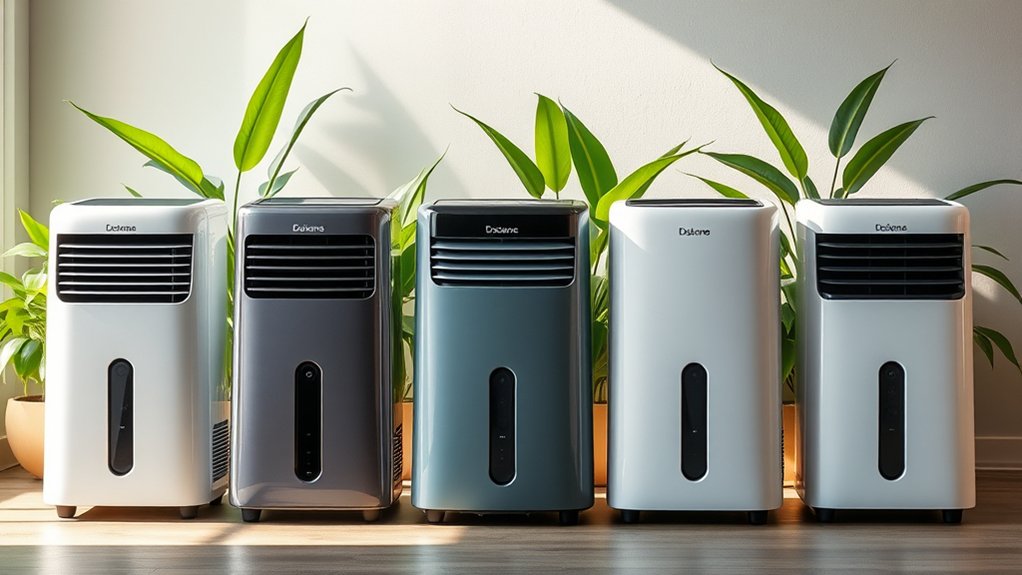
The best dehumidifier for RV living should fit a tight floor plan, operate quietly, use manageable power, and remove enough moisture to help control everyday condensation. Compact thermoelectric or Peltier models are most useful for localized moisture around sleeping areas, bathrooms, closets, cabinets, and windows while an RV is parked.
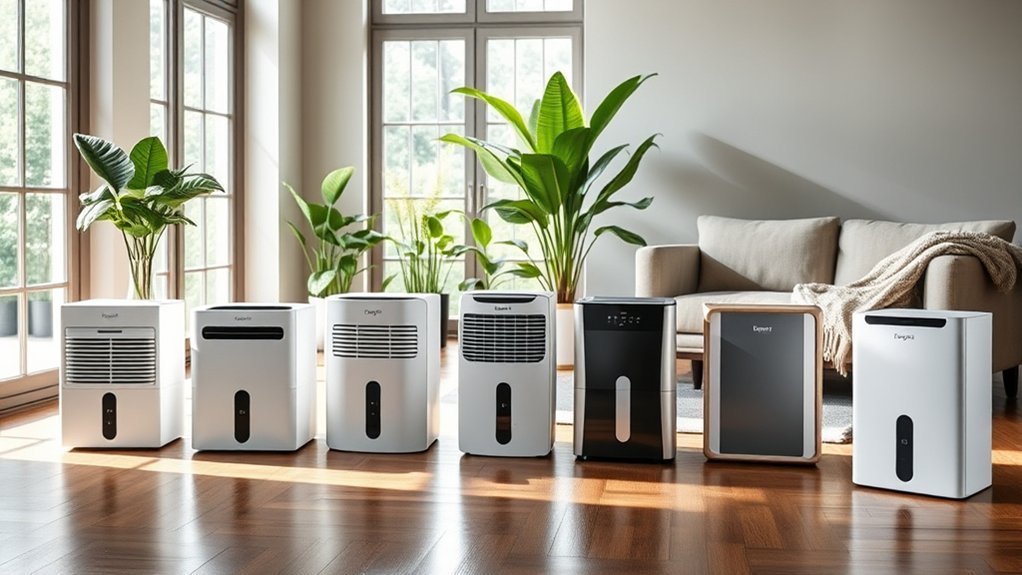
The five options below were selected for their listed extraction rate, tank capacity, automatic shut-off, noise controls, portability, power requirements, and suitability for small spaces. These are supplemental moisture-control appliances rather than substitutes for repairing roof, plumbing, window, wall, or floor leaks.
Quick verdict
Best overall: Choose the BREEZOME 60 OZ Dehumidifier for the highest manufacturer-stated daily moisture removal in this group, a larger tank, sleep mode, and timer control.
Best quiet compact pick: Choose the CLEVAST Mini Quiet Dehumidifier when low nighttime noise, documented power consumption, and compact dimensions matter most.
Best large-tank option: Choose the NineSky 95 OZ Dehumidifier when fewer tank-emptying trips are more important than having a clearly documented daily extraction rate.
How these products were compared
This is an editorial comparison based on available product listings and documentation, not hands-on testing. The main comparison points were listed moisture removal per day, test conditions, tank size, noise mode, power draw, dimensions, automatic shut-off, controls, and RV practicality.
Important: These are compact electric dehumidifiers, not full-size compressor models. Their stated moisture-removal rates are generally measured under warm, humid laboratory or seller-specified conditions. Actual RV performance will vary with temperature, ventilation, outdoor humidity, occupancy, showering, cooking, wet clothing, air leaks, water intrusion, and how often doors or windows are opened.
Quick Comparison
Use the table as a starting point rather than choosing by tank size or advertised floor area alone. Extraction-rate figures below are manufacturer or seller claims unless otherwise stated.
| Product | Best For | Tank | Listed Daily Removal | Noise | Amazon |
|---|---|---|---|---|---|
| 42 OZ Small Portable Dehumidifier | Balanced compact-RV use | 42 oz / 1,200 ml | Seller states up to 16 oz / 450 ml at 86°F and 80% RH | Seller states about 28 dB; verify current listing | View on Amazon |
| BREEZOME 60 OZ Dehumidifier | Best overall and higher listed extraction | 60 oz / 1.8 L | Up to 700 ml at 86°F and 80% RH | 35 dB sleep mode | View on Amazon |
| NineSky 95 OZ Dehumidifier | Large collection tank | 95 oz | Not clearly stated in accessible product information | Night mode; no verified dB figure | View on Amazon |
| 35 OZ Screen-Display Dehumidifier | Display and short timer presets | About 35 oz / 1 L | Seller states up to 350 ml; verify test conditions | No independently verified dB figure | View on Amazon |
| CLEVAST CL-DH04 Mini Dehumidifier | Quiet nighttime use and tight spaces | 30 oz / 887 ml | Up to 10 oz / 295 ml at 86°F and 85% RH | 24 dB quiet mode | View on Amazon |
Before you buy
- Measure the shelf, counter, bathroom, or sleeping-area location and allow the clearance required by the manual.
- Compare daily moisture removal and test conditions, not just tank size or advertised square footage.
- Confirm the exact voltage, adapter, wattage, and estimated daily energy use.
- Make sure the tank can be removed without hitting a wall, bed, cabinet, or dinette.
- Use a separate hygrometer to measure actual relative humidity.
- Check the current seller, model number, warranty, return terms, and included accessories.
Small Portable Dehumidifier with Night Light
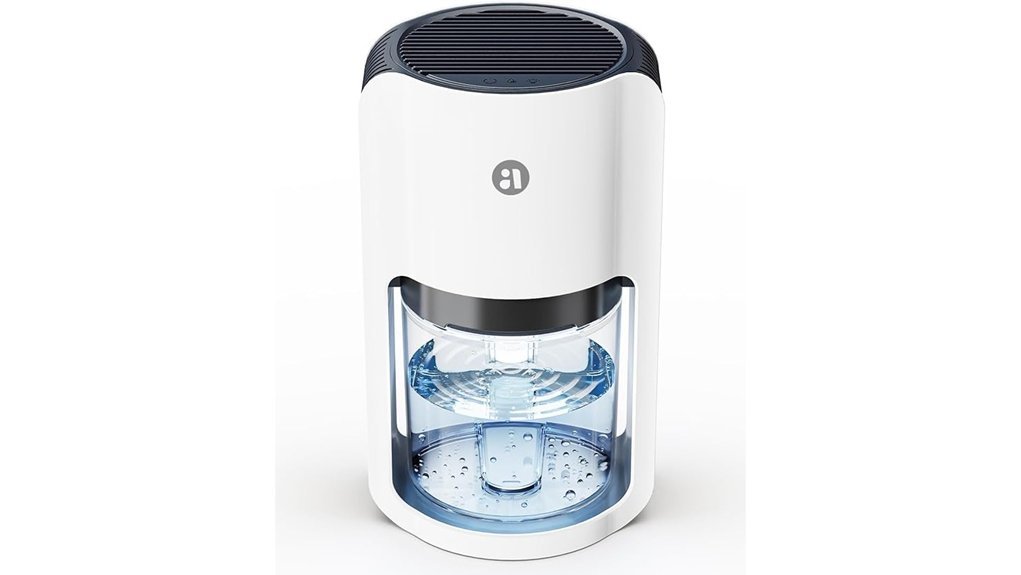
Best balanced pick for compact RVs: This portable model combines a 42 oz transparent tank with a relatively small, easy-to-move design. The seller listing states that it can collect up to 16 oz (450 ml) per day at 86°F and 80% relative humidity. Treat that as a warm, high-humidity test result rather than the amount it will collect every day in an RV.
It is best suited to localized condensation in a small travel trailer, sleeping area, RV bathroom, wardrobe, or closet. A built-in handle can make repositioning easier after the RV is parked, while automatic shut-off is intended to stop collection when the tank is full.
The seller also describes operation at about 28 dB and includes a seven-color night light. Because detailed documentation for this generic model is limited, confirm the current noise specification, extraction conditions, power adapter, dimensions, and warranty on the Amazon page before ordering.
Why you’ll like it: It offers a useful balance between the smallest 30 oz units and larger dual-semiconductor models.
Who should buy this: RV owners who want one portable unit for a small moisture-prone zone and prefer a larger tank than the most compact models provide.
Who should avoid this: Anyone dealing with an active leak, soaked materials, major wall or floor dampness, or high humidity throughout the entire RV.
Pros:
- 42 oz transparent tank is easy to monitor.
- Automatic shut-off helps reduce full-tank overflow risk.
- Seller-listed quiet operation may suit sleeping areas.
- Built-in handle supports easier repositioning while parked.
Cons:
- The 450 ml daily rate is a seller claim measured under warm, humid conditions.
- Thermoelectric collection normally decreases as temperatures fall.
- Brand, warranty, and detailed documentation should be checked carefully.
BREEZOME 60 OZ Portable Quiet Dehumidifier with Timer
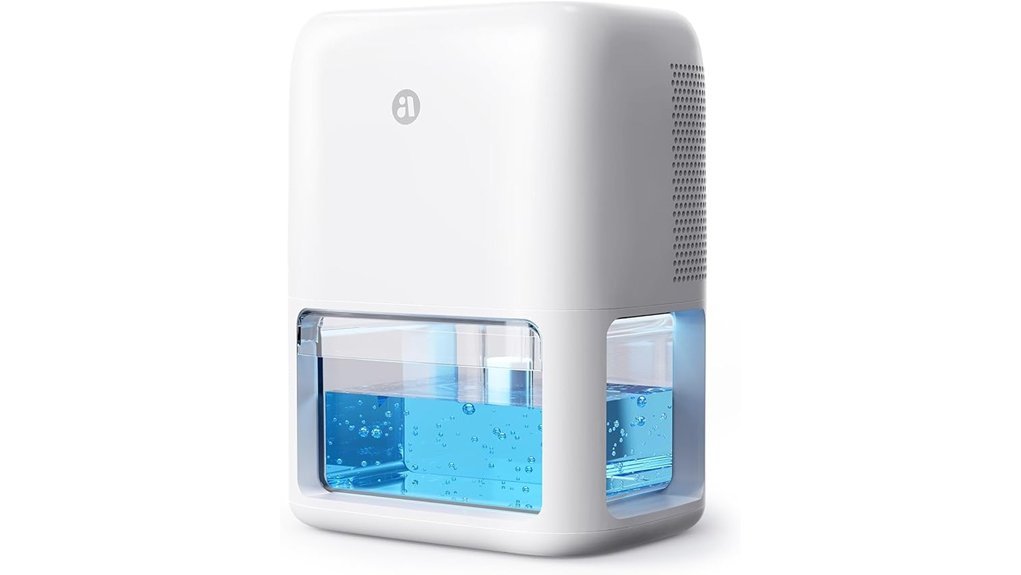
Best overall for higher listed extraction: The BREEZOME MCS008 uses dual semiconductor condensers and is manufacturer-listed to remove up to 700 ml of moisture per day at 86°F and 80% relative humidity. That is the highest stated extraction figure in this roundup, although actual collection in a cooler or less humid RV will normally be lower.
The 1.8 L tank can reduce emptying frequency compared with smaller models. Its 35 dB sleep mode is designed for use near a bed, while 12-, 24-, 36-, and 48-hour timer settings let you limit runtime.
The listed power draw is 48W, or approximately 1.15 kWh after 24 hours of continuous operation. That may be manageable on shore power but can represent a meaningful load for a battery bank, inverter, or small solar setup. Compare its demand with refrigeration, lighting, fans, chargers, and other appliances before relying on it off-grid.
Why you’ll like it: It combines the strongest listed extraction rate in this group with a larger tank, sleep mode, automatic shut-off, automatic defrost, and timer control.
Who should buy this: RV owners who experience recurring window condensation, regularly use an onboard shower, or need more collection than a basic single-semiconductor mini unit provides.
Who should avoid this: Off-grid users with a limited battery bank or anyone who needs rapid drying after flooding, plumbing failure, or major water intrusion.
Pros:
- Manufacturer states up to 700 ml daily removal at 86°F and 80% RH.
- 60 oz tank supports longer operation between emptying.
- 35 dB sleep mode is designed for nighttime use.
- Multiple timer settings can help manage runtime and energy use.
- Automatic defrost addresses frost buildup on the semiconductor system.
Cons:
- Uses more power than the smallest models in this roundup.
- Its maximum collection claim depends on warm, humid test conditions.
- It remains a compact Peltier unit rather than a compressor dehumidifier.
NineSky Dehumidifier with 95 OZ Water Tank
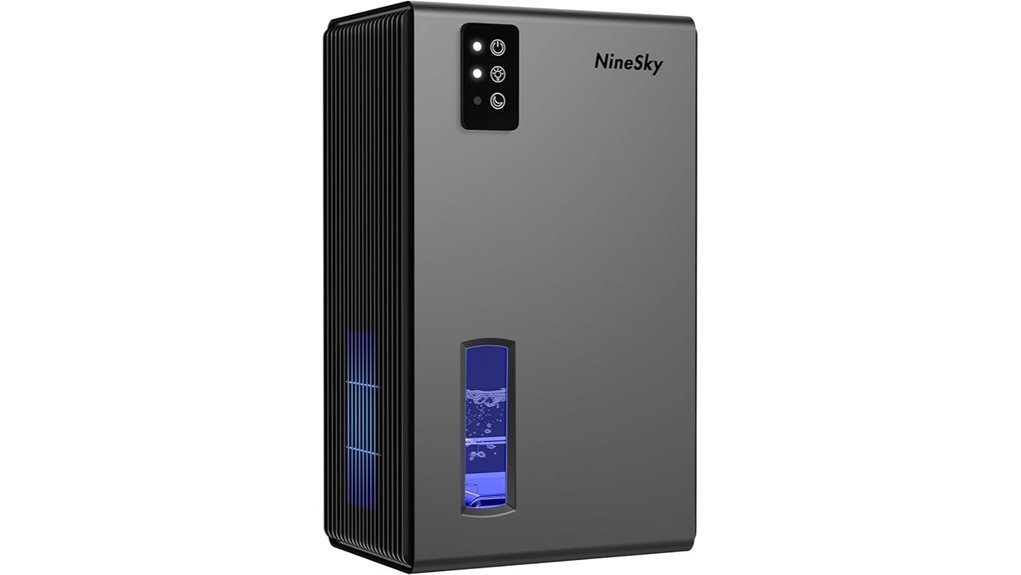
Best large-tank option: The NineSky CT2 stands out because of its 95 oz collection tank, automatic shut-off, two operating modes, and seven-color ambient light. In an RV, the tank capacity is its clearest advantage because it may reduce how often collected water must be emptied during a parked stay.
The product is marketed for spaces up to 1,000 square feet, but that figure should not be treated as equivalent to the standardized capacity of a compressor dehumidifier. A compact thermoelectric unit may help in a localized RV area while still being unable to control severe whole-vehicle humidity.
Accessible information for this exact ASIN did not clearly provide a daily extraction figure. Check the current Amazon page for a stated milliliter-per-day or ounce-per-day capacity and its test conditions before comparing its drying performance with the BREEZOME or CLEVAST models.
Why you’ll like it: The oversized tank and automatic shut-off can reduce day-to-day maintenance during longer parked stays.
Who should buy this: RV owners who prioritize tank capacity and fewer emptying trips over having the smallest possible appliance.
Who should avoid this: Buyers who need a clearly documented extraction rate, exact noise measurement, or direct power-consumption comparison.
Pros:
- 95 oz tank is the largest in this retained lineup.
- Automatic shut-off is designed to stop operation when the tank is full or incorrectly positioned.
- Two operating modes support day and nighttime use.
- Ambient lighting can be adjusted to suit the interior.
Cons:
- A daily moisture-removal rate was not clearly documented in accessible product information.
- The 1,000-square-foot claim may create unrealistic expectations.
- The larger tank and body require more floor, shelf, or counter space.
35 OZ Dehumidifier with Screen Display and Auto Shut-Off
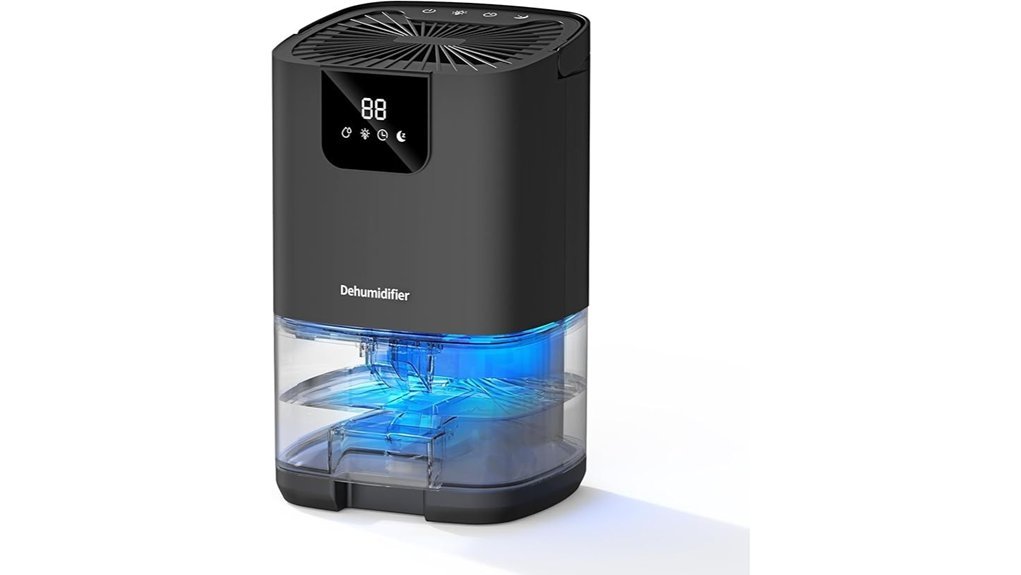
Best for simple visible controls: This compact dehumidifier is seller-listed with a screen display, an approximately 35 oz (1 L) tank, automatic shut-off, a seven-color light, and 4-, 8-, or 12-hour timer settings. The seller also states moisture collection of up to 350 ml per day.
That level of collection may help with light, localized moisture in a small RV bedroom, bathroom, wardrobe, or enclosed storage area. It should not be treated as sufficient evidence that the unit can control high humidity throughout a large motorhome or solve moisture caused by a leak.
The display can make operating status easier to check, while the short timer presets may help avoid unnecessary runtime. The indexed product information does not strongly document the brand, exact model, noise measurement, warranty, or extraction test conditions, so review the current Amazon listing carefully before purchasing.
Why you’ll like it: The display and shorter timer presets make scheduled operation easier to understand than a basic one-button model.
Who should buy this: RV users who value visible controls and short scheduled runtimes in one small area.
Who should avoid this: Buyers who need high-capacity drying, extensive manufacturer documentation, or a clearly stated brand warranty.
Pros:
- Screen display improves at-a-glance usability.
- 4-, 8-, and 12-hour timer options can reduce unnecessary runtime.
- Automatic shut-off helps reduce full-tank spill risk.
- Compact format suits RV shelves, counters, and small rooms.
Cons:
- The seller-stated 350 ml daily rate is modest for very damp conditions.
- Test conditions and an exact noise figure were not independently confirmed.
- Brand, warranty, seller, and accessory details require careful checking.
CLEVAST CL-DH04 Mini Quiet Dehumidifier
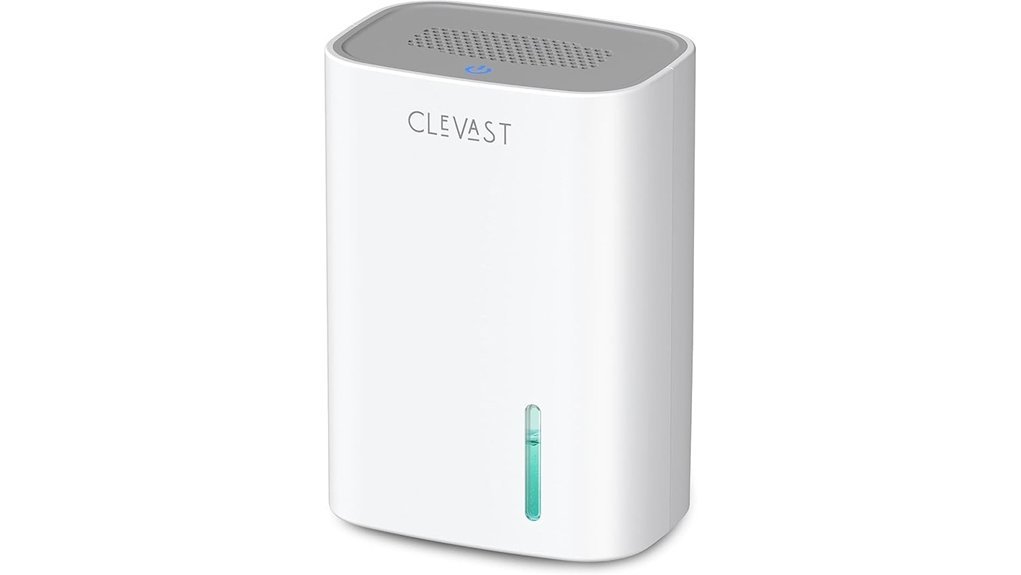
Best quiet compact pick: The CLEVAST CL-DH04 measures approximately 4.57 × 6.5 × 9.25 inches and uses a 30 oz (887 ml) tank. Its narrow footprint makes it one of the easiest models here to position in a tight RV bedroom, bathroom, closet, cabinet area, or small camper.
The manufacturer documentation states collection of up to 10 oz (295 ml) per day at 86°F and 85% relative humidity. Quiet mode is listed at 24 dB, while rated power consumption is 27W, or approximately 0.55 kWh per day under continuous use.
The recommended operating range is 68°F to 86°F. Expect reduced water collection in a cold trailer or during winter storage. The unit also requires a standard power connection and is not cordless.
Why you’ll like it: Its dimensions, noise level, power draw, and operating range are more clearly documented than those of many generic mini dehumidifiers.
Who should buy this: Light sleepers, small-trailer owners, and users targeting one enclosed moisture-prone area.
Who should avoid this: Anyone expecting rapid whole-RV drying or dependable high extraction in a cold, unheated camper.
Pros:
- Compact 4.57 × 6.5 × 9.25-inch body fits tight spaces.
- 24 dB quiet mode is the lowest documented noise figure in this roundup.
- 30 oz tank and built-in handle support easy everyday use.
- Rated at 27W and approximately 0.55 kWh per day.
- Automatic shut-off and overheat protection are documented features.
Cons:
- Up to 295 ml daily collection is intended for light localized moisture.
- Best performance requires warm, humid conditions.
- It must remain plugged in and should be secured before travel.
Factors to Consider When Choosing a Dehumidifier for RV Living
An RV dehumidifier must operate within tighter limits than a typical home appliance. Space, tank access, power supply, nighttime noise, temperature, ventilation, and safe storage while traveling all matter.
Measure Relative Humidity
Use a separate hygrometer to determine whether the RV is actually too humid. The U.S. Environmental Protection Agency recommends keeping indoor relative humidity below 60% and ideally between 30% and 50%. Avoid trying to make the RV excessively dry, particularly when storing wood furniture, instruments, leather, or other humidity-sensitive materials. See the EPA moisture-control guidance for additional context.
Match Removal Rate to the Moisture Problem
Compare listed daily moisture removal before relying on advertised floor area. For compact Peltier units, ounces or milliliters collected per day and the stated test conditions are usually more useful than a broad square-foot claim.
A unit in the 295-to-450-ml-per-day range may help with light condensation in one enclosed area under favorable conditions. The BREEZOME model has the highest listed rate in this roundup at up to 700 ml per day, but that maximum is measured at 86°F and 80% relative humidity and should not be treated as a guaranteed everyday result.
If humidity stays high, surfaces remain wet, insulation or flooring feels damp, or staining continues to spread, inspect the RV for a roof, window, plumbing, appliance, wall, or floor leak. Improve ventilation and consider a higher-capacity compressor dehumidifier when shore power, space, and operating temperature allow.
Tank Size and Emptying Access
A larger tank does not make a dehumidifier remove water faster. It only allows more water to accumulate before the tank must be emptied. Make sure the tank can slide out without hitting a wall, bed, cabinet, toilet, or dinette.
A transparent tank and full-tank indicator make routine checks easier. Empty the tank before driving, even when the appliance has automatic shut-off.
Power Draw and RV Electrical System
Check the exact wattage, voltage, adapter, and estimated daily energy use against your shore-power connection, inverter, battery bank, generator, solar system, and other appliances. A low-watt device can still use meaningful energy when it operates continuously.
Confirm that the exact model is compatible with your RV electrical system. Do not exceed circuit or inverter ratings, daisy-chain power strips, or use damaged cords and adapters.
Noise Near Sleeping Areas
Choose a documented quiet or sleep mode when the appliance will be only a few feet from a bed. Compare decibel claims cautiously because test methods may differ. Also check whether indicator or ambient lights can be turned off at night.
Temperature Range
Thermoelectric dehumidifiers perform best in warm conditions. Collection can decrease sharply in a cold camper, particularly during winter storage. Review the stated operating range rather than assuming that summer and winter performance will be the same.
Automatic Shut-Off
Automatic shut-off is an important feature for a tank-based RV dehumidifier. It should stop the appliance when the tank is full or incorrectly seated. This reduces overflow risk but does not replace regular inspection, especially when the RV is unattended.
Placement and Airflow
Place the unit on a stable, level, dry surface with the clearance required by its manual. Do not position it where shower spray, sink splashes, bedding, curtains, clothing, or furniture can obstruct the intake or outlet.
Close exterior doors and windows during operation when outdoor air is humid, but continue using appropriate bathroom and cooking ventilation to remove moisture at its source.
Warranty, Seller, and Return Policy
Amazon listings for compact appliances can change. Before purchasing, confirm the current seller, brand, model number, warranty, return terms, tank capacity, extraction test conditions, voltage, wattage, adapter, dimensions, and included manual. Save the order confirmation and product-page details in case the listing changes later.
RV safety note
Operate a portable tank-style dehumidifier only while the RV is parked, unless the manufacturer specifically approves another use. Keep the appliance stable and away from direct water spray, flammable vapors, blocked vents, heat sources, damaged outlets, and overloaded circuits. Empty the tank, unplug the unit, and secure it before driving.
Frequently Asked Questions
What Humidity Level Should I Maintain in an RV?
A practical target is generally between 30% and 50% relative humidity, while keeping it below 60% where possible. Use a hygrometer and watch for window condensation, damp fabrics, musty odors, wet walls, or moisture around plumbing and roof openings. Adjust ventilation and dehumidifier runtime gradually rather than attempting to make the RV as dry as possible.
How Do I Maintain My RV Dehumidifier Effectively?
Unplug the unit before cleaning. Empty and rinse the tank regularly, wipe the intake and exhaust grilles, and clean any washable filter according to the manual. Inspect for slime, odor, dust, blocked airflow, a poorly seated tank, or damage to the cord and adapter. Allow cleaned parts to dry fully before reassembly.
Can a Dehumidifier Help With Mold Prevention in an RV?
It can help reduce excess humidity and condensation, which are conditions that support mold growth. It cannot guarantee mold prevention, repair a leak, dry deeply soaked insulation, or remove existing mold. Correct the moisture source and clean or replace affected materials using appropriate safety procedures.
What Size Dehumidifier Is Best for My RV?
Do not choose by tank size or advertised square footage alone. Compare daily extraction rate, test conditions, dimensions, wattage, noise, operating temperature, tank access, and where the moisture appears.
A compact 295-to-450-ml-per-day unit may help in one small area under warm conditions. A model listed near 700 ml per day may be more appropriate for recurring everyday condensation, provided its physical size and electrical demand suit the RV.
Are Compact RV Dehumidifiers Energy-Efficient?
Peltier models usually draw less instantaneous power than full-size compressor dehumidifiers, but they also remove substantially less water. Compare wattage and estimated kilowatt-hours per day rather than assuming that a product marketed as “mini” has negligible energy demand.
Can I Use an RV Dehumidifier Off-Grid?
Possibly, but calculate the daily energy demand first. For example, a device drawing 48W continuously uses about 1.15 kWh in 24 hours before inverter losses. Compare the load with your usable battery capacity, solar production, refrigerator, fans, lights, pumps, chargers, and other equipment.
Do RV Dehumidifiers Work in Cold Weather?
Compact thermoelectric units generally collect less water as temperatures fall. Review the exact operating-temperature range. During cold-weather storage, passive moisture absorbers can help inside small cabinets, but they are not equivalent to active electric dehumidification and will not correct water intrusion.
How Often Should I Empty the Water Tank?
Check the tank at least daily when first using the unit. The required schedule depends on temperature, humidity, tank size, occupancy, ventilation, and extraction rate. A larger tank may reduce emptying frequency, but it does not increase the amount of water removed per hour.
Can I Run a Dehumidifier While Driving?
Do not operate a portable tank-style dehumidifier while the RV is moving unless the manufacturer explicitly approves mobile operation and provides secure installation instructions. Water can spill, the tank can shift, and the appliance can fall or obstruct a walkway. Empty, unplug, and secure it before travel.
Conclusion
For most RV owners, the right dehumidifier is the model that addresses the actual moisture load without consuming unnecessary floor space or electrical power. Based on listed specifications rather than hands-on testing, the BREEZOME 60 OZ Dehumidifier is the strongest overall option because it combines the highest stated extraction rate in this group with a 1.8 L tank, sleep mode, timer settings, and automatic shut-off.
The CLEVAST CL-DH04 is the better choice for light sleepers, compact campers, and buyers who want clearly documented dimensions, noise, wattage, and operating temperature. The NineSky 95 OZ model is most appealing when tank capacity and fewer emptying trips matter more than direct extraction-rate comparisons.
Choose the 42 oz portable model for a balanced small-RV setup or the 35 oz screen-display model when visible controls and short timer presets are priorities. Because detailed documentation for these two generic models is more limited, verify their current specifications and seller terms carefully.
Final recommendation
Start with a hygrometer and identify where the moisture is coming from. Use a compact dehumidifier for everyday condensation while the RV is parked, but treat persistent wet surfaces, staining, soft materials, or musty odors as signs that the RV may need leak inspection, ventilation improvements, or professional moisture remediation.