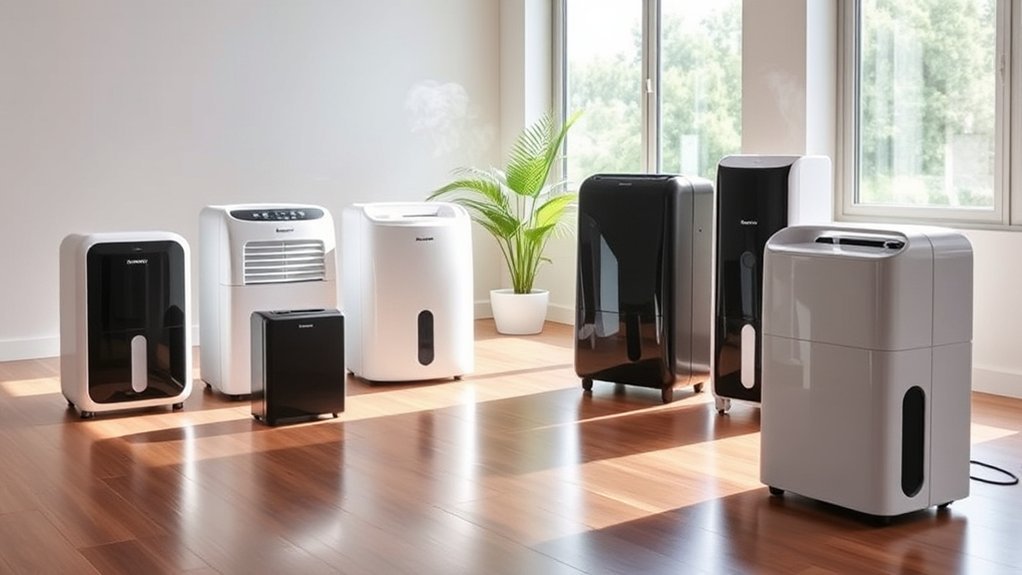
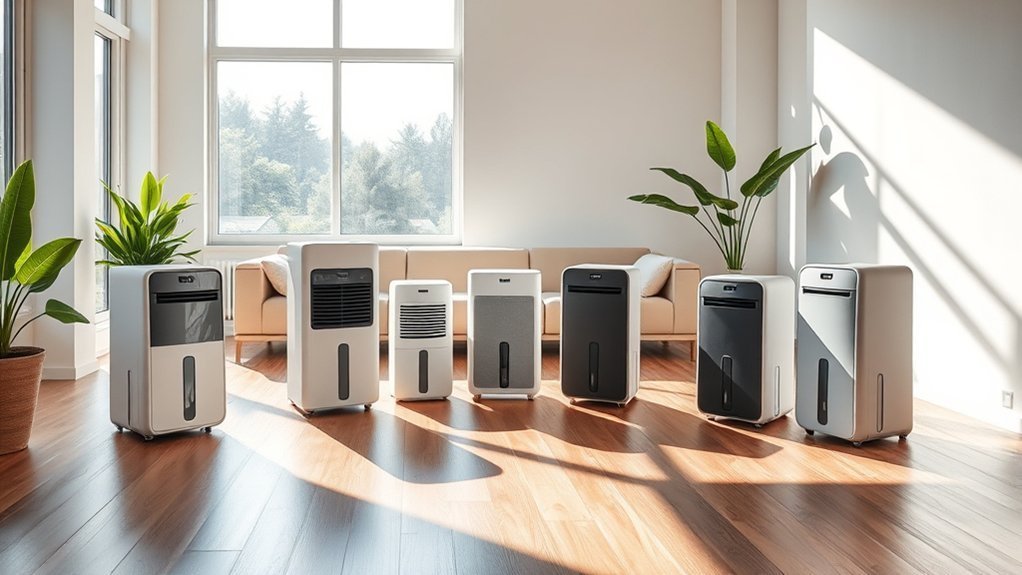
If you’re looking for the best compressor dehumidifiers in Australia for 2026, the right choice depends on where you need moisture control most. Large homes, basements, crawl spaces, garages, warehouses, grow tents, and damp storage areas all need different capacity levels, drainage options, and noise expectations. This guide compares high-capacity home models, commercial pump dehumidifiers, crawl space units, and smart compact options so you can choose a compressor dehumidifier that fits your space, humidity problem, and daily use.
Quick Verdict
For very large rooms, basements, and garages, the Waykar 150 Pint Dehumidifier with Pump is the strongest home-focused pick in this list. For crawl spaces and damp underfloor areas, the ALORAIR Crawl Space Dehumidifier 120 PPD is easier to position in confined spaces. For restoration work, flood drying, or commercial moisture control, the ALORAIR and Mounto commercial models offer stronger moisture removal and built-in pump drainage.
Pro tip: Do not choose only by pint rating. Also check coverage area, drainage height, noise level, filter access, warranty, and whether the unit is designed for living spaces, crawl spaces, grow tents, or commercial drying.
| Product | Best For | Main Strength | Amazon |
|---|---|---|---|
| Waykar 150 Pint Dehumidifier with Pump | Large homes, garages, basements | High capacity and pump drainage | Check Price |
| ALORAIR Crawl Space Dehumidifier 120 PPD | Crawl spaces and basements | Rugged housing and continuous drainage | Check Price |
| ALORAIR Commercial Dehumidifier with Pump 180 PPD | Flood repair and commercial drying | Powerful airflow and pump drainage | Check Price |
| ALORAIR 170 PPD Commercial Dehumidifier with Pump | Water damage and carpet drying | Portable commercial design | Check Price |
| MARS HYDRO 18L Compressor Dehumidifier | Grow tents and smaller rooms | Compact humidity control | Check Price |
| HBN 125 Pints Crawl Space Dehumidifier with Pump | Large crawl spaces and basements | Dual drainage options | Check Price |
| Mounto 150 Pints Commercial Dehumidifier with Pump | Warehouses, basements, greenhouses | Durable commercial build | Check Price |
| ALORAIR 180 PPD Commercial Dehumidifier with Pump | Commercial buildings and tight basements | Compact high-output design | Check Price |
| Gasbye 4500 Sq.Ft. Energy Star Dehumidifier | Large living spaces | Energy-conscious operation | Check Price |
| Midea Cube 20 Pint Dehumidifier with Smart Control | Medium rooms and smart homes | App and voice control | Check Price |
Affiliate disclosure: This article contains Amazon affiliate links. If you buy through these links, we may earn a commission at no extra cost to you. Product details can change, so always confirm capacity, voltage, dimensions, drainage setup, and warranty information on the Amazon listing before buying.
Waykar 150 Pint Dehumidifier with Pump for Home
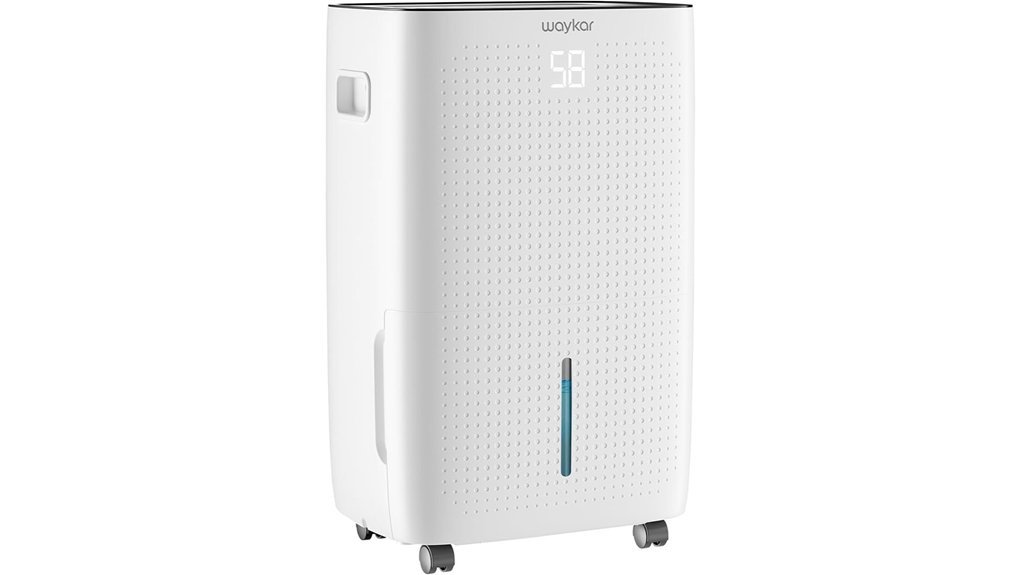
Best Overall for Large Home Areas: If you’re seeking an efficient solution for managing humidity in large spaces, the Waykar 150 Pint Dehumidifier is a strong choice for basements, garages, storage areas, and other high-moisture rooms. With a stated capacity to remove up to 150 pints of moisture daily, it is designed for areas up to 7,000 square feet, making it better suited to bigger spaces than small bedroom dehumidifiers. The built-in pump allows for flexible drainage, while the 90° auto-swing airflow helps distribute dry air more evenly.
The main appeal is convenience. You can customize humidity levels with the smart control feature, use continuous drainage when a floor drain or sink is available, and rely on filter reminders to make maintenance easier. It is not the best choice if you need a tiny portable unit, but it makes sense if damp air is a recurring issue in a large room or lower level of the home.
Best For: Homeowners and businesses needing an effective solution for high humidity levels in large areas.
Why You’ll Like It: It combines high moisture removal, pump drainage, and user-friendly controls, which helps reduce the daily hassle of emptying a tank in a damp space.
Who Should Avoid This: Skip it if you only need light humidity control in a small bedroom, apartment corner, or wardrobe area.
Pros:
- High capacity: Removes up to 150 pints of moisture daily, ideal for extensive spaces.
- Flexible drainage: Built-in pump allows for continuous drainage over longer distances.
- Energy-efficient and quiet design: Built to reduce energy waste while keeping operation more comfortable for home use.
Cons:
- Size and weight: May be cumbersome for smaller spaces or frequent relocation.
- Initial cost: Higher upfront investment compared to smaller dehumidifiers.
- Maintenance required: Regular filter cleaning and tank emptying can be necessary for optimal performance.
ALORAIR Crawl Space Dehumidifier (120 PPD)
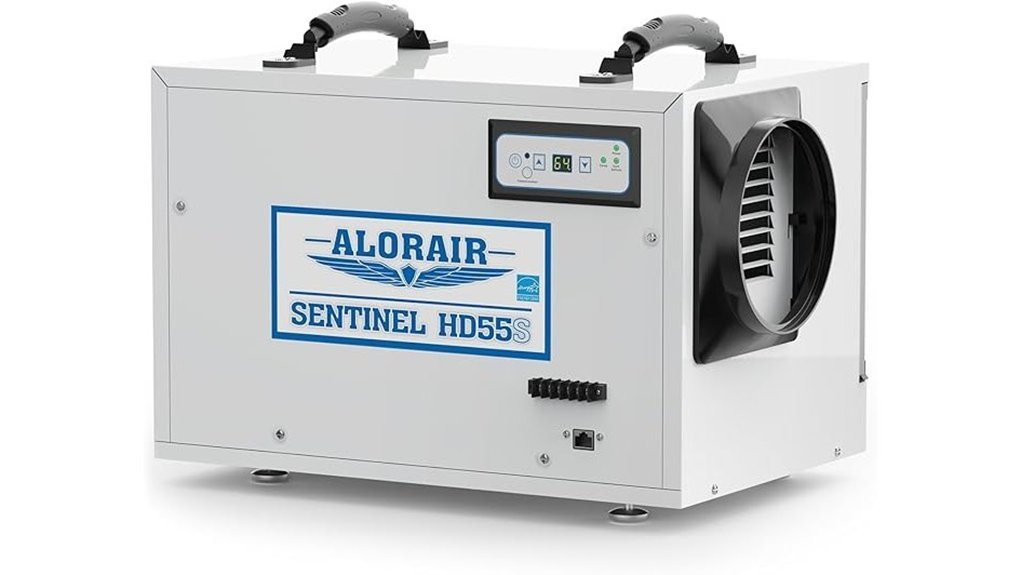
Best for Crawl Spaces: The ALORAIR Crawl Space Dehumidifier (120 PPD) is built for moisture problems in confined areas where ordinary room units can be awkward to place. With a capacity of 120 pints per day and coverage up to 1,300 sq. ft., it is designed for crawl spaces, basements, and underfloor zones where damp air can lead to musty smells and long-term moisture concerns.
Its rugged metal housing makes it more suitable for demanding conditions than many lightweight plastic home models. The auto defrost feature helps prevent ice buildup, while the continuous drainage system removes the need to keep manually emptying a tank. The MERV-1 filter helps keep internal components cleaner by reducing dust entering the unit.
Best For: Homeowners and light commercial users looking for an effective solution to control moisture in crawl spaces and basements.
Why You’ll Like It: It is more purpose-built for crawl space placement than a standard upright room dehumidifier.
Who Should Avoid This: It may not be ideal if you want a decorative dehumidifier for a visible living room or bedroom.
Pros:
- High moisture removal capacity of up to 120 pints per day, suitable for larger damp areas.
- Durable metal housing helps withstand tougher conditions.
- Auto defrost feature prevents ice buildup, maintaining consistent performance.
Cons:
- Weight of 41.7 pounds may make installation a bit challenging for some users.
- Coverage limited to 1,300 sq. ft., which may not suffice for larger open spaces.
- MERV-1 filter may require frequent cleaning or replacement to maintain optimal performance.
ALORAIR Commercial Dehumidifier with Pump (180 PPD)
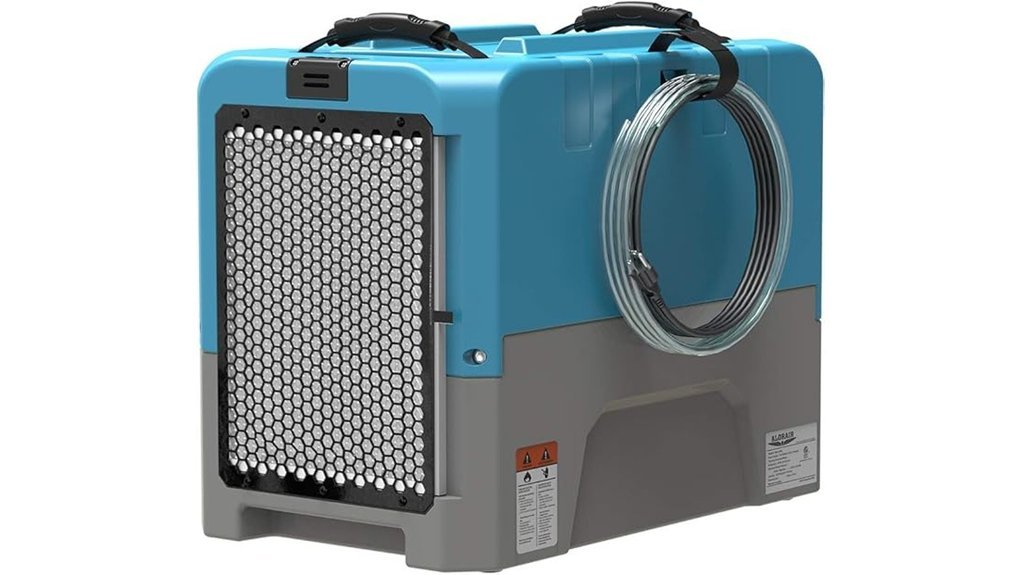
Best for Flood Repair and Professional Drying: For professionals tackling flood repairs or managing damp crawlspaces, the ALORAIR Commercial Dehumidifier with Pump (180 PPD) is a powerful option. With a stated coverage of up to 2,300 square feet, it is built for larger areas where a standard home dehumidifier may take too long to reduce moisture.
Weighing 64.3 pounds, it is not a small plug-in unit, but its compact commercial design and carrying handles help with positioning. The high airflow rating of 210 CFM, adjustable humidity control, auto restart, and built-in pump all make it easier to run for extended drying jobs. The pump drainage feature is especially useful when water needs to move to a sink, drain, or higher drainage point.
Best For: Professionals involved in flood repair and those managing damp crawlspaces or basements.
Why You’ll Like It: It is designed for demanding moisture removal, not just occasional bedroom humidity.
Who Should Avoid This: It may be too powerful, heavy, or costly if you only need a quiet unit for a small living area.
Pros:
- High capacity: Effectively removes up to 180 PPD of moisture, suitable for large areas up to 2,300 sq. ft.
- User-friendly: Plug-and-go operation with adjustable humidity control and automatic features enhances convenience.
- Durable warranty: Comes with a limited 6-year warranty, providing assurance of quality and reliability.
Cons:
- Weight: At 64.3 pounds, it may be cumbersome to transport for some users.
- Size: While compact, its dimensions may still take up significant space in smaller areas.
- Initial cost: Higher upfront investment compared to smaller, less powerful dehumidifiers.
ALORAIR 170 PPD Commercial Dehumidifier with Pump
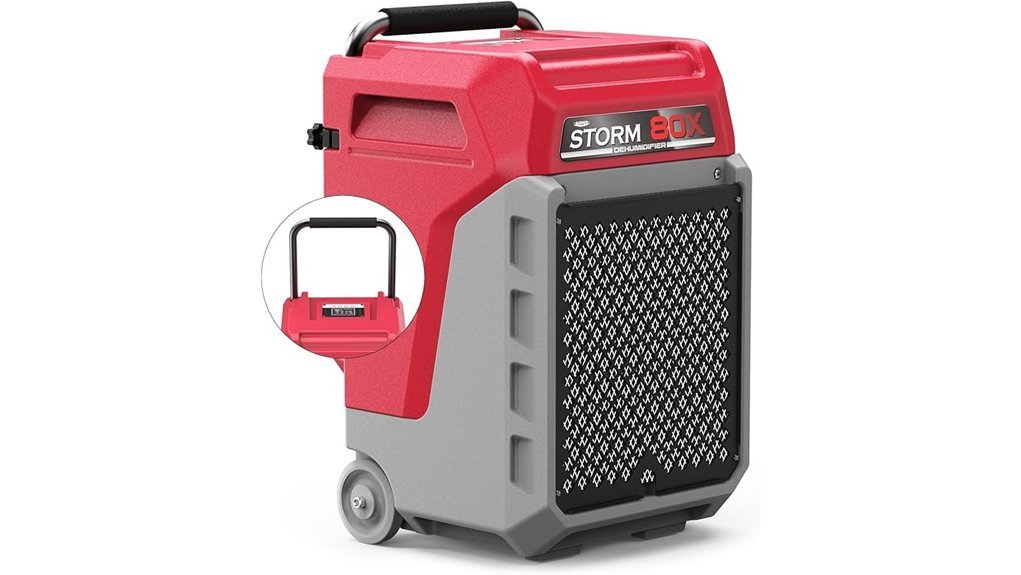
Best for Water Damage Restoration: When tackling water damage restoration or drying carpets, the ALORAIR 170 PPD Commercial Dehumidifier is designed for heavy-duty moisture removal. It removes up to 170 pints of moisture daily and is suitable for large spaces up to 2,100 sq. ft., making it a practical option for contractors, property managers, and homeowners dealing with more serious dampness.
With an airflow of 200 CFM and a portable design, you can move it using the durable wheels and retractable handle. The built-in pump supports automatic drainage, while auto on/off and intelligent defrost features help the unit run with less manual attention. It is more of a serious drying tool than a casual room appliance.
Best For: Those in need of effective moisture removal for large spaces, such as contractors and property managers dealing with water damage restoration.
Why You’ll Like It: The wheels, handle, pump, and high capacity make it easier to use in changing jobsite or restoration conditions.
Who Should Avoid This: It is not the most practical choice if you need a low-profile unit for a bedroom or small apartment.
Pros:
- High moisture removal capacity of up to 170 pints per day makes it ideal for large areas.
- Compact and portable design with durable wheels and a retractable handle for easy transportation.
- Automatic drainage system with a built-in pump, along with features like auto on/off and intelligent defrost.
Cons:
- Relatively heavy at 63.9 pounds, which may be cumbersome for some users.
- Limited to indoor use; not suitable for outdoor applications or environments without power.
- Initial cost may be higher compared to smaller dehumidifiers, impacting budget-conscious buyers.
MARS HYDRO 18L Compressor Dehumidifier for Home
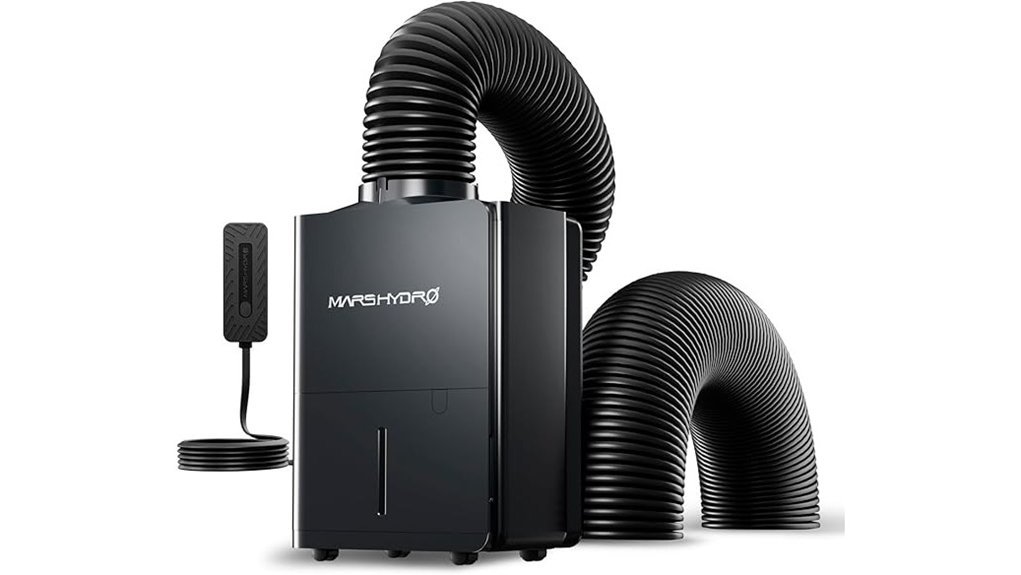
Best for Grow Tents and Compact Humidity Control: Looking for an efficient solution to manage humidity in your grow tent? The MARS HYDRO 18L Compressor Dehumidifier is designed specifically for that purpose and can also suit smaller indoor spaces where humidity control matters. It removes up to 38 pints of moisture daily, helping support more stable air conditions for plants and indoor storage areas.
With high-precision sensors, it automatically adjusts humidity between 30% and 90%, making it more user-friendly than a basic on/off unit. Its compact dimensions of 13.2D x 8.7W x 18H inches and weight of 29.32 pounds make it easier to reposition than large commercial models. The washable filter and automatic shut-off when the tank is full also simplify maintenance.
Best For: Indoor gardeners and homeowners looking to maintain humidity levels in grow tents and residential spaces.
Why You’ll Like It: It gives you a more compact compressor option when the larger commercial units are too big for your setup.
Who Should Avoid This: It may not be enough for very large basements, flood drying, or large commercial areas.
Pros:
- High dehumidification capacity of up to 38 pints per day, useful for moisture-heavy compact environments.
- User-friendly features like smart auto mode and high-precision sensors for automatic humidity control.
- Easy maintenance with a washable filter and automatic shut-off when the water tank is full.
Cons:
- Limited portability due to its weight of 29.32 pounds, which may be cumbersome for frequent repositioning.
- Noise level may be noticeable in quiet settings, potentially disrupting the environment.
- Requires electricity, which could be a concern in areas with unreliable power supply.
HBN 125 Pints Crawl Space Dehumidifier with Pump
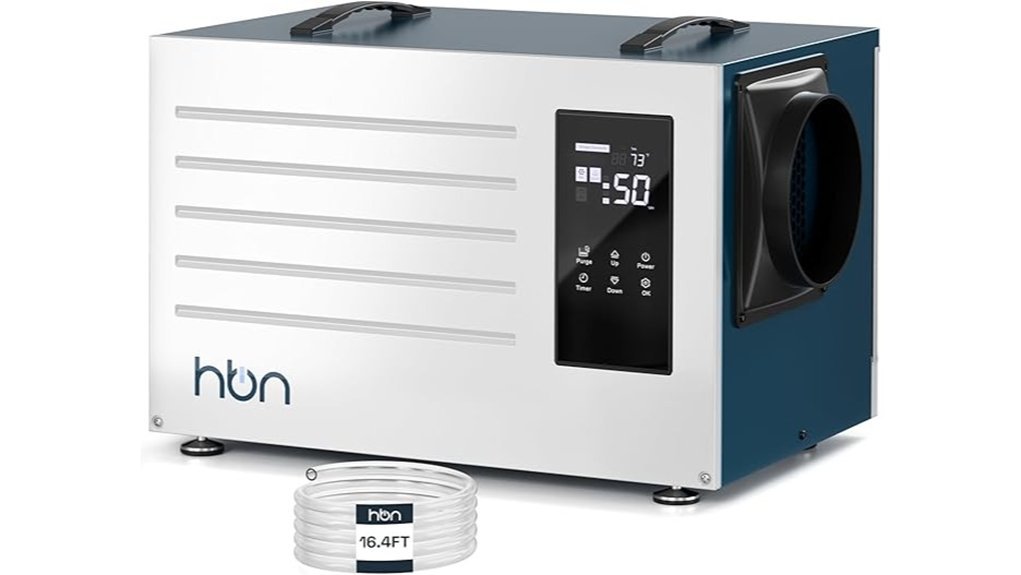
Best for Large Crawl Spaces: The HBN 125 Pints Crawl Space Dehumidifier is designed for large areas and is stated to handle spaces up to 5,900 sq. ft. It removes up to 125 pints of moisture daily and supports humidity control between 10% and 90% RH, giving users more flexibility in damp basements, crawl spaces, and storage zones.
One of its strongest features is drainage flexibility. With dual drainage options, you can manage excess water using the gravity drain hose or the built-in pump, which lifts water up to 16.4 ft. User-friendly features like an intuitive touchscreen and power outage memory function make operation easier if you need the unit to run regularly.
Best For: Homeowners and businesses looking for an efficient solution to control humidity in large crawl spaces or basements.
Why You’ll Like It: The touchscreen, pump, and gravity drainage options give you more setup flexibility than a basic tank-only unit.
Who Should Avoid This: Avoid it if you need a small, quiet, decorative dehumidifier for a compact room.
Pros:
- High Performance: Removes up to 125 pints of moisture daily, ideal for large areas up to 5,900 sq. ft.
- Versatile Drainage Options: Offers both gravity drainage and a built-in pump for flexible water management.
- User-Friendly Features: Intuitive touchscreen controls and power outage memory for hassle-free operation.
Cons:
- Initial Cost: Higher upfront investment compared to smaller dehumidifiers.
- Size and Weight: May be bulkier and heavier, making it less portable for some users.
- Remote Control Sold Separately: Additional cost for the convenience of remote operation.
Mounto 150 Pints Commercial Dehumidifier with Pump
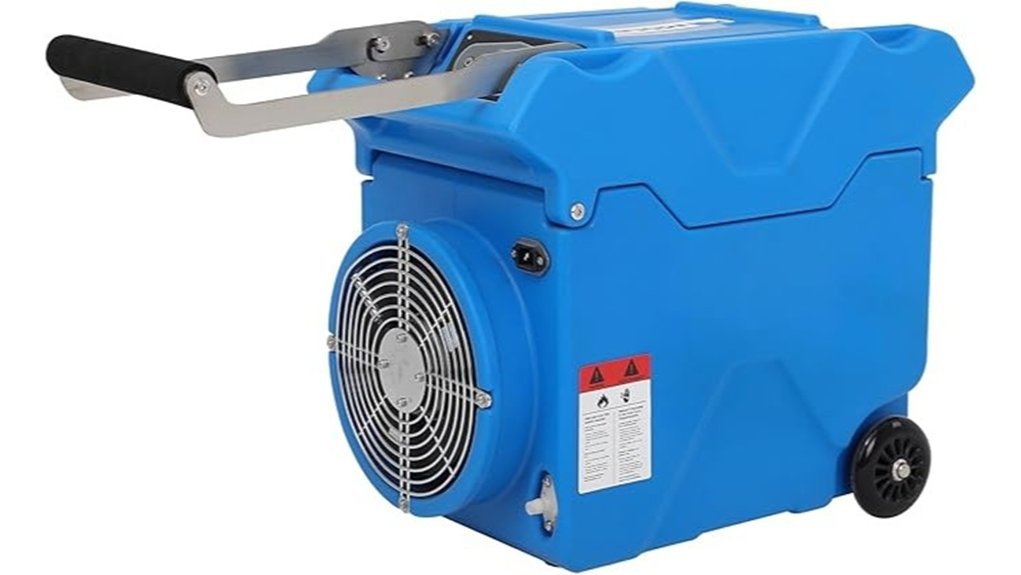
Best Durable Commercial Pick: For large spaces like warehouses or basements, the Mounto 150 Pints Commercial Dehumidifier with Pump is a strong option. It removes up to 150 pints of moisture daily, making it suitable for moisture-heavy areas where long-running performance matters.
With a durable Panasonic compressor and 100% copper coils, this unit is positioned for reliability and demanding use. It operates at 72db, so it is better suited to basements, warehouses, greenhouses, or work areas than quiet bedrooms. The compact design includes wheels and a stainless handle for easier transport, while the included 25-foot drain hose allows flexible installation. ETL certification and a memory function that resumes operation after power outages add practical peace of mind.
Best For: Large spaces such as warehouses, basements, and greenhouses that require efficient moisture removal.
Why You’ll Like It: It focuses on durability, drainage convenience, and transport features for larger spaces.
Who Should Avoid This: The 72db noise level may be too noticeable for bedrooms, nurseries, or quiet home offices.
Pros:
- High capacity: Removes up to 150 pints of moisture per day, ensuring effective dehumidification.
- Durable construction: Features a high-quality Panasonic compressor and 100% copper coils for longevity.
- User-friendly design: Easy to transport with wheels and a stainless handle, plus a 25-foot drain hose for flexible installation.
Cons:
- Weight: At 65 pounds, it may be cumbersome for some users to move.
- Noise level: Operates at 72db, which may be noticeable in quiet environments.
- Initial cost: Higher upfront investment compared to smaller dehumidifiers.
ALORAIR 180 PPD Commercial Dehumidifier with Pump
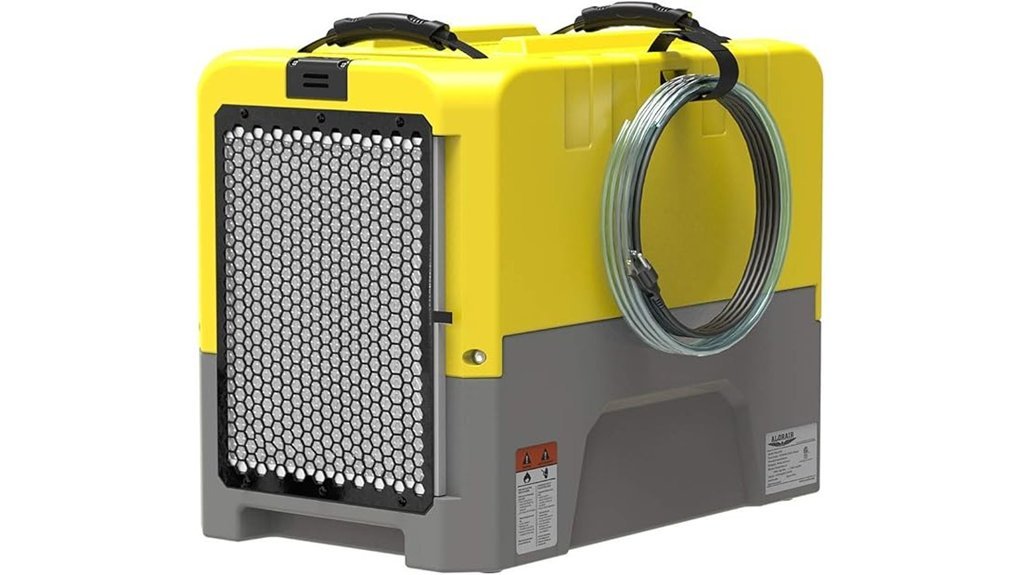
Best Compact High-Capacity Commercial Option: If you need powerful moisture control, the ALORAIR 180 PPD Commercial Dehumidifier with Pump is another strong choice. With a capacity of 180 pints per day, it efficiently covers up to 2,300 square feet and is designed for commercial buildings, crawl spaces, basements, and damp work areas.
Its compact design helps it fit in tight basements and crawl spaces where larger upright units may be harder to place. The automatic drainage system includes a 19.6 ft drain hose for easier operation. Adjustable humidity control and auto-restart make the unit easier to manage during longer drying periods. Backed by a 6-year warranty, this model is positioned as a long-term moisture management investment.
Best For: Those needing effective moisture control in large spaces, such as commercial buildings, crawl spaces, and basements.
Why You’ll Like It: It gives you strong capacity in a shape that can work in tighter areas than many large commercial machines.
Who Should Avoid This: It may be more machine than you need if you are only treating one small room with mild humidity.
Pros:
- High capacity: Removes up to 180 pints of moisture per day, ideal for extensive areas.
- User-friendly features: Includes adjustable humidity control and automatic restart for ease of use.
- Compact design: Fits well in tight spaces, making it versatile for various environments.
Cons:
- Weighty: At 64.3 pounds, it may be difficult to move without assistance.
- Noise level: Some users may find it louder than expected during operation.
- Initial cost: Higher upfront investment compared to basic dehumidifiers.
Gasbye 4500 Sq.Ft. Energy Star Dehumidifier
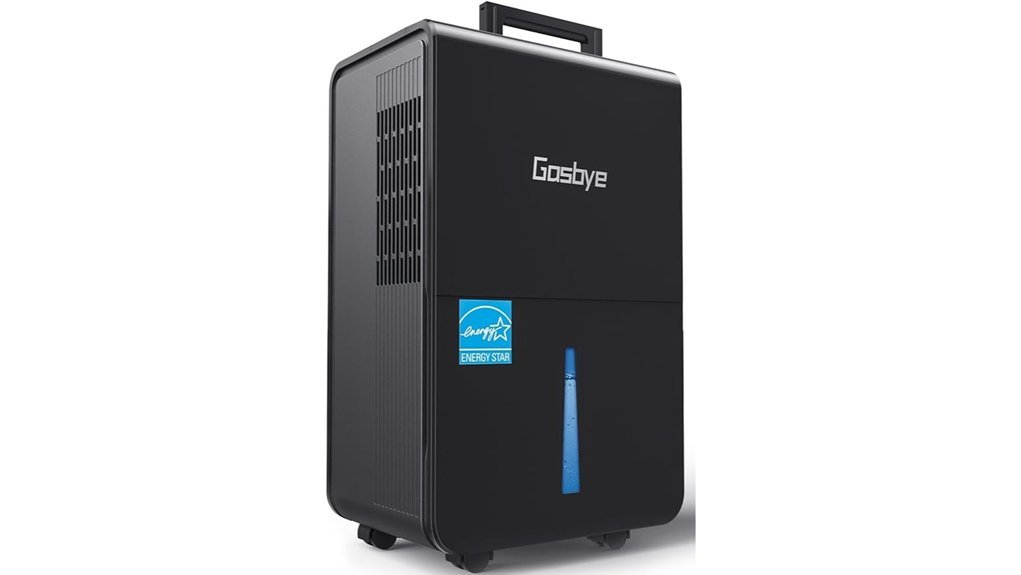
Best Energy-Conscious Large Room Pick: Looking for a powerful solution to combat humidity without stepping into full commercial-machine territory? The Gasbye 4500 Sq.Ft. Energy Star Dehumidifier is designed for large living spaces, basements, and rooms where energy use and noise matter. With a capacity of up to 115 pints per day, it effectively covers areas up to 4,500 square feet.
Its Energy Star certification means it is designed to use less energy than many non-certified models, and it uses only 500 watts. Operating quietly at around 45 dB, it is more suitable for living spaces than louder commercial units. Features like a 1.7-gallon water tank, multiple operation modes, hose drainage, and a two-year warranty make it a practical choice for ongoing home moisture control.
Best For: Those seeking an efficient and quieter dehumidification solution for large spaces up to 4,500 square feet.
Why You’ll Like It: It balances large-room capacity with quieter operation and energy-conscious performance.
Who Should Avoid This: Skip it if you need built-in pump drainage or a rugged commercial unit for restoration work.
Pros:
- Energy Efficient: Uses only 500 watts, making it more efficient than many non-Energy Star models.
- Quiet Operation: Runs at approximately 45 dB, ideal for living rooms and bedrooms.
- Versatile Features: Offers multiple operation modes and easy drainage options, including a 1.7-gallon tank and hose connection.
Cons:
- Manual Drainage Required: The water tank needs to be emptied manually unless connected to a drain.
- Weight: At 43 pounds, it may be cumbersome to move for some users.
- Limited Color Options: Available only in black, which may not suit all décor styles.
Midea Cube 20 Pint Dehumidifier with Smart Control
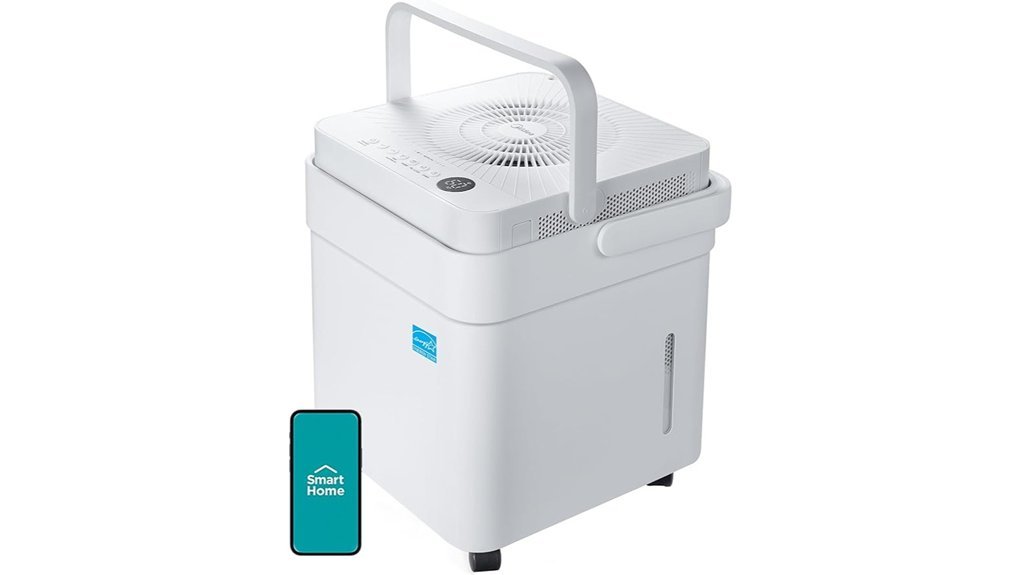
Best Smart Compact Pick: The Midea Cube 20 Pint Dehumidifier is a good fit for homeowners wanting smart humidity control in spaces up to 1,500 sq. ft. With a unique lift-and-twist design, it adapts for storage and use, whether extended or nested. It collects 20 pints of moisture daily and includes a 3.2-gallon tank that allows longer operation without frequent emptying.
You can control it through the SmartHome app or use voice commands with Alexa and Google Assistant. Auto restart, defrost functions, and a washable filter help reduce maintenance stress. It is not the most powerful product in this guide, but it is one of the easiest to live with if smart controls and flexible design matter more than commercial-level drying.
Best For: Homeowners seeking effective humidity control in medium to large spaces with smart technology integration.
Why You’ll Like It: It is convenient, smart-home friendly, and easier to manage than many larger pump-based models.
Who Should Avoid This: Choose a higher-capacity model if you have a very wet basement, flood damage, or a large commercial space.
Pros:
- Wi-Fi enabled for convenient remote control via SmartHome app and compatibility with voice assistants.
- Extended operation with a large 3.2-gallon tank, reducing the need for frequent emptying.
- Flexible design allows for both nested and extended use, adapting to various space requirements.
Cons:
- Initial setup may require technical knowledge for Wi-Fi and app integration.
- Size may be bulkier than traditional dehumidifiers when in extended form.
- Limited coverage at 1,500 sq. ft., which may not suffice for larger areas.
Factors to Consider When Choosing a Compressor Dehumidifier in Australia
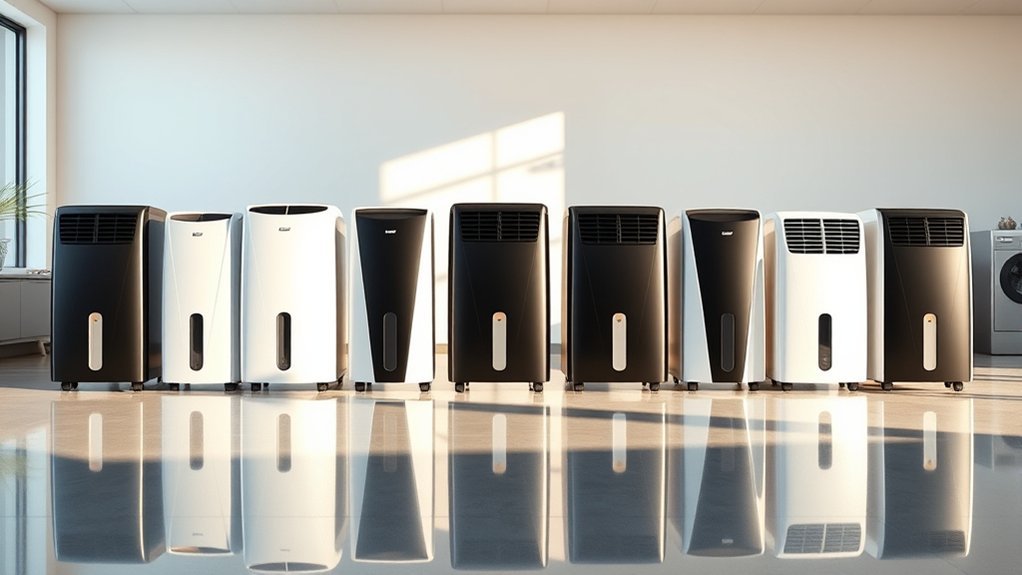
When choosing a compressor dehumidifier in Australia, you need to consider several key factors. Think about the dehumidification capacity you require, the area you need to cover, and how energy-efficient the unit is. Don’t forget to check the drainage options, noise levels, warranty, and whether the model is suitable for your room type.
Before You Buy Checklist
- Measure the room or crawl space before choosing a capacity.
- Check whether you need a built-in pump, gravity drain, or manual tank.
- Confirm the noise level if the unit will run near bedrooms or living areas.
- Look at the unit weight if you need to move it between rooms.
- Check voltage, plug type, warranty, and drainage setup before ordering.
Dehumidification Capacity Requirements
Choosing the right dehumidification capacity is essential for effective humidity control in your space. The capacity, measured in pints per day (PPD), tells you how much moisture a unit can remove within 24 hours. To optimize performance, evaluate your moisture removal needs based on the size of your space and current humidity levels. Larger areas or more humid environments will require units with higher capacities. Keep in mind that a unit’s performance can vary based on test conditions, room temperature, and relative humidity. Regularly monitoring humidity can also guide your choice, especially if the area feels musty, has condensation, or dries slowly after rain.
Coverage Area Considerations
How do you make sure your compressor dehumidifier fits your space properly? Start by evaluating the coverage area. Units vary greatly, with some suited for small and medium spaces, while others tackle areas as large as several thousand square feet. Make sure the dehumidifier’s capacity matches your environment’s moisture levels. If you’re in a humid zone, a higher-capacity model may dry the air faster and reduce compressor strain. Pay attention to airflow capacity; higher CFM ratings can improve drying across larger areas. Finally, consider your space layout because longer drainage distances may require models with built-in pumps.
Energy Efficiency Ratings
Understanding energy efficiency ratings is important when selecting the right compressor dehumidifier for your needs. Look for the Energy Factor (EF), which measures how many liters of water are removed per kilowatt-hour of electricity. Higher EF values usually mean better efficiency. Energy Star certification can also help identify models designed to meet energy guidelines. Additionally, consider the Coefficient of Performance (COP), which shows the ratio of dehumidification capacity to energy use. Regular maintenance, like cleaning filters, can improve efficiency. Choosing a model with adjustable humidity settings also lets you avoid over-drying and wasting power.
Drainage Options Available
When selecting a compressor dehumidifier in Australia, consider the various drainage options available to suit your needs. Many models offer multiple drainage methods, including manual tank drainage and continuous drainage systems. If you’re dealing with high moisture levels, a continuous drainage option is ideal because it automatically removes condensate without frequent emptying. Look for units that come with a drain hose that can be extended for flexible installation. Some models even feature built-in pumps, which can lift water to a higher drain point. Manual tank drainage is simpler but requires you to empty the collection tank regularly.
Noise Level Specifications
While choosing a compressor dehumidifier in Australia, it’s crucial to pay attention to noise level specifications, especially if you plan to use it in quiet spaces like bedrooms or living areas. Noise levels can vary widely, typically ranging from quiet home-use levels to noticeably louder commercial operation. A lower dB rating indicates quieter operation; units around 45 dB are more suitable for noise-sensitive areas, while models around 70 dB are better for garages, warehouses, crawl spaces, and restoration work. Also consider placement because putting a unit on a stable, level surface can reduce vibration noise.
Build Quality and Durability
Choosing a compressor dehumidifier involves more than just considering noise levels; build quality and durability play a significant role in ensuring your unit lasts. Look for models made from rugged materials like metal or high-quality plastic, especially if you plan to use the unit in a crawl space, garage, warehouse, or restoration environment. Corrosion-resistant components are useful in humid conditions. Reinforced or thicker housing can offer better protection against knocks and movement. Also check warranty information because longer coverage can give you more confidence when buying a higher-priced model.
Maintenance and Filter Types
To maintain ideal performance and air quality in your compressor dehumidifier, paying attention to filter types and maintenance is essential. Regularly cleaning or replacing the filter supports peak airflow and helps protect internal components from dust and debris. Many models come with a filter cleaning reminder system, alerting you when maintenance is due. A removable and washable dust filter can save on long-term costs because it reduces the need for frequent replacement filters. Remember, clogged filters can hinder airflow and increase energy consumption, so stay proactive.
Warranty and Support Options
Maintaining your compressor dehumidifier is just one part of ensuring long-term satisfaction; understanding warranty and support options is equally important. Warranty coverage can vary widely by brand and model. Look for coverage that clearly explains parts, labor, compressors, pumps, and electronic controls. Reliable customer support, including phone and email assistance, can greatly improve your experience if you need help with drainage setup, error codes, or replacement parts. For higher-capacity units, warranty and support should matter almost as much as pint rating.
Australia-Specific Buying Considerations
If you are shopping from Australia, confirm the power requirements, plug compatibility, warranty support, shipping terms, and return policy before purchasing from Amazon. Some dehumidifiers may be sold through international listings, so you should check whether the unit is suitable for your local electrical setup and whether warranty support is practical from your location. This is especially important for heavier commercial models because returns can be more complicated than with small household appliances.
Pro Tips for Better Results
- Place the dehumidifier where air can flow freely around the intake and exhaust.
- Close windows and doors while the unit is running so it is not drying outdoor air.
- Use continuous drainage for basements, crawl spaces, and long running periods.
- Clean the filter regularly to maintain airflow and reduce energy waste.
- Use a separate hygrometer if you want a second reading of room humidity.
Frequently Asked Questions
What Is the Average Lifespan of a Compressor Dehumidifier?
The average lifespan of a compressor dehumidifier is about 5 to 10 years. To maximize its longevity, you should maintain it regularly, keep the filters clean, make sure the drainage system is clear, and allow proper airflow around the unit.
How Often Should I Clean My Dehumidifier Filter?
You should clean your dehumidifier filter every two to four weeks, depending on usage and dust levels. If the unit runs daily in a basement, crawl space, garage, or work area, check the filter more often. Regular maintenance keeps it running efficiently and can help extend its lifespan.
Can I Use a Dehumidifier in Winter?
Yes, you can use a dehumidifier in winter, especially in damp indoor areas. However, compressor models may be less effective in cold conditions, and very low temperatures can cause frost issues. If you plan to use one in a cold basement or crawl space, look for an auto defrost feature.
Are Compressor Dehumidifiers Noisy During Operation?
Yes, compressor dehumidifiers can make noise during operation because they use a compressor and fan. The noise level varies by model. Quieter units are better for bedrooms and living spaces, while louder commercial units are usually better for garages, warehouses, basements, and restoration jobs.
How Do I Determine the Right Size Dehumidifier for My Space?
Measure your room’s square footage, consider how damp the area feels, and check the manufacturer’s recommended coverage area. For mild humidity, a smaller unit may be enough. For musty basements, crawl spaces, water damage, or large open areas, choose a higher-capacity model with continuous drainage.
Is a Built-In Pump Worth It?
A built-in pump is worth it if you cannot rely on gravity drainage or if the water needs to move upward into a sink, drain, or higher outlet. If your dehumidifier will sit near a floor drain, a gravity hose may be enough. For basements, crawl spaces, and long-running setups, pump drainage can make daily use much easier.
Which Dehumidifier Is Best for a Bedroom?
For a bedroom, prioritize quiet operation, compact size, easy tank removal, and automatic shut-off. A heavy commercial model may remove more moisture, but it can be too loud and bulky for sleeping areas. The Midea Cube and Gasbye models are better aligned with living-space use than louder commercial units.
Final Recommendation
For most large home spaces, the Waykar 150 Pint Dehumidifier with Pump offers the best mix of high capacity, flexible drainage, and home-friendly operation. If your main problem is a crawl space, the ALORAIR Crawl Space Dehumidifier 120 PPD or HBN 125 Pints Crawl Space Dehumidifier may fit the job better. For restoration, water damage, warehouses, and commercial moisture control, the ALORAIR and Mounto commercial models are stronger choices.
For a quieter living-space option, consider the Gasbye 4500 Sq.Ft. Energy Star Dehumidifier. For smart-home convenience and medium rooms, the Midea Cube 20 Pint Dehumidifier is easier to manage than the larger pump-based units.
Conclusion
In the wide market of compressor dehumidifiers, finding the right one is easier when you match the product to the space. A damp crawl space needs a different unit than a bedroom, grow tent, warehouse, or flood-damaged basement. The best choice is not always the highest pint rating; it is the model that fits your room size, drainage setup, noise tolerance, and maintenance routine.
If you want strong moisture removal for a large area, choose a higher-capacity model with continuous drainage or a built-in pump. If you want comfort in a living space, prioritize lower noise, easy controls, and energy efficiency. With the right compressor dehumidifier, you can reduce musty air, protect stored items, and make damp spaces feel more comfortable throughout the year.