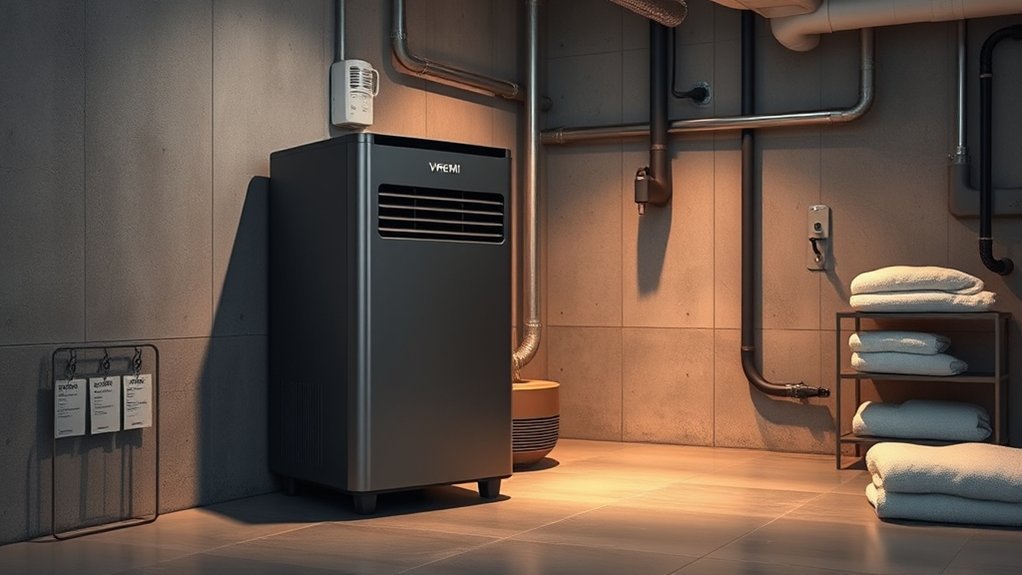
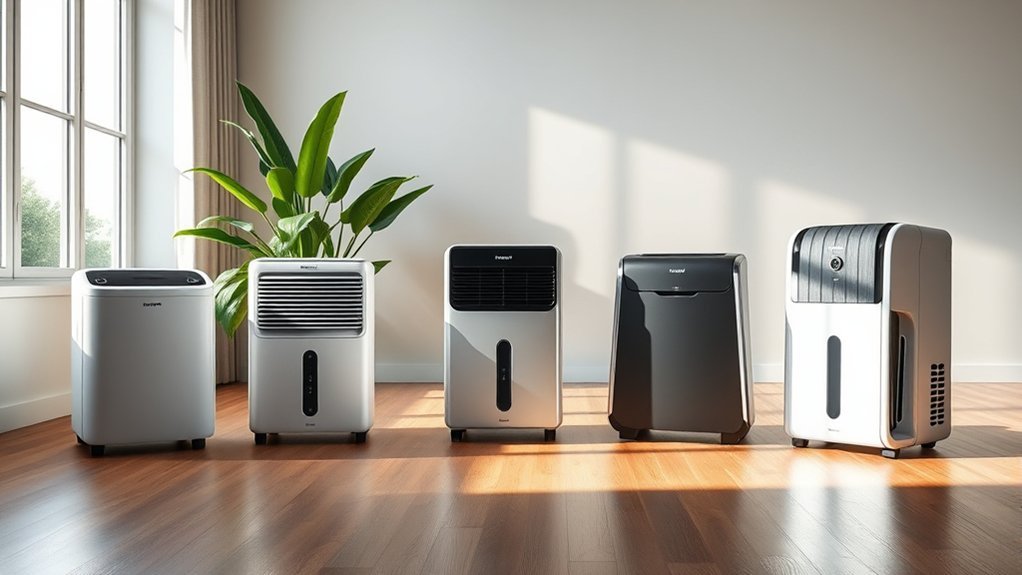
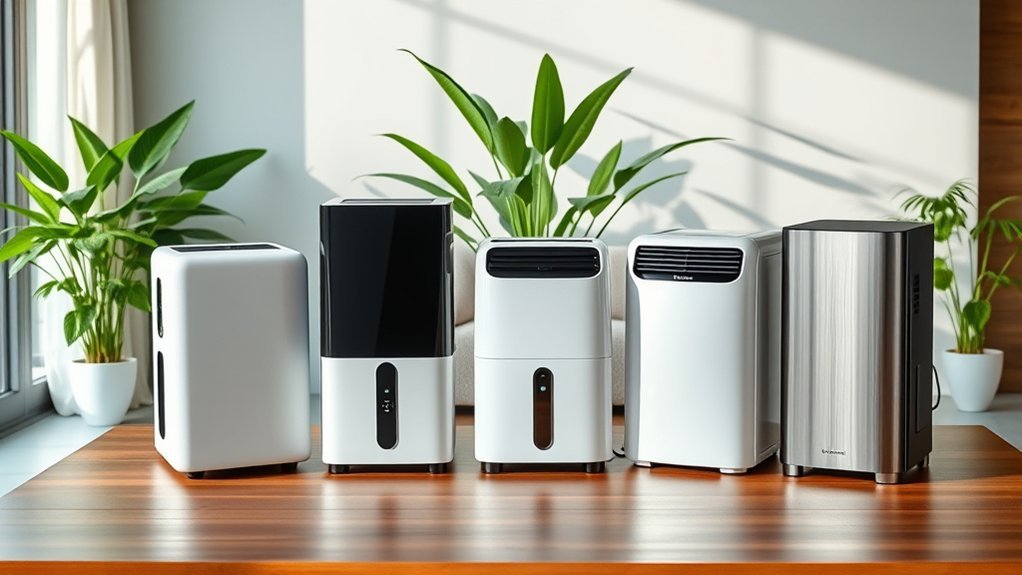
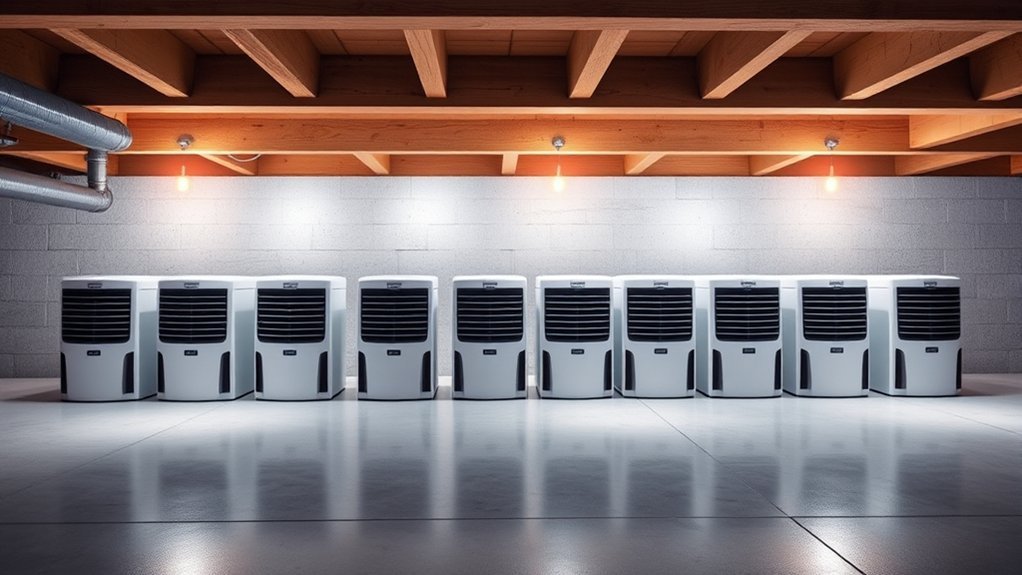
For 2026, the best heavy-duty dehumidifier depends on how much moisture you need to remove, how large the space is, and where the collected water can drain. The Waykar stands out for very large areas and pump-assisted drainage, while the ALORAIR Sentinel HD55 is the more purpose-built choice for crawl spaces and compact basement installations. AIRPLUS and DECIUU suit large residential rooms, while KNKA and PLUSCENT are better for moderately damp basements, bedrooms, and laundry areas. Compare drainage type and rating conditions—not just the largest pint number—before choosing.
Quick Verdict
Best overall for large spaces: Waykar 150-Pint Dehumidifier with Pump, because its built-in pump can move water upward when a floor drain is not conveniently placed.
Best for crawl spaces: ALORAIR Sentinel HD55, because its compact metal housing, gravity drain, auto defrost, and AHAM-rated capacity suit long-term basement or crawl-space use.
Best residential high-capacity alternatives: AIRPLUS for broad coverage and simple controls, or DECIUU for a larger tank and multiple continuous-drain options.
Best for lighter heavy-duty use: KNKA or PLUSCENT when quiet operation and portability matter more than maximum water removal.
Quick Comparison of Heavy-Duty Dehumidifiers
| Model | Listed Moisture Removal | Listed Coverage | Drainage | Best For | Check Details |
|---|---|---|---|---|---|
| KNKA | Up to 34 pints/day | Up to 2,500 sq. ft. | 3-liter tank or gravity hose | Quiet residential spaces | Check on Amazon |
| PLUSCENT | Up to 32 pints/day | Up to 2,500 sq. ft. | 2-liter tank or gravity hose | Large rooms and RV use | Check on Amazon |
| ALORAIR Sentinel HD55 | 113 PPD at saturation; 53 PPD at AHAM | Up to 1,200 sq. ft. | Continuous gravity drain | Crawl spaces and basements | Check on Amazon |
| Waykar | Up to 150 pints/day under high-humidity conditions | Up to 7,000 sq. ft. | Built-in pump or gravity hose | Very large or unattended areas | Check on Amazon |
| AIRPLUS | Up to 70 pints/day | Up to 4,500 sq. ft. | 0.7-gallon tank or gravity hose | Large residential rooms | Check on Amazon |
| DECIUU | Up to 100 pints/day at 95°F and 90% RH; up to 70 at 86°F and 80% RH | Up to 5,000 sq. ft. | 1.45-gallon tank, drain hose, or garden-hose adapter | Large damp homes and basements | Check on Amazon |
Important: Pint ratings are not always measured under the same temperature and humidity conditions. A large “maximum” rating may be based on hotter, wetter test conditions than an AHAM or current DOE-style rating. Use the comparison as a shortlist, then confirm the rating conditions on the current product page.
KNKA 2500 Sq.Ft Dehumidifier with Drain Hose
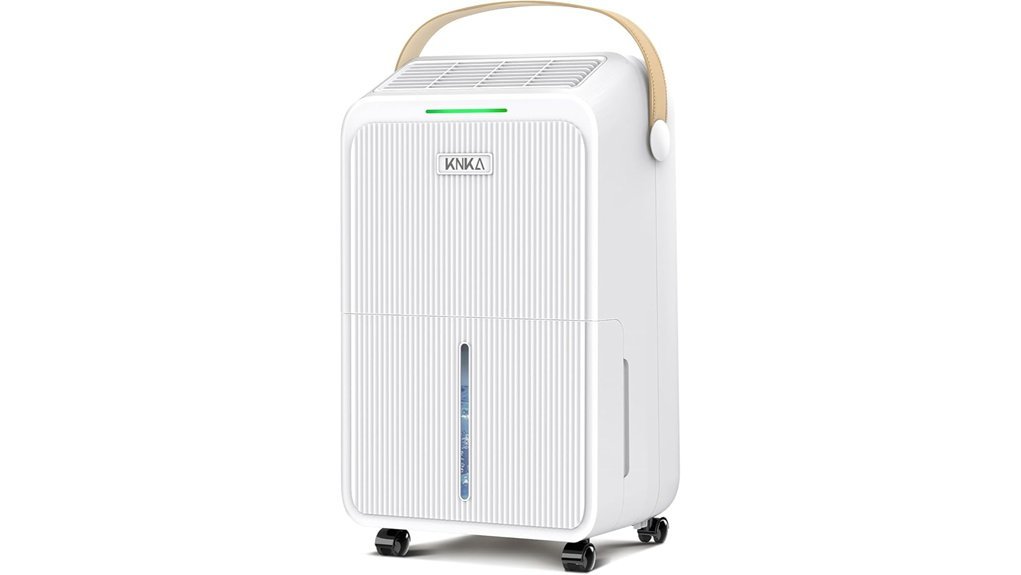
Quiet Residential Pick
The KNKA dehumidifier is a practical choice for a moderately damp basement, garage, laundry room, bedroom, or other residential area where low noise matters. Its listing states coverage up to 2,500 sq. ft. and moisture removal up to 34 pints per day. DEHU mode controls humidity, DRY mode helps with indoor laundry, and CONT mode supports ongoing operation. The unit also offers a 24-hour timer, automatic shutoff, auto defrost, a washable filter, wheels, and a color humidity indicator.
Best For: Homeowners or renters who want quieter moisture control and flexible tank-or-hose drainage in a medium-to-large residential space.
Why You’ll Like It: The listed 37 dB low-noise operation, sleep mode, and easy-roll design make it less disruptive than many larger-capacity units.
Who Should Avoid It: Buyers dealing with flooding, water-restoration work, a very wet crawl space, or a large commercial area should choose a higher-capacity or purpose-built commercial model.
Pros:
- Listed for spaces up to 2,500 sq. ft. with up to 34 pints of daily moisture removal.
- DEHU, DRY, and CONT modes support everyday humidity control and laundry drying.
- Includes a 3-liter tank and a drain-hose option for continuous gravity drainage.
Cons:
- The 3-liter tank can fill quickly in a persistently damp area.
- The maximum pint figure may reflect high-humidity test conditions, so real-world removal can be lower.
- It is a residential portable unit rather than a restoration-grade or ducted dehumidifier.
PLUSCENT 32 Pint Dehumidifier for Large Rooms
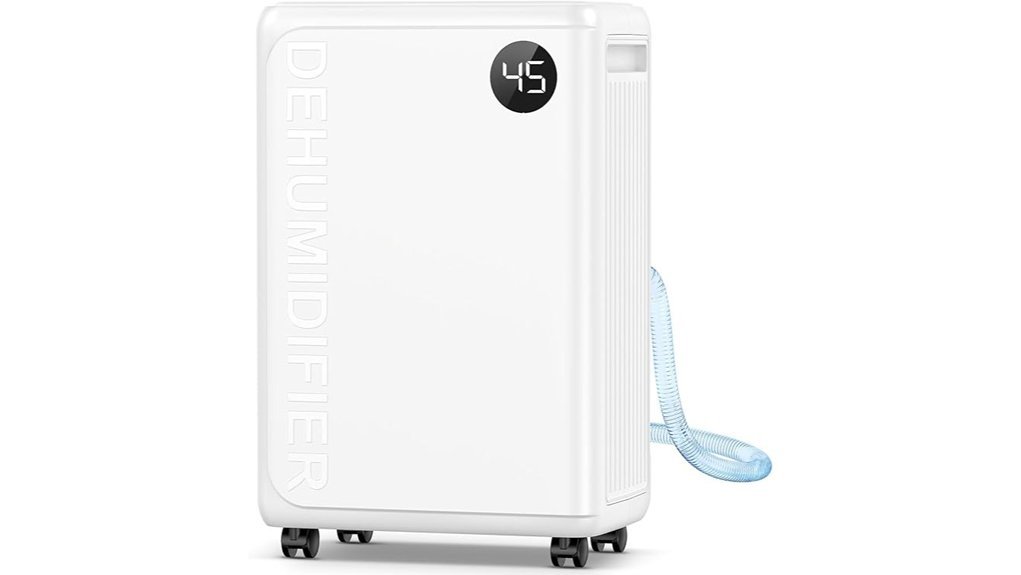
Best Value for Flexible Room Use
The PLUSCENT 32 Pint Dehumidifier is aimed at basements, bedrooms, bathrooms, RVs, and open living spaces. Its listing states coverage up to 2,500 sq. ft., with DEHU mode for adjustable humidity, CONT mode for steady moisture removal, and DRY mode for laundry. A 24-hour timer, child lock, auto defrost, restart memory, washable filter, handles, and 360-degree wheels make it easy to use in different rooms.
Best For: Buyers who want a quiet, portable dehumidifier for a large residential room or RV and do not need pump-assisted drainage.
Why You’ll Like It: The unit combines a listed 39–42 dB sound range with a drain hose, a compact 2-liter tank, and several automatic protections.
Who Should Avoid It: It is not the best match when water must be pumped upward, when the space is divided into many closed rooms, or when commercial-grade drying speed is required.
Pros:
- Listed 32-pint maximum capacity and coverage up to 2,500 sq. ft.
- Quiet operation is better suited to bedrooms and living areas than louder commercial units.
- Includes a gravity drain hose, child lock, auto defrost, auto-restart, and washable filter.
Cons:
- The 2-liter tank may require frequent emptying when the hose is not connected.
- No built-in pump is listed, so the hose outlet must drain downhill.
- No app or remote-control feature is listed.
ALORAIR Commercial Dehumidifier 113 Pint (Sentinel HD55)
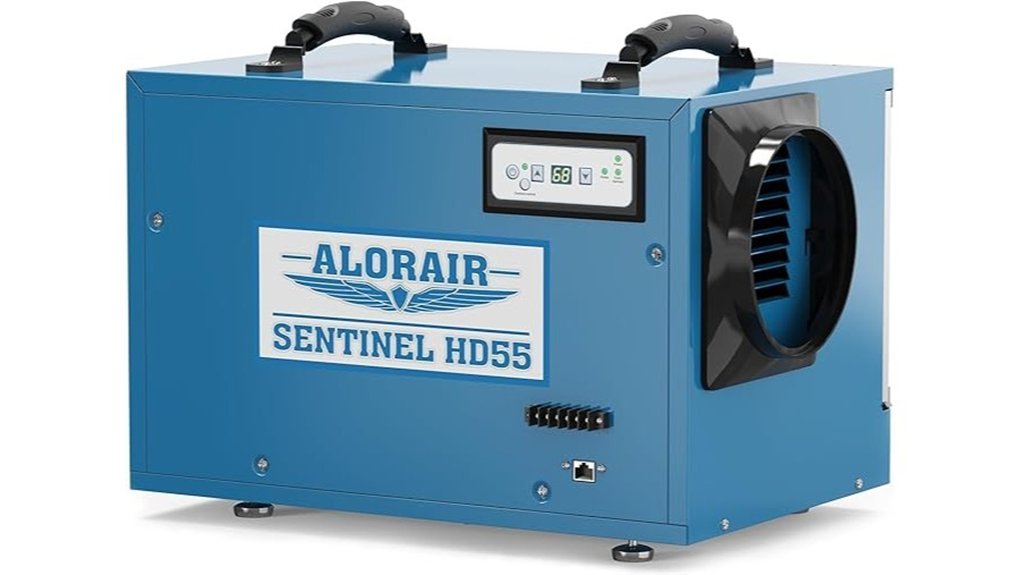
Best for Crawl Spaces
The ALORAIR Sentinel HD55 is the most purpose-built crawl-space model in this roundup. It is rated at 113 pints per day at saturation and 53 pints per day under AHAM conditions, with listed coverage up to 1,200 sq. ft. Its compact metal cabinet, carrying handle, MERV-1 filter, adjustable humidistat, auto defrost, restart memory, and continuous gravity drain are designed for basements and crawl spaces where a bucket-style appliance is inconvenient.
Best For: Homeowners, contractors, and property managers who need a compact, durable dehumidifier for a crawl space, basement, storage area, or similar enclosed space.
Why You’ll Like It: The AHAM rating makes capacity easier to compare, while the gravity-drain design eliminates routine tank emptying when a suitable lower drain is available.
Who Should Avoid It: Do not choose this version when the drain hose must run uphill; it uses gravity drainage rather than a built-in condensate pump.
Pros:
- Clearly states both saturation and AHAM moisture-removal ratings.
- Compact metal housing, auto defrost, MERV-1 filter, and adjustable humidity control suit crawl-space installations.
- Backed by a listed six-year limited warranty, subject to the manufacturer’s current terms and registration requirements.
Cons:
- Gravity drainage requires a properly sloped hose and a lower drain point.
- The industrial-style cabinet is less convenient for moving between finished living rooms.
- Coverage is smaller than the broad marketing figures listed for some residential tower-style models.
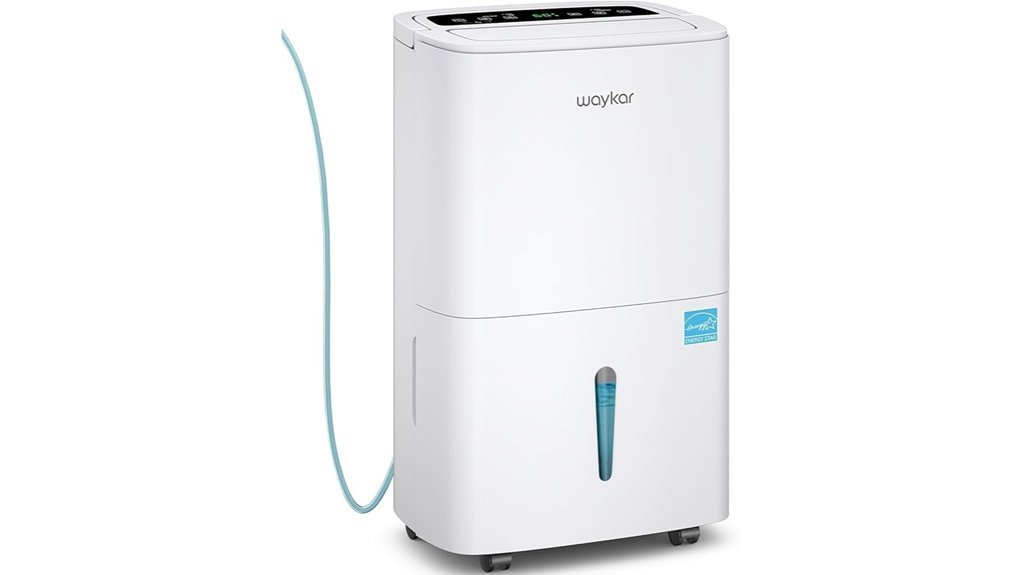
Waykar 150-Pint Energy Star Dehumidifier with Pump
Best Overall for Large Spaces
The Waykar is the most convenient choice here when you need high-capacity, low-attention moisture control in a large basement, garage, warehouse-style room, or wine cellar. The listing advertises removal up to 150 pints per day under high-humidity conditions and coverage up to 7,000 sq. ft. Its key advantage is the built-in pump, which can lift condensate up to 9.84 feet when gravity drainage is not practical. A gravity hose option, auto defrost, self-drying function, timer, restart memory, and washable filter add flexibility.
Best For: Very large spaces or unattended areas where water must be moved to a sink, window, or other drain point above the unit.
Why You’ll Like It: Pump drainage reduces placement restrictions, and ENERGY STAR-listed Waykar models can provide better efficiency than similarly sized non-certified units.
Who Should Avoid It: This unit may be unnecessarily large and costly for a small bedroom, bathroom, or mildly damp area.
Pros:
- Advertised for very large spaces, with up to 150 pints of removal under the listing’s maximum test conditions.
- Built-in pump can lift water up to 9.84 feet, with gravity drainage also available.
- Includes auto defrost, self-drying, timer, restart memory, and portable controls.
Cons:
- The 150-pint figure should not be compared directly with AHAM or standardized ratings measured under different conditions.
- Its size and feature set may be excessive for smaller residential rooms.
- Pump hoses require correct routing and periodic inspection to reduce leak or blockage risk.
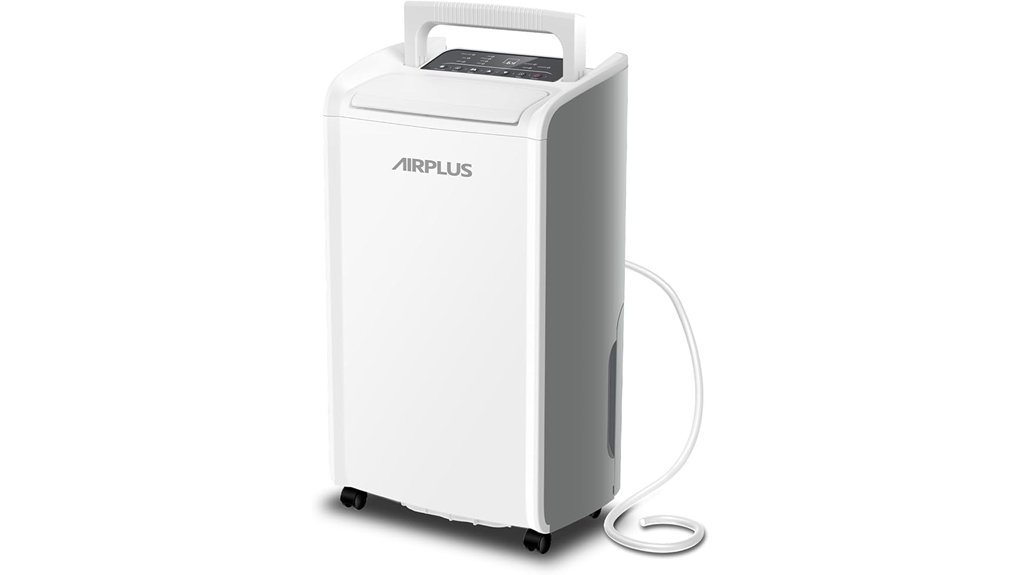
AIRPLUS 70 Pint Dehumidifier for Basements and Home
Best Large-Room Value
The AIRPLUS AP20-1905EE is a high-capacity residential dehumidifier listed for spaces up to 4,500 sq. ft. and up to 70 pints of moisture removal per day. It offers four operating modes, a digital display, a 24-hour timer, automatic shutoff, restart memory, auto defrost, child lock, and a washable filter. You can use the 0.7-gallon tank or connect the included hose for continuous gravity drainage.
Best For: Large basements, garages, laundry rooms, storage rooms, and open residential areas that have access to a nearby lower drain.
Why You’ll Like It: It balances a larger listed capacity with familiar portable-appliance controls and two drainage methods.
Who Should Avoid It: Choose a pump model instead when water must travel upward, and choose a smaller unit for a compact bedroom or bathroom.
Pros:
- Listed for up to 4,500 sq. ft. and up to 70 pints of daily moisture removal.
- Four operating modes, timer, auto defrost, restart memory, and digital humidity display.
- Includes a 0.7-gallon tank, continuous-drain hose, child lock, and washable filter.
Cons:
- The tank can require frequent emptying in severe humidity if continuous drainage is not used.
- No built-in pump is listed.
- The listed one-year warranty is shorter than the coverage advertised for some competing models.
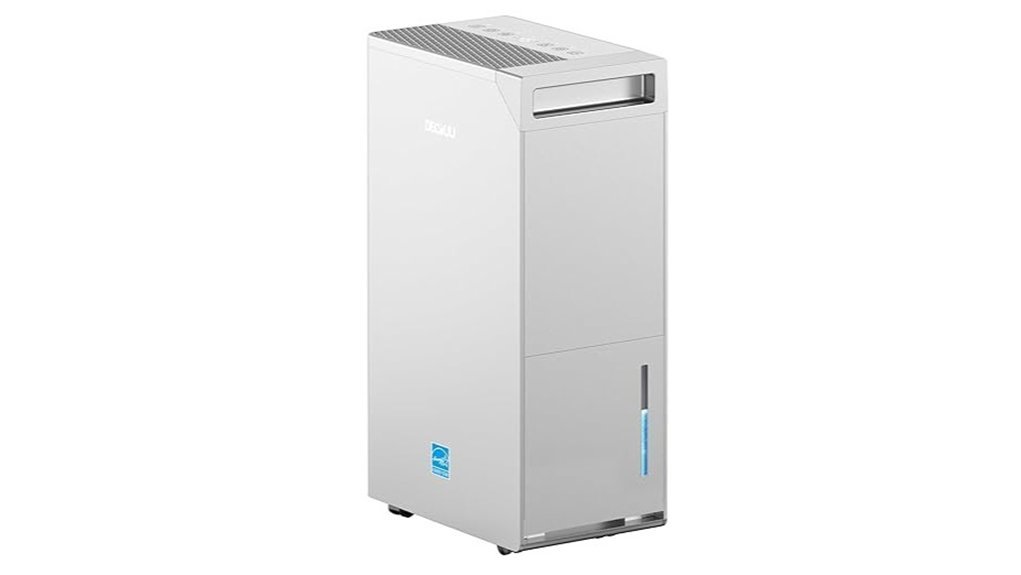
DECIUU Max 100 Pint Dehumidifier
Best High-Capacity Residential Pick
The DECIUU is designed for large homes, basements, garages, laundry rooms, and other damp areas. Its listing states up to 100 pints per day at 95°F and 90% relative humidity, up to 70 pints at 86°F and 80% RH, and coverage up to 5,000 sq. ft. You can set a target humidity from 35% to 80%, choose among three fan speeds, use the 24-hour timer, and drain through the 1.45-gallon tank, included hose, or a compatible garden hose.
Best For: Large residential areas where a bigger tank, adjustable controls, and flexible continuous-drain connections are priorities.
Why You’ll Like It: The large tank reduces emptying frequency, while the garden-hose adapter gives more drainage flexibility than a short proprietary hose alone.
Who Should Avoid It: Buyers needing upward drainage should choose a model with a built-in pump. The “Most Efficient 2024” wording on the listing is historical and should not be treated as a current-year award.
Pros:
- Clearly states different moisture-removal figures for different temperature and humidity conditions.
- Large 1.45-gallon tank plus included hose and garden-hose adapter.
- Adjustable humidistat, auto defrost, restart memory, child lock, washable filter, and wheels.
Cons:
- The 100-pint maximum applies to unusually hot and humid test conditions.
- No built-in condensate pump is listed.
- The second warranty year requires product registration within the stated period.
Factors to Consider When Choosing a Heavy Duty Dehumidifier
Start with the moisture-removal rating and its test conditions, then compare coverage, drainage, operating temperature, noise, controls, portability, and warranty. A dehumidifier that looks strongest on a product title may not be the best match if it cannot drain properly or if its capacity was measured under unusually hot, humid conditions.
Coverage Area
Coverage is a useful screening number, but it is not a guarantee. Open basements with good airflow are easier to dehumidify than divided rooms with closed doors, stored boxes, or weak air circulation. Choose a unit with some extra capacity for a wet basement, laundry area, or seasonal property, but do not rely on square footage alone. Ceiling height, temperature, water intrusion, and how quickly outside air enters the space can change real-world performance.
Pint Capacity and Rating Conditions
Pint capacity shows how much water a unit can remove in 24 hours under a stated test condition. The key phrase is under a stated test condition. Some listings use a maximum figure measured in very hot, humid air, while crawl-space manufacturers may publish both saturation and AHAM ratings. Compare like with like whenever possible. For example, the ALORAIR clearly separates 113 PPD at saturation from 53 PPD at AHAM, while the DECIUU listing explains that its 100-pint maximum falls to 70 pints at a less extreme condition. This context is more useful than the largest number alone.
Drainage Options
For regular heavy-duty use, drainage can matter more than tank size. A gravity hose must slope continuously toward a lower drain. A built-in pump can move water upward to a sink, window, or elevated drain, but the hose still needs secure routing and routine inspection. A large tank is useful when no drain is available, while auto shutoff helps prevent overflow when the tank fills. Before buying, measure the route from the unit to the drain and confirm the included hose length and connection type.
Operating Temperature and Auto Defrost
Basements and crawl spaces can be cooler than living rooms. Compressor dehumidifiers lose efficiency as temperatures fall, and frost can form on the coils. Auto defrost helps protect operation, but every model still has a stated temperature range. Check the manual if the area regularly becomes cold, and consider a unit designed specifically for crawl spaces rather than a standard bedroom-style appliance.
Noise Levels
Noise matters most in bedrooms, offices, and finished basements. Lower fan settings and sleep modes can reduce sound, but the compressor will still cycle. Published dB figures may be measured under different settings, so treat them as a guide rather than a perfect comparison. In an unfinished basement or crawl space, drainage reliability and capacity usually matter more than a small difference in sound level.
Energy Efficiency
An ENERGY STAR-certified dehumidifier uses more efficient components to remove the same amount of moisture as a similarly sized conventional model. Current ENERGY STAR guidance states that certified dehumidifiers use about 20% less energy than non-certified models. Efficiency still depends on correct sizing, clean airflow, a reasonable humidity target, and continuous drainage that prevents unnecessary stops.
Controls and Automatic Operation
A built-in humidistat lets you choose a target relative humidity and allows the unit to cycle instead of running at full power continuously. Timers, restart memory, auto defrost, full-tank shutoff, and filter reminders reduce day-to-day work. App control is useful for a seasonal property or distant basement, but it should not replace checking the drain hose, filter, and surrounding area for leaks or blockages.
Before You Buy Checklist
- Measure the usable floor area and note whether doors normally stay open or closed.
- Identify the moisture source; repair leaks and water intrusion instead of relying only on a dehumidifier.
- Confirm whether drainage can flow downhill or requires a pump.
- Compare pint ratings measured under similar conditions.
- Check the operating-temperature range for a basement or crawl space.
- Review filter-cleaning access, hose length, tank size, dimensions, weight, and warranty terms.
- Use a separate hygrometer to confirm the humidity in the occupied part of the room.
Frequently Asked Questions
How Often Should a Heavy Duty Dehumidifier Be Serviced?
Follow the model’s manual. Inspect the filter, air intake, coils, tank, and drain setup regularly, and clean the filter as often as the manufacturer recommends—more often in a dusty basement or work area. Arrange professional service if capacity drops, the compressor short-cycles, frost persists, the pump fails, or unusual noise or odor develops.
Can I Run a Dehumidifier Continuously Without Damage?
Many models include a continuous mode, but the safer approach is to set a target humidity and use a secure drain connection. Keep the intake and outlet clear, clean the filter, follow the operating-temperature limits, and inspect hoses and pumps. Continuous operation should not be used as a substitute for repairing leaks or active water intrusion.
Do Heavy Duty Dehumidifiers Increase Electricity Bills Significantly?
They add electricity use, and the cost depends on wattage, runtime, local rates, temperature, and moisture load. Reduce waste by choosing the right capacity, using a humidistat instead of an unnecessarily low setting, cleaning the filter, improving drainage, and fixing outside moisture sources. An ENERGY STAR-certified model can also reduce energy use compared with a similarly sized non-certified unit.
What Room Humidity Level Is Ideal for Mold Prevention?
A practical indoor target is generally 30% to 50% relative humidity. Keeping humidity below 60% helps reduce conditions that support mold growth. Avoid setting the unit lower than necessary, especially in winter, because overly dry air can also be uncomfortable.
Can One Dehumidifier Cover Multiple Connected Rooms Effectively?
It can help when doors remain open and air moves freely, but walls and closed doors reduce performance. Place the unit centrally, keep the intake clear, and use fans if appropriate. Separate closed rooms or distant damp zones may need their own unit or a whole-home system.
What Does a 150-Pint Dehumidifier Rating Mean?
It means the manufacturer claims the unit can remove up to 150 pints of water in 24 hours under the stated test conditions. It does not mean the unit will remove that amount every day in a typical basement. Look for the temperature and relative humidity used for the rating, plus any AHAM or standardized capacity listed for the exact model.
Is a Built-In Pump Better Than Gravity Drainage?
A pump is better when the water must travel upward or when no lower floor drain is nearby. Gravity drainage is simpler and can be more reliable when the hose can slope continuously downward. Choose based on the drain location, not just convenience.
Conclusion
The right heavy-duty dehumidifier is the one that matches your moisture load and drainage route. Choose the Waykar when pump-assisted drainage and very broad listed coverage are the priorities. Pick the ALORAIR Sentinel HD55 for a crawl space or compact basement installation with a lower drain. AIRPLUS and DECIUU are stronger residential choices for large damp rooms, while KNKA and PLUSCENT make more sense when quiet operation, portability, and moderate capacity matter most. Compare rating conditions, confirm the hose path, and target roughly 30% to 50% indoor relative humidity rather than buying by the largest pint number alone.