Disclosure: As an Amazon Associate, we earn from qualifying purchases. If you buy through links on this page, we may earn a commission at no extra cost to you.
Last updated: August 19, 2026
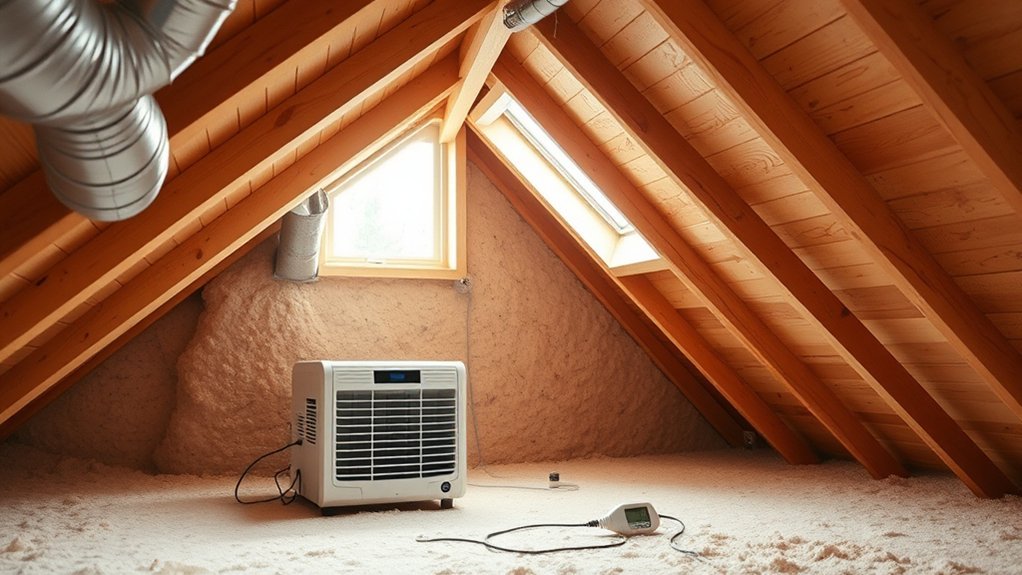
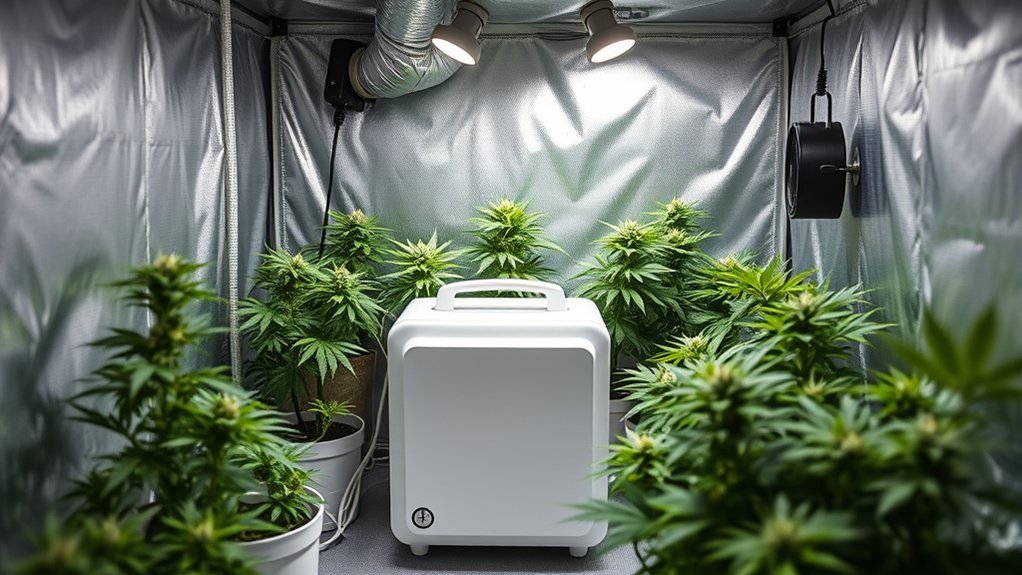
Editor’s note: A sump pump removes collected water, but it does not dry damp air. If your basement smells musty, feels sticky, or keeps stored items damp, a dehumidifier with continuous drainage can help control humidity between sump pump cycles.
Best overall direction: Choose a pump model if the drain hose must run upward or across a long route. Choose gravity drainage if the unit can drain downhill into a sump basin, floor drain, or safe drain point.
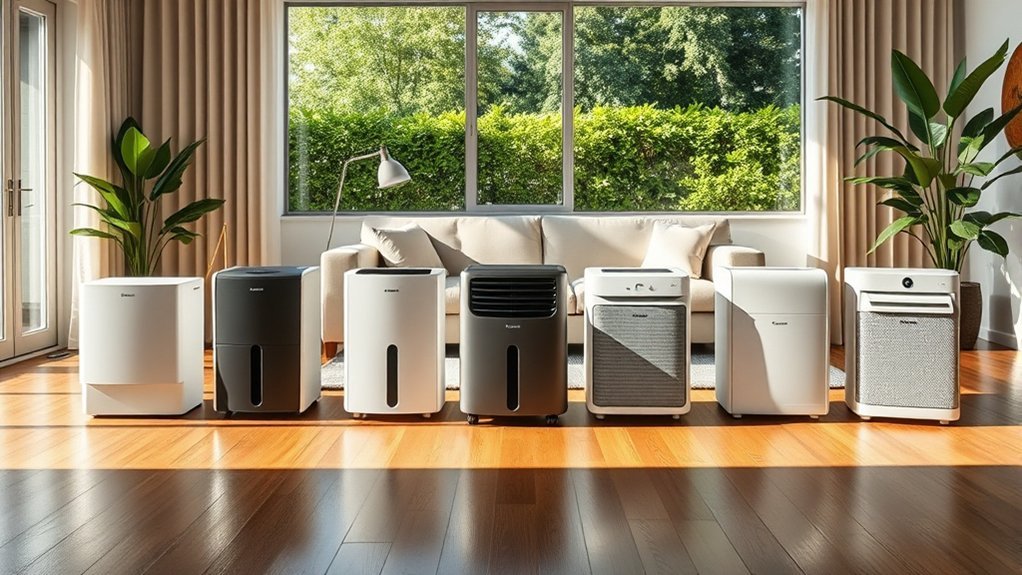
If your basement stays damp even with a sump pump, the pump may be handling standing water while the air still holds too much moisture. You need a dehumidifier with enough capacity for the basement size, a reliable drainage setup, and efficient nonstop operation so the unit can run without constant bucket emptying. Top picks in 2026 include the HBN Crawl Space Dehumidifier, Vellgoo Max, Gasbye, Sijipt, hOmeLabs, AEOCKY, Waykar, ALORAIR, and DECIUU. Compare coverage, pint capacity, pump lift, hose drainage, energy use, noise, filter access, tank size, and basement placement before buying. The right model can protect stored items, reduce musty air, and help keep your basement more comfortable.
Quick Picks: Best Basement Dehumidifiers With Pump-Friendly Drainage
- Best heavy-duty crawl space pick: HBN Crawl Space Dehumidifier 125 Pints with Pump.
- Best energy-conscious large-room pick: Vellgoo Max 64 Pint Energy Star Dehumidifier.
- Best quiet pump option: Gasbye Energy Star Dehumidifier with Replaceable Pump.
- Best hands-off large basement pick: Sijipt 80 Pint Dehumidifier with Pump.
- Best smart-control pick: hOmeLabs Wi-Fi Dehumidifier with Pump.
- Best flexible drainage pick: AEOCKY 4500 Sq.Ft Energy Star Dehumidifier with Pump.
- Best simple large-space pick: Waykar 80 Pints Energy Star Dehumidifier.
- Best compact crawl space pick: ALORAIR 70 Pints Crawl Space Dehumidifier with Pump.
- Best high-capacity basement pick: DECIUU 100 Pint Dehumidifier with Pump.
Before you choose:
- Measure your basement square footage and check whether the space is mildly damp, very damp, or wet after rain.
- Confirm where the water will drain: sump basin, floor drain, utility sink, window route, or bucket.
- Choose a built-in pump when the hose must lift water upward.
- Choose a gravity hose when the hose can slope downward safely.
- Leave space around the intake and exhaust so damp air can circulate through the unit.
Comparison Table
| Product | Best For | Listed Coverage / Capacity | Drainage Style | Check Price |
|---|---|---|---|---|
| HBN Crawl Space Dehumidifier 125 Pints with Pump | Large basements and crawl spaces | Up to 5,900 sq. ft.; up to 125 pints/day | Gravity hose or pump drainage | Check Price on Amazon |
| Vellgoo Max 64 Pint Energy Star Dehumidifier | Energy-efficient basement drying | Up to 4,000 sq. ft.; up to 64 pints/day | Tank or included hose | Check Price on Amazon |
| Gasbye Energy Star Dehumidifier with Replaceable Pump | Quiet operation with pump drainage | Up to 4,500 sq. ft.; up to 75 pints/day | Replaceable pump, hose, or bucket | Check Price on Amazon |
| Sijipt 80 Pint Dehumidifier with Pump | Hands-off large basement use | Up to 5,000 sq. ft.; up to 80 pints/day | Built-in pump or gravity drainage | Check Price on Amazon |
| hOmeLabs Wi-Fi Dehumidifier with Pump | Wi-Fi control and large spaces | Up to 7,500 sq. ft.; removes 50 pints/day under normal conditions | Built-in pump | Check Price on Amazon |
| AEOCKY 4500 Sq.Ft Energy Star Dehumidifier with Pump | Efficient large-basement moisture control | Up to 4,500 sq. ft.; up to 80 pints/day | Built-in pump | Check Price on Amazon |
| Waykar 80 Pints Energy Star Dehumidifier for Large Spaces | Simple large-space drying | Up to 5,000 sq. ft.; up to 80 pints/day | Tank or continuous hose drainage | Check Price on Amazon |
| ALORAIR 70 Pints Crawl Space Dehumidifier with Pump | Smaller basements and crawl spaces | Up to 1,000 sq. ft.; up to 70 pints/day in saturated conditions | Gravity drainage or pump discharge | Check Price on Amazon |
| DECIUU 100 Pint Dehumidifier with Pump | High-capacity basement moisture removal | Up to 5,000 sq. ft.; up to 100 pints/day | Built-in pump or tank | Check Price on Amazon |
Buying tip: Choose a unit based on your actual basement size, moisture level, and drainage route. A sump basin can be convenient, but you should make sure the hose is secure, the basin has enough capacity, and the setup follows local requirements and the sump system can handle the added condensate.
Capacity note: Pint-per-day ratings are not always measured under the same temperature and humidity conditions. Compare standard-condition ratings when available, and treat maximum square-foot coverage as a sizing guide rather than a guarantee.
HBN Crawl Space Dehumidifier 125 Pints with Pump
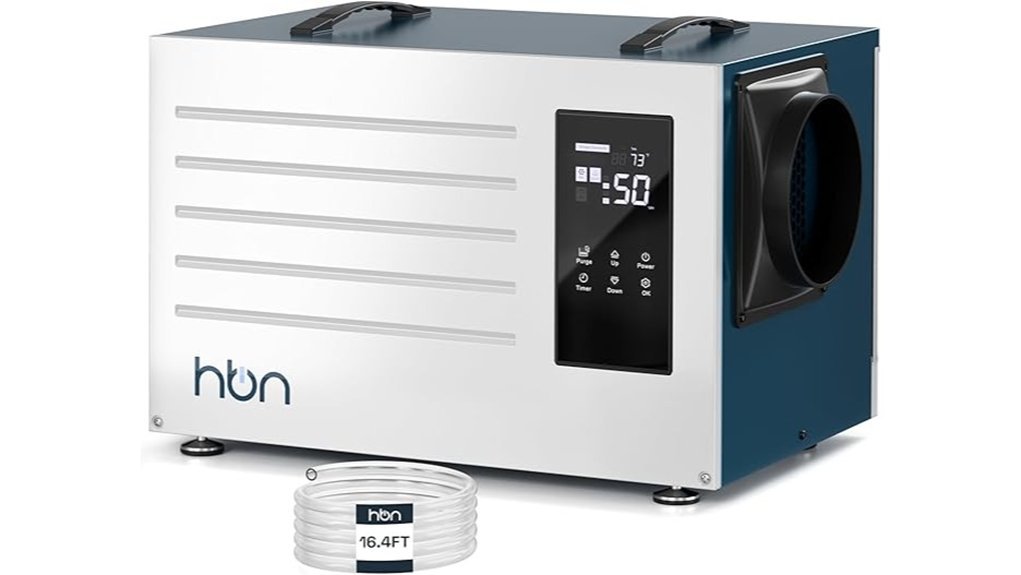
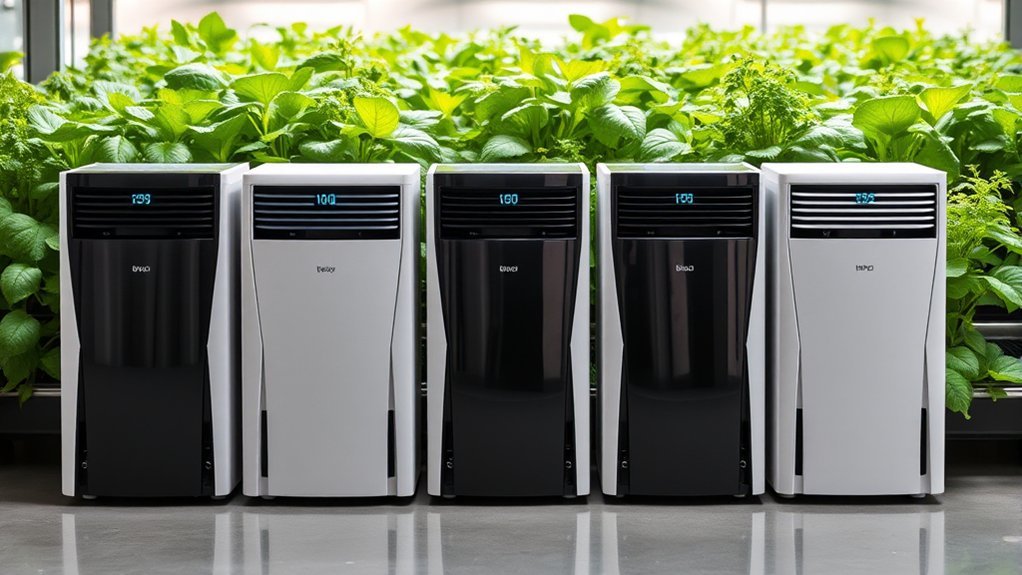
The HBN Crawl Space Dehumidifier 125 Pints with Pump is a strong pick if you need serious moisture removal for a large basement or crawl space. You get up to 125 pints a day in hot, humid conditions and coverage for spaces up to 5,900 square feet. Its 10%–90% humidity control lets you fine-tune comfort, while automatic defrost keeps it working in colder areas. Use the gravity hose for simple draining, or let the pump move water up to 16.4 feet. You also get touchscreen controls and power-failure memory; check the current listing for warranty terms.
Why you’ll like it: This model is built for buyers who do not want a small room dehumidifier struggling in a big, damp area. The pump option is helpful when your drainage route is not perfectly downhill.
Best For: Homeowners needing a powerful dehumidifier for large basements or crawl spaces with flexible drainage options and easy humidity control.
Pros:
- Handles large areas up to 5,900 sq. ft. with strong moisture removal.
- Dual drainage options include a gravity hose and a pump that can lift water up to 16.4 feet.
- Touchscreen controls, power-outage memory, and automatic defrost add convenience and reliability.
Cons:
- Bulkier than standard home dehumidifiers, so it may be less convenient in tight spaces.
- 125-pint rating is under hot, humid conditions; real-world performance may be lower.
- No weight listed, which makes portability harder to judge.
Who should buy this: Choose it if your basement, crawl space, or storage area has heavy humidity and you need a strong pump-friendly drainage setup.
Who should avoid this: Skip it if you need a compact unit for one small finished room or if you plan to move the dehumidifier often.
Quick verdict: Choose this one if your basement or crawl space is large, damp, and needs flexible drainage. Skip it if you need a small room unit that is easy to carry upstairs.
Vellgoo Max 64 Pint Energy Star Dehumidifier
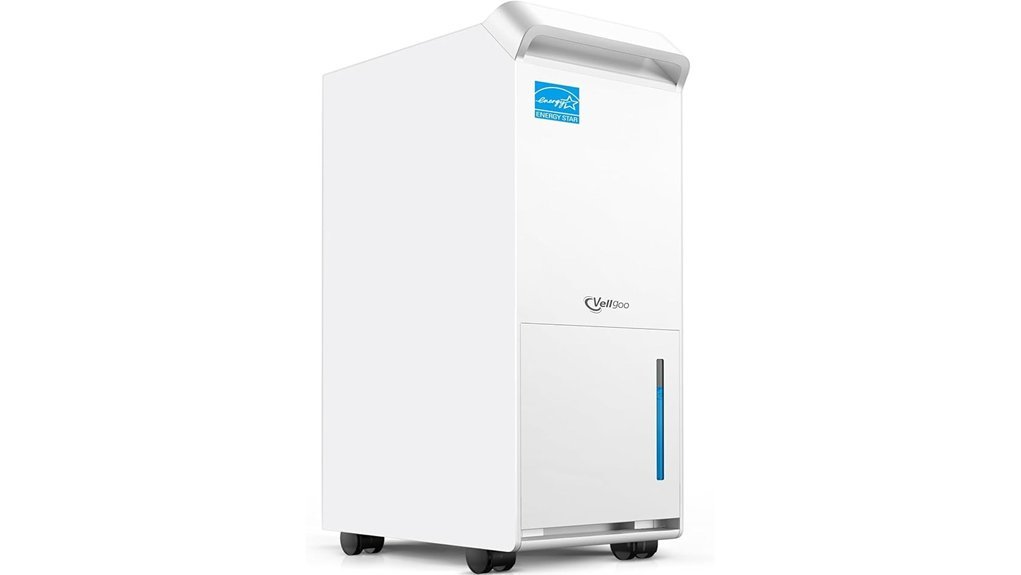
If you need strong basement coverage, the Vellgoo Max handles spaces up to 4,000 square feet. It pulls up to 64 pints a day, so you can control damp air in large residential spaces with confidence. Its ENERGY STAR Most Efficient 2024 listing makes it a strong option for buyers who prioritize energy efficiency. You can run continuous, comfort, or humidity control modes, and the rotary compressor plus “3+2” coil system speeds drying. Use the washable filter, 24-hour timer, child lock, and 5.5-liter tank, or connect the included hose for nonstop drainage.
Why you’ll like it: This is a good fit when you want basement moisture control without choosing the largest pump model on the list. The included hose supports continuous drainage when your setup allows a downhill route.
Best For: Homeowners needing a high-capacity, energy-efficient dehumidifier for large spaces like basements, garages, and other residential areas up to 4,000 sq. ft.
Pros:
- Removes up to 64 pints of moisture per day, making it effective for large damp spaces.
- ENERGY STAR Most Efficient 2024 listing supports energy-conscious operation.
- Offers flexible operation with continuous, comfort, and humidity control modes plus multiple drainage options.
Cons:
- Larger footprint may take up significant floor space.
- 5.5-liter tank still requires manual emptying if not using the hose.
- Best suited for residential use, so it may not be ideal for heavier commercial applications.
Who should buy this: Choose it if your basement has moderate to heavy humidity and you want energy-conscious continuous hose drainage.
Who should avoid this: Skip it if your drain route requires upward water lift, because a built-in pump model will be easier.
Quick verdict: This is a practical fit if energy savings matter and you have a large residential basement. Skip it if you need built-in pump lift rather than hose or tank drainage.
Gasbye Energy Star Dehumidifier with Replaceable Pump
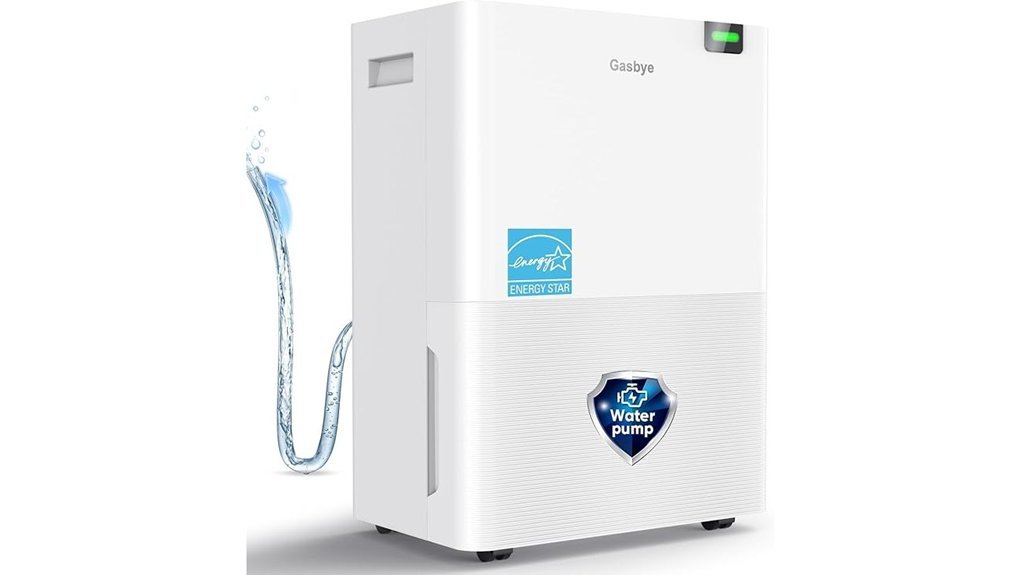
Gasbye’s ENERGY STAR Most Efficient 2024 dehumidifier is a smart pick for large basements up to 4,500 square feet. It is rated for up to 75 pints a day under the manufacturer’s stated high-humidity conditions. Its 44 dB listed noise level helps keep operation quieter, and the included pump hose supports flexible drainage. Use the removable, cleanable, replaceable pump, gravity drainage, or the bucket depending on your setup. Auto shut-off, automatic operation features, and multiple modes make day-to-day control easier. Check the current listing for warranty terms and coverage details.
Why you’ll like it: The replaceable pump design gives this model a practical advantage for buyers who plan to run their dehumidifier often and want easier pump maintenance over time.
Best For: Homeowners with large basements or damp spaces up to 4,500 square feet who want a quiet, energy-efficient dehumidifier with flexible drainage options.
Pros:
- ENERGY STAR Most Efficient 2024 certification supports energy-conscious operation.
- Replaceable, cleanable pump with a 16.5-foot drain hose for versatile drainage.
- Quiet 44 dB operation plus smart auto shut-off, auto restart, and four modes.
Cons:
- At about 35.3 pounds, it may still feel heavy to move frequently.
- 1.45-gallon tank may still require emptying if bucket mode is used frequently.
- Best suited for larger spaces, so it may be overkill for smaller rooms.
Who should buy this: Choose it if you want quieter operation, pump drainage, and a design that may be easier to service.
Who should avoid this: Skip it if your basement is small, lightly damp, or already has a simple downhill drain route.
Quick verdict: Pick Gasbye if quiet running and a serviceable pump are high priorities. Skip it if you only need a small, basic dehumidifier for light humidity.
Sijipt 80 Pint Dehumidifier with Pump
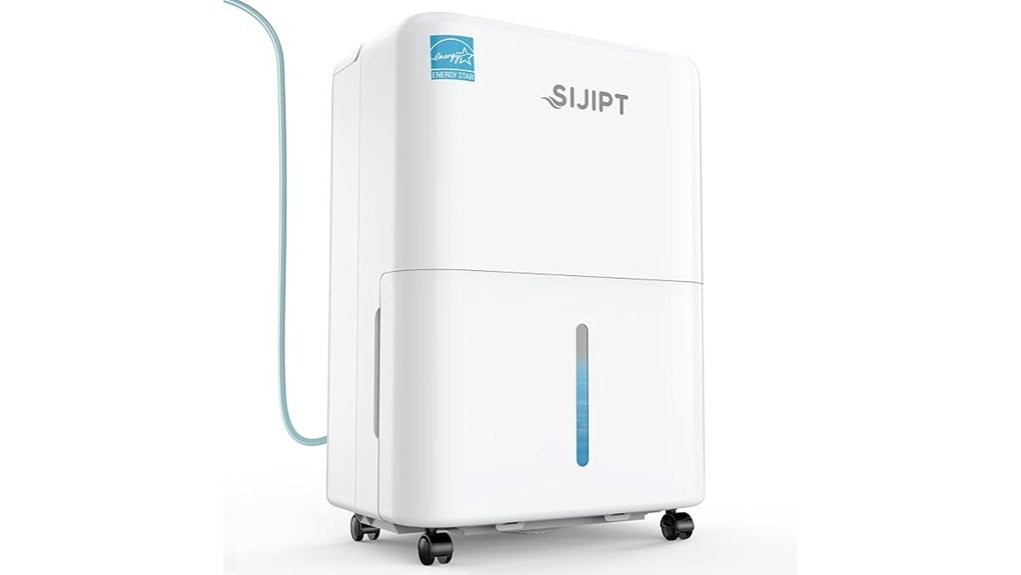
Need a hands-off basement solution? The Sijipt 80 Pint Dehumidifier with Pump covers up to 5,000 square feet and removes 80 pints a day, so you can tackle damp spaces fast. Its built-in pump sends water sideways or up to 16.4 feet, while the included hose supports gravity drainage for nonstop operation. You’ll also save energy with Energy Star certification and keep things quiet at 45 decibels. Use DEHU, DRY, or CONT mode, move it easily with rolling wheels, and rely on auto-defrost, overheat protection, child lock, and power-failure memory.
Why you’ll like it: This model is easy to position because it combines wheels, pump drainage, gravity drainage, and automatic safety features. That makes it useful for basements where the drain route may change later.
Best For: Homeowners, renters, or property managers who need a powerful, low-maintenance dehumidifier for large spaces like basements, garages, RVs, or bedrooms.
Pros:
- Covers up to 5,000 sq. ft. and removes up to 80 pints per day for strong moisture control.
- Built-in pump and gravity drain option allow flexible, hands-off continuous drainage.
- Energy Star certified and relatively quiet at 45 decibels with useful convenience features like a timer, child lock, and power-memory restart.
Cons:
- At 440 watts, it may still use noticeable electricity during frequent use.
- The 5-liter tank may be less useful if you’re not using continuous drainage.
- Larger-capacity units like this can take up more floor space than compact dehumidifiers.
Who should buy this: Choose it if you want an 80-pint pump dehumidifier for a large basement and prefer a low-touch drainage setup.
Who should avoid this: Skip it if you only need occasional drying in a small finished room.
Quick verdict: The Sijipt model fits buyers who want strong capacity, wheels, safety features, and pump drainage in one unit. Skip it if your basement is small and does not need 80-pint performance.
hOmeLabs Wi-Fi Dehumidifier with Pump (50 Pint)
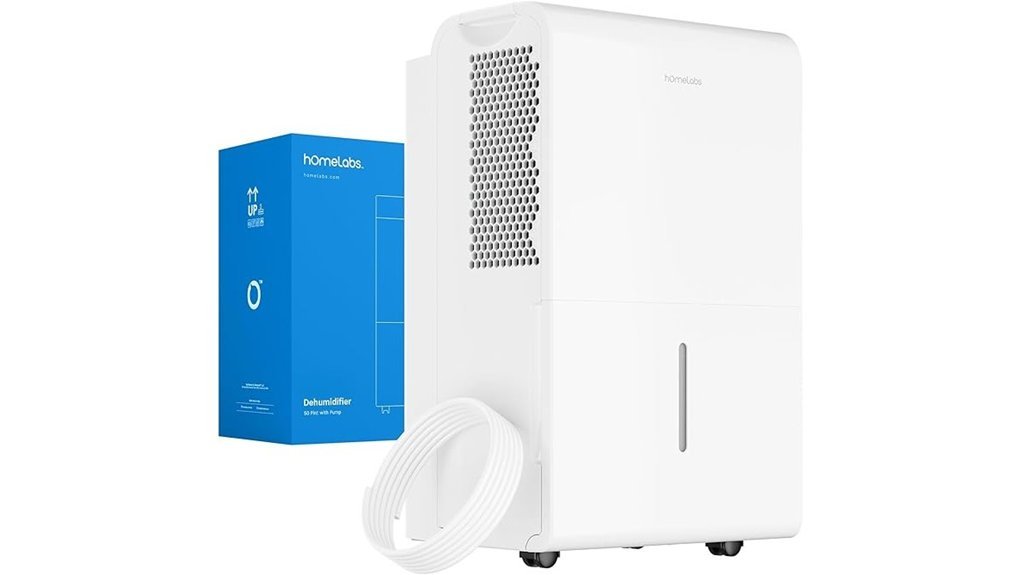
The hOmeLabs Wi-Fi Dehumidifier with Pump is best for large, damp basements that need hands-off moisture control. You can cover up to 7,500 sq ft, and it removes 50 pints a day under normal conditions, with higher capacity in extreme humidity. Wi-Fi lets you adjust settings remotely, while Comfort, Turbo, and Continuous modes give you control. The built-in pump supports nonstop drainage, so you won’t empty buckets often. You also get a digital readout, timer, wheels, and safety shutoff features. Its sleek design fits your space easily.
Why you’ll like it: Wi-Fi control is useful if the dehumidifier sits in a basement storage area, rental space, or utility room where you do not want to check settings every day.
Best For: Homeowners with large, damp spaces like basements, offices, or bathrooms who want powerful moisture removal with Wi-Fi control and continuous drainage.
Pros:
- Covers up to 7,500 sq ft, making it suitable for large areas.
- Built-in pump supports nonstop drainage, reducing the need to empty buckets.
- Wi-Fi connectivity, digital controls, and multiple modes offer convenient remote operation.
Cons:
- At 42.1 pounds, it may be heavy to move despite the wheels.
- Larger capacity units can take up more floor space than smaller dehumidifiers.
- Continuous operation and smart features may be more than some users need for smaller rooms.
Who should buy this: Choose it if you want remote control, built-in pump drainage, and a large-space dehumidifier that is easier to monitor.
Who should avoid this: Skip it if you prefer simple manual controls or do not want app setup.
Quick verdict: Choose hOmeLabs if you want Wi-Fi control and built-in pumping for a large damp space. Skip it if smart controls are not useful to you or if weight is a concern.
AEOCKY 4500 Sq.Ft Energy Star Dehumidifier with Pump
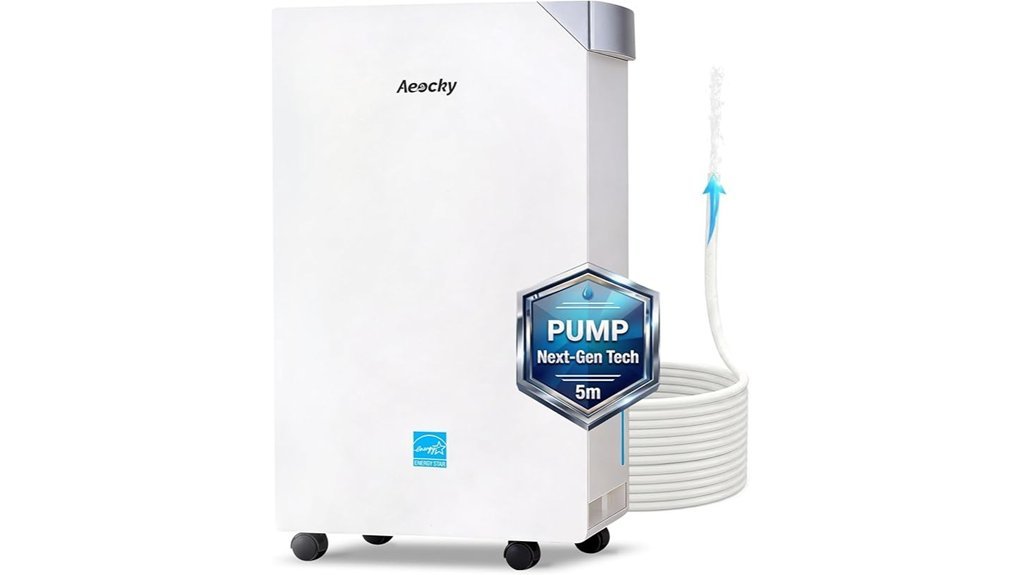
AEOCKY’s 4500 sq. ft. dehumidifier suits you if your basement needs powerful, low-maintenance moisture control. You get an ENERGY STAR Most Efficient 2025 model that pulls up to 80 pints a day, yet still keeps energy use in check. Its intelligent humidistat reacts fast, so you won’t over-dry the space. The built-in pump sends water up to 5 meters, letting you drain almost anywhere. You also get quieter operation, smart socket compatibility, and a durable design tested for long-term reliability. The current Amazon listing also describes three-year coverage, which adds reassurance for long-term use.
Why you’ll like it: It balances strong capacity with pump lift and smart humidity control, which helps if your basement moisture changes after rain, snow melt, or seasonal humidity swings.
Best For: homeowners with large basements or other damp spaces who want powerful, energy-efficient dehumidification with flexible auto-drainage and low-maintenance operation.
Pros:
- ENERGY STAR Most Efficient 2025 model with strong moisture removal up to 80 pints per day.
- Built-in pump lifts water up to 5 meters, making drainage flexible in many setups.
- Quiet-focused design, smart humidistat control, and three-year coverage listed on the current Amazon page.
Cons:
- May be more dehumidifier than needed for small rooms or light humidity issues.
- Pump and smart features can make it more expensive than basic non-pump models.
- Best performance depends on proper setup and access to a suitable drainage route.
Who should buy this: Choose it if you want a strong pump model for a basement where drainage flexibility matters.
Who should avoid this: Skip it if the hose has no safe route to a drain, basin, sink, or other approved discharge point.
Quick verdict: AEOCKY is best for buyers who want efficient drying, pump lift, and a longer listed warranty. Skip it if your setup does not have a practical route for the pump hose.
Waykar 80 Pints Energy Star Dehumidifier for Large Spaces
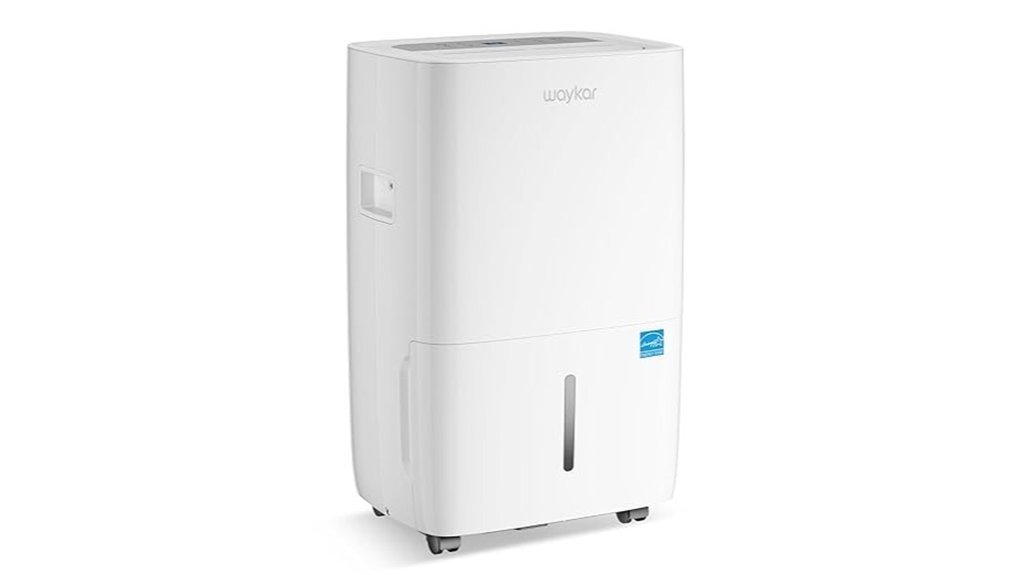
If you need a basement dehumidifier for large, damp spaces, Waykar’s 80-pint model is a strong fit. You can cover up to 5,000 sq. ft. and pull 80 pints a day in hot, humid conditions. The 90° auto swing helps spread dry air evenly, while smart control lets you set humidity from 30% to 80%. ENERGY STAR certification keeps running costs down. It also runs quietly at about 42 dB and protects itself with auto defrost. Use the tank or connect the hose for continuous drainage.
Why you’ll like it: Waykar is a practical choice if you want high listed coverage and straightforward hose drainage without focusing on app control or complex smart features.
Best For: Homeowners, renters, and RV users with large, damp spaces up to 5,000 sq. ft. who want an energy-efficient, quiet dehumidifier with flexible drainage.
Pros:
- Covers up to 5,000 sq. ft. and removes 80 pints of moisture per day in humid conditions.
- ENERGY STAR certified with quiet operation around 42 dB for efficient, low-disruption use.
- Offers smart humidity control, auto defrost, and both tank and continuous drainage options.
Cons:
- Best performance is in very humid conditions, so real-world results may vary by environment.
- The 1.14-gallon tank may need frequent emptying if continuous drainage isn’t used.
- Large-capacity units can still be bulky and take up noticeable floor space.
Who should buy this: Choose it if your drain route can work with continuous hose drainage and you want a simple large-space model.
Who should avoid this: Skip it if you need the hose to push water upward to a sink, window, or high drain.
Quick verdict: Waykar is a good fit if you want straightforward large-space dehumidification with smart humidity control. Skip it if you need a built-in pump that lifts water upward.
ALORAIR 70 Pints Crawl Space Dehumidifier with Pump
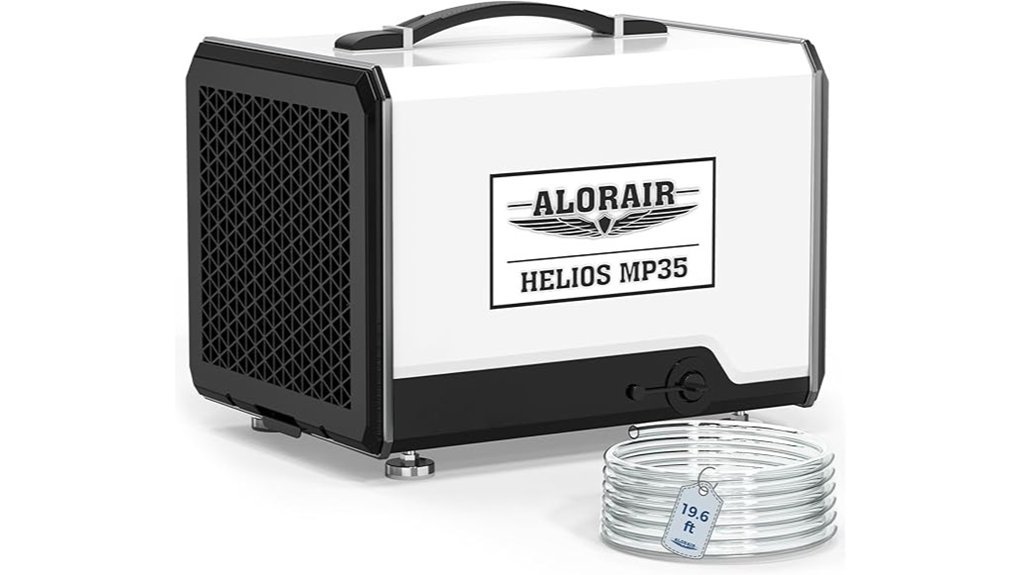
The ALORAIR Helios MP35 is ideal if you need serious moisture control in a small basement or crawl space. You can pull up to 70 pints of water daily in saturated conditions, or 35 pints under AHAM standards, and cover spaces up to 1,000 square feet. Its R32 system helps you manage humidity efficiently, while the corrosion-resistant casing stands up to harsh conditions. You get gravity drainage or pumped discharge up to 19.6 feet. Automatic defrost, GPP mode, restart memory, and ETL listing make it practical and dependable, too.
Why you’ll like it: This is the most focused option for smaller basements and crawl spaces where durability, compact placement, and pump discharge matter more than whole-basement coverage.
Best For: Homeowners who need reliable moisture control in a small basement or crawl space, especially where gravity drainage or pumped discharge is needed.
Pros:
- Removes up to 70 pints of moisture per day in saturated conditions and covers areas up to 1,000 sq. ft.
- Built with a corrosion-resistant casing and efficient R32 humidity control for demanding environments.
- Includes convenient features like automatic defrost, restart memory, and a pump that can discharge up to 19.6 ft.
Cons:
- Best suited for smaller spaces, so it may not be enough for larger basements or whole-home use.
- At 323 watts, it may use noticeable power during extended operation.
- Installation and drainage setup may still require some planning depending on the space layout.
Who should buy this: Choose it if you have a smaller crawl space, utility area, or basement zone that needs a durable pump-capable unit.
Who should avoid this: Skip it if your basement is very large and needs wider room coverage.
Quick verdict: Choose ALORAIR for a smaller basement or crawl space where durability and pumped discharge matter. Skip it for very large basements that need whole-room coverage.
DECIUU 100 Pint Dehumidifier with Pump
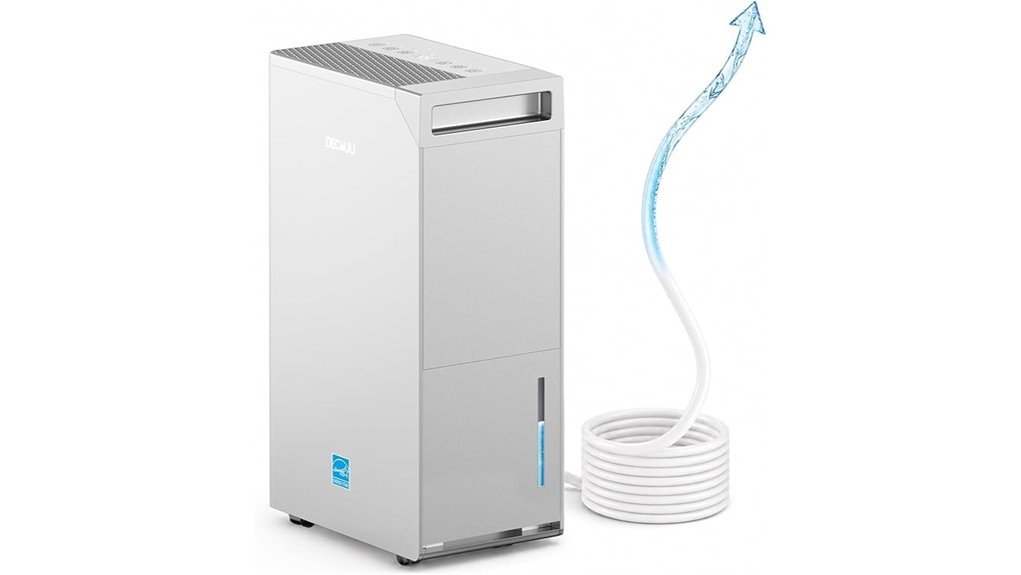
DECIUU’s 100-pint model suits you if your basement needs serious moisture control across large spaces. You can cover up to 5,000 sq. ft. and pull 100 pints a day in hot, damp conditions, so it handles demanding basements well. Its Energy Star Most Efficient 2024 rating and high-efficiency rotary compressor help you save power while keeping performance steady. You also get an intelligent humidity system, a 1.45-gallon tank, and a built-in pump that lifts water up to 16.4 feet. Use the LED panel, timer, child lock, and washable filter for easier daily control.
Why you’ll like it: DECIUU is positioned for basements that need more than basic moisture removal. The 100-pint rating and built-in pump make it easier to manage damp air without relying on bucket emptying.
Best For: Homeowners with large, damp basements or other big spaces up to 5,000 sq. ft. who need strong moisture removal and flexible drainage options.
Pros:
- Handles heavy-duty dehumidification with up to 100 pints per day in high-humidity conditions.
- Built-in pump allows upward drainage up to 16.4 feet, making setup more flexible.
- Energy Star Most Efficient 2024 rating, plus user-friendly features like a timer, child lock, and washable filter.
Cons:
- The unit is large and likely better suited for bigger spaces than small rooms.
- The 1.45-gallon tank may require frequent emptying if continuous drainage isn’t used.
- Features and capacity may be more than some users need, making it less ideal for light-duty use.
Who should buy this: Choose it if your basement is large, humid, and needs a pump model with higher moisture removal capacity.
Who should avoid this: Skip it if your humidity issue is mild or if you need a compact unit for an upstairs room.
Quick verdict: DECIUU fits large, wet basements where high capacity and upward pump drainage are priorities. Skip it if your humidity issue is mild or limited to one small room.
Which Basement Dehumidifier Should You Choose?
For a basement with a sump pump, the best choice depends less on brand name and more on drainage path, moisture load, and how often you want to check the unit. If the dehumidifier sits near the sump basin and the hose can slope downward, gravity drainage may be enough. If the hose must run upward to a sink, window, or high drain, a built-in pump is more convenient.
- For very large or very wet spaces: Start with HBN, DECIUU, Sijipt, Waykar, or AEOCKY.
- For smart control: Consider hOmeLabs.
- For smaller crawl spaces: ALORAIR is the most focused option in this list.
- For lower energy use: Compare the models that highlight ENERGY STAR or Most Efficient ratings.
- For upward drainage: Prioritize HBN, Gasbye, Sijipt, hOmeLabs, AEOCKY, ALORAIR, or DECIUU.
- For simple downhill drainage: Vellgoo Max or Waykar may be enough if your hose can slope safely to the sump basin or floor drain.
Also check the outlet location, drain-hose length, pump lift height, basement temperature, and filter access before buying. A powerful dehumidifier can still be frustrating if the hose cannot reach the sump area or the filter is hard to clean.
Quick recommendation box:
Best for the wettest large spaces: HBN or DECIUU.
Best for pump drainage and quiet use: Gasbye, Sijipt, or AEOCKY.
Best for app control: hOmeLabs.
Best for smaller crawl spaces: ALORAIR.
Factors to Consider When Choosing a Dehumidifier for Basement With Sump Pump
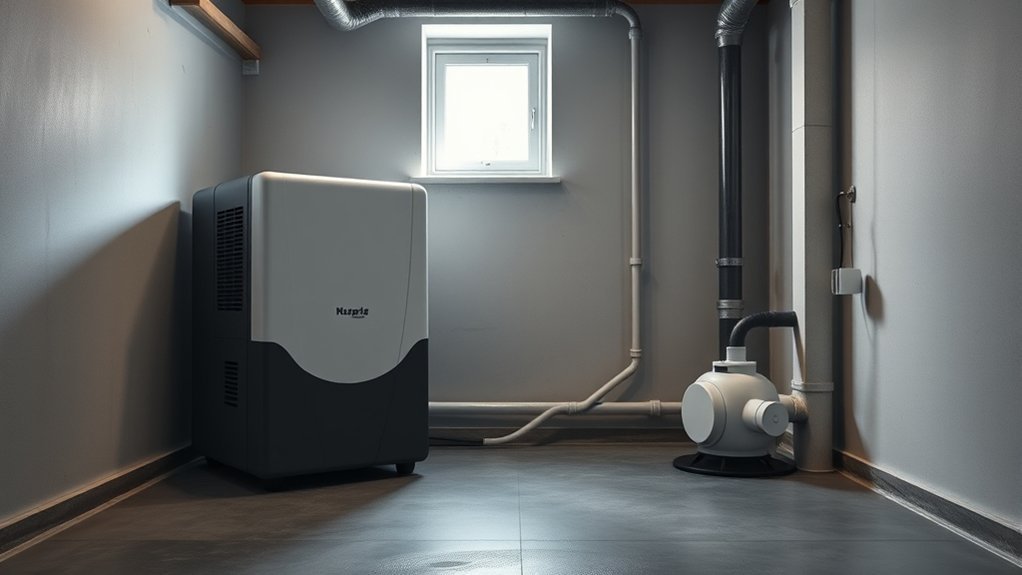
When you choose a dehumidifier for a basement with a sump pump, check the pump drainage options first so water flows out smoothly. You’ll also want to match the unit’s coverage area and humidity control range to your basement size and moisture level. Energy efficiency, noise, and easy maintenance matter too, since they affect both your comfort and long-term costs.
Pump Drainage Options
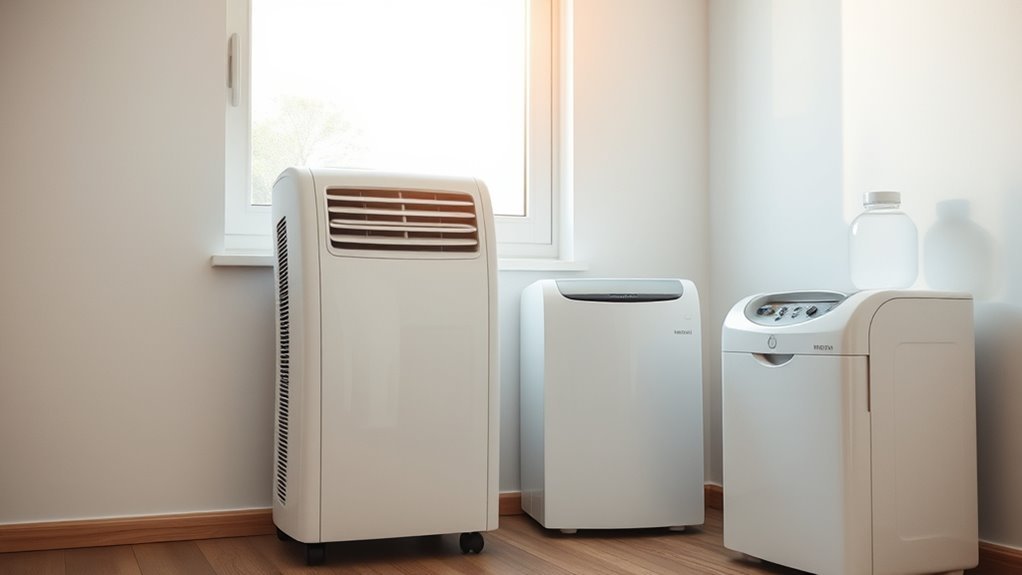
If you’re choosing a basement dehumidifier with a sump pump nearby, drainage options should be high on your checklist. A built-in pump can move water up to 16.4 feet or more on some models, so you can route condensate even when a drain isn’t close by. If your setup allows it, a gravity drain hose lets you send water straight to plumbing, a sump basin, or an outdoor drain, and you won’t have to empty a tank. Some units also give you dual drainage, so you can switch between pump and gravity modes as your basement setup changes. That flexibility helps you keep humidity down without interruptions. Check the pump’s lift height and hose length before you buy, because both need to match your basement layout for reliable, continuous drainage.
Safety note: A dehumidifier is not a replacement for a sump pump. If you see standing water, active seepage, or repeated sump overflow, fix the water problem first and use the dehumidifier to control leftover humidity.
Basement Coverage Area
Coverage area is one of the first things you should check when choosing a basement dehumidifier for a home with a sump pump. You’ll want a model rated for your basement’s square footage, since many units cover about 1,000 to 7,500 square feet. Match that rating with the unit’s capacity, usually 50 to 125 pints per day, so it can keep up with your space. In a larger basement, higher CFM helps move damp air faster and improve moisture removal. You should also check whether the unit can perform in very humid conditions, such as 95°F and 90% relative humidity. Finally, think about your layout. A dehumidifier with 360° mobility, casters, handles, or adjustable drainage lets you place it better and keeps airflow moving where you need it most.
Humidity Control Range
Humidity control range matters because it determines how precisely you can keep your basement dry without overdoing it. You’ll usually see dehumidifiers that let you set humidity across a wide RH range, so you can fine-tune conditions for your space. For many basements, a target around 30% to 50% RH is commonly used to stay comfortable and discourage mold-friendly dampness. If your basement gets especially damp, choose a unit that can handle heavy moisture loads and still respond accurately. Some models remove up to 80 pints per day or more in hot, saturated conditions, and advanced sensors can adjust settings automatically as humidity changes. That’s especially useful when you’re pairing the unit with a sump pump, since consistent control helps protect your basement from lingering moisture and musty air.
Energy Efficiency Ratings
When you’re choosing a dehumidifier for a basement with a sump pump, energy efficiency ratings matter because they can lower electricity costs without sacrificing moisture control. Look for ENERGY STAR certification or Most Efficient wording when listed, since efficient models can reduce energy use compared with older or less efficient units. You’ll also get better performance from dehumidifiers with high-efficiency compressors and optimized airflow, which remove more moisture with less power. Match the pint capacity to your basement’s size and humidity level; in damp spaces, a larger-capacity model can sometimes run more efficiently than an undersized model that never catches up. Continuous operation modes help maintain steady humidity without frequent cycling. Programmable timers and smart humidity controls let you run the unit only when needed, further reducing waste.
Noise And Maintenance
Noise and maintenance can make a big difference in how well a basement dehumidifier fits your routine. If you use the space for storage, work, laundry, exercise, or relaxation, choose a model that runs quietly; some units operate around 40 to 45 dB, so they are less likely to disrupt everyday use. You should also look for simple upkeep. Washable filters, self-cleaning pumps, accessible tanks, and other low-maintenance features can save you time and effort. Cleaning or replacing filters regularly helps the unit run efficiently and last longer. An automatic shut-off also matters, because it stops overflow when the tank fills up. For the easiest setup, pick a dehumidifier with a built-in pump when your drain route is not downhill, so you can drain water automatically and keep humidity steady without constant monitoring.
Sump Basin Safety And Placement
If you plan to drain into a sump basin, make sure the hose is secured so it cannot slip out or kink. Keep the end of the hose where water can flow freely, and do not block the sump float switch. You should also confirm that the basin can handle the extra water during rainy periods. A dehumidifier produces a steady flow of condensate, and the sump pump may already be working hard during storms. Good placement also matters. Keep the dehumidifier level, leave open air around the intake and exhaust, and avoid placing it in dusty corners where the filter will clog quickly.
Pro tip: If your basement has one wet corner, place the dehumidifier where airflow can pull damp air from that zone, not directly against a wall. Use a separate fan only if needed to help move air across a long or divided basement.
Buyer hesitation reducer: Do not buy only by pint rating. A lower-capacity model with the right drainage path can be easier to live with than a stronger unit that is hard to drain, clean, or place.
Frequently Asked Questions
Can a Dehumidifier Drain Into the Same Sump Pump Basin?
Yes, you can drain your dehumidifier into the same sump pump basin if local requirements allow it and the basin has enough capacity. You’ll want secure tubing, a check on overflow risk, and regular maintenance. Make sure the hose does not interfere with the sump pump float or lid.
How Often Should Basement Dehumidifier Filters Be Cleaned?
You should clean your basement dehumidifier filter every 2 to 4 weeks, or sooner if dust builds up. You’ll keep airflow strong, reduce strain, and help the unit run efficiently year-round. In dusty basements, check the filter more often during the first month.
Do Dehumidifiers Help Prevent Mold Around Sump Pumps?
Yes, dehumidifiers help prevent mold around sump pumps by lowering moisture, so you can keep damp surfaces drier and less welcoming to mold. You’ll still need to fix leaks, clean regularly, and ventilate well. A dehumidifier helps with humidity, but it cannot solve standing water or active seepage.
Will a Dehumidifier Increase My Basement Electricity Bill?
Yes. The amount depends on the unit, local electricity rates, basement conditions, and how often it runs. You’ll see higher use if it runs often, yet an efficient model with a humidistat keeps costs down by cycling on only when your basement needs drying.
Can Smart Dehumidifiers Alert Me to Sump Pump Problems?
Yes, some smart dehumidifiers can alert you to humidity changes, tank status, or operating problems, which can serve as an early warning that conditions have changed. They may not directly diagnose a sump pump failure, but a sudden humidity spike can be an early sign that you should inspect the basement, sump basin, drainage hose, and pump area.
What Humidity Should a Basement With a Sump Pump Stay At?
A practical target for many basements is often around 30% to 50% relative humidity. If the air still smells musty or surfaces feel damp, lower the setting gradually and check for leaks, blocked airflow, or poor drainage. Avoid setting the humidity too low if it makes the unit run nonstop without a clear benefit.
Do I Need a Built-In Pump if I Already Have a Sump Pump?
Not always. If the dehumidifier can drain downhill into the sump basin or a floor drain, a gravity hose may work. A built-in pump helps when the hose must run upward or across a longer route. Think of the sump pump as the final water exit and the dehumidifier pump as the helper that gets condensate to that exit.
Where Should I Place a Dehumidifier in a Basement?
Place it where air can move freely around the intake and exhaust, close enough to a safe drainage route, and away from dust-heavy corners when possible. Keep the hose secure so it cannot slip out of the basin or drain. If the basement has divided rooms, you may need to leave doors open or use airflow support so damp air reaches the unit.
Is a Bigger Dehumidifier Always Better for a Basement?
No. A bigger dehumidifier can help in a wet or large basement, but it can also cost more, take up more room, and use more power than needed. Match the unit to your basement size, humidity level, drainage path, and how often you want to check the machine.
Should I Use Bucket Mode Or Continuous Drainage?
Continuous drainage is usually better for basements because humidity can build up quickly when the bucket fills and the unit shuts off. Bucket mode is fine for occasional use, testing placement, or spaces without a safe drain route. For long-term basement use, a hose or pump setup is usually more convenient.
Conclusion
Choosing the right dehumidifier for your basement with a sump pump means balancing power, drainage, and daily convenience. A bulky unit can feel like overkill, yet a too-small one leaves dampness behind. For large wet basements, look first at high-capacity pump models like HBN, Sijipt, AEOCKY, Waykar, or DECIUU. For smart monitoring, hOmeLabs is the strongest fit in this list. For a smaller crawl space, ALORAIR is easier to match to the job. Pick a model with enough capacity for your space, a drainage path that actually works, and energy-saving features, and you’ll keep your basement dry with less day-to-day hassle.
Final buying advice: Do not choose only the highest pint rating. Choose the model that matches your basement size, moisture level, and drain route.
Choose HBN or DECIUU for heavy-duty moisture removal.
Choose Gasbye, Sijipt, AEOCKY, or hOmeLabs if pump drainage is a top priority.
Choose Vellgoo Max or Waykar if hose drainage is enough and you want straightforward large-space drying.
Choose ALORAIR if your main concern is a smaller crawl space or compact basement zone.