Affiliate disclosure: As an Amazon Associate, we may earn from qualifying purchases. This does not affect how products are assessed. Product specifications, voltage, seller terms, import charges, and availability can change.
A dehumidifier can help with mould prevention by lowering excess indoor humidity, but it will not remove existing mould or repair the leak, condensation, or water damage causing it. For homes in India, electrical compatibility is especially important: confirm that the exact appliance label supports 220–240V and 50Hz before connecting it to a household outlet.
Important for buyers in India: A plug adapter changes only the plug shape; it does not convert voltage. Do not connect a 110–120V dehumidifier directly to a 230V outlet. Check the unit label, manual, plug type, warranty coverage, and seller’s return policy before ordering an imported appliance.
India normally uses 230V, 50Hz electricity. You can review the country power information at World Standards.
Quick verdict: The retained ToLife model is a compact thermoelectric option for localized moisture control in a small enclosed room. It is not a substitute for a high-capacity compressor dehumidifier when an entire flat, large bedroom, basement, or severely damp area needs treatment.
Before buying: Confirm that the exact unit supplied to you is marked for 220–240V operation and that its extraction capacity is sufficient for your measured humidity problem.
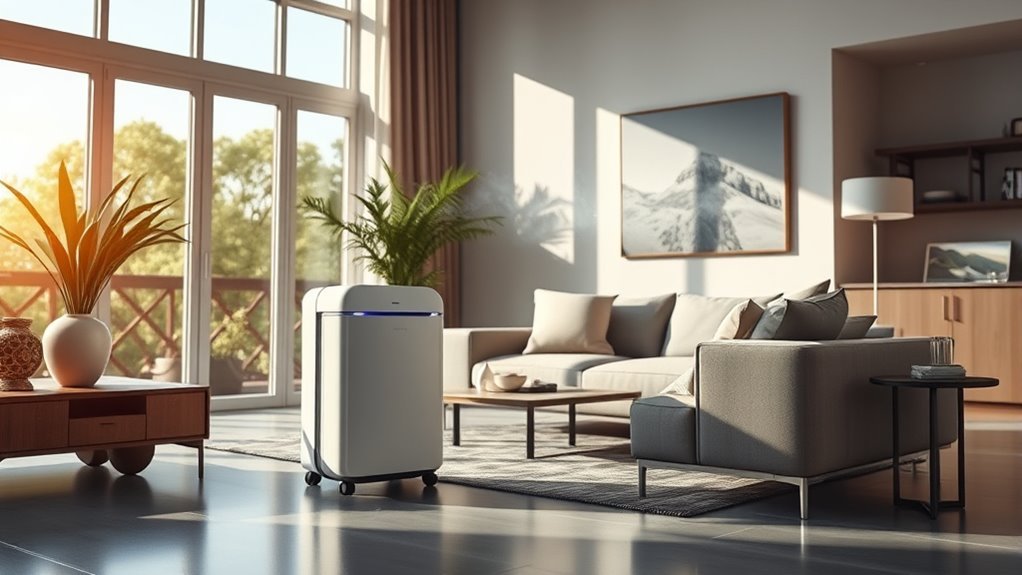
ToLife Dehumidifier for Home (1000 sq.ft)
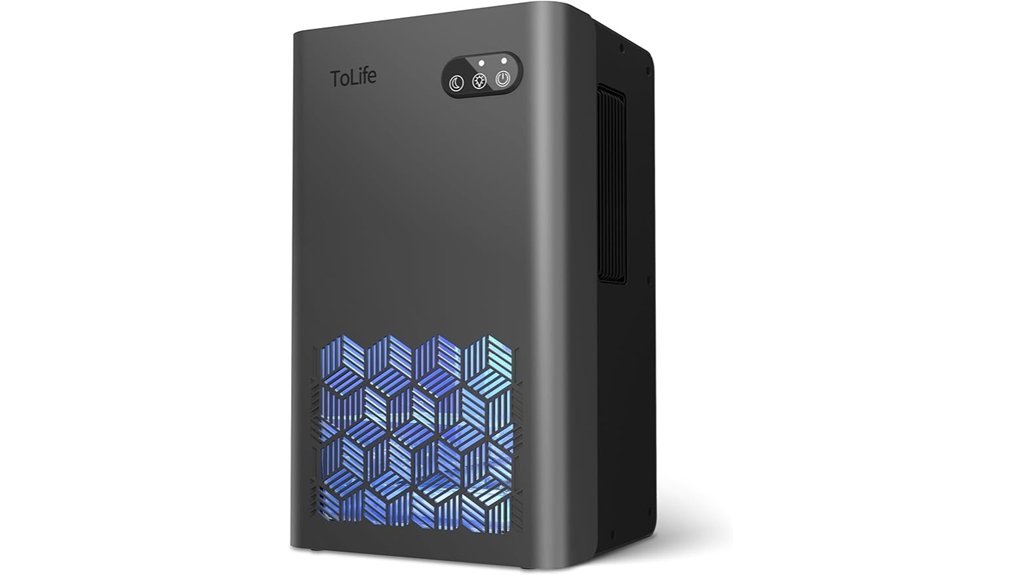
The ToLife Dehumidifier is a compact thermoelectric model designed for quiet, low-power moisture collection. Seller-provided specifications associate this model with a 95-ounce tank and moisture removal of up to approximately one litre per day under favourable test conditions.
Although the listing promotes coverage of up to 1,000 square feet, buyers should not interpret that figure as a guarantee that the unit can control severe humidity throughout a large open space. Its extraction rate makes it more appropriate for a small enclosed bedroom, bathroom, wardrobe area, utility corner, or other localized damp spot.
| Technology | Thermoelectric semiconductor condensation |
|---|---|
| Seller-stated extraction | Up to approximately 1 litre per day under favourable conditions |
| Tank capacity | 95 fluid ounces |
| Operating choices | Higher-output mode and lower-noise sleep mode |
| Drainage | Removable collection tank; continuous drainage is not confirmed |
| Electrical check | Confirm 220–240V and 50Hz on the exact product label before use in India |
Best for: Localized humidity control in a small enclosed space where low noise and portability matter.
Avoid this model if: You have widespread condensation, persistent humidity above 60%, an open-plan room, water intrusion, wet walls, or an active mould problem covering a large area. Those conditions generally require stronger moisture-source control and may require a compressor dehumidifier or professional assessment.
Why You May Like It
- Compact body that is easier to move than a full-size compressor unit.
- Lower-noise operating mode for bedrooms and occupied rooms.
- Automatic shut-off helps reduce the risk of tank overflow.
- Large tank relative to many compact thermoelectric models.
- Simple controls without a complicated setup process.
Limitations to Consider
- The one-litre-per-day figure is an upper test-condition claim, not a guaranteed result in every room.
- Thermoelectric performance normally drops in cooler or less humid conditions.
- The advertised floor-area figure is less useful than the actual extraction rate.
- It does not include a confirmed built-in humidistat for maintaining a precise relative-humidity target.
- It will not clean established mould from walls, furniture, fabric, or building materials.
- Imported warranty, plug, frequency, and return support should be confirmed before purchase.
What a Dehumidifier Can and Cannot Do
A dehumidifier removes water vapour from the air. This can make conditions less favourable for new mould growth and may reduce condensation, musty conditions, and dampness when excess airborne humidity is the main problem.
It does not kill or remove mould that is already growing. Existing contamination should be cleaned using an appropriate method, damaged porous materials may need replacement, and the original moisture source must be corrected. The US Environmental Protection Agency recommends keeping indoor relative humidity below 60% and ideally between 30% and 50% when practical. Its mould and moisture guide also emphasizes fixing the source of moisture.
Safety note: Seek qualified help when mould is widespread, repeatedly returns after cleaning, follows flooding or sewage contamination, affects hidden building cavities, or is linked to continuing roof, plumbing, or structural moisture.
Factors to Consider When Choosing a Dehumidifier for Mould Control in India
Check Voltage, Frequency, and Plug
Start with the rating label or official manual. For normal use in India, look for an input specification that explicitly includes 220–240V and 50Hz. A label showing only 110V, 115V, or 120V is not directly compatible with a standard Indian outlet.
Also check the supplied plug, grounding arrangement, current requirement, and whether the seller provides warranty support in India. Avoid relying only on the country name shown on an import marketplace page.
Compare Real Extraction Capacity
The amount of water a unit can remove per day is more meaningful than its tank size or advertised square-foot coverage. Always note the temperature and relative humidity used for the capacity test because machines collect more water under warm, extremely humid test conditions.
A small thermoelectric unit may be useful for a wardrobe, bathroom, or compact bedroom. A persistently damp living room, coastal flat, monsoon-affected space, or large basement usually needs a compressor unit with a substantially higher daily extraction rating.
Choose Between Compressor and Thermoelectric Technology
Thermoelectric dehumidifiers are compact, light, and relatively quiet. They are best for localized moisture and small enclosed spaces. Their extraction capacity is limited, so they should not be treated as whole-home machines.
Compressor dehumidifiers generally remove much more moisture and are better for large rooms or serious dampness. They are heavier, consume more power, and create more operating noise, but they are usually the practical choice when humidity remains high across a substantial area.
Use a Humidistat or Separate Hygrometer
A model with an adjustable humidistat can cycle automatically around your selected humidity level. When a unit does not display relative humidity, use a separate digital hygrometer rather than judging the room only by how it feels.
A practical target for many homes is around 45% to 50% RH. Avoid driving the room unnecessarily dry, and investigate leaks or ventilation problems when humidity quickly rises again after the machine stops.
Consider Continuous Drainage
In a humid climate, a small tank can fill quickly and stop the machine. A continuous drain connection is useful when the unit can sit above a suitable floor drain or outlet and the hose can maintain a steady downward slope.
Confirm whether a drain hose is included, the required hose diameter, and whether the machine uses gravity drainage or an internal pump. Never position a drain hose where a leak could damage flooring, furniture, or electrical equipment.
Look Beyond Tank Capacity
A large tank reduces how often you need to empty it, but it does not make the dehumidifier more powerful. Extraction capacity determines how quickly moisture is removed; tank capacity determines how much collected water can be stored before shut-off.
Review Noise and Placement
Quieter sleep modes are useful in bedrooms, but lower fan speed may also reduce moisture removal. Place the unit on a firm, level surface with the manufacturer’s recommended clearance around its air inlet and outlet.
Keep windows and exterior doors closed while it is operating. Open access between connected indoor areas only when the unit has enough capacity to treat the combined space.
Plan for Cleaning and Maintenance
Empty and rinse the collection tank regularly, clean the filter according to the manual, and allow washed components to dry fully before reinstalling them. Standing water and dirty internal surfaces can develop odours or microbial buildup.
Inspect the drain hose for blockage, poor slope, algae, or leaks. Unplug the appliance before cleaning and never spray water into the electrical housing.
Check Warranty and Import Support
An imported product may have a warranty that is valid only in its original sales country. Before ordering, confirm who pays for return shipping, whether replacement parts are available, and whether the seller accepts returns after the product has been imported.
Before You Buy Checklist
- Measure the room and record its normal relative humidity with a hygrometer.
- Identify and repair leaks, seepage, condensation, or poor exhaust ventilation.
- Confirm 220–240V and 50Hz on the exact product label or official manual.
- Compare daily extraction capacity, not only tank size or advertised coverage.
- Choose a compressor model for large or persistently wet spaces.
- Check whether continuous drainage is possible at the installation point.
- Review operating noise if the unit will be used in a bedroom.
- Confirm filter-cleaning and tank-cleaning requirements.
- Verify the seller, warranty region, return terms, plug, and included accessories.
How to Use a Dehumidifier for Mould Prevention
- Measure first: Check the room’s humidity at different times of day.
- Fix the moisture source: Repair leaks and improve bathroom, kitchen, or laundry ventilation.
- Close the treatment area: Keep exterior doors and windows closed while the unit runs.
- Place it correctly: Keep the air inlet and outlet clear and place the machine on a level surface.
- Set a sensible target: Aim for approximately 45% to 50% RH unless the manufacturer or building conditions require otherwise.
- Empty or drain it safely: Do not allow the full tank to stop operation for long periods in a damp room.
- Clean it regularly: Wash the tank and maintain the filter according to the manual.
- Recheck the room: If humidity remains high despite continuous operation, the unit may be undersized or the building may have an unresolved moisture problem.
Frequently Asked Questions
Can a Dehumidifier Remove Existing Mould?
No. A dehumidifier can lower airborne moisture and make future mould growth less likely, but existing mould still needs appropriate cleaning or removal. The leak, condensation, seepage, or ventilation problem supporting the growth must also be corrected.
What Humidity Level Helps Prevent Mould?
Keep indoor relative humidity below 60% and ideally around 30% to 50% when practical. A target near 45% to 50% is suitable for many homes, although climate, room temperature, and condensation risk can affect the best setting.
Is a Small Thermoelectric Dehumidifier Enough During the Monsoon?
It may help in a small enclosed room, wardrobe, or localized damp area. It is unlikely to control severe monsoon humidity throughout a large room or an entire home. Persistent high humidity normally requires greater extraction capacity and better moisture-source control.
Can I Use a 120V Dehumidifier in India With a Plug Adapter?
No. A normal plug adapter does not convert India’s 230V supply to 120V. Using a 120V-only appliance directly can damage the machine and create an electrical hazard. Select a model rated for 220–240V and 50Hz unless a qualified professional specifies an appropriately rated conversion solution.
How Often Should the Water Tank Be Emptied?
Empty it whenever the full-tank indicator appears and inspect it at least daily during very humid weather. Cleaning frequency depends on use, but the tank should be rinsed regularly rather than allowing collected water to remain stagnant.
Does a Larger Water Tank Mean Better Performance?
No. A larger tank allows the machine to run longer before shut-off, but daily extraction capacity determines how much moisture it can remove. Compare both figures separately.
Why Does Humidity Return After the Dehumidifier Stops?
Moisture may be entering through outdoor air, wet walls, an active leak, cooking, bathing, drying clothes indoors, or poor ventilation. Rapid humidity recovery can also mean that the machine is undersized for the space.
Conclusion
For mould control in India, electrical compatibility and realistic moisture-removal capacity matter more than decorative features, tank size, or broad square-foot claims. Start by measuring the room’s relative humidity and correcting the underlying source of dampness.
Final recommendation: Consider the retained ToLife model only for localized humidity control in a small enclosed space and only after confirming 220–240V, 50Hz compatibility on the exact unit supplied.
For a large room, persistent monsoon humidity, widespread condensation, or serious dampness, look for a properly rated India-compatible compressor dehumidifier with a humidistat and continuous drainage rather than relying on a compact thermoelectric unit.