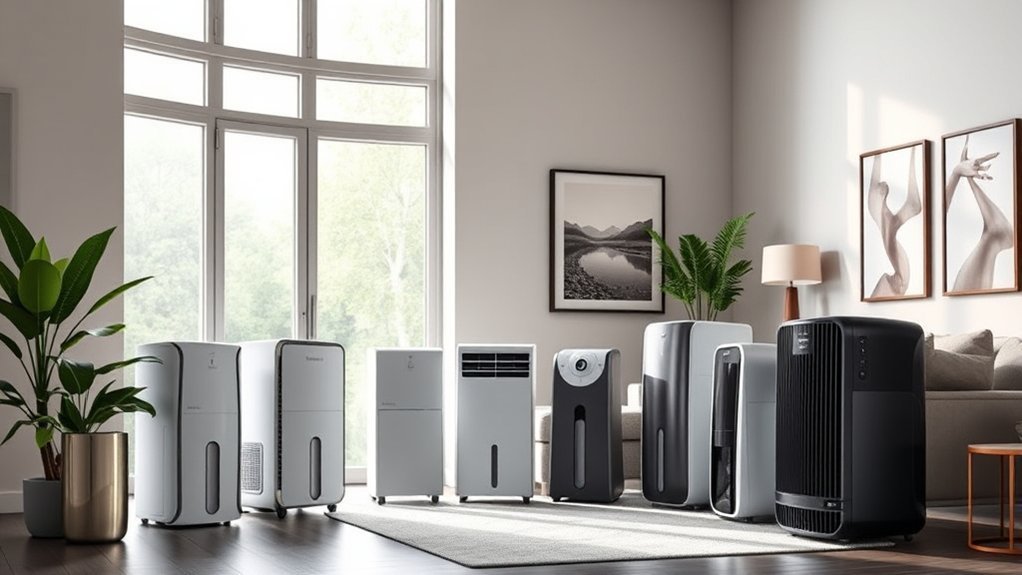
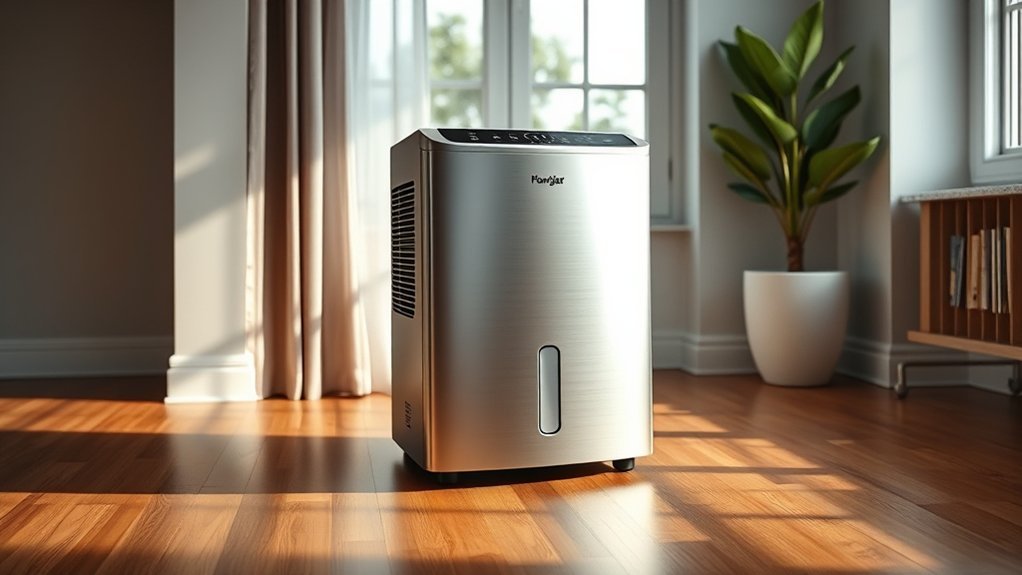
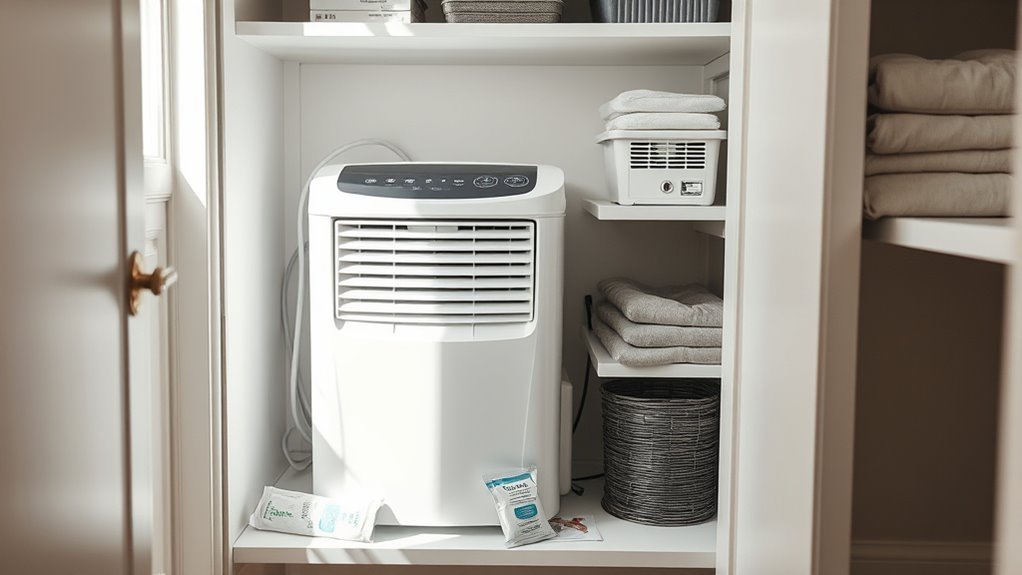
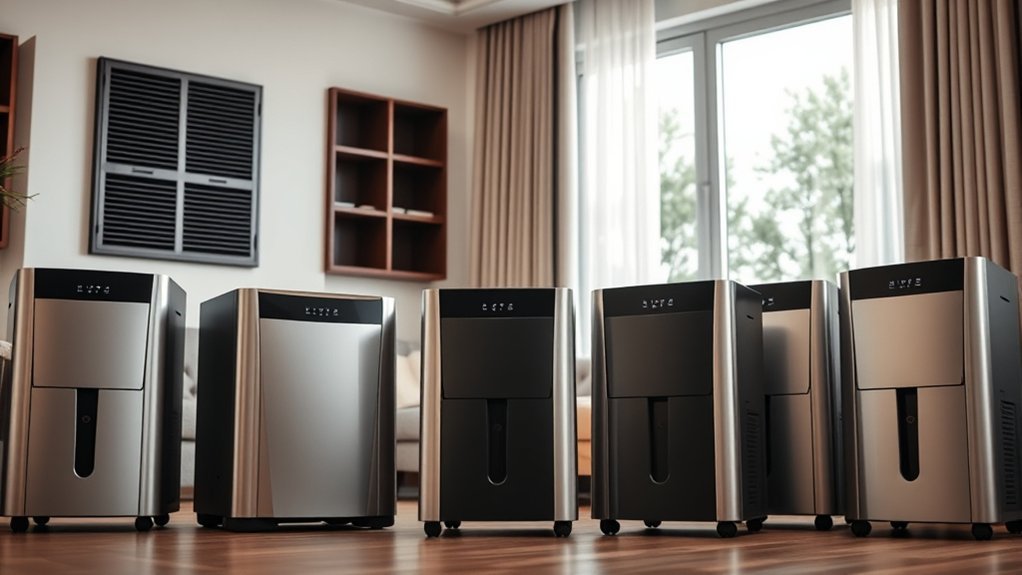
Finding the best dehumidifier for mold removal really means choosing a machine that can control the moisture that allows mold to grow. A dehumidifier does not remove existing mold from walls, ceilings, carpet, insulation, or furniture. It can help maintain drier conditions after leaks are repaired and contaminated materials are properly cleaned or removed.
This guide focuses on portable compressor dehumidifiers with humidistats and drainage options for bedrooms, living areas, garages, and basements. Small thermoelectric units, passive tubs, and rechargeable silica-gel absorbers were excluded because they remove far less moisture and are generally better suited to closets, cabinets, or other localized spaces.
Quick Comparison
| Pick | Product | Capacity Claim and Test Basis | Best For | Amazon |
|---|---|---|---|---|
| Best for Moderate Humidity | Waykar 34-Pint ENERGY STAR Dehumidifier | Up to 34 pints per day at 95°F and 90% RH; not directly comparable with a current DOE-rated 34-pint model. | Moderately damp bedrooms, offices, living areas, and smaller basements with gravity-drain access. | Check on Amazon |
| Best Simple Controls | PLUSCENT 32-Pint Dehumidifier | 32-pint listing claim; confirm the current DOE-rated capacity and test basis on the exact listing. | Everyday humidity control where straightforward settings and an included drain hose are priorities. | Check on Amazon |
| Best for Very Damp Large Spaces | DECIUU Max 100-Pint Dehumidifier | Listed as 70 pints under its lower-condition rating and up to 100 pints under maximum conditions. | Large basements, garages, and open spaces with persistent high humidity. | Check on Amazon |
| Best Quiet-Claim Mid-Size Pick | KNKA 34-Pint Dehumidifier with Drain Hose | 34-pint listing claim; the exact current DOE test-basis rating was not confirmed. | Medium spaces where multiple modes, an included hose, and a lower advertised noise level matter. | Check on Amazon |
| Best Balanced 50-Pint Claim | AEOCKY BOREAS-001 50-Pint Dehumidifier | 50-pint listing claim; confirm the precise test basis for the linked ASIN. | Buyers who want more extraction than compact models without choosing the heaviest unit. | Check on Amazon |
| Best Overall | AEOCKY RHEA-001 4,500 Sq. Ft. Dehumidifier | Listed at 56 pints under its lower-condition rating and up to 80 pints under maximum conditions. | Large residential spaces needing strong capacity, automatic humidity control, and drainage flexibility. | Check on Amazon |
| Best Compact Low-Noise Claim | BANABIE 32-Pint Dehumidifier | 32-pint listing claim; confirm the current standardized rating and noise-test conditions. | Bedrooms and nearby living areas where compact dimensions and quieter operation are priorities. | Check on Amazon |
| Best Large-Capacity Alternative | Yaufey 80-Pint ENERGY STAR Dehumidifier | Up to 80 pints per day at 95°F and 90% RH; verify the current DOE-rated capacity. | Large spaces needing a larger tank, multiple modes, and included hose drainage. | Check on Amazon |
| Best Wi-Fi Pick | hOmeLabs HME1003 50-Pint Wi-Fi Dehumidifier | 50 pints at 80°F and 60% RH; up to 120 pints at 95°F and 90% RH. | Remote basements and large rooms where app control is more important than low weight or an included hose. | Check on Amazon |
Quick Verdict
Best Overall: The AEOCKY RHEA-001 offers the strongest balance of documented capacity, automatic humidity control, drainage accessories, and mobility for a large damp residential area.
Best for Very Damp Spaces: The DECIUU Max 100-Pint model is the better fit when moisture is persistent and a lower-capacity machine is likely to run almost constantly.
Best Wi-Fi Pick: Choose the hOmeLabs HME1003 when app control and remote status checks justify its heavier design and separately purchased drain hose.
Best Moderate-Space Pick: The Waykar model is easier to place in a moderately damp room, but its 34-pint claim is based on hot, highly humid test conditions.
Waykar 34-Pint ENERGY STAR Dehumidifier
Best for Moderate Humidity
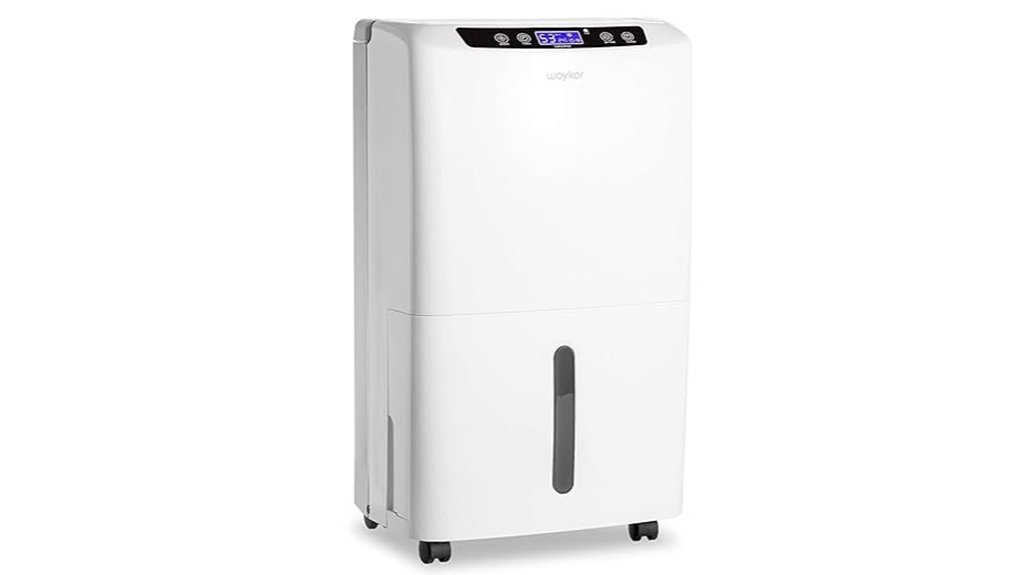
The Waykar PD160B is a practical compressor model for bedrooms, offices, living areas, and moderately damp basements. Its listing describes removal of up to 34 pints per day at 95°F and 90% relative humidity, a 2.5-liter tank, two fan speeds, adjustable humidity settings, a timer, automatic defrost, and continuous gravity drainage. Because the 34-pint number uses hot and highly humid conditions, it should not be compared directly with a current DOE-rated 34-pint machine.
Best For: Moderately damp residential spaces where a compact compressor unit can maintain the target humidity without running continuously.
Why You’ll Like It: The humidistat, included hose, tank, timer, and wheels provide more flexibility than a mini thermoelectric unit.
Who Should Avoid It: Buyers drying a very wet, poorly sealed, or large open basement should consider a model with a clearly documented higher lower-temperature capacity.
Pros:
- Adjustable humidity control and two fan speeds.
- Includes both bucket collection and gravity-drain capability.
- Washable filter, timer, wheels, and automatic defrost improve usability.
Cons:
- The 34-pint claim is measured at 95°F and 90% RH.
- The 2.5-liter tank can fill quickly without hose drainage.
- Gravity drainage requires a destination lower than the outlet.
PLUSCENT 32-Pint Dehumidifier
Best Simple Controls
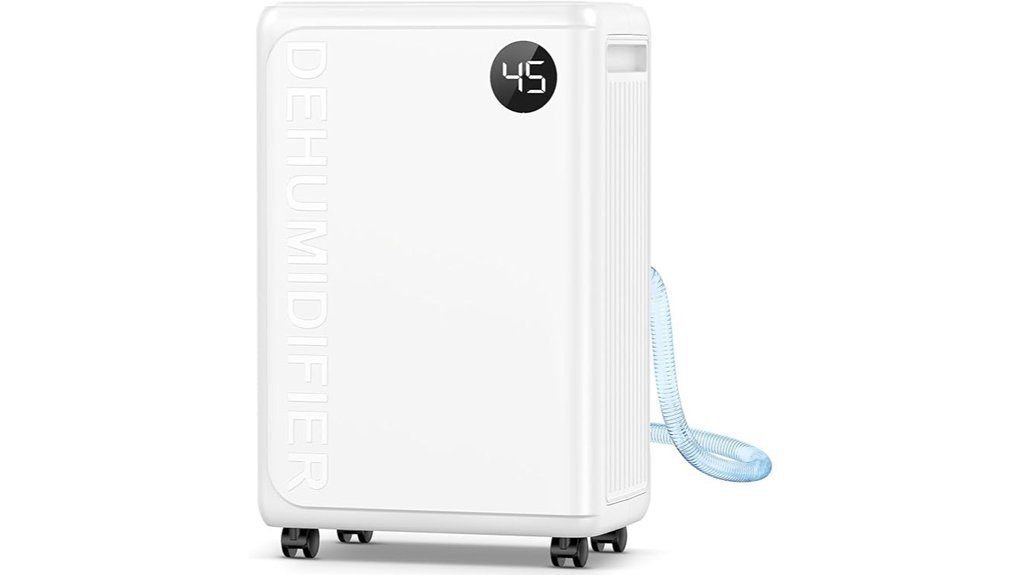
The PLUSCENT PD10 is aimed at everyday humidity control in bedrooms, laundry areas, basements, and other medium-size spaces. Its listing describes a 32-pint-per-day claim, adjustable humidity, two fan speeds, laundry drying, a 24-hour timer, automatic restart and defrost, a 2-liter tank, and a roughly 39-inch drain hose. The exact current DOE test-basis capacity was not confirmed, so buyers should check the EnergyGuide or current listing before comparing it with other pint ratings.
Best For: Buyers who want straightforward controls, a compact body, and an included hose for continuous gravity drainage.
Why You’ll Like It: The humidistat, timer, child lock, wheels, and drainage choices cover the features most households use regularly.
Who Should Avoid It: It is not the best match for standing water, active leakage, or a large wet basement that requires heavy continuous extraction.
Pros:
- Adjustable humidity control supports set-and-monitor operation.
- Included drain hose reduces the need to empty the bucket manually.
- Automatic defrost, restart, shutoff, and a washable filter improve convenience.
Cons:
- The 2-liter tank can fill quickly during humid weather.
- The current standardized capacity and certification should be confirmed.
- Gravity drainage cannot move condensate uphill.
DECIUU Max 100-Pint Dehumidifier
Best for Very Damp Large Spaces
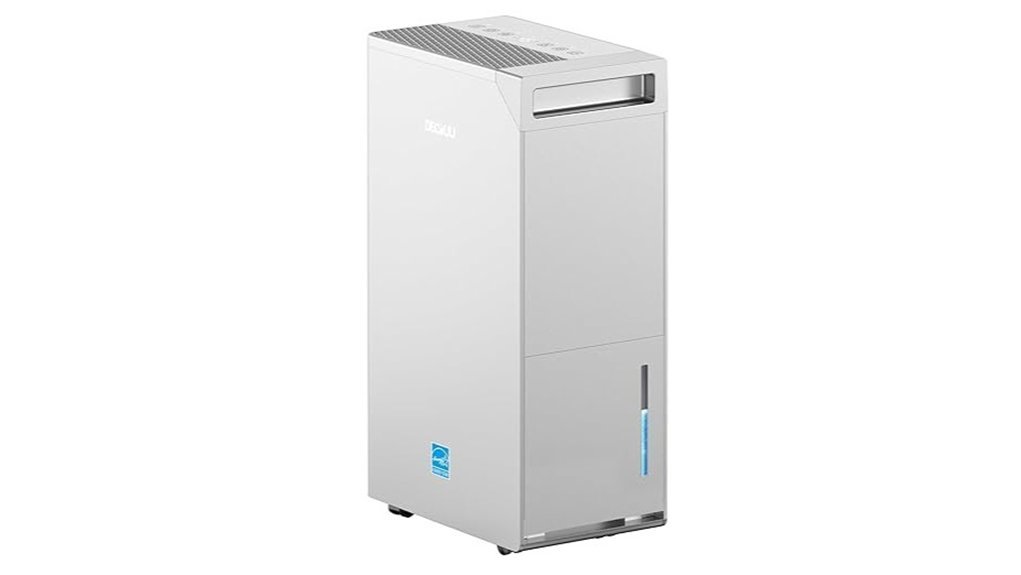
The DECIUU DER32S01-50 is designed for large, damp areas where a lower-capacity unit may struggle. The listing distinguishes between a 70-pint lower-condition rating and a “Max 100 Pint” figure measured under more favorable hot and humid conditions. It also offers automatic humidity control, automatic defrost, a removable tank, drain-hose support, and casters.
Best For: Large basements, garages, and open residential areas with persistent high humidity.
Why You’ll Like It: Its documented 70-pint rating provides a clearer basis for heavy-moisture comparison than products that display only a maximum-condition number.
Who Should Avoid It: The larger compressor, weight, energy use, and airflow may be unnecessary in a small bedroom or mildly damp room.
Pros:
- Documented 70-pint lower-condition and 100-pint maximum claims.
- Automatic humidistat and defrost support longer operating periods.
- Drainage options and wheels make it more practical for basement use.
Cons:
- The 100-pint headline is not the directly comparable lower-condition rating.
- A larger compressor generally produces more airflow, heat, and operating noise.
- At more than 30 pounds, it is movable but not lightweight.
KNKA 34-Pint Dehumidifier with Drain Hose
Best Quiet-Claim Mid-Size Pick
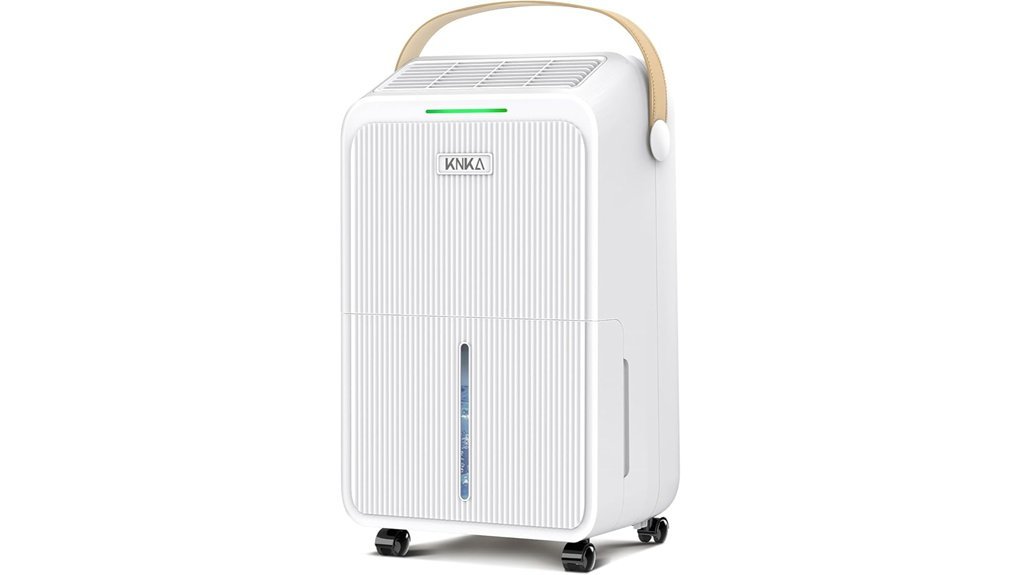
The KNKA PD22SC-12 offers dehumidifying, clothes-drying, and continuous modes, along with a humidistat, two fan speeds, a timer, child lock, automatic defrost, a 3-liter tank, and an included 3.28-foot drain hose. It is marketed at 34 pints per day and up to 2,500 square feet. Buyers should still size it by moisture severity and a comparable capacity rating rather than floor area alone.
Best For: Medium-size basements, laundry rooms, bedrooms, and living areas where multiple operating modes and a lower advertised sound level are useful.
Why You’ll Like It: The included hose, three modes, humidity indicator, wheels, and washable filter create a convenient feature set.
Who Should Avoid It: Choose a larger documented-capacity unit when walls or floors remain wet, seepage is present, or humidity stays very high despite continuous operation.
Pros:
- Three operating modes and adjustable humidity control.
- Includes a 3.28-foot gravity-drain hose.
- Three-liter tank, casters, child lock, and washable filter.
Cons:
- The exact current DOE test-basis capacity was not confirmed.
- The advertised 37 dB figure may reflect favorable test conditions or a lower setting.
- Gravity drainage will not carry water uphill.
AEOCKY BOREAS-001 50-Pint Compressor Dehumidifier
Best Balanced 50-Pint Claim
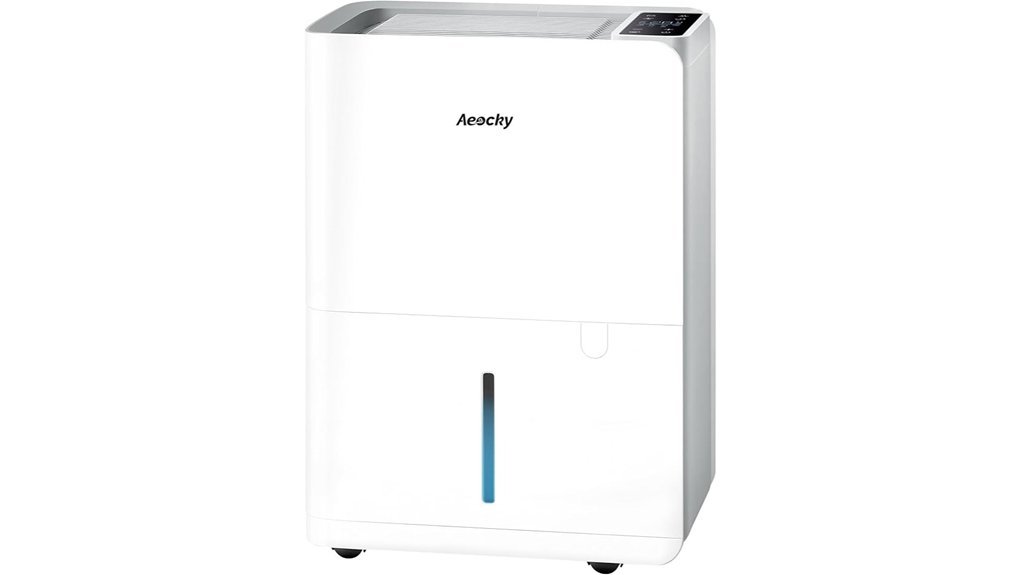
The AEOCKY BOREAS-001 sits between compact 30-pint-class listings and the largest portable models. The linked ASIN is marketed at 50 pints per day and up to 3,500 square feet, with an intelligent humidistat, automatic defrost, a 0.8-gallon tank, continuous gravity drainage, and casters. The listing information reviewed did not clearly establish the conditions used for the 50-pint claim, so compare the current EnergyGuide or DOE rating before purchase.
Best For: Buyers who need more extraction than a compact model but still want a manageable residential unit.
Why You’ll Like It: Its humidistat, drain hose, tank, and mobile design provide a useful middle ground for damp basements and larger rooms.
Who Should Avoid It: Buyers who need app control, a built-in pump, or a clearly documented high-capacity DOE rating should choose another model.
Pros:
- Useful middle-ground capacity claim for larger residential rooms.
- Humidistat and automatic defrost support extended operation.
- Included hose and 0.8-gallon tank provide drainage flexibility.
Cons:
- The precise test basis for the 50-pint claim should be confirmed.
- Advertised square-foot coverage is not a performance guarantee.
- No built-in pump or verified Wi-Fi control for the linked model.
AEOCKY RHEA-001 4,500 Sq. Ft. Dehumidifier
Best Overall
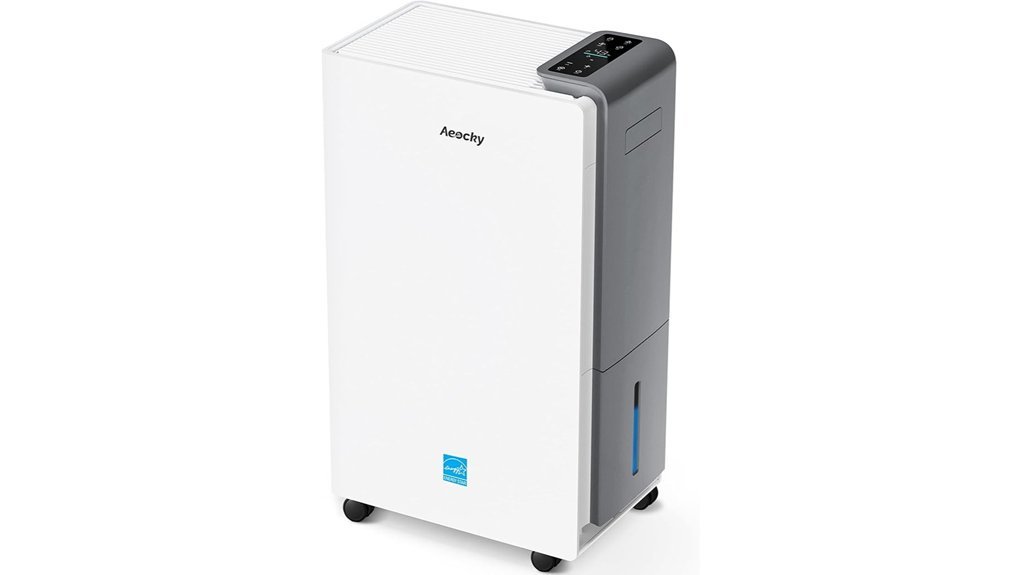
The AEOCKY RHEA-001 is a strong all-around option for large rooms and basements. Its listing distinguishes between approximately 56 pints under a lower-condition rating and up to 80 pints per day in hotter, more humid conditions. Features include automatic humidity sensing, automatic defrost, a drain hose, a garden-hose adapter, child lock, timer, and casters. “Smart” operation refers to automatic control features; the linked model should not be assumed to include Wi-Fi.
Best For: Large residential spaces that need strong moisture control, automatic operation, and flexible drainage.
Why You’ll Like It: It combines a documented lower-condition capacity with automatic humidity control and useful drainage accessories.
Who Should Avoid It: It is more capacity, size, and weight than most small bedrooms need, and buyers requiring app control should choose a verified Wi-Fi model.
Pros:
- Approximately 56-pint lower-condition rating and 80-pint maximum claim.
- Humidistat, defrost, child lock, timer, and drainage accessories.
- Suitable for large or persistently damp residential areas.
Cons:
- The 80-pint headline is measured under more favorable conditions.
- At roughly 35 pounds, it is portable but not lightweight.
- Warranty terms and current ENERGY STAR status should be confirmed for the exact ASIN.
BANABIE 32-Pint Dehumidifier with Smart Humidity Control
Best Compact Low-Noise Claim
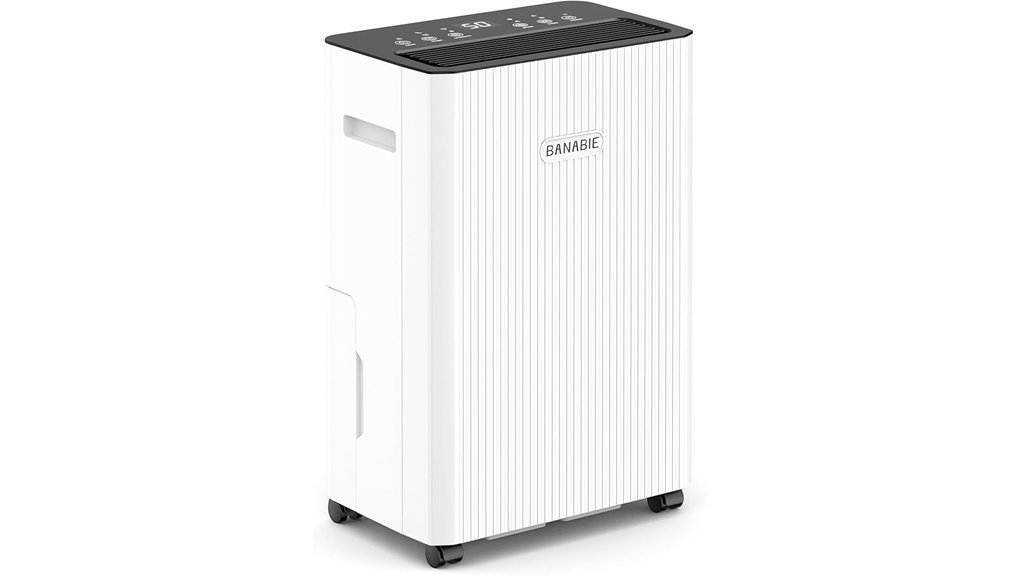
The linked ASIN is marketed as a BANABIE 32-pint compressor dehumidifier for spaces up to 2,500 square feet. Listed features include smart humidity control, several operating modes, a timer, automatic shutoff, a 2.5-liter tank, wheels, a washable filter, and an included drain hose. The advertised 32 dB figure should be treated as a best-case claim rather than guaranteed sound output during compressor startup or high-speed operation.
Best For: Bedrooms and nearby living spaces where a compact cabinet and lower advertised operating noise matter.
Why You’ll Like It: Multiple modes, target-humidity control, portable dimensions, and included drainage accessories make it easy to place.
Who Should Avoid It: Do not select it solely for a nursery or sleeping area without considering cord placement, warm exhaust, compressor cycling, tank access, and the manufacturer’s required clearances.
Pros:
- Compact design with a 2.5-liter tank and included drain hose.
- Humidity controls, timer, modes, and automatic shutoff.
- Portable design with wheels and a washable filter.
Cons:
- The current standardized capacity was not confirmed.
- The advertised 32 dB figure may not represent every operating mode.
- Brand support, warranty, and certification details should be checked before ordering.
Yaufey 80-Pint ENERGY STAR Dehumidifier
Best Large-Capacity Alternative
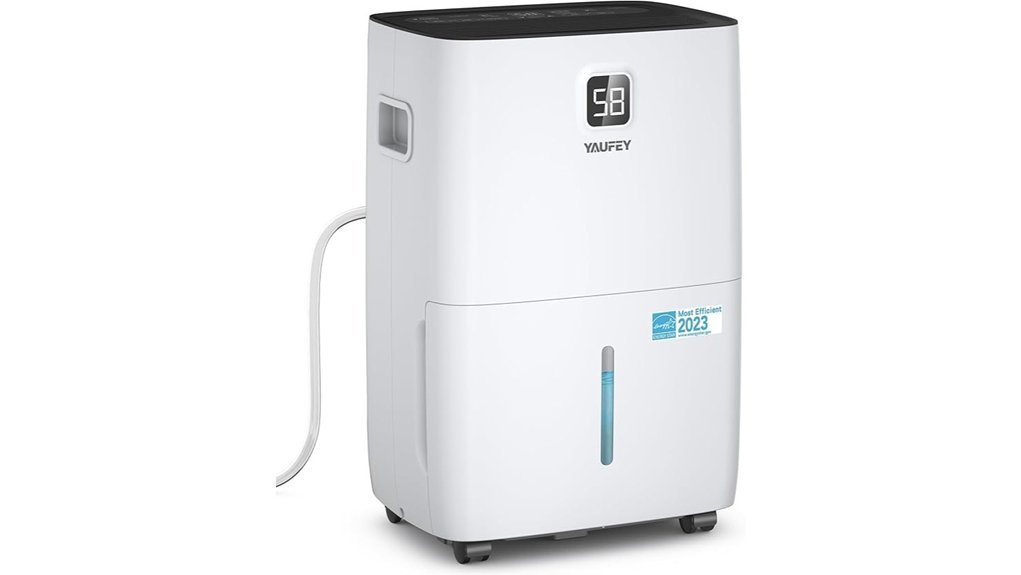
The Yaufey JD025Q-80 is marketed for large rooms and basements, with removal of up to 80 pints per day at 95°F and 90% relative humidity. It includes adjustable humidity from 30% to 80%, several preset modes, three fan speeds, a timer, a 1.06-gallon tank, a washable filter, casters, and an included 3.28-foot drain hose. Because its headline capacity uses maximum conditions, confirm the current DOE-rated capacity before comparing it with lower-temperature ratings.
Best For: Large residential spaces needing a larger tank, multiple operating modes, and both manual and continuous drainage.
Why You’ll Like It: The larger bucket, included hose, preset modes, and three speeds support longer operating periods during humid weather.
Who Should Avoid It: Buyers who need a built-in pump or a verified current capacity that is directly comparable with a 50- or 70-pint DOE-rated model should check the listing documentation carefully.
Pros:
- Large 1.06-gallon tank and included drain hose.
- Adjustable humidity, four modes, three speeds, and timer.
- Automatic shutoff, defrost, restart, and a washable filter.
Cons:
- The 80-pint claim is measured at 95°F and 90% RH.
- A full 1.06-gallon bucket can be heavy to lift and empty.
- Current certification and standardized capacity should be verified for the exact listing.
hOmeLabs HME1003 50-Pint Wi-Fi Dehumidifier
Best Wi-Fi Pick
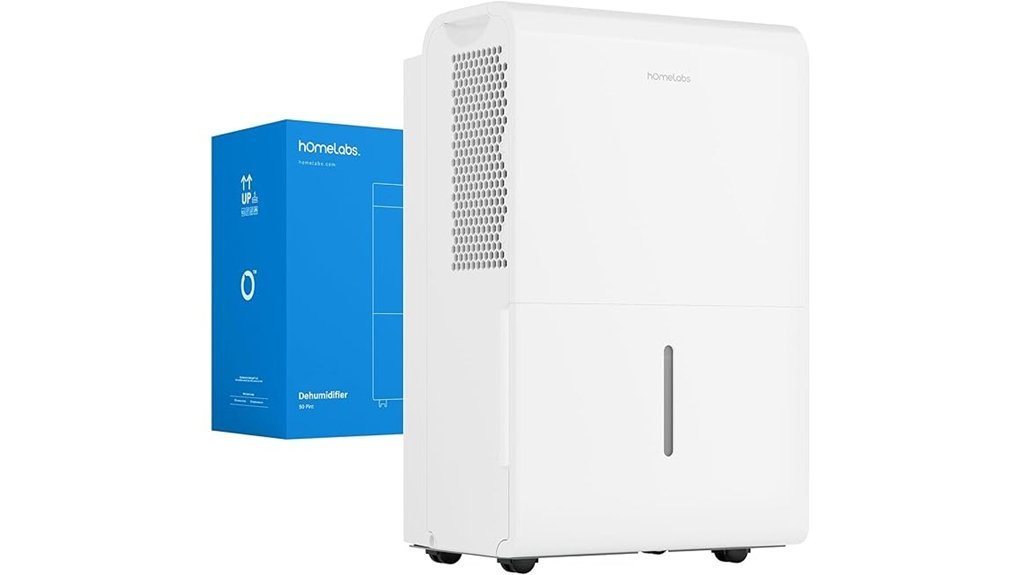
The hOmeLabs HME1003 is designed for buyers who want remote control and status checks. Its listing describes removal of 50 pints per day at 80°F and 60% relative humidity and up to 120 pints under 95°F and 90% RH conditions. Wi-Fi control, turbo mode, a humidistat, timer, automatic defrost, automatic shutoff, and a continuous-drain outlet make it convenient for basements or offices that are not checked every day.
Best For: Large or remote spaces where app control is more valuable than low weight or an included drainage hose.
Why You’ll Like It: Wi-Fi access can reduce repeated trips to a basement or remote room to check humidity and change settings.
Who Should Avoid It: It is not the best choice for buyers who want a lightweight model, an included hose, or a built-in condensate pump.
Pros:
- 50-pint rating stated at 80°F and 60% RH.
- Wi-Fi controls, turbo mode, timer, and humidistat.
- Continuous-drain outlet and automatic safety functions.
Cons:
- The drain hose is not included with the linked model.
- At more than 40 pounds, it is one of the heavier options.
- Advertised coverage varies between listing versions and should not replace capacity-based sizing.
Factors to Consider When Choosing a Dehumidifier for Mold Control
The right dehumidifier should be selected by measured humidity, moisture severity, comparable pint capacity, room temperature, airflow, and drainage access. Coverage numbers printed in product titles may help with rough comparison, but they are not standardized performance guarantees.
Dehumidifiers Help Prevent Mold; They Do Not Clean It
A dehumidifier reduces airborne moisture and makes conditions less favorable for new mold growth. It does not remove colonies already growing on drywall, wood, fabric, carpet, insulation, or other materials. Repair the moisture source, clean or remove affected material, and then use the dehumidifier to maintain dry conditions.
Compare Pint Capacity Under the Same Test Conditions
Capacity is measured as the amount of water removed over 24 hours under specified temperature and humidity conditions. Current DOE testing uses cooler conditions intended to better represent basement use. Older ratings may use 80°F, while many marketplace listings promote much larger “maximum” figures measured at 95°F and 90% relative humidity.
Do not assume that a model advertised as “80 pints maximum” is stronger than a model with a verified 50-pint DOE rating. Check the EnergyGuide label, ENERGY STAR product record, manual, or manufacturer specifications for the test basis.
Size by Dampness, Not Only Square Feet
ENERGY STAR recommends considering both floor area and the condition of the room. A smaller, moderately damp area may need roughly a 20- to 30-pint current-capacity model, while a large, very damp, or wet space may need 40 to 50 pints or more. It is generally better to choose enough capacity for the moisture load than to rely on an undersized unit running continuously.
Use a Humidistat and a Separate Hygrometer
Look for adjustable humidity control so the compressor can cycle around the selected target. A practical setting is often 45% to 50% relative humidity, provided the room remains comfortable and condensation does not develop. Place a separate hygrometer several feet away from the intake or exhaust to confirm the room’s actual humidity.
Plan the Drainage Before Buying
Bucket collection works for occasional use, but a damp basement can fill a small tank quickly. Continuous gravity drainage is more convenient when a floor drain, sump, or sink is lower than the outlet. Keep the hose sloping downward without loops or kinks.
If the water must travel uphill, choose a model with a built-in pump or use a separate condensate pump that is suitable for the installation. A standard gravity-drain connection cannot force water upward.
Check Low-Temperature Performance and Automatic Defrost
Portable compressor dehumidifiers remove less water as room temperature drops. Frost may also form on the coils in a cool basement. Automatic defrost helps the machine pause and clear frost, but it does not eliminate the performance loss caused by colder air. Confirm the model’s permitted operating-temperature range if the room falls below 65°F.
Review ENERGY STAR Status Carefully
ENERGY STAR certification can help compare efficiency, but certification does not guarantee a fixed dollar saving. Operating cost depends on wattage, moisture load, run time, electricity rates, room temperature, drainage setup, and building air leakage. Verify certification for the exact model rather than assuming every variant from the brand has the same status.
Consider Noise in the Actual Installation
Published decibel figures may reflect a low fan setting or favorable test environment. Compressor startup, high fan speed, vibration, hard flooring, and placement against a wall can make the unit sound louder. For a bedroom or office, leave the required clearance and place the machine on a firm, level surface.
Allow Airflow Around the Unit
Do not push a portable dehumidifier tightly into a corner unless the manual specifically permits that placement. Keep the intake and exhaust clear, close exterior doors and windows while it runs, and improve circulation between divided rooms when appropriate. Follow the manufacturer’s clearance requirements rather than guessing.
Maintain the Filter, Tank, and Drain Hose
Clean the washable filter on the manufacturer’s schedule, rinse and dry the bucket, inspect the hose for kinks or buildup, and keep the intake free of lint and dust. A dirty filter restricts airflow and may make the compressor run longer without controlling humidity effectively.
Check Warranty and Support for the Exact ASIN
Warranty length, drain-hose inclusion, pump inclusion, certification, capacity, and model specifications can differ between listing variants. Confirm the exact ASIN, model number, included accessories, return terms, support contact, and warranty conditions before ordering.
Frequently Asked Questions
Can a Dehumidifier Remove Existing Mold?
No. It can reduce the moisture that supports mold growth, but visible mold still needs to be cleaned or removed. The underlying leak, condensation, drainage problem, or water intrusion must also be corrected.
What Humidity Level Helps Prevent Mold?
EPA guidance recommends keeping indoor relative humidity below 60% and ideally between 30% and 50%. Many homes use a setting around 45% to 50% as a practical balance between moisture control, comfort, and electricity use.
How Do I Know the Right Size Dehumidifier for My Space?
Use floor area only as a starting point. Also consider measured humidity, musty odors, condensation, damp spots, standing water, room temperature, air leakage, and whether the space is open or divided. Compare capacities under the same test conditions and choose more capacity when an undersized unit would otherwise run continuously.
Is a 30- to 35-Pint Dehumidifier Enough for a Basement?
A current DOE-rated 30- to 35-pint unit can be enough for a smaller or moderately damp basement. A product marketed as 30 to 35 pints only under 95°F and 90% RH may have a much lower rating under cooler basement conditions. A large, wet, or poorly sealed basement often needs a verified 40- to 50-pint or higher-capacity model.
Should I Run a Dehumidifier Continuously?
Continuous operation can help during initial drying or unusually humid weather. Once the target humidity is reached, humidistat-controlled cycling is generally more efficient. Use a secure drainage setup for unattended operation and inspect the unit and hose regularly.
Where Should I Place a Dehumidifier?
Place it on a firm, level surface near the dampest area while maintaining the clearances in the manual. Keep doors and windows closed, avoid blocking the intake or exhaust, and route a gravity-drain hose continuously downhill without loops or kinks.
Are Mini or Thermoelectric Dehumidifiers Good for Mold Problems?
They may help in a closet, cabinet, RV compartment, or very small bathroom with mild localized moisture. They remove far less water than compressor models and are usually not the best primary solution for a damp bedroom, basement, or visible mold problem.
When Should I Call a Mold Professional?
Consider professional help when mold covers more than about 10 square feet, there has been extensive water damage, sewage or contaminated water is involved, the HVAC system may be contaminated, mold keeps returning after cleanup, or someone in the home has health concerns related to exposure.
What Maintenance Is Required?
Clean the filter, rinse and dry the bucket, inspect the drain hose, remove dust from the air inlets, and confirm room humidity with a separate hygrometer. Unplug the unit before cleaning and follow the manufacturer’s instructions.
Conclusion
The best dehumidifier for mold control is the one that can hold your actual space near the selected humidity target without running beyond its practical capacity. The AEOCKY RHEA-001 is the strongest all-around choice in this group because it combines a documented lower-condition capacity with automatic controls and useful drainage accessories. The DECIUU Max 100-Pint is better suited to heavier moisture loads, while the hOmeLabs HME1003 is the most convenient choice when Wi-Fi control matters.
For a moderately damp room, the Waykar, PLUSCENT, KNKA, or BANABIE may provide a more manageable setup, but their headline pint figures should not be assumed to equal current DOE-rated capacities. Whichever model you choose, repair leaks and clean existing mold first. The dehumidifier’s role is to maintain dry conditions that make future growth less likely.