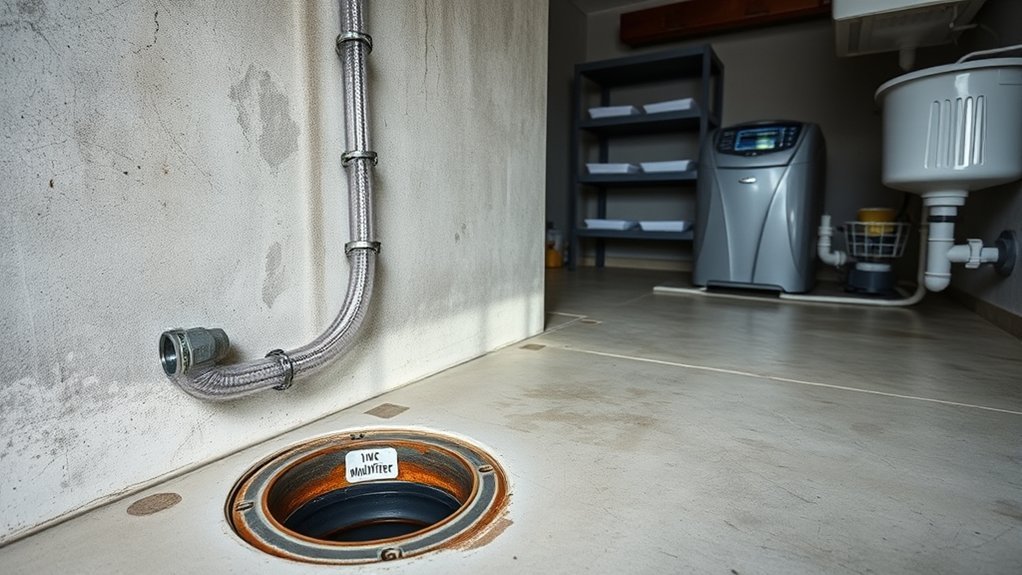
If you’re dealing with window condensation in 2026, the right moisture-control product can help protect your sills, walls, floors, and indoor air quality. The best choice depends on where the moisture collects, how much condensation you see each day, and whether you want a reusable strip, a no-electricity moisture absorber, or a compact electric dehumidifier. For direct window drip control, absorber strips and condensation weather stripping are the most targeted options. For bathrooms, bedrooms, closets, and small damp spaces, a compact dehumidifier or DampRid-style moisture absorber can help lower the overall humidity that causes condensation in the first place.
Affiliate disclosure: This article contains Amazon affiliate links. If you buy through these links, we may earn a commission at no extra cost to you.
Quick Verdict
If condensation is dripping directly from your window glass, start with a stick-on absorber strip. If several windows fog up or the whole room feels damp, choose the compact electric dehumidifier. If you need quiet moisture control in a closet, bathroom, laundry area, or small enclosed space, the DampRid canisters are the easiest no-plug option.
- Best direct window fix: Window Condensation Prevention Absorber Strips (3 Roll)
- Best narrow strip: Window Condensation Absorber Weather Stripping (1.18"x13′)
- Best active humidity control: Dehumidifier for Home with 68 OZ Water Tank
- Best no-electricity option: DampRid Fragrance Free Moisture Absorber 3-Pack
- Best reusable strip option: 3 Rolls Window Condensation Prevention Absorber Strips
Below, you’ll find five practical options for reducing window condensation, from stick-on absorber strips to small-space moisture control. Use the comparison table first if you want a quick answer, then read the product notes to decide which one fits your home.
Quick Comparison: Best Options for Window Condensation
| Product | Best For | Type | Key Benefit | CTA |
|---|---|---|---|---|
| Window Condensation Prevention Absorber Strips (3 Roll) | Windows with frequent dripping | Stick-on absorber strip | Custom-cut felt strips for sill moisture control | Check Price on Amazon |
| Window Condensation Absorber Weather Stripping (1.18"x13′) | Narrow window edges, vents, and small surfaces | Absorbing weather strip | High-density fabric absorbs surface moisture | Check Price on Amazon |
| Dehumidifier for Home with 68 OZ Water Tank | Bathrooms, bedrooms, closets, and small rooms | Electric dehumidifier | Removes moisture from the air with auto shut-off | Check Price on Amazon |
| DampRid Fragrance Free Moisture Absorber 3-Pack | Closets, bathrooms, and small enclosed damp areas | Disposable moisture absorber | No electricity needed and helps with odor control | Check Price on Amazon |
| 3 Rolls Window Condensation Prevention Absorber Strips | Reusable condensation control on windows and tanks | Reusable absorber strip | Cut-to-fit strips that can absorb moisture on contact | Check Price on Amazon |
Window Condensation Prevention Absorber Strips (3 Roll)
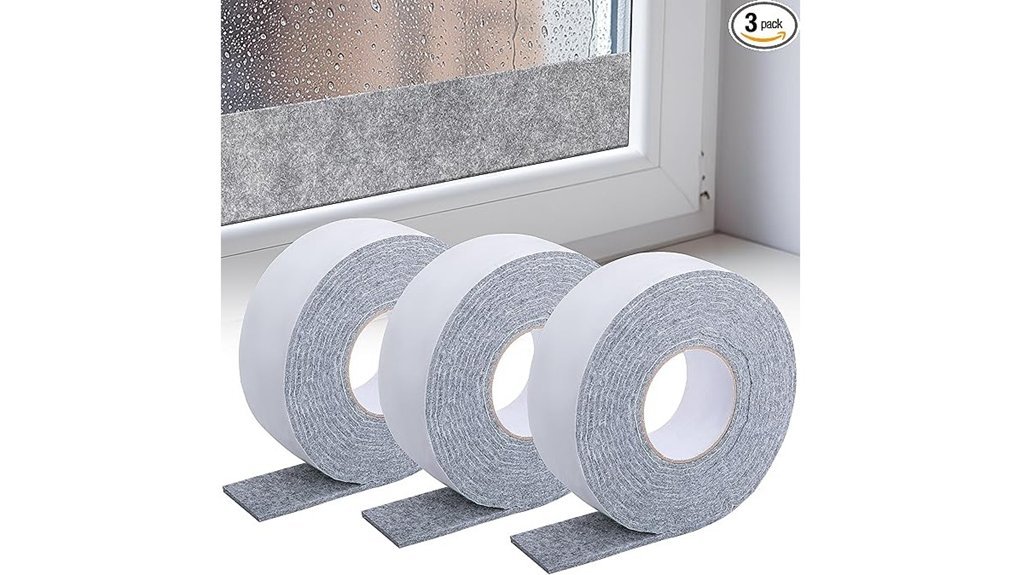
Best For: Direct window drip control on sills, glass edges, and damp indoor surfaces.
If you’re tired of wiping water from your window ledges every morning, the Window Condensation Prevention Absorber Strips are a practical first option to consider. These premium felt strips are designed to absorb moisture efficiently, helping prevent drips that can damage sills, walls, and floors. Each roll is 16.4 feet long and 2 inches wide, so you can cut the material to match different window widths, door edges, or other damp indoor spots.
The adhesive backing makes setup simple: measure the area, cut the strip, and press it into place on a clean, dry surface. You can also reactivate the strips by squeezing out extra moisture or using a hair dryer. That makes them useful through winter or during damp weather when condensation keeps coming back.
Why You Might Like It: These strips target the exact place where condensation usually becomes a problem: the lower edge of the window. They are a good fit if your main issue is dripping water rather than whole-room humidity.
Who Should Buy This: Choose this option if one or more windows collect visible water every morning and you want a simple, cut-to-fit solution that catches moisture before it reaches painted trim, flooring, or nearby walls.
Who Should Skip It: Skip this option if your entire room feels damp or musty. In that case, a small dehumidifier or moisture absorber may help more than a window strip alone.
Pros:
- Highly absorbent material efficiently prevents moisture damage to sills, walls, and floors.
- Customizable length allows for tailored application to fit any window or door.
- Easy to install with adhesive backing and reusable after moisture extraction.
Cons:
- May require occasional reactivation using a hair dryer, which can be time-consuming.
- Adhesive backing may lose effectiveness over time, especially in high-humidity areas.
- Limited to indoor use, making it unsuitable for outdoor applications.
Window Condensation Absorber Weather Stripping (1.18"x13′)
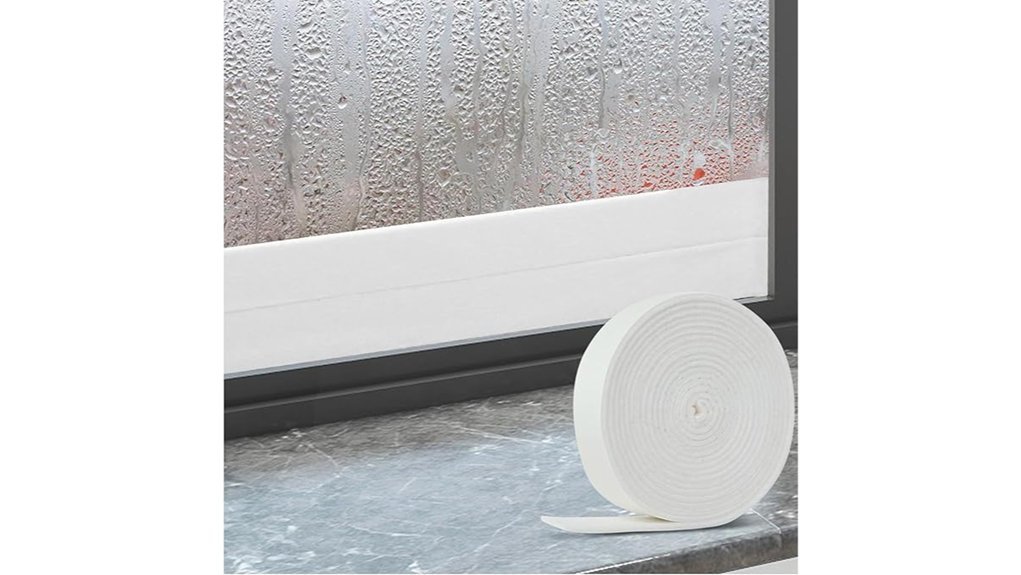
Best For: Narrow window edges, vents, toilet tanks, and smaller smooth surfaces where wider strips may look bulky.
The Window Condensation Absorber Weather Stripping is a smart choice for homeowners who want a narrow, cut-to-fit solution for moisture buildup. Measuring 1.18 inches by 13 feet, this high-density fabric absorbs up to 1.4 ounces of condensation per foot, helping keep windows and nearby surfaces dry. It can work well on window edges, AC vents, toilet tanks, and other smooth indoor surfaces where moisture tends to collect.
Installation is simple. Cut the strip to the length you need, place it on a clean surface, and press it down firmly. The adhesive is designed to hold securely without leaving residue, which is helpful if you rent or want a low-mess seasonal fix. Because the strip dries faster with sunlight or warmth, it works best in spots that get some airflow or light.
Why You Might Like It: The narrower width makes this option easier to place on smaller surfaces where a wider strip might look bulky.
Who Should Buy This: Choose it if you need a less bulky strip for thin ledges, window frames, AC vent areas, or compact moisture-prone spots around the home.
Who Should Skip It: Skip it if your windows are painted, dusty, or uneven, because adhesive strips may not bond well on those surfaces.
Pros:
- High-density fabric absorbs significant moisture, keeping areas dry.
- Easy DIY installation with strong adhesive that leaves no residue.
- Versatile for multiple applications, including windows, AC vents, and toilet tanks.
Cons:
- Requires sunlight or warmth for effective quick-drying.
- May not adhere well to painted surfaces.
- Limited to a specific size, which may not fit all needs without cutting.
Dehumidifier for Home with 68 OZ Water Tank
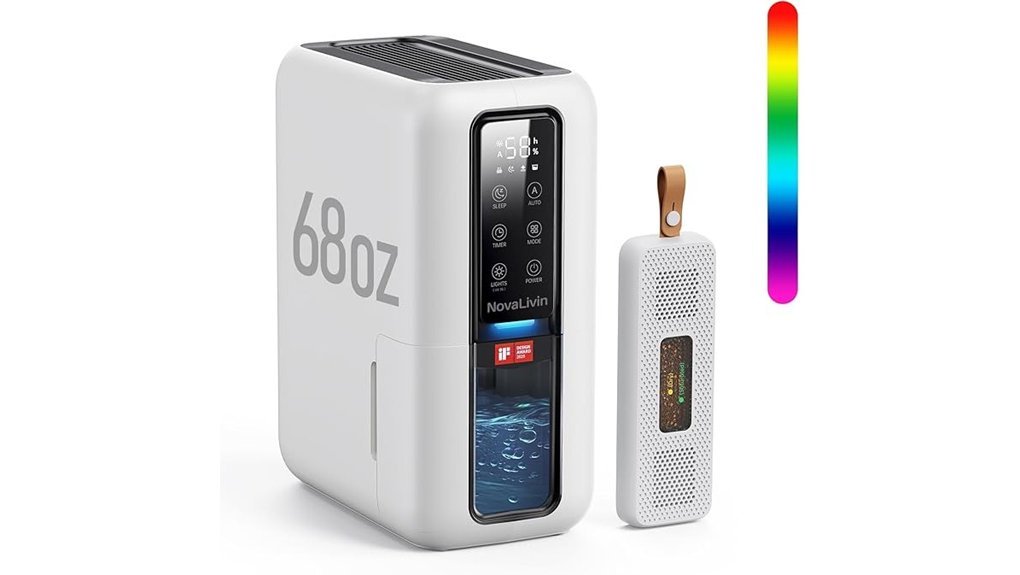
Best For: Active moisture removal in bathrooms, bedrooms, closets, laundry areas, and small rooms.
Looking for a compact and efficient way to reduce the humidity that leads to window condensation? The dehumidifier with a 68 oz water tank is built for small spaces such as bathrooms, bedrooms, closets, and living rooms. It removes 34 oz of moisture daily, even in high humidity, thanks to its dual semiconductor technology.
You can customize humidity levels with auto modes and two speeds, which helps you match the unit to the room instead of running it at full power all day. It also operates quietly at 30dB, making it a better fit for bedrooms, nurseries, or shared spaces where noise matters. The removable tank and auto shut-off make it easier to use, while the bonus dehumidifier box can help with smaller enclosed areas like closets.
Why You Might Like It: This is the best option here if condensation is part of a larger humidity problem. Instead of only catching water after it forms, it helps reduce moisture in the air.
Who Should Buy This: Choose this if your windows fog up often, the room smells musty, towels stay damp, or condensation appears on more than one surface.
Who Should Skip It: Skip it if you only have a small amount of water on one window and do not want to plug in an electric device. In that case, absorber strips may be simpler.
Pros:
- Energy-efficient operation with low power consumption at 1.3 kW per day.
- Customizable humidity control with multiple modes and speeds for tailored use.
- Quiet operation at 30dB, making it suitable for noise-sensitive environments.
Cons:
- Limited tank capacity of 68 oz may require frequent emptying in very humid conditions.
- Effectiveness may vary in extremely large or open spaces.
- Manual maintenance needed for tank cleaning despite the auto shut-off feature.
DampRid Fragrance Free Moisture Absorber 3-Pack
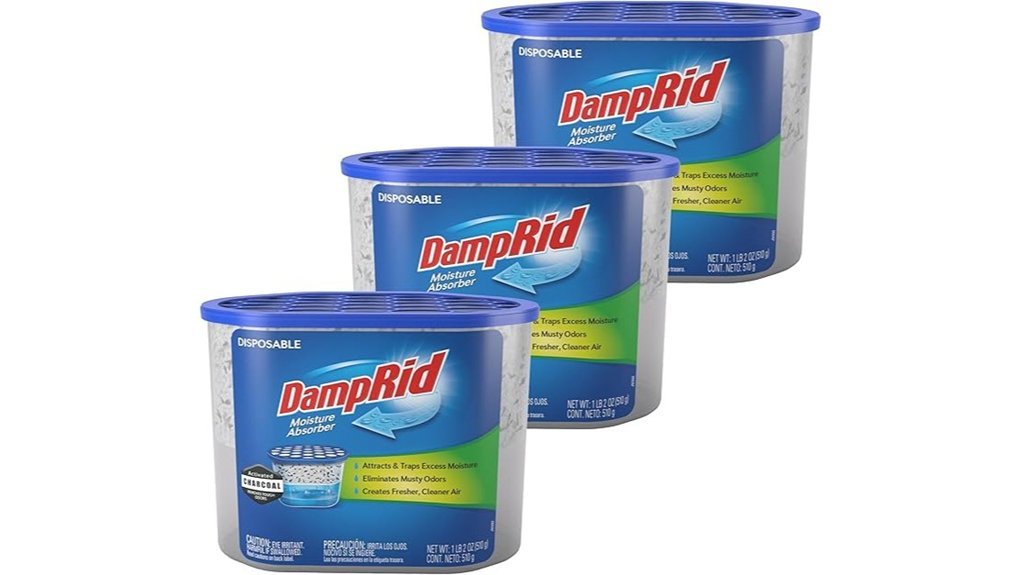
Best For: Quiet, no-electricity moisture control in closets, bathrooms, laundry rooms, storage areas, and small enclosed damp spaces.
DampRid Fragrance Free Moisture Absorber 3-Pack is a useful choice if you want a simple, no-electricity solution for humidity in small spaces. Each 18 oz. canister lasts up to 60 days, making it a low-maintenance option for spaces up to 300 square feet, such as bathrooms, closets, laundry areas, and storage rooms.
Its activated charcoal helps with odor control while the crystals absorb excess moisture from the air. To use it, remove the lid, peel off the foil, and place the canister where moisture is a problem. Once the crystals dissolve, discard the canister. It is not as targeted as a window strip, but it can help reduce the damp air that contributes to condensation.
Why You Might Like It: This is a good option for closets, bathrooms, and rooms where you do not want to run a plug-in dehumidifier.
Who Should Buy This: Choose it if you want a set-and-leave moisture absorber for small spaces where outlets are limited or where a fan-based unit would be annoying.
Who Should Skip It: Skip it if you need a reusable product or want a solution placed directly on the window. DampRid is better for general small-space moisture control than direct drip absorption.
Pros:
- Lasts up to 60 days, providing long-term moisture control.
- Activated charcoal effectively eliminates tough odors instead of just masking them.
- No electricity required, making it easy to place anywhere without the need for outlets.
Cons:
- Limited to areas up to 300 square feet, which may not suffice for larger spaces.
- Requires disposal once crystals dissolve, which may not appeal to eco-conscious users.
- Child safety precautions are necessary, limiting placement options in homes with young children.
Safety Note: Keep disposable moisture absorbers out of reach of children and pets. Place them where they cannot be tipped over, spilled, or handled accidentally.
3 Rolls Window Condensation Prevention Absorber Strips
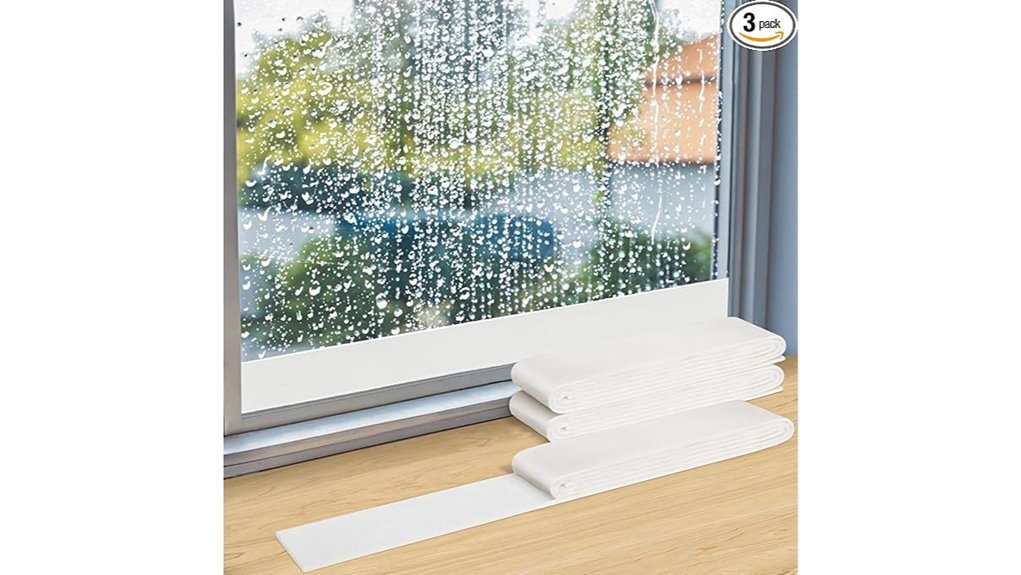
Best For: Reusable condensation control for multiple windows, toilet tanks, kitchens, and other damp indoor surfaces.
If you want to tackle window condensation with a reusable strip, the 3 Rolls Window Condensation Prevention Absorber Strips are worth considering. Designed by Heiwinner, these premium non-woven suede strips absorb up to 200g of water per 39 inches, helping keep windows, toilet tanks, kitchens, and other damp indoor surfaces drier.
Each strip measures 66 inches long and can be cut to fit your window size. The no-residue adhesive makes installation simple and helps reduce mess when you need to adjust or remove the strip. Because the strips are reusable, they may suit homeowners who want a longer-term option instead of disposable moisture products.
Why You Might Like It: This option is useful if you need several shorter pieces for multiple windows or damp surfaces around the home.
Who Should Buy This: Choose it if you want a reusable, cut-to-fit strip that can be placed on several small condensation-prone surfaces instead of using one long roll in a single area.
Who Should Skip It: Skip it if you prefer a hidden solution. Like most window strips, it will be visible after installation.
Pros:
- Eco-friendly: Reusable design allows for long-term use without the need for constant replacements.
- Versatile application: Suitable for various installations, including windows, toilet tanks, and kitchens.
- Easy installation: No-residue adhesive ensures a simple and mess-free setup.
Cons:
- Limited length: Each strip may require multiple pieces for larger windows or surfaces.
- Specific material: Non-woven suede may not suit everyone’s aesthetic preferences.
- Effectiveness may vary: Performance can depend on humidity levels and window placement.
Factors to Consider When Choosing a Dehumidifier for Window Condensation
When choosing a dehumidifier or moisture-control product for window condensation, start with the source of the problem. If water forms only along the glass or sill, absorber strips may be enough. If the whole room feels humid, smells musty, or has moisture on several surfaces, a dehumidifier or room moisture absorber may be the better choice. Think about the absorption capacity you need, how noisy the unit is, and its energy efficiency. Size, portability, and ease of maintenance can also make a big difference in daily use.
Before You Buy Checklist
- Find the moisture source: One wet window needs a different fix than a damp whole room.
- Check the surface: Adhesive strips need a clean, dry, smooth area to bond well.
- Think about maintenance: Strips may need drying, canisters need replacement, and dehumidifiers need tank cleaning.
- Plan placement: Dehumidifiers need airflow, while absorber canisters should stay upright and out of reach of children and pets.
- Match the solution to the room: Bathrooms and laundry areas often need stronger humidity control than a single window strip.
Absorption Capacity Requirements
Choosing the right dehumidifier for window condensation starts with knowing how much moisture you need to control. Some compact models can absorb up to 34 ounces in high humidity. Look for dehumidifiers with adjustable humidity settings, letting you customize levels based on your environment. Common target settings include 40%, 50%, or 60% humidity.
The size of the water tank matters, too. Larger tanks, such as 68 ounces, reduce the need for frequent emptying, which can be helpful in bathrooms, bedrooms, and other damp rooms. For window strips, focus on strip width, length, and how much water the material can absorb before it needs drying.
Noise Level Considerations
Although you might prioritize moisture removal, noise levels also play an essential role when selecting a dehumidifier for window condensation. Dehumidifiers typically operate between 30 dB and higher, with quieter models being better for bedrooms or nurseries. Noise output can change depending on the mode. Higher settings usually create more sound because the fan runs faster.
This matters if you plan to use the unit overnight or in a shared space. Many modern dehumidifiers include noise-reduction technology to reduce disturbances. Before buying, check the listed noise level and consider where you will place the unit.
Energy Efficiency Ratings
Energy efficiency ratings help you choose a dehumidifier that reduces window condensation without adding too much to your electricity bill. Look for models with an Energy Star certification when available. Energy consumption can vary depending on the size, runtime, and efficiency of the unit, so check the product details before buying.
Energy-efficient dehumidifiers often use advanced technologies, like dual semiconductors, to maximize moisture removal while minimizing energy use. You can also compare the energy factor, which shows how much moisture a model removes per kilowatt-hour.
Size and Portability
When selecting a dehumidifier for window condensation, size and portability can affect how often you actually use it. Make sure the unit fits comfortably in your intended space without blocking walkways, outlets, drawers, or doors. Compact designs work well in tight areas like bathrooms, closets, and small bedrooms.
If you plan to move the dehumidifier between rooms, look for lightweight models with built-in handles or wheels. Also consider the water tank capacity. Larger tanks mean less frequent emptying, but they can also make the unit bigger and heavier.
Maintenance and Cleaning Ease
Maintaining your dehumidifier is important if you want it to run efficiently and reduce window condensation consistently. Regularly empty the water tank, especially during damp weather. Some models have removable tanks that make cleaning easier, while others include full-tank indicators to help prevent overflow.
It is also important to clean or replace filters regularly if your model uses one. Look for washable filters when possible. For absorber strips, maintenance usually means squeezing out moisture, drying the strip, or replacing it once it no longer performs well.
Humidity Control Options
The right humidity control options can make a big difference in how well your dehumidifier handles window condensation. Look for models that let you set specific target humidity levels, such as 40%, 50%, or 60%. This helps you keep moisture under control without drying the air too much.
Dual-speed operation is also useful because it lets you adjust dehumidification intensity based on current conditions. Advanced options with smart technology can automatically adapt to environmental changes. No matter which option you choose, regular maintenance is still key to keeping performance steady.
Additional Features Offered
While selecting a dehumidifier for window condensation, consider features that make the unit easier to use. Customizable humidity control settings let you set your preferred level. An auto shut-off function helps prevent overflow when the water tank is full. If noise is a concern, choose a model that operates quietly, around 30dB, so you can use it in bedrooms or nurseries.
Integrated timers, adjustable up to 24 hours, can add convenience by allowing hands-free operation. Some dehumidifiers also offer special modes, such as a dry mode for drying clothes. These extra features are not required, but they can make daily moisture control easier.
How to Choose the Right Window Condensation Solution
Choose a strip if you mainly see water pooling on the sill or dripping down the glass. Choose a room dehumidifier if the air feels humid, your bathroom stays damp, or condensation appears on several windows. Choose a no-electricity absorber if you need quiet moisture control in a closet, bathroom, laundry area, or small storage space.
For the best results, you may need to combine two methods. For example, a window strip can catch moisture at the glass, while a small dehumidifier lowers the room humidity that causes the moisture. This combination is especially useful in winter, in poorly ventilated rooms, or in homes where windows fog up every morning.
Pro Tips for Better Results
- Wipe the window and sill dry before applying any adhesive strip.
- Use a dehumidifier in the same room where condensation is most visible.
- Keep furniture, curtains, and storage bins away from vents and airflow paths.
- Open bathroom doors or run ventilation after showers to reduce trapped moisture.
- Check strips and tanks often during cold weather, because condensation can build up faster in winter.
Frequently Asked Questions
How Do I Maintain My Dehumidifier for Optimal Performance?
To maintain your dehumidifier for ideal performance, regularly clean the filter, empty the water tank, check for blockages, and guarantee proper airflow. It’s also smart to keep it in a stable, dry environment.
What Is the Ideal Humidity Level for Preventing Window Condensation?
To prevent window condensation, aim for a humidity level between 30% and 50%. Too high, and you’ll see moisture; too low, and your skin might crack. Balance is key for comfort and clarity in your home.
Can I Use Multiple Dehumidifiers in One Room?
Yes, you can use multiple dehumidifiers in one room. This approach can enhance moisture removal, especially in larger spaces or areas with high humidity. Just make sure they’re appropriately sized for maximum efficiency.
How Often Should I Empty the Water Tank?
Think of your dehumidifier as a thirsty sponge. You should empty the water tank every day or every few days, depending on humidity levels. Regular checks keep it running efficiently and prevent overflow.
Are There Energy-Efficient Options for Dehumidifiers?
Yes, there are energy-efficient dehumidifiers available. Look for models with the Energy Star label, which consume less electricity while effectively removing moisture. These options save you money on energy bills and reduce your environmental impact.
Do Condensation Absorber Strips Replace a Dehumidifier?
Condensation absorber strips can help catch moisture on windows, but they do not lower humidity in the whole room. If the air is damp throughout the space, a dehumidifier is usually the stronger choice.
Where Should I Place a Dehumidifier for Window Condensation?
Place the dehumidifier in the room where condensation is most noticeable, with enough space around the vents for airflow. Avoid placing it directly against curtains, furniture, or walls that block air movement.
Are Window Condensation Strips Visible After Installation?
Yes, most absorber strips are visible once installed. If appearance matters, measure carefully, cut cleanly, and place the strip along the lower edge where it looks neat and catches the most moisture.
Should I Use a Strip and Dehumidifier Together?
Yes, combining both can work well. A strip catches water at the window, while a dehumidifier reduces the room humidity that causes the condensation. This is helpful when windows fog up every morning.
Final Recommendation
For most homes, the best starting point is simple: match the product to the moisture pattern. Use Window Condensation Prevention Absorber Strips if water gathers directly on the glass or sill. Choose the Dehumidifier for Home with 68 OZ Water Tank if the whole room feels damp, musty, or humid. Pick DampRid Fragrance Free Moisture Absorber 3-Pack if you need quiet, no-electricity humidity control in a closet, bathroom, or enclosed storage area.
Conclusion
In the battle against window condensation, choosing the right moisture-control product is your best defense. If you need to catch water right at the glass, the absorber strips and weather stripping options are the most direct fixes. If your room feels damp overall, the Dehumidifier for Home with 68 OZ Water Tank is the better choice for active moisture removal. For closets, bathrooms, and small enclosed areas, DampRid Fragrance Free Moisture Absorber 3-Pack gives you a simple no-electricity option. Pick the product that matches your moisture problem, then keep up with basic maintenance so your windows stay clearer and your home feels drier.