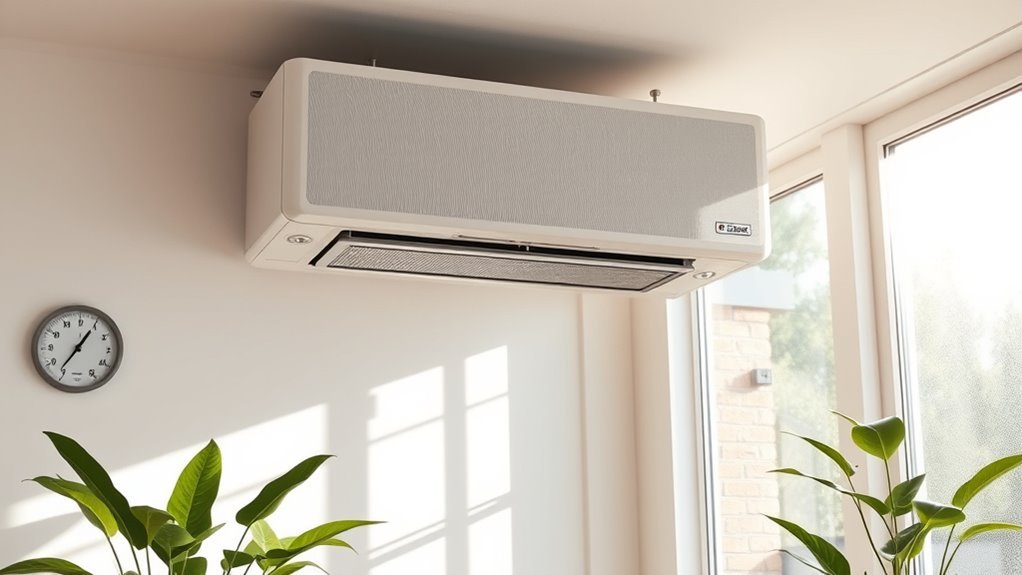
Do heat pumps dehumidify? Yes, a heat pump can lower indoor humidity while it is cooling. The cold indoor coil condenses water from the air, and that water leaves through the condensate drain. Dry Mode may improve moisture removal on supported models, but its controls vary. In normal heating mode, a standard heat pump does not remove moisture from indoor air.
Quick Answer
Heat pumps dehumidify while cooling and, on supported models, in Dry Mode. Moisture condenses on the cold indoor coil and drains away. A standard heat pump does not remove indoor moisture while heating. If humidity stays high, check sizing, airflow, drainage, and moisture sources, then consider a dedicated dehumidifier.
Key Takeaways
- A heat pump physically removes moisture only when its indoor coil is cold enough to create condensation.
- Cooling Mode and Dry Mode can dehumidify, but Heating Mode and Fan-only Mode normally do not.
- Dry Mode operation varies by manufacturer and may still cool the room.
- Aim for about 30% to 50% indoor relative humidity when practical and investigate repeated readings above 60%.
- Persistent humidity may point to short cycling, improper sizing, drainage problems, outdoor-air leakage, water intrusion, or the need for a dedicated dehumidifier.
Do Heat Pumps Dehumidify?
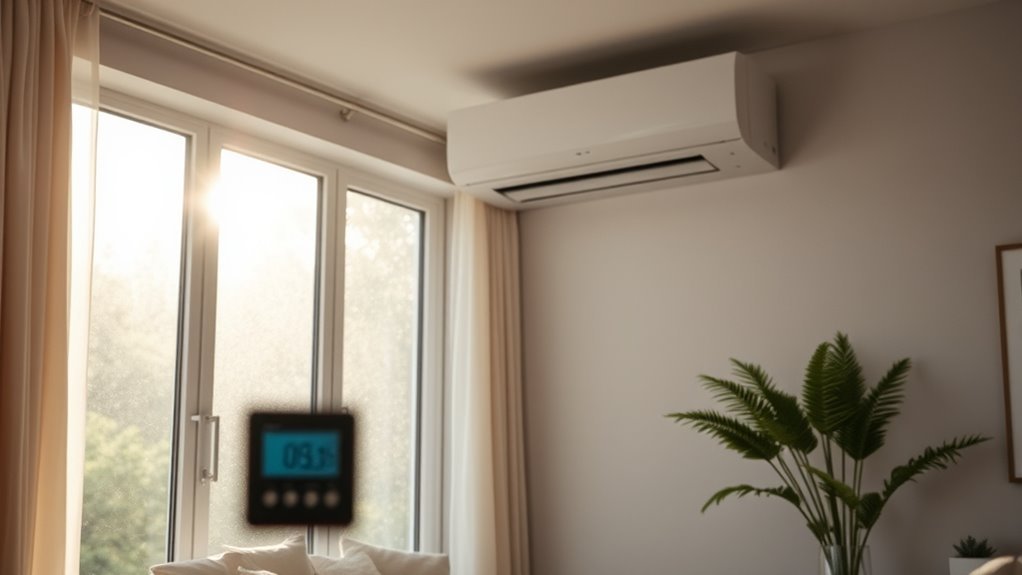
Yes. When a heat pump runs in cooling mode, it can cool and dehumidify at the same time. Warm indoor air passes across the cold evaporator coil. If the coil is below the air’s dew point, water vapor turns into liquid condensate, flows into a drain pan, and leaves through the condensate line.
The U.S. Department of Energy notes that high-efficiency heat pumps can provide effective summer dehumidification. However, the amount of water removed depends on the equipment, indoor temperature, relative humidity, airflow, compressor capacity, runtime, and operating mode.
Do not estimate moisture removal from the unit’s cooling capacity alone. A 5 kW or 8 kW rating describes heat-transfer capacity, not a universal liters-per-hour dehumidification rate. Check the product specifications or owner’s manual if you need a rated moisture-removal figure for a specific model.
How Each Heat Pump Mode Affects Humidity
| Mode | Does It Remove Moisture? | What to Expect |
|---|---|---|
| Cooling Mode | Yes | The cold indoor coil removes heat and condenses moisture while the compressor runs. |
| Dry Mode | Usually, on supported models | The unit uses a manufacturer-defined cooling and airflow pattern intended to favor moisture removal. Some cooling is normal. |
| Heating Mode | No, not in a standard system | Heating may lower the relative-humidity reading because warmer air can hold more moisture, but it does not remove that water from the room. |
| Fan-only Mode | No | Air circulates without a cold active coil. On some systems, extended fan operation can return moisture left on the coil to the room. |
Note: Specialized systems with reheat, desiccant components, or separate humidity controls may operate differently. Follow the manual for your exact model rather than assuming every heat pump uses the same Dry Mode sequence.
How Heat Pumps Remove Moisture
A heat pump removes moisture through condensation. The indoor blower pulls warm, humid air across the evaporator coil during cooling. As the air temperature falls below its dew point, some of the water vapor becomes liquid on the coil.
The condensate then drips into a pan and travels through a drain line. The heat pump sends cooler, drier air back into the room. This process continues only while the coil remains cold and the system runs long enough to collect and drain moisture.
Moisture removal is sometimes called the system’s latent cooling. Temperature reduction is called sensible cooling. A system can provide plenty of sensible cooling while still struggling with latent moisture, especially when it reaches the thermostat setting quickly and shuts off.
Research summarized by the U.S. Department of Energy shows that longer runtimes and appropriately controlled lower airflow can improve moisture removal in humid, low-load homes. Those settings should be managed by the equipment’s controls or a qualified technician, not changed beyond the manufacturer’s instructions.
What Indoor Humidity Should You Aim For?
The U.S. Environmental Protection Agency generally recommends keeping indoor relative humidity between 30% and 50%. EPA also advises keeping it below 60% to reduce condensation and moisture conditions that support mold growth.
A practical target for many homes is 30% to 50% relative humidity, with repeated readings above 60% treated as a sign that the moisture source or control system needs attention.
Use a digital hygrometer to measure conditions rather than relying only on how the room feels. Check readings at different times of day because humidity may rise after showers, cooking, laundry, rain, or overnight temperature changes.
Pro Tip: Place the hygrometer away from the supply vent, direct sunlight, exterior doors, bathrooms, and cooking appliances. A reading taken directly in cool supply air may not represent the average humidity in the room.
When Dry Mode Works Best
Dry Mode works best during mild, muggy weather when indoor humidity is uncomfortable but the room does not need aggressive cooling. The heat pump still needs a cold coil to condense moisture, so some temperature drop may occur.
Manufacturer controls differ. For example, LG explains that dehumidification operation uses low-level cooling and that not every model supports the function. Your unit may automatically control the fan and compressor, limit temperature adjustment, or cycle differently from normal cooling.
Dry Mode is most useful when:
- The room feels clammy even though the temperature is close to comfortable.
- Humidity is moderately elevated rather than caused by flooding or an active leak.
- The space is reasonably closed, with doors and windows shut.
- The system can run long enough to collect and drain condensate.
- The owner’s manual recommends Dry Mode for current conditions.
Dry Mode is not guaranteed to use less electricity than Cooling Mode in every home. Energy use depends on runtime, compressor operation, fan control, weather, equipment efficiency, and the humidity load.
Note: Do not manually force an unusually low fan speed unless the manufacturer permits it. Excessively low airflow can reduce comfort, contribute to coil icing, or interfere with normal system operation.
When Heat Pumps Aren’t Enough for Humidity
A heat pump may cool the room without keeping humidity under control when the moisture load is larger than the system can manage. This can happen in hot, humid climates, tightly insulated low-load homes, damp basements, spaces with water intrusion, or buildings that bring in too much humid outdoor air.
Consider a dedicated dehumidifier or professional evaluation when:
- Indoor humidity repeatedly remains above 60% during normal operation.
- The room reaches the temperature setting quickly but still feels damp.
- You see recurring window condensation or moisture on cool surfaces.
- There is a persistent musty odor or visible mold.
- Humidity is high during cool weather when the heat pump has little reason to run in cooling mode.
- A basement, crawl space, laundry area, or bathroom has a continuing moisture load.
- The building has experienced a leak, flood, drainage problem, or damp construction material.
Warning: A heat pump or dehumidifier cannot correct an active roof leak, plumbing leak, foundation-water problem, or wet building material by itself. Stop the water source and dry affected materials promptly. Extensive water damage or mold may require professional remediation.
Recommended Products

Upgrade High Efficient Dehumidification: Dehumidifier utilize semi conductor condensation technology, ensuring quiet operation while effectively extracting moisture from the air. This advanced feature helps keep humidity levels below 45%

【Ideal for Large Homes & Basements (Up to 5,000 Sq. Ft)】The Waykar 80 pint dehumidifier efficiently removes up to 80 pints of moisture per day in high-humidity conditions (95°F, 90% RH). In warmer, damp spaces like basements (86°F, 80% RH), it removes 62 pints/day. This dehumidifier for basement is perfect for large areas such as basements, bathrooms, bedrooms, and living rooms. Customize your space by adjusting the humidity level from 30% to 80%, creating a drier and healthier environment

120-Pint/Day Dehumidifier for Large Spaces Up to 6,000 Sq. Ft.: This powerful dehumidifier for basement removes 120 pints/day in humid conditions (95℉, 90% RH) and 90 pints/day in warm, damp environments (86℉, 80% RH). Ideal for spaces up to 6,000 sq. ft., including offices, bedrooms, kitchens, living rooms, garages, and RVs. The ENERGY STAR certified dehumidifier maintains humidity between 30%–80%, providing a wider range than most models, which typically range from 40%–80%.
Why Your Heat Pump May Not Be Lowering Humidity
1. The System Is Oversized
An oversized unit may cool the room so quickly that it shuts off before the coil has enough runtime to remove much moisture. EPA warns that equipment that is too large can cycle on and off frequently and provide poor moisture removal, especially in humid climates.
Proper sizing should be based on a load calculation rather than floor area alone. A variable-capacity system may handle low loads better because it can operate at reduced output for longer periods, but correct design and commissioning still matter.
2. The Filter or Indoor Coil Is Dirty
A clogged filter reduces airflow and can interfere with heat transfer. A dirty coil may also reduce performance. Inspect or clean user-serviceable filters according to the owner’s manual, and have inaccessible coils serviced by a qualified technician.
3. The Condensate Drain Is Blocked
If the drain pan or line cannot move water away, the system may leak, shut down, or develop standing water. The ENERGY STAR maintenance checklist recommends inspecting the condensate drain of a heat pump while it operates in cooling mode.
Water around the indoor unit, an overflowing drain pan, musty odors, or a condensate safety switch that repeatedly stops the system all need attention.
4. The Fan Is Set to Run Continuously
On some ducted systems, leaving the thermostat fan set to “On” can move air across a wet coil after the compressor stops. Some of the remaining water may evaporate back into the air. Using the thermostat’s “Auto” setting often lets the blower stop with the cooling cycle, unless your system’s manual specifies another humidity-control strategy.
5. Humid Air Keeps Entering the Building
Open windows, leaky return ducts, unsealed penetrations, or excessive outdoor-air ventilation can add moisture faster than the system removes it. Kitchen exhaust, bathroom exhaust, and clothes-dryer vents should discharge outdoors rather than into an attic, crawl space, or other indoor area.
6. Indoor Moisture Sources Are Too Strong
Showers, cooking, indoor clothes drying, aquariums, large numbers of occupants, damp basements, and wet materials can create a heavy latent load. Use local exhaust fans and correct the source instead of relying only on a lower thermostat setting.
7. The System Has a Mechanical or Control Problem
Low refrigerant charge, a failing compressor, damaged sensors, incorrect airflow, poor installation, or control-setting problems can reduce both cooling and moisture removal. Refrigerant and electrical diagnosis should be handled by a qualified HVAC technician.
How to Improve Heat Pump Dehumidification
- Measure the humidity. Track indoor RH with a hygrometer for several days instead of judging from one reading.
- Use the correct mode. Select Cooling Mode or the manufacturer-approved Dry Mode. Heating and Fan-only modes do not normally remove water from indoor air.
- Keep doors and windows closed. Do not invite humid outdoor air into the space while trying to dehumidify it.
- Use local exhaust fans. Run bathroom and kitchen fans during moisture-producing activities and for an appropriate period afterward.
- Check the filter. Clean or replace it according to the equipment manual.
- Inspect condensate drainage. Look for standing water, leaks, algae buildup, or a blocked drain outlet.
- Use the thermostat fan setting recommended by the manufacturer. For many ducted systems, “Auto” is preferable to continuous “On” operation for humidity control.
- Avoid extreme thermostat reductions. Making the room excessively cold is not a proper solution to a separate moisture problem.
- Confirm correct equipment sizing. Ask for a recognized heating and cooling load calculation when replacing or evaluating the system.
- Schedule professional service. A technician can check the coil, blower airflow, refrigerant performance, controls, duct leakage, and drainage.
Warning: Turn off power before opening an equipment panel. Do not handle refrigerant components, live electrical parts, or inaccessible internal drainage components unless you are trained and authorized to service the system.
Recommended Products

Face Icon Comfort Indicator: Humidity temperature gauge features face icons to indicate DRY/COMFORT/WET air conditions, quickly informs you how to adjust your humidifier or dehumidifier to achieve optimal comfort.

Maintain the Right Room Temperature and Humidity Levels: This wireless indoor thermometer/hygrometer combination is perfect to pair with humidifiers or dehumidifiers

Wellness Indicator: This humidity meter with humidity level icon indicates air conditions - DRY/COMFORT/WET, allowing this humidity sensor to ensure you’re always aware of changes to your home/household with just a quick glance
Heat Pump vs. Dedicated Dehumidifier
| Consideration | Heat Pump | Dedicated Dehumidifier |
|---|---|---|
| Main purpose | Heating and cooling, with moisture removal during cooling | Humidity control |
| Works without much cooling demand | Limited, unless the model has enhanced controls | Yes |
| Best use | Routine summer comfort and moderate humidity | Persistent dampness, basements, shoulder seasons, or high latent loads |
| Temperature effect | Cools the room while removing moisture | Usually releases slightly warmer air into the treated space |
A heat pump is often enough when humidity rises mainly during warm weather and falls into the target range during normal cooling. A dedicated dehumidifier is more suitable when moisture remains high without much cooling demand or when one area has a persistent dampness problem.
For whole-home problems, an HVAC professional can evaluate whether you need equipment changes, improved controls, ventilation adjustments, air sealing, drainage repairs, or a whole-home dehumidifier.
Recommended Products

【Reduce humidity - Enhance comfort】:Massive Capacity + Wide Coverage. This dehumidifier has dehumidification capacity ranging 45- 80 pints—outperforming standard units while covering 4,500 sq. ft. of living space. Great dehumidifier for basements, large house, garages, bedroom, bathroom and gyms where excess humidity triggers cause unpleasant odors and discomfort. The result? A noticeably drier, fresher, and more comfortable environment for your entire family.
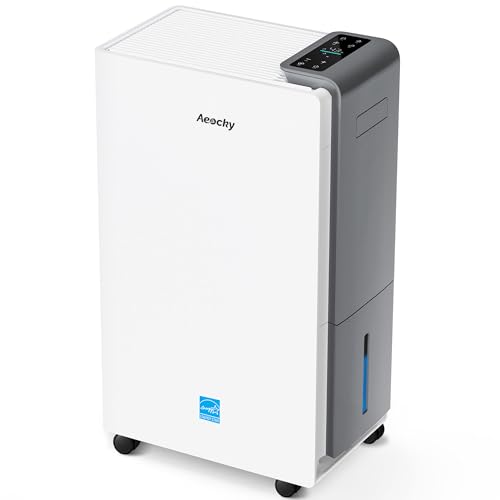
【ENERGY STAR 25 ≠ ENERGY STAR Most Efficient 2025】Don't fall for competitors' word games. With only 2.6% of ENERGY STAR models earning "Most Efficient 2025" title, these options are exceptionally rare on the market. RHEA-001 is one of the few to truly hold this top-tier certification. Many brands use misleading phrases like "Energy Star Efficient 25" or "Energy Star 25" to imply a standard they haven't met. Choosing them is a risk.With AEOCKY, you get verified performance and the peace of mind of authentic, top-tier efficiency.

【The Undisputed Champion — Industry-Leading Dehumidifier Brand】When you choose AEOCKY, you get double market validation. According to data independently verified by Stackline, a leading third-party data analytics company, AEOCKY was an industry‑leading dehumidifier brand on Amazon U.S. in 2025. This means you’re not just choosing a flagship product from a market leader, but a top-performing brand backed by independent market data and trusted by millions of real users, delivering the ultimate combination of performance, quality and trust.
Related Guides
Frequently Asked Questions
Do heat pumps get rid of humidity?
They remove some indoor moisture while operating in Cooling Mode or a supported Dry Mode. They do not remove all humidity, and performance depends on runtime, airflow, equipment sizing, indoor conditions, and the building's moisture load.
Does a heat pump dehumidify in heating mode?
A standard heat pump does not normally remove indoor water vapor while heating. Warming the air can lower its relative-humidity percentage, but the moisture remains in the room unless it is removed through ventilation, condensation, or separate dehumidification equipment.
What indoor humidity should I aim for with a heat pump?
The EPA generally recommends keeping indoor relative humidity between 30% and 50% and below 60%. Use a hygrometer to check, because how the room feels is not a reliable measure.
Why is my heat pump not lowering humidity?
Common causes are an oversized system that shuts off before removing much moisture, a dirty filter or coil, a blocked condensate drain, a continuously running fan, humid outdoor air entering the building, or a strong indoor moisture source. A technician can check sizing, airflow, and refrigerant performance.
Should I set the thermostat fan to Auto or On for humidity?
For many ducted systems, Auto is better for humidity control because the blower stops with the cooling cycle. Running the fan continuously can return moisture left on a wet coil to the air, unless the manual specifies another humidity-control strategy.
Should I use Dry Mode or a dehumidifier?
Use Dry Mode for moderate humidity during mild or warm weather when some cooling is acceptable. Use a dedicated dehumidifier when humidity stays high without a cooling need, when one area remains damp, or when the heat pump cannot keep relative humidity below about 60%.
Conclusion
A heat pump can dehumidify your home while cooling, and a supported Dry Mode may improve comfort during mild, muggy weather. However, a standard heat pump does not remove indoor moisture in Heating or Fan-only Mode, and it may not control a large or persistent humidity load.
Monitor conditions with a hygrometer and aim for roughly 30% to 50% relative humidity when practical. If readings repeatedly stay above 60%, check the operating mode, filter, condensate drain, fan setting, equipment sizing, ventilation, air leakage, and indoor moisture sources. Use a dedicated dehumidifier or professional HVAC evaluation when normal cooling cannot keep the space dry.
Sources
- U.S. Department of Energy: Heat Pump Systems — heat-pump operation, efficiency, and summer dehumidification.
- U.S. Department of Energy: Evaluating Moisture Control of Variable-Capacity Heat Pumps — runtime, airflow, and humidity performance in humid climates.
- U.S. Environmental Protection Agency: Care for Your Air — recommended indoor humidity and moisture control.
- U.S. Environmental Protection Agency: Air Ducts and Moisture Control — equipment sizing, short cycling, condensate drainage, and humidity.
- ENERGY STAR: Heating and Cooling Maintenance Checklist — filter, system, and condensate-drain maintenance.
- LG Support: Dehumidification Mode and Cooling — model-dependent Dry Mode operation and expected cooling.