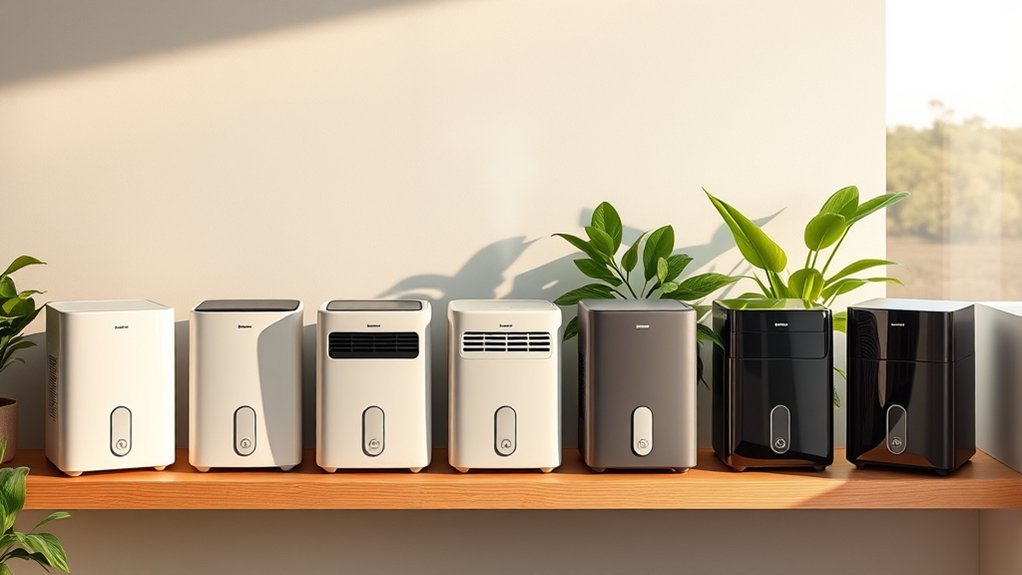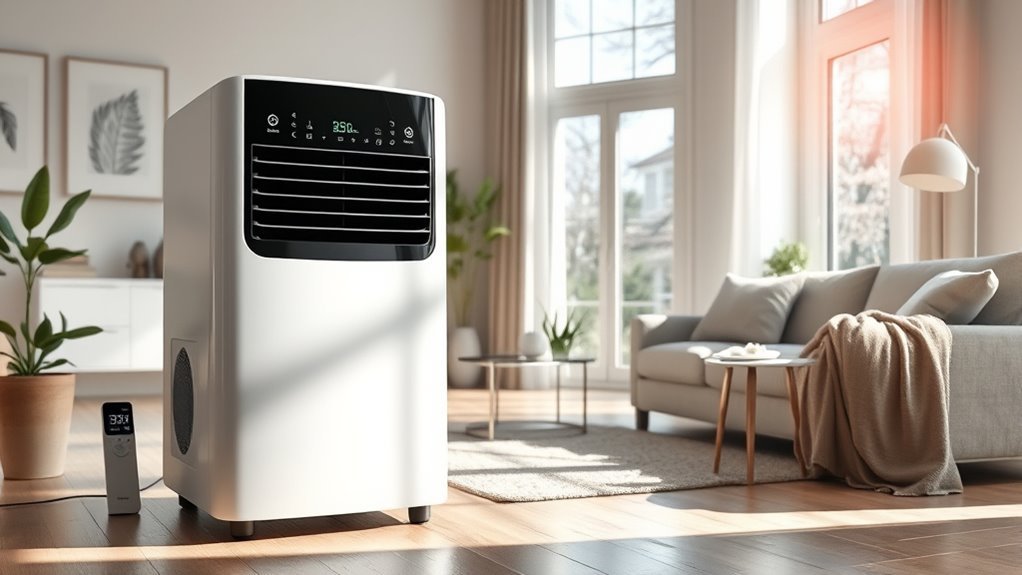
Smart Dry on a dehumidifier is an automatic humidity-control feature that lets the unit respond to room moisture instead of running at one fixed setting all day. In simple terms, it works like a thermostat for humidity: the dehumidifier reads the air, adjusts operation when moisture rises or falls, and helps you keep the room in a healthier, more comfortable range with less manual tuning.
Quick Answer
Smart Dry is an automatic mode that uses a built-in humidity sensor to adjust dehumidifier operation as room conditions change. It helps maintain a steady humidity target, usually around 30%–50% relative humidity, while reducing unnecessary runtime compared with leaving the unit on a fixed manual setting.
Key Takeaways
- Smart Dry automatically responds to humidity changes, but the exact behavior depends on the brand and model.
- For most homes, aim for 30%–50% relative humidity; keeping humidity below 60% helps reduce conditions that support mold growth.
- Smart Dry can reduce wasted runtime, but it does not fix leaks, remove existing mold, or replace proper ventilation.
- Choose capacity by room size and dampness level, not just by the biggest pint number on the box.
What Is Smart Dry on a Dehumidifier?
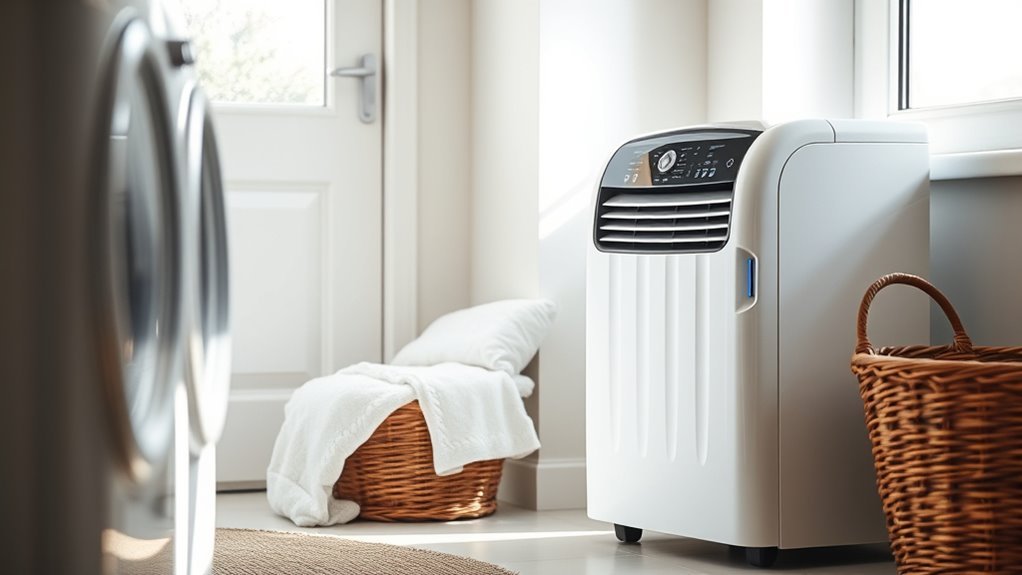
Smart Dry on a dehumidifier is an automated mode that uses a built-in humidistat or humidity sensor to monitor the air and adjust the unit’s operation. Instead of making you choose one fan speed or constantly change the humidity setting, Smart Dry lets the machine react to real room conditions.
The best target for most homes is not “as dry as possible.” The U.S. Environmental Protection Agency recommends keeping indoor relative humidity below 60% and ideally between 30% and 50%. The CDC mold-prevention guidance is even more direct: keep home humidity no higher than 50% all day when possible.
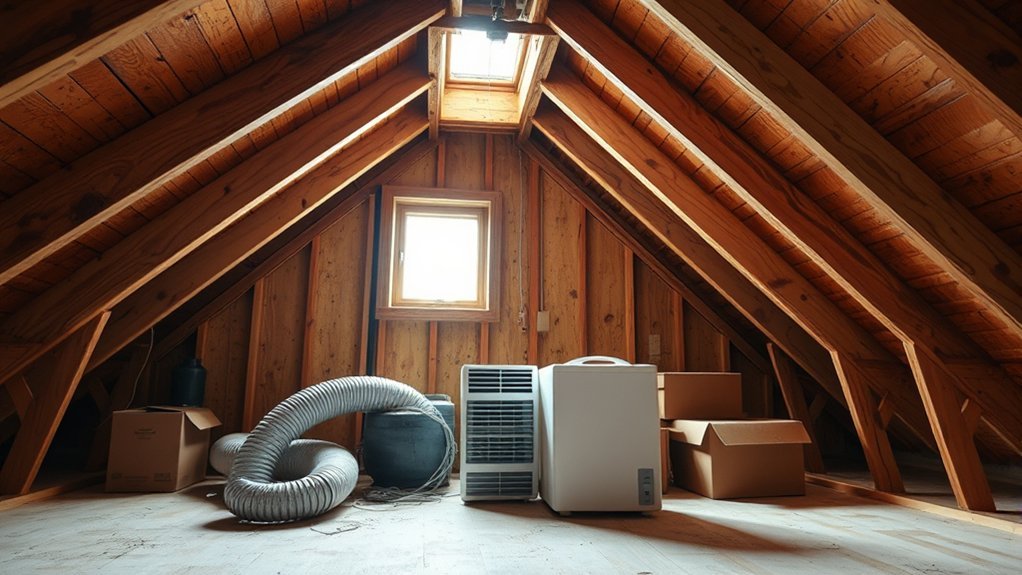
That makes Smart Dry useful in basements, bathrooms, laundry rooms, garages, and other damp spaces where moisture levels rise and fall throughout the day. It can improve comfort, reduce musty odors, and lower the chance of condensation on walls, windows, or stored items.
Warning: Smart Dry helps control airborne humidity, but it will not repair leaks, dry soaked building materials, or remove existing mold. If you see mold, smell a persistent musty odor, or have water intrusion, fix the moisture source first.
How Smart Dry Adjusts Humidity Automatically
Smart Dry works by reading the room’s relative humidity and then changing how hard the dehumidifier works. On some models, that means adjusting fan speed. On others, it may also influence compressor cycling or humidity setpoints. The exact controls vary by manufacturer, so always check the manual for your model.
| Condition | Smart Dry response |
|---|---|
| Humidity rises above the target | Increases moisture removal or fan activity, depending on the model |
| Humidity falls near the target | Reduces output or cycles down to avoid over-drying |
| Humidity stays stable | Maintains efficient operation instead of running at full power constantly |
| Water bucket fills | Alerts you or pauses dehumidifying until the bucket is emptied; continuous drainage can prevent this interruption |
This automatic response is the main benefit. You do not have to keep checking the display every few hours, and the unit is less likely to waste energy once the room is already dry enough.
Note: The built-in humidistat on a dehumidifier may not match a separate room hygrometer exactly. A small difference is normal because the sensor is inside or near the unit, not in the center of the room.
Smart Dry vs. Manual Dehumidifier Settings
Manual settings give you direct control over fan speed, target humidity, and timer options. That can be useful when you want the room dried quickly after a shower, laundry load, or very humid day. The downside is that fixed settings do not always respond well when the room changes.
Smart Dry reduces that guesswork. When moisture rises, the unit works harder. When the room gets close to the target, the unit backs off. That makes it better for spaces where humidity changes during the day, such as basements, laundry rooms, bathrooms, kitchens, and garages.
Manual mode still has a place. Use manual settings when you need a short burst of stronger drying, when you are testing a new room, or when your Smart Dry mode is not reaching the humidity level you want. Once the room is stable, Smart Dry is usually the easier everyday setting.
How Smart Dry Improves Energy Efficiency
Smart Dry improves efficiency by reducing wasted runtime. A dehumidifier uses the most energy when it keeps running hard after the room is already near the target humidity. By adjusting output as conditions change, Smart Dry can help the unit avoid unnecessary cycles.
For the biggest efficiency gain, pair Smart Dry with an ENERGY STAR certified dehumidifier. ENERGY STAR explains that certified dehumidifiers use more efficient refrigeration coils, compressors, and fans to remove the same amount of moisture while using less energy than similarly sized conventional units.
Smart Dry saves energy best when the room is properly sized for the unit, the filter is clean, and the target humidity is realistic.
A good target for most rooms is 45%–50%. Use a lower setting only when the space is still damp, musty, or showing condensation. Setting the target too low can make the dehumidifier run longer than necessary.
Best Rooms for Smart Dry Dehumidifiers
Smart Dry works best in rooms where humidity changes often or moisture builds up faster than the rest of the home.
- Basements: Useful for musty air, cool surfaces, and seasonal moisture swings.
- Laundry rooms: Helps manage damp air from washing machines, drying racks, and dryers.
- Bathrooms: Helps after showers, especially if the exhaust fan is weak or missing.
- Kitchens: Helps control steam from cooking, dishwashing, and poor ventilation.
- Garages and storage rooms: Helps protect tools, paper goods, electronics, and stored furniture from damp air.
- Home offices or hobby rooms: Useful when books, artwork, musical instruments, or documents are stored in a humid space.
Smart Dry is less useful in a room that is already dry, a space with open windows during humid weather, or a room with an active leak. In those cases, you need to address the moisture source first.
Recommended Products

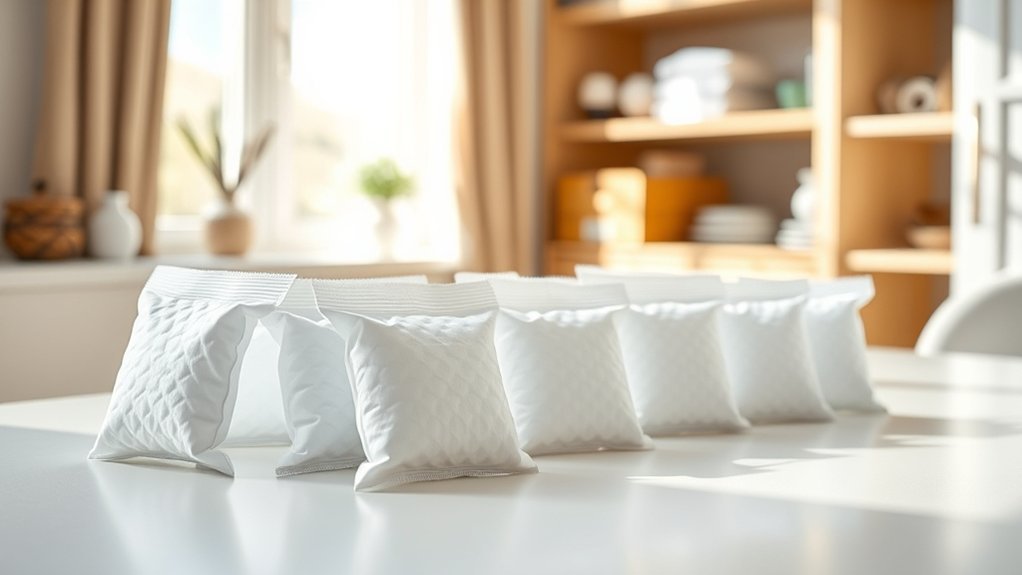
✔ EASY TO USE: This mini dehumidifier is spill and mess free. Just hang and go! Non-toxic, child and pet safe! Your small rooms will be dry and odor free. Works for areas up to 333 cubic feet.

1,500 Sq.Ft. OF COVERAGE - Midea dehumidifier with drain hose is able to collect 20 pint (Similar to 30 PT-2012 DOE) of water a day and adjust humidity from 35% to 85%, perfect for use for basement, bathroom, bedroom, or crawlspace.

4,500 SQ. FT. DEHUMIDIFIER – Removes up to 50 pints of moisture per day with an adjustable humidity setting from 35% to 85%. Perfect for use in basement, bathroom, bedroom, office, kitchen, cellar, or crawlspace. Maintain a healthy 45%-55% humidity range
Do You Need Smart Dry?
You probably need Smart Dry if you want a dehumidifier that can manage normal humidity swings without constant adjustment. It is especially useful when the room feels damp at some times of day but not others.
Smart Dry is worth choosing if you:
- Use a dehumidifier in a basement or other damp room for long periods.
- Do not want to manually change fan speeds throughout the day.
- Want to avoid over-drying the room.
- Need steadier humidity for stored items, documents, instruments, or electronics.
- Prefer app alerts, filter reminders, or remote control on compatible smart models.
You may not need Smart Dry if you only run the dehumidifier occasionally, use it in one small room for short bursts, or already have a simple manual model that keeps the room at your target humidity without trouble.
Pro Tip: Place a separate hygrometer across the room for the first few days. If the dehumidifier display says 50% but the far side of the room reads 60%, improve airflow or move the unit before lowering the setpoint.
How to Choose a Smart Dry Model
Choosing the right Smart Dry model starts with capacity, not features. Capacity is the amount of water a dehumidifier can remove in 24 hours under standard test conditions. ENERGY STAR explains that dehumidifier performance is measured by capacity and energy efficiency, including the integrated energy factor, or IEF.
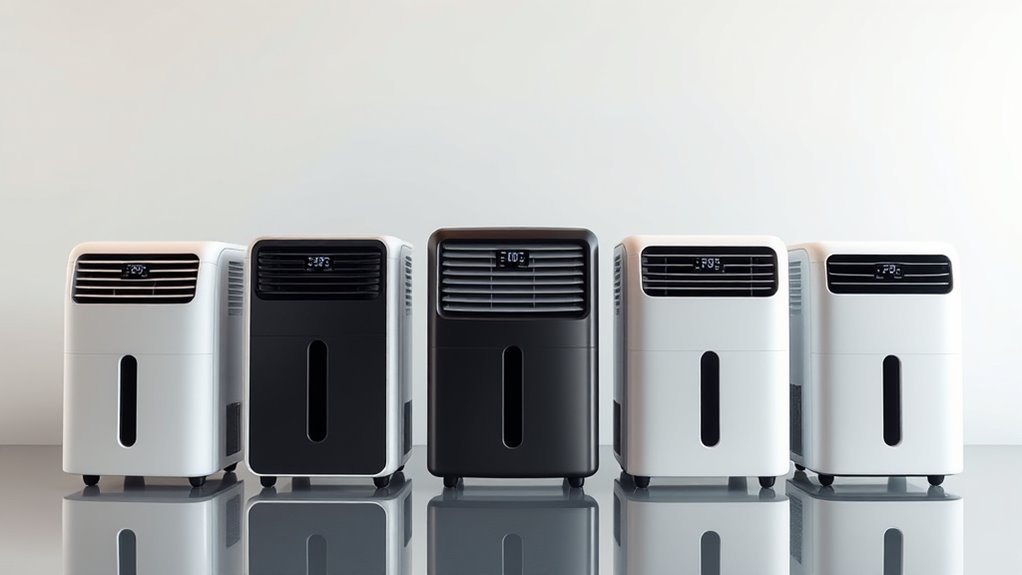
For current portable dehumidifiers, you will commonly see 20- or 22-pint models for smaller rooms, 35-pint models for medium damp spaces, and 50-pint models for large or very damp spaces. A basement, garage, or laundry room may need more capacity than a bedroom with the same square footage because moisture load matters as much as room size.
When comparing models, check these features:
- Humidity target range: Look for adjustable targets around 35%–85%, with 45%–50% as a practical everyday setting.
- Smart Dry or auto mode behavior: Confirm whether it adjusts fan speed, compressor cycling, or both.
- Continuous drainage: A hose connection or built-in pump is useful for basements and long runtimes.
- ENERGY STAR certification: This helps reduce operating costs over time.
- Filter reminder: A dirty filter reduces airflow and performance.
- Noise level: Important for bedrooms, offices, and living rooms.
- Cold-room performance: Basements and garages may need auto-defrost or low-temperature operation.
- App control: Useful if the unit sits in a basement, storage room, or rental property you do not check daily.
Recommended Products
4,500 SQ. FT. DEHUMIDIFIER – Removes up to 50 pints of moisture per day with an adjustable humidity setting from 35% to 85%. Perfect for use in basement, bathroom, bedroom, office, kitchen, cellar, or crawlspace. Maintain a healthy 45%-55% humidity range
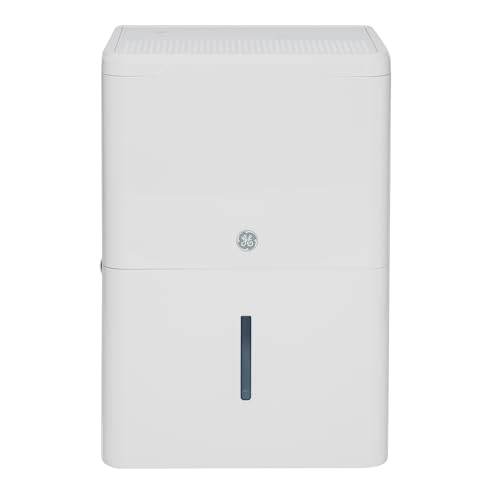
LARGE DEHUMIDIFIER: Effectively removes up to 50 pints of moisture daily, perfect for whole home moisture control including basements, garages, bedrooms, bathrooms, and high-humidity spaces up to 5000 sq ft.
Smart Dry on Midea vs. GE Models
Smart Dry is not always identical from one brand to another. Some brands use “Smart Dry” as a named automatic drying mode, while others use similar language for app-connected or humidity-sensing models. The safest approach is to check the product page or manual for the exact model you are buying.
Recommended Products

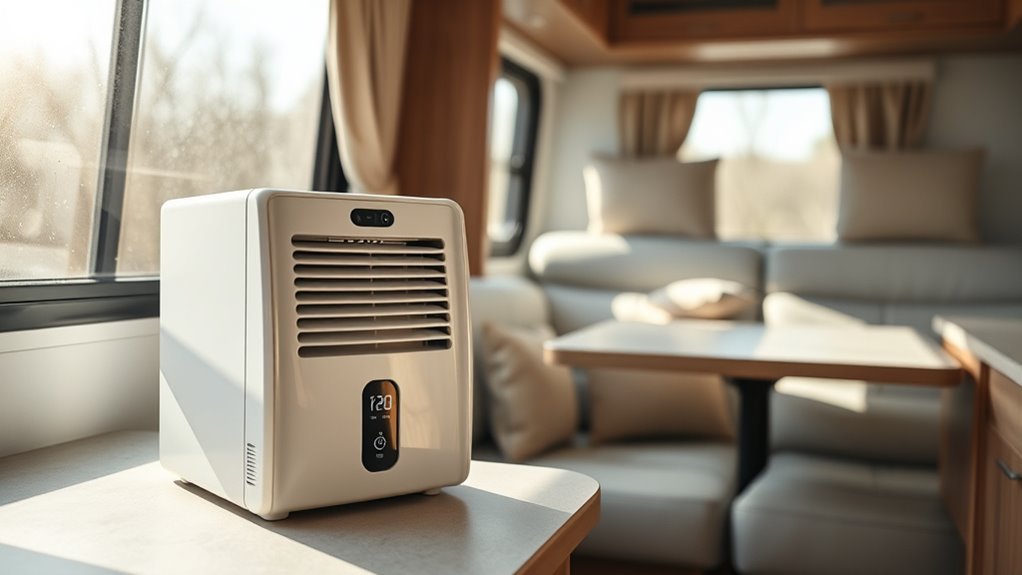
REAL COMPRESSOR DEHUMIDIFIER FOR UP TO 1,600 SQ. FT -Removes up to 21 pints of moisture daily (tested at 95°F/90% RH) and maintains 30%–50% humidity to help reduce dampness and protect furniture from moisture damage. Auto-Defrost prevents coil icing for reliable performance in cooler spaces—ideal as a dehumidifier for basement, bedroom, bathroom, laundry, kitchen, living room, storage spaces, garage, apartment, office, or RV. For best results, close doors and windows
Midea SmartDry Features
Midea sells SmartDry and smart dehumidifier models with features such as SmartHome app control, remote monitoring, clean-filter reminders, portability, and ENERGY STAR certification on specific models. Some Midea models also include built-in pumps or continuous drainage, which can make long basement operation easier.
Choose a Midea SmartDry model if app control, room-to-room portability, and maintenance reminders matter to you. Before buying, confirm the exact model number, pint capacity, drainage setup, and whether the automatic mode behaves the way you expect.
GE Smart Dry Features
GE describes its Smart Dry technology as a feature that automatically adjusts fan speed based on room humidity. That makes GE Smart Dry useful when you want the dehumidifier to respond to changing conditions without manually changing fan speeds.
Many GE dehumidifiers with Smart Dry also include practical features such as an empty-bucket alarm, filter reminder, casters, handles, and continuous drain options. Choose GE if you want clear automatic fan-speed control for damp spaces and a straightforward control panel.
Setup Tips for Best Results
Smart Dry works better when the room setup is right. Even a good dehumidifier can struggle if airflow is blocked or moisture keeps entering the space.
- Place the unit on a level surface with open space around the intake and exhaust.
- Keep doors and windows closed when outdoor air is humid.
- Use bathroom and kitchen exhaust fans to remove moisture at the source.
- Clean the filter as recommended by the manufacturer.
- Use continuous drainage for basements or long unattended operation.
- Set the target around 45%–50% before trying lower settings.
If the unit runs all day and never reaches the target, the space may be too large, too cold, too wet, or poorly sealed. You may need a higher-capacity model, better drainage, leak repair, or improved ventilation.
Troubleshooting Smart Dry Problems
If Smart Dry does not seem to work, check the simple issues first.
| Problem | Likely fix |
|---|---|
| Unit runs constantly | Raise the target to 45%–50%, clean the filter, close windows, and check for leaks. |
| Room still feels damp | Check humidity with a separate hygrometer and make sure the unit is sized for the room. |
| Bucket-full alert keeps stopping operation | Empty and reseat the bucket, clean the float area, or connect continuous drainage. |
| Humidity reading seems wrong | Compare with a separate hygrometer placed away from the unit’s airflow. |
| Frost appears on coils | Move the unit to a warmer space, check for auto-defrost, or choose a model rated for cooler rooms. |
Frequently Asked Questions
What is the Smart Dry setting on a dehumidifier?
Smart Dry is an automatic humidity-control setting. It uses the dehumidifier’s built-in sensor to respond to room humidity, then adjusts operation so the unit does not run harder than needed once the room reaches the target range.
What is the best setting on a dehumidifier?
For most rooms, set the dehumidifier around 45%–50% relative humidity. EPA guidance says indoor humidity should stay below 60% and ideally between 30% and 50%. Lower settings may be useful in damp basements, but very low targets can waste energy.
How much does it cost to run a dehumidifier 12 hours a day?
Use this formula: watts × hours ÷ 1,000 × your electricity rate. For example, a 500-watt dehumidifier running for 12 hours uses 6 kWh. If electricity costs $0.20 per kWh, that day costs about $1.20.
Is it okay to use dry mode all night?
Yes, it is usually okay to use Smart Dry or dry mode overnight if the dehumidifier is in good condition, has an automatic shutoff, and is set to a reasonable target such as 45%–50%. Use continuous drainage if you do not want the bucket filling overnight.
Is Smart Dry the same as continuous mode?
No. Smart Dry adjusts operation based on humidity readings. Continuous mode usually runs the unit steadily until you stop it or the bucket fills. Use continuous mode for short-term heavy drying and Smart Dry for everyday humidity control.
Can Smart Dry prevent mold?
Smart Dry can help reduce the damp conditions that support mold growth, especially when humidity stays below 50%–60%. It cannot remove existing mold, repair water damage, or fix leaks. Those problems need cleaning, drying, and moisture-source repair.
Conclusion
Smart Dry takes much of the guesswork out of using a dehumidifier. It senses changing room humidity and adjusts operation so you do not have to keep switching fan speeds or target levels by hand. For most homes, the sweet spot is around 45%–50% relative humidity, with extra attention to basements, laundry rooms, bathrooms, and storage areas.
Choose Smart Dry when you want steadier comfort, fewer manual adjustments, and better control over damp air. Just remember that it is a humidity-control feature, not a repair tool. If the room has leaks, standing water, blocked drainage, or visible mold, fix those issues first and then let Smart Dry help maintain the balance.
Sources
- U.S. Environmental Protection Agency: A Brief Guide to Mold, Moisture and Your Home — supports indoor humidity targets and mold-prevention guidance.
- CDC: You Can Control Mold — supports keeping home humidity no higher than 50% when possible.
- ENERGY STAR: Dehumidifiers — supports energy-efficiency claims for certified dehumidifiers.
- ENERGY STAR: Dehumidifier Testing and Capacity — supports capacity and rating explanations.
- GE Appliances: Dehumidifiers — supports GE Smart Dry fan-speed behavior based on room humidity.
- Midea: SmartDry Dehumidifier — supports Midea SmartDry product features and SmartHome app control.