

Yes, an oversized AC unit can leave your home cool but clammy. It reaches the thermostat setting so quickly that the compressor shuts off before the evaporator coil collects and drains enough moisture. Before replacing anything, measure humidity and rule out airflow, drainage, refrigerant, duct, and moisture-source problems.
Quick Answer
Yes. An oversized air conditioner can cool a home so quickly that the compressor shuts off before the system removes enough moisture. The result may be a cool but clammy home. Confirm the problem by measuring humidity and cycle behavior, then rule out airflow, drainage, refrigerant, duct, and moisture-source problems before replacing equipment.
Key Takeaways
- An oversized AC may satisfy the thermostat before it removes enough indoor moisture.
- There is no universal five-minute or 15-minute rule for effective dehumidification.
- Aim for roughly 30% to 50% indoor relative humidity and avoid sustained levels above 60%.
- Use a steady thermostat setting and keep the fan on AUTO unless the equipment manufacturer specifies another mode.
- Have a contractor rule out airflow, refrigerant, drain, duct, and control problems before recommending replacement.
Why an Oversized AC Unit Won’t Dehumidify Well
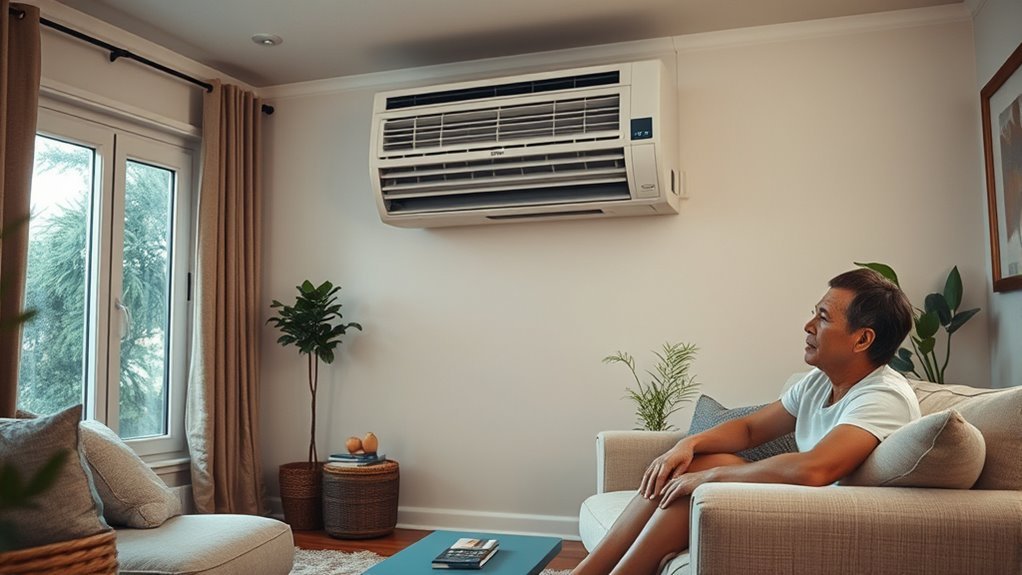
An air conditioner handles two different loads. It removes sensible heat, which lowers the air temperature, and latent heat, which removes water vapor. Moisture condenses when warm indoor air passes across an evaporator coil that is colder than the air’s dew point.
A properly selected system normally operates long enough to cool the home and drain a useful amount of condensate. An oversized fixed-capacity system may reach the thermostat setting very quickly, turn off, and restart a short time later. This frequent on-and-off operation is called short cycling.
ENERGY STAR warns that oversized equipment may cycle too frequently, reducing comfort and shortening equipment life. The U.S. Department of Energy also lists reduced efficiency, extra equipment wear, and increased indoor humidity in summer as possible results of HVAC oversizing. For more on the basics, see how air conditioners dehumidify.
Note: High humidity does not prove that the AC is oversized. Dirty components, incorrect airflow, duct leakage, a blocked condensate drain, low refrigerant, outdoor-air leaks, and indoor moisture sources can create similar symptoms.
How Short Cycling Raises Indoor Humidity
During a cooling cycle, the evaporator coil becomes cold enough for water vapor to condense on its surface. The water collects in a drain pan and leaves through a condensate line. When the compressor shuts off quickly, the system may remove less water during each cycle even though the thermostat shows that the target temperature has been reached.
Short Cycling Basics
Short cycling means the compressor repeatedly starts and stops instead of completing steadier cooling cycles. Oversizing is one possible cause, but it is not the only one. Thermostat placement, a dirty filter, a frozen coil, a control fault, or an equipment problem may also produce short cycles.
Common signs include:
- The AC lowers the temperature very quickly and shuts off.
- The system restarts soon after shutting down.
- The home feels cool but clammy.
- Some rooms become cold while others stay warm or humid.
- The indoor relative humidity remains high during normal cooling operation.
- The compressor has frequent, noticeable starts.
One brief cycle does not confirm a sizing problem. Observe several cycles during warm weather and record the temperature, humidity, start time, and stop time.
Moisture Removal Cut Short
There is no universal minimum runtime that guarantees dehumidification. The time needed depends on the equipment, airflow, coil temperature, indoor moisture load, outdoor conditions, and thermostat controls. The important question is whether the system runs long enough to produce steady condensate drainage and lower indoor relative humidity without overcooling the home.
A fixed-capacity oversized unit often operates at full output whenever it starts. A two-stage or variable-capacity system can reduce its output during mild conditions, which may allow longer operation and better humidity control when it is correctly selected and configured.
Humidity Build-Up Effects
When moisture removal does not keep pace with moisture entering the home, indoor relative humidity rises. You may notice:
- Sticky skin and clammy bedding
- Musty odors
- Condensation on windows, ducts, pipes, or supply registers
- Damp surfaces or swelling wood
- More noticeable dust-mite or mold-related allergy symptoms
- Uneven comfort from room to room
Frequent cycling can also increase equipment wear. However, high humidity and frequent starts should be diagnosed separately because one may have another cause.
What Indoor Humidity Should Be
The U.S. Environmental Protection Agency recommends keeping indoor relative humidity between about 30% and 50% where practical. The EPA also advises keeping it below 60% to reduce moisture and mold concerns.
A cool thermostat reading does not guarantee dry air. Measure relative humidity with a separate hygrometer instead of judging the moisture level by temperature alone.
A small digital hygrometer can help you track conditions. Place it away from supply vents, exterior doors, kitchens, bathrooms, direct sunlight, and other locations that can distort the reading. Check more than one room if comfort varies throughout the home.
What High Humidity Does to Comfort
High humidity slows the evaporation of sweat from your skin. This can make a room feel warmer and stickier than its temperature suggests. Lowering the thermostat may then make the air colder without solving the moisture problem.
Sustained dampness can also support mold growth and dust mites. People with asthma, allergies, or mold sensitivity may notice more symptoms when moisture problems are not controlled. Humidity alone is not a medical diagnosis, but visible mold, persistent condensation, water damage, or breathing symptoms deserve prompt attention.
The EPA recommends correcting the source of excess moisture, keeping drain pans and condensate lines clear, and drying wet materials quickly.
How to Tell If Your AC Is the Wrong Size
An oversized system usually shows a pattern rather than one isolated symptom. Use the following clues together:
| Observation | What It May Mean |
|---|---|
| Temperature drops very quickly | The unit may have more capacity than the home needs at that moment. |
| Compressor repeatedly starts and stops | Possible oversizing, thermostat trouble, airflow restriction, freezing, or another control fault. |
| Humidity stays high while temperature is satisfied | The system may be removing sensible heat faster than latent moisture. |
| Rooms near the thermostat become cold first | Possible sizing, airflow-balancing, duct, insulation, or thermostat-location problem. |
| The problem has existed since installation | Incorrect sizing, equipment selection, commissioning, or duct design becomes more likely. |
Pro Tip: Record indoor humidity, thermostat temperature, outdoor conditions, and compressor start and stop times for two or three days. A clear log gives an HVAC contractor better evidence than a general complaint that the house feels humid.
Problems That Can Look Like Oversizing
Do not replace an air conditioner based on humidity alone. Have these common problems checked first, and see why your AC may not be dehumidifying for a fuller checklist.
Thermostat Fan Set to ON
For many central systems, AUTO is the better normal setting for humidity control because the indoor blower stops when the cooling cycle ends. With the fan set to ON, air may continue moving across a wet coil after the compressor stops and return some moisture to the house. Follow the equipment manufacturer’s instructions if your system uses a special circulation or humidity-control mode.
Dirty Filter, Coil, or Blocked Registers
A clogged filter, dirty evaporator coil, closed register, or blocked return can reduce airflow and system performance. Replace or clean the filter according to the manufacturer’s instructions and keep registers unobstructed. Do not close multiple supply vents in an attempt to force longer cycles.
Frozen Evaporator Coil
Ice on the refrigerant line or evaporator coil can result from restricted airflow, a blower problem, or a refrigerant fault. A frozen coil cannot control humidity correctly and may eventually leak water as it thaws.
Warning: Turn cooling off if you see ice, smell burning, hear electrical arcing, or find water near electrical components. Do not chip ice from the coil, open sealed electrical panels, or add refrigerant yourself. Contact a qualified HVAC technician.
Condensate Drain Problem
A blocked drain line or damaged drain pan may prevent collected water from leaving the system. Check for standing water, overflow, staining, or a triggered condensate safety switch. Follow the manufacturer’s maintenance instructions or call a technician if the drain is inaccessible.
Incorrect Refrigerant Charge or Airflow
Too much or too little refrigerant, incorrect blower speed, or poor commissioning can reduce both cooling and moisture removal. These are professional measurements. A technician should compare refrigerant readings, temperature split, airflow, static pressure, and manufacturer performance data.
Duct Leakage and Outdoor-Air Infiltration
Leaky return ducts can draw humid air from an attic, crawl space, garage, or outdoors. Gaps around doors, windows, plumbing penetrations, recessed lights, and attic hatches can also add moisture faster than the AC removes it.
Indoor Moisture Sources
Cooking, showers, unvented dryers, wet basements, crawl-space moisture, plumbing leaks, large numbers of houseplants, and drying clothes indoors can raise humidity. Use bathroom and kitchen exhaust fans that vent outdoors, repair leaks, and confirm that the clothes dryer exhausts outside.
How to Fix Humidity Problems
Start with simple measurements and maintenance before changing equipment. The following process helps separate oversizing from other causes.
At a Glance
| Time Required | About 30 to 60 minutes for basic checks, plus several cooling cycles for observation |
| Difficulty | Easy for measurement and filter checks; professional service for refrigerant, wiring, airflow, and sizing |
| Tools Needed | Digital hygrometer, phone timer or notebook, flashlight, and the correct replacement filter if needed |
| Cost | Observation may cost nothing; filters, hygrometers, professional repairs, and dehumidification equipment vary by home and system |
Recommended Products

Wellness Indicator: This humidity meter with humidity level icon indicates air conditions - DRY/COMFORT/WET, allowing this humidity sensor to ensure you’re always aware of changes to your home/household with just a quick glance

Face Icon Comfort Indicator: Humidity temperature gauge features face icons to indicate DRY/COMFORT/WET air conditions, quickly informs you how to adjust your humidifier or dehumidifier to achieve optimal comfort.

2-in-1 Thermometer & Hygrometer Meter: Equipped with a high-precision sensor, this temperature and humidity meter provides accurate readings, making it ideal for monitoring indoor environments like homes, offices, or greenhouses
Set the Controls for Better Humidity Removal
- Use a steady, comfortable temperature setting. Avoid repeatedly raising and lowering the thermostat.
- Set the central-system fan to AUTO. Use another mode only when the manufacturer or technician recommends it for your equipment.
- Enable humidity control or dehumidify mode if available. Some thermostats and variable-speed systems can lower airflow or extend operation when humidity is high.
- Do not lower the thermostat only to force longer cycles. This may overcool the home without correcting the cause.
For a room or window air conditioner, ENERGY STAR advises using a lower fan speed on humid days because slower airflow can improve moisture removal. Central-system blower adjustments are different and should be made according to manufacturer data by a qualified technician.
Improve Moisture Removal
- Measure humidity. Confirm that the problem is persistent rather than based on how the room feels.
- Check the filter. Replace a dirty filter with the correct size and type.
- Open and clear registers. Make sure furniture, rugs, curtains, and stored items are not blocking airflow.
- Look for ice or water. Shut cooling off and call for service if the coil is frozen or the drain is overflowing.
- Reduce indoor moisture. Use outdoor-vented exhaust fans and repair water leaks.
- Inspect the building envelope. Seal significant outdoor-air leaks and have suspicious duct leakage tested.
- Schedule professional testing. Ask for airflow, static pressure, refrigerant charge, condensate drainage, thermostat, duct, and coil checks.
Use a Dehumidifier When the Moisture Load Remains High
A portable dehumidifier can help one room or a small problem area; for ducted options, see how to add a dehumidifier to an HVAC system. A whole-home dehumidifier can control moisture across a ducted home and may be useful in hot-humid climates, tightly built homes, damp basements, or mild weather when the AC has little reason to run.
A dehumidifier is not a substitute for repairing water leaks, blocked drains, wet crawl spaces, severe duct leakage, or defective cooling equipment. It also adds electricity use and produces some heat, so it should be selected and installed for the actual moisture load.
How Professionals Confirm AC Size
Square footage alone is not enough to size a central air conditioner. A qualified contractor should calculate the home’s cooling load using ACCA Manual J. The calculation considers factors such as:
- Local outdoor design conditions
- Insulation and air leakage
- Window area, direction, shading, and performance
- Ceiling height and building volume
- Duct location and leakage
- Ventilation and infiltration
- Internal heat and moisture loads
- Room-by-room requirements
The contractor should then use Manual S and manufacturer performance data to select equipment that can handle both sensible and latent loads under the home’s design conditions. Ask for a copy of the load calculation instead of accepting a rule-of-thumb recommendation based only on floor area or the size of the old unit.
Recommended Products

When Oversizing Means Replacing the Unit
Replacement may be the best long-term solution when a fixed-capacity system is substantially oversized, repeatedly short cycles, cannot control humidity, and has no practical control or equipment adjustment that solves the problem. Replacement becomes more reasonable when the unit is also old, inefficient, unreliable, out of warranty, or facing a major repair.
Replacement is not always the first step. Depending on the equipment, a contractor may improve performance by:
- Correcting thermostat or control settings
- Repairing duct leakage
- Correcting refrigerant charge or airflow
- Cleaning the coil and drain system
- Enabling approved dehumidification controls
- Installing a properly selected whole-home dehumidifier
- Using an available lower stage on compatible equipment
When replacement is necessary, consider properly selected two-stage or variable-capacity equipment. These systems can operate at reduced output during lighter loads, but they still require a valid load calculation and correct installation.
Recommended Products

【Reduce humidity - Enhance comfort】:Massive Capacity + Wide Coverage. This dehumidifier has dehumidification capacity ranging 45- 80 pints—outperforming standard units while covering 4,500 sq. ft. of living space. Great dehumidifier for basements, large house, garages, bedroom, bathroom and gyms where excess humidity triggers cause unpleasant odors and discomfort. The result? A noticeably drier, fresher, and more comfortable environment for your entire family.
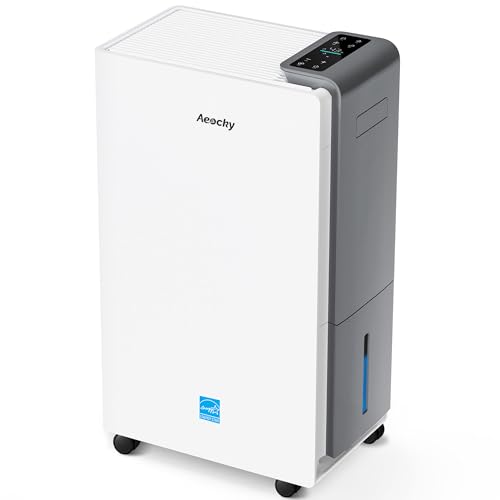
【ENERGY STAR 25 ≠ ENERGY STAR Most Efficient 2025】Don't fall for competitors' word games. With only 2.6% of ENERGY STAR models earning "Most Efficient 2025" title, these options are exceptionally rare on the market. RHEA-001 is one of the few to truly hold this top-tier certification. Many brands use misleading phrases like "Energy Star Efficient 25" or "Energy Star 25" to imply a standard they haven't met. Choosing them is a risk.With AEOCKY, you get verified performance and the peace of mind of authentic, top-tier efficiency.

【The Undisputed Champion — Industry-Leading Dehumidifier Brand】When you choose AEOCKY, you get double market validation. According to data independently verified by Stackline, a leading third-party data analytics company, AEOCKY was an industry‑leading dehumidifier brand on Amazon U.S. in 2025. This means you’re not just choosing a flagship product from a market leader, but a top-performing brand backed by independent market data and trusted by millions of real users, delivering the ultimate combination of performance, quality and trust.
Related Guides
Frequently Asked Questions
Can an Oversized AC Unit Cause High Humidity?
Yes. An oversized fixed-capacity AC may reach the thermostat setting and shut off before it removes enough moisture. However, high humidity can also come from airflow problems, duct leaks, a blocked drain, incorrect refrigerant charge, a continuously running fan, outdoor-air infiltration, or indoor moisture sources.
Why Is My Air Conditioner Not Dehumidifying My House?
Possible causes include oversizing, short cycling, a dirty filter or coil, incorrect fan settings, low or improper refrigerant charge, a frozen coil, a clogged condensate drain, duct leakage, open-building leaks, and a moisture load that exceeds the AC’s latent capacity. Measure the humidity and have the complete system checked before replacing it.
How Do I Know if My AC Is Oversized?
Look for fast temperature drops, frequent starts and stops, and high humidity even when the thermostat is satisfied. Because other faults can cause the same signs, ask a contractor for an ACCA Manual J load calculation and airflow and refrigerant checks.
Will a Dehumidifier Fix an Oversized AC?
A dehumidifier can lower humidity by removing the moisture the AC leaves behind, but it does not fix the sizing. It also adds electricity use and some heat, so size it to the actual moisture load.
Should I Set My AC Fan to Auto or On for Humidity?
For many central systems, AUTO is the better normal setting, because the blower stops when the cooling cycle ends. With the fan on, air can keep moving across a wet coil and return some moisture to the house. Follow your equipment manufacturer’s instructions.
Can an Oversized AC Be Fixed Without Replacing It?
Sometimes. A contractor may correct controls, airflow, refrigerant charge, or duct leakage, enable humidity-control settings, or add a whole-home dehumidifier. Replacement is more likely when a fixed-capacity unit is substantially oversized and keeps short cycling.
Conclusion
An oversized AC can cool a home before it removes enough moisture, leaving the rooms cold but clammy. Frequent cycling, high measured humidity, and a problem that began with the installation can point toward incorrect sizing, but they do not prove it by themselves.
Start with a hygrometer, a steady thermostat setting, fan AUTO, a clean filter, open registers, moisture-source control, and a check for ice or drainage trouble. If the problem continues, ask a qualified HVAC contractor to test the complete system and provide an ACCA Manual J load calculation. Replace the unit only after confirming that oversizing is the real cause and that maintenance, controls, duct repairs, or dehumidification cannot provide an acceptable solution.
Sources
- ENERGY STAR HVAC Quality Installation — proper sizing, airflow, refrigerant charge, comfort, and equipment life
- U.S. Department of Energy HVAC Sizing Research — oversizing, equipment cycling, efficiency, wear, and summer humidity
- U.S. EPA Care for Your Air — recommended indoor relative-humidity range
- U.S. EPA Mold, Moisture and Your Home — humidity, condensation, drainage, and mold prevention
- ACCA Manual J Residential Load Calculation — recognized residential HVAC load-calculation method

[…] oversized system may cool the home quickly and shut off before it removes enough moisture. An undersized system may […]