
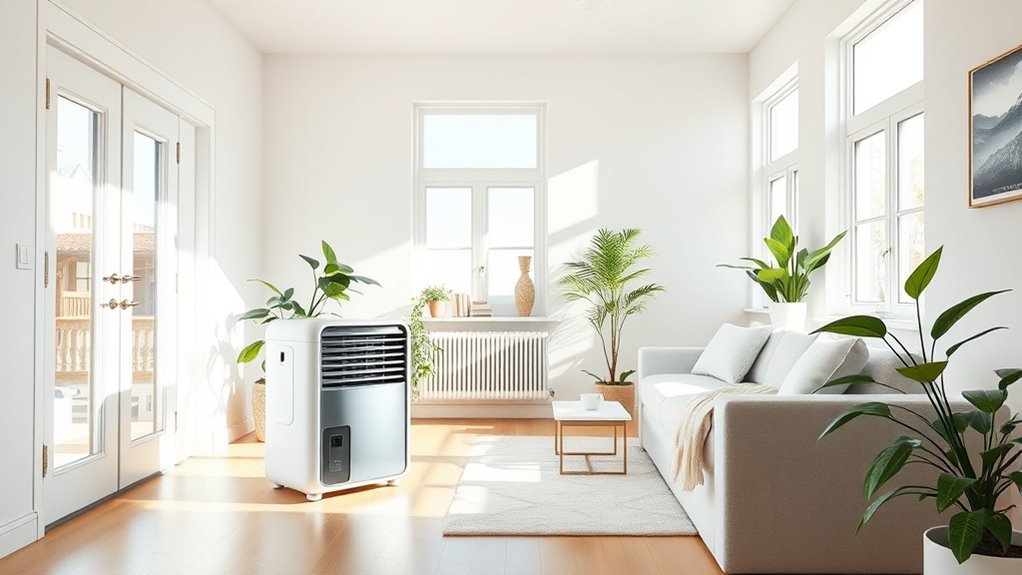
The main benefits of a dehumidifier are drier rooms, fewer musty smells, less condensation, and lower mold, mildew and dust mite risk. For most homes the goal is indoor relative humidity of about 30% to 50%, together with fixing leaks, improving ventilation, and choosing the right-size unit for the space.
Quick Answer
A dehumidifier removes moisture from indoor air. It can help reduce musty odors, condensation, mold-friendly dampness, dust mite conditions, and moisture damage to walls, floors, furniture, books, and electronics. It works best when you also fix leaks and keep humidity near 30% to 50%.
Key Takeaways
- A dehumidifier is most useful in damp rooms such as basements, bathrooms, laundry areas, crawl-space-adjacent rooms, and humid bedrooms.
- Aim for about 30% to 50% relative humidity; use a hygrometer instead of guessing.
- Lower humidity can reduce mold-friendly conditions, musty odors, dust mite activity, condensation, and moisture damage.
- A dehumidifier helps control moisture, but it will not fix leaks, flooding, sewage water, or large mold problems by itself.
- Choose the right capacity, clean the filter, empty or drain the bucket, and keep air flowing around the unit.
At a Glance
| Best Humidity Target | About 30% to 50% relative humidity for most homes |
| Best Rooms | Basements, bathrooms, laundry rooms, humid bedrooms, storage rooms, and damp finished spaces |
| Tools Needed | Dehumidifier, hygrometer, grounded outlet, drain hose if continuous drainage is available |
| Maintenance | Clean the filter, empty and rinse the bucket, check the drain hose, and keep the coils free of dust |
| Running Cost | Depends on wattage, runtime, and local electric rate; estimate with watts ÷ 1,000 × hours × electricity rate |
Main Benefits of a Dehumidifier at a Glance
| Benefit | How a dehumidifier helps | Limit to know |
|---|---|---|
| Less mold and mildew risk | Keeping humidity near 30% to 50% makes damp surfaces less friendly to mold | It does not remove existing mold or fix leaks |
| Fewer dust mites | Dust mites depend on humidity, and keeping it below 50% limits them | It is not an allergy cure |
| Fewer musty odors | Less damp air and fewer damp materials means less stale smell | Hidden mold or wet padding may still need finding |
| Less condensation | Drier air is less likely to condense on windows, pipes and cold walls | Poor insulation can still cause winter condensation |
| Protected belongings | Reduces swelling, rust, curling paper and mildew on stored items | Over-drying can crack wood and dry out the air |
| More comfortable rooms | Humid air feels warmer, so rooms can feel less sticky | Savings vary and the unit uses electricity |
What Is a Dehumidifier?
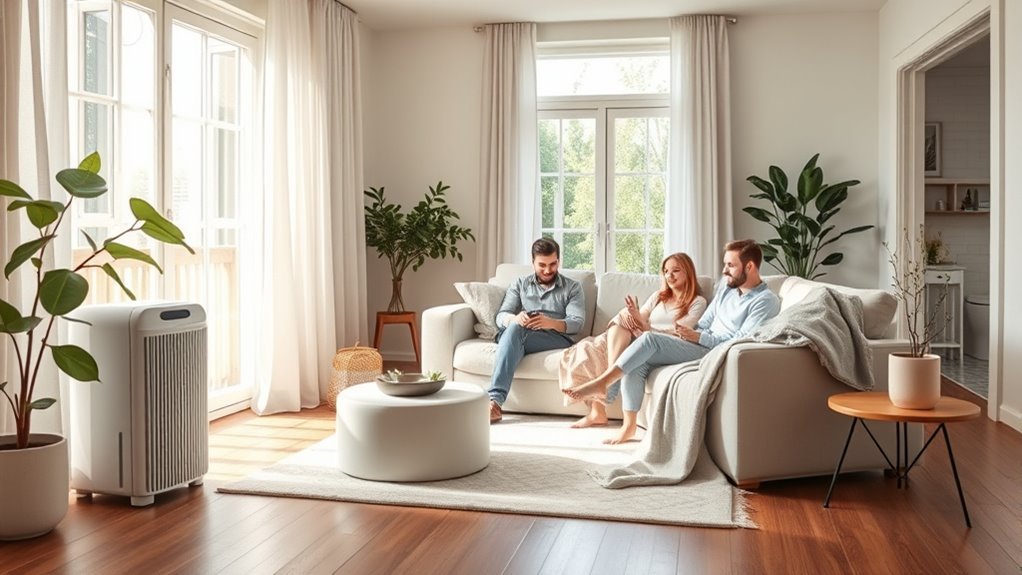
A dehumidifier is an appliance that lowers moisture in the air. Most home models pull humid air across cold coils, condense water vapor into liquid, collect that water in a bucket or drain hose, and send drier air back into the room. Some systems are portable, while whole-home dehumidifiers connect to HVAC ductwork for broader humidity control.
The main job is not to “purify” air like an air purifier. Instead, a dehumidifier changes the conditions that allow dampness, mold, mildew, condensation, and dust mites to become worse. The U.S. Environmental Protection Agency recommends keeping indoor humidity below 60% if possible, ideally between 30% and 50% relative humidity.
Pro Tip: Buy a small hygrometer and place it in the room you want to control. A dehumidifier setting is useful, but a separate humidity meter helps you confirm the real room humidity.
How a Dehumidifier Improves Air Quality
A dehumidifier can support better indoor air quality by reducing damp conditions. Moist air does not just feel sticky; it can help mold, mildew, and dust mites thrive. When you lower humidity, those moisture-related triggers have a harder time building up.
This does not mean a dehumidifier removes every pollutant from the air. It does not capture fine particles like a HEPA air purifier, and it does not replace cleaning, ventilation, or leak repair. Its benefit is moisture control. In a damp home, that can make the air feel fresher, reduce musty smells, and make rooms easier to keep clean.
For the best result, use a dehumidifier with basic indoor-air habits: run bathroom and kitchen exhaust fans, vent the clothes dryer outdoors, repair roof or plumbing leaks, and avoid storing damp cardboard, rugs, or fabrics in basements.
How Dehumidifiers Reduce Mold and Mildew
Mold needs moisture to grow. That is why a dehumidifier can be useful in damp rooms, especially basements, bathrooms, closets, and laundry areas. By keeping humidity lower, you make the space less favorable for mold and mildew.
The Centers for Disease Control and Prevention recommends keeping home humidity no higher than 50% all day long to help prevent mold. The EPA also says moisture control is the key to mold control and recommends drying wet materials within 24 to 48 hours after leaks or spills.
Mold Growth Prevention
A dehumidifier helps prevent mold by reducing moisture in the air and on nearby surfaces. This is especially helpful where condensation forms on windows, concrete walls, pipes, or cool basement surfaces. Lower humidity can also reduce the musty odor that often appears before visible mold is easy to find.
However, a dehumidifier should not be treated as the only fix. If rainwater is entering the basement, a pipe is leaking, a roof is damaged, or a bathroom fan vents into an attic, the water source still needs repair. If you dry the air but leave the water problem, mold is likely to return.
Moisture Control Benefits
Steady moisture control gives you three practical benefits:
- It reduces the damp conditions that help mold and mildew grow.
- It helps limit dust mites, which depend heavily on indoor humidity.
- It protects porous materials such as drywall, carpets, books, fabrics, and stored boxes from moisture damage.
Warning: Do not rely on a dehumidifier alone for active leaks, flood damage, sewage water, or large mold areas. Fix the water source first, and consider professional mold cleanup for widespread growth or health-sensitive households.
How Dehumidifiers Relieve Allergy Symptoms
A dehumidifier may help with allergies when high humidity is feeding dust mites, mold, or mildew. It does not cure allergies, but it can reduce moisture-related triggers in the home.
Dust mites are a common indoor trigger for people with allergies and asthma. The American Lung Association says humidity is the most important factor in whether a house has high dust mite levels and recommends keeping the home below 50% humidity. Mayo Clinic also recommends keeping relative humidity below 50% for dust mite allergy control.
For stronger allergy control, combine humidity management with regular cleaning. Wash bedding weekly, reduce clutter, use allergen-proof mattress and pillow covers, vacuum with a HEPA filter if possible, and replace damp carpet where dust mites or mold are a recurring problem.
How Dehumidifiers Help Manage Asthma
If you have asthma, damp indoor air can be a problem because it may support mold and dust mites. CDC notes that damp and moldy environments may cause coughing, wheezing, and other symptoms, and that people with asthma or mold allergies may have stronger reactions to mold exposure.
Keeping humidity under control can reduce moisture-related asthma triggers, but a dehumidifier is not a substitute for an asthma action plan, prescribed medication, or medical care.
Use a dehumidifier as one part of a broader asthma-friendly home plan:
- Control moisture: Keep humidity near 30% to 50% and fix leaks quickly.
- Reduce triggers: Lower mold-friendly dampness and keep dust mite humidity below 50%.
- Clean safely: Avoid stirring up dust or mold, and get help with large mold cleanup if symptoms are severe.
If asthma symptoms increase indoors, talk with a healthcare professional. The cause may be humidity, but it could also be smoke, pests, pet dander, cleaning chemicals, outdoor pollution, or HVAC problems.
How Dehumidifiers Prevent Musty Odors
Musty odors usually come from damp materials, mold, mildew, or stagnant air. A dehumidifier helps by removing excess water vapor from the room, which makes it harder for odor-causing moisture problems to continue.
This is especially helpful in basements, closets, laundry rooms, and storage areas where air circulation is poor. If the smell improves after running a dehumidifier, that is a sign humidity was part of the problem. If the odor remains, check for hidden mold, wet carpet padding, damp drywall, leaking pipes, foundation seepage, or stored items that already absorbed moisture.
A dehumidifier removes the conditions behind many musty smells, but it should not be used to hide a serious moisture problem. If you smell mold but cannot find it, inspect behind furniture, under carpet edges, around windows, below sinks, near HVAC equipment, and along exterior walls.
How Dehumidifiers Stop Condensation and Water Damage
Condensation happens when warm, humid air touches a cooler surface, such as window glass, metal pipes, concrete walls, or cold corners. A dehumidifier lowers the moisture content of the air, which can reduce condensation and help protect nearby materials.
Condensation On Windows
Window condensation is a common sign of high indoor humidity. If water collects on glass, sills, or trim, it can eventually stain wood, soften paint, encourage mildew, and damage nearby drywall.
To reduce window condensation, lower humidity, increase air movement, use exhaust fans while cooking or showering, and insulate cold surfaces where practical. In cold climates, some winter condensation may also point to poor insulation, weak ventilation, or very tight indoor air.
Moisture Damage Prevention
Excess moisture can slowly damage a home. Paint may peel, wallpaper may loosen, drywall may stain, wood may swell, and metal parts may corrode. A dehumidifier helps reduce those risks by keeping indoor moisture more stable.
For storage rooms, this matters even more. Books, photographs, documents, musical instruments, seasonal clothes, and cardboard boxes all suffer in damp air. If you store valuables in a basement, combine dehumidification with plastic storage bins, raised shelving, and regular humidity checks.
Protect Walls And Floors
Walls and floors often show moisture problems before the rest of the room does. Watch for:
- Water stains, bubbling paint, or peeling wallpaper.
- Warped wood, swollen trim, or musty carpet edges.
- Condensation on basement walls, pipes, or windows.
A dehumidifier can help protect these surfaces, but recurring dampness should be investigated. If the floor feels wet, the wall is soft, or moisture returns soon after drying, there may be a leak, drainage issue, or building-envelope problem.
How Dehumidifiers Lower Energy Costs
Humid air can make a room feel warmer than it is. When indoor humidity is controlled, you may feel comfortable at a slightly higher thermostat setting in summer, which can reduce cooling demand. In homes where the air conditioner struggles to remove enough moisture, a properly sized dehumidifier can also improve comfort.
Energy savings vary by climate, home tightness, HVAC system, thermostat habits, and how long the dehumidifier runs. The safest way to estimate cost is to use this formula:
Watts ÷ 1,000 × hours used × electricity rate = operating cost
For example, a 500-watt dehumidifier running for 4 hours uses 2 kWh. At $0.18 per kWh, that costs about $0.36. The U.S. Energy Information Administration publishes average residential electricity prices by state. Use the rate on your own utility bill for the most accurate estimate.
To reduce energy waste, choose an efficient unit, keep doors and windows closed while it runs, clean the filter, use a drain hose when possible, and set the humidistat instead of running the unit nonstop. ENERGY STAR says certified dehumidifiers use 20% less energy than similarly sized conventional units.
How Dehumidifiers Protect Furniture and Belongings
Moisture does not only affect walls and air quality. It can also damage the things you store and use every day. A dehumidifier helps protect furniture, fabrics, paper, electronics, tools, and keepsakes by reducing the damp conditions that cause swelling, mildew, rust, and musty odors.
Prevent Moisture Damage
Wood can absorb moisture, swell, warp, or crack as humidity changes. Upholstery and rugs can hold dampness and develop mildew. Books and documents may curl, stain, or smell musty. By keeping humidity more stable, a dehumidifier helps these materials last longer.
- Wood: Helps reduce swelling, sticking drawers, warped trim, and loose joints.
- Paper and photos: Helps prevent curling, mildew spots, and musty storage smells.
- Fabrics: Helps keep stored clothes, rugs, and upholstery drier.
Stop Mold Growth
Furniture and stored items can grow mold when they sit in damp rooms with poor airflow. This is common behind sofas placed against exterior walls, under basement storage, or inside crowded closets.
Leave space between furniture and cold walls, avoid stacking boxes directly on concrete, and run the dehumidifier before dampness becomes visible. If an item is already moldy, clean it safely or discard it if it is porous and cannot be fully dried.
Preserve Wood And Fabrics
Stable humidity helps wood furniture, musical instruments, antiques, and fabric items stay in better condition. For valuable items, do not aim for extremely dry air. Too little humidity can also cause wood shrinkage, cracking, dry skin, and respiratory irritation.
Note: More dehumidifying is not always better. If your room is already below about 30% humidity, running a dehumidifier may make the air uncomfortably dry.
How to Use a Dehumidifier Effectively
Using a dehumidifier correctly makes a big difference. A good unit can underperform if it is too small, blocked by furniture, placed in the wrong room, or run with windows open.
- Measure first: Use a hygrometer to confirm the room is actually humid.
- Place it correctly: Keep space around the air intake and exhaust. Follow the manufacturer’s clearance instructions.
- Close the room: Keep windows and exterior doors closed while the unit runs.
- Use continuous drainage if possible: A drain hose prevents shutoff from a full bucket.
- Set a target: Start around 45% to 50% relative humidity, then adjust for comfort.
- Check the bucket and filter: A dirty filter or full bucket reduces performance.
Recommended Products

1-【Widely Application】The digital LCD monitor can be used in home, office, garage, schools, hotels, laboratories, kindergartens, aquaculture, instrument workshop, warehouse, reptile tank terrarium, aquarium, hermit crab habitat, and other places where temperature/humidity measurement is required.

Face Icon Comfort Indicator: Humidity temperature gauge features face icons to indicate DRY/COMFORT/WET air conditions, quickly informs you how to adjust your humidifier or dehumidifier to achieve optimal comfort.

Maintain the Right Room Temperature and Humidity Levels: This wireless indoor thermometer/hygrometer combination is perfect to pair with humidifiers or dehumidifiers
How to Choose the Right Size Dehumidifier
Dehumidifier capacity is usually listed in pints of water removed per day. The right size depends on room size, temperature, and how damp the space is. A small bedroom with mild humidity needs less capacity than a wet basement with condensation and seepage.
ENERGY STAR recommends considering both the size of the space and the dampness conditions. Signs such as musty odors, damp spots, sweating walls, and high humidity readings all point to a higher moisture load.
Also check operating temperature. Some compressor-based dehumidifiers work poorly in cooler spaces. If the room is often below 65°F, look for a unit rated for lower-temperature operation or one with auto-defrost.
Recommended Products

Semiconductor dehumidifiers use thermoelectric cooling to remove moisture from the air. They create a drier, more comfortable environment by reducing humidity and improving air quality.

2500 Sq.Ft High Capacity Dehumidifier- The GoGuess basement dehumidifier is equipped with a quiet yet powerful compressor that efficiently extracts up to 34 pints of moisture per day (tested at 95°F and 90% RH). Perfect for use in basements, offices, bathrooms, bedrooms, kitchens, storage areas, living rooms, laundry spaces, garages, crawl spaces, and RVs. It helps maintain a healthy humidity level between 30% and 70%, promoting a more comfortable and healthier indoor environment.
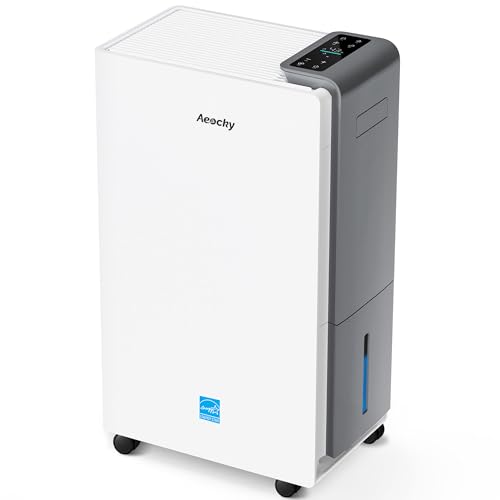
【ENERGY STAR 25 ≠ ENERGY STAR Most Efficient 2025】Don't fall for competitors' word games. With only 2.6% of ENERGY STAR models earning "Most Efficient 2025" title, these options are exceptionally rare on the market. RHEA-001 is one of the few to truly hold this top-tier certification. Many brands use misleading phrases like "Energy Star Efficient 25" or "Energy Star 25" to imply a standard they haven't met. Choosing them is a risk.With AEOCKY, you get verified performance and the peace of mind of authentic, top-tier efficiency.
Maintenance Checklist
A dehumidifier works best when it stays clean and unobstructed. Build these habits into your routine:
- Clean or replace the filter according to the manual.
- Empty and rinse the bucket so residue and odors do not build up.
- Check the drain hose for kinks, clogs, or poor slope.
- Keep the coils clean and give the unit room to move air.
- Watch for frost in cool rooms and use auto-defrost if available.
- Confirm the humidity reading with a separate hygrometer.
Signs You Need a Dehumidifier
You may need a dehumidifier if you notice persistent dampness or high humidity readings. Common signs include:
- Musty odors that return after cleaning.
- Condensation on windows, pipes, or basement walls.
- Sticky, clammy air even when the room is cool.
- Mold or mildew spots in corners, closets, bathrooms, or storage rooms.
- Allergy or asthma symptoms that seem worse in damp areas.
- Warped wood, peeling paint, bubbling wallpaper, or damp carpet edges.
- Humidity readings above 50% to 60% for long periods.
If dampness appears after rain, check gutters, grading, foundation cracks, sump pump performance, and plumbing. A dehumidifier can manage indoor air moisture, but it cannot replace water control at the source.
Recommended Products

【45-80 Pints for 4500 Sq.Ft Moisture Control】:This dehumidifier for basement and home features flexible 45–80 pints dehumidification output with an ultra-wide 4500 square feet coverage range, offering premium whole-space moisture control. No matter damp basement, humid bathroom, quiet bedroom for restful sleep, large living room, or compact RV traveling space, this multi-functional dehumidifier for home effortlessly sucks up excess moisture,, maintaining ideal humidity levels for all indoor environments.

【Reduce humidity - Enhance comfort】:Massive Capacity + Wide Coverage. This dehumidifier has dehumidification capacity ranging 45- 80 pints—outperforming standard units while covering 4,500 sq. ft. of living space. Great dehumidifier for basements, large house, garages, bedroom, bathroom and gyms where excess humidity triggers cause unpleasant odors and discomfort. The result? A noticeably drier, fresher, and more comfortable environment for your entire family.

32-Pint Daily Capacity for Spaces up to 2,500 Sq. Ft. — Designed to manage ambient moisture in large living spaces, finished basements, and storage areas. This unit removes up to 32 pints of water vapor every 24 hours under test conditions of 95°F and 90% RH, helping promote a more balanced indoor air environment across areas up to 2,500 sq. ft
Frequently Asked Questions
What are the downsides of using a dehumidifier?
The main downsides are electricity use, noise, heat output, bucket emptying, maintenance, and the risk of making the air too dry. If humidity drops too low, you may notice dry skin, irritated sinuses, or wood shrinkage. A dehumidifier also will not fix leaks or remove existing mold by itself.
How much does it cost to run a dehumidifier for 4 hours?
Use this formula: watts ÷ 1,000 × hours × electric rate. For example, a 500-watt dehumidifier running for 4 hours uses 2 kWh. At $0.18 per kWh, that costs about $0.36. Your actual cost depends on your model, runtime, and local utility rate.
Can a dehumidifier make the air too dry?
Yes. If room humidity falls below about 30%, you may notice dry skin, irritated sinuses or wood shrinkage. Set the humidistat around 45% to 50% and check with a separate hygrometer.
Should a dehumidifier run all day?
It can run for long periods in very damp spaces, but it should not need to run nonstop forever. Use the humidistat to target about 45% to 50% humidity. If the unit never reaches the target, it may be undersized, poorly placed, dirty, or fighting an active moisture source.
Where is the best place to put a dehumidifier?
Place it in the dampest room, with enough clearance around the intake and exhaust. Keep it on a level surface near a grounded outlet. For basements, place it where air can circulate freely, not tight against a wall or behind stored boxes.
Does a dehumidifier help with allergies?
It can help when high humidity is feeding dust mites or mold, because both depend on moisture. It does not cure allergies, so combine it with regular cleaning and ask a clinician about symptoms.
Conclusion
If your home feels damp, smells musty, or shows condensation, a dehumidifier can be a practical fix. It helps control indoor moisture, reduce mold-friendly conditions, limit dust mites, protect belongings, and make rooms feel more comfortable. For best results, keep humidity around 30% to 50%, measure with a hygrometer, choose the right-size unit, and maintain it regularly. Most important, fix the moisture source. A dehumidifier works best when it supports good home maintenance, not when it has to fight an ongoing leak.
Sources
- U.S. Environmental Protection Agency: A Brief Guide to Mold, Moisture and Your Home — backs up indoor humidity targets, moisture control, condensation, and mold prevention guidance.
- Centers for Disease Control and Prevention: About Mold — backs up health effects, mold prevention, and keeping humidity no higher than 50%.
- ENERGY STAR: Dehumidifiers — backs up dehumidifier energy savings, sizing factors, capacity, drainage, and low-temperature considerations.
- American Lung Association: Dust Mites — backs up dust mite humidity guidance and asthma/allergy trigger information.
- Mayo Clinic: Dust Mite Allergy — backs up keeping humidity below 50% and using a hygrometer for dust mite control.
- U.S. Energy Information Administration: Average Price of Electricity — backs up electricity-rate context for estimating dehumidifier running cost.

[…] toiletries, snacks, or small gear fast. The durable nylon mesh dries quickly, helps prevent mildew, and cuts down on odors after wet […]
[…] Benefits of a Dehumidifier […]