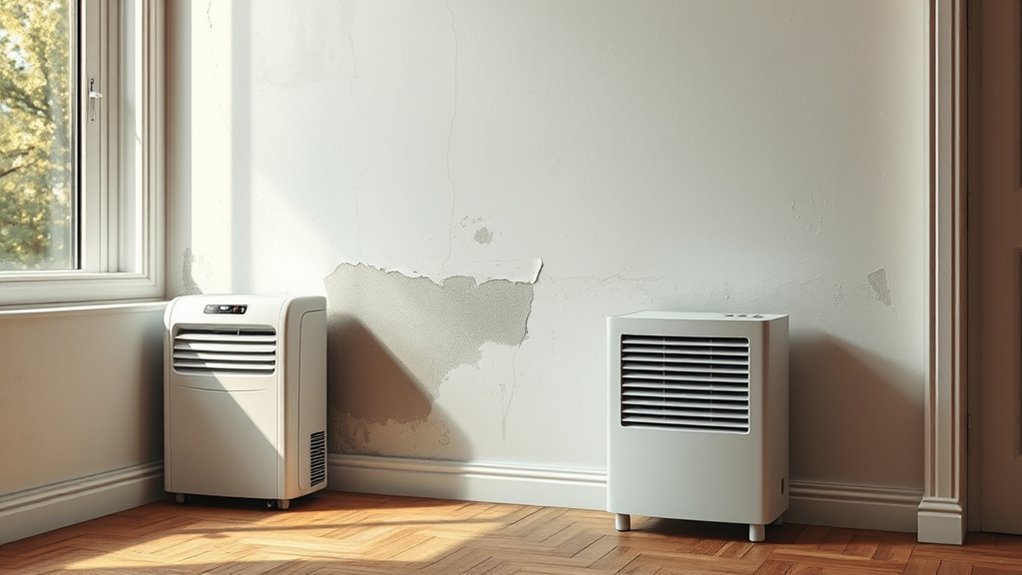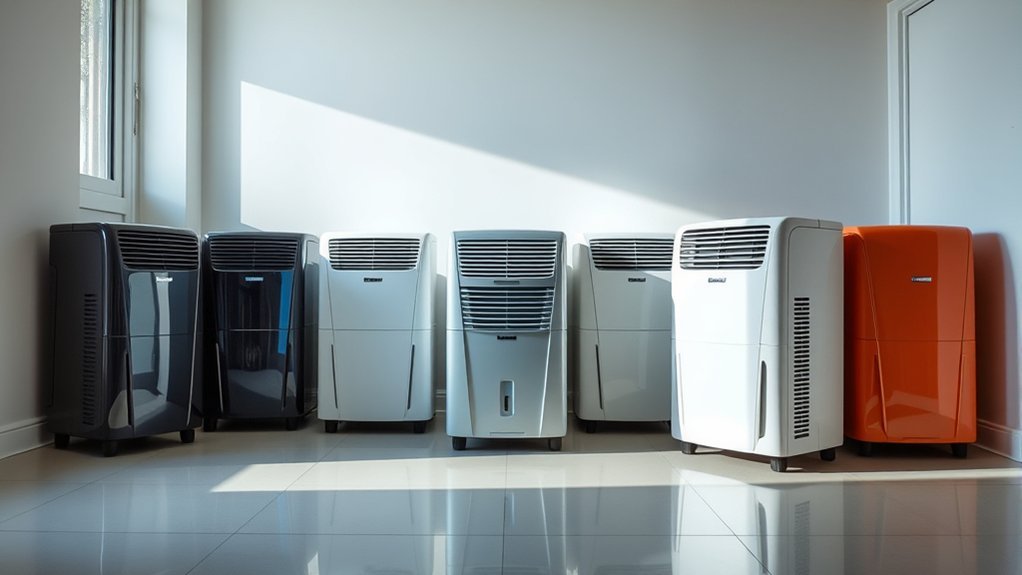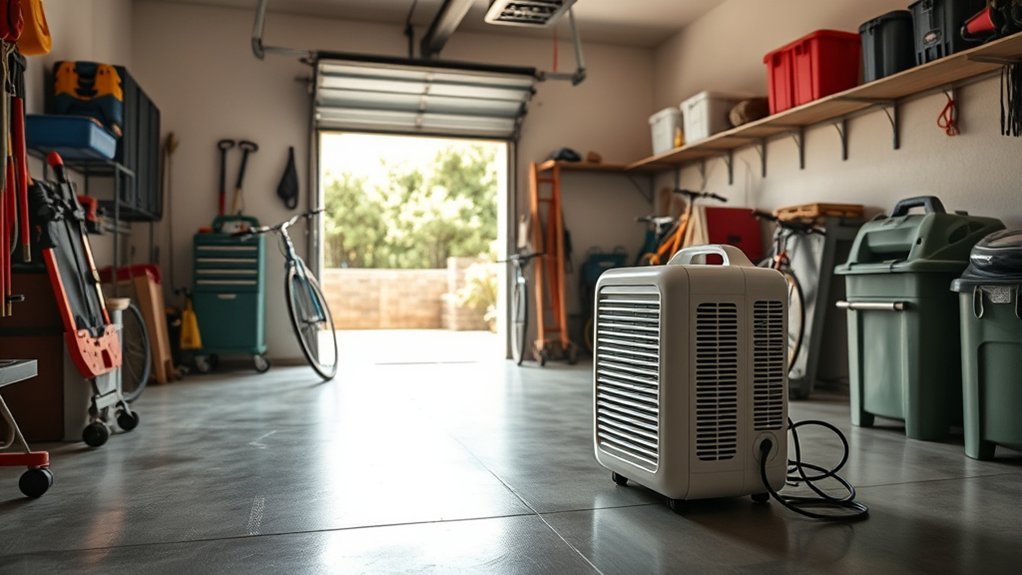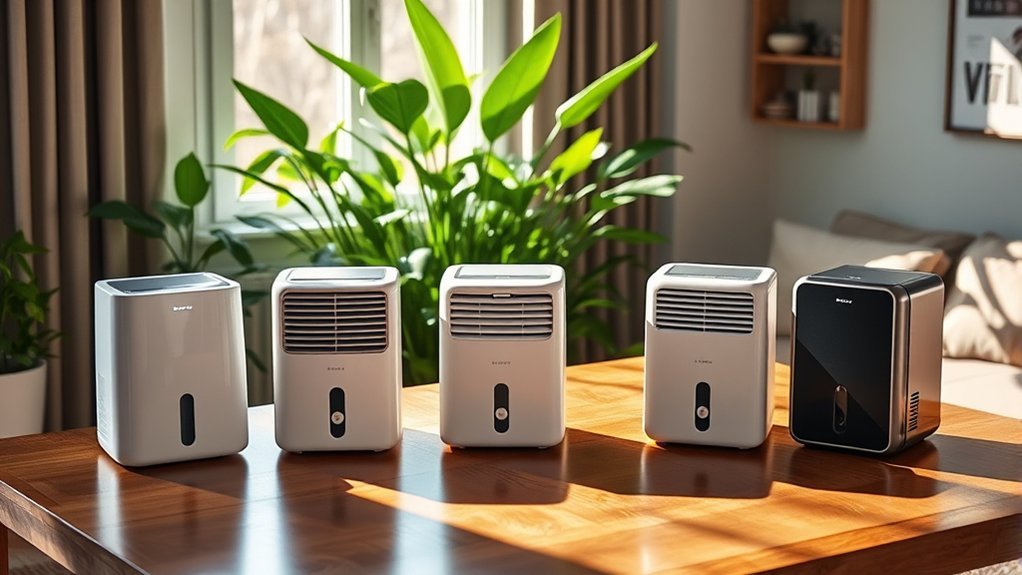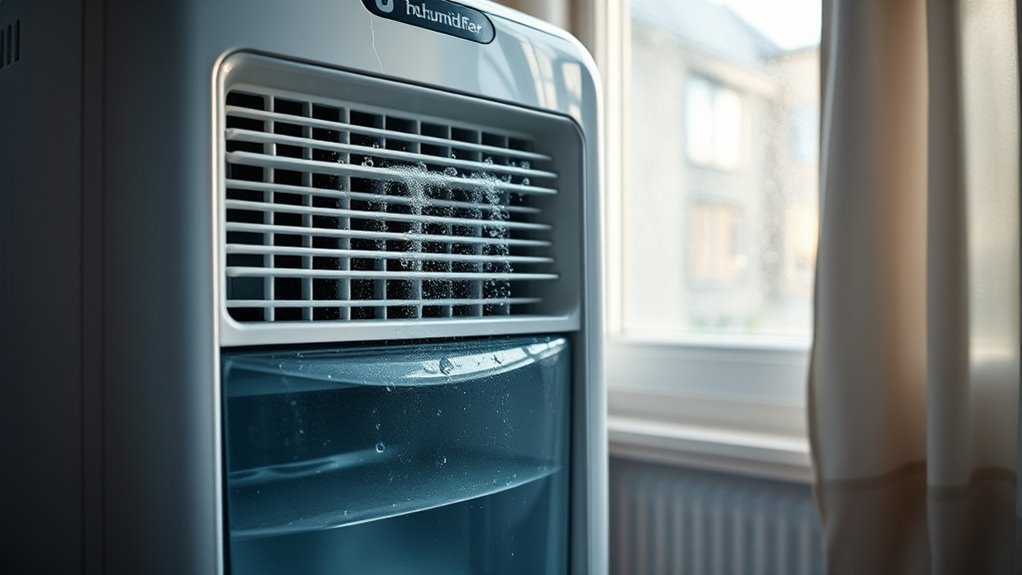
How does a dehumidifier work? It pulls humid room air into the appliance, removes water from that air, and sends drier air back into the room. Most home models cool the incoming air below its dew point so water condenses on cold coils, then collect it in a tank or drain. The result is lower indoor relative humidity, less dampness and condensation, and conditions that are less favorable for mold. Desiccant models use a moisture-absorbing material instead of cold coils.
Last updated: October 13, 2026
Key Takeaways
- For most homes, aim for about 30% to 50% relative humidity; the EPA recommends keeping indoor humidity low, ideally in that range.
- A dehumidifier helps prevent damp conditions, but it does not fix leaks, remove existing mold, or replace ventilation.
- Choose capacity by both room size and how damp the space is, not by square footage alone.
- Clean the filter and tank regularly, keep airflow open, and use a safe drain setup if you want continuous operation.
What Is a Dehumidifier?
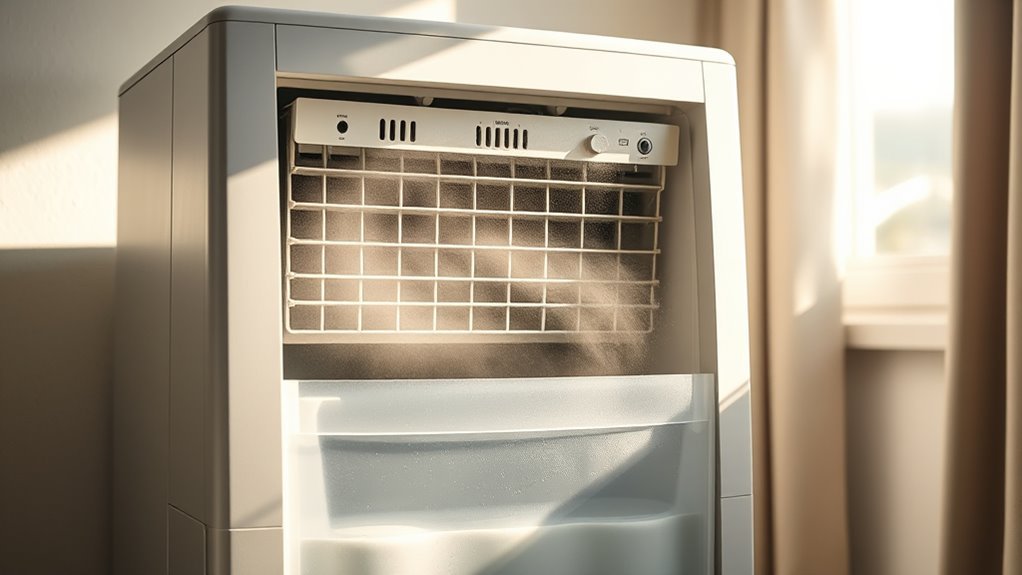
A dehumidifier is an electrical appliance that lowers indoor humidity by removing moisture from air. You use it when a room feels damp, smells musty, shows condensation, or regularly measures above your target relative humidity.
Most portable home units are refrigerant dehumidifiers. They pull room air across cold coils, condense water vapor into droplets, collect the water, and release drier air back into the space. Desiccant dehumidifiers use moisture-absorbing material instead. Whole-home dehumidifiers connect to HVAC ductwork and control moisture across a larger area.
A dehumidifier is not the same as an air purifier, heater, or ventilation system. It manages moisture. That moisture control can support comfort and help reduce conditions that allow mold and mildew to grow, but it does not clean existing mold or solve the water source by itself.
How Does a Dehumidifier Work? The Refrigerant Process
A refrigerant dehumidifier uses a process similar to an air conditioner, but its goal is moisture removal rather than cooling the room.
- A fan pulls humid room air into the unit. The air usually passes through a filter first, which helps keep dust away from the coils.
- The air moves over cold evaporator coils. When the coil surface cools the air to its dew point, water vapor begins changing into liquid droplets.
- Water drips into a tank, tray, hose, or pump system. Some models stop automatically when the bucket is full. Others can drain continuously.
- The air passes over warmer condenser coils. Heat from the refrigeration cycle warms the dried air before it returns to the room.
- The humidistat monitors the room. When the room reaches your chosen humidity setting, the unit cycles as needed to maintain it.
The dew point is the temperature at which air becomes saturated and water vapor begins to condense. A refrigerant dehumidifier deliberately makes its evaporator coil cold enough for this condensation to occur. It is the same basic reason moisture appears on the outside of a cold drink on a humid day.
Note: A dehumidifier is not a space heater, but the air around it may feel slightly warmer because the evaporator and condenser are both inside the room and the compressor and fan add operating heat.
How Do Desiccant Dehumidifiers Work?
A desiccant dehumidifier removes moisture with a hygroscopic material, such as silica gel or a similar drying medium. Instead of relying on a cold evaporator coil, humid air passes across the desiccant, the material attracts water vapor, and the unit then regenerates or dries that material so the moisture can be collected or exhausted.
Because desiccant models do not depend on a refrigerated coil to condense water, they can be useful in cooler rooms where frosting or reduced compressor performance is a concern. Energy use varies by model and operating temperature, so compare rated moisture extraction and power consumption for the conditions where you plan to use the appliance.
What Parts Collect Moisture?
The main moisture-removal parts depend on the type of dehumidifier:
- Fan: pulls humid air into the appliance and pushes drier air back out.
- Air filter: catches larger dust so the internal parts stay cleaner.
- Evaporator coil: the cold coil where water vapor condenses in refrigerant models.
- Condenser coil: releases heat and warms the dried air before it leaves the unit.
- Drain pan or collection tank: catches condensed water.
- Drain hose or pump: sends water to a floor drain, sink, sump, or other approved drain point.
- Humidistat: senses relative humidity and cycles the unit to maintain your setting.
For humidity control, the humidistat matters as much as the bucket. It keeps the unit from running constantly when the room is already dry enough.
What Humidity Setting Should You Use?
For many homes, a setting around 45% to 50% relative humidity is a practical starting point. The CDC advises keeping home humidity no higher than 50% all day long to help prevent mold growth, while EPA guidance describes 30% to 50% as the ideal range where possible.
Climate matters. ENERGY STAR notes that in colder climates during the heating season, indoor humidity may need to stay around 30% to 40% to limit condensation on cold windows. If you see condensation on windows or pipes, musty smells, damp walls, or stored items feeling clammy, the room may still be too humid. If the air becomes uncomfortably dry, raise the setting rather than forcing the humidity lower than necessary.
Pro Tip: Use a separate hygrometer away from the dehumidifier’s immediate exhaust airflow. Built-in sensors measure the air close to the appliance, while a separate meter helps you judge humidity elsewhere in the room.
Why Use a Dehumidifier at Home?
You use a dehumidifier at home when moisture is making a space uncomfortable or risky for your belongings. Damp indoor air can lead to musty odors, condensation, swollen wood, sticky rooms, and conditions that support mold growth. The EPA’s mold guidance is clear that moisture control is central to mold control.
Healthier Indoor Air
A dehumidifier does not purify the air like a HEPA air cleaner, but it can help control the excessive moisture that supports mold growth. The CDC says damp and moldy environments may cause symptoms such as stuffy nose, coughing, wheezing, burning eyes, or skin irritation in some people. People with asthma, mold allergies, immune suppression, or chronic lung disease may face greater risks from mold exposure.
- It reduces excess moisture that can support mold and mildew.
- It helps limit musty odors associated with damp materials.
- It can make humid rooms feel less sticky.
- It can support a broader indoor-air plan when moisture-related triggers are part of the problem.
Protecting Your Home
Moisture can damage materials long before you see major mold. Wood can swell, doors may stick, stored papers can wrinkle, metal can corrode, and soft surfaces can hold musty smells. A dehumidifier helps by reducing water vapor in the room before prolonged dampness causes more damage.
That said, a dehumidifier should not be your only fix if water is entering the home. Repair leaks, improve drainage, vent bathrooms and dryers outdoors, and dry wet materials quickly.
Warning: Do not use a dehumidifier as a substitute for fixing leaks, sewage damage, flooding, or visible mold. Fix the water source first, follow safe cleanup guidance, and keep drain hoses away from electrical cords, outlets, and devices.
Which Dehumidifier Should You Buy?
Start with the size of the space, its moisture level, and the way you want to drain the collected water. Our guide on what size dehumidifier you need walks through the sizing step by step. The ENERGY STAR dehumidifier guide measures capacity in pints removed per 24 hours and bases its guidance on both room size and dampness. ENERGY STAR recommends oversizing rather than undersizing when you are between capacities.
| Room Condition | Small-Medium Room <2,000 sq. ft. |
Large Room >2,000 sq. ft. |
| Slightly to moderately damp; intermittent musty odor; about 50%–75% RH | 20–30 pints per day | 30+ pints per day |
| Very damp; consistently damp smell or damp spots; about 75%–90% RH | 25–40 pints per day | 40+ pints per day |
| Wet; sweating walls or floors, seepage, or a heavy moisture load; about 90%–100% RH | 30–50 pints per day | 50+ pints per day |
Important: Do not compare an older dehumidifier’s pint rating directly with a current model without checking the test method. DOE changed portable dehumidifier testing to a cooler 65°F condition, so current capacity numbers can look lower even when performance is comparable. ENERGY STAR’s capacity guidance shows that an older 70-pint portable rating is roughly comparable to about 40–45 pints under the newer test procedure.
When comparing models, look for:
- ENERGY STAR certification: ENERGY STAR says certified dehumidifiers use about 20% less energy than comparable non-certified models.
- Built-in humidistat: lets you set a target humidity instead of guessing.
- Continuous drainage: useful for basements and daily use.
- Built-in pump: useful if water must be moved upward to an approved drain location.
- Auto shut-off: stops the unit when the tank fills.
- Auto defrost: helpful in cooler spaces where coils may frost.
- Operating-temperature range: check the manual if the room regularly falls below 65°F.
- Noise rating: important for bedrooms, offices, and living rooms.
- Filter access: choose a model that is easy to clean.
Recommended Products

【The Undisputed Champion — Industry‑Leading Dehumidifier Brand】When you choose AEOCKY, you get double market validation. In 2025, AEOCKY was an industry‑leading dehumidifier brand on Amazon US. This means you’re not just choosing a flagship from a market leader, but the top choice proven by millions of real users—representing the ultimate combination of performance, quality, and trust.

【Waykar Dehumidifier For Spaces Up To 7,000 Sq. Ft.】Our dehumidifier are able to remove up to 150 pints (under 95°F, 90%RH condition) of moisture per day, which cover areas up to 7,000 Sq. Ft. and adjust humidity from 30% to 80%. It is a dehumidifier ideal for home, basement, wine cellars, garages, supermarkets, concourses, and other indoor/outdoor places,cellars, crawlspace, large spaces, etc.
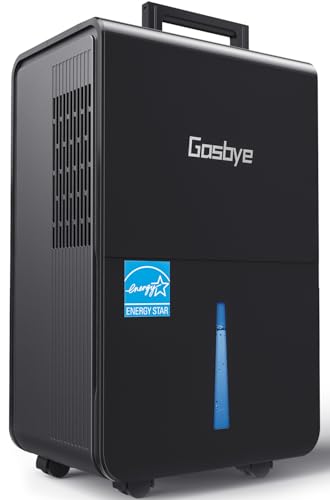
[43-Pound Solid Build] Gasbye DryPrime dehumidifier pulls up to 115 pints/day at 86°F, 80% RH, 73 pints/day at 80°F, 60% RH, and 50 pints/day at 65°F, 60% RH. Since we don’t inflate the pints/day performance figures, what you see is what you get. Dimensions: 11" D × 15" W × 24" H, which may be larger compared to some other "mini" models with inflated pints/day ratings
How to Use a Dehumidifier Effectively
Good placement and maintenance make a major difference. Even a powerful dehumidifier works poorly if airflow is blocked or humid outdoor air keeps entering.
- Follow the model’s airflow-clearance instructions. Many top-discharge units can sit close to a wall, while other designs need more open space around the intake and outlet. Keep curtains, furniture, boxes, and other objects away from the grilles.
- Close exterior doors and windows while it runs. Otherwise, the unit keeps drying new humid outdoor air.
- Set the humidistat around 45% to 50% as a starting point. Use a lower winter setting only when needed for condensation control or other conditions.
- Empty and rinse the tank often. Standing water can develop odors and residue.
- Clean the filter on schedule. A dirty filter reduces airflow and makes the unit work harder.
- Check the drain hose. For gravity drainage, make sure it slopes toward the drain, is not kinked, and does not create a tripping or electrical hazard.
- Watch for frost in cool rooms. If the space regularly falls below 65°F, check that the model is designed for lower-temperature operation. If frost develops, follow the manual’s defrost instructions.
How Can You Tell a Dehumidifier Is Working?
The best way to judge a dehumidifier is to watch the room humidity, not just the amount of water in the bucket. Place a separate hygrometer away from the unit’s immediate exhaust and compare the room reading with your target. In a humid room, the relative humidity should trend downward as the unit removes moisture. Once the target is reached, a humidistat-controlled compressor should cycle as needed instead of removing water continuously.
- Humidity is moving toward the target: the clearest sign that the unit is controlling the room.
- Water is collecting: expected when the air contains enough moisture and the unit is operating within its temperature range.
- The compressor cycles after reaching the target: normal humidistat behavior.
- Bucket volume changes from day to day: normal because temperature, humidity, outdoor air, laundry, showers, and other moisture sources change.
A full bucket does not prove that wet walls, carpet, insulation, or other building materials are fully dry. Likewise, a nearly empty bucket is not automatically a fault if the room is already near the selected humidity.
Common Dehumidifier Problems and Fixes
- The room still feels damp: Check whether the unit is undersized, the filter is dirty, doors or windows are open, or moisture is entering from a leak.
- The bucket fills too quickly: The room may be very damp, the unit may be new to the space, or you may need continuous drainage.
- The unit runs nonstop: Check the selected target with a separate hygrometer, clean the filter, close exterior openings, and confirm the unit has enough capacity.
- Ice forms on the coils: The room may be too cool for that model, airflow may be blocked, or the filter may need cleaning.
- The air smells musty: Wash the tank, clean the filter, inspect the drain pan, and check the room for hidden moisture or mold.
- It leaks water: Reseat the bucket, clear the hose, check the hose connection, and confirm the unit is level.
- It runs but collects little water: Check whether the room is already near the target, the temperature is too low, the filter is restricted, or the evaporator is frosting.
Recommended Products

[Convenient] This drain hose automatically drains water from the dehumidifier to the drain for uninterrupted use.

32-Pint Daily Capacity for Spaces up to 2,500 Sq. Ft. — Designed to manage ambient moisture in large living spaces, finished basements, and storage areas. This unit removes up to 32 pints of water vapor every 24 hours under test conditions of 95°F and 90% RH, helping promote a more balanced indoor air environment across areas up to 2,500 sq. ft

4,500 SQ. FT. DEHUMIDIFIER – Removes up to 50 pints of moisture per day with an adjustable humidity setting from 35% to 85%. Perfect for use in basement, bathroom, bedroom, office, kitchen, cellar, or crawlspace. Maintain a healthy 45%-55% humidity range
What a Dehumidifier Cannot Do
A dehumidifier is useful, but it has limits. It cannot repair a roof leak, stop groundwater from entering a basement, remove visible mold, or replace a bathroom exhaust fan. It also does not filter fine particles the way a properly sized air cleaner can. The EPA explains that portable air cleaners and HVAC filters can reduce some indoor particles, but air cleaning and moisture control solve different problems.
If you see mold, smell persistent mustiness, or have water-damaged materials, focus first on the water source. Then clean or remove affected materials safely.
How Long Do Dehumidifiers Last?
A dehumidifier’s lifespan depends on build quality, run time, room conditions, and maintenance (see how long dehumidifiers last for typical ranges). A unit that runs every day in a damp basement can experience more wear than one used seasonally. Compressor strain, dirty filters, blocked coils, and drainage problems can also shorten service life.
To help your unit last longer:
- Clean or replace the filter as the manual recommends.
- Keep coils and grilles clear of dust.
- Wash the tank so residue does not build up.
- Use continuous drainage for heavy-duty basement use when the model supports it.
- Do not run a compressor model outside the temperature range in its manual.
- Store the unit dry when not in use.
Warranty length can also help you compare support, but it is not a guarantee of lifespan. Choose a model with clear warranty terms, available support, and enough capacity for the space.
Are Whole-Home Dehumidifiers Worth It?
A whole-home dehumidifier can be worth it when humidity is a housewide problem rather than a single damp room. These systems usually connect to HVAC ductwork and should be sized and installed correctly. ENERGY STAR says a properly sized whole-home dehumidifier may make sense for relatively well-sealed homes with central air conditioning that consistently measure above about 55% relative humidity throughout the house.
Whole-home systems usually cost more upfront than portable units, but they can provide steadier control, eliminate bucket emptying, and cover multiple rooms. They are most practical when the home is reasonably well sealed, the ductwork is suitable, and the moisture source is not an unresolved leak or drainage problem.
Choose a portable unit when the problem is limited to one room, a basement area, a laundry space, or seasonal dampness. Consider whole-home equipment when multiple rooms remain humid after leaks, ventilation, grading, gutters, and drainage problems have been addressed.
Recommended Products
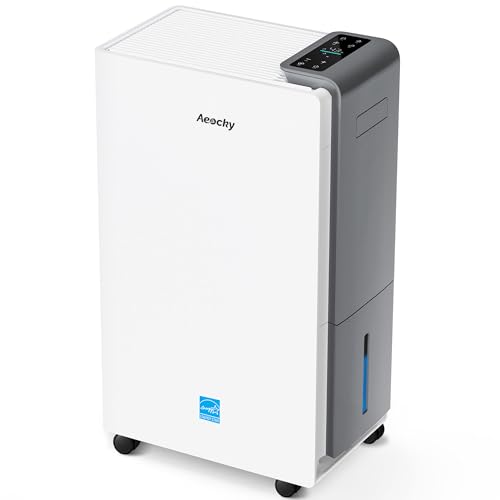
【ENERGY STAR 25 ≠ ENERGY STAR Most Efficient 2025】Don't fall for competitors' word games. With only 2.6% of ENERGY STAR models earning "Most Efficient 2025" title, these options are exceptionally rare on the market. RHEA-001 is one of the few to truly hold this top-tier certification. Many brands use misleading phrases like "Energy Star Efficient 25" or "Energy Star 25" to imply a standard they haven't met. Choosing them is a risk.With AEOCKY, you get verified performance and the peace of mind of authentic, top-tier efficiency.

【The Undisputed Champion — Industry-Leading Dehumidifier Brand】When you choose AEOCKY, you get double market validation. According to data independently verified by Stackline, a leading third-party data analytics company, AEOCKY was an industry‑leading dehumidifier brand on Amazon U.S. in 2025. This means you’re not just choosing a flagship product from a market leader, but a top-performing brand backed by independent market data and trusted by millions of real users, delivering the ultimate combination of performance, quality and trust.

2500 Sq. Ft Dehumidifier - SEMKAP dehumidifier for basement features a quiet, high-performance compressor that removes up to 32 pints of moisture per day (at 95°F, 90% RH). Ideal for basements, offices, bathrooms, bedrooms, kitchens, stockrooms, living rooms, laundry rooms, garages, crawlspaces, or RVs. It helps maintain optimal humidity between 40%–60%RH for healthier, more comfortable living
Frequently Asked Questions
What are the downsides of a dehumidifier?
The main downsides are electricity use, fan and compressor noise, warm exhaust air, tank cleaning, filter maintenance, and the possibility of making a room uncomfortably dry if the setting is too low. A dehumidifier can also hide a larger moisture problem if you use it instead of fixing leaks, drainage issues, or poor ventilation.
How long does a dehumidifier take to dry a room?
There is no fixed drying time. Room humidity can begin falling within hours with a properly sized unit, while wet carpet, drywall, wood, concrete, or other materials may require much longer. Drying time depends on room size, starting humidity, temperature, airflow, capacity, and whether new moisture is still entering the space.
Can a dehumidifier remove mold?
No. A dehumidifier can reduce the moisture that supports future mold growth, but it does not remove existing mold from walls, furniture, carpet, or stored items. Existing mold must be cleaned or removed appropriately, and the water source must be fixed.
Should a dehumidifier run all day?
It can run for long periods when a room is initially damp or when new moisture keeps entering. After the room reaches the selected humidity, a humidistat-controlled unit should normally cycle as needed. Check the setting, filter, room humidity, open doors or windows, and unit capacity if it runs continuously.
Where is the best place to put a dehumidifier?
Place it in or near the area with the moisture problem and follow the manufacturer’s airflow-clearance instructions. Keep curtains, furniture, dust sources, and electrical hazards away from the grilles. If you use gravity drainage, position the unit where the hose can travel safely downhill without kinks.
Why does a dehumidifier blow warm air?
Warm exhaust is normal for a refrigerant dehumidifier. The unit first cools the incoming air so moisture condenses, then the air passes the warm condenser and also picks up some operating heat from the compressor and fan. As a result, the discharged air is usually warmer than the air entering the unit.
Conclusion
A dehumidifier works by removing water vapor from indoor air and collecting that moisture in a tank, drain, or pump system. Refrigerant models cool air below its dew point so water condenses on a cold evaporator coil, then reheat the dried air at the condenser. Desiccant models capture moisture with an absorbent drying material.
For effective humidity control, start around 45% to 50% RH for many homes, choose capacity based on both room size and dampness, keep airflow and drainage clear, and watch the room with a hygrometer. Most importantly, fix leaks and other moisture sources instead of expecting the appliance to solve them by itself. For a deeper explanation of the condensation cycle, see how a dehumidifier removes moisture from the air.
Sources
- U.S. EPA — A Brief Guide to Mold, Moisture and Your Home — humidity range, moisture control, mold prevention, ventilation, and cleanup guidance.
- CDC — Mold — mold health effects, home humidity no higher than 50%, leak repair, and mold-prevention guidance.
- CDC — Mold Clean Up Guidelines and Recommendations — mold-cleanup precautions for people with COPD and other chronic respiratory conditions.
- ENERGY STAR — Dehumidifiers — current capacity table, efficiency, humidistats, placement, operating temperature, drainage, whole-home guidance, and current specification information.
- ENERGY STAR — Dehumidifier Testing and Capacity — DOE test-condition changes and comparison between older and current portable capacity ratings.
- U.S. EPA — Guide to Air Cleaners in the Home — distinction between particle filtration and moisture control.
- National Weather Service — Dew Point vs. Humidity — dew-point definition and condensation principle.
- American Lung Association — Prevent a COPD Exacerbation or Flare Up — environmental triggers including high humidity.