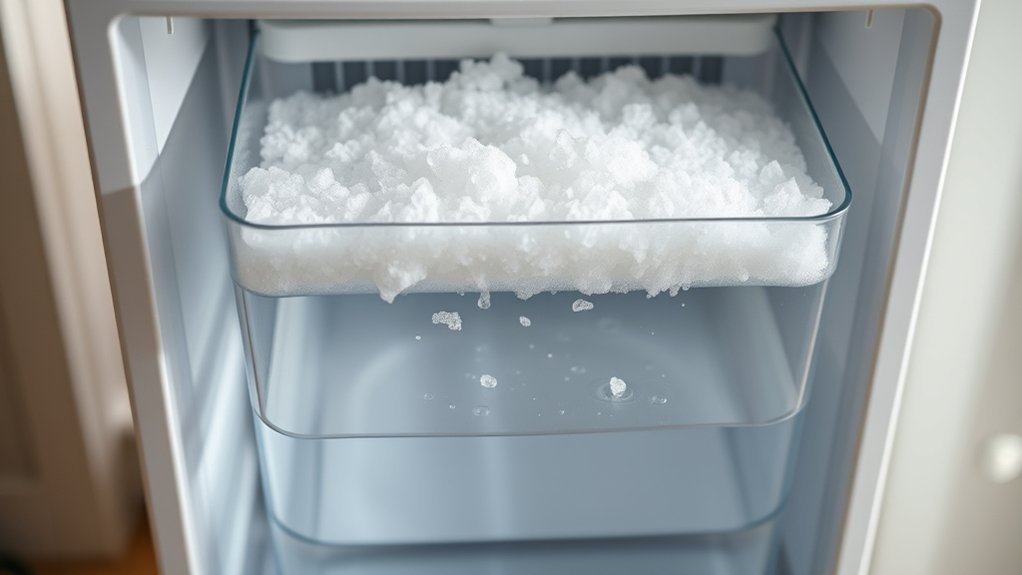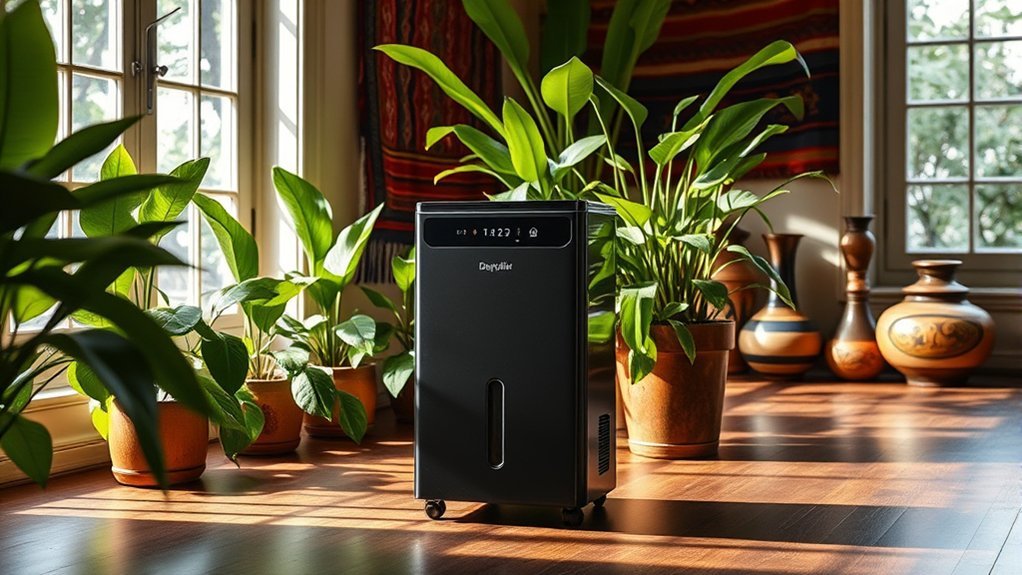
A dehumidifier that fills its tank quickly is usually working normally if the room’s relative humidity is steadily falling. The water is coming from humid air, damp walls and floors, wet furniture or building materials, or an ongoing moisture source such as laundry, seepage, or a leak. Fast collection becomes more concerning when humidity stays high, quickly rebounds after the unit stops, or the amount of water suddenly increases without an obvious weather or household change.
Quick Answer
A dehumidifier collecting lots of water is often working normally, especially in a damp basement, humid weather, or a room drying after a leak. Check the room with a hygrometer. If relative humidity steadily falls toward roughly 30–50% and stays controlled, fast collection is usually normal. If RH stays above 60%, quickly rebounds, or water collection suddenly increases, investigate an ongoing moisture source, air leakage, or insufficient dehumidifier capacity.
Key Takeaways
- A rapidly filling bucket often means the dehumidifier has a large moisture load, not that the machine is defective.
- Judge performance by the room’s relative humidity trend, not by bucket volume alone.
- Dehumidifier capacity in pints per day is different from the size of the collection bucket.
- Plumbing leaks, foundation seepage, damp crawl spaces, indoor laundry, showers, and humid outdoor air can continuously add moisture.
- Persistent humidity, visible dampness, condensation, musty odors, or a sudden increase in water collection deserves investigation.
- For most homes, EPA guidance recommends keeping indoor relative humidity below 60% when possible and ideally around 30–50%.
Editorial Note: This informational guide contains no affiliate product links. Moisture, safety, and appliance guidance is supported by authoritative sources listed below.
| Factor | What It Does | What You May Notice |
|---|---|---|
| High indoor humidity | Gives the unit more moisture to remove | Tank fills faster |
| Warm, humid air | Can carry a substantial moisture load | Higher collection during humid periods |
| Large or open area | Exposes the unit to more air and damp surfaces | Longer runtime and potentially more water |
| Leak or damp material | Continuously adds moisture | Humidity quickly returns |
| Poor airflow | Limits how freely room air reaches the unit | Uneven or inefficient drying |
| Dirty filter or coils | Restricts normal airflow and performance | Longer operation or weaker humidity control |
The 3-Signal Test
- Bucket fills fast + RH steadily falls: usually normal drying. Keep monitoring until the humidistat begins cycling the unit.
- Bucket fills fast + RH stays high: moisture may be entering faster than the unit can remove it. Check leaks, seepage, open doors or windows, room size, and dehumidifier capacity.
- RH was controlled + water collection suddenly jumps: conditions have changed. Check recent weather, plumbing, drainage, ventilation, wet materials, and other new moisture sources.
Why Is My Dehumidifier Collecting So Much Water?
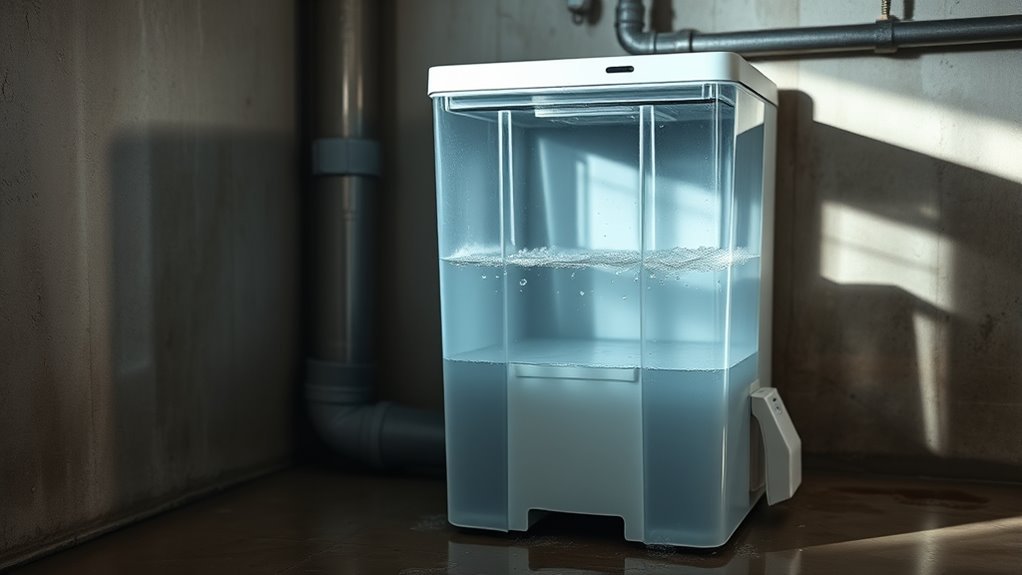
If your dehumidifier is collecting a lot of water, high humidity is usually the first condition to check. The machine removes water vapor from the surrounding air, so a larger moisture load usually leads to more water in the collection tank.
A damp basement, bathroom, laundry area, recently wet room, or poorly ventilated space can give the dehumidifier a steady supply of moisture. Building materials such as concrete, drywall, carpet, wood, furniture, and stored belongings can also release moisture as a room dries.
That is why a tank that fills quickly can be a sign that the dehumidifier is doing useful work. The more important question is whether the room’s relative humidity falls toward your target and then remains controlled.
The U.S. Environmental Protection Agency recommends keeping indoor relative humidity below 60% when possible and ideally between 30% and 50%. A hygrometer makes this much easier to monitor.
Pro Tip: Place a separate hygrometer where it reflects normal room air, not directly in the dehumidifier’s outlet stream or against a damp wall or floor. Compare readings over several hours or days to see whether the entire room is becoming drier.
What Causes a Dehumidifier to Fill Up Fast?
A dehumidifier fills up fast when moisture is available faster than expected or when the collection bucket is relatively small. High outdoor humidity, wet building materials, shower steam, cooking, indoor laundry drying, basement seepage, plumbing problems, and air leakage can all contribute.
Continuous operation also matters. A machine running for many hours has more opportunity to collect water than one that cycles occasionally. Tank size matters too: a small reservoir can require frequent emptying even when the appliance’s moisture-removal rate is completely normal.
Common Moisture Sources to Check
- Plumbing leaks: Inspect under sinks, around toilets, near water heaters and washing machines, and along visible pipes.
- Basement or crawl-space dampness: Look for wet walls, floor moisture, seepage, condensation, damp soil, or musty areas.
- Bathrooms: Long showers and weak exhaust ventilation can create substantial short-term humidity.
- Kitchen activity: Boiling water, dishwashing, and cooking can raise indoor humidity.
- Indoor laundry: Air-drying wet clothes releases moisture back into the room.
- Clothes-dryer venting: A dryer that is improperly vented can discharge moisture indoors.
- Weather: Humid outdoor air entering through doors, windows, gaps, or air leaks increases the dehumidifier’s load.
- Recently wet materials: Carpet, drywall, wood, furniture, and concrete may continue releasing stored moisture after a leak or flood.
Before You Buy: A larger dehumidifier may remove moisture faster, but it cannot repair an active roof leak, plumbing leak, groundwater problem, failed drainage system, or other continuous water source. Correct the source whenever possible instead of relying on additional dehumidification alone.
How Much Water Is Normal When a Dehumidifier Fills Fast?
There is no universal number of pints that every dehumidifier should collect in a day. Actual collection depends on rated capacity, room size, starting humidity, temperature, runtime, air leakage, wet materials, and ongoing moisture sources. For a dedicated 24-hour measurement method, see our guide to how much water a dehumidifier should collect per day.
One important distinction is that a dehumidifier’s advertised capacity and its bucket capacity are not the same thing. According to ENERGY STAR, dehumidifier capacity is normally expressed as the amount of moisture the unit can remove in pints per 24 hours. The removable bucket may hold only a fraction of that amount, so a high-capacity unit can fill a small bucket several times during continuous operation.
If you know both numbers for your model, dividing its rated pints per day by its usable bucket capacity shows how many full buckets it could theoretically produce in 24 hours at its rating conditions. Treat that only as a comparison ceiling, not a prediction of household output, because actual room temperature and humidity rarely match laboratory test conditions for a full day.
| What You See | What It Usually Means | Next Step |
|---|---|---|
| Bucket fills fast and RH steadily falls | Often normal drying | Keep monitoring humidity |
| Bucket fills fast but RH stays high | Moisture is entering faster than the unit can control it | Look for leaks, seepage, open areas, or inadequate capacity |
| Collection slows as RH reaches target | Normal stabilization | Allow humidistat-controlled cycling |
| Collection suddenly increases | Weather or moisture conditions may have changed | Check for a new leak, seepage, or humidity spike |
The bucket tells you how much water was collected. The hygrometer tells you whether the moisture problem is actually improving.
How Room Size, Heat, and Humidity Affect Collection
Room size, temperature, and relative humidity all affect how much water a dehumidifier can collect. A larger or more open space exposes the unit to more air, damp surfaces, and possibly connected rooms, which can keep it running longer.
Humidity level is especially important. A room at 70% relative humidity presents a much heavier moisture-control problem than the same room after it has dried closer to 50%. You may therefore see heavy collection during the first days of drying and much less water later.
Temperature also affects refrigerant dehumidifiers. ENERGY STAR warns that some units can develop frost on their condensing coils when room temperature falls below about 65°F (18°C), reducing moisture removal. Some models include automatic defrost or are designed for cooler spaces. Your model’s specified operating-temperature range remains the controlling limit.
Why Collection Often Drops After Several Days
When a damp room first starts drying, moisture is being removed from both the air and materials inside the room. Carpets, walls, furniture, concrete, wood, cardboard, and other porous items may gradually release stored moisture.
As those materials dry, the amount of water available to the machine usually decreases. A falling collection rate is therefore not necessarily a loss of performance. If your hygrometer shows that relative humidity is also falling and staying controlled, lower collection usually means the space has become drier.
How to Diagnose a Fast-Filling Dehumidifier
At a Glance
| Time Required | About 15–20 minutes for an initial inspection, plus several hours of humidity monitoring |
| Difficulty | Easy for basic checks; professional help may be needed for hidden leaks or structural moisture |
| Tools Needed | Hygrometer, flashlight, and the dehumidifier owner’s manual |
| Cost | Usually none if you already own a hygrometer; repairs depend on the moisture source |
- Measure the room humidity. Place a hygrometer away from the dehumidifier’s direct outlet and record the RH before operation.
- Check the humidity trend. Run the dehumidifier according to its instructions and see whether RH decreases over several hours.
- Record a useful baseline. Over the same 6–24-hour period, note starting RH, ending RH, room temperature, approximate runtime, and the amount of water collected. Trends are more useful than one full bucket.
- Inspect for obvious moisture sources. Check pipes, sinks, toilets, water heaters, washing machines, walls, floors, windows, and the area around the foundation for leaks, stains, condensation, or dampness.
- Check airflow and the filter. Make sure the intake and exhaust are clear and clean the filter according to the manufacturer. If airflow is weak, see what happens when a dehumidifier filter is dirty.
- Check room temperature. If the space is cool, inspect for frost or unusual cycling and confirm that the model is rated for that temperature.
- Check doors and windows. Close openings to humid outdoor air or adjoining damp spaces while dehumidifying.
- Compare the unit with the space. If RH remains high despite correct operation, check whether the dehumidifier is appropriately sized for the room’s area and dampness level.
- Investigate persistent moisture. If humidity will not fall or quickly returns, look beyond the appliance for an ongoing building, plumbing, drainage, roofing, or ventilation problem.
Warning: Do not operate, plug in, unplug, move, or drain an electrical appliance while you are standing in water. Keep electrical connections and drain hoses away from standing water, and follow the manufacturer’s grounding and electrical-safety instructions.
How Placement and Ventilation Change Performance
Where you place your dehumidifier directly affects airflow. The intake and exhaust should not be blocked by curtains, furniture, storage boxes, or other objects. Follow the clearance requirements in your owner’s manual because different models use different air-intake and discharge arrangements.
| Placement or Condition | Effect | Likely Result |
|---|---|---|
| Damp room | High moisture load | More water collection |
| Airflow blocked by a wall or furniture | Restricted circulation | Reduced performance |
| Clear air path | Better circulation | More even drying |
| Stagnant room air | Moist air mixes slowly | Uneven humidity |
| Indoor circulation fan | Helps mix room air | Can improve evenness across the space |
| Open window in humid weather | Introduces outdoor moisture | Can make the dehumidifier work harder |
ENERGY STAR recommends keeping doors and windows to the space closed while a dehumidifier is operating. Opening a window can be useful only when outdoor air is clearly drier and appropriate ventilation will actually reduce indoor moisture. During hot, humid weather, an open window often does the opposite.
How It Performs in Real-World Situations
In a Damp Basement
A basement can produce a large amount of collected water because concrete, ground moisture, seepage, cool surfaces, and limited air movement can keep humidity elevated. If the tank fills repeatedly but humidity gradually falls, the unit may simply be drying a heavily damp space.
If humidity stays high, inspect foundation drainage, gutters, downspouts, seepage, cracks, plumbing, and connected crawl spaces. ENERGY STAR recommends addressing foundation drainage and other moisture sources to reduce the dehumidifier’s workload.
After a Leak or Water Event
After a minor leak has been stopped, a dehumidifier may collect unusually large amounts of water while surrounding materials dry. EPA guidance emphasizes correcting the water source and drying damp materials quickly, ideally within 24–48 hours after a leak or spill when possible.
Persistent wetness, standing water, contaminated water, or water repeatedly entering the structure requires source control and may require professional cleanup rather than dehumidification alone.
During Hot, Humid Weather
Outdoor air entering through doors, windows, gaps, ducts, or ventilation can increase the indoor moisture load. Your dehumidifier may therefore run longer and fill more often during humid weather than during a dry season.
In a Laundry or Bathroom Area
Wet clothing, showers, baths, cooking, and inadequate exhaust ventilation can cause short-term humidity spikes. Running bathroom and kitchen exhaust fans that vent outdoors and properly venting clothes dryers can reduce the amount of moisture the dehumidifier must remove.
How to Tell If the Dehumidifier Is Working Properly
A healthy dehumidifier does not need to produce a particular bucket volume. Look for four outcomes instead: measured RH falls, airflow remains normal, the unit collects water when the room is humid, and the humidistat eventually cycles the compressor or unit as the room approaches its setting.
- RH trend: A separate hygrometer shows humidity declining over several hours.
- Airflow: The fan moves air freely and the filter, intake, and exhaust are not blocked.
- Water removal: Water reaches the bucket or approved drain when the room is above the selected humidity setting.
- Humidity control: The unit eventually cycles rather than running indefinitely after the target is reached.
If the machine runs continuously but humidity remains very high, investigate room size, open doors or windows, moisture entry, filter condition, room temperature, and whether the dehumidifier has enough capacity for the space and moisture conditions.
Note: Air leaving a refrigerant dehumidifier may feel slightly warmer than the surrounding room air. ENERGY STAR notes that slight warming around a working dehumidifier is normal.
Placement Tips for Better Results
- Use the damp zone first. Basements, laundry areas, and other moisture-prone rooms generally benefit most from direct dehumidification.
- Keep the air path clear. Follow the clearance instructions in the owner’s manual and keep curtains, boxes, and furniture away from required intake and exhaust areas.
- Close humid openings. Avoid continuously feeding the room with humid outdoor air or air from another damp space.
- Use approved continuous drainage when needed. Follow the manufacturer’s hose, slope, pump, and drain instructions. If the bucket still fills while a hose is connected, see why a dehumidifier is not draining through the hose.
- Maintain the filter. Clean or replace it only by the method specified for your model.
Continuous drainage removes the inconvenience of repeated bucket emptying, but it does not eliminate the moisture source. If the unit drains continuously while room humidity remains high, continue investigating why moisture is entering the space.
Recommended Products

[Convenient] This drain hose automatically drains water from the dehumidifier to the drain for uninterrupted use.

POWERFUL 2,500 SQ. FT. COVERAGE - Stop letting sticky, heavy air dictate your comfort. The BANABIE dehumidifier utilizes a high-efficiency rotary compressor to deliver heavy-duty moisture removal, extracting 32 pints daily (at 95°F, 90%RH). Engineered with a smart integrated airflow system, this unit effectively covers up to 2,500 Sq. Ft., ensuring that your basement, crawl space, or large open floor plans stay bone-dry

3,500 Sq.Ft. OF COVERAGE - Midea dehumidifier with drain hose is able to collect 35 pint (Similar to 50 PT-2012 DOE) of water a day and adjust humidity from 35% to 85%, perfect for use in basement, bathroom, bedroom, or crawlspace.
When Fast Water Collection May Signal a Home Moisture Problem
Heavy collection becomes more concerning when it continues together with visible dampness, condensation, water stains, musty odors, peeling finishes, recurring mold, or humidity that refuses to fall.
A dehumidifier can manage airborne moisture, but it cannot permanently solve water entering through the roof, foundation, plumbing system, exterior walls, or drainage system. Repeated moisture problems may require a plumber, HVAC professional, waterproofing specialist, roofer, restoration contractor, or another qualified professional depending on the source.
Professional assessment becomes especially important when the moisture source is unclear, mold repeatedly returns after cleanup, significant water may be contaminated, or water has entered wall, ceiling, or floor cavities that cannot be dried normally.
Recommended Products

Breakthrough 1804 ft Connectivity: Engineered with advanced Sub-1G long-range wireless tech, our leak detector maintains robust signals over unprecedented distances—reaching up to 1804 feet even through 5 dense walls. Secure every critical space in expansive properties, from deep basements to detached garages and distant outbuildings.

Complete plug-and-play kit: hub plus Leak Sensor 4 units, each with a built-in 105 dB audible alarm for instant on-site alerts.

Never Miss a Leak: When a water leak is detected, a red light will flash on the water leak detector and the base station will sound an alarm up to 100 dB; you’ll also get an app alert on your phone, so you can learn about leaks even if you’re away
Pay Attention to a Sudden Increase
A sudden change can be especially useful information. If the dehumidifier used to collect a moderate amount of water and suddenly begins filling much faster without an obvious seasonal humidity change, inspect for a newly developed leak, plumbing problem, foundation seepage, blocked drainage, wet building material, or ventilation change.
The dehumidifier itself does not identify the source, but a sharp change in its workload can tell you that conditions in the room have changed.
How to Reduce Excess Moisture at Home
To reduce excess moisture, aim to keep indoor relative humidity below 60% and ideally around 30–50% when conditions allow, consistent with EPA moisture-control guidance. A hygrometer makes it much easier to see whether your changes are working.
- Run bathroom exhaust fans during and after showers.
- Use kitchen exhaust ventilation when cooking produces steam.
- Make sure clothes dryers vent properly to the outdoors.
- Repair plumbing, roof, window, exterior-wall, or foundation leaks promptly.
- Avoid drying large amounts of laundry indoors when humidity is already high.
- Keep gutters and downspouts clear and direct drainage away from the foundation where appropriate.
- Keep doors and windows closed while dehumidifying when outdoor air is more humid than indoor air.
- Use air conditioning when appropriate because cooling systems can also remove moisture.
- Clean the dehumidifier’s filter and follow its maintenance schedule.
If humidity remains high throughout several rooms or an entire house, one portable unit may not provide effective whole-home control. In that situation, it may be worth discussing ventilation, air-conditioning performance, air sealing, drainage, or a whole-house dehumidifier with a qualified HVAC professional.
Recommended Products

Wellness Indicator: This humidity meter with humidity level icon indicates air conditions - DRY/COMFORT/WET, allowing this humidity sensor to ensure you’re always aware of changes to your home/household with just a quick glance

This 2-pack indoor hygrometer thermometer helps monitoring room temperature and humidity in real time. Temperature range: -58 ~ 158 ℉( -50 ~ 70℃ ), Humidity range: 10%~99%

【Readings be Switched Between Fahrenheit and Celsius】 Round Digital Thermometer ease to achieve the mutual conversion between Fahrenheit (°F) and Celsius (°C),(with temperature switch button- °C/°F mode)
Safety and Health Considerations
Very damp indoor conditions can encourage condensation and mold growth, while excessively dry air can also be uncomfortable. Instead of trying to make the home as dry as possible, monitor RH and maintain a moderate level appropriate for your home and climate.
For electrical safety, keep the appliance, plug, outlet, extension connections, and drain routing away from standing water. ENERGY STAR advises using a properly grounded outlet and keeping drainage away from electrical circuits and connections. General Health Canada electrical-safety guidance also recommends keeping electrical products dry and away from water.
Common Mistakes to Avoid
- Assuming a full tank means failure: Heavy collection often means plenty of moisture is available.
- Confusing pint rating with tank size: Rated capacity describes moisture removal over time, not how much the bucket holds.
- Ignoring the actual humidity reading: Tank volume alone does not tell you whether the room is adequately dry.
- Blocking airflow: Furniture, curtains, storage, or walls can interfere with normal air movement.
- Leaving windows open in humid weather: Outdoor moisture can replace the water your machine just removed.
- Ignoring leaks: A dehumidifier manages moisture but cannot repair the source.
- Neglecting the filter: A dirty filter can reduce airflow and overall performance.
- Ignoring low temperatures: Coil frost can reduce the performance of some refrigerant dehumidifiers.
- Setting humidity unnecessarily low: Very low settings can increase runtime and energy use without providing a useful moisture-control benefit.
- Assuming continuous drainage fixes the cause: A hose prevents bucket filling but does not eliminate incoming moisture.
Frequently Asked Questions
How Much Water Should a Dehumidifier Collect in 12 Hours?
There is no single correct amount. Collection depends on the dehumidifier’s capacity, bucket size, starting humidity, room size, temperature, runtime, and moisture entering the space. Compare the amount collected with the room’s humidity trend rather than relying on a fixed pint target. For a fuller measurement method, see how much water a dehumidifier should collect per day.
Should a Dehumidifier Fill Up Every Day?
It can be normal in a damp room, during humid weather, or while wet materials are drying. If the tank keeps filling every day and indoor humidity remains high, check for leaks, moisture entry, inadequate capacity, or another source that is continuously adding moisture.
Is 70% Humidity Too High for a House?
A sustained indoor relative humidity reading around 70% is high. EPA guidance recommends staying below 60% when possible and ideally around 30–50%. Check for moisture sources, improve source ventilation, and watch for condensation or damp materials.
Why Does My Dehumidifier Fill Faster at Night?
Possible reasons include longer uninterrupted runtime, changing temperature, closed-room conditions, overnight weather changes, or moisture released from building materials. Compare hygrometer readings before and after the overnight period to see whether humidity is actually falling.
Why Is My Dehumidifier Running Constantly?
Continuous running can happen when the humidity setting is low, the room is very damp, moisture keeps entering the space, or the unit is struggling to reach its target. Also check airflow, filter condition, room temperature, open doors or windows, and unit sizing.
Should I Open a Window While Running a Dehumidifier?
Usually not. ENERGY STAR recommends closing doors and windows to the space while the unit runs. Opening a window may help only when the outdoor air is clearly drier than the indoor air and ventilation will reduce rather than increase the room’s moisture load.
When Should I Be Concerned About How Much Water It Collects?
Be more concerned when heavy collection occurs with visible water, damp building materials, recurring mold, musty odors, condensation, water stains, or humidity that remains high despite long operation. Those signs suggest an ongoing moisture source that needs investigation.
Does a Full Dehumidifier Bucket Mean It Is Broken?
No. A full bucket usually means the machine has successfully condensed moisture from the air. Check whether humidity is falling, airflow is normal, and the unit eventually stops or cycles near its target before assuming there is a fault.
Why Did My Dehumidifier Suddenly Start Collecting More Water?
A sudden increase can follow humid weather, a new plumbing leak, water intrusion, wet materials, changes in ventilation, or more moisture-producing activity in the room. If weather and household activity have not changed, inspect for a new water source.
The Bottom Line
If your dehumidifier collects a lot of water, first compare the bucket with the hygrometer. Fast collection together with steadily falling RH usually means the appliance is removing a heavy moisture load normally. Keep airflow clear, maintain the filter, close the space against humid outdoor air, and allow damp materials time to dry.
If humidity stays above 60%, quickly rebounds, or water collection suddenly increases while visible dampness, stains, condensation, or musty odors appear, investigate the underlying moisture source. A dehumidifier can remove water vapor, but it cannot repair plumbing, roofing, drainage, foundation, or water-intrusion problems.
Sources
- U.S. Environmental Protection Agency — A Brief Guide to Mold, Moisture and Your Home — indoor humidity targets, leak control, mold prevention, condensation, and drying wet materials.
- ENERGY STAR — Dehumidifiers — capacity ratings, sizing, operating temperature, drainage, placement, humidity monitoring, and moisture-control practices.
- Health Canada — Electrical Product Safety — general electrical appliance and water-safety guidance.