Are Dehumidifiers Bad for Cats?
Are dehumidifiers bad for cats? No, not when you use them to keep indoor air in a moderate range of about 30% to 50% humidity. The safest setup is an ozone-free unit, a separate hygrometer, clean filters, and a placement that keeps cords, hoses, vents, and bucket water away from your cat. The goal is not bone-dry air. It is steady moisture control that helps a damp basement feel cleaner without irritating your cat’s skin, nose, or airways.
Key Takeaways
- For most homes with cats, the safest humidity target is 30% to 50%, with about 40% to 50% often feeling comfortable in a basement.
- A dehumidifier may reduce dampness, musty odors, and mold-friendly conditions, but it does not treat feline asthma or replace veterinary care.
- Avoid dehumidifiers or add-on air-cleaning modes that advertise ionizers, ozone, plasma, “activated oxygen,” or sanitizing ozone.
- Keep the unit on a level surface, protect the cord and drain hose, clean the tank and filter, and check product recalls before long-term use.
At a Glance
| Time Required | 10 to 15 minutes for setup; 1 to 2 minutes for daily checks; about 10 minutes for weekly cleaning. |
| Difficulty | Easy, as long as you monitor humidity and follow the unit’s manual. |
| Tools Needed | Hygrometer, ozone-free dehumidifier with humidistat, grounded outlet, optional drain hose, mild soap for tank cleaning. |
| Cost | Typically about $10 to $20 for a hygrometer; dehumidifier cost varies by room size, capacity, pump, and energy efficiency. |
What Should You Do Based on the Humidity Reading?
Use the number on a separate hygrometer to decide what to do, not your cat’s nose alone. A dry nose can be normal, while coughing, wheezing, open-mouth breathing, or major behavior changes need veterinary attention.
| Room reading | Best next step |
|---|---|
| Below 30% | Raise the humidistat, shorten runtime, or move the unit away from your cat’s main resting area. |
| 30% to 50% | Keep monitoring. This is the general EPA indoor-air target and works well for many cat households. |
| 50% to 60% | Run the dehumidifier if the room feels damp, smells musty, or has condensation. |
| Above 60% | Check for leaks, wet materials, poor ventilation, seepage, clogged gutters, or mold-prone areas. |
How Dehumidifiers Affect Cats
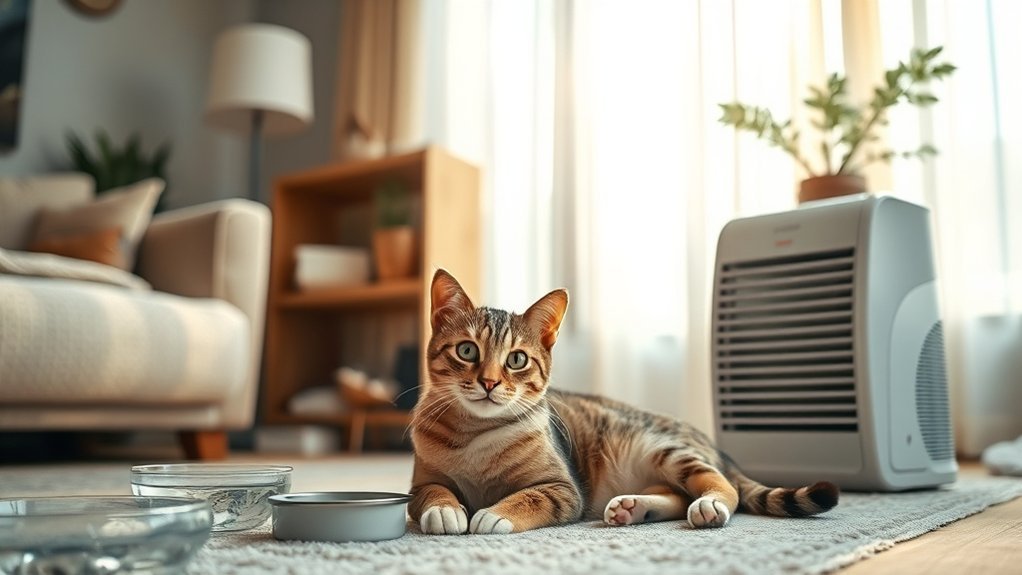
A dehumidifier affects your cat by changing the moisture level in the room. That can help in a damp basement because excess humidity makes musty odors, condensation, dust mites, and mold-friendly conditions harder to control. Dampness matters for cats because Cornell Feline Health Center lists mold, mildew, dust mites, smoke, aerosol sprays, and dusty litter among suspected feline asthma triggers.
That does not mean a dehumidifier cures coughing or asthma. It only helps manage one part of the indoor environment. If your cat coughs, wheezes, breathes rapidly, or seems to work harder to breathe, treat that as a health sign first and an appliance problem second.
The best setup keeps air from getting too damp or too dry. Use a hygrometer, set the dehumidifier’s humidistat, and check the room where your cat actually spends time. If your cat has a diagnosed respiratory condition, use humidity control as part of the plan your veterinarian recommends.
Warning: Open-mouth breathing, blue or gray gums, collapse, severe wheezing, or obvious labored breathing can be an emergency in cats. Do not wait to adjust humidity first; contact an emergency veterinarian.
What Humidity Level Is Safe for Cats?
For most cat households, aim for 30% to 50% indoor humidity. The U.S. Environmental Protection Agency recommends that range for indoor air quality and advises using a humidity gauge to check your home. A practical comfort target is often around 40% to 50%, especially if your basement tends to feel damp.
| Humidity level | What it means for cats and the home |
|---|---|
| Below 30% | May feel too dry if sustained; watch for static, flaky skin, irritated airways, or dry nasal crusting. |
| 30% to 50% | Best general target for indoor air quality and mold control. |
| 40% to 50% | A comfortable target zone for many homes, especially if dryness is a concern. |
| Above 60% | A warning sign for dampness; check for leaks, condensation, poor ventilation, or mold. |
| Large swings | May make it harder to manage comfort, mold risk, and respiratory triggers. |
Dog owners have similar questions, covered in our guide on whether dehumidifiers are bad for dogs. A dry nose alone does not prove the air is unsafe. Cats can have wet or dry noses for many normal reasons. What matters more is the full pattern: coughing, sneezing, skin flakes, static, thirst, lethargy, or changes in breathing.
Signs the Air May Be Too Dry for Your Cat
When indoor air gets too dry, some cats may show signs of discomfort. These signs can also come from allergies, parasites, skin disease, respiratory infections, asthma, or other conditions, so use them as clues rather than a diagnosis.
- More static: You feel small shocks when petting or brushing your cat.
- Flaky skin or dull coat: Your cat scratches or grooms more than usual.
- Dry nose with other signs: A dry nose plus sneezing, crusting, discharge, or appetite change deserves attention.
- Coughing or wheezing: Very dry air may irritate sensitive airways, but coughing in cats is never something to ignore.
- Increased thirst: Your cat drinks more than usual, especially if the room has been below 30% humidity for days.
If your hygrometer shows humidity below 30%, raise the dehumidifier setting, run it less often, or move the unit away from your cat’s main sleeping area. If your cat has ongoing respiratory signs, call your veterinarian.
Why Ozone Can Be Risky
The main safety concern is not ordinary dehumidification. The concern is ozone, especially from air-cleaning add-ons such as ionizers, plasma features, “activated oxygen,” or ozone sanitizing modes. The EPA explains that ion generators and other ozone-generating air cleaners can produce ozone, which is a lung irritant.
Ozone is not safer indoors just because it comes from a household device. The EPA warns that ion generators and ozone-generating air cleaners can produce levels above health-based limits under some conditions. Cats have small, sensitive airways, so it is smart to avoid unnecessary ozone exposure around them.
If your dehumidifier includes an ionizer, air purifier, UV sanitizer, plasma mode, or “fresh air” button, read the manual carefully. When in doubt, leave that feature off and use the unit only for moisture removal.
Which Dehumidifiers Are Safer for Cats?
The safer choice is a standard ozone-free dehumidifier with a humidistat, auto shutoff, stable base, washable filter, and clear drainage plan. For basement use, a compressor dehumidifier is usually the practical choice because it can remove larger amounts of moisture from a room. Smaller desiccant units can help in closets or tiny spaces but may not control a damp basement well.
Be careful with wording on product pages. CARB certification applies to indoor air-cleaning devices, and CARB notes that certification does not prove general effectiveness or overall “health safety.” For cat households, the simpler rule is this: choose a dehumidifier that does not generate ozone, and avoid or disable ionizing/electronic air-cleaning features.
Carbon filters can be helpful for some odors and gaseous pollutants, but they are not the same as HEPA filtration for particles. If your cat has asthma or allergies, ask your vet whether a separate mechanical HEPA air purifier makes sense for the room.
Note: Avoid scented additives, essential oils, deodorizing sprays, or fragrance pads near cats. Many cats are sensitive to airborne irritants, and scented products can worsen respiratory discomfort.
Recommended Products
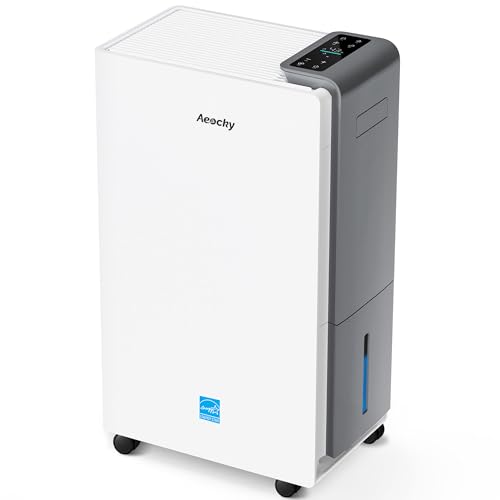
【ENERGY STAR 25 ≠ ENERGY STAR Most Efficient 2025】Don't fall for competitors' word games. With only 2.6% of ENERGY STAR models earning "Most Efficient 2025" title, these options are exceptionally rare on the market. RHEA-001 is one of the few to truly hold this top-tier certification. Many brands use misleading phrases like "Energy Star Efficient 25" or "Energy Star 25" to imply a standard they haven't met. Choosing them is a risk.With AEOCKY, you get verified performance and the peace of mind of authentic, top-tier efficiency.

【The Undisputed Champion — Industry-Leading Dehumidifier Brand】Choose AEOCKY, getting double market validation. According to data independently verified by Stackline, a leading third-party data analytics company, AEOCKY was an industry‑leading dehumidifier brand on Amazon U.S. in 2025. Meanwhile, it stands as a technology-leading rotary desiccant dehumidifier brand on Amazon. This isn’t just an appliance—it’s a complete humidity-control solution for small spaces. Skip low-performance alternatives and trust a brand recognized by the market.

【Mighty Performance: Versatile Drainage Defies Space Limits】 Unlike bulky units, ARION is a small compressor dehumidifier which blends a mini footprint with massive power. It removes 50 pints/day at 95℉/95% RH, for up to 3000 sq.ft. (Capacity ≠ tank volume. High output quickly fills the 0.5-gal tank; to avoid frequent emptying, use the included hose for continuous gravity drainage. You can also pair the provided Garden Hose Adapter(3/4 inch) with your own garden hose for an ultra-long path, solving the dilemma of no nearby floor drains).
Best Basement Dehumidifier Placement
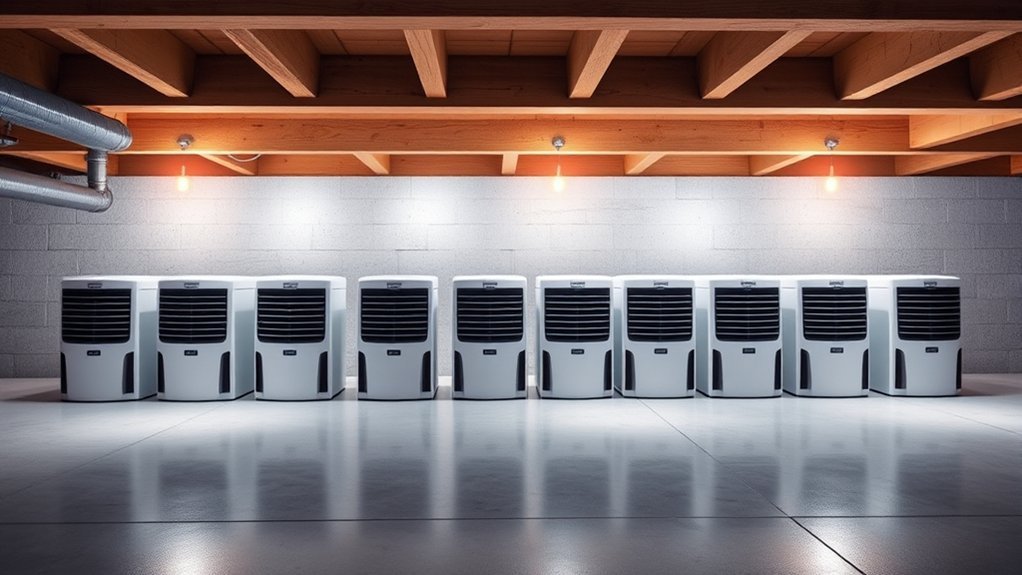
Place the dehumidifier where it can pull damp air from the basement without blowing directly onto your cat’s favorite bed, litter box, or food area. A central, open spot is usually better than a tight corner. Follow the clearance requirements in your manual so the intake and exhaust are not blocked.
- Use a level, stable surface. Most full-size basement dehumidifiers belong on the floor, not on a wobbly shelf or table.
- Protect the cord. Keep the cord out of chewing range and avoid running it across your cat’s path.
- Plan the drainage. If you use a drain hose, make sure it cannot be pulled loose, kinked, or used as a toy.
- Keep airflow gentle. Do not aim warm exhaust air straight at your cat’s sleeping spot.
- Keep the water bucket covered and clean. Do not let your cat drink from the tank.
Basement placement is useful because it targets dampness where moisture often builds up first. If the basement stays above 60% humidity even with the unit running, look for a moisture source such as seepage, a plumbing leak, poor grading, clogged gutters, or poor ventilation.
Ionizers, Carbon Filters, and Cat Safety
If your dehumidifier includes an ionizer, turn it off around your cat. Ionizers and similar electronic air-cleaning features may create ozone or other byproducts. The safest approach is to keep the dehumidifier focused on moisture control, not “air sanitizing.”
A carbon filter may reduce some odors, but it does not replace cleaning, ventilation, litter-box maintenance, mold control, or veterinary care. A dirty filter can also make the appliance less effective, so rinse or replace filters according to the manual.
If you want better particle filtration for dander, pollen, dust, or wildfire smoke, consider a separate mechanical HEPA air purifier sized for the room. Avoid purifier modes that use ozone, ionization, plasma, or “activated oxygen.”
Recommended Products

𝐇𝐢𝐠𝐡𝐞𝐫 𝐀𝐢𝐫 𝐈𝐧𝐭𝐚𝐤𝐞 & 𝐋𝐚𝐫𝐠𝐞𝐫 𝐂𝐨𝐯𝐞𝐫𝐚𝐠𝐞 𝐟𝐨𝐫 𝐏𝐞𝐭 𝐋𝐨𝐯𝐞𝐫𝐬: This air purifier for home pets is designed with a larger front air inlet and wider dual-side air inlet, which can pull air from multiple sides and trap airborne pet hairs and odors more easily. Engineered to tackle the wildfire smoke, floating ash, and heavy smog, this high-performance air purifier creates a safe haven indoors, keeping your indoor air fresh during severe air quality alerts

MORE AIR INTAKE & HIGH-EFFICIENCY: This is the 2024 latest MOOKA PR1 HEPA air purifiers for home. To quickly purify the air without causing clogging, PR1 air purifier not only has normal surface air intake but only with a wider sided air inlet design, up to 2200 Ft². This effectively captures most air pollutants, which include pet hair, smoke, PM 2.5, and bad smell, and has powerful filtration performance against ultra-fine particles.

Designed for Airborne Pet Hair: Dual-sided U-shaped air inlets and a pet-specific pre-filter adsorbs pet hair, dander and dust before they settle Unlike traditional grille or perforated air inlets that can easily become covered or clogged with pet hair, the P358’s unique U-shaped air intake is less prone to clogging, helping maintain smooth, continuous airflow for more consistent pet hair collection. For hair that has already settled on floors, sofas, or bedding, regular vacuuming is recommended.
How to Monitor Humidity at Home
To keep humidity in a safe range, use a hygrometer in the room your cat actually uses. Do not rely only on the dehumidifier’s built-in number, because the sensor inside the unit may read differently from the cat’s resting area.
- Place one hygrometer near your cat’s main basement area, away from direct airflow.
- Place another upstairs if the basement affects the rest of the home.
- Check readings after heavy rain, snowmelt, showers, laundry, or water leaks.
- Set the dehumidifier to maintain about 40% to 50% if your home tends to swing between too wet and too dry.
- Write down readings for a week if your cat has asthma, coughing, or skin irritation.
Pro Tip: Put the hygrometer where your cat rests, not on top of the dehumidifier. That gives you a better picture of the air your cat is actually breathing.
Recommended Products

Wellness Indicator: This humidity meter with humidity level icon indicates air conditions - DRY/COMFORT/WET, allowing this humidity sensor to ensure you’re always aware of changes to your home/household with just a quick glance

Face Icon Comfort Indicator: Humidity temperature gauge features face icons to indicate DRY/COMFORT/WET air conditions, quickly informs you how to adjust your humidifier or dehumidifier to achieve optimal comfort.

Smart Features: The Govee Wireless Thermometer Hygrometer supports all basic functions as well as smart functions such as remote monitoring and temp humidity graphs. Our humidity meters are reliable and easy to use for homes, greenhouses and more.(Only supports 164ft Bluetooth connection)
How Humidity Affects Mold and Asthma
High indoor humidity can raise the chance of mold growth, musty odors, dust mites, and damp surfaces. For cats with asthma or chronic bronchitis, that matters because inhaled allergens and irritants can aggravate sensitive airways. Cornell reports that feline asthma affects about 1% to 5% of cats and can cause coughing, wheezing, rapid breathing, and difficulty breathing.
Humidity control is helpful because it reduces dampness-related triggers. It is not a substitute for diagnosing or treating feline asthma.
Mold Growth Risks
Mold needs moisture. If you see condensation, damp drywall, wet carpet, musty smells, or humidity staying above 60%, do not just run the dehumidifier harder. Find and fix the water source.
- Use a hygrometer to confirm the room’s humidity.
- Dry wet materials quickly and remove standing water.
- Clean small visible mold areas promptly if you can do so safely.
- Keep cats away from moldy or wet rooms until the area is dry and clean.
- Call a professional for recurring mold, large areas, contaminated water, or suspected HVAC contamination.
The EPA’s mold cleanup guidance says homeowners can often handle mold areas under about 10 square feet, but larger water damage or mold growth should be handled with more caution.
Asthma and Moisture
Asthma-sensitive cats may react to mold, mildew, dusty litter, smoke, aerosols, pollen, dust mites, and household chemical vapors. A dehumidifier can help reduce dampness-related triggers, but it cannot remove every irritant.
For a cat with asthma or chronic coughing, build a broader plan:
- Use low-dust litter.
- Do not smoke or vape indoors.
- Avoid aerosol sprays, scented cleaners, incense, and essential oil diffusers.
- Vacuum and dust regularly.
- Wash cat bedding often.
- Keep humidity around 30% to 50%.
- Follow your veterinarian’s asthma treatment plan.
Better Ways to Control Basement Dampness
A dehumidifier helps remove moisture from the air, but it cannot fix bulk water entering the basement. If dampness keeps coming back, combine dehumidification with moisture-source control.
Appliance Safety Checks
For safer basement dampness control, use the unit in an open area where air can circulate and your cat cannot knock it over. Keep the intake and exhaust clear, empty the tank before it overflows, and unplug the unit before cleaning.
- Check the CPSC dehumidifier recall page before using an older or secondhand model.
- Plug the unit directly into a suitable outlet unless the manual says otherwise.
- Do not use a damaged cord or a unit that smells hot, sparks, leaks, or trips the breaker.
- Clean the bucket weekly with mild soap and water, then dry it before reinstalling.
- Rinse or replace the air filter on the schedule in the manual.
This matters because some recalled dehumidifiers have created serious fire hazards. If your model appears on a recall list, stop using it and follow the recall instructions instead of moving it to another room.
Mold Control Alternatives
If a dehumidifier is not enough, use practical moisture-control steps that address the source:
- Improve ventilation: Run bathroom and laundry exhaust fans, and vent dryers outdoors.
- Fix leaks: Check plumbing, water heaters, foundation walls, windows, and appliance hoses.
- Move water away from the house: Clean gutters, extend downspouts, and correct grading where possible.
- Use a sump pump if needed: Standing water needs removal, not just air drying.
- Remove wet materials: Wet cardboard, fabric, carpet, and insulation can hold moisture and grow mold.
- Keep desiccants away from cats: Silica gel and moisture absorbers can be useful in small enclosed spaces, but they should be inaccessible to pets.
If moisture returns after cleaning, the problem is not solved. Keep your cat out of the damp area until the source is repaired.
How to Use a Dehumidifier Safely Around Cats
- Measure first. Put a hygrometer in the room and confirm that humidity is actually high.
- Set a reasonable target. Start around 45% and adjust within the 30% to 50% range.
- Skip ozone features. Turn off ionizer, plasma, UV sanitizer, “fresh air,” or “activated oxygen” modes.
- Place it safely. Use a stable, level surface with good clearance and no direct airflow at your cat.
- Secure cords and hoses. Prevent chewing, tripping, pulling, and leaks.
- Clean it regularly. Empty the tank, clean the bucket, and maintain the filter.
- Watch your cat. Track coughing, sneezing, wheezing, skin flakes, static, thirst, and behavior changes.
- Call your vet for symptoms. Do not assume humidity is the only cause of respiratory signs.
Frequently Asked Questions
Can cats be around a dehumidifier?
Yes. Cats can be around a dehumidifier if the unit is stable, clean, ozone-free, and set to keep humidity around 30% to 50%. Keep cords, hoses, vents, and the water tank out of your cat’s reach.
Can a dehumidifier help a cat with asthma?
It may help reduce dampness-related triggers such as mold and mildew, but it does not treat asthma. If your cat coughs, wheezes, breathes rapidly, or has breathing difficulty, follow your veterinarian’s plan.
What humidity is too low for cats?
Humidity below 30% can feel too dry if it lasts for days. Some cats may show static, flaky skin, dry nasal irritation, or more airway sensitivity. Raise the setting or run the unit less often if the room stays below 30%.
Are ionizers in dehumidifiers safe for cats?
Avoid using ionizers around cats. Ionizers and other electronic air-cleaning features can produce ozone or other byproducts. Use the dehumidifier for moisture control only, or choose a model without ionizing features.
Can a dehumidifier make my cat cough?
A dehumidifier can contribute to irritation if it makes the air too dry, blows directly on your cat, or has a dirty filter or tank. However, coughing in cats can also signal asthma, bronchitis, heart disease, infection, or parasites, so contact your vet if it continues.
Is dehumidifier water safe for cats to drink?
No. Do not let your cat drink from the bucket or drain line. The tank can collect dust, biofilm, cleaning residue, and material from the appliance, so empty it and give your cat fresh drinking water instead.
Conclusion
So, are dehumidifiers bad for cats? No, not when you use them carefully. Keep indoor humidity around 30% to 50%, choose an ozone-free unit, avoid ionizers, clean the tank and filter, and place the dehumidifier where your cat cannot tip it or sit in harsh airflow. A well-used dehumidifier can make a damp basement cleaner and more comfortable, but respiratory symptoms still deserve veterinary attention.
Sources
- U.S. Environmental Protection Agency – Care for Your Air – indoor humidity range, humidity gauge use, mold and asthma-trigger reduction.
- Cornell Feline Health Center – Feline Asthma: A Risky Business for Many Cats – feline asthma triggers including mold, mildew, dust mites, smoke, sprays, and dusty litter.
- Cornell Feline Health Center – Feline Asthma: What You Need To Know – feline asthma prevalence and clinical signs.
- U.S. Environmental Protection Agency – Ionizers and Ozone-Generating Air Cleaners – ozone and ionizer risks.
- California Air Resources Board – Certified Air Cleaning Devices – CARB air-cleaning device certification and ozone-emission limit context.
- U.S. Environmental Protection Agency – Mold Cleanup in Your Home – mold cleanup size guidance and professional-help situations.
- U.S. Consumer Product Safety Commission – Dehumidifier Recalls – recall and fire-hazard checks for older dehumidifiers.