Disclosure: This article contains Amazon affiliate links. If you buy through one of these links, we may earn a commission at no extra cost to you.
Reusable car dehumidifier bags can help manage everyday cabin humidity and reduce the conditions that cause windshield condensation and damp smells in a parked vehicle. The five options below use rechargeable desiccant or silica gel and are best suited to mild moisture problems in cars, trucks, boats, storage bins, and other small enclosed spaces. ZARPAX is the most vehicle-focused choice, FURWEY offers two compact bags, and the QBmalls 5-pack provides the most placement flexibility.
Quick Verdict
- Best Overall: ZARPAX Reusable Car Dehumidifier Bags
- Best Compact 2-Pack: FURWEY Rechargeable Silica Gel Bags
- Best Multipack: QBmalls Rechargeable Desiccant Pack of 5
- Best Single Compact Bag: Absorb Pro 100g Bag
- Best Simple Single Pack: GearGuard 100g Moisture Absorber
How We Compared These Options
We prioritized vehicle relevance, pack size, placement flexibility, a visible saturation indicator, straightforward recharge instructions, and honest limitations. These are passive moisture absorbers, so they are most useful after leaks, soaked carpet, and drainage problems have been corrected.
Quick Comparison
| Product | Pack Format | Best For | Recharge Cue | Amazon |
|---|---|---|---|---|
| ZARPAX Reusable Car Dehumidifier Bags | 2 larger vehicle-focused bags | Windshield condensation and broader cabin placement | Blue-to-pink indicator | Check Price on Amazon |
| FURWEY Silica Gel Bags | 2 compact 100g bags | Small cars, bins, closets, and tight storage spaces | Blue-to-light-pink indicator | Check Product Details |
| QBmalls Rechargeable Desiccant Packs | 5 compact 100g packs | Distributing several packs around a vehicle or multiple small spaces | Blue-to-pink indicator | Check Current Availability |
| Absorb Pro Rechargeable Bag | 1 compact 100g bag | Small cars, storage bins, safes, luggage, and boats | Blue-to-pink indicator | See Today’s Price |
| GearGuard Rechargeable Moisture Absorber | 1 compact 100g pack | Targeted moisture control in one small enclosed area | Blue-to-pink indicator | Check Current Availability |
ZARPAX Reusable Car Dehumidifier Bags (2-Pack)
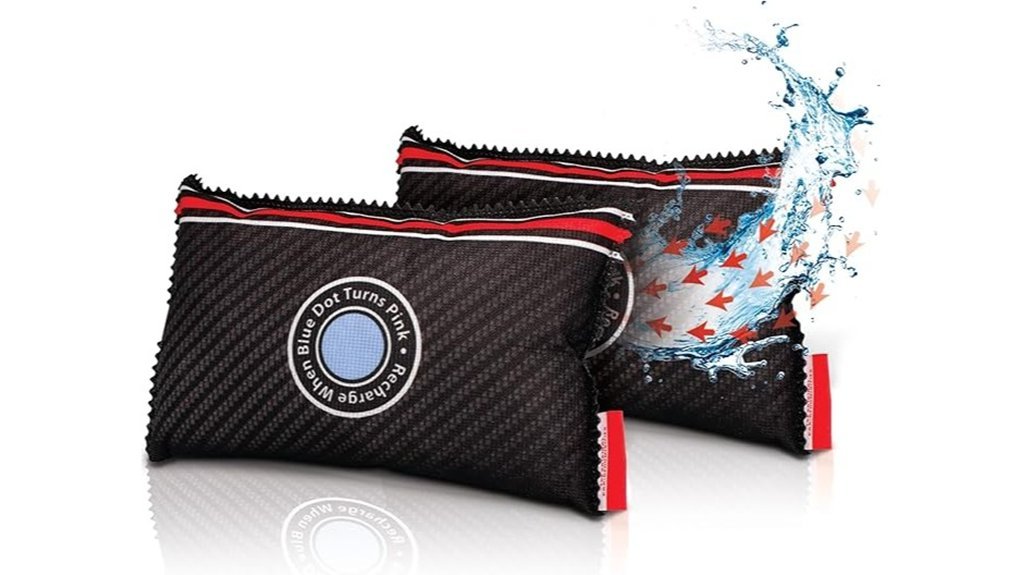
For drivers dealing with recurring windshield condensation or a mildly damp cabin, the ZARPAX Reusable Car Dehumidifier Bags are the most car-focused option in this group. The listing describes two larger bags with a 299-gram stated capacity, a blue-to-pink humidity indicator, and microwave regeneration. The sealed bag format is designed to retain absorbed moisture without creating a liquid collection cup inside the vehicle.
Who Should Buy This: Drivers of cars, trucks, vans, SUVs, RVs, or boats who want two larger reusable bags instead of several small packs.
Why You’ll Like It: The two-bag setup allows separate front-and-rear placement, which is more practical for a vehicle cabin than relying on one compact pouch.
Who Should Avoid It: Buyers without access to the recharge method specified by the manufacturer or anyone dealing with an active leak, standing water, or soaked carpet padding.
Pros:
- Designed specifically with vehicle interiors and windshield condensation in mind.
- Two larger bags provide more placement flexibility than a single small pack.
- Color-changing indicator makes routine recharge checks easier.
Cons:
- Recharge time and microwave settings must follow the exact product instructions.
- Results vary with cabin size, humidity, ventilation, and the source of the moisture.
- It cannot repair leaking seals, clogged drains, or wet interior materials.
FURWEY Rechargeable Silica Gel Dehumidifier Bags (2-Pack)
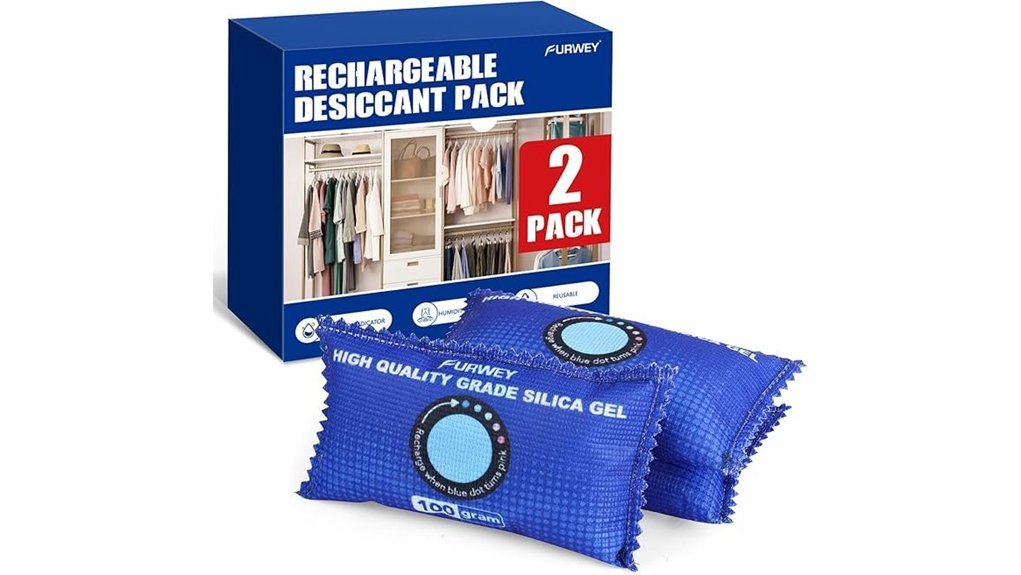
The FURWEY Rechargeable Silica Gel Dehumidifier Bags suit drivers who want two smaller packs that are easy to position. Each bag is listed at 5.5 by 3.1 inches with a dry weight of 100 grams. The listing states an absorption range of about 25% to 35% of dry weight and uses an indicator that changes from blue to light pink when the bag needs recharging.
Who Should Buy This: Owners of compact cars or anyone who wants two small packs for door pockets, cargo areas, bins, closets, or luggage.
Why You’ll Like It: The compact format is easy to move, and individual packaging helps keep the second bag dry until it is needed.
Who Should Avoid It: Anyone expecting a small passive bag to dry a large cabin, soaked upholstery, or an interior with ongoing water entry.
Pros:
- Two compact 100-gram packs are easy to position in separate areas.
- Color-changing indicator provides a clear visual recharge cue.
- Reusable design can reduce reliance on disposable moisture absorbers.
Cons:
- The product listing recommends replacement after about ten recharge cycles for better absorption.
- Small packs may saturate sooner in humid or poorly ventilated vehicles.
- Microwave temperature and handling instructions must be followed carefully.
QBmalls Rechargeable Desiccant Pack of 5
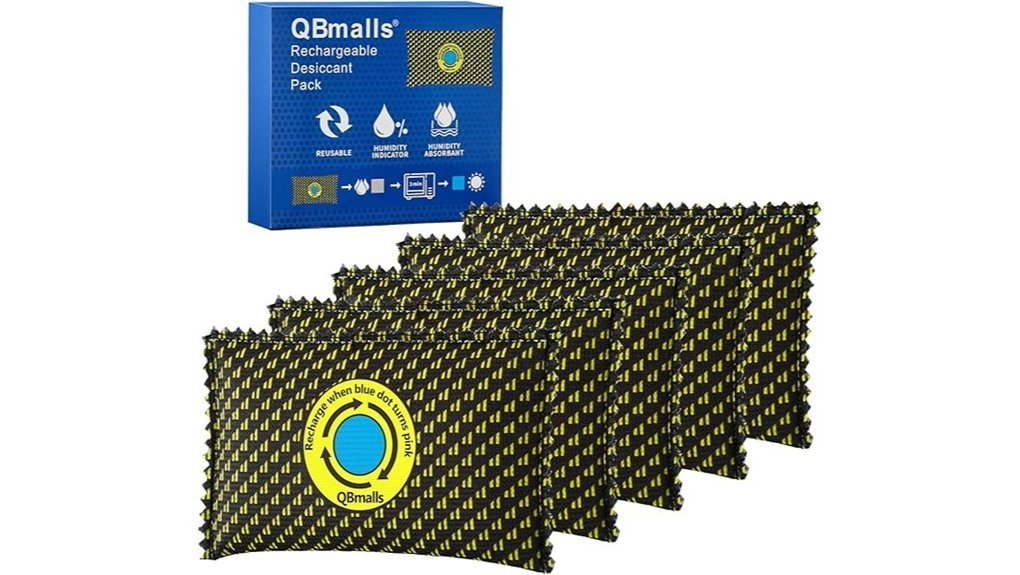
The QBmalls Rechargeable Desiccant Pack of 5 is a practical choice when you want several small packs instead of one large bag. Each pack is listed at 100 grams and is intended for cars, campers, closets, drawers, luggage, storage containers, and other small enclosed spaces. A blue-to-pink indicator helps show when the desiccant needs to be regenerated.
Who Should Buy This: Drivers who want to distribute several packs around one vehicle or divide them among multiple storage spaces.
Why You’ll Like It: Five separate packs make it easy to place moisture absorbers near different problem areas without buying several single packs.
Who Should Avoid It: Buyers who prefer one larger, vehicle-specific bag or need continuous powered moisture removal.
Pros:
- Five-pack format offers the most placement flexibility in this comparison.
- Reusable design can reduce repeat purchases of disposable desiccant packs.
- Color indicator simplifies routine saturation checks.
Cons:
- Five packs also mean more items to inspect, rotate, and recharge.
- Broad coverage claims for passive desiccant products are difficult to compare reliably.
- It is not a substitute for repairing leaks or drying soaked materials.
Absorb Pro Rechargeable Dehumidifier Bag (100g)
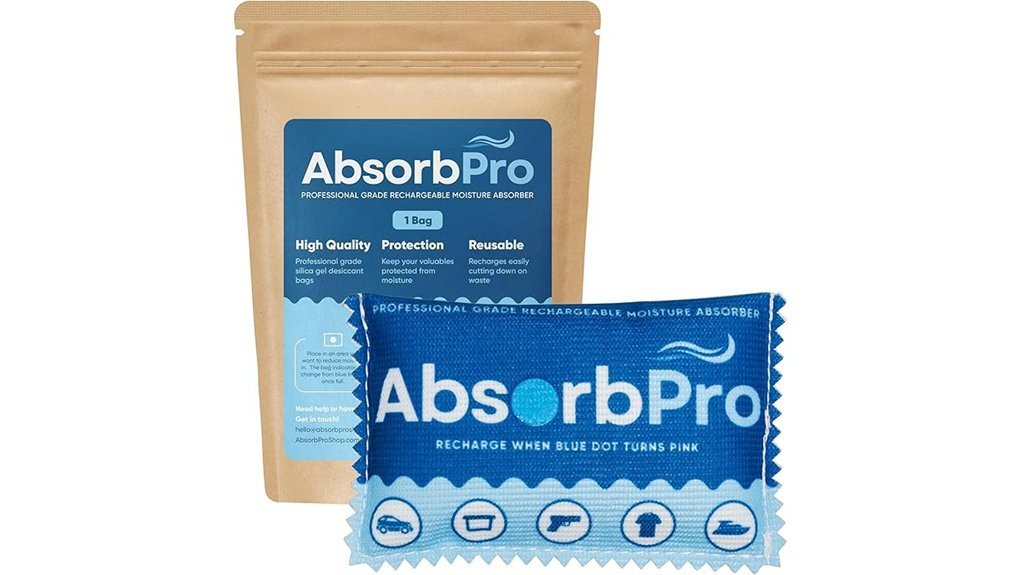
The Absorb Pro Rechargeable Dehumidifier Bag is a compact 100-gram silica gel pack for one small enclosed area. It is marketed for cars, trucks, boats, storage bins, luggage, safes, shoes, and similar spaces. When the indicator changes from blue to pink, the brand directs users to regenerate the pack in a microwave according to its stated power and time instructions.
Who Should Buy This: Shoppers who need one compact reusable bag for a small car, storage container, safe, or travel bag.
Why You’ll Like It: The small, movable format works well when you need targeted moisture control rather than a multi-bag setup.
Who Should Avoid It: Anyone who needs broad cabin coverage from one product or does not want a microwave-regenerated bag.
Pros:
- Compact 100-gram format works in tight storage spaces.
- Reusable silica gel design includes a visible saturation indicator.
- Useful across several small-space moisture-control applications.
Cons:
- One 100-gram bag may be too small for a large or very damp vehicle.
- The indicator can be harder to inspect when the bag is hidden in a dark compartment.
- Microwave recharging may not suit every household or travel situation.
GearGuard Rechargeable Moisture Absorber (100g)
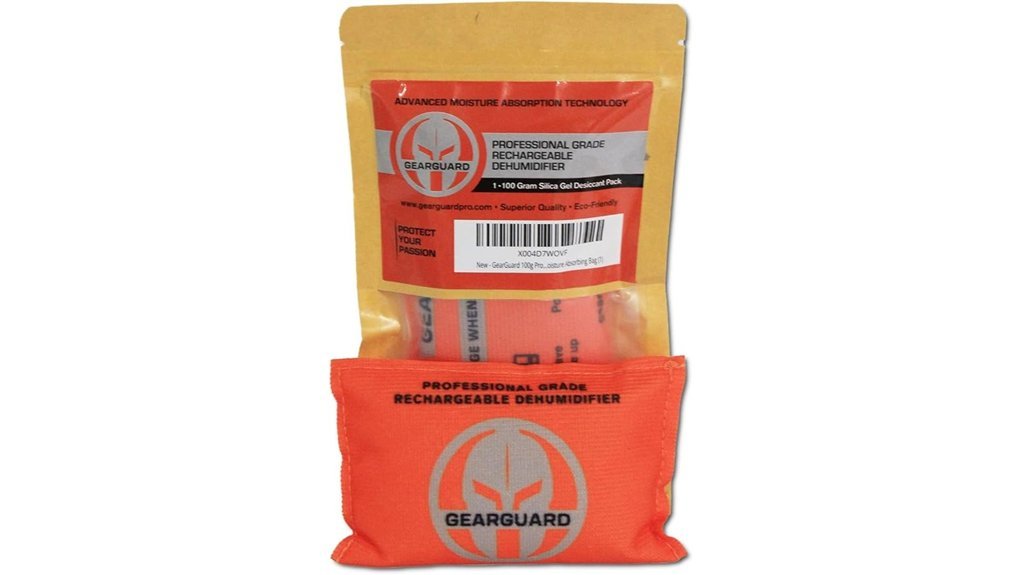
The GearGuard 100g Rechargeable Dehumidifier is a simple single-pack option for targeted moisture control. The product is marketed for cars, boats, closets, toolboxes, luggage, storage bins, safes, and other small enclosed areas. Its listing describes a blue-to-pink saturation indicator and microwave regeneration, but buyers should confirm the current instructions on the exact package before use.
Who Should Buy This: Buyers who want one small reusable moisture absorber for a specific compartment, bin, toolbox, or compact vehicle area.
Why You’ll Like It: The straightforward single-pack format is easy to move between small enclosed spaces.
Who Should Avoid It: Drivers with large vehicles, heavy condensation, recurring water entry, or wet interior materials that need diagnosis and active drying.
Pros:
- Compact 100-gram format for targeted placement.
- Reusable design with a color-changing saturation indicator.
- Suitable for vehicles and several other small storage areas.
Cons:
- One small pack may not provide enough coverage for a larger cabin.
- Requires regular inspection and periodic regeneration.
- Passive desiccant works gradually and cannot remove standing water.
Factors to Consider When Choosing a Reusable Car Dehumidifier
The best reusable car dehumidifier depends on vehicle size, the amount and source of the moisture, available placement space, and how often you are willing to inspect and recharge the bag.
Moisture Absorption Capacity
Do not confuse a bag’s dry weight with the amount of water it can absorb. A label such as 100 grams usually describes the pack or desiccant weight, not a promise that it will absorb 100 grams of water. Larger bags or multiple packs may last longer between recharge cycles, but real performance varies with temperature, humidity, airflow, cabin volume, and wet materials.
Rechargeability and Maintenance
Choose a product with a visible saturation indicator and clear regeneration instructions. Many bags use a blue-to-pink color change, but microwave power, heating time, cooling time, and bag orientation can differ. Follow the directions supplied with the exact product, use any required microwave-safe dish, and stop using a bag if its cover, seam, or indicator is damaged.
Size and Design
A larger vehicle-focused bag may need less frequent attention, while several small packs provide flexible placement. Choose a design that fits securely without blocking controls, vents, mirrors, airbags, or the driver’s view. Never place a loose bag where it could slide under the brake or accelerator pedal.
Safety and Placement
Keep desiccant bags away from children and pets, and prevent access to the contents. Secure each pack before driving, let it cool fully after regeneration, and inspect it for damage before returning it to the vehicle. These products are intended for airborne humidity, not for collecting liquid from a major leak.
Versatile Usage Options
Reusable silica gel and desiccant packs can also be useful in boats, campers, closets, luggage, storage bins, and safes when those uses are listed by the manufacturer. A multipack may offer better placement value when you need moisture control in several small enclosed spaces.
Before You Buy Checklist
- Check the number and size of bags included.
- Confirm the saturation indicator color and regeneration method.
- Choose a secure location away from pedals, airbags, vents, and sight lines.
- Inspect the vehicle for wet carpet, failed seals, or blocked drains first.
- Review replacement-cycle guidance and current package instructions.
What Car Dehumidifiers Can and Cannot Do
Important: A reusable desiccant bag can help manage ordinary cabin humidity and light condensation, but it cannot repair a leaking door seal, clogged sunroof drain, damaged heater core, wet carpet padding, or another source of ongoing water entry.
If the interior stays wet, develops a strong mildew smell, or repeatedly forms heavy condensation, identify and correct the moisture source first. Dry wet carpet and upholstery fully before relying on a passive absorber.
Frequently Asked Questions
How Long Do Reusable Car Dehumidifiers Last Before Needing Replacement?
There is no single lifespan for every reusable car dehumidifier. Replacement depends on the product design, allowed recharge cycles, humidity level, handling, and the physical condition of the bag. Follow any manufacturer limit and replace a pack that leaks, tears, develops unusual damage, or no longer returns to its dry indicator color after proper regeneration.
Can These Dehumidifiers Damage Car Interiors?
A sound bag used as directed should keep its desiccant contained, but damage or interference is possible if the bag is torn, overheated, or placed near pedals, controls, airbags, vents, or the driver’s sight line. Inspect and secure it before driving.
Are Reusable Dehumidifiers Safe Around Pets and Children?
Keep every desiccant bag out of reach of children and pets. Do not allow the pouch or its contents to be swallowed, chewed, or used as a toy. Materials and warnings vary by product, so follow the label and manufacturer instructions for the exact model.
How Often Should I Recharge My Dehumidifier?
Recharge or regenerate the bag when its indicator shows saturation or as directed by the manufacturer. Timing varies with weather, cabin size, ventilation, wet materials, and how often the vehicle is opened. Use the indicator and product instructions rather than a fixed calendar schedule.
Do Reusable Dehumidifiers Work in Extreme Temperatures?
Temperature and humidity can change how quickly a passive desiccant pack absorbs moisture and how often it needs regeneration. Use the bag only within the storage, operating, and heating limits provided for that product, and never exceed its recharge instructions.
Where Should I Place a Car Dehumidifier?
Place it in a stable, manufacturer-approved location where air can reach it, such as a secured door pocket or cargo area. Keep it away from pedals, airbags, vents, direct sight lines, and any location where it could slide while the vehicle is moving.
Conclusion
The ZARPAX Reusable Car Dehumidifier Bags are the strongest all-around choice here for drivers who want two larger, vehicle-focused bags. The FURWEY 2-pack is better when compact size matters, while the QBmalls 5-pack offers the most flexible placement. Absorb Pro and GearGuard are sensible single-pack choices for one small area. Whichever option you choose, use the saturation indicator, follow the exact regeneration instructions, secure the bag before driving, and correct any active leak or soaked interior material first.
Final Recommendation: Choose ZARPAX for a car-first two-bag setup, FURWEY for compact placement, or QBmalls when you want several packs for different areas.