As an Amazon Associate, we may earn from qualifying purchases at no extra cost to you.
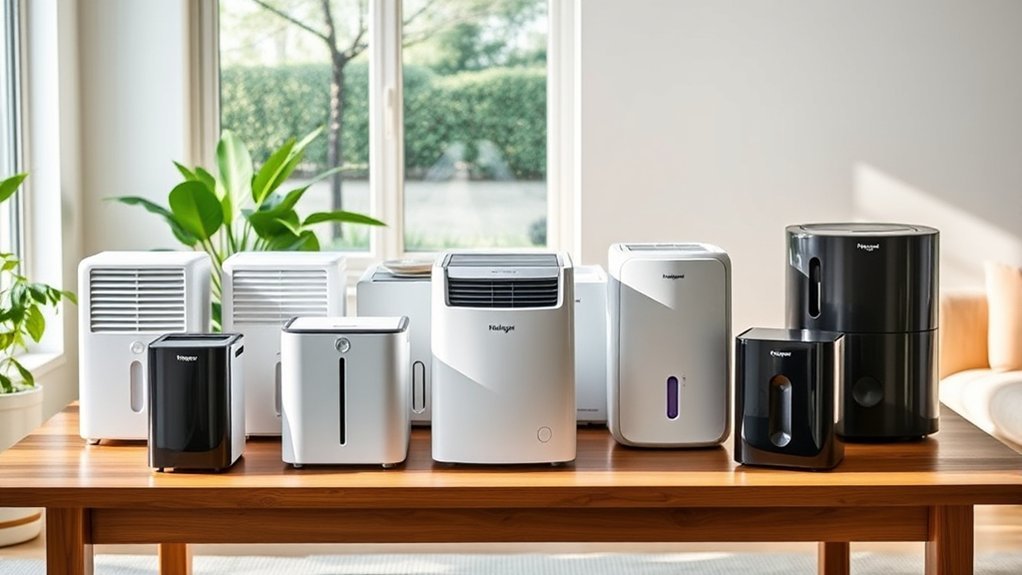
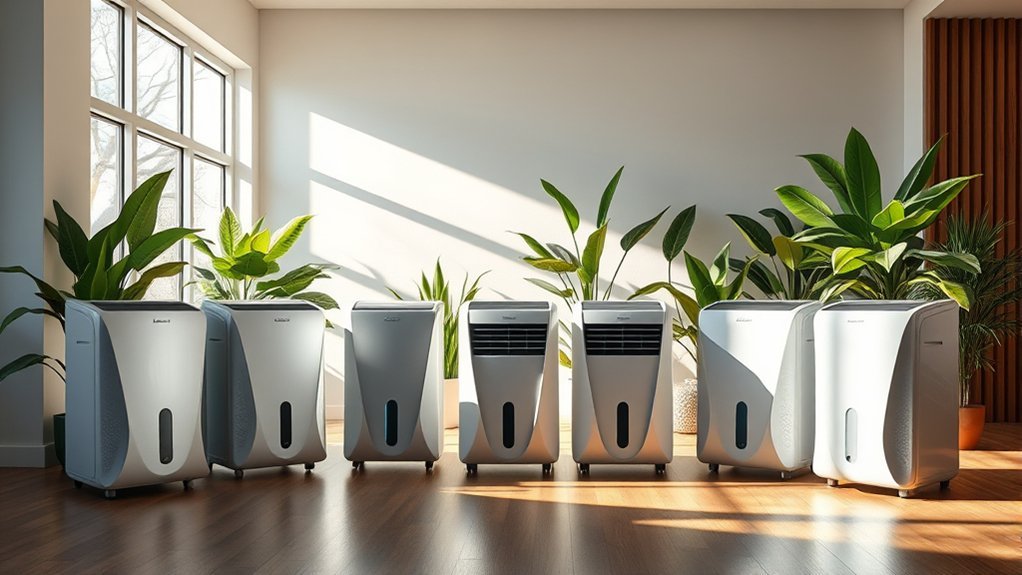
The best quiet dehumidifier for an apartment depends on whether you need low bedroom noise or enough capacity to control a larger damp area. The TABYIK 35 oz Dehumidifier has the lowest manufacturer-listed noise level in this shortlist and is intended for small enclosed spaces with light, localized moisture. The Tenergy Sorbi adds True HEPA particle filtration for shoppers who want a compact two-in-one unit. For a larger apartment or a persistent humidity problem, the Midea Cube 20 Pint is the best overall performer here because it offers much stronger moisture removal, smart controls, a large bucket, and continuous drainage, although it is heavier and more audible than the mini models.
Quick verdict
- Best overall for meaningful apartment humidity: Midea Cube 20 Pint Dehumidifier
- Best low-noise pick for a small bedroom: TABYIK 35 oz Dehumidifier
- Best compact two-in-one: Tenergy Sorbi Dehumidifier and Air Purifier
How these picks were compared: We focused on manufacturer-listed sound output, moisture-removal capacity and test conditions, tank and drainage options, portability, controls, and suitability for common apartment spaces. Noise levels and square-foot coverage are manufacturer claims, not independent measurements.
Quick Comparison
| Product | Best For | Type | Listed Noise | Listed Moisture Removal | Main Limitation | Details |
|---|---|---|---|---|---|---|
| TABYIK 35 oz | Small bedroom, closet, RV, or dry bathroom area | Thermoelectric | 28 dB, manufacturer-listed | Up to 450 ml/day at 86°F and 80% RH | Not designed for a whole apartment or severe dampness | Check Current Amazon Availability |
| Tenergy Sorbi | Small room needing light dehumidification plus particle filtration | Thermoelectric with True HEPA filter | 35–42 dB, manufacturer-listed | Up to 750 ml/day at 86°F and 80% RH | 1-liter tank, no drain-hose connection, and limited capacity | Check Current Amazon Availability |
| Midea Cube 20 Pint | Larger apartment, living area, laundry area | Compressor | 45 dBA, manufacturer-listed | 20 pints/day, manufacturer-rated | Heavier and more audible than a mini unit | Check Current Amazon Availability |
Before you buy: Manufacturer square-foot coverage is only a starting point, not a performance guarantee. A warm bathroom, a damp laundry area, and an open-plan apartment place very different demands on a dehumidifier. Compare the listed moisture-removal capacity and test conditions, check the room with a hygrometer, and decide whether you need continuous drainage.
TABYIK 35 oz Dehumidifier: Best Low-Noise Pick for Small Bedrooms
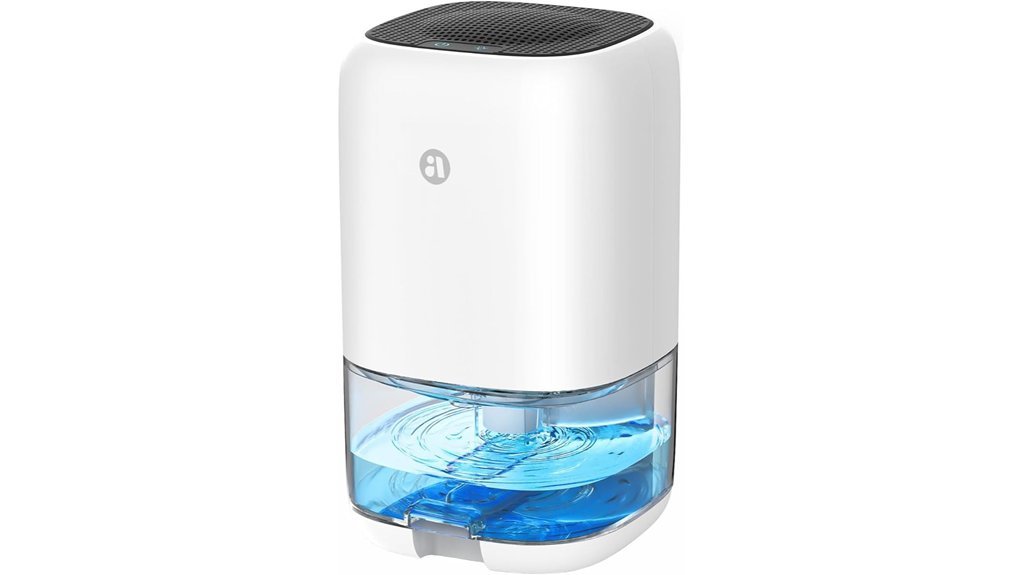
The TABYIK 35 oz model is the best fit in this shortlist for a small sleeping area where low listed noise and easy portability matter more than high extraction capacity. Its manufacturer-listed 28 dB operating level is the lowest figure among these three picks, while the compact body and built-in handle make it easy to move between a bedroom, closet, RV, or a dry bathroom location away from splashes.
The manufacturer lists moisture collection of up to 450 ml in 24 hours, but that maximum is measured in warm, highly humid conditions. In a cooler apartment or at moderate humidity, expect it to collect less water. This is a compact thermoelectric unit, not a substitute for a 20-pint compressor dehumidifier.
Best For: A bedroom, closet, desk area, RV, or other small enclosed space with light, localized humidity.
Why You’ll Like It:
- Lowest manufacturer-listed noise figure in this shortlist.
- Transparent 35 oz tank makes the water level easy to check.
- Automatic shut-off helps prevent overflow when the tank fills.
- Compact footprint and carrying handle simplify room-to-room use.
Who Should Avoid It:
- Anyone trying to dehumidify an entire apartment.
- Homes with leaks, wet walls, persistent condensation, or heavy laundry moisture.
- Users who need continuous drainage, a built-in humidistat, or precise humidity control.
Tenergy Sorbi 1000ml: Best Compact Dehumidifier with HEPA Filtration
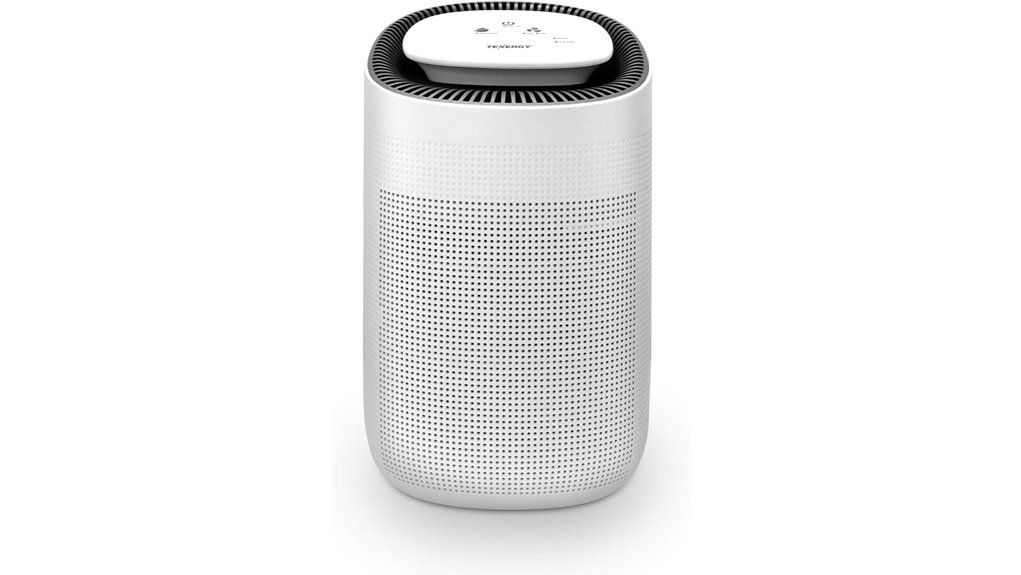
The Tenergy Sorbi combines a small thermoelectric dehumidifier with a True HEPA filter. It is a practical choice for a small bedroom, office, closet, or dry bathroom area when you want modest moisture collection and basic particle filtration in one compact appliance.
Its manufacturer-listed moisture-removal maximum is 750 ml per day at 86°F and 80% relative humidity, and its listed operating range is 35–42 dB. The 1,000 ml removable tank includes a full-tank sensor and automatic shut-off. Two fan speeds let you balance airflow and noise. Tenergy markets it for spaces up to 200 square feet, but the daily removal capacity is the more useful comparison for real-world sizing.
Best For: Small rooms where a combined dehumidifier and particle filter is more useful than maximum moisture-removal power.
Why You’ll Like It:
- Combines moisture collection and HEPA filtration in one unit.
- Adjustable fan speed provides more control than many basic mini models.
- Automatic shut-off reduces overflow risk.
- Touch controls and removable tank keep daily use simple.
Who Should Avoid It:
- People who need whole-apartment humidity control.
- Users who do not want the recurring cost and maintenance of replacement filters.
- Anyone expecting the HEPA filter to remove gases, odors, or the source of a moisture problem.
Midea Cube 20 Pint: Best Overall for Larger or Persistently Damp Apartments
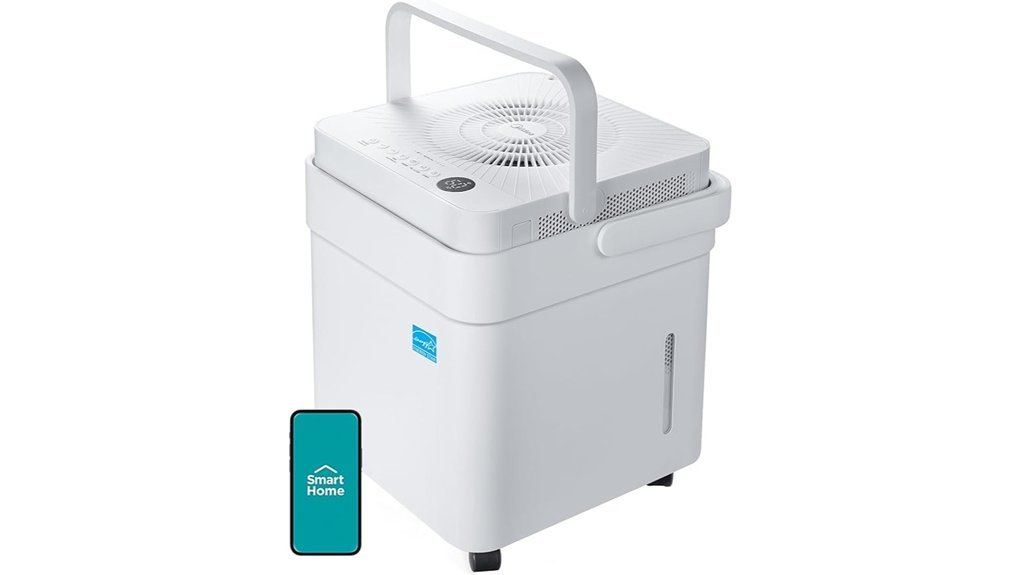
The Midea Cube 20 Pint is the strongest moisture remover in this shortlist and the best overall choice when an apartment has more than a small pocket of damp air. It is a better match for a larger apartment, open living area, laundry zone, or a room with persistent humidity that would overwhelm a small thermoelectric model. Midea lists a 20-pint daily capacity and coverage of up to 1,500 square feet, although real-world sizing still depends on the starting humidity, room layout, temperature, and moisture source.
The lift-and-twist design nests the main unit inside the bucket for storage. In its extended form, the manufacturer lists a large removable bucket of about 12 liters, reducing trips to the sink. It also supports continuous drainage, Wi-Fi control through the SmartHome app, and voice control with compatible assistants.
At a listed 45 dBA, this is not as quiet as the TABYIK or Tenergy. It is the better choice when effective moisture removal matters more than near-silent bedside operation.
Best For: Larger apartments, living rooms, laundry areas, and persistent humidity problems that need compressor-level performance.
Why You’ll Like It:
- Much higher moisture-removal capacity than mini thermoelectric units.
- Large bucket reduces emptying frequency.
- Continuous-drain option is useful for regular operation near a suitable drain.
- App and voice controls make scheduling and monitoring easier.
- Nesting design reduces storage height when the unit is not in use.
- Current manufacturer specifications list ENERGY STAR certification.
Who Should Avoid It:
- Light sleepers who need a near-silent bedside appliance.
- Anyone who must carry the unit frequently; it weighs about 33 lb.
- Small closets or bathrooms where a full-size compressor model would be awkward.
How to Choose a Quiet Dehumidifier for an Apartment
Match the Technology to the Moisture Problem
Thermoelectric dehumidifiers are compact, light, and usually quieter, but they remove far less water than compressor models. They work best in warm, enclosed spaces with light moisture. Compressor dehumidifiers are heavier and more audible, but they are the practical choice for larger rooms, laundry moisture, or consistently high humidity.
Compare Tested Capacity, Not Only Square Footage
Square-foot coverage is a marketing estimate, not a complete sizing method. Compare the listed pints or milliliters removed per day and note the test conditions. Mini models often publish their maximum collection rate at high temperature and very high relative humidity, so normal apartment performance may be lower.
Check Noise at the Mode You Will Use
A sleep-mode number is not always the noise level at full output, and manufacturer sound ratings may use different test methods. On paper, a model listed in the high-20 dB range is more bedroom-friendly than a compressor model listed in the mid-40 dBA range. Also consider vibration: place the unit on a level, firm surface and leave the required clearance around its air inlet and outlet.
Choose a Tank and Drainage Setup You Can Maintain
A small tank is easy to carry but may need frequent emptying. For regular use, a continuous-drain connection can reduce maintenance, but it requires a safe downward path to a suitable drain. Never route a hose where it can leak onto flooring or create a trip hazard.
Use a Hygrometer and Fix the Moisture Source
A separate hygrometer helps you see whether the unit is actually lowering relative humidity. A general indoor target is roughly 30% to 50%, although the best setting can vary with season and local conditions. A dehumidifier can manage excess moisture, but it cannot repair plumbing leaks, failed waterproofing, roof leaks, or inadequate bathroom ventilation. Renters should report persistent dampness, visible water damage, or recurring condensation to the property manager.
Evaluate Energy Efficiency Correctly
For compressor models, look for an ENERGY STAR certification and compare the model’s Integrated Energy Factor when available. Avoid relying on vague claims such as a fixed annual dollar saving, because operating cost depends on local electricity rates, runtime, set humidity, and room conditions. Mini thermoelectric units draw less power, but their lower extraction capacity can make them unsuitable for a large moisture load.
Plan for Cleaning and Filter Care
Empty and rinse the bucket regularly, clean the air inlet, and follow the manual’s filter schedule. A dirty filter restricts airflow and can reduce performance. Let the tank dry before storage, and inspect the drain hose for kinks or buildup if you use continuous drainage.
Safety note: Plug the dehumidifier directly into a suitable wall outlet unless the manufacturer specifically allows another setup. Keep the cord and plug dry, do not block airflow, and stop using the unit if the plug becomes hot, the cord is damaged, or the appliance develops an unusual smell or sound.
Frequently Asked Questions
Which Type of Dehumidifier Is Quietest for a Bedroom?
A small thermoelectric model is usually the quietest option for a bedroom. It is best for light moisture in a small enclosed area. A compressor model removes much more water but normally creates more fan, compressor, and vibration noise.
Can a Mini Dehumidifier Dry an Entire Apartment?
Usually not. Mini thermoelectric units are intended for small rooms, closets, RVs, or dry bathroom areas where the manual permits safe placement. An open-plan apartment or a persistent moisture problem usually needs a compressor dehumidifier with a tested capacity measured in pints per day.
Can I Run a Dehumidifier While Sleeping?
It may be suitable for overnight use when the manufacturer permits it and the unit is in good condition, has adequate airflow clearance, sits on a stable surface, and is connected as directed in the manual. Auto shut-off is helpful for a full bucket, but it does not replace safe placement and regular inspection. Do not place the appliance where bedding, curtains, or clothing can block its vents.
Can I Use a Dehumidifier in a Laundry Room?
Yes. A higher-capacity compressor model is generally more suitable because drying clothes can create a heavy moisture load. Keep the appliance away from splashes, maintain clear airflow, and use a safe drain setup if you choose continuous drainage.
Does a Dehumidifier Clean the Air?
A standard dehumidifier mainly removes moisture. It does not replace ventilation or a dedicated air cleaner. A combination model such as the Tenergy Sorbi can also filter airborne particles through its HEPA filter, but the filter requires maintenance and does not fix the source of excess moisture.
How Often Should I Clean the Tank and Filter?
Check the tank frequently and clean it before residue or odor develops. Inspect the air inlet and filter regularly, especially in dusty rooms. Follow the manufacturer’s manual because filter type, cleaning method, and replacement intervals vary by model.
Final Recommendation
Choose the Midea Cube 20 Pint as the best overall option when humidity affects a larger part of the apartment or returns quickly after cooking, showering, or drying laundry. Choose the TABYIK 35 oz when your priority is the lowest manufacturer-listed noise level for a small bedroom or other enclosed space with light moisture. Pick the Tenergy Sorbi when you want compact dehumidification plus HEPA particle filtration and accept the smaller tank and replacement-filter maintenance.
Whichever model you choose, match the capacity to the actual dampness, monitor humidity with a hygrometer, and address leaks or ventilation problems instead of relying on the appliance alone.