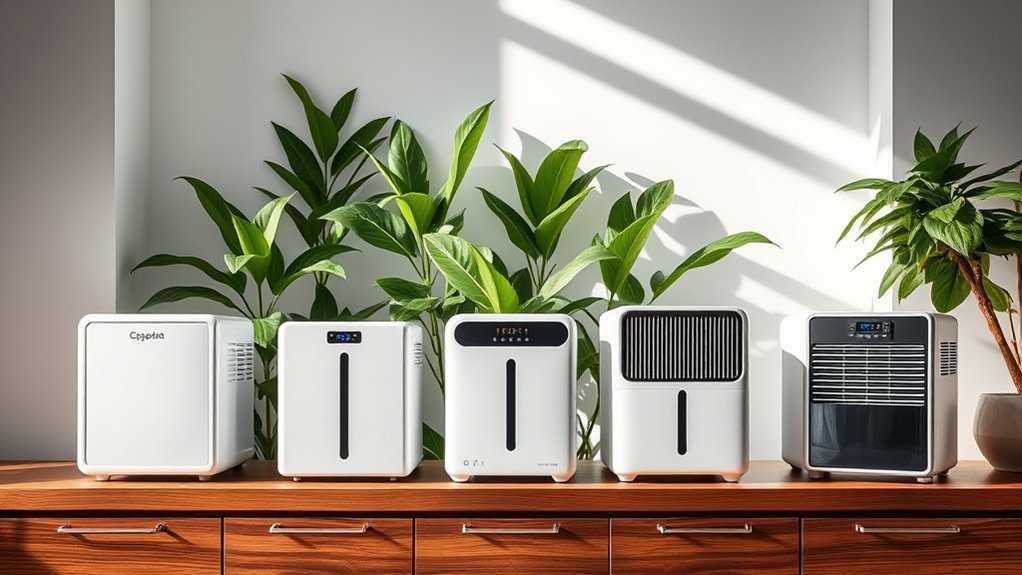
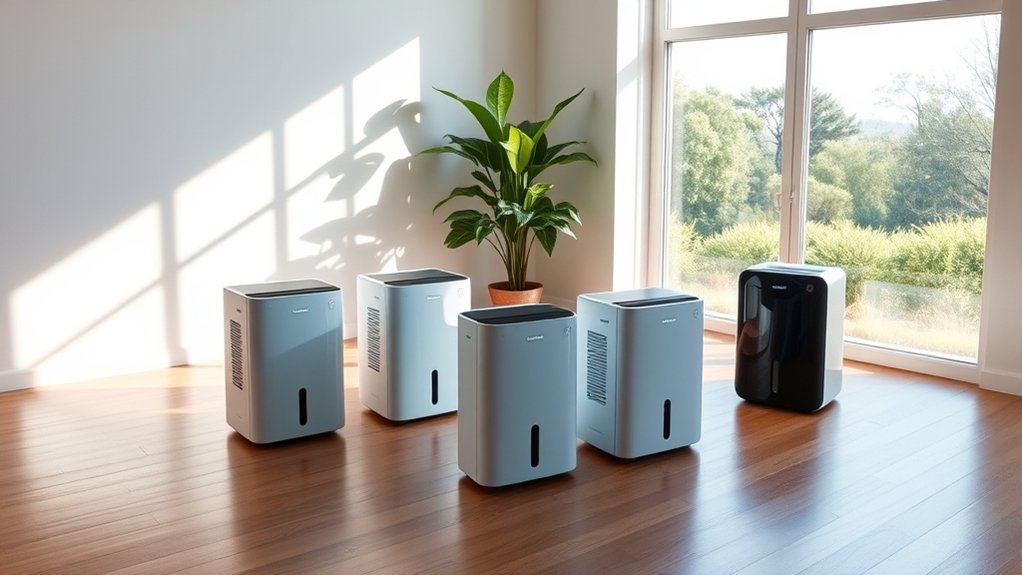
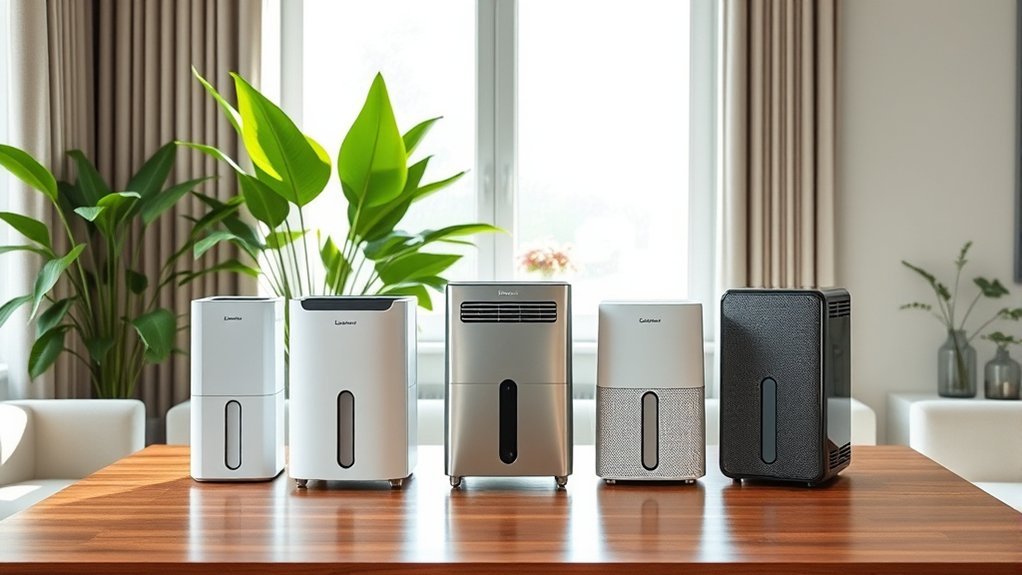
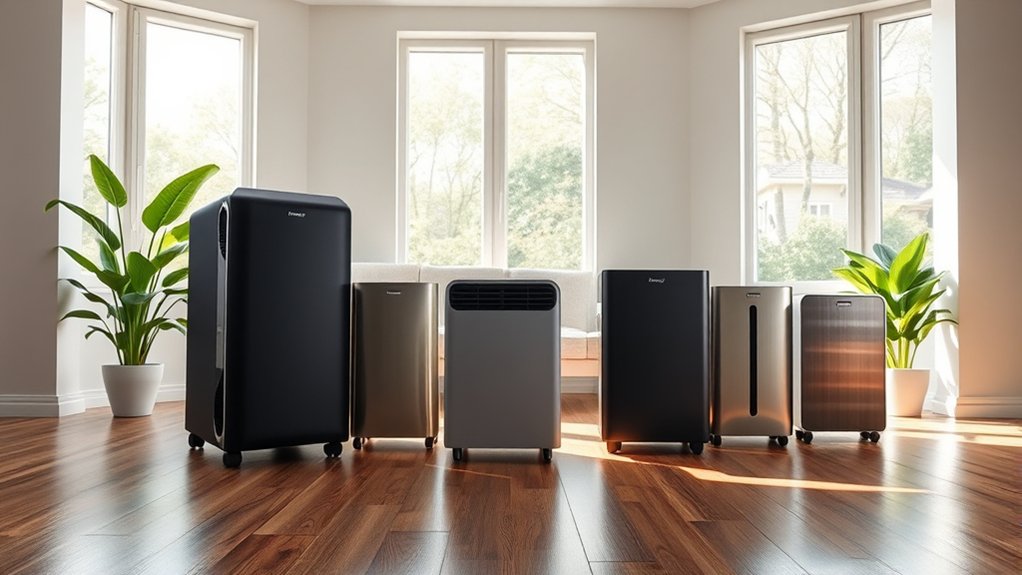
A dehumidifier with continuous drain can remove collected water through a hose instead of stopping whenever its tank becomes full. The most important choice is the drainage method. A standard hose normally needs a continuous downhill path, while a built-in condensate pump can move water upward to an elevated sink, utility drain, or window.
For a medium-size room or moderately damp basement with a nearby floor drain, the Waykar 34-Pint Dehumidifier offers the most balanced combination of humidity control, portability, and gravity drainage. Choose the DECIUU Max 100-Pint Dehumidifier when a higher drain requires a built-in pump. The SEMKAP 32-Pint Dehumidifier is the easier model to move between rooms, while the Levoair Mini is intended for localized moisture in a bathroom, closet, bedroom, or RV.
Quick Comparison
| Product | Best For | Published Capacity | Drain Type | Main Limitation |
|---|---|---|---|---|
| Waykar 34-Pint | Medium rooms and moderately damp basements | 34 pints per day at 95°F and 90% RH; official ENERGY STAR capacity is 9.81 pints per day under standardized conditions | Gravity hose or tank | Cannot pump water upward |
| DECIUU Max 100-Pint | Large or persistently damp areas needing an elevated drain | Seller lists a 100-pint maximum and a 70-pint standard figure | Built-in pump, gravity hose, or tank | Capacity and certification details require listing confirmation |
| SEMKAP 32-Pint | Living areas and moderate basement humidity | Up to 32 pints per day at 95°F and 90% RH | Included gravity hose or tank | Small 2.5-liter tank |
| Levoair Mini | Bathrooms, closets, bedrooms, and RVs | Up to about 35 ounces per day at 86°F and 80% RH | Five-foot gravity hose or tank | Not suitable for a wet basement or heavy moisture load |
How We Selected These Dehumidifiers
These recommendations are based on published product specifications, drainage design, moisture-removal claims, operating controls, tank size, portability, room suitability, and the limitations disclosed by each listing. They are not presented as the result of hands-on testing.
Products with unavailable, outdated, mismatched, or unverifiable Amazon listings were removed. Because manufacturers use different test conditions, headline pint figures are shown with their stated temperature and humidity conditions whenever that information is available.
Waykar 34-Pint ENERGY STAR Dehumidifier
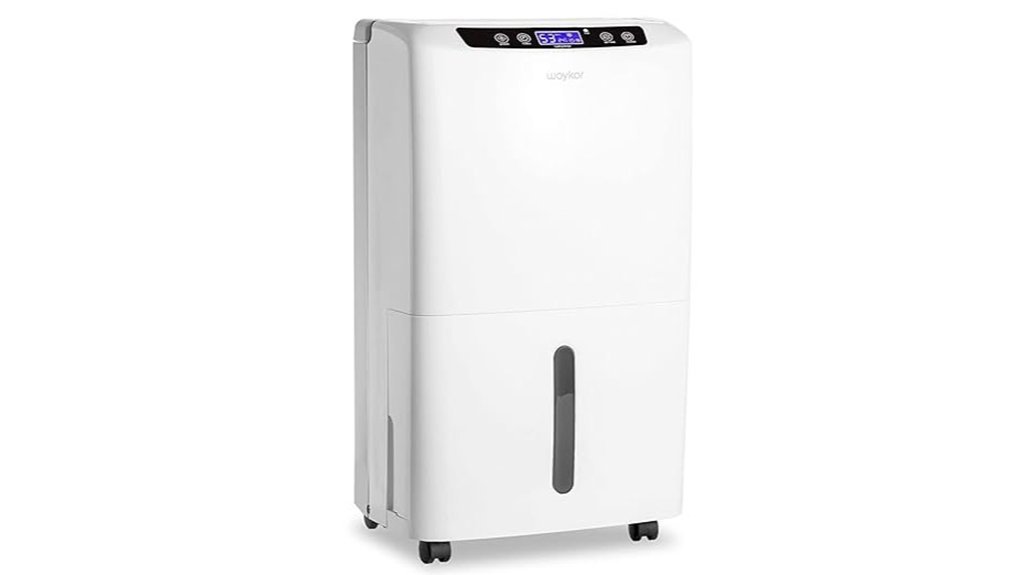
The Waykar PD160B is the most balanced option here for a medium-size living area, garage, office, or moderately damp basement. It includes an adjustable humidistat, two fan speeds, a timer, automatic defrost, a removable tank, caster wheels, and a hose connection for continuous gravity drainage.
The product is marketed as a 34-pint dehumidifier based on operation at approximately 95°F and 90% relative humidity. Its official ENERGY STAR entry reports a standardized capacity of 9.81 pints per day. The figures use different test environments and should not be treated as contradictory or directly interchangeable.
Why You’ll Like It: It offers a useful combination of automatic humidity control, an included drain hose, ENERGY STAR certification, and room-to-room mobility without the size of a very high-capacity machine.
Best For: Buyers who have a lower floor drain and need reliable compressor-based moisture control in one open room or basement area.
Who Should Avoid It: Anyone who must drain into a sink, window, or pipe above the machine. The hose depends on gravity and cannot lift water upward.
Pros:
- Officially listed as an ENERGY STAR-certified portable dehumidifier.
- Includes a hose connection for continuous gravity drainage.
- Adjustable target humidity, timer, automatic shutoff, and automatic defrost.
- Wheels and handles make it easier to reposition.
- Tank collection remains available when no drain is nearby.
Cons:
- The 0.66-gallon tank can fill quickly if the hose is not connected.
- The hose must remain below the drain outlet with a continuous downward slope.
- The 34-pint marketing figure uses hotter and more humid conditions than standardized testing.
- One portable unit may not control several closed or separated rooms.
DECIUU Max 100-Pint Dehumidifier With Pump
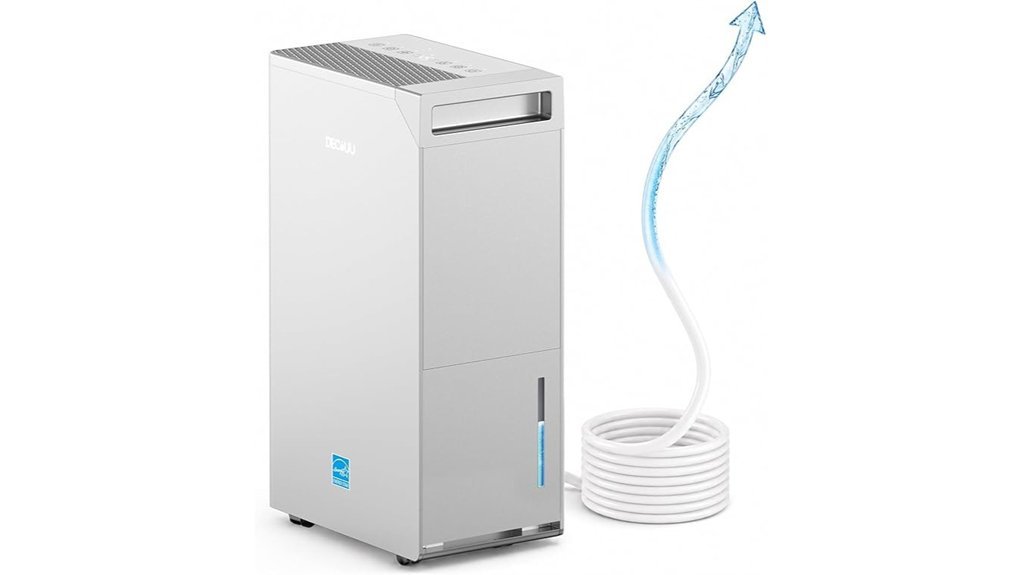
The DECIUU is the strongest drainage choice in this group when the available outlet is higher than the dehumidifier. Its listing describes three water-removal options: tank collection, continuous gravity drainage, and a built-in condensate pump that can move water upward by as much as 16.4 feet.
The seller lists a maximum capacity of 100 pints per day and a separate 70-pint standard figure. Because the listing uses multiple ratings, buyers should check the stated test conditions rather than comparing the 100-pint number directly with another manufacturer’s DOE or ENERGY STAR capacity.
Why You’ll Like It: The pump provides more placement freedom than a gravity-only model. It can be useful when the practical drain is a utility sink, elevated standpipe, basement window, or another outlet above floor level.
Best For: Large basements, garages, laundry areas, and persistently humid spaces where a gravity hose cannot reach a lower drain.
Who Should Avoid It: Buyers who only need light moisture control in a small room. The larger body, pump system, and higher capacity may be unnecessary for localized humidity.
Pros:
- Built-in pump supports upward drainage within the seller-stated lift limit.
- Also supports gravity drainage and removable-tank collection.
- Adjustable humidity control allows automatic cycling around a target level.
- Washable filter supports routine maintenance.
- Better suited to heavy moisture loads than a compact semiconductor model.
Cons:
- The maximum 100-pint figure is condition-dependent.
- Pump tubing, gravity hose, certification details, and package contents should be confirmed on the current listing.
- A pump adds another component that must be inspected for clogs or drainage failures.
- The unit requires more floor space than a compact dehumidifier.
SEMKAP 32-Pint Dehumidifier for Home and Basement
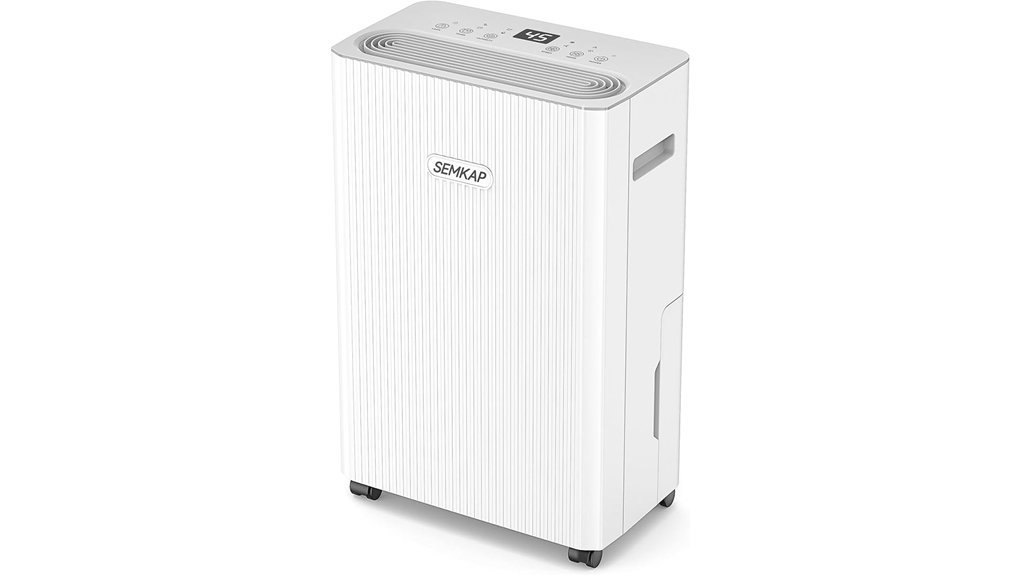
The SEMKAP is a portable compressor dehumidifier for a bedroom, office, living area, garage, or moderately damp basement. It has a 2.5-liter removable tank, caster wheels, a carrying handle, adjustable humidity control, automatic defrost, multiple operating modes, and an included 3.28-foot drain hose.
Its advertised 32-pint daily capacity is measured at approximately 95°F and 90% relative humidity. Expect lower collection in a cooler room or after the space approaches the selected humidity level.
Why You’ll Like It: The wheels, handle, compact compressor design, and included hose make it easier to move and install than many larger basement units.
Best For: Buyers who want to move one dehumidifier between medium-size rooms and have access to a lower drain when continuous operation is needed.
Who Should Avoid It: Anyone dealing with standing water, active seepage, wet foundation walls, or a drainage point above the machine.
Pros:
- Includes a drain hose for continuous gravity drainage.
- Wheels and a handle simplify room-to-room movement.
- Adjustable humidity setting, timer, and multiple operating modes.
- Automatic defrost supports operation when coil frost begins to form.
- Washable filter and removable tank make routine cleaning easier.
Cons:
- The 2.5-liter tank is small for a compressor model.
- The 32-pint figure is based on hot, highly humid test conditions.
- The included hose is relatively short.
- Gravity drainage cannot move water to an elevated outlet.
- Warranty and current seller details should be checked before ordering.
Levoair Small Portable Dehumidifier With Drain Hose
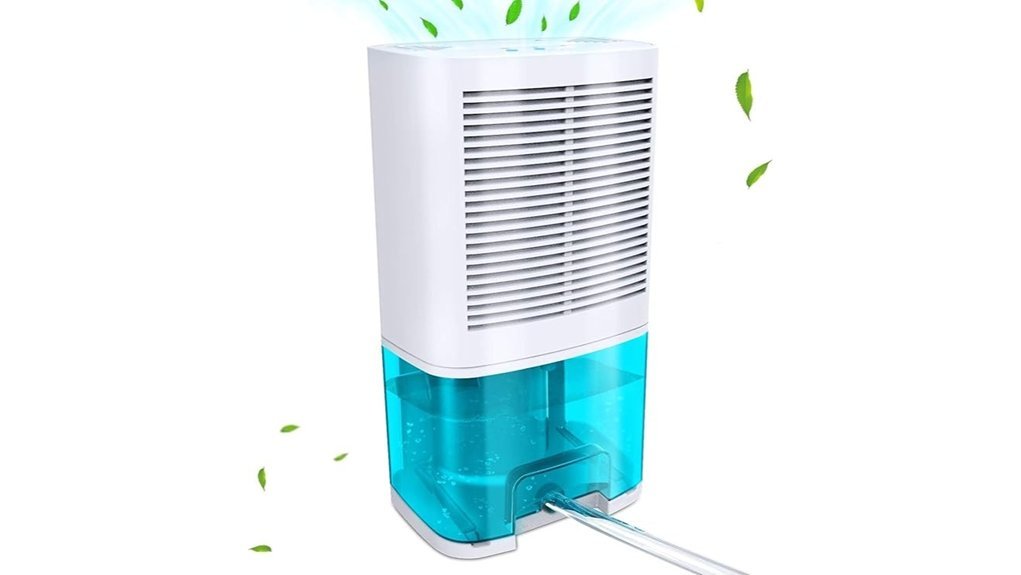
The Levoair Mini uses semiconductor condensation rather than a full-size compressor. It has a 2,000-milliliter tank, compact 5.4-by-7.9-by-14-inch dimensions, automatic tank-full shutoff, and a five-foot hose for continuous gravity drainage.
The listing states that it can collect up to about 35 ounces, or one liter, per day at approximately 86°F and 80% relative humidity. Its output will decrease as the room becomes cooler or less humid.
Why You’ll Like It: The lightweight body, small footprint, handle, and drain hose make it easier to place on an RV counter, bathroom shelf, closet surface, or other confined area.
Best For: Localized moisture in a warm bathroom, closet, small bedroom area, kitchen corner, boat cabin, or RV with a suitable lower drain.
Who Should Avoid It: Buyers trying to control a wet basement, large open floor, active leak, or high daily moisture load.
Pros:
- Compact dimensions and a lightweight design.
- Includes a five-foot continuous-drain hose.
- Quieter operating technology than many compressor models.
- Automatic shutoff helps prevent tank overflow.
- Simple controls reduce setup complexity.
Cons:
- Much lower moisture-removal capacity than a compressor dehumidifier.
- Maximum extraction requires warm and highly humid conditions.
- The advertised coverage should be treated as a marketing maximum.
- The hose requires a lower drain and an uninterrupted downhill slope.
- It is not suitable for structural dampness or basement seepage.
Factors to Consider When Choosing a Dehumidifier With Continuous Drain
A continuous-drain connection reduces tank emptying, but it does not make every dehumidifier suitable for every room. Compare the moisture load, capacity test conditions, drainage method, operating temperature, tank size, noise, and room layout before deciding.
Match Capacity to the Moisture Load
A room that feels slightly humid requires less capacity than one with frequent condensation, wet masonry, laundry drying, or outdoor air entering through an unsealed basement. Choose capacity according to the amount of moisture entering the area rather than square footage alone.
Persistent seepage, plumbing leaks, standing water, and poor exterior drainage should be repaired. A dehumidifier can manage airborne moisture, but it cannot correct the source of active water intrusion.
Compare Capacity Test Conditions
Portable-dehumidifier capacity is measured as water removed during 24 hours under specified temperature and humidity conditions. Current DOE testing for portable models uses conditions near 65°F and 60% relative humidity.
Some Amazon listings advertise larger figures measured at 86°F or 95°F and 80% to 90% relative humidity. Those numbers may be legitimate for the stated environment, but they should not be compared directly with a DOE-standard capacity without noting the test conditions.
Gravity Drain Versus Built-In Pump
A standard continuous-drain hose works through gravity. The end of the hose must remain below the dehumidifier’s drain outlet, and the full hose path should slope downward without raised sections.
A built-in condensate pump is useful when the water must travel upward to a sink, laundry drain, window, or elevated pipe. Check the maximum vertical lift and total supported tubing length because every pump has operating limits.
Check the Hose and Drain Location
- Measure the full route from the dehumidifier to the drain.
- Confirm the required hose diameter and connection type.
- Check whether the hose is included in the current package.
- Keep a gravity hose free from loops, raised sections, and sharp bends.
- Do not submerge the hose end in standing water.
- Secure the hose so it does not create a trip hazard.
- Test the installation while you can observe the water flow.
- Place the machine on a stable and level surface.
Consider Operating Temperature
Dehumidifiers collect less moisture as the air becomes cooler. Compressor coils can develop frost, although many full-size models include automatic defrost. Check the manufacturer’s operating-temperature range before placing a unit in a cold basement, garage, crawl space, or seasonal property.
Understand Advertised Coverage
A large advertised square-foot figure does not mean one portable unit will control an entire divided home. Portable dehumidifiers work best in an open area where air can circulate freely. Closed doors, hallways, separate floors, high ceilings, and multiple HVAC zones reduce effective coverage.
Compare Noise Levels and Fan Settings
A bedroom or home office may benefit from a lower fan setting or sleep mode. Published decibel figures are not always measured in the same way, so treat them as a general guide. Compressor models usually provide stronger extraction but may produce more fan and compressor noise than semiconductor units.
Look at Tank and Filter Maintenance
Continuous drainage reduces tank emptying but does not eliminate maintenance. Clean the filter, wipe the tank, inspect the outlet, and flush or replace a dirty hose according to the manual. Some models require the tank to remain correctly installed even while a drain hose is being used.
Evaluate Energy Efficiency
A dehumidifier may operate for many hours during humid weather, so verified efficiency information matters. Look for an exact model number in the ENERGY STAR product database rather than relying only on a logo or year-specific phrase in a marketplace title.
An adjustable humidistat can reduce unnecessary runtime by cycling the compressor after the room reaches the selected humidity level.
Check Placement and Electrical Safety
- Keep the intake and exhaust openings clear.
- Follow the manufacturer’s required wall clearance.
- Use a properly grounded outlet.
- Keep the power connection away from dripping water.
- Do not place an unsupported unit on a narrow shelf.
- Allow a compressor model to stand upright for the period stated in its manual after transport.
- Unplug the appliance before cleaning or correcting a drainage problem.
Frequently Asked Questions
How Do Continuous-Drain Dehumidifiers Work?
The dehumidifier condenses airborne moisture and sends the collected water through a connected hose. A gravity-drain model requires a lower drain and a continuous downhill hose path. A pump-equipped model can move water upward within the pump’s stated lift limit.
Can I Use a Dehumidifier Without a Drain Hose?
Yes. Most portable models can collect water in a removable tank. The machine normally stops when the tank becomes full. You must empty and correctly reinstall the tank before normal operation can continue.
Do I Need a Built-In Pump?
You need a pump when the available drain is higher than the dehumidifier or the hose cannot maintain a continuous downward slope. A pump is usually unnecessary when the unit can sit above a nearby floor drain.
Can a Gravity-Drain Hose Run Uphill?
No. Even a short raised section can trap water and interrupt drainage. Reposition the machine or hose so the entire route slopes downward, or use a model with a built-in condensate pump.
What Maintenance Is Required?
Inspect the hose for kinks, leaks, algae, and clogs. Clean the air filter and tank regularly, keep the intake and outlet clear, and confirm that water is reaching the drain. Follow the cleaning and filter schedule in the product manual.
Why Is Water Not Flowing Through the Drain Hose?
The hose may be raised above the outlet, kinked, clogged, loosely connected, pushed too far into the destination drain, or submerged in standing water. The dehumidifier may also be uneven. Disconnect the power before inspecting and reinstalling the hose.
Can I Leave It Unattended?
Continuous drainage is designed to reduce manual tank emptying, but test the installation before leaving it unattended. Confirm that the hose connection does not leak, water flows freely, the drain cannot overflow, and the machine is positioned according to its manual.
Are Continuous-Drain Dehumidifiers Energy-Efficient?
The drain hose itself does not determine energy efficiency. Consumption depends on the dehumidification technology, standardized capacity, Integrated Energy Factor, fan speed, target humidity, room conditions, and operating time.
Can a Mini Dehumidifier Handle a Wet Basement?
Usually not. A mini semiconductor model may help with localized humidity in a bathroom, closet, small bedroom area, or RV. A basement with wet walls, seepage, condensation across a large area, or persistent high humidity generally needs a correctly sized compressor model and repairs to any active water source.
What Humidity Level Should I Select?
Many buyers begin around 45% to 55% relative humidity and adjust according to comfort, condensation, room temperature, and the appliance manual. Extremely low settings can increase runtime without solving an underlying leak or drainage problem.
How Long Do Dehumidifiers Typically Last?
Service life varies with build quality, operating hours, temperature, maintenance, filter condition, drainage setup, and storage. Keeping the airflow clear, cleaning the filter, preventing hose backups, and operating within the recommended temperature range can reduce avoidable wear.
Conclusion
The Waykar 34-Pint Dehumidifier is the most balanced option in this group for a medium room or moderately damp basement with access to a lower drain. Its ENERGY STAR certification, humidistat, portability, and gravity-drain hose make it the easiest starting point for many households.
Choose the DECIUU Max 100-Pint Dehumidifier when the available drain is above the machine and a built-in pump is necessary. The SEMKAP 32-Pint Dehumidifier is better for buyers who value wheels, an included hose, and easy movement between rooms. For localized humidity in a bathroom, closet, bedroom, or RV, the Levoair Mini offers a smaller and quieter alternative, but it should not be used as a substitute for a basement compressor model.