
Updated August 2026: The best continuous-drain dehumidifier is not necessarily the model with the largest square-foot or pint claim. The right choice depends on the room’s moisture load, the unit’s standardized capacity, operating temperature, drainage route, noise, and maintenance requirements. This guide compares residential, compact, and commercial dehumidifiers that support gravity drainage or include a built-in condensate pump.
Quick verdict
- Best large residential option: Waykar JD025CE-80, which combines automatic humidity control, gravity drainage, and a verified 24.93-pint standardized rating.
- Large-space alternative: Yaufey JD025Q-80, provided you treat its 80-pint figure as a high-temperature seller maximum.
- Best built-in pump option: Airzentti 155-Pint Commercial for crawl spaces, restoration work, and drains located above the unit.
- Balanced mid-size seller-rated option: KNKA 34-Pint for a basement or laundry area with a nearby floor drain.
- Best mini continuous-drain option: Levoair 68oz Mini for localized, mild moisture in a bathroom, RV, closet, or small bedroom.
Important capacity note: Seller listings may show maximum extraction measured around 95°F and 90% relative humidity. Current DOE or ENERGY STAR ratings use cooler, more realistic conditions and can be much lower. Compare standardized ratings whenever they are available.
Verified examples: The Waykar PD160B is listed by ENERGY STAR at 9.81 pints per day, while the Waykar JD025CE-80 is listed at 24.93 pints per day. Their 34-pint and 80-pint headlines refer to different, hotter test conditions.
Drainage note: A standard hose relies on gravity and needs a continuous downward route. Choose a built-in pump when condensate must travel upward. Test any drainage setup while you are present before relying on it for extended operation.
How We Selected These Continuous-Drain Options
We retained products whose current listing information identifies a drain-hose connection or built-in condensate pump and whose product category fits continuous indoor moisture control. We compared standardized capacity where an official rating was available, seller-listed maximum extraction, drainage method, humidistat controls, automatic defrost, portability, noise claims, and intended room type.
This is a product-relevance and feature comparison, not a claim of hands-on laboratory testing. Seller-listed coverage, noise, and high-temperature capacity figures are identified as claims rather than guaranteed real-room performance.
Quick Comparison
Use this table to narrow the choices by drainage type and moisture load. Do not use square-foot marketing claims as the only sizing method.
| Model | Capacity Information | Drainage | Best Fit | Main Limitation |
|---|---|---|---|---|
| Waykar JD025CE-80 | 24.93 pints/day ENERGY STAR rating; 80-pint seller maximum at hot, humid conditions | Gravity hose or tank | Large or damp residential spaces with a low drain | No built-in pump |
| Yaufey JD025Q-80 | 80-pint seller maximum at 95°F and 90% RH; exact standardized rating not verified | Gravity hose or bucket | Large basements, laundry areas, and open rooms | Certification and standardized capacity require model-number confirmation |
| Airzentti 155-Pint Commercial | 155-pint near-saturated maximum; approximately 70 pints/day under AHAM-style conditions | Built-in pump or gravity drain | Crawl spaces, commercial drying, large basements, and elevated drains | Too large and heavy for most bedrooms |
| KNKA 34-Pint | 34-pint seller maximum; standardized rating not verified | Gravity hose or 3L bucket | Medium-size basements and laundry rooms | Coverage and noise are seller claims |
| FreAire 34-Pint | 34-pint seller maximum; standardized rating not verified | 6.56-ft gravity hose or bucket | Rooms needing a longer included gravity hose | Hose still needs an uninterrupted downward slope |
| SEMKAP 32-Pint | 32-pint seller maximum at hot, humid conditions | Gravity hose or 2.5L tank | Bedrooms, offices, basements, and laundry rooms | Standardized capacity is not published in the supplied data |
| BANABIE 32-Pint | 32-pint seller maximum at 95°F and 90% RH | Gravity hose or 2.5L tank | Compact basement, bathroom, or laundry-room use | 32 dB and 2,500 sq. ft. figures are seller specifications |
| NEWBULIG 30-Pint | 30-pint seller maximum; standardized rating not verified | 3.28-ft gravity hose or tank | Medium-size rooms where sleep controls are useful | Noise and coverage are seller claims |
| Aiusevo AS280 | 21-pint seller maximum at 95°F and 90% RH | Gravity hose or 2L bucket | Smaller basements and rooms needing more output than a mini unit | Not intended for major water intrusion |
| Waykar PD160B | 9.81 pints/day ENERGY STAR rating; 34-pint seller maximum at different conditions | Gravity hose or bucket | Small to moderate rooms with a nearby low drain | Not a true 34-pint DOE-class basement unit |
| KeepGlad 98oz | Approximately 2.8 pints/day seller claim | Hose or 98-oz tank | Bathrooms, closets, campers, and mild localized humidity | Far less output than a compressor model |
| Levoair 68oz Mini | Up to 35 oz/day at warm, humid test conditions | 5-ft hose or 68-oz tank | RVs, boats, closets, bathrooms, and small bedrooms | Performance drops in cool rooms |
Waykar 80-Pint Dehumidifier for Home
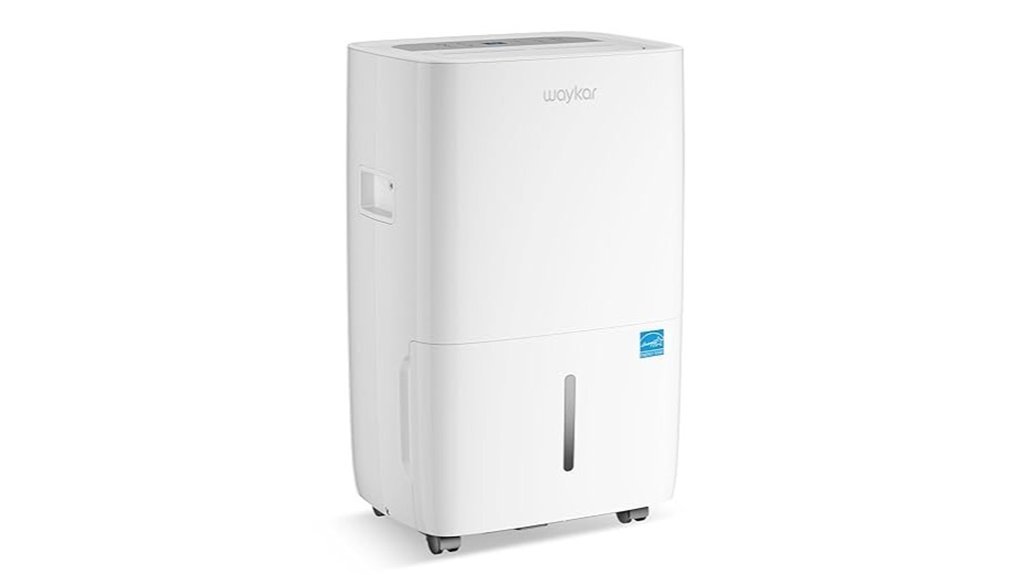
The Waykar JD025CE-80 is marketed as an 80-pint dehumidifier based on hot, humid test conditions. More importantly for comparison, the current ENERGY STAR listing identifies a standardized water-removal capacity of 24.93 pints per day. It includes automatic humidity control, a removable tank, a washable filter, and a drain-hose connection for continuous gravity drainage.
Best For: Large or persistently damp residential spaces with a floor drain, sump, or other discharge point below the hose outlet.
Why You’ll Like It:
- Standardized capacity and ENERGY STAR status can be checked by exact model number.
- Automatic humidistat operation reduces unnecessary continuous compressor use.
- Tank and gravity-hose drainage support temporary or permanent placement.
Who Should Avoid It:
- Anyone who needs condensate lifted to a sink or drain above the machine.
- Buyers expecting 80 pints per day under ordinary basement conditions.
Yaufey 80-Pint Dehumidifier for Large Spaces
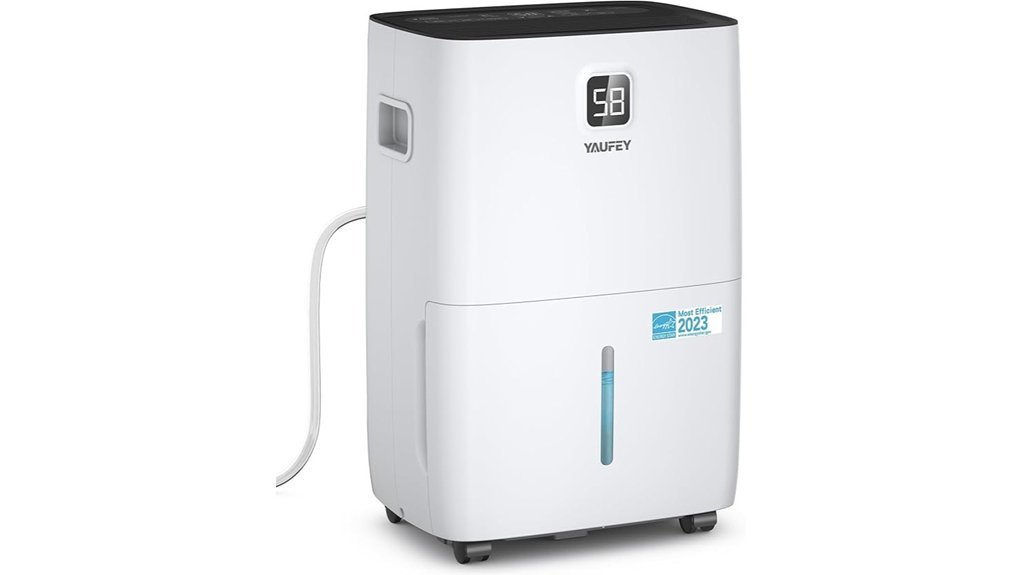
The Yaufey JD025Q-80 listing advertises up to 80 pints per day at 95°F and 90% relative humidity, along with coverage up to 5,000 sq. ft. It includes a humidistat, timer, bucket, and hose connection for continuous gravity drainage. The exact standardized capacity and current ENERGY STAR status were not independently confirmed for this ASIN, so compare the model label with current official records before relying on either claim.
Best For: Large basements, open-plan living areas, and laundry spaces with a convenient low drain.
Why You’ll Like It:
- High seller-listed extraction maximum for warm, very humid conditions.
- Automatic humidity control and continuous-drain support.
- Portable cabinet is easier to reposition than a fixed commercial unit.
Who Should Avoid It:
- Installations where the drain is higher than the hose outlet.
- Buyers who cannot confirm the exact current model and standardized rating.
Airzentti 155-Pint Commercial Dehumidifier with Pump
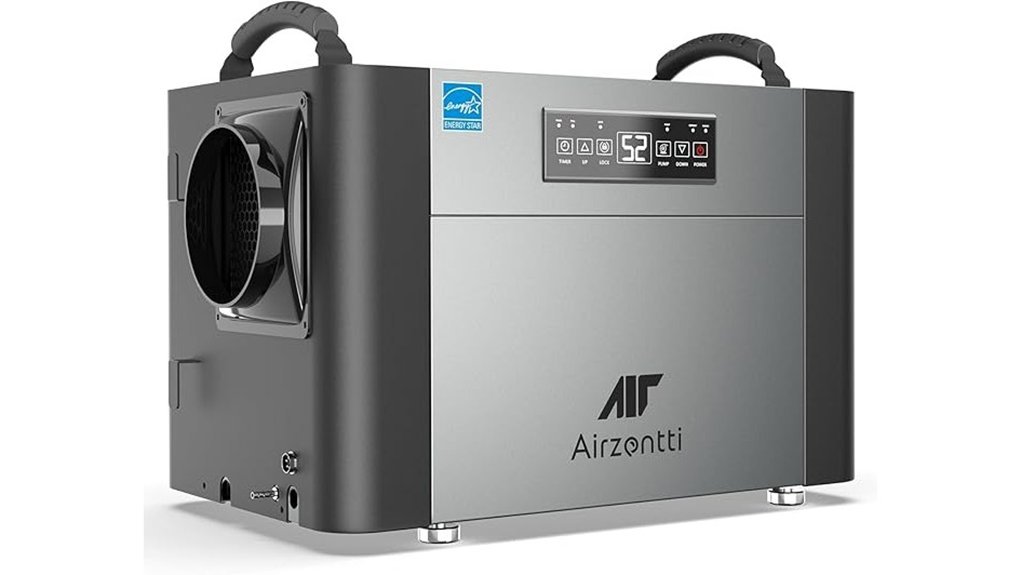
The Airzentti listing distinguishes between a 155-pint maximum under near-saturated conditions and approximately 70 pints per day under AHAM-style conditions. It also lists 220 CFM airflow, automatic defrost, gravity drainage, and a built-in condensate pump with a seller-listed lift of up to 16.4 feet.
The pump is the main reason to choose this model over a residential gravity-drain unit. It can route condensate toward a higher sink, discharge pipe, or other approved drain when a continuously descending hose route is unavailable.
Best For: Crawl spaces, restoration work, warehouses, large basements, and installations requiring pumped drainage.
Why You’ll Like It:
- Built-in pump can move water upward instead of relying only on gravity.
- AHAM-style capacity is disclosed alongside the larger near-saturated maximum.
- Commercial airflow, automatic defrost, and duct-collar support suit demanding spaces.
Who Should Avoid It:
- Bedrooms, small apartments, and other spaces where size, weight, and sound are major concerns.
- Buyers who need only mild seasonal humidity control.
KNKA 2500 Sq.Ft Dehumidifier with Drain Hose
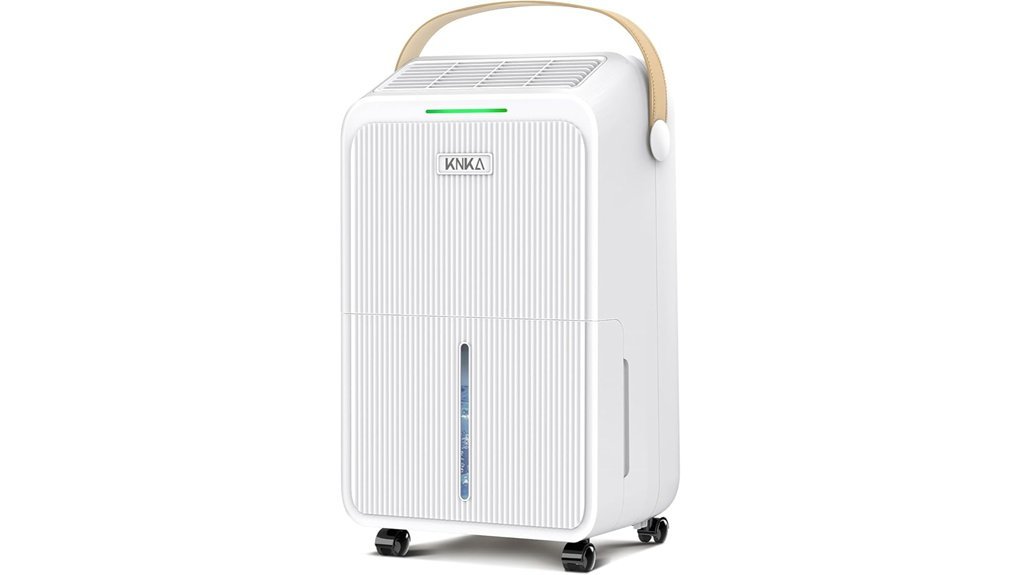
The KNKA listing advertises a maximum extraction rate of 34 pints per day and coverage up to 2,500 sq. ft. It includes DEHU, DRY, and continuous modes, an adjustable humidistat, a 3L bucket, wheels, and a connection for continuous gravity drainage.
The 34-pint, 2,500-square-foot, and 37 dB figures are seller specifications rather than verified standardized performance. Use the model for a moderate moisture load, not as a substitute for a larger standardized-capacity machine in a wet basement.
Best For: Basements, laundry rooms, and medium-size areas with a nearby floor drain.
Why You’ll Like It:
- Three operating modes cover automatic, laundry-drying, and continuous use.
- Gravity drainage reduces routine bucket emptying.
- Casters and a visible control panel simplify room-to-room use.
Who Should Avoid It:
- Buyers who need a built-in condensate pump.
- Spaces with active seepage or a high daily moisture load.
FreAire 2500 Sq.Ft Dehumidifier with Drain Hose
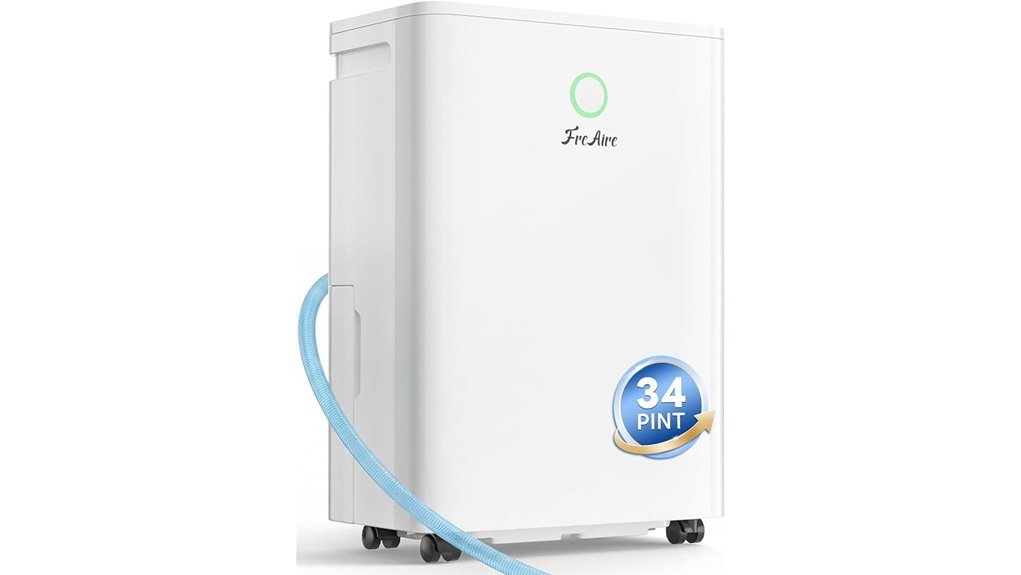
The FreAire listing advertises up to 34 pints per day, coverage up to 2,500 sq. ft., a humidistat, and a 6.56-foot drain hose. Its compact wheeled cabinet is easier to move than a commercial crawl-space model.
The longer hose provides placement flexibility, but it does not create pumping pressure. The complete route still needs to descend toward the drain without loops, pinches, or upward sections.
Best For: Users who need a movable compressor dehumidifier and a longer included gravity-drain hose.
Why You’ll Like It:
- 6.56-foot hose offers more routing flexibility than shorter included hoses.
- Humidity sensing and automatic controls simplify regular use.
- Bucket and continuous-drain operation are both available.
Who Should Avoid It:
- Rooms where the hose cannot maintain a continuous downward slope.
- Severe leaks or flooding that require repair and professional drying.
SEMKAP 32-Pint Dehumidifier for Basement and Home
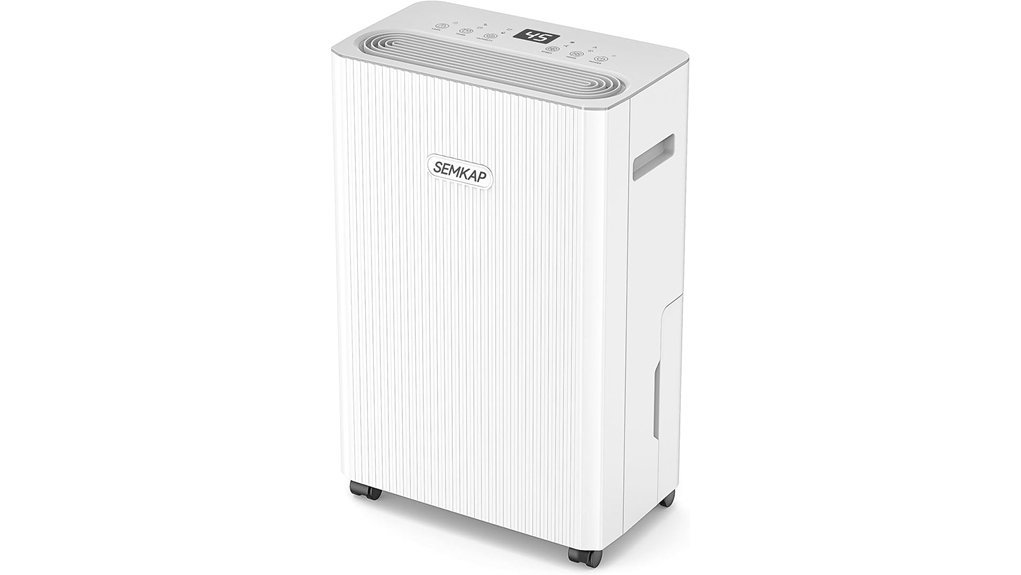
The SEMKAP PD8R-03ME listing advertises a 32-pint maximum under hot, humid test conditions, coverage up to 2,500 sq. ft., a 2.5L tank, continuous gravity drainage, automatic defrost, a child lock, and a 24-hour timer. Its standardized DOE capacity was not available in the reviewed product data.
Best For: Basements, offices, bedrooms, and laundry rooms where compact dimensions and hose drainage are priorities.
Why You’ll Like It:
- Automatic, continuous, and customized humidity modes.
- Drain hose, washable filter, timer, and automatic defrost.
- Casters and a recessed handle support room-to-room movement.
Who Should Avoid It:
- Commercial water-damage restoration projects.
- Buyers who need independently verified low-noise performance.
BANABIE 2500 Sq.Ft Dehumidifier with Smart Humidity Control
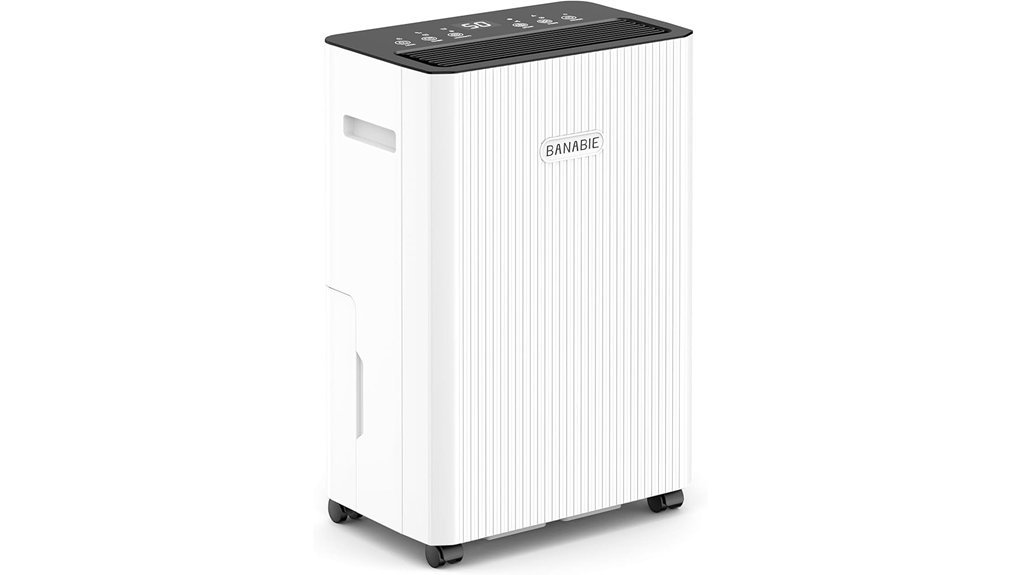
The BANABIE listing advertises up to 32 pints per day at 95°F and 90% relative humidity, coverage up to 2,500 sq. ft., a 2.5L tank, smart humidity control, and a gravity-drain connection. Auto, continuous, and custom modes cover common household use cases.
The advertised 32 dB sound level and coverage figure are seller specifications. Room acoustics, fan speed, flooring, temperature, and compressor cycling will affect actual sound and moisture removal.
Best For: Basements, bathrooms, bedrooms, and laundry rooms where compact mobility matters.
Why You’ll Like It:
- Automatic, continuous, and custom humidity-control modes.
- Continuous gravity drainage and full-tank shutoff.
- Portable cabinet with a seller-listed low fan-noise figure.
Who Should Avoid It:
- Installations requiring pumped drainage.
- Very large or severely damp areas needing verified commercial capacity.
NEWBULIG 30-Pint Dehumidifier with Drain Hose
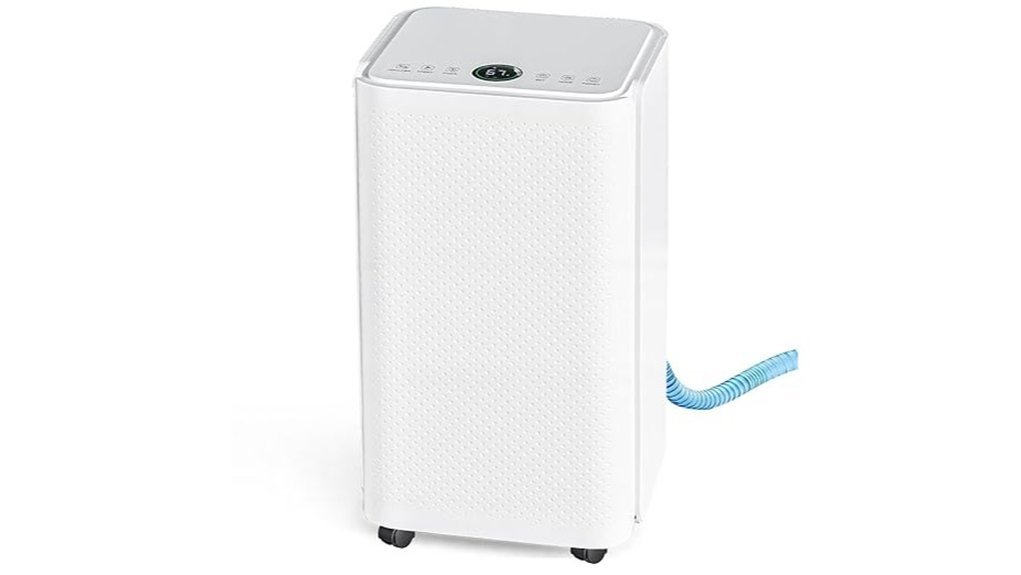
The NEWBULIG listing advertises up to 30 pints per day, coverage up to 2,000 sq. ft., a 0.53-gallon tank, a 3.28-foot drain hose, and operation below 38 dB. Auto, drying, sleep, and fan-only modes provide more control than a basic on-and-off model.
The capacity, coverage, and sound figures are seller specifications. Treat sleep mode as a convenience feature rather than a guarantee that compressor cycling will be inaudible.
Best For: Bedrooms, basements, and medium-size rooms where display visibility and sleep controls are useful.
Why You’ll Like It:
- Sleep mode and a color-coded humidity display.
- Continuous hose drainage and a washable filter.
- Casters, timer, automatic defrost, and automatic restart.
Who Should Avoid It:
- Large, heavily damp spaces needing higher standardized capacity.
- Users who require app control or a built-in pump.
Aiusevo AS280 1500 Sq. Ft. Dehumidifier
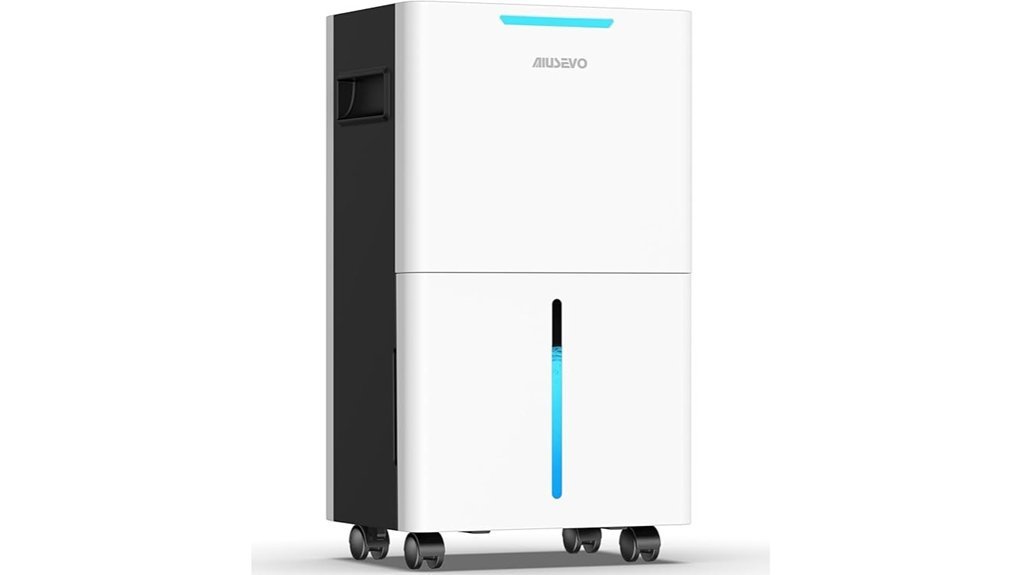
The Aiusevo AS280 listing states a maximum extraction rate of 21 pints per day at 95°F and 90% relative humidity, with coverage up to 1,500 sq. ft. It includes DEHU, DRY, and continuous modes, a 2L tank, adjustable humidity control, a timer, wheels, and a gravity-drain hose connection.
Best For: Smaller basements, bathrooms, bedrooms, and other rooms that need more output than a thermoelectric mini unit.
Why You’ll Like It:
- Compressor-based moisture removal in a relatively compact cabinet.
- Separate normal, clothes-drying, and continuous modes.
- Gravity drainage and automatic full-tank shutoff.
Who Should Avoid It:
- Large or consistently wet basements.
- Rooms without adequate clearance around the air inlet and outlet.
Waykar PD160B Dehumidifier
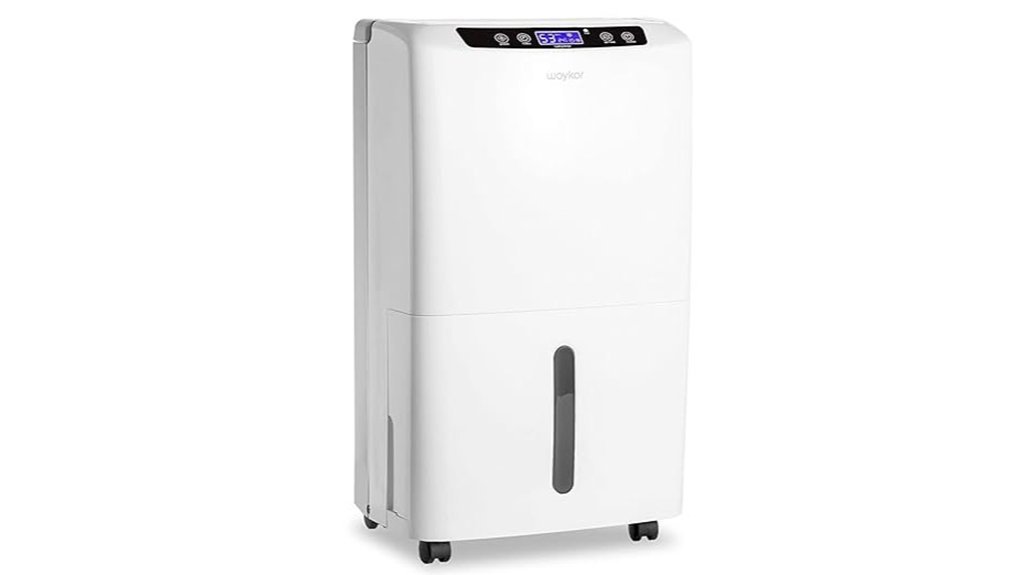
The Waykar PD160B is frequently marketed with a 34-pint high-condition maximum and coverage up to 2,000 sq. ft. However, the current ENERGY STAR Product Finder lists its standardized water-removal capacity at 9.81 pints per day, with an Integrated Energy Factor of 1.73 L/kWh.
That verified rating makes the PD160B better suited to a small or moderate room than a wet, full-size basement. It includes an adjustable humidistat, bucket drainage, a washable filter, and a hose connection for continuous gravity drainage.
Best For: Small living areas, bedrooms, bathrooms, and moderately damp rooms with a nearby low drain.
Why You’ll Like It:
- Exact model appears in the current ENERGY STAR Product Finder.
- Automatic humidity control and gravity drainage reduce daily handling.
- Smaller capacity can be more appropriate for localized moisture loads.
Who Should Avoid It:
- Wet basements requiring a true 20- to 50-pint standardized capacity.
- Rooms where condensate must be pumped upward.
KeepGlad 98oz Compact Dehumidifier with Drain Hose
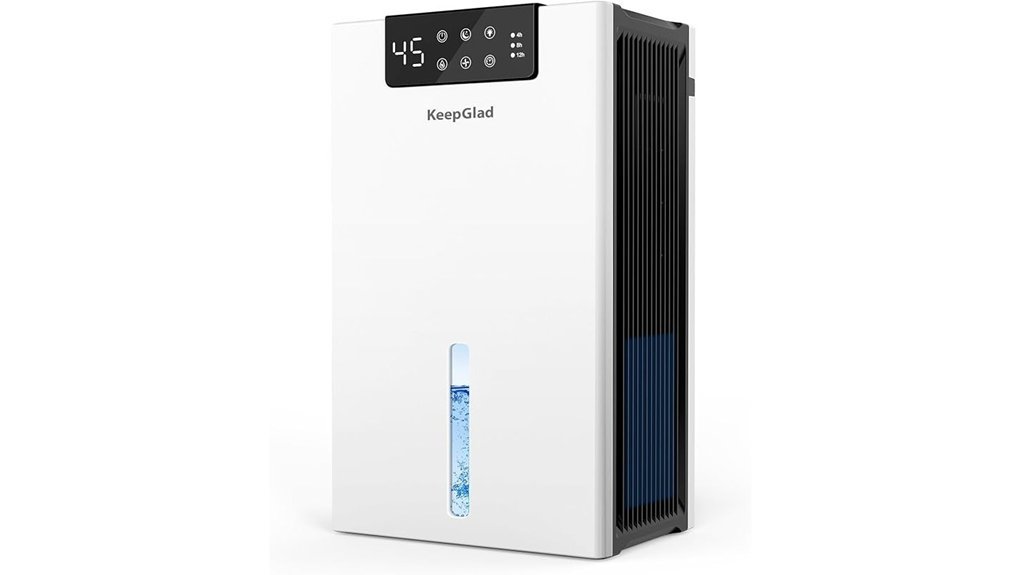
The KeepGlad listing identifies a 98-ounce tank, drain-hose connection, humidity display, timer, multiple fan settings, washable filter, and automatic shutoff. Its seller-listed extraction rate is approximately 2.8 pints per day, so it belongs in a different performance class from compressor dehumidifiers.
The advertised 1,000-square-foot coverage should be treated as a marketing ceiling rather than a recommended sizing figure. Use it for localized mild humidity, not a wet basement or whole-home moisture problem.
Best For: Bathrooms, campers, closets, bedrooms, and other small areas with light condensation.
Why You’ll Like It:
- Drain-hose support is useful for a mini thermoelectric model.
- Humidity display, timer, fan settings, and automatic shutoff.
- Large tank relative to its daily extraction rate.
Who Should Avoid It:
- Wet basements, large rooms, and whole-home humidity problems.
- Cool locations where thermoelectric extraction commonly falls.
Levoair 68oz Mini Dehumidifier with Drain Hose
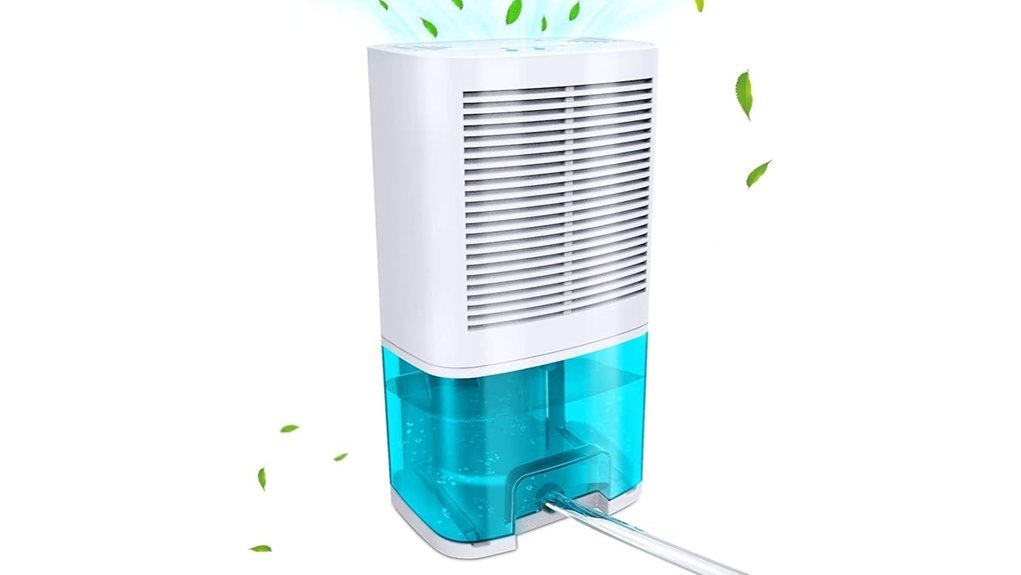
The Levoair YXTX-607D listing advertises a 68-ounce tank, collection up to 35 ounces per day at warm, humid test conditions, and a 5-foot continuous-drain hose. Its compact thermoelectric design suits localized humidity control, but it cannot match a compressor model in a damp basement.
Best For: Bathrooms, RVs, boats, closets, and small bedrooms with mild humidity.
Why You’ll Like It:
- Five-foot hose supports low-maintenance drainage.
- Compact dimensions make it easier to place in tight spaces.
- Automatic shutoff helps prevent bucket overflow when the hose is not used.
Who Should Avoid It:
- Cold rooms and serious basement dampness.
- Buyers expecting whole-room compressor performance from a mini unit.
Factors to Consider When Choosing a Continuous Dehumidifier
A drain hose or pump can reduce bucket emptying, but it does not increase moisture-removal capacity. Match the machine to the moisture load first, then verify that the drainage route is safe and practical.
Compare Standardized Capacity First
Look for a current DOE, ENERGY STAR, or clearly identified AHAM-style capacity. A seller maximum measured at 95°F and 90% relative humidity can be much higher than performance in a cool basement. When no standardized rating is available, treat the headline capacity as a comparison claim rather than a guaranteed daily result.
Coverage Area and Moisture Load
Square-foot figures are rough marketing guides. A cool basement with seepage, wet walls, laundry drying, or frequent door openings can require more capacity than a warmer room of the same size. Also consider the starting humidity, outdoor air leakage, room layout, and whether the space is slightly damp, very damp, or wet.
Repair leaks, improve exterior drainage, and dry water-damaged materials promptly. A dehumidifier can control airborne moisture but cannot repair the source of water intrusion.
Gravity Drainage vs. Built-In Pump
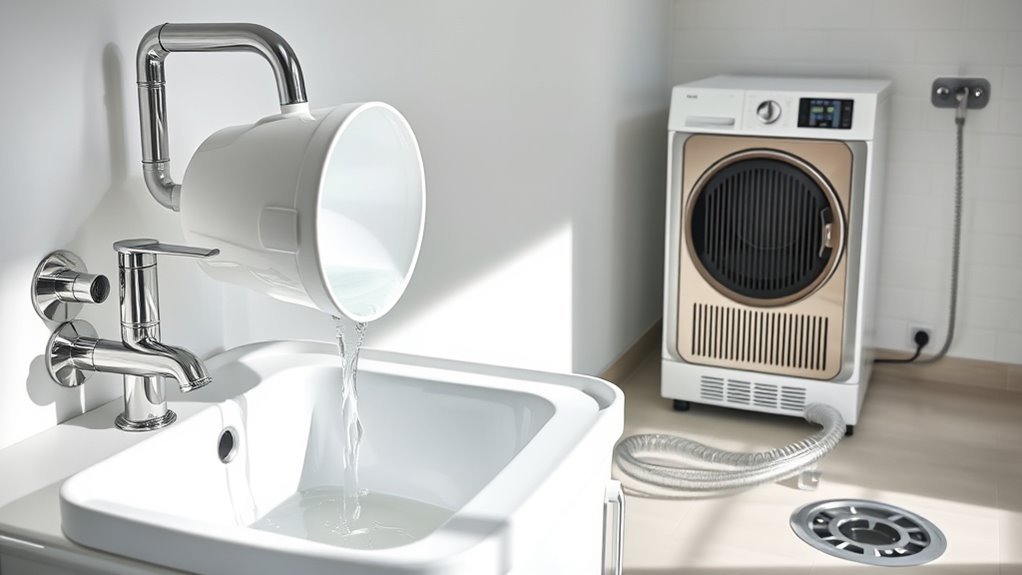
Gravity drainage works only when the hose can run continuously downhill from the outlet to a floor drain, sump, shower, or other approved discharge point. Avoid upward sections, tight loops, kinks, and submerged hose ends.
A built-in pump is preferable when the drain is above the machine or the route cannot maintain a downward slope. Confirm the stated lift height and maximum hose length in the manual.
Continuous Mode vs. Humidistat Mode
Some products use “continuous” to describe non-stop compressor operation, while others use it only to describe hose drainage. These are different features. For everyday use, an automatic humidistat is usually more efficient because the compressor can cycle after reaching the selected humidity.
Operating Temperature and Defrost
Compressor models remove less water as the room becomes cooler and may need automatic defrost to protect the coils. Thermoelectric mini units also lose substantial output in cool conditions. Check the manual’s operating-temperature range before choosing a model for a basement, garage, boat, or seasonal property.
Noise and Placement
Seller-listed decibel figures are not always measured under comparable conditions. Fan speed, compressor cycling, hard floors, nearby walls, and vibration can change perceived noise. Leave the required clearance around the unit, keep the filter clean, and place it on a level surface.
Energy Efficiency and Model Verification
Match the exact brand and model number in the current ENERGY STAR Product Finder instead of relying on a general brand claim. Compare the Integrated Energy Factor, or IEF, when available. A properly sized unit with automatic humidity control may use less energy than an undersized model that runs continuously.
Before You Buy Checklist
- Measure the room and note its normal and peak humidity.
- Identify whether the area is slightly damp, very damp, or actively wet.
- Determine whether the capacity is a standardized rating or a hot-condition seller maximum.
- Confirm whether gravity drainage will work or a pump is required.
- Check the hose diameter, included hose length, pump lift, and allowed discharge route.
- Review the minimum operating temperature for cool basements and garages.
- Confirm filter access, bucket size, warranty terms, and exact model number.
- Use a separate hygrometer to check room humidity instead of relying only on the built-in sensor.
Continuous-operation safety note: A drain hose or pump reduces bucket maintenance but does not eliminate the risk of a blocked hose, loose connection, pump failure, power interruption, or leak. Test the complete setup while present and inspect it regularly.
Electrical safety: Keep the unit upright, use a properly grounded outlet, keep the plug and cord dry, and follow the manufacturer’s manual. Do not use an extension cord unless the manufacturer specifically permits it.
Water safety: Dehumidifier condensate is not drinking water.
Health and mold note: Moisture control may make conditions less favorable for mold and dust mites, but a dehumidifier does not remove existing mold or replace medical care. Correct leaks and water damage directly.
Frequently Asked Questions
What Does Continuous Drain Mean?
Continuous drain means collected condensate can leave through a hose or pump instead of remaining in the bucket. It does not always mean the compressor runs continuously. Check whether the product has a separate continuous operating mode and an automatic humidistat mode.
Can a Gravity Drain Hose Run Uphill?
No. A gravity hose requires an uninterrupted downward route. Choose a model with a built-in pump or an approved external condensate pump when the drain is above the dehumidifier outlet.
Why Is the Standardized Pint Rating Lower Than the Listing Headline?
Water removal falls as temperature and humidity decrease. A maximum measured in very hot, humid air can be much higher than a DOE or AHAM-style result measured under cooler, more realistic conditions.
What Is the Ideal Humidity Level for My Home?
A practical target for many homes is approximately 30% to 50% relative humidity. In cold weather, a lower setting may help reduce window condensation. Use a separate hygrometer and avoid making the room unnecessarily dry.
How Do I Maintain a Continuous-Drain Dehumidifier?
Clean the filter according to the manual, inspect the hose for algae, buildup, kinks, and loose fittings, clean the bucket even when it is rarely used, and keep the air inlet and outlet clear. Test the pump periodically if the unit has one.
Can a Dehumidifier Help With Allergies or Asthma?
Controlling excess moisture may make the environment less favorable for mold and dust mites. A dehumidifier does not remove every allergen, clean existing mold, or replace medical diagnosis and treatment.
Should I Use Continuous Mode All the Time?
Usually not. Automatic humidistat mode is more appropriate for routine moisture control because it allows the compressor to cycle after reaching the selected humidity. Continuous compressor operation is more useful for short-term drying or unusually high moisture loads.
Can I Leave a Dehumidifier Running Unattended?
Follow the manufacturer’s instructions. Before extended operation, test the drain route, confirm that the hose cannot move or clog, verify pump operation where applicable, and inspect the power cord and outlet. Check the setup regularly even when it appears to be draining correctly.
Final Recommendation
For a large residential basement or open room with a floor drain, the Waykar JD025CE-80 is the strongest starting point because its exact model has a verified 24.93-pint ENERGY STAR capacity. The Yaufey JD025Q-80 is another large-space gravity-drain option, but its standardized rating should be confirmed before purchase.
Choose the Airzentti 155-Pint Commercial when water must be pumped upward or the space genuinely needs commercial airflow. For a moderate moisture load, the KNKA, FreAire, SEMKAP, BANABIE, and NEWBULIG models provide lower-cost compressor options, although their headline capacities remain seller-listed maxima.
Reserve the KeepGlad and Levoair mini units for localized mild humidity. Whichever model you choose, verify the exact model number, standardized capacity, drainage requirements, operating-temperature range, and current warranty before ordering.

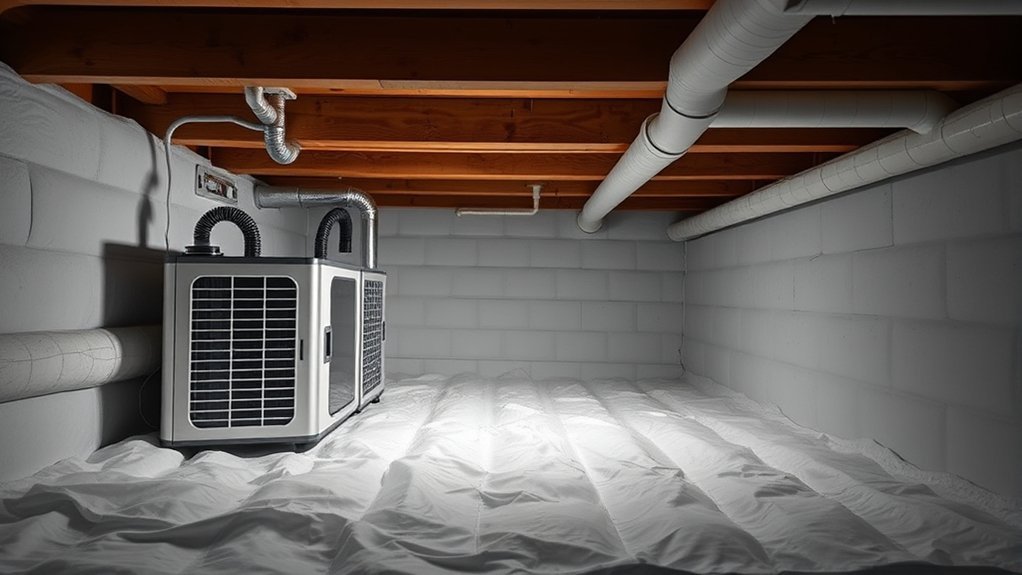
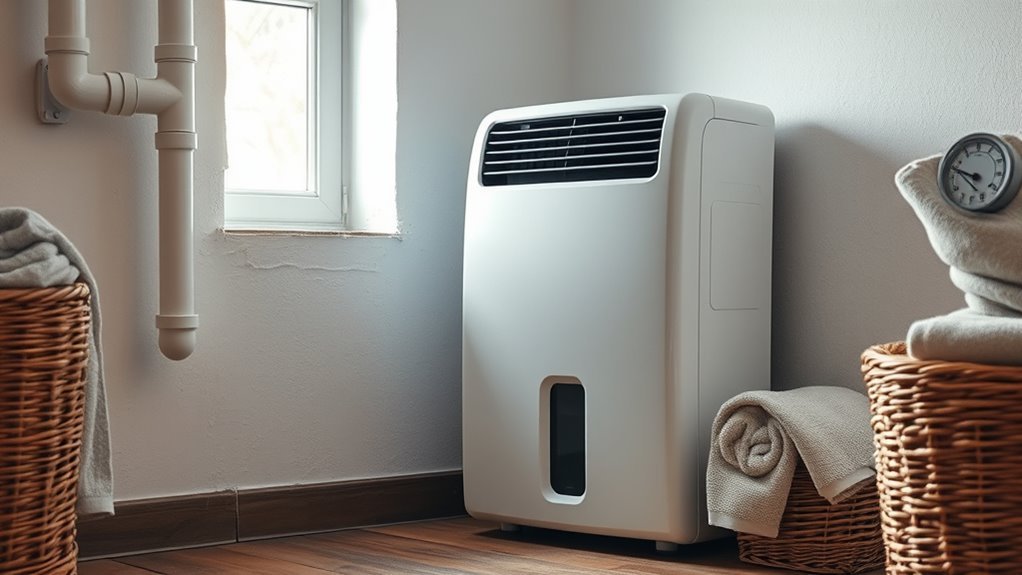
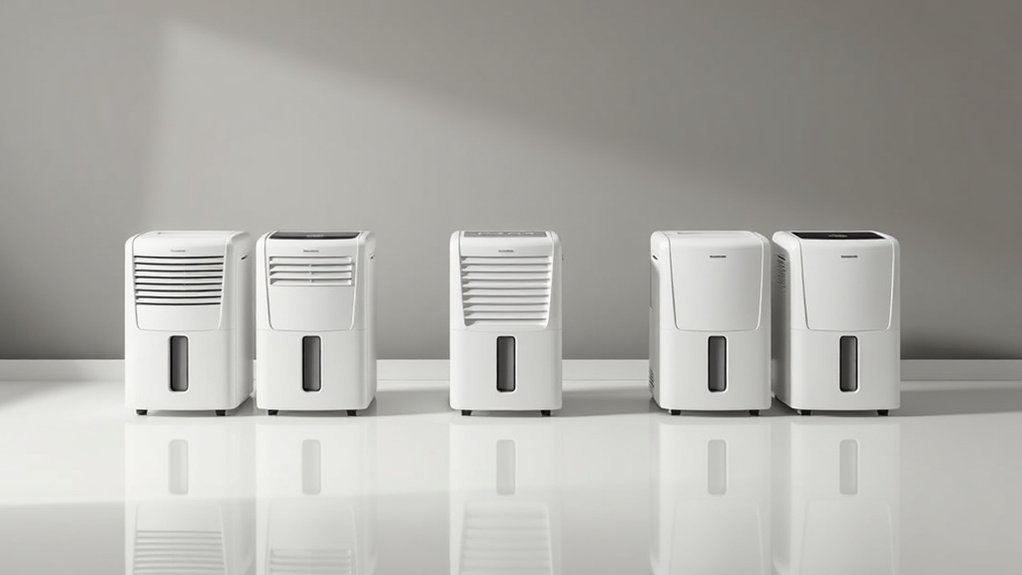
[…] Portable dehumidifiers are cheaper and better for one room, while whole-home systems offer automatic drainage and ducted coverage. […]
[…] works better outside the tent in the lung room. Size it by moisture load, not tent size alone. Use continuous drainage, keep air moving through the canopy, and adjust humidity targets by plant stage, temperature, and […]