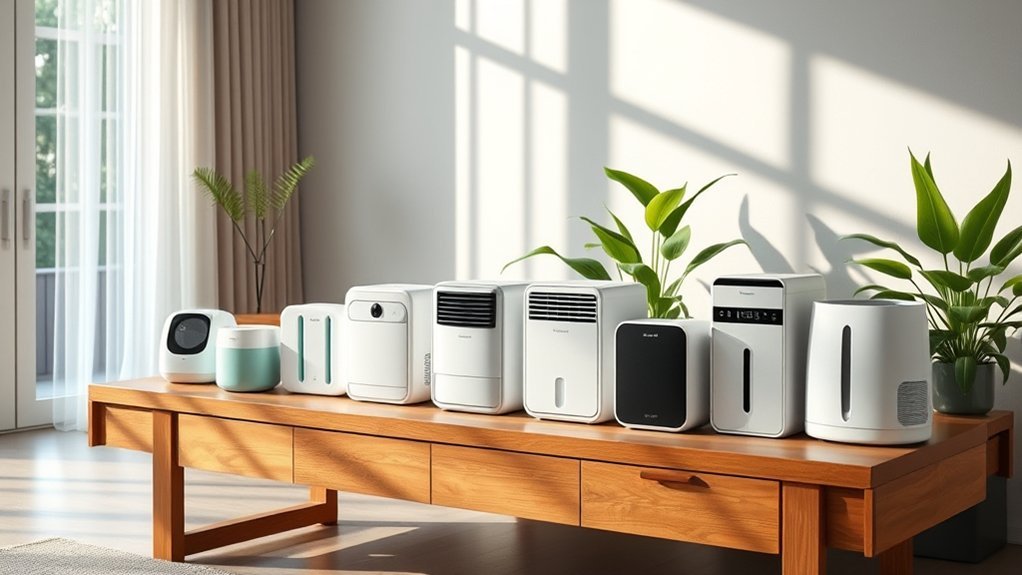
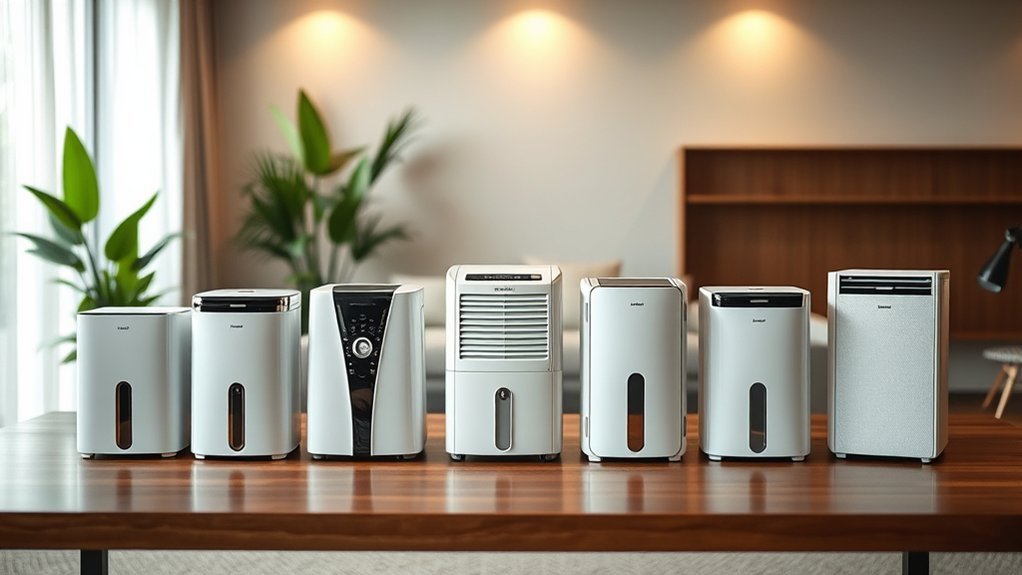
Looking for the best dehumidifiers for basements without a tank in 2026? In most homes, “without a tank” means you want a basement dehumidifier with a drain hose or continuous drainage option, so you do not have to keep emptying a bucket by hand. That matters most in damp basements, laundry rooms, crawl spaces, and finished lower levels where moisture can build up fast.
This guide compares 10 dehumidifiers that focus on basement moisture control, continuous drainage, smart humidity settings, portability, and easy maintenance. You will find compact 21-pint models for smaller rooms, mid-size 32 to 50-pint options for everyday basement use, and high-capacity Energy Star picks for larger spaces.
Before you buy: Match the dehumidifier to your basement size, humidity level, drain location, and noise tolerance. If your floor drain or sink is lower than the drain port, gravity drainage may work. If the drain point is higher, you may need a model with a built-in pump or a separate condensate pump.
Quick Picks
- Best for large basements: DECIUU Max 100 Pint Energy Star Dehumidifier
- Best quiet large-space option: AEOCKY 3500 Sq.Ft Dehumidifier with Drain Hose
- Best smart-control option: Midea Cube 20 Pint Dehumidifier with Smart Control
- Best compact basement option: PLUSCENT 21 Pint Portable Dehumidifier for Home
- Best mid-size continuous-drain pick: KNKA 2500 Sq.Ft Dehumidifier with Drain Hose
Quick Verdict: For the least manual work, prioritize continuous drainage, hose length, and whether your basement drain is lower than the dehumidifier outlet. For heavy dampness, choose a higher pint rating. For a finished basement, noise level and smart humidity control matter more.
Basement Dehumidifier Comparison Table
| Product | Stated Coverage | Stated Moisture Removal | Drainage Setup | Best For | CTA |
|---|---|---|---|---|---|
| Aiusevo AS280 1500 Sq. ft Dehumidifier | Up to 1,500 sq. ft. | Up to 21 pints/day | Tank or continuous drainage | Medium rooms and smaller basements | Check Price on Amazon |
| AEOCKY 3500 Sq.Ft Dehumidifier | Up to 3,500 sq. ft. | Up to 50 pints/day | Built-in drain hose | Large basements, RVs, and laundry rooms | Check Price on Amazon |
| PLUSCENT 21 Pint Portable Dehumidifier | Up to 1,500 sq. ft. | Up to 21 pints/day | Tank or continuous drainage | Compact spaces and bedrooms | Check Price on Amazon |
| KNKA 2500 Sq.Ft Dehumidifier | Up to 2,500 sq. ft. | Up to 34 pints/day | 3.28 ft drain hose | Mid-size basements and living areas | Check Price on Amazon |
| Midea Cube 20 Pint Dehumidifier | Up to 1,500 sq. ft. | Up to 20 pints/day | Large tank or continuous drain | Smart-home users and finished basements | Check Price on Amazon |
| PLUSCENT 32 Pint Dehumidifier | Up to 2,500 sq. ft. | Up to 32 pints/day | 39.4-inch gravity hose | Bedrooms, basements, and laundry drying | Check Price on Amazon |
| Yaufey Energy Star Dehumidifier | Up to 5,000 sq. ft. | Up to 80 pints/day | Manual or continuous drainage | Large basements and offices | Check Price on Amazon |
| DECIUU Max 100 Pint Energy Star Dehumidifier | Up to 5,000 sq. ft. | Up to 100 pints/day | Garden hose adapter or tank | Very damp or large basements | Check Price on Amazon |
| 2500 Sq.Ft Dehumidifier with Smart Humidity Control | Up to 2,500 sq. ft. | Up to 32 pints/day | Gravity drainage or tank | Quiet use in offices, bedrooms, and basements | Check Price on Amazon |
| GoGuess 1600 Sq.ft Dehumidifier | Up to 1,600 sq. ft. | Up to 21 pints/day | 3.28 ft drain hose | Smaller basements and daily moisture control | Check Price on Amazon |
1500 Sq. ft Dehumidifier for Home and Basement
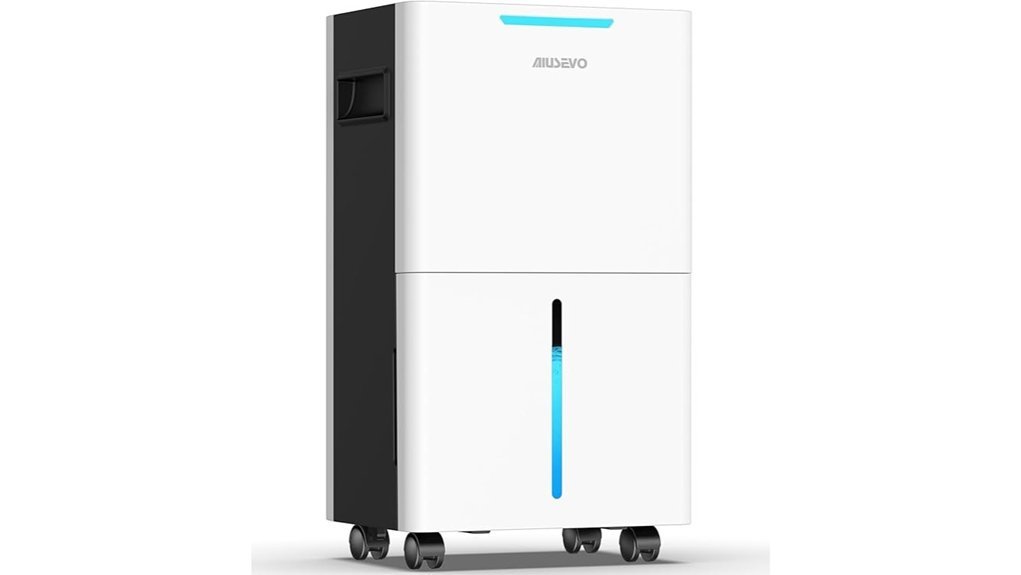
When you need a simple basement dehumidifier for a medium-size space, the Aiusevo AS280 1500 sq. ft. model is a practical place to start. It is listed for areas up to 1,500 sq. ft. and removes up to 21 pints of moisture daily, which makes it a better fit for smaller basements, bedrooms, laundry rooms, and living areas than for extremely wet, oversized spaces.
The DEHU mode helps with general humidity control, while the DRY mode is useful when you want extra help drying laundry. The unit also includes an automatic shutoff feature and a water level indicator, so it is easier to manage if you are using the tank instead of the continuous drain option.
Best For: Those looking to reduce humidity in medium-sized spaces like basements, bedrooms, and living areas.
Why it may work for you: Choose this model if your basement is not huge and you want a portable dehumidifier with basic modes, automatic shutoff, and a manageable daily moisture-removal rating.
Who should skip it: Skip it if your basement is very damp, larger than 1,500 sq. ft., or needs a high-capacity unit that can run hard every day.
Pros:
- Versatile Operation Modes: Offers multiple settings for specific needs, including laundry drying and continuous operation.
- Portable Design: Weighing only 15.3 pounds with 360° wheels, it’s easy to move from room to room.
- User-Friendly Features: Includes automatic shutoff, digital display, and a water level indicator for hassle-free maintenance.
Cons:
- Limited Capacity: Dehumidification capacity of 21 pints per day may not suffice for extremely humid environments.
- Manual Drainage Option: Requires regular emptying of the 2L water tank if not using continuous drainage.
- Noise Level: While designed for quiet operation, it may still produce noticeable sound in very quiet spaces.
AEOCKY 3500 Sq.Ft Dehumidifier with Drain Hose
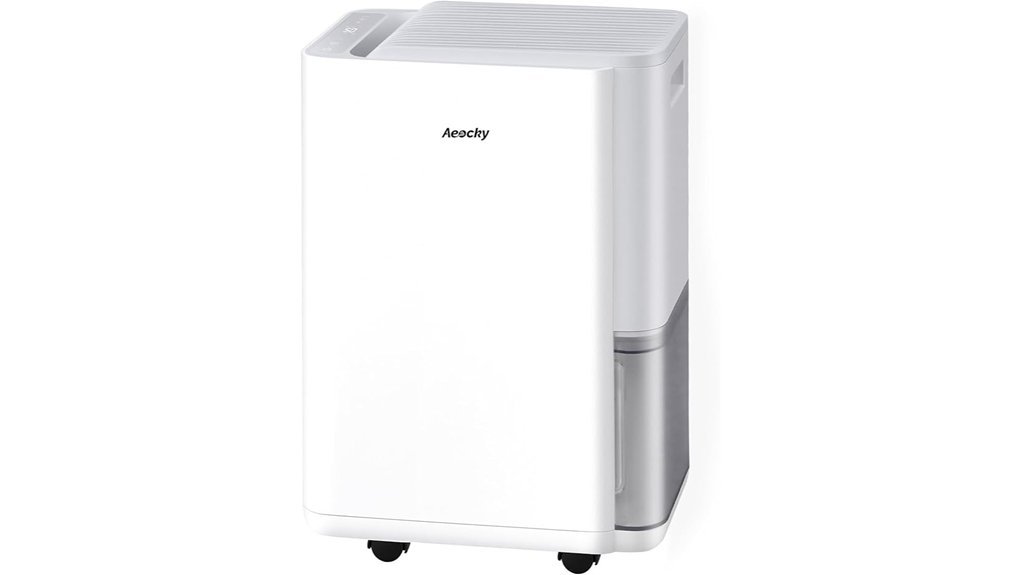
The AEOCKY 3500 Sq.Ft Dehumidifier is a strong match if you need efficient moisture control in a larger basement, RV, laundry room, or damp living area. It is listed to remove up to 50 pints of moisture daily, which gives it more breathing room than the smaller 20 to 21-pint options in this roundup.
Its compact design helps it fit into tighter spaces, while the advanced brushless DC motor is designed for quieter operation. You also get adjustable humidity control, multiple operating modes, and a built-in drain hose, which is the key feature for buyers who do not want to rely on manual tank emptying.
Best For: Those seeking an efficient and quiet dehumidifier for large spaces, such as basements, RVs, or laundry rooms.
Why it may work for you: This is one of the better fits here for buyers who want a larger-capacity dehumidifier with a hose included and controls that can be adjusted for different humidity levels.
Who should skip it: Skip it if your basement is small and only needs occasional moisture control, since a lower-capacity unit may be easier to store and move.
Pros:
- High moisture removal capacity, efficiently handling up to 50 pints per day.
- User-friendly features like adjustable humidity control and multiple operating modes.
- Durable design with high-quality components and an extended 3-year warranty.
Cons:
- Compact size may not suit those needing a larger unit for extremely expansive areas.
- Initial investment might be higher compared to basic dehumidifiers.
- Requires regular maintenance to ensure optimal performance, despite the built-in drain hose.
PLUSCENT 21 Pint Portable Dehumidifier for Home
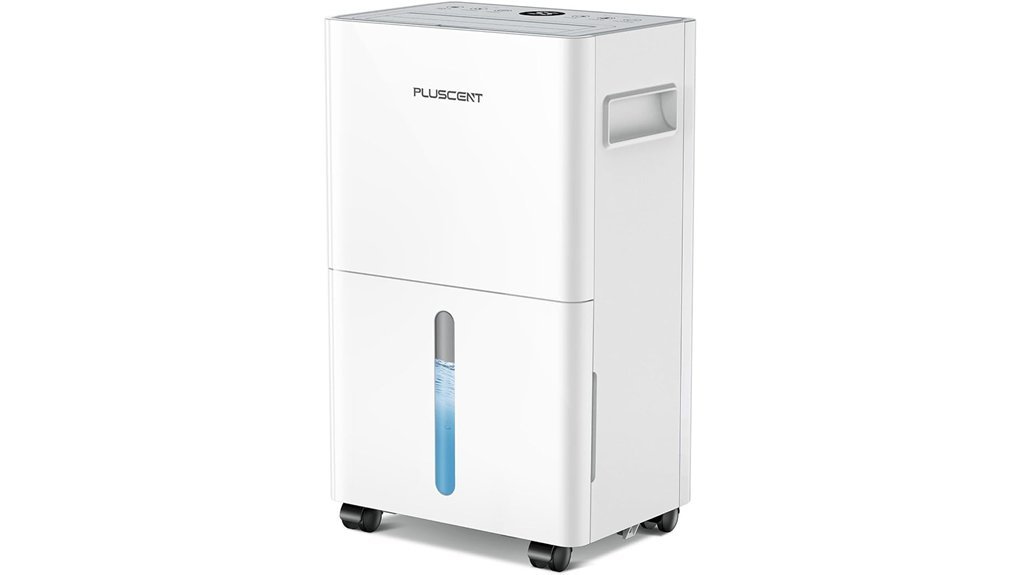
If you are looking for an efficient solution for basement humidity in a smaller area, the PLUSCENT 21 Pint Portable Dehumidifier is worth considering. It is listed for spaces up to 1,500 sq. ft. and removes up to 21 pints per day, making it a practical fit for small basements, bedrooms, offices, and laundry rooms.
The high-efficiency compressor technology is designed for high-humidity conditions, while Continuous and Laundry Mode give you more flexibility than a basic one-mode unit. The integrated humidity sensor helps with real-time monitoring, and the auto-defrost feature can help maintain performance in cooler temperatures. The 1.5L removable tank is useful for portable use, while the continuous drainage option is better for basement setups.
Best For: Individuals seeking an effective and portable solution for managing humidity in spaces up to 1,500 sq. ft.
Why it may work for you: Pick this model if you need a smaller dehumidifier that can move between rooms and still offers a continuous drain option.
Who should skip it: Skip it if you have a large, wet basement where the 1.5L tank and 21-pint capacity may feel limiting.
Pros:
- High efficiency: Effectively removes moisture in high-humidity conditions.
- Multiple modes: Offers tailored settings for various needs, including laundry drying.
- Portable design: Easy to move with 360° wheels, making it convenient for different areas.
Cons:
- Capacity limitation: May not be sufficient for larger spaces over 1,500 sq. ft.
- Tank size: The 1.5L tank may require frequent emptying in extremely humid conditions.
- Noise level: While designed for quiet operation, it may still be noticeable in very quiet environments.
KNKA 2500 Sq.Ft Dehumidifier with Drain Hose
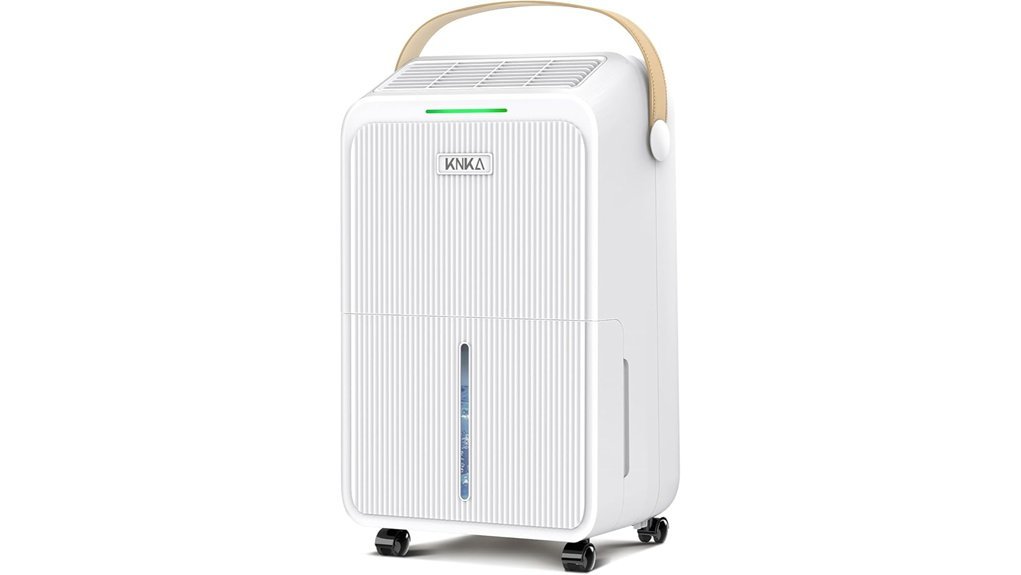
For homeowners tackling regular basement humidity, the KNKA 2500 Sq.Ft Dehumidifier gives you a useful balance of coverage, capacity, and drainage convenience. It is listed to remove up to 34 pints of moisture daily and cover spaces up to 2,500 square feet, including basements, living rooms, and laundry areas.
The three smart modes, DEHU, DRY, and CONT, let you adjust the unit for daily humidity control, faster clothes drying, or continuous operation. The included 3.28 ft drain hose supports continuous drainage, which is exactly what most basement buyers want when they are trying to avoid frequent tank emptying. Its listed 37dB operating level also makes it a better fit for shared or finished spaces.
Best For: Homeowners looking to effectively manage humidity levels in spaces up to 2,500 square feet, such as basements, living rooms, and laundry rooms.
Why it may work for you: This is a strong mid-size option if you want a drain hose included, a quieter listed noise level, and enough capacity for a damp basement that is not massive.
Who should skip it: Skip it if your drain location is far from the unit, since the included hose length may not suit every basement layout.
Pros:
- Quiet Operation: At just 37dB, it operates more quietly than a conversation, making it suitable for any room.
- Smart Modes: Offers three operational modes for customized humidity control and quick drying of clothes.
- Convenient Drainage: Features a 3.28 ft drain hose for continuous drainage, eliminating the need for frequent tank emptying.
Cons:
- Limited Tank Capacity: The 3-liter tank may require frequent manual emptying if not using the continuous drainage option.
- Weight and Size: The unit’s dimensions and weight may make it less portable for some users.
- Wattage Consumption: At 230 watts, it may increase electricity bills during extended use.
Midea Cube 20 Pint Dehumidifier with Smart Control
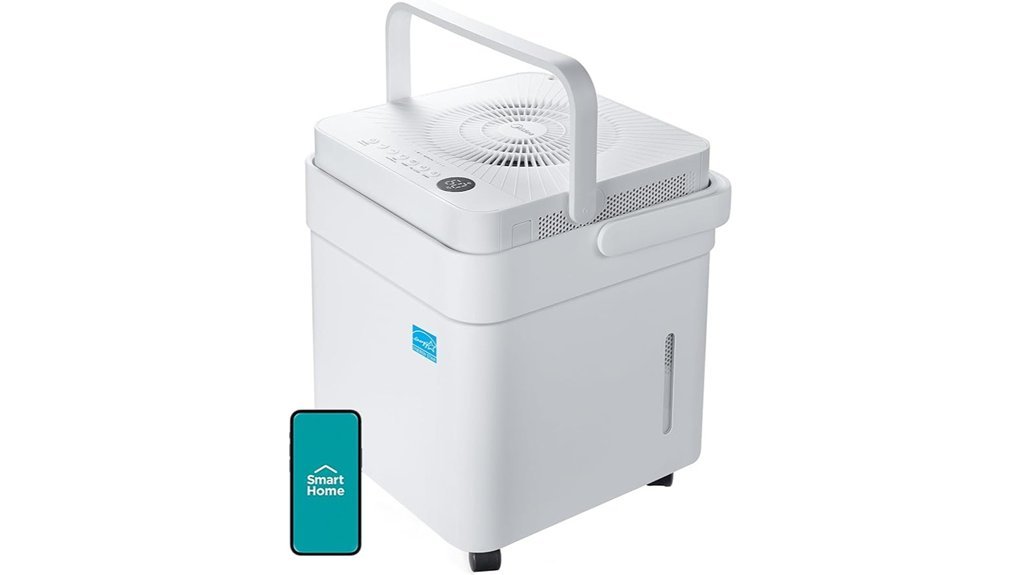
Searching for an efficient solution to humidity issues with smart control? The Midea Cube 20 Pint Dehumidifier is a useful option for buyers who want app-based monitoring, a larger water tank, and a compact storage design. It is listed to cover up to 1,500 sq. ft. and collect 20 pints of moisture daily.
The lift-and-twist design helps reduce storage space when the unit is not in use, and the 3.2-gallon tank means less frequent emptying compared with smaller-tank models. With Wi-Fi capabilities, you can monitor and control it through a smartphone or voice assistants like Alexa. It also includes a continuous drain option, three fan speeds, and a washable filter for easier maintenance.
Best For: Homeowners looking to efficiently manage humidity in medium to large spaces up to 1,500 sq. ft.
Why it may work for you: Choose this one if you want smart controls and a larger tank backup, but still want the option to drain continuously when the unit is placed near a drain.
Who should skip it: Skip it if you do not want Wi-Fi setup or if you prefer a simpler plug-in unit with fewer smart features.
Pros:
- Wi-Fi enabled for remote control and monitoring through a smartphone app.
- Compact design allows for easy storage when not in use.
- Large water tank reduces the frequency of emptying, enhancing convenience.
Cons:
- Price point may be higher compared to traditional dehumidifiers.
- Requires Wi-Fi for full smart features, which may not suit all users.
- Initial setup can be complicated for some users unfamiliar with smart devices.
PLUSCENT 32 Pint Dehumidifier for Home and Basement
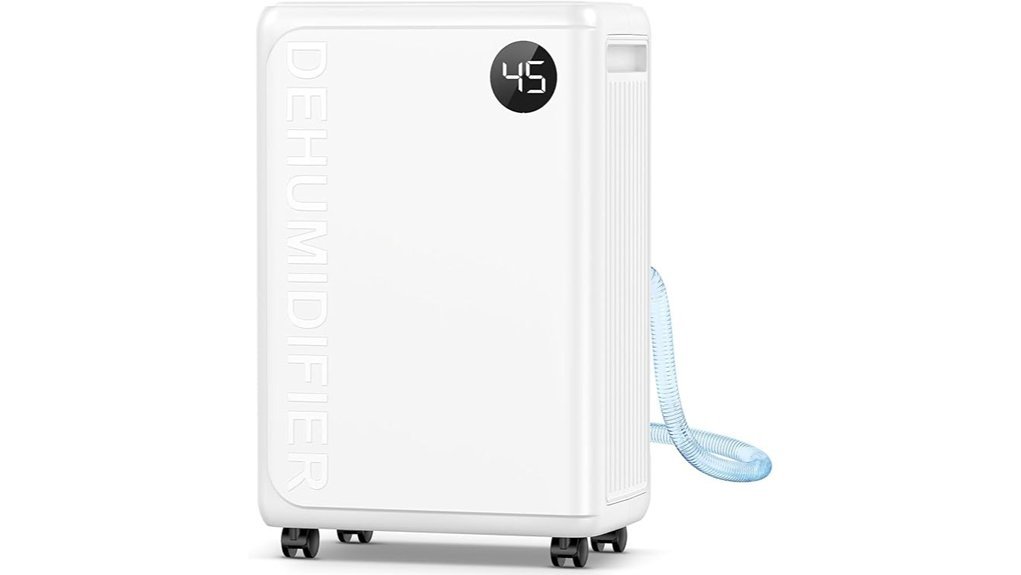
The PLUSCENT 32 Pint Dehumidifier is a solid fit for homeowners dealing with moisture in basements and larger living spaces. With a listed capacity to remove up to 32 pints of moisture daily, it is designed for areas up to 2,500 sq. ft.
You can choose from three operational modes, including a drying option for laundry. The 24-hour timer, automatic defrost, overflow protection, and listed quiet operation at 39-42 dB make it more practical for bedrooms, finished basements, and multi-use rooms. The included 39.4-inch gravity hose supports continuous drainage, while wheels and handles help with moving it between spaces.
Best For: Homeowners seeking an effective solution for moisture control in basements and large living spaces.
Why it may work for you: This model makes sense if you want a mid-size dehumidifier with timer controls, laundry drying support, and a hose for hands-off drainage.
Who should skip it: Skip it if your drain is not close to the unit or if gravity drainage will not work in your basement layout.
Pros:
- High Capacity: Removes up to 32 pints of moisture daily, suitable for spaces up to 2,500 sq. ft.
- Quiet Operation: Runs at a low noise level of 39-42 dB, making it ideal for bedrooms and living areas.
- Convenient Features: Includes a 24-hour timer, multiple operational modes, and a continuous drainage option for hassle-free use.
Cons:
- Limited Tank Size: The 2L water tank may require frequent emptying in extremely humid conditions.
- Gravity Drainage Requirement: Continuous drainage relies on gravity, which may not be feasible in all setups.
- Initial Cost: Higher upfront investment compared to smaller, less powerful dehumidifiers.
Yaufey Energy Star Dehumidifier for Home (80 Pints)
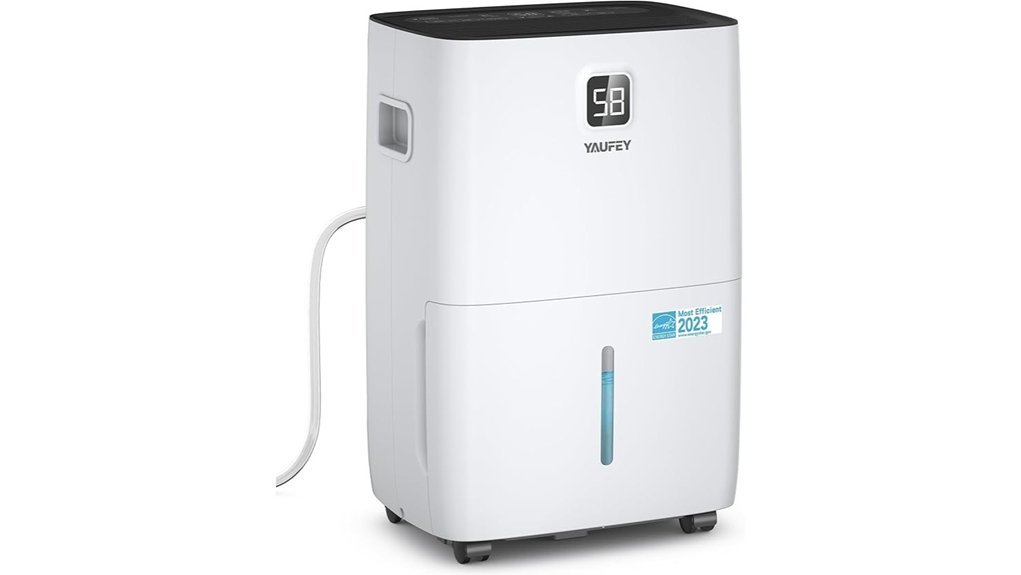
If you need a higher-capacity solution for moisture control, the Yaufey Energy Star Dehumidifier stands out with its listed 80 pints per day capacity. It is designed for spaces up to 5000 sq. ft., so it is better suited to large basements, offices, and open living areas than small bedrooms.
The smart sensors are designed to maintain humidity between 30-80%, giving you more precise control than a simple on/off model. You also get manual and continuous drainage options, adjustable fan speeds, and safety features like auto shut-off and child lock. The listed 52dB noise level is something to consider if you plan to use it in a quiet finished basement.
Best For: Homeowners seeking an efficient and reliable dehumidification solution for large spaces such as basements, offices, and living areas.
Why it may work for you: Choose this model if your basement is large, damp, or open-plan and you want a higher-capacity Energy Star option with continuous drainage support.
Who should skip it: Skip it if you need a very quiet unit for sleeping areas or if your space is small enough for a lower-capacity model.
Pros:
- Energy-efficient design that can help reduce electricity costs compared with less efficient units.
- Smart sensors maintain optimal humidity levels between 30-80% for precise control.
- Quiet operation at 52dB, making it suitable for use in many bedrooms and living areas.
Cons:
- Manual drainage option may require more frequent attention if not using continuous drainage.
- Initial cost may be higher compared to non-Energy Star models.
- Size may be cumbersome in smaller spaces despite its portability features.
DECIUU Max 100 Pint Energy Star Dehumidifier
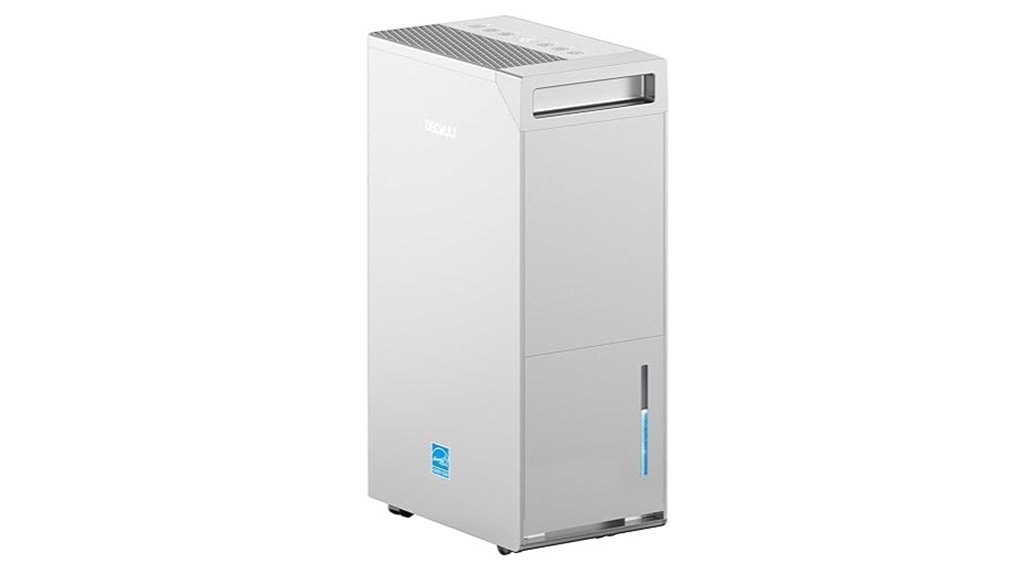
For homeowners battling heavy humidity, the DECIUU Max 100 Pint Energy Star Dehumidifier is the highest-capacity option in this roundup. It is listed with a 100 pints/day capacity and coverage up to 5,000 sq. ft., so it is best suited for larger basements, very damp spaces, and homes that need stronger moisture removal.
Its advanced technology includes an intelligent humidity control system for real-time monitoring and customizable settings. The flexible drainage options include a garden hose adapter and a 5.5L tank with auto shut-off. A clear LED panel and removable filter also make it easier to monitor and maintain.
Best For: Homeowners looking to efficiently reduce humidity levels in large spaces up to 5,000 sq. ft.
Why it may work for you: This is the strongest match if your main problem is a large, damp basement and you want high-capacity moisture removal with Energy Star efficiency features.
Who should skip it: Skip it if you only need light moisture control or if you need a smaller unit that is easy to carry up and down stairs.
Pros:
- Energy-efficient with ENERGY STAR certification, helping reduce operating costs.
- Customizable settings allow users to easily adjust humidity levels between 35% and 80% RH.
- Flexible drainage options provide convenience for continuous operation and maintenance.
Cons:
- Initial cost may be higher compared to traditional dehumidifiers.
- Size and weight might be cumbersome for some users when moving it around.
- Noise level may be noticeable at higher fan speeds, potentially affecting quiet spaces.
2500 Sq.Ft Dehumidifier with Smart Humidity Control
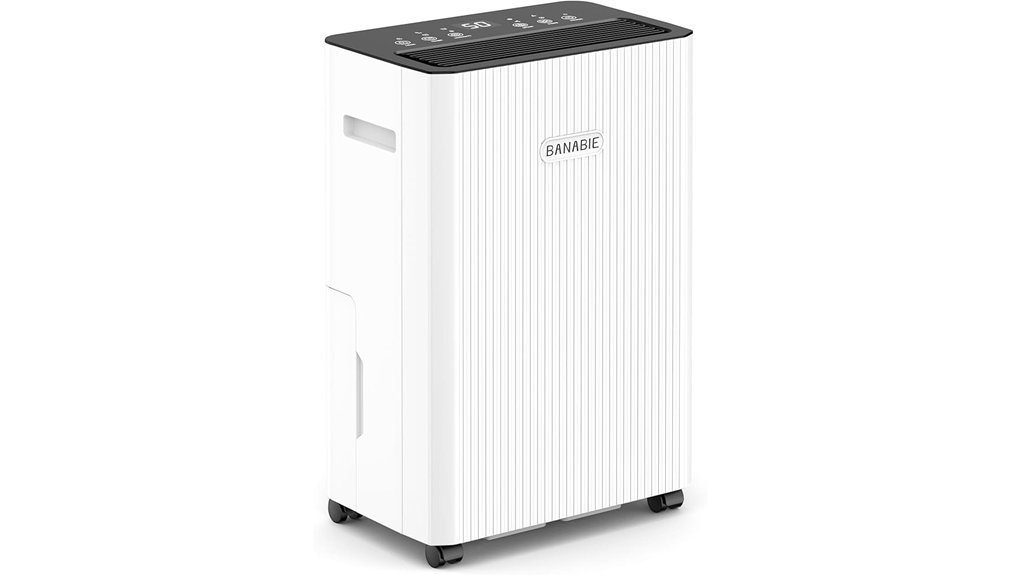
Looking for an effective solution to combat basement humidity in a mid-size space? This 2500 Sq.Ft Dehumidifier with Smart Humidity Control is designed for larger rooms, basements, bedrooms, and offices. It is listed to remove up to 32 pints of moisture daily and maintain a comfortable 45%-55% humidity range.
The listed quiet operation at 32dB makes it a strong choice for finished basements, home offices, and bedrooms where noise matters. It features gravity drainage for continuous use and a manual water tank with safety auto-shutoff. Its portable design and smart modes also let you adjust humidity control based on room conditions.
Best For: Individuals looking to reduce humidity in large spaces, such as basements, bedrooms, or offices.
Why it may work for you: This model fits buyers who want a mid-size unit with smart humidity control, a very low listed noise level, and both manual and gravity drainage options.
Who should skip it: Skip it if you need verified brand details before purchase or if your basement requires a higher-capacity 50 to 100-pint model.
Pros:
- High moisture removal of up to 32 pints daily, making it effective for large areas.
- Quiet operation at 32dB, ensuring minimal disruption in living and working spaces.
- Smart humidity control features with multiple operating modes for customized comfort.
Cons:
- Manual water tank may require regular emptying if gravity drainage is not utilized.
- Initial investment cost might be higher compared to basic dehumidifiers.
- Portability may be limited by its size, making it less ideal for frequent relocation.
1600 Sq.ft Dehumidifier with Drain Hose & Timer
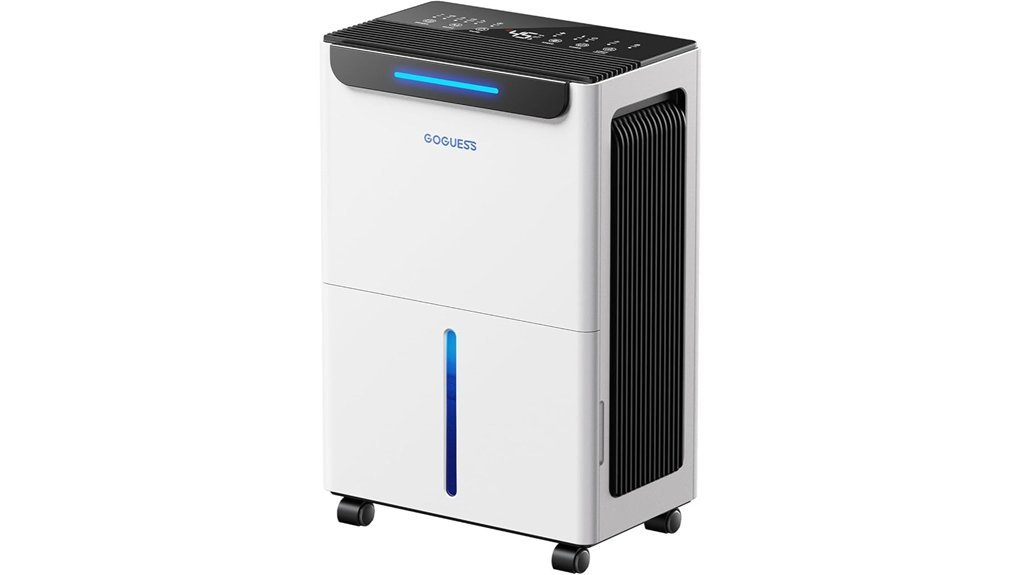
The GoGuess 1600 Sq.ft Dehumidifier is ideal for homeowners who need daily moisture control in smaller basements, bedrooms, offices, and laundry rooms. With a listed capacity of 21 pints per day, it covers areas up to 1600 sq.ft and gives you a useful step up from very small portable units.
You get three intelligent modes, DEHU, TURBO, and SLEEP, so you can tailor humidity levels for daily use, faster moisture removal, or quieter nighttime operation. The included 3.28 ft drain hose supports hassle-free continuous drainage. Features like auto shutoff, child lock, and a washable filter also make maintenance easier.
Best For: Homeowners seeking an efficient solution for moisture control in large spaces like basements, bedrooms, and offices.
Why it may work for you: Choose this if you want a 21-pint dehumidifier with a timer, sleep mode, child lock, and included hose for a smaller basement or multi-use room.
Who should skip it: Skip it if your basement is very wet or much larger than 1,600 sq.ft, since you may need a higher-capacity model.
Pros:
- Effective Coverage: Suitable for areas up to 1600 sq.ft with a capacity of 21 pints per day.
- Smart Features: Three operational modes (DEHU, TURBO, and SLEEP) for customized humidity control.
- Convenient Maintenance: Includes a washable filter and a continuous drainage option for easy upkeep.
Cons:
- Limited Capacity: May not be sufficient for extremely humid environments or larger spaces beyond 1600 sq.ft.
- Noise Level: While quieter than typical conversations, some users may still find it noticeable in SLEEP mode.
- Size: The design may be bulkier for some users, making it less portable compared to smaller models.
Factors to Consider When Choosing Dehumidifiers for Basements Without a Tank
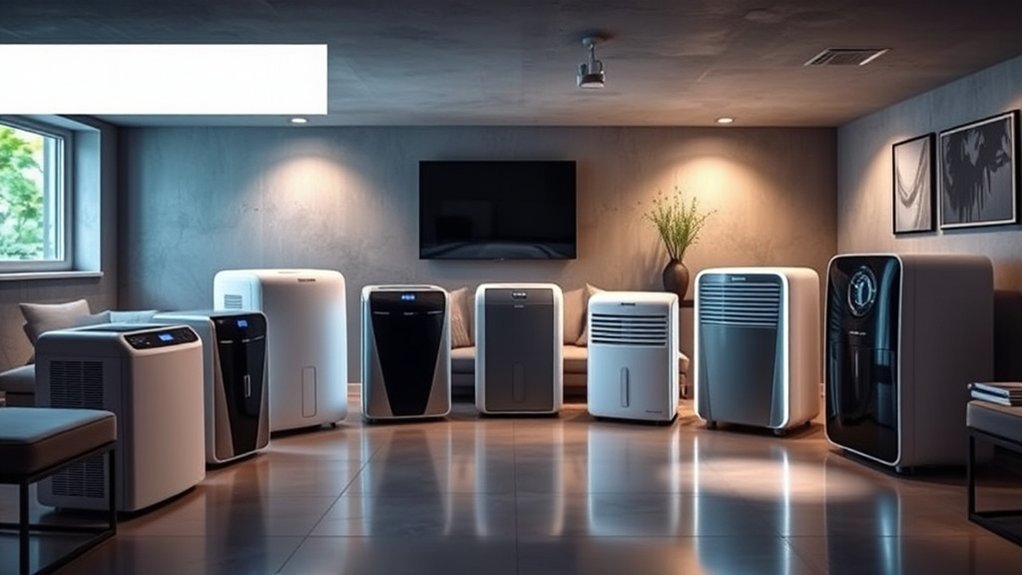
When choosing a dehumidifier for your basement without a tank, focus on the details that affect daily use: coverage area, moisture removal capacity, drainage setup, portability, noise, and energy efficiency. A model can look powerful on paper, but it still needs to match your basement layout and drain location.
Before You Buy Checklist:
- Measure your basement or target room size.
- Decide whether you need gravity drainage or pump-assisted drainage.
- Check whether the included hose length fits your drain location.
- Choose a pint rating that fits the moisture level, not just the square footage.
- Look for a washable filter, auto shutoff, defrost mode, and easy-access controls.
Coverage Area Requirements
Choosing the right dehumidifier for your basement starts with the coverage area. Models in this guide typically cover between 1,500 and 5,000 square feet, so it is important to match the unit to your actual space. A small finished basement may be fine with a 20 to 21-pint unit, while a large or very damp basement may need a 50, 80, or 100-pint model.
Also think about basement conditions, not just square footage. A cooler, sealed basement with light dampness needs less power than a warm basement with wet walls, laundry humidity, or a musty smell.
Moisture Removal Capacity
Moisture removal capacity is measured in pints per day. It tells you how much water the unit is designed to pull from the air under listed test conditions. In this roundup, the options range from 20 to 100 pints per day.
For light dampness, a 20 to 32-pint model may be enough. For large basements or heavy humidity, look closer at 50-pint and higher-capacity options. If your basement feels wet even after hours of operation, the unit may be undersized or the drainage setup may not be working well.
Drainage Options Available
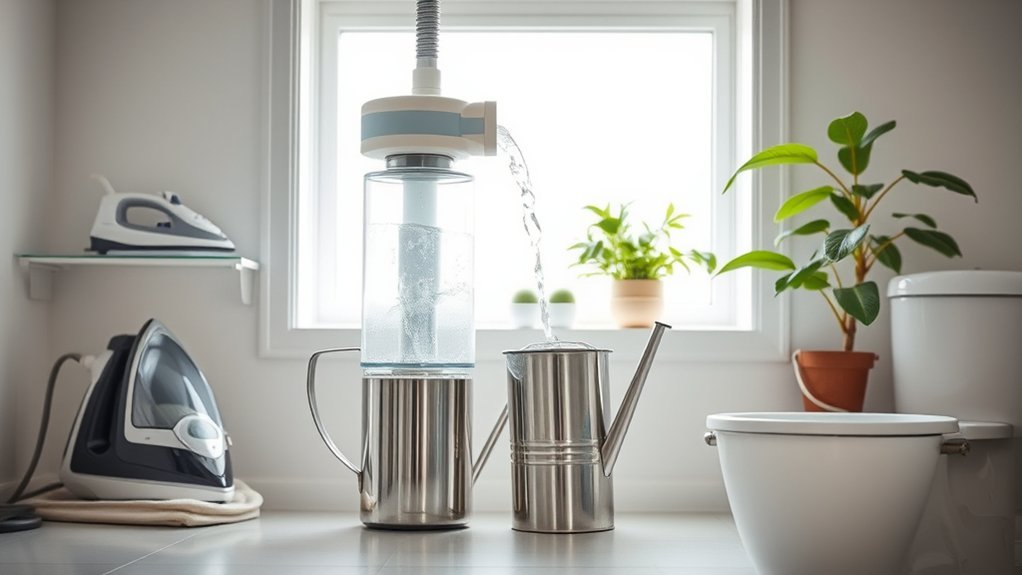
Drainage is the main reason buyers search for dehumidifiers “without a tank.” Most units still include a tank, but the key feature is a continuous drainage system that lets water flow through a hose into a drain, sink, utility tub, or condensate pump.
Many units use gravity drainage, which means the drain point must sit lower than the hose outlet. If your drain is higher than the dehumidifier, gravity may not work. In that case, you may need a dehumidifier with a built-in pump or a separate pump setup.
Pro Tip: Before ordering, picture the exact path from the dehumidifier to your floor drain, sink, or utility tub. A short hose, upward slope, or sharp bend can make continuous drainage less reliable.
Portability Features Needed
Portability matters if you plan to move your dehumidifier between a basement, laundry room, bedroom, or office. Look for models with 360° universal wheels, side handles, and a weight you can manage safely.
Lighter models under 20 pounds are generally easier to move, but larger units often remove more moisture. If the dehumidifier will stay in one basement spot with a drain hose attached, portability may matter less than capacity, hose placement, and ease of filter cleaning.
Noise Level Considerations
Noise level is important in finished basements, bedrooms, offices, and family rooms. Many modern dehumidifiers list noise levels from around 30 to 52 dB, depending on the fan setting and operating mode.
If you want the quietest setup, look for a Sleep Mode, low fan setting, or brushless motor design. Also remember that sound can feel louder in a basement with hard floors, bare walls, and little furniture to absorb noise.
Energy Efficiency Ratings
Energy efficiency ratings play an essential role in selecting the right dehumidifier for your basement, especially if the unit may run for long stretches. Look for ENERGY STAR certified units, adjustable humidity controls, timers, and smart sensors that prevent over-dehumidification.
Energy use depends on capacity, runtime, local electricity rates, basement moisture level, and filter maintenance. A higher-capacity model may use more power per hour, but it may also dry a large damp space faster than an undersized unit that runs nonstop.
Smart Control Features
Selecting a dehumidifier with smart control features can make basement humidity easier to manage. These devices may automatically adjust humidity levels based on real-time conditions, and some connect to mobile apps or voice assistants.
If you value convenience, look for app control, timers, auto restart, memory functions, and integrated humidity sensors. These features are especially useful if the dehumidifier is in a basement utility area where you do not check it every day.
Maintenance and Care
Maintaining your dehumidifier is essential for steady basement performance. Regularly clean or replace the filter so air can move through the unit. A dirty filter can reduce efficiency, increase noise, and make the unit work harder.
You should also inspect the drainage system for clogs, kinks, algae buildup, or leaks. Make sure the hose slopes correctly if you are using gravity drainage. If the unit has auto shutoff, test that feature when using the tank so you can reduce overflow risk.
Frequently Asked Questions
How Do I Maintain My Dehumidifier Without a Tank?
To maintain your dehumidifier without a tank, regularly clean the filter, check for dust buildup, and make sure air can move freely around the unit. You should also inspect the drain hose for clogs or kinks and monitor humidity levels so the unit is not running harder than needed.
Do Tankless Basement Dehumidifiers Really Have No Tank?
Most home dehumidifiers still include a tank, even when they are marketed for continuous drainage. For this type of buyer, “without a tank” usually means you can connect a hose and drain water automatically instead of emptying the tank by hand.
Can I Use a Dehumidifier in a Crawl Space?
Yes, you can use a dehumidifier in a crawl space if the model is suitable for the space size, temperature range, and drainage setup. Proper ventilation and safe drainage are important because crawl spaces can trap moisture and restrict airflow.
What Is the Ideal Humidity Level for Basements?
The ideal humidity level for most basements is between 30% and 50%. Keeping it in this range helps reduce musty smells, damp air, and mold risk while protecting stored items, furniture, and finished basement materials.
How Noisy Are Dehumidifiers Without Tanks?
Dehumidifiers without tanks, or models used with continuous drainage, are often in the 30 to 50 decibel range. Low fan and Sleep Mode settings are best for quiet spaces, while Turbo or high fan modes may be more noticeable.
Are There Energy-Efficient Options for Dehumidifiers?
Yes, there are energy-efficient dehumidifiers available. Look for models with Energy Star certification, timers, auto restart, humidity sensors, and adjustable target humidity settings. These features help reduce wasted runtime while keeping your basement comfortable and dry.
Do I Need a Pump for Continuous Drainage?
You need a pump only when the drain point is higher than the dehumidifier drain outlet or too far away for gravity drainage. If you have a nearby floor drain below the hose outlet, gravity drainage may be enough.
Where Should I Place a Basement Dehumidifier?
Place the dehumidifier where air can move freely around it and where the drain hose can run safely without sharp bends. Avoid pushing it tightly against walls, furniture, or stored boxes because blocked airflow can reduce performance.
Conclusion
Choosing the right dehumidifier can make a major difference in how dry and comfortable your basement feels. For large, damp basements, the DECIUU Max 100 Pint and Yaufey 80 Pint models offer the strongest listed capacity. For mid-size spaces, the AEOCKY, KNKA, and PLUSCENT 32 Pint models give you a good mix of coverage and continuous drainage. For smaller rooms, the Aiusevo, PLUSCENT 21 Pint, Midea Cube, smart 2500 Sq.Ft model, and GoGuess options may be easier to place and manage.
If you want the least manual work, choose a model with a drain hose setup that fits your basement layout. Check the capacity, hose length, noise level, and Energy Star details before buying, then place the unit where it can drain safely and pull moist air from the whole room.
Final Recommendation: If your basement is very damp, start with the highest-capacity models first. If your basement is finished or used as a living space, balance capacity with noise level, smart controls, and easy drainage. The best choice is the one that fits your room size, drain position, and how often you want to check the unit.