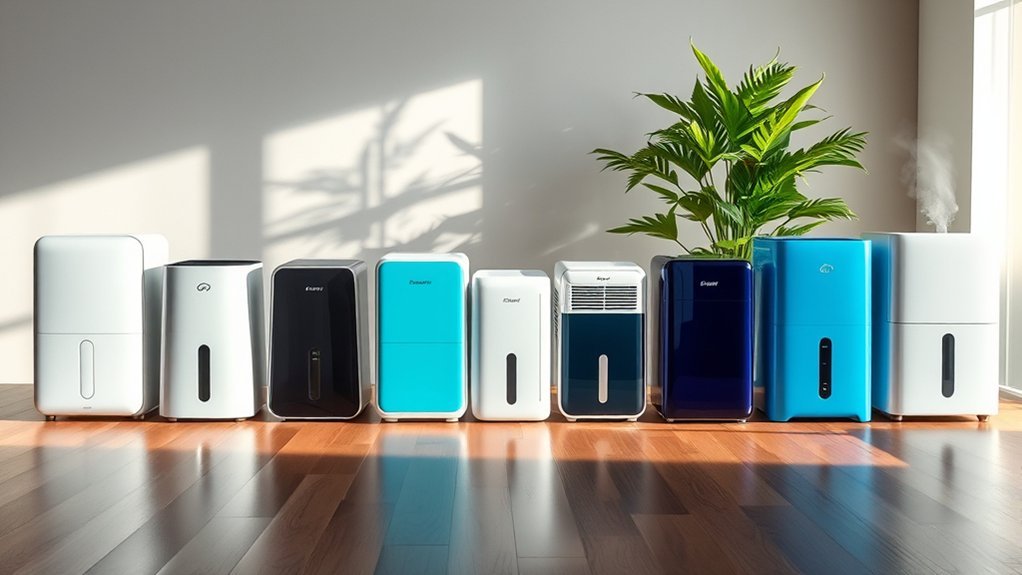
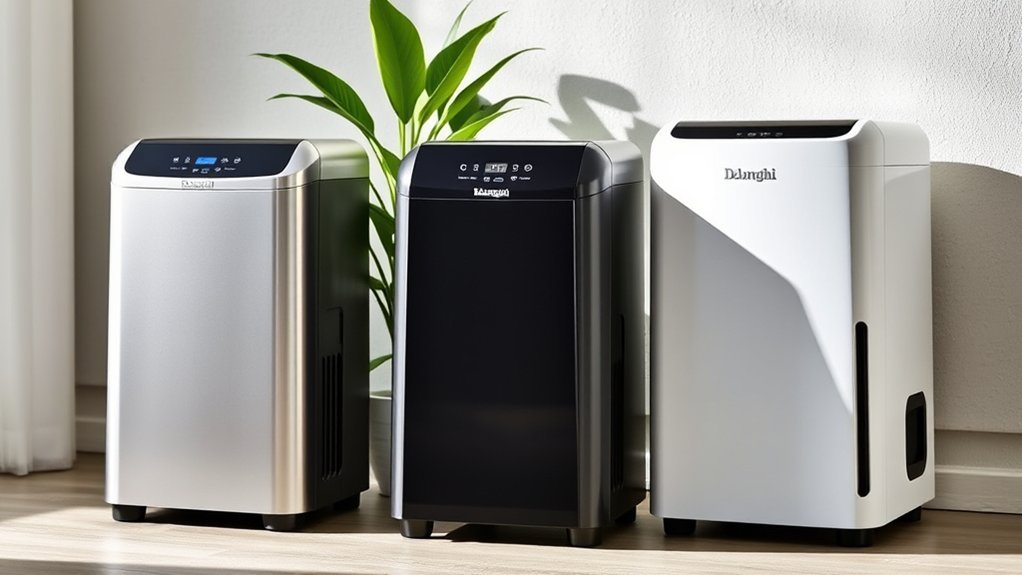
Drying clothes indoors can raise room humidity, slow evaporation, and leave laundry smelling damp. A dehumidifier can help by collecting moisture from the surrounding air, but its extraction capacity matters far more than its tank size. The three compact models below are best suited to occasional small loads in enclosed laundry areas, bathrooms, bedrooms, closets, or RVs. They are not substitutes for a pint-rated compressor dehumidifier when you regularly dry full washing-machine loads, towels, or bedding.
Quick Verdict
NovaLivin 68 oz is the strongest overall compact option on paper because it combines the highest listed maximum moisture removal with selectable humidity targets, two output levels, a sleep mode, and a 68 oz tank. NeedDuck B-2 is the easiest model to carry and place in a tight room, but its available specifications do not provide a dependable daily extraction rate. Deyagoo DY501 is best reserved for light humidity control and occasional small loads because its listed maximum removal is much lower.
How These Products Were Compared
The ranking prioritizes listed daily moisture removal, tank capacity, humidity controls, portability, timer functions, drainage, noise information, and suitability for indoor clothes drying. Seller-provided extraction figures are treated as maximum claims rather than guaranteed real-world results.
Quick Comparison
| Product | Practical Use | Tank | Listed Maximum Removal | Main Limitation | Amazon |
|---|---|---|---|---|---|
| NovaLivin 68 oz | Best overall for occasional drying in a small closed room | 68 oz / 2 L | Up to 34 oz / 1,000 ml per day at 86°F and 80% RH | Actual output may be much lower in cooler or less humid rooms | Check on Amazon |
| NeedDuck B-2 | Best portable pick for a tight laundry nook | 44 oz | Not reliably stated in the available specifications | Cannot be compared honestly by extraction speed | Check on Amazon |
| Deyagoo DY501 | Best for light moisture and occasional small loads | 1,500 ml / about 50 oz | Up to 300 ml per day at 86°F and 80% RH | Too slow for frequent or moisture-heavy laundry | Check on Amazon |
NovaLivin 68 oz Dehumidifier with Auto Shutoff
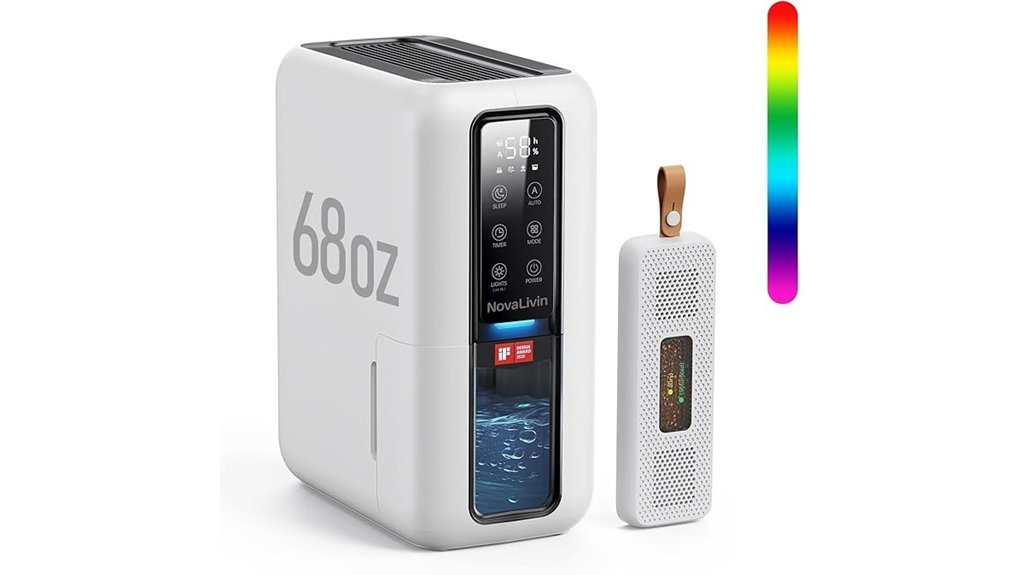
The NovaLivin 68 oz is the most capable of these three compact options based on its listed specifications. Its dual-semiconductor system is advertised to collect up to 34 oz (1,000 ml) of water per day at 86°F and 80% relative humidity. That figure should be treated as a warm-condition maximum rather than the amount every buyer will collect. Its 68 oz transparent tank provides more collection room than the other retained models, while automatic shutoff helps prevent overflow when the tank is full.
You can choose 40%, 50%, or 60% humidity settings, switch between two output levels, use a timer, or select a quieter sleep mode listed at approximately 30 dB. Those controls make it easier to manage humidity beside a drying rack in a small closed room without leaving the unit at maximum output continuously.
Why You’ll Like It
- It has the highest listed maximum daily moisture removal among the three products.
- The 68 oz tank can reduce the frequency of manual emptying.
- Selectable humidity settings, two output levels, a timer, and automatic shutoff improve control.
- Sleep mode can be useful when the drying area is close to a bedroom or home office.
Best For: Occasional small laundry loads in a closed laundry nook, bathroom, bedroom, or other compact drying area where humidity controls are more important than maximum portability.
Who Should Avoid It: Anyone drying full loads every day, dealing with water intrusion, trying to dry heavy bedding, or controlling severe dampness across a large or open room.
Pros:
- Listed to remove up to 34 oz of moisture per day under warm, humid test conditions.
- Large 68 oz transparent tank with full-tank shutoff and alert.
- Selectable humidity settings, two output levels, sleep mode, and timer control.
Cons:
- The maximum extraction claim will not represent normal output in every room.
- It remains a compact semiconductor unit rather than a pint-rated laundry-room dehumidifier.
- No continuous-drain connection is clearly listed, so the tank may require manual emptying.
NeedDuck B-2 Small Quiet Dehumidifier with Auto Shutoff
The NeedDuck B-2 is the easiest model here to place in a tight laundry nook. It measures 5.91 x 5.91 x 8.46 inches, weighs approximately 2.6 pounds, uses a listed 28 watts, and has a 44 oz water tank. Its compact footprint makes it practical beside a clothes rack, on a suitable shelf, in a bathroom, or in an RV where floor space is limited.
It provides Sleep, Auto, and Performance modes plus Continuous, 24H, 48H, and 72H timer choices. Automatic shutoff, automatic defrost, and tilt protection add useful safeguards. However, the available specifications do not provide a sufficiently dependable daily moisture-removal figure, so this model cannot be honestly ranked against the other products for extraction speed.
Why You’ll Like It
- Its small, lightweight design is easy to carry between enclosed rooms.
- Three operating modes and four timer choices provide flexible scheduling.
- The compact footprint is useful when space beside a drying rack is limited.
- Automatic shutoff, defrost, and tilt protection improve convenience.
Best For: Buyers who prioritize portability, timer control, and easy placement for occasional small loads rather than a verified high extraction rate.
Who Should Avoid It: Buyers who need a confirmed daily moisture-removal capacity, continuous drainage, rapid humidity reduction, or dependable performance for full laundry loads.
Pros:
- Compact dimensions and low weight make repositioning simple.
- Sleep, Auto, and Performance modes support different operating preferences.
- Its 44 oz tank, timer settings, automatic shutoff, and defrost feature add convenience.
Cons:
- No sufficiently reliable daily moisture-removal figure was available for direct comparison.
- The 44 oz tank is smaller than the tanks on the other retained options.
- Small-room coverage claims do not establish how quickly it will dry laundry.
Deyagoo DY501 Small Home Dehumidifier with Auto Shutoff
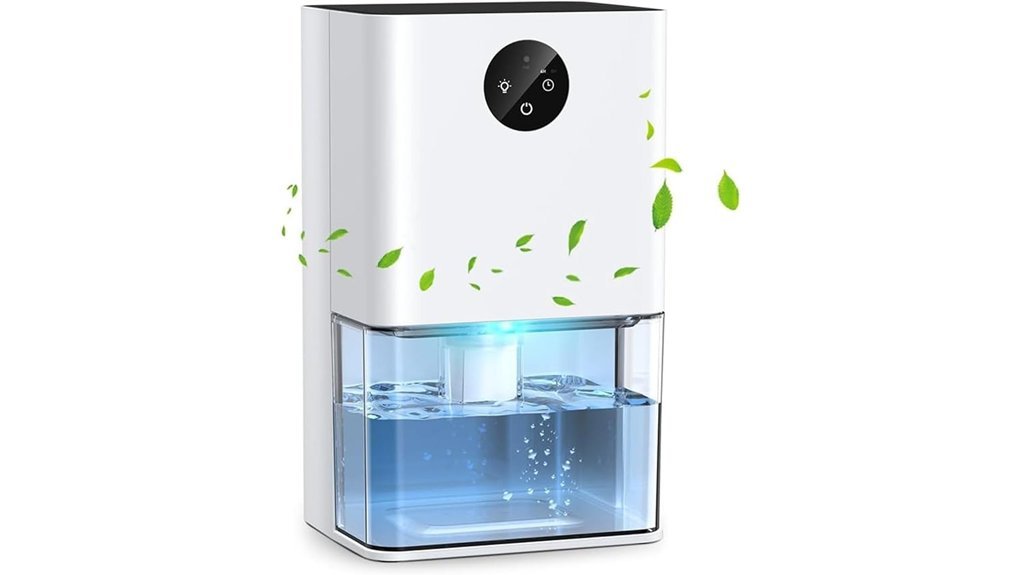
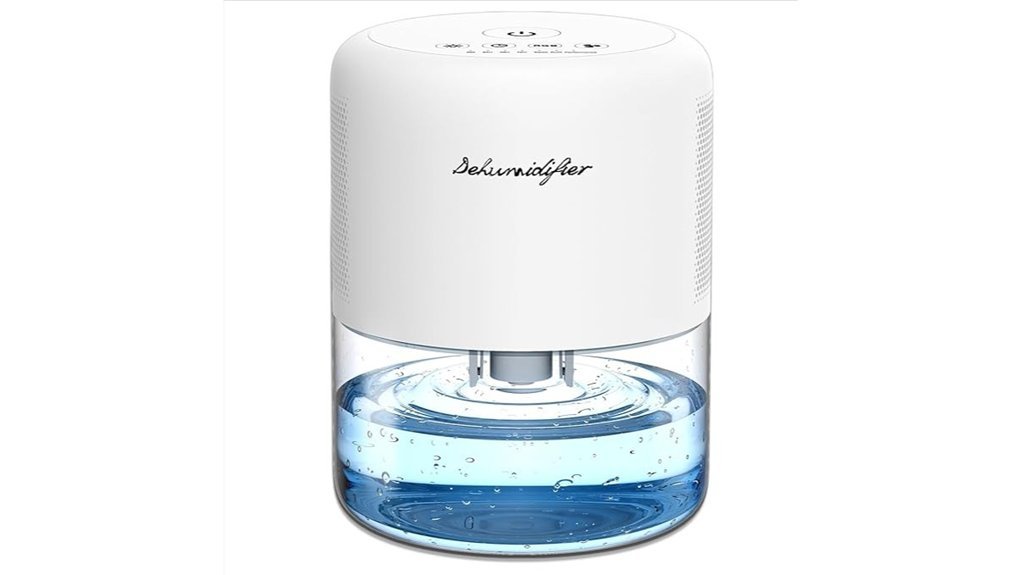
The Deyagoo DY501 is a simple option for light humidity in a small enclosed space. Its 1,500 ml transparent tank is easy to monitor, and matching listing information advertises collection of up to 300 ml of water in 24 hours at 86°F and 80% relative humidity. Automatic shutoff and a flashing full-tank warning help reduce the risk of overflow.
At approximately 1.4 kg, it remains easy to move, and the separate light control lets you turn the seven-color lighting on or off. Its main limitation is extraction speed. A maximum claim of 300 ml per day is modest for indoor laundry, so this model makes more sense for a closet, RV, bathroom, or occasional small drying load than for a busy laundry room.
Why You’ll Like It
- The 1,500 ml transparent tank is relatively large for a compact unit.
- Simple controls, automatic shutoff, and a visible full-tank alert make it easy to operate.
- Its compact body is easy to move between small enclosed areas.
- The separate ambient-light control lets you operate the dehumidifier without leaving the decorative lights on.
Best For: Light moisture control in a closet, bathroom, RV, or compact laundry corner used for occasional small loads.
Who Should Avoid It: Anyone who needs rapid drying, selectable humidity targets, continuous drainage, or enough extraction for frequent full-size loads.
Pros:
- The transparent 1,500 ml tank is easy to monitor, remove, empty, and clean.
- Automatic shutoff and a flashing warning light help prevent spills.
- Its compact body is easy to reposition when used in one closed room at a time.
Cons:
- Its listed maximum removal is only about 300 ml per day under warm, highly humid conditions.
- Real performance is likely to be lower in cooler or less humid rooms.
- No continuous drain or selectable percentage-based humidity control is clearly listed.
Factors to Consider When Choosing a Dehumidifier for Drying Laundry
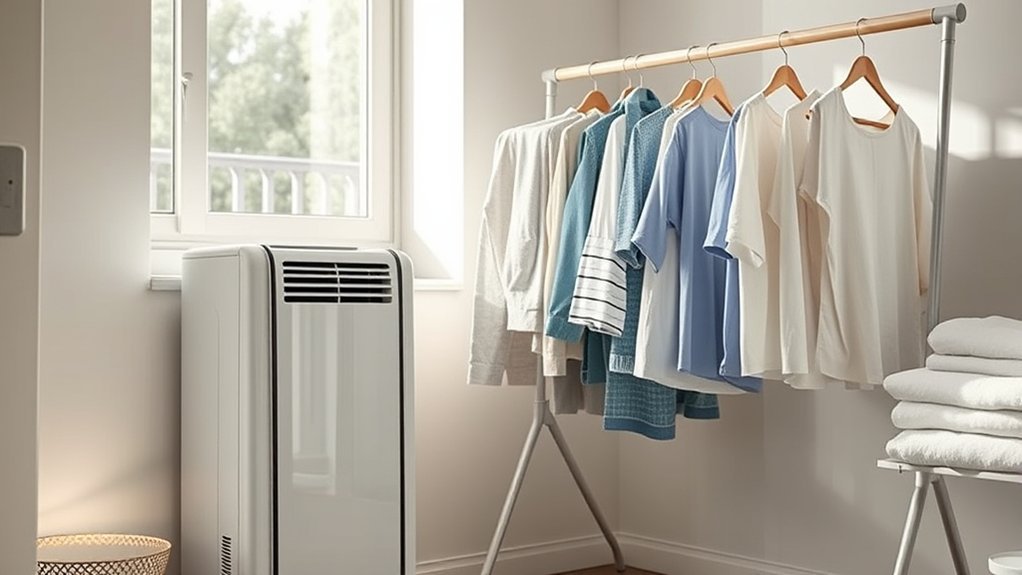
The best laundry dehumidifier is not automatically the model with the biggest water tank. Focus first on daily moisture removal, room conditions, airflow, humidity control, noise, drainage, and how much washing you dry indoors.
Daily Moisture-Removal Capacity
Daily capacity describes how much water a unit is advertised or tested to collect over 24 hours under stated conditions. It is different from tank capacity. Warm, humid air offers more removable moisture, so a rating measured at 86°F and 80% RH may be much higher than the result in a cool room. Compare products using the same units and similar test conditions whenever possible.
For occasional small loads in a closed room, a compact unit may provide useful humidity control. For frequent full loads, visible condensation, thick towels, bedding, or persistent dampness, look for a compressor model rated in pints per day. Use a separate hygrometer when necessary to check whether the room is moving toward approximately 40% to 50% RH. If humidity remains above 60%, the room setup or dehumidifier capacity needs attention.
Tank Size and Drainage
A larger tank can reduce emptying frequency, but it does not make a machine extract moisture faster. NovaLivin has the strongest listed maximum extraction in this comparison, while Deyagoo has a relatively large tank but a much lower daily removal claim. Check whether the tank can hold the expected water from an entire drying session.
If you want long unattended operation, look for a continuous-drain connection. None of these three compact products clearly provides the same dependable gravity-drain or pump setup commonly found on larger compressor models, so confirm the current listing and manual before purchase.
Room Size and Door Position
Coverage figures on compact dehumidifiers are rough seller or manufacturer guides, not guarantees of laundry-drying performance. Use the machine in the smallest practical room, close doors and windows, and leave the clearance required by the product manual around the air inlet and outlet. Trying to dehumidify several connected rooms will slow humidity reduction.
Airflow and Laundry Setup
A dehumidifier works better when moist air can move away from the fabric. Run the washing machine’s fastest safe spin cycle, leave gaps between garments, avoid overlapping thick items, and consider a separate fan when the room has stagnant air. Keep wet clothes from dripping onto the dehumidifier, plug, adapter, or power cord.
Energy Use
Check the wattage printed on the exact product label and multiply it by the expected runtime to estimate electricity use. Low wattage can reduce hourly consumption, but it may also accompany slower moisture removal. A more useful comparison is how much water the machine removes for the electricity consumed, not wattage alone.
Product specifications can change or appear inconsistently across syndicated listings, so treat the label and current manual supplied with the exact unit as the final reference.
Noise Level
If the drying area is close to a bedroom or home office, look for a sleep mode and a measured decibel figure. Treat unqualified terms such as “silent” or “whisper quiet” as marketing unless a specific rating is supplied. Place the unit on a firm, dry, level surface to help reduce vibration.
Controls and Safety
Useful features include selectable humidity settings, timers, automatic shutoff, a full-tank alert, defrost protection, and a removable tank that is easy to clean. Always follow the product manual, keep vents clear, use the supplied power equipment, place the unit on a stable dry surface, and keep it away from splashing water and dripping garments.
Simple Buying Checklist
- How many loads do you dry indoors each week?
- Are they light garments, or do they include towels and bedding?
- What is the room’s starting relative humidity?
- Is the daily extraction rate stated with clear test conditions?
- Will the tank need emptying during one drying session?
- Do you need a timer, sleep mode, humidistat, or continuous drain?
- Can you close the room and maintain clear airflow around the machine?
- Would a pint-rated compressor model better match the moisture load?
Frequently Asked Questions
How Long Does It Take to Dry a Full Laundry Load?
There is no dependable fixed time. Drying speed depends on the washing machine’s spin speed, fabric thickness, room temperature, starting humidity, airflow, garment spacing, and dehumidifier capacity. These compact products are not designed to guarantee rapid drying of a full load. Monitor the clothes and room humidity rather than relying on a promised number of hours.
Can a Dehumidifier Reduce Mold Risk From Indoor Clothes Drying?
A dehumidifier can help control the excess humidity that supports mold growth, particularly when combined with good airflow and appropriate ventilation. It does not remove existing mold or repair plumbing leaks, roof leaks, condensation defects, or water intrusion. If you see or smell mold, address the moisture source and clean or remediate the affected area rather than relying on the dehumidifier alone.
Do Dehumidifiers Work Better in Cold or Warm Rooms?
The maximum claims for these compact products are based on warm, humid conditions, so they will generally collect less water in cooler rooms. A model with automatic defrost may manage cooler conditions more reliably, but you should still check the manufacturer’s stated operating-temperature range for the exact product.
How Much Electricity Does a Laundry Dehumidifier Use?
Electricity use depends on the exact wattage and runtime. Compact electronic models usually draw less power than larger compressor dehumidifiers, but they also tend to remove substantially less moisture. Check the label on the delivered unit and compare energy consumption with daily water removal rather than selecting a product by wattage alone.
Can I Use One Dehumidifier for Multiple Rooms?
You can carry one compact unit from room to room, but it will work most effectively in one closed space at a time. Open doors allow additional humid air to enter and can significantly slow the reduction in humidity around the drying rack.
Is a Compact Dehumidifier Enough for Drying Clothes?
It may assist with occasional small loads in a tight, enclosed room. It is less suitable for large families, thick towels, bedding, frequent full loads, open-plan spaces, or rooms with ongoing dampness. In those cases, choose a higher-capacity compressor dehumidifier with a clear pints-per-day rating and consider continuous drainage.
Where Should I Place a Dehumidifier Near Laundry?
Place it on a stable, dry, level surface with the clearance specified in its manual around the air inlet and outlet. Keep it away from direct splashes and never position it beneath dripping clothes. Arrange the drying rack so moist air can circulate away from the fabric and toward the open room.
Does a Larger Tank Mean Faster Laundry Drying?
No. Tank capacity only tells you how much collected water the container can hold before it must be emptied. Drying performance depends more directly on the machine’s moisture-removal capacity, the room conditions, airflow, and the amount of wet fabric.
Should I Use a Fan With a Laundry Dehumidifier?
A separate fan can help when air remains still around the drying rack. Gentle airflow moves moisture away from the fabric so the dehumidifier can process the surrounding air more effectively. Keep the fan, dehumidifier, cables, and outlets away from drips and splashing water.
Final Recommendation
Choose the NovaLivin 68 oz when you want the strongest listed maximum moisture removal and the most useful controls for occasional indoor drying in a small closed room.
Choose the NeedDuck B-2 when portability, timer options, and a compact footprint matter more than having a verified extraction figure.
Choose the Deyagoo DY501 only for light humidity and occasional small loads, not for rapid drying, heavy fabrics, or a busy laundry room.
A dehumidifier can make indoor clothes drying more manageable by lowering room humidity, but capacity and setup determine the result. Use the fastest safe spin cycle, space garments apart, close the room, maintain airflow, and monitor humidity with a hygrometer. If one of these compact units cannot keep the room below 60% RH or cannot make meaningful progress during a drying session, move to a higher-capacity compressor dehumidifier rather than running an undersized machine indefinitely.