Last updated: August 1, 2026. Products were compared by intended use, manufacturer-stated moisture removal under specified test conditions, tank or desiccant capacity, noise, drainage, controls, and safety features. This is an editorial comparison, not a claim of hands-on testing.
If you are looking for the best dehumidifier for a small space in 2026, start by matching the unit to the room and the severity of the moisture problem. Compact thermoelectric dehumidifiers work best in warm, enclosed bedrooms, bathrooms, closets, offices, and RVs with light to moderate humidity. They are not substitutes for a full-size compressor model when a basement is wet, a leak is active, or humidity remains very high.
Quick verdict: The Levoair 68oz model is the strongest all-around option here because it combines a larger tank, a stated test-condition output of up to 35oz per day, and a gravity-drain option. The TABYIK is a better fit for a quiet bedroom, while the Eva-Dry E-333 is designed for tiny enclosed spaces where cordless, silent operation matters more than fast moisture removal.
Before you buy: Manufacturer coverage figures are best treated as rough guidance. Room temperature, relative humidity, airflow, and ongoing moisture sources can make a major difference in real-world performance. Measure the room with a hygrometer before choosing a capacity.
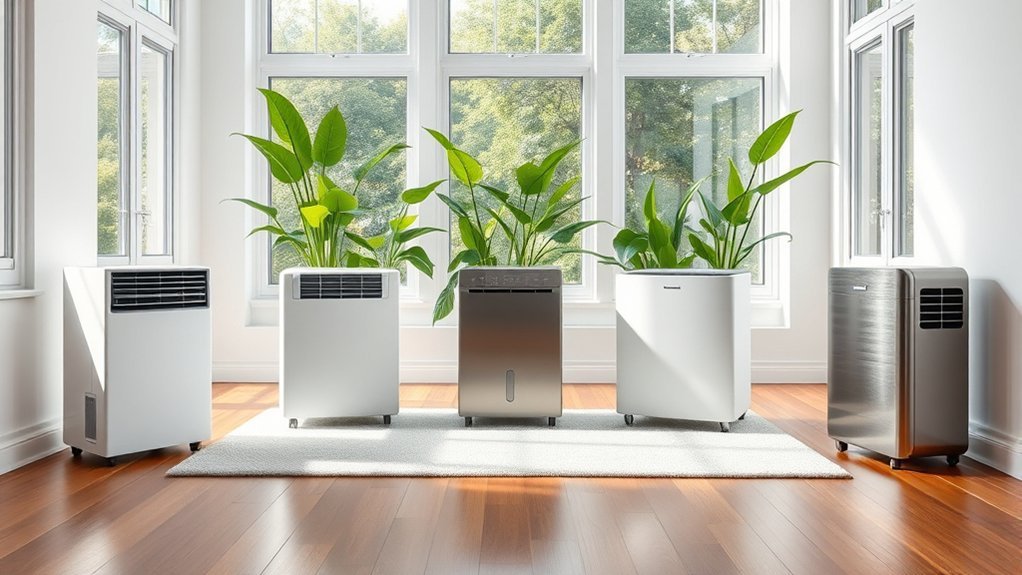
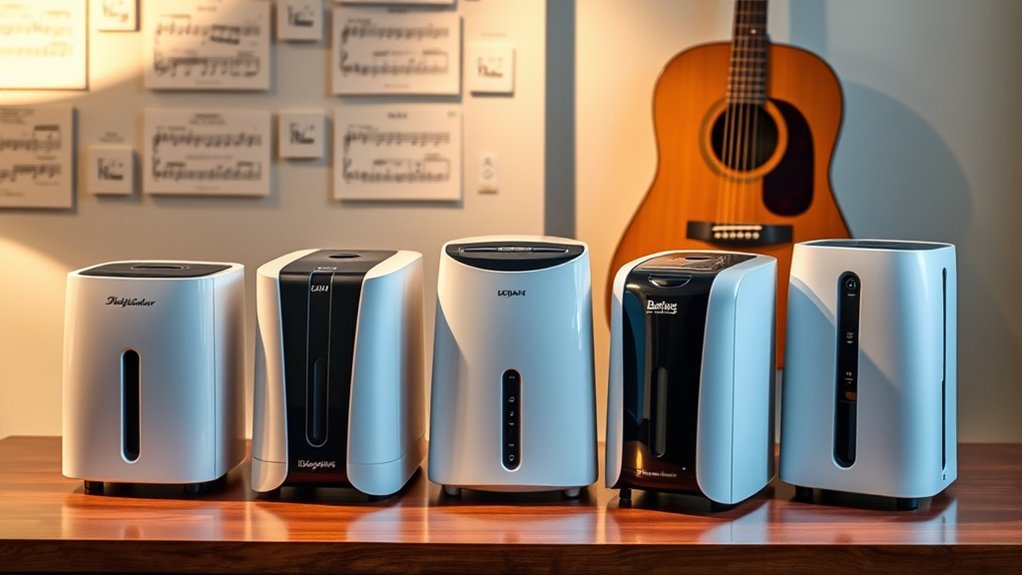
Quick Comparison of the Best Small-Space Dehumidifiers
| Product | Best For | Stated Output or Capacity | Key Advantage | Main Limitation | Amazon |
|---|---|---|---|---|---|
| Levoair 68oz | Best Overall | 68oz tank; up to 35oz per day at 86°F and 80% RH | Larger tank and continuous gravity drainage | Performance drops in cool or moderately humid rooms | Check Price |
| TABYIK 35oz | Quiet Bedrooms | 35oz tank; up to 16oz per day at 86°F and 80% RH | Stated 28dB operation and simple controls | Modest extraction and no continuous drain | Check Price |
| Bangnics Mini | Simple Compact Use | Up to 14oz per day at 86°F and 80% RH | Small footprint, auto shutoff, and power memory | Designed only for small, lightly damp spaces | Check Price |
| BEDRED CT11 | Large Reservoir and Ambient Light | 95oz tank; dependable daily extraction figure not confirmed | Less frequent emptying and sleep-friendly features | The seller’s 1,000 sq. ft. claim does not guarantee room-wide control | Check Price |
| Eva-Dry E-333 | Closets, Cabinets, and Safes | Up to 13oz total absorption; up to 333 cubic feet | Cordless and silent during use | Slow moisture control for very small enclosures only | Check Price |
| BeOkay DH-AA2 | Adjustable Modes and Timers | Up to 0.3L per day; tank figure varies by listing | Three modes, timers, and adjustable lighting | Low extraction compared with compressor units | Check Price |
Comparison note: Tank capacity shows how much collected water a reservoir can hold. It does not show how much moisture the unit can remove per day. Maximum extraction figures are also highly dependent on the stated temperature and humidity conditions.
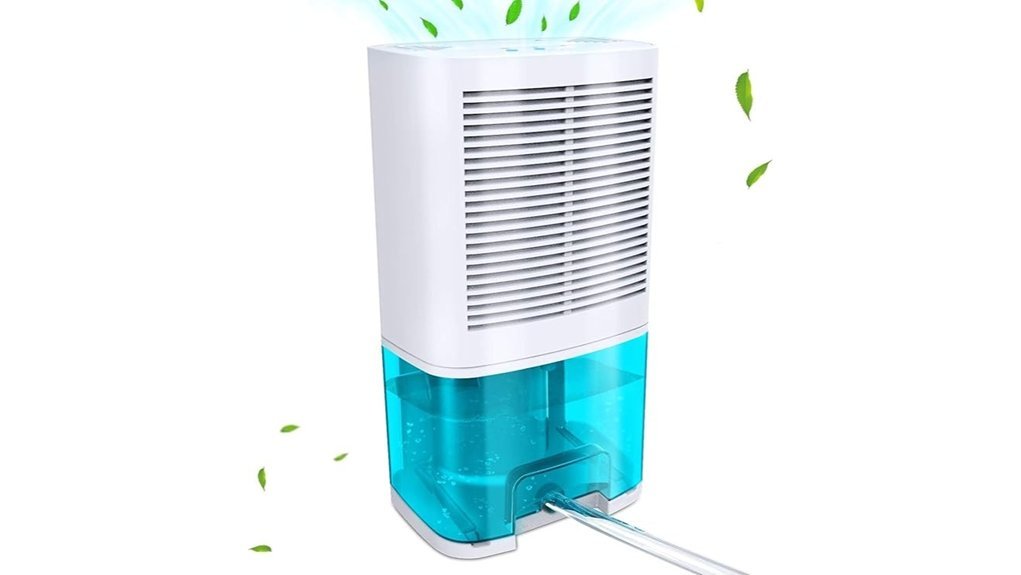
Levoair 68oz Small Dehumidifier for Home and RV
Best Overall
The Levoair YXTX-607D is a practical choice for buyers who want more water storage and less frequent maintenance than a basic mini model. It has a 68oz (2-liter) tank, automatic full-tank shutoff, and a drain-hose connection for continuous gravity drainage. The manufacturer rates moisture removal at up to 35oz per day at 86°F and 80% relative humidity, so actual collection will usually be lower in an ordinary bedroom, bathroom, or RV.
Best For: Warm bedrooms, bathrooms, kitchens, RVs, and other small enclosed spaces with light to moderate humidity.
Why You’ll Like It: The larger tank and included drain-hose option make it easier to operate for longer periods without constantly checking the reservoir.
Who Should Avoid It: Buyers dealing with cold rooms, water intrusion, a wet basement, laundry drying, or severe whole-room humidity should choose a properly sized compressor dehumidifier instead.
Pros:
- 68oz tank reduces how often you need to empty collected water.
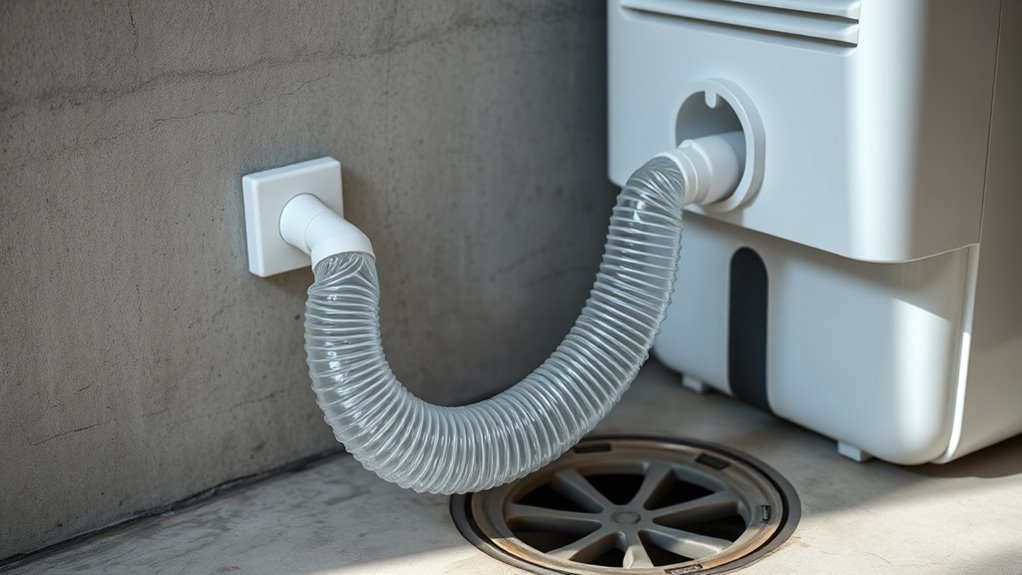
- Continuous gravity drainage adds convenience when a suitable lower drain is nearby.
- Automatic shutoff helps prevent tank overflow.
- Portable design and stated noise at or below 40dB suit many bedrooms and RVs.
Cons:
- The highest extraction figure is based on warm, high-humidity test conditions.
- Thermoelectric performance is weaker in cool rooms or when humidity is already moderate.
- Gravity drainage requires the hose to remain below the outlet and slope downward without kinks.
- It does not provide the pint-per-day capacity expected from a compressor dehumidifier.
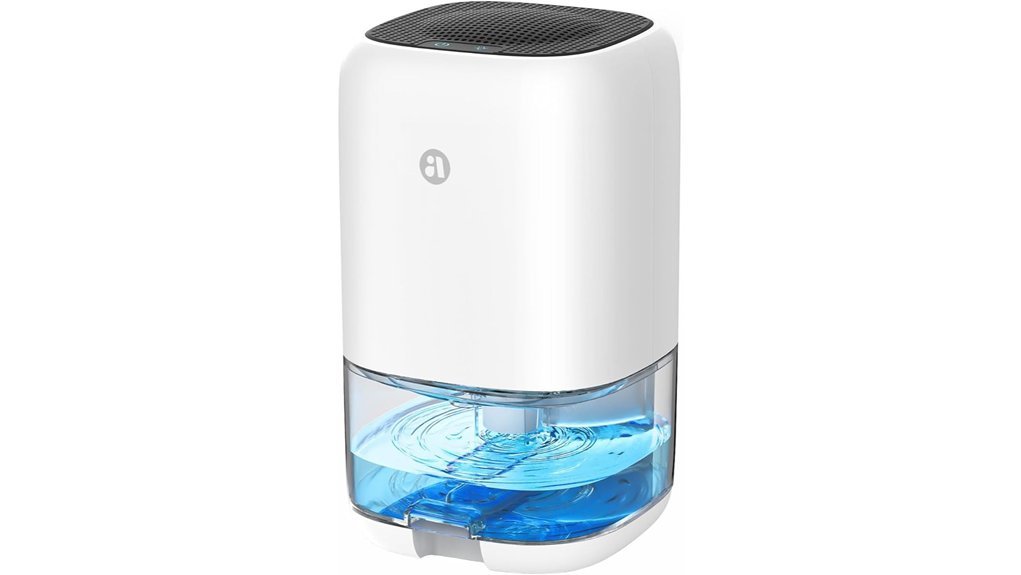
TABYIK 35oz Quiet Dehumidifier with Auto Shutoff
Best for Quiet Bedrooms
The TABYIK 35oz Peltier dehumidifier is designed for small rooms where low noise and simple operation matter. It is rated at about 28dB and can collect up to 16oz (450ml) per day under the manufacturer’s test conditions of 86°F and 80% relative humidity. The transparent tank, automatic full-tank shutoff, built-in handle, and optional seven-color light make it easy to use in a bedroom, bathroom, closet, office, or RV.
Best For: Noise-sensitive bedrooms and compact rooms with mild condensation, stuffy air, or a musty smell caused by elevated humidity.
Why You’ll Like It: It offers quiet operation, a compact footprint, and straightforward controls without an app, complicated settings, or a large floor appliance.
Who Should Avoid It: It is not powerful enough for a wet basement, an active leak, laundry drying, or a large room with persistent high humidity.
Pros:
- Stated 28dB operation suits many sleep and work areas.
- Automatic shutoff activates when the tank is full.
- Compact, lightweight design is easy to move.
- Transparent 35oz reservoir makes the water level easy to monitor.
- The ambient light can be controlled separately from dehumidification.
Cons:
- Moisture removal is modest compared with compressor dehumidifiers.
- Real-world collection will be lower than the maximum figure in cooler or less humid rooms.
- The tank requires regular manual emptying.
- There is no confirmed continuous-drain connection.
Bangnics Mini Dehumidifier for Small Spaces
Best Simple Compact Option
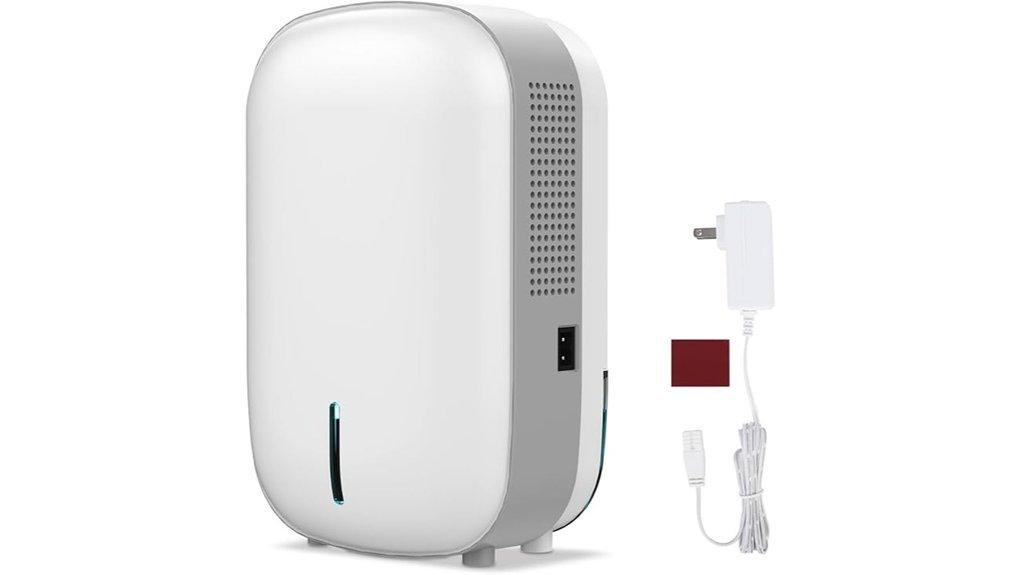
This compact electric dehumidifier is designed for small bathrooms, bedrooms, closets, storage rooms, RVs, campers, and boats. The product listing rates it to collect up to 14oz (420ml) per day at 86°F and 80% relative humidity. It also includes automatic shutoff, power-off memory, and operation below 30dB, making it a convenient option for a small enclosed area with a light moisture load.
Best For: Buyers who want a basic plug-in unit with a small footprint, automatic restart behavior, and no complicated controls.
Why You’ll Like It: The combination of automatic shutoff and power memory supports simple day-to-day operation and may be useful with a compatible smart outlet.
Who Should Avoid It: Skip it for large rooms, cold spaces, wet basements, or serious dampness that requires high-capacity water removal.
Pros:
- Compact body fits on shelves, counters, and other tight surfaces.
- Stated operating noise below 30dB suits many bedrooms and offices.
- Automatic shutoff helps prevent overflow.
- Power memory can restore operation after a power interruption.
- Maximum 25-watt consumption is modest, although efficiency still depends on actual water removal.
Cons:
- The maximum daily collection figure depends on unusually warm and humid conditions.
- The reservoir may require frequent emptying during humid weather.
- No continuous-drain option is listed.
- It should not be selected only because a seller description mentions basements; serious basement moisture usually requires a compressor model.
BEDRED CT11 95oz Compact Dehumidifier with Ambient Light
Best Large-Tank Compact Option
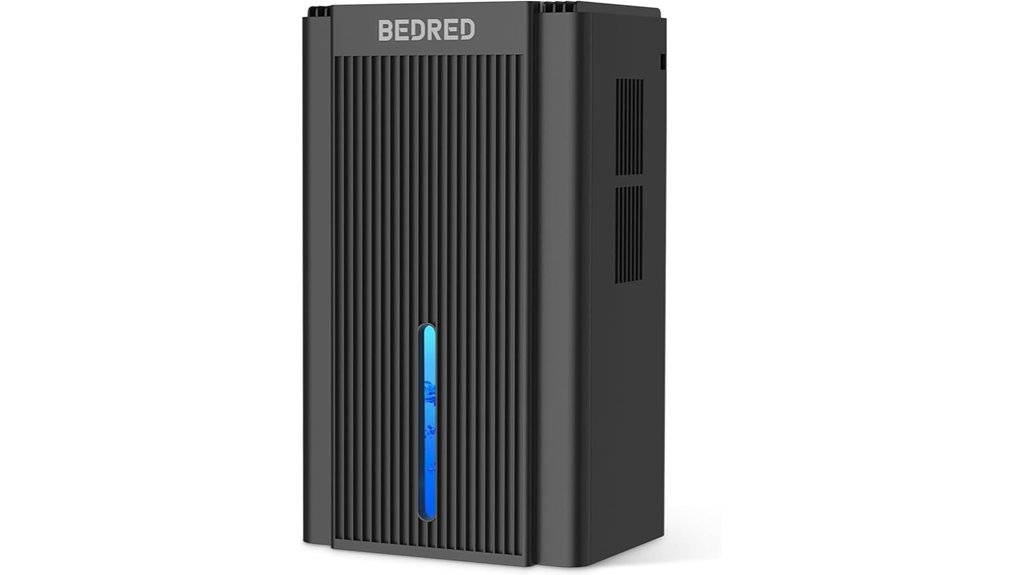
The BEDRED CT11 combines a 95oz water tank with thermoelectric moisture removal, automatic shutoff, a sleep mode, and seven-color ambient lighting. The seller markets it for spaces up to 1,000 square feet, but that number should be treated as a maximum marketing claim rather than proof that this compact model can control humidity throughout a large room. A dependable standardized daily moisture-removal figure was not confirmed, so the product is better judged by its large reservoir and comfort features than by its advertised coverage.
Best For: Buyers who value a larger reservoir, decorative lighting, and less frequent tank emptying in a small enclosed room with mild humidity.
Why You’ll Like It: Its 95oz tank provides more water storage than many mini models, while the sleep setting and adjustable lighting make it easier to place in a bedroom or living area.
Who Should Avoid It: Do not rely on this compact thermoelectric model to handle standing water, seepage, laundry drying, severe basement dampness, or verified high-capacity room control.
Pros:
- 95oz reservoir offers more storage capacity than many compact models.
- Automatic shutoff helps protect against overflow.
- Sleep mode turns off the ambient lighting for nighttime use.
- Seven-color lighting can serve as optional room ambience.
- Compact design is easier to position than a full-size compressor appliance.
Cons:
- The advertised 1,000 sq. ft. coverage should not be treated as guaranteed performance.
- No dependable daily moisture-removal figure was confirmed for comparison with the other powered models.
- A large tank does not necessarily mean faster moisture extraction.
- The tank requires manual emptying because a continuous-drain feature is not confirmed.
Eva-Dry Wireless Mini Dehumidifier, White (E-333)
Best Cordless Pick for Enclosed Spaces
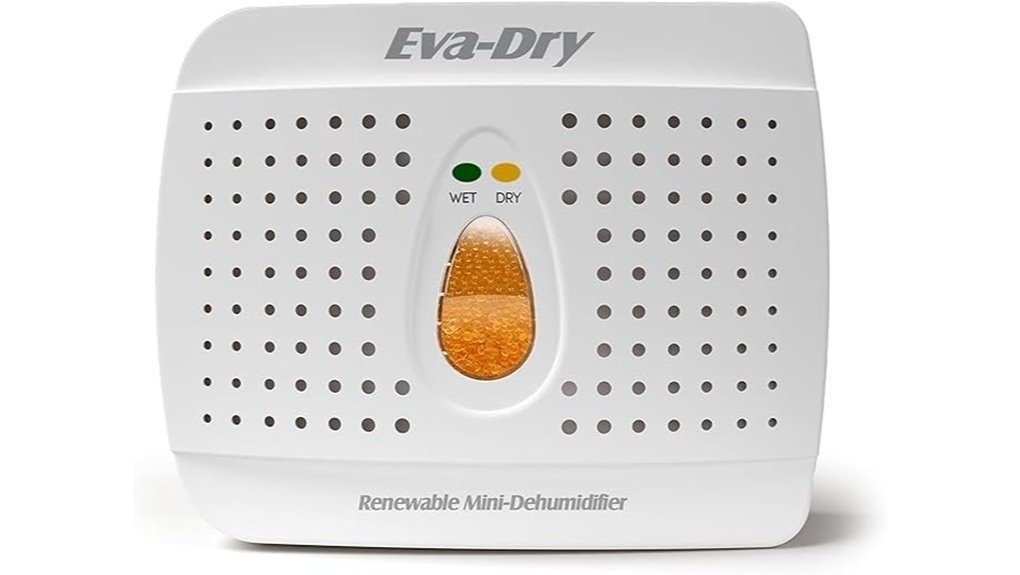
The Eva-Dry E-333 is different from the plug-in models above. It uses renewable silica gel to absorb moisture silently while unplugged, then connects to a wall outlet only for recharging. The manufacturer recommends it for enclosed areas up to 333 cubic feet, including closets, cabinets, safes, storage boxes, RV compartments, and boats. It can absorb up to 13oz of moisture before recharging, while color-changing beads provide a visual maintenance cue.
Best For: Tiny enclosed spaces where a cord, fan, water tank, or operating noise would be inconvenient.
Why You’ll Like It: It is silent, reusable, and cordless during normal use, with no liquid-water reservoir to carry or empty.
Who Should Avoid It: This is not a room-scale dehumidifier and should not be expected to control humidity across a bedroom, bathroom, open basement, or other normally ventilated room.
Pros:
- Cordless and completely silent during moisture absorption.
- Renewable desiccant can be recharged instead of discarded.
- Up to 13oz total absorption provides longer use than many tiny disposable moisture absorbers.
- Color-changing indicator makes maintenance easy to track.
- Compact shape works in cabinets, closets, safes, and storage areas.
Cons:
- Coverage is measured in cubic feet and is limited to very small enclosed spaces.
- Recharging takes approximately 10 to 12 hours under the manufacturer’s guidance.
- Time between recharges varies with humidity, enclosure size, and airflow.
- Moisture removal is much slower than a powered room dehumidifier.
BeOkay DH-AA2 Small Dehumidifier with Lights and Timers
Best Adjustable Controls
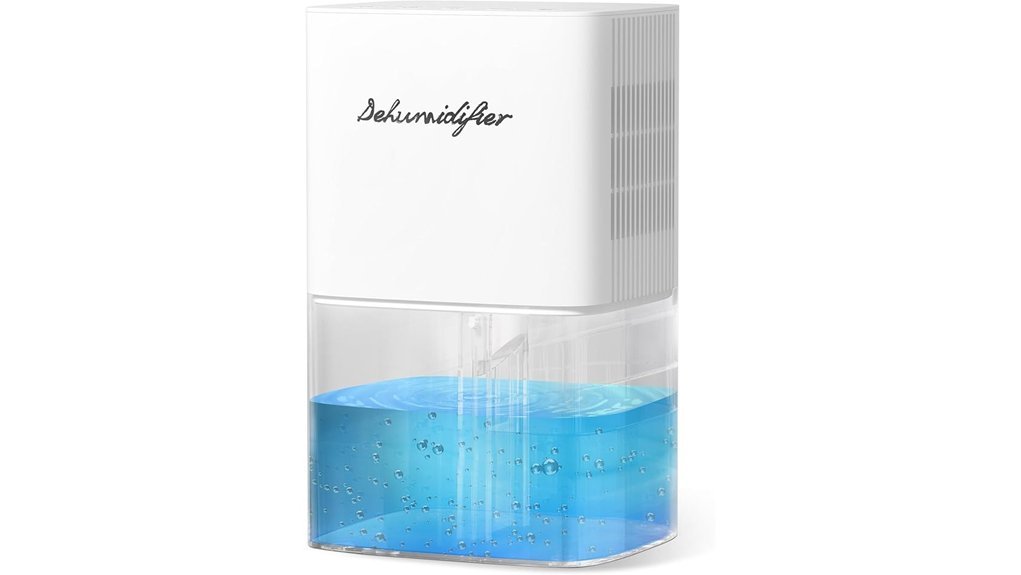
The BeOkay DH-AA2 is built for buyers who want more control than a basic one-button mini dehumidifier provides. It is listed for spaces up to 230 square feet and up to 0.3 liters of moisture removal per day. Its three operating modes, timer settings, adjustable 10-color lighting, automatic shutoff, and auto-defrost function make it versatile for bedrooms, bathrooms, and home offices with light humidity.
Best For: Small rooms where adjustable fan behavior, lighting, and scheduling are more useful than maximum water-removal capacity.
Why You’ll Like It: You can choose a quieter sleep mode, a normal setting, or a higher-output mode rather than running at one fixed speed.
Who Should Avoid It: Buyers who need fast structural drying, continuous drainage, humidity-based automatic control, or high-capacity basement performance should look at a compressor model.
Pros:
- Three operating modes provide more flexibility than basic mini units.
- Sleep mode is listed below 40dB.
- Multiple timers can reduce unnecessary runtime.
- Automatic shutoff helps prevent overflow.
- Auto-defrost protection supports operation when the internal cold surface begins to frost.
Cons:
- Daily extraction is low compared with full-size dehumidifiers.
- Published tank-capacity figures vary between current seller listings, so confirm the specification on the Amazon product page before ordering.
- A timer schedules operation but does not replace a true humidistat.
- Regular manual emptying may still be necessary in humid conditions.
Factors to Consider When Choosing a Dehumidifier for Small Spaces
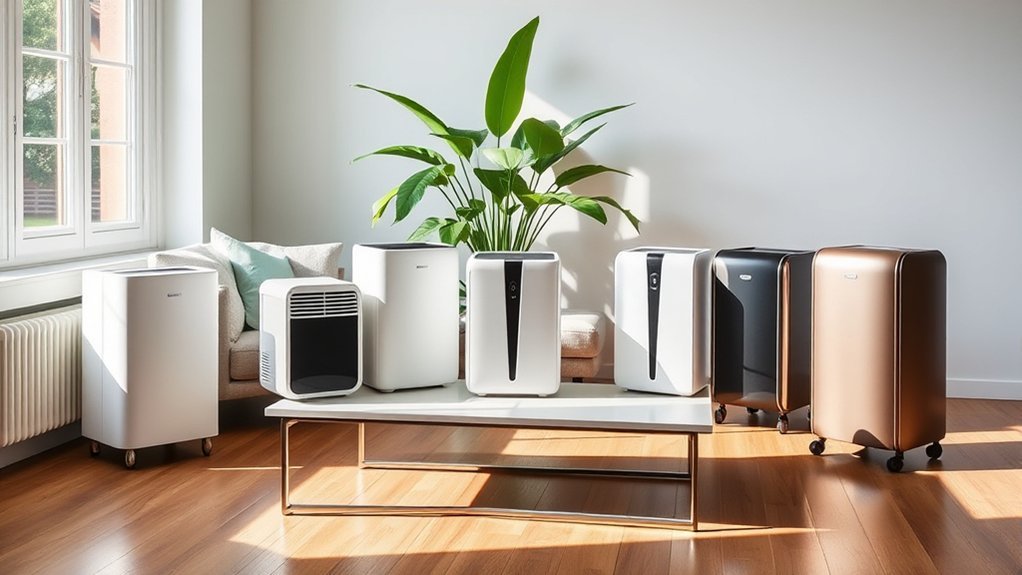
A small dehumidifier is most useful when it matches the room, temperature, and moisture load. Compare the extraction method, tested daily capacity, tank size, drainage, noise, and safety features instead of choosing from a square-foot claim alone.
1. Match the Unit to the Use Case
Choose a plug-in thermoelectric model for a warm bedroom, bathroom, office, or RV with mild humidity. Choose a rechargeable desiccant model for a closet, cabinet, safe, or storage box. For a wet basement, recurring seepage, laundry drying, wet building materials, or persistent relative humidity above your target, a higher-capacity compressor dehumidifier is usually the more suitable category.
2. Compare Moisture-Removal Capacity Carefully
Daily extraction claims for compact Peltier units are often measured under warm and very humid conditions, such as 86°F and 80% relative humidity. A unit advertised to collect 14 to 35 ounces per day may remove much less water in a cooler bedroom with moderate humidity. Compare products using the same test conditions whenever possible, and do not confuse water-tank size with daily moisture-removal capacity.
3. Check Temperature and Humidity Conditions
Thermoelectric dehumidifiers work best in warmer rooms. Their output can fall sharply in cooler conditions or when relative humidity is already moderate. Use a digital hygrometer to measure the room instead of guessing. The U.S. Environmental Protection Agency recommends keeping indoor relative humidity below 60% and ideally around 30% to 50% when possible. See the EPA’s mold and moisture guidance for additional information.
4. Consider Noise Where You Sleep or Work
For bedrooms and offices, look for a published noise figure below about 40dB, a sleep mode, or fan-speed control. Even a quiet hum can be noticeable on a nightstand, so place the unit on a firm, level surface away from the bed and keep the air inlet and outlet clear.
5. Compare Tank Size and Drainage
A larger tank means less frequent emptying, but it does not automatically mean the unit removes more moisture per day. Automatic shutoff is important for tank-based models. Continuous gravity drainage is useful for longer operation, but the hose must run downward without kinks to a safe drain or stable container. Never position a container where overflowing water could reach an outlet, adapter, extension cord, or appliance.
6. Review Energy Use and Efficiency
Small Peltier units often use relatively low wattage, but their moisture removal is also limited. Compare electricity use with the amount of water removed rather than relying on wattage alone. For higher-capacity compressor dehumidifiers, check the current ENERGY STAR dehumidifier directory and sizing guidance instead of assuming that a product is certified.
7. Check for a Humidistat or Use a Hygrometer
Many compact thermoelectric models do not let you select and maintain a specific relative-humidity level. They may continue running until switched off, stopped by a timer, or interrupted by a full tank. A separate digital hygrometer makes it easier to judge whether the unit is producing a meaningful change and helps prevent unnecessary operation after the room reaches your target range.
8. Look for Practical Safety Features
Useful features include full-tank shutoff, tank-position detection, tip protection, auto defrost, and a stable base. Keep any powered unit upright on a flat surface, away from splashing water, and with clearance around its vents. Do not place the unit on a wet bathroom floor, beside a tub or shower, or anywhere the cord or adapter could become wet.
9. Plan for Maintenance
Empty and rinse the tank regularly, wipe dust from the air inlet and outlet, and follow the manufacturer’s cleaning instructions. Recharge desiccant units only as directed. Never drink or reuse collected condensate, and do not let it sit in the reservoir for long periods. Address leaks, seepage, and water intrusion instead of relying on a dehumidifier alone.
10. Consider Design and Portability
Measure the intended shelf, counter, or floor area before ordering. A carry handle, transparent tank, easy-access controls, and optional light shutoff can make a compact model more convenient. Decorative lighting is most practical when it can be dimmed or disabled in a bedroom.
Before You Buy: Small-Dehumidifier Checklist
- Measure the humidity: Use a hygrometer instead of judging only by how the room feels.
- Find the moisture source: Check for plumbing leaks, rain entry, poor ventilation, wet materials, or condensation.
- Check the temperature: Peltier models generally collect less water in cooler rooms.
- Compare extraction, not only tank size: A large reservoir does not prove high daily output.
- Review the test conditions: Maximum figures measured at 86°F and 80% RH will not represent every home.
- Plan for emptying or drainage: Confirm whether you can maintain the tank or route a gravity hose safely.
- Check outlet safety: Keep the unit, adapter, cord, and outlet away from splashing or standing water.
- Choose a compressor model when needed: Mini units are not intended for severe dampness, seepage, flood drying, or large moisture loads.
Moisture-control tip: A dehumidifier can help control airborne moisture, but it cannot repair a plumbing leak, stop rainwater entry, dry concealed structural damage, or replace effective bathroom exhaust ventilation.
Stop and investigate: If you see standing water, spreading mold, wet drywall, damaged flooring, or repeated condensation, correct the moisture source and consider qualified repair or remediation help.
Frequently Asked Questions
How Do I Maintain a Dehumidifier for Optimal Performance?
Empty and rinse the tank before residue builds up, wipe dust from the vents, keep the unit upright on a level surface, and leave enough clearance for airflow. Follow the manual for filter cleaning, desiccant recharging, and storage. Unplug powered units before cleaning and never pour water into the appliance body.
What Size Dehumidifier Is Best for a Bathroom?
There is no single correct size for every bathroom. A mini thermoelectric unit can help with mild moisture in a small, warm bathroom, especially when an exhaust fan is already used during and after showers. Persistent condensation, peeling paint, mold, or very high humidity usually calls for better ventilation, repair of the moisture source, or a higher-capacity compressor dehumidifier.
Can I Use a Dehumidifier in a Closet?
Yes, but match the type to the space. A rechargeable desiccant unit is well suited to a small enclosed closet because it is cordless and silent during use. A powered model needs safe electrical access and enough open space around its vents for airflow. Do not cover the unit with clothing or position it where stored items can block its inlet or outlet.
Are There Energy-Efficient Dehumidifier Options Available?
Yes. For compact thermoelectric models, compare power consumption with verified daily moisture removal. Low wattage alone does not prove that a unit is efficient at removing water. For compressor models, look for a current ENERGY STAR certification and an appropriate pint-per-day capacity for the room’s dampness level.
How Often Should I Empty the Water Tank?
Empty it whenever the full-tank indicator appears or before an extended period away from home. The interval may range from less than a day to several days depending on tank size, temperature, humidity, and runtime. Do not let collected water sit for long periods, and rinse the tank regularly to reduce residue and odors.
Will a Small Dehumidifier Stop Mold?
It may help reduce one condition that supports mold growth, but it will not remove existing mold or fix the moisture source. Clean affected surfaces appropriately, repair leaks, improve ventilation, dry wet materials promptly, and use a hygrometer to track relative humidity. Extensive mold or water damage may require professional assessment.
Are Small-Dehumidifier Square-Foot Ratings Reliable?
They are best treated as rough guidance rather than guaranteed performance. Sellers may not use identical test methods, room temperatures, humidity levels, ceiling heights, airflow, or moisture loads. Compare stated daily water removal under clearly identified conditions, then consider the actual room temperature and measured relative humidity.
Do Mini Dehumidifiers Automatically Maintain a Selected Humidity?
Many compact Peltier models do not include a true adjustable humidistat. They may run continuously until the tank becomes full, the timer ends, or you switch them off. Use a separate hygrometer to measure the room, and check the product controls carefully if automatic humidity-based cycling is important to you.
Can a Mini Dehumidifier Work in a Basement?
It may collect some water in a warm, small, lightly humid basement area, but it is generally not the right category for a damp or wet basement. Seepage, sweating walls, laundry drying, standing water, or widespread musty conditions usually require source repair, drainage improvements, and a compressor dehumidifier rated in pints per day.
Conclusion
For the most balanced small-space setup, the Levoair 68oz dehumidifier offers the strongest combination of reservoir size, stated test-condition output, automatic shutoff, and continuous gravity drainage. Choose the TABYIK 35oz when bedroom noise is the priority, the Bangnics Mini when you want simple controls and power memory, or the BeOkay DH-AA2 when adjustable modes and timers matter. The BEDRED CT11 provides a larger reservoir, but its advertised coverage should not replace a verified daily extraction figure when sizing the unit. For a closet, cabinet, safe, or RV compartment, the cordless Eva-Dry E-333 is the better match. Whatever model you choose, measure the room’s humidity and address leaks or poor ventilation so the dehumidifier is solving the right problem.
Final recommendation: Choose by moisture load first, then compare verified extraction conditions, noise, tank maintenance, and drainage. A compact unit is best for mild humidity in a small enclosed space, not for structural water problems.