Last checked: August 2026
A damp couch can develop musty odors, feel uncomfortable, and remain vulnerable to mildew when the surrounding room stays humid. A dehumidifier can lower airborne moisture around upholstered furniture, but it cannot repair a leak, remove existing mold, or quickly dry waterlogged cushions. For most living rooms, a compressor dehumidifier with an adjustable humidistat is the strongest choice. Compact thermoelectric models are better for small enclosed rooms, RVs, or mild localized humidity. This guide compares six electric dehumidifiers for couch areas, from small-space units to higher-capacity machines for large, damp rooms.
Quick verdict: The Waykar 34 Pint Dehumidifier is the most practical match for many living rooms because it combines compressor-based moisture removal, adjustable humidity control, and continuous gravity drainage. The linked GE 50 Pint is a strong large-room option with Smart Dry and a 15-pint bucket, but this exact linked variant is the standard model rather than the built-in-pump version. Choose the Waykar 80 Pint only for a large or persistently damp space. For a small room with mild humidity, the Pure Enrichment PureDry or TABYIK 35 OZ is easier to place.
Important: Use a separate hygrometer when possible, aim for about 30% to 50% relative humidity, and address leaks or wet upholstery directly. A dehumidifier reduces airborne moisture but does not remove existing mold or replace proper cleaning and drying.
Key takeaways
- Size the dehumidifier for the entire room, not only the couch.
- Choose a compressor model for ongoing living-room humidity and a thermoelectric mini only for mild moisture in a small enclosed space.
- Do not confuse daily extraction capacity with bucket size or marketing coverage.
- Use direct upholstery drying and cleaning after spills, leaks, or visible mold.
Quick Comparison
| Product | Best Use | Type | Key Advantage | Main Limitation | Amazon |
|---|---|---|---|---|---|
| Waykar 34 Pint Best Overall for Typical Living Rooms |
Medium rooms and steady humidity | Compressor | Balanced capacity, humidistat, and drainage options | Tank may fill quickly without a hose | Check Details |
| GE 50 Pint Best for Large Living Areas |
Large living areas, basements, and garages | Compressor | 50-pint capacity, Smart Dry, and a 15-pint bucket | Linked variant has no built-in pump and is more noticeable in a quiet room | Check Details |
| Waykar 80 Pint Best for Very Damp Large Spaces |
Large open rooms and heavy humidity | Compressor | High rated moisture-removal capacity | Oversized for many normal living rooms | Check Details |
| Pure Enrichment PureDry Best for Very Small Rooms |
Small rooms, closets, and mild localized dampness | Thermoelectric | Compact, portable, and simple | Too weak for a large or seriously damp living room | Check Details |
| TABYIK 35 OZ Best Compact Value |
Bedrooms, small sitting rooms, RVs, and closets | Thermoelectric | Quiet operation and easy portability | Modest extraction rate | Check Details |
| BEDRED 95 OZ Best Quiet Large-Tank Mini |
Mild humidity in a bedroom or smaller living space | Thermoelectric | Larger tank and sleep mode | Marketing coverage should not be treated like compressor capacity | Check Details |
How We Compared These Dehumidifiers
We focused on the factors that matter most around upholstered furniture: realistic moisture-removal strength, room suitability, adjustable humidity control, drainage options, tank size, operating noise, portability, and automatic shutoff. We also checked the linked model variants and separated compressor models from thermoelectric mini units because their performance is not directly comparable. Manufacturer room-size claims are useful for orientation, but actual results depend on temperature, starting humidity, airflow, doors, windows, and the source of the moisture.
Waykar 34 Pint Energy Star Dehumidifier for Homes
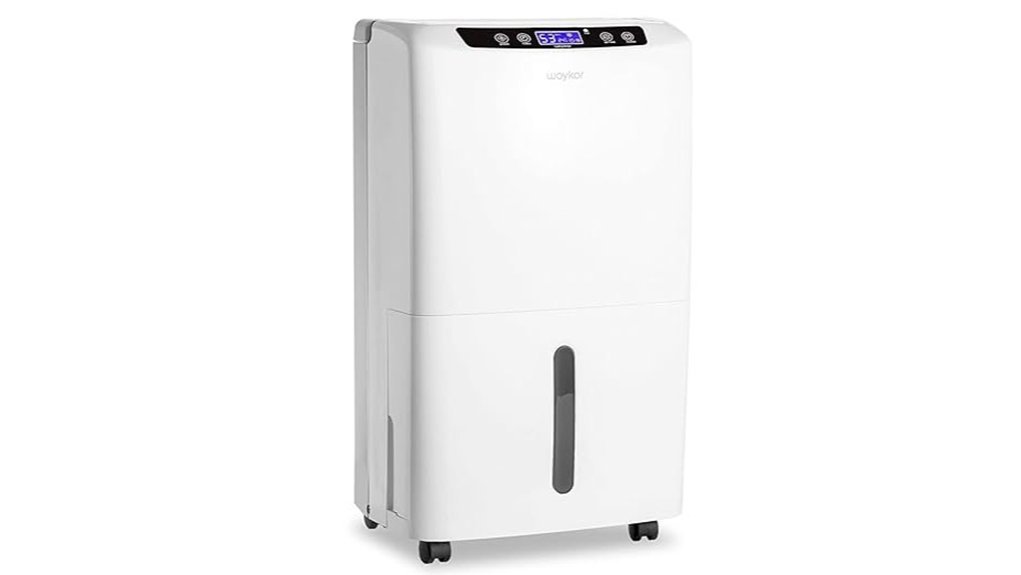
Best overall for many living rooms: The Waykar 34 Pint Dehumidifier offers a practical balance when the couch is in a medium-size room and a mini unit is too weak. The linked listing rates it for up to 2,000 square feet and up to 34 pints per day at 95°F and 90% relative humidity. It includes adjustable humidity settings, automatic operation, tank-full protection, a timer, auto restart, two fan speeds, and both tank and hose drainage.
The 0.66-gallon removable tank is convenient for occasional use, while the included hose supports continuous gravity drainage to a suitable lower drain. This compressor model provides meaningful room-level humidity control without the footprint of the largest units in this guide, but its collection rate will be lower under cooler or less humid household conditions.
Why You’ll Like It: It combines compressor performance, adjustable humidity control, and flexible drainage in a size that suits many living rooms.
Who Should Buy This: People with a typical living room, basement sitting area, or medium-size room that regularly stays damp.
Who Should Avoid This: Buyers treating only a tiny closet or those facing active flooding, a plumbing leak, or severe structural moisture.
Pros:
- Balanced 34-pint rating for medium rooms and everyday humidity control.
- Adjustable target humidity and automatic operation.
- Included drain hose supports continuous gravity drainage.
- Timer, auto restart, washable filter, handle, and portability features add convenience.
Cons:
- The 34-pint rating is based on hot, high-humidity test conditions.
- The 0.66-gallon tank can fill quickly without continuous drainage.
- Compressor operation is more audible than a thermoelectric mini unit.
GE Portable 50 Pint Dehumidifier (Standard Drainage)
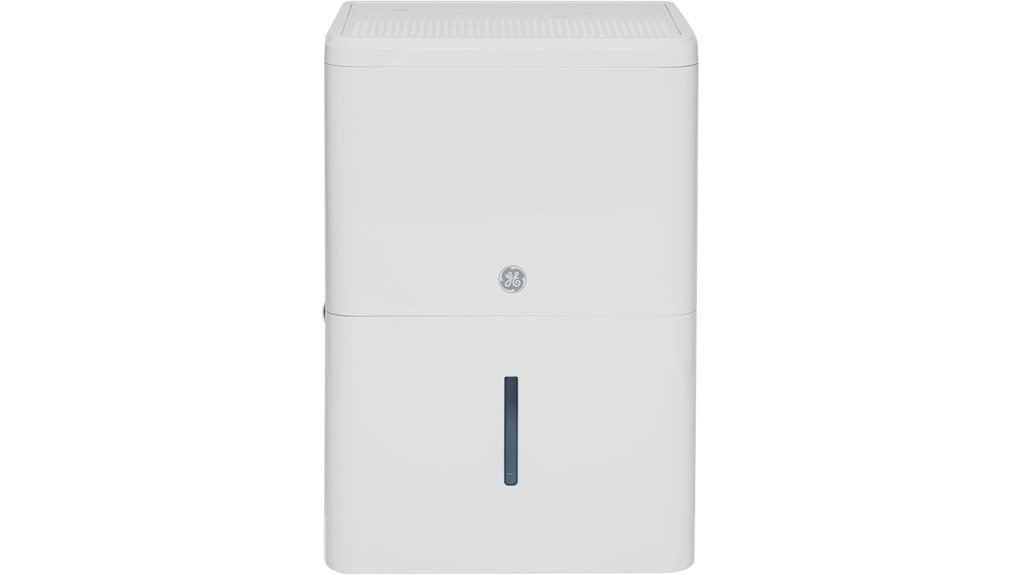
Best for large living areas: The linked GE 50-pint portable dehumidifier is a strong fit for a large living room, basement, garage, or other persistently humid area. This exact linked variant combines a 50-pint daily rating with an adjustable humidistat, three fan speeds, Smart Dry control, a 15-pint bucket, and a continuous gravity-drain port.
Model-match note: GE sells a separate 50-pint pump variant, but the affiliate link in this article points to the standard 50-pint model. Choose this linked version when a floor-level drain or manual bucket emptying works for your setup. If water must travel upward to a sink or window, verify and purchase the pump-equipped variant instead.
GE lists coverage up to 4,500 square feet, but room shape, airflow, temperature, and moisture load still determine actual performance. The listed sound range is about 47 to 50 dBA depending on the setting, so compressor and fan noise may still be noticeable during television or conversation.
Why You’ll Like It: It provides substantial room-level moisture removal, a large 15-pint bucket, and automatic fan adjustment without requiring the footprint of the largest model in this guide.
Who Should Buy This: Buyers with a large damp room and access to a suitable low gravity drain, or those comfortable emptying the bucket.
Who Should Avoid This: People who need pumped upward drainage, a very small bedside unit, or near-silent operation.
Pros:
- 50-pint daily rating suits demanding residential humidity control.
- Smart Dry, an adjustable 30% to 70% humidistat, and three fan speeds improve control.
- Continuous gravity drainage and a 15-pint bucket provide two water-removal options.
- Casters and handles help with movement despite the larger size.
Cons:
- The exact linked variant does not include a built-in pump.
- Heavier and bulkier than mini dehumidifiers.
- Compressor and fan noise can be noticeable in a quiet sitting area.
Waykar 80 Pint Energy Star Home Dehumidifier
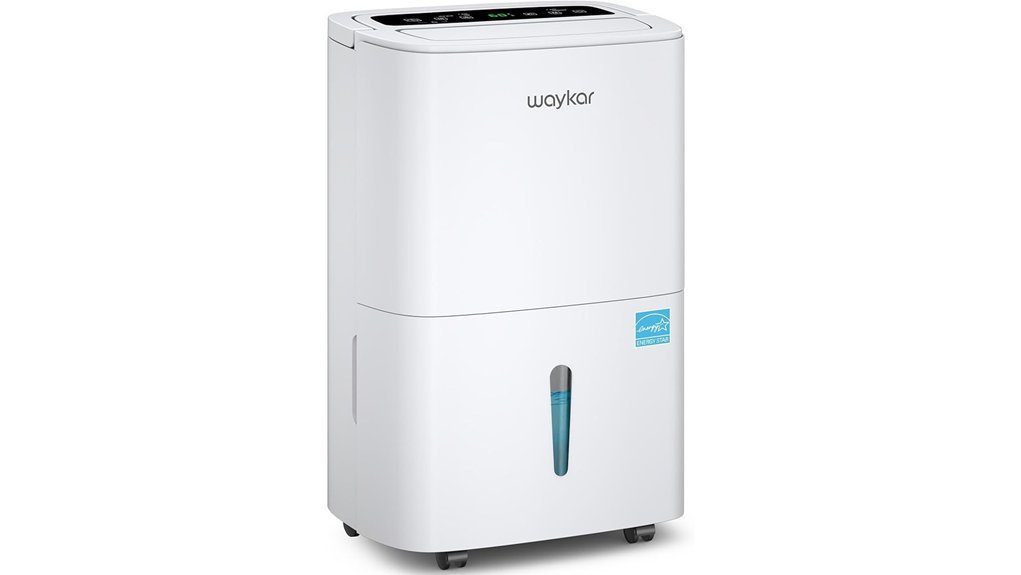
Best for very damp large spaces: The Waykar 80 Pint model is designed for large rooms, basements, and open living areas where a mini dehumidifier would be too weak. The linked listing describes removal of up to 80 pints per day at 95°F and 90% relative humidity, and 62 pints per day at 86°F and 80% relative humidity. Those are demanding test conditions, so collection in a cooler living room can be lower.
The manufacturer lists coverage up to 5,000 square feet, but that figure should be treated as a broad orientation rather than a guarantee. You can set a target humidity, use the tank or connect the drain hose for continuous gravity drainage, and move the unit with its casters and handle. This model is most appropriate for a large couch area with persistent humidity and may be unnecessary for a normal bedroom or mildly damp living room.
Why You’ll Like It: It offers much stronger room-level moisture control than a thermoelectric unit and supports continuous drainage for lower-maintenance operation.
Who Should Buy This: Homeowners with a large, humid living room, basement family room, or open floor plan.
Who Should Avoid This: People who only need occasional moisture control in a small room or who cannot provide clearance and a safe downward drainage route.
Pros:
- High listed moisture-removal capacity for large, damp areas.
- Adjustable humidity control helps maintain a chosen target.
- Tank and hose drainage options support flexible setup.
- Casters, handle, timer, auto defrost, and washable filter improve usability.
Cons:
- The headline 80-pint figure is measured under hotter and more humid conditions than most living rooms.
- Large footprint and compressor noise may be noticeable near a couch.
- Manual tank emptying can be frequent if continuous drainage is not used.
Pure Enrichment PureDry Mini Dehumidifier (27oz)
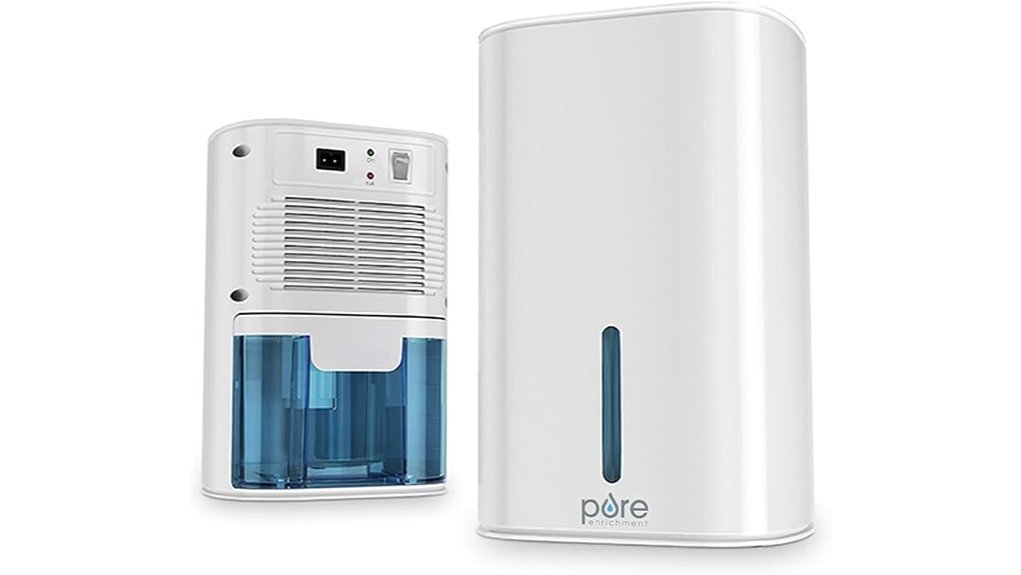
Best for very small spaces: The Pure Enrichment PureDry is a compact thermoelectric dehumidifier for a small bedroom, closet, RV, or enclosed sitting area with mild humidity. Its 27-ounce transparent tank makes the water level easy to see, and automatic shutoff stops operation when the tank is full. The manufacturer rates it to remove about 10 ounces of water per day under warm, humid test conditions and lists coverage up to 110 square feet.
This model makes sense when you need a quiet unit that can sit near, but not directly against, furniture. It is not a substitute for a compressor dehumidifier in a large living room or for drying cushions after a spill. Its extraction rate also drops in cooler or less humid conditions.
Why You’ll Like It: It is small, lightweight, easy to move, and simple to operate without complicated settings.
Who Should Buy This: People treating mild humidity in a very small couch area, bedroom corner, closet, boat, or RV.
Who Should Avoid This: Anyone dealing with visible condensation across a full room, active water intrusion, soaked upholstery, or persistent humidity above the target range.
Pros:
- Compact 27-ounce tank fits in tight spaces.
- Automatic shutoff helps prevent tank overflow.
- Transparent reservoir makes the water level easy to monitor.
- Low-complexity design is convenient for light-duty use.
Cons:
- Limited to small-space and mild-humidity use.
- Rated extraction is based on warm, humid test conditions.
- No adjustable humidistat or continuous drain.
Dehumidifier for Bedroom, Bathroom, RV, Closet (35 OZ)
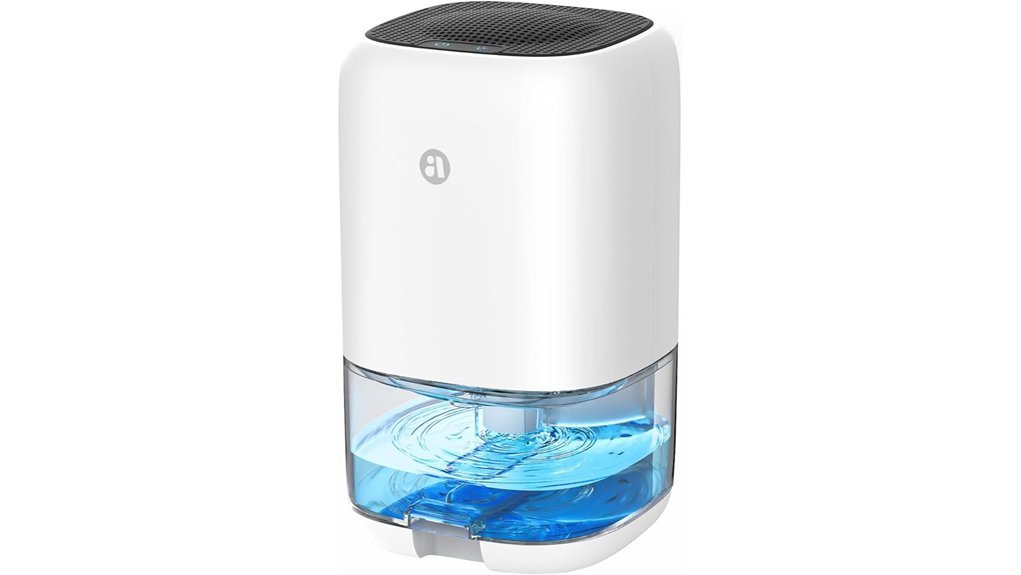
Best compact value: The TABYIK 35 OZ Dehumidifier is a small thermoelectric model for bedrooms, bathrooms, RVs, closets, and small couch areas with mild humidity. It is marketed for spaces up to 280 square feet and can collect up to about 16 ounces of water per day under warm, highly humid conditions. Its transparent tank, built-in handle, automatic shutoff, red full-tank indicator, and seven-color light make it easy to use.
At a claimed 28 dB, this is one of the quieter options for sleeping or relaxing areas. However, its modest extraction capacity means it should not be selected for a large living room, a wet basement, or upholstery that has absorbed liquid. Keep the air inlet and outlet clear so the unit can work properly.
Why You’ll Like It: It is portable, quiet, and straightforward, with a larger tank than many ultra-compact units.
Who Should Buy This: Apartment dwellers, RV users, or anyone managing light humidity in a small room.
Who Should Avoid This: Buyers who need adjustable humidity control, continuous drainage, or rapid whole-room moisture removal.
Pros:
- Quiet 28 dB claimed operating level suits bedrooms and sitting areas.
- Transparent 35-ounce tank and full-tank indicator simplify monitoring.
- Built-in handle makes it easy to move between small spaces.
- Automatic shutoff helps prevent overfilling.
Cons:
- Modest extraction compared with compressor models.
- Performance drops in cool or moderately humid conditions.
- No adjustable humidistat or hose drainage.
95OZ Quiet Dehumidifier for Home with Ambient Light
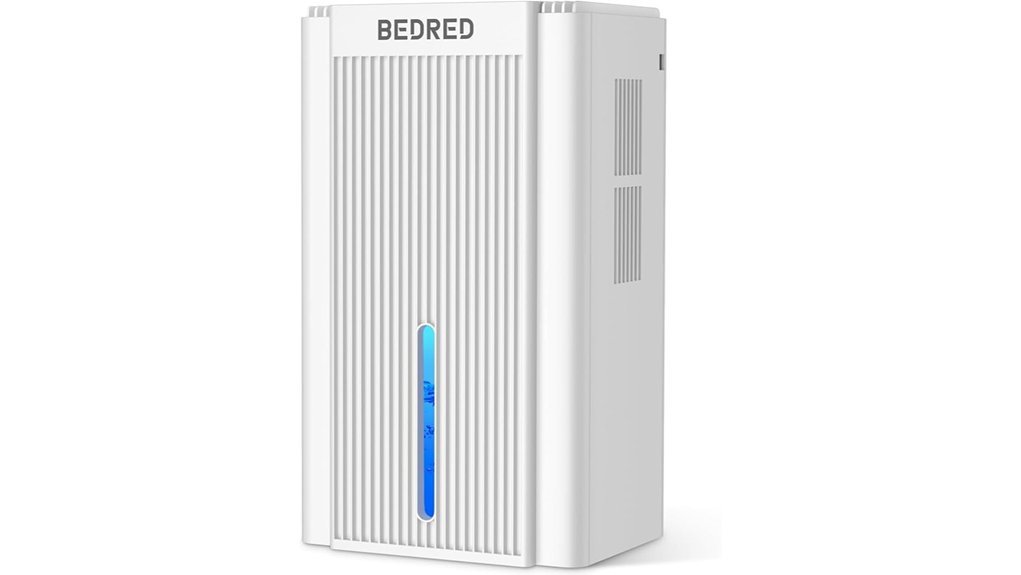
Best quiet large-tank mini: The 95-ounce BEDRED dehumidifier is a thermoelectric model with a larger tank, automatic shutoff, sleep mode, and seven-color ambient lighting. It is easier to place in a bedroom or smaller living space than a full-size compressor unit, and sleep mode lowers the fan disturbance and turns off the decorative light.
The advertised coverage of up to 1,000 square feet should be treated as a marketing maximum, not as equivalent to the capacity of a 34-, 50-, or 80-pint compressor dehumidifier. The linked listing does not clearly provide a daily extraction rate or an adjustable target-humidity range. Thermoelectric units work best in warm conditions and for mild, localized humidity. Choose it for quiet convenience, not for drying a heavily damp couch or controlling a large open room.
Why You’ll Like It: The larger tank and sleep mode reduce day-to-day fuss compared with many tiny thermoelectric models.
Who Should Buy This: People who want gentle moisture control in a smaller living space and value quiet operation.
Who Should Avoid This: Anyone relying on the 1,000-square-foot claim for a seriously humid open floor plan.
Pros:
- 95-ounce tank can reduce emptying frequency compared with smaller mini units.
- Sleep mode and automatic shutoff improve bedroom usability.
- Compact shape is easier to position than a compressor dehumidifier.
- Ambient light can be disabled for nighttime use.
Cons:
- Thermoelectric extraction is much lower than compressor performance.
- Advertised room coverage may create unrealistic expectations.
- No clear daily extraction rating, adjustable humidistat range, or continuous drain is stated.
Factors to Consider When Choosing a Dehumidifier for Couches
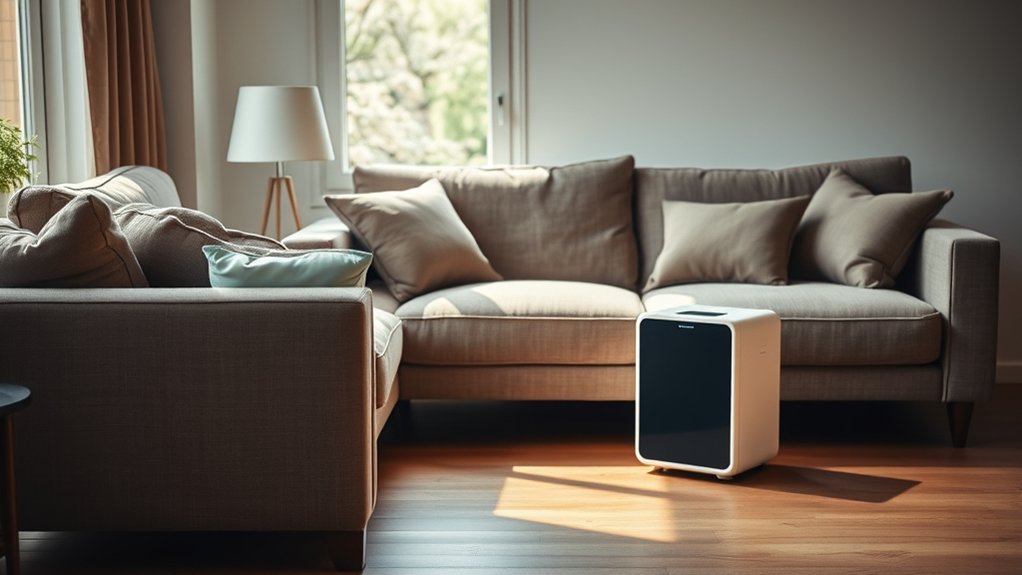
The best dehumidifier for a couch area is the one that controls the room’s humidity without blocking walkways, blowing directly against upholstery, or creating unnecessary noise. Start with a hygrometer and the size and dampness of the room, then compare extraction capacity, technology, drainage, tank size, sound, safety, and maintenance.
Compressor vs. Thermoelectric
Compressor dehumidifiers are the better choice for normal living rooms, basements, and persistent humidity because they remove much more water and usually include an adjustable humidistat. Thermoelectric models are smaller and quieter, but their extraction rate is much lower and depends heavily on warm, humid conditions. Choose a mini thermoelectric unit for mild dampness in a small room, not as a direct replacement for a 34- to 50-pint compressor machine.
Moisture Capacity
Daily capacity tells you how much moisture a unit can remove under specified test conditions. Do not confuse that figure with tank size. A 50-pint dehumidifier may have a much smaller bucket because it is designed to shut off, be emptied, or drain continuously. Ratings measured in very hot and humid air can be substantially higher than what the same machine collects in a cooler living room. Match capacity to the room’s actual humidity and choose more capacity when the space feels consistently damp, smells musty, or shows condensation.
Room Size and Airflow
Measure the room rather than the couch itself. A dehumidifier controls the surrounding air, so doors, open hallways, ceiling height, and airflow all affect performance. Leave the manufacturer-recommended clearance around the intake and exhaust. Do not wedge the unit behind the couch or place it where curtains, cushions, or walls block airflow.
Humidity Control
An adjustable humidistat is more useful than a simple on/off switch because it lets the machine cycle around a target. For most homes, aim for roughly 30% to 50% relative humidity and generally keep it below 60%. Very low humidity can dry wood, leather, skin, and airways, so more dehumidification is not always better. A separate hygrometer helps confirm the unit’s built-in reading.
Noise Levels
Noise matters near a couch because compressor and fan sound can compete with television and conversation. Mini thermoelectric models are usually quieter, but they also remove less moisture. For a full-size unit, compare low and high fan settings and consider placing it several feet from the main seating position while keeping airflow unobstructed.
Drainage and Tank Size
A larger tank means fewer interruptions, but continuous drainage is usually more convenient in a consistently humid room. Gravity drainage needs a hose that slopes downward to a suitable drain. A built-in pump can move water to a higher drain, but it must be installed and operated exactly as the manufacturer directs. Check hoses and connections regularly for leaks.
Size and Portability
Measure the available floor space and keep clear walking paths around the couch. A compact unit is easier to position, while caster wheels and handles help with heavier compressor models. Avoid lifting a full water tank inside the machine. Empty the bucket first and move the unit upright.
Safety Features
Look for automatic shutoff, tank-full indication, auto defrost for cooler rooms, a stable base, and recognized electrical certification where listed. Plug the unit directly into a suitable grounded outlet unless the manual explicitly permits another setup. Keep cords away from walkways, do not operate electrical equipment on a wet floor, and do not place collected-water containers where children or pets can reach them.
Maintenance
Wash or vacuum the filter on the schedule in the manual, empty and rinse the tank, inspect the drain hose, and keep the intake free of lint and pet hair. A dirty filter reduces airflow and can lower performance. Cleaning the tank also helps prevent slime and odors from developing inside the machine.
Odor Control
Lower humidity can reduce the conditions that support mildew and musty smells, but a dehumidifier does not remove an existing odor source by itself. If the couch already smells musty, identify and stop the moisture source, dry the upholstery fully, clean it according to the manufacturer’s care instructions, and inspect the padding and floor beneath it. Replace materials that cannot be safely cleaned and dried.
Safety and mold note: A dehumidifier can support moisture control, but it cannot guarantee mold prevention or make contaminated upholstery safe. Dry spills and leaks promptly, repair the moisture source, and seek qualified help when mold is extensive, keeps returning, or involves sewage or contaminated water.
Placement tip: Keep the dehumidifier on a level, dry surface with clear intake and exhaust space. Do not aim hot exhaust directly at leather or delicate upholstery for long periods.
Before You Buy: Quick Checklist
- Measure the full room and note whether doors usually remain open.
- Check the current relative humidity with a separate hygrometer.
- Choose compressor capacity for persistent room humidity and thermoelectric only for mild small-space moisture.
- Confirm where collected water will go: tank, gravity hose, or built-in pump.
- Check the unit’s dimensions, required clearance, and cord route.
- Compare low-speed noise if the machine will run during television or sleep.
- Review filter cleaning, tank cleaning, warranty, and return terms before purchase.
- Fix leaks and dry wet cushions instead of relying on room dehumidification alone.
Frequently Asked Questions
Can a Dehumidifier Prevent Mold Under Couch Cushions?
It can lower the room humidity and reduce mold-friendly conditions, but it cannot guarantee prevention. Lift cushions, improve airflow, dry spills promptly, and inspect the fabric, padding, frame, wall, and floor for hidden moisture. Existing mold needs appropriate cleaning or removal.
What Humidity Level Is Best Around a Couch?
A practical indoor target is about 30% to 50% relative humidity, with levels generally kept below 60%. Use a hygrometer to confirm the room rather than relying only on how the air feels.
How Do I Choose the Right Size for a Couch Area?
Size the dehumidifier for the entire room, not the furniture footprint. Consider square footage, ceiling height, open doors, starting humidity, temperature, and whether the moisture is occasional or persistent. A compressor model is usually the safer choice for a normal living room with ongoing dampness.
Can a Mini Dehumidifier Dry a Wet Couch?
Not quickly or reliably. Remove as much water as possible, separate cushions, increase airflow, use fans where safe, follow the upholstery care instructions, and address the spill or leak. A room dehumidifier can support drying, but soaked padding may need professional extraction or replacement.
Where Should I Place a Dehumidifier Near a Couch?
Place it on a level, dry surface with the intake and exhaust unobstructed and with the clearance required in the manual. Keep it out of walkways and do not push it directly against the couch, wall, curtains, or cushions.
Can Dehumidifiers Reduce Musty Smells in Upholstered Furniture?
They can help by reducing excess airborne moisture, but they will not remove an established odor source. Fully dry and clean the couch, inspect beneath it, and correct leaks or condensation that caused the smell.
Should I Run the Dehumidifier Continuously?
Run it until the room reaches the target humidity, then let the humidistat cycle the compressor as needed. Continuous drainage can make long operation easier, but the room should still be monitored so humidity does not fall too low.
Are Large Coverage Claims Always Realistic?
No. Coverage numbers are marketing guides and do not show the full moisture load. Extraction capacity, temperature, airflow, room layout, and starting humidity matter more. Thermoelectric units with large coverage claims should not be compared directly with compressor models rated in pints per day.
Conclusion
For most couch areas, the best purchase is a room dehumidifier matched to the actual humidity, not a passive closet absorber. The Waykar 34 Pint Dehumidifier offers the best balance for many medium living rooms. The linked GE 50 Pint is a stronger large-room choice when a bucket or gravity drain works for the setup, while the Waykar 80 Pint suits large, persistently damp spaces. The Pure Enrichment PureDry, BEDRED 95 OZ, and TABYIK 35 OZ are quieter, compact alternatives for small rooms and mild moisture.
Whichever model you choose, measure humidity, keep airflow clear, clean the filter and tank, and repair the source of dampness. That combination protects upholstery more effectively than relying on a dehumidifier alone.
Final recommendation: Choose the Waykar 34 Pint for a typical damp living room, the linked GE 50 Pint for a large room with bucket or gravity drainage, the Waykar 80 Pint for a very large or persistently damp space, or a compact thermoelectric model only when the room is small and the humidity problem is mild.
Check the current Amazon listing before ordering to confirm the exact model variant, included hose or accessories, warranty terms, electrical requirements, and seller details.