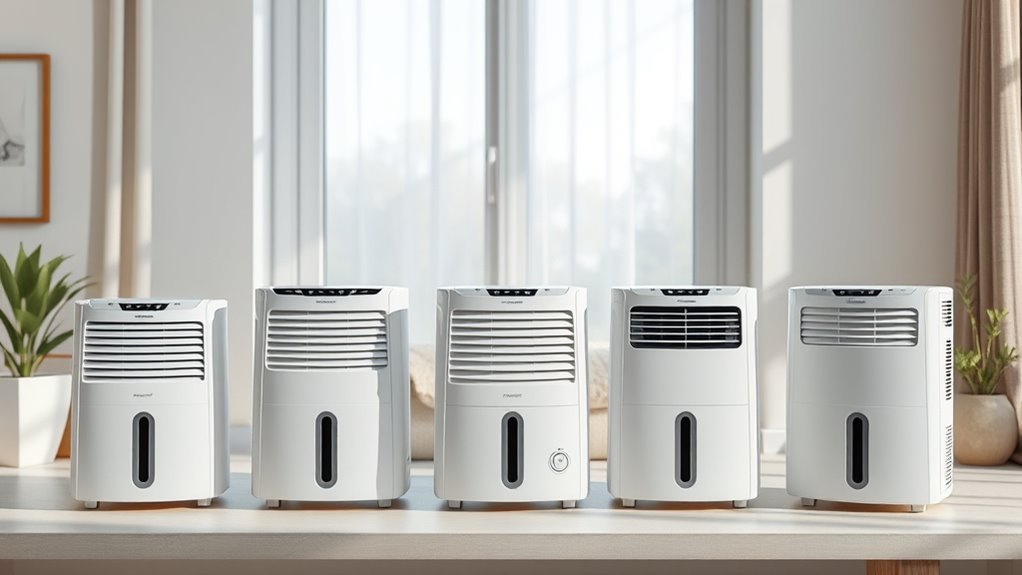
If you need a large-area dehumidifier for a damp basement, garage, open living area, or multi-room space in 2026, focus on more than the biggest square-foot number. The most useful comparison points are moisture-removal capacity, drainage setup, operating temperature, noise, energy efficiency, and whether the layout allows air to circulate. This guide compares eight relevant portable models, including pump-equipped, Wi-Fi, high-capacity, and value-focused options.
Quick Verdict
- Best overall with a pump: AEOCKY 4500 Sq.Ft model
- Best smart-control option: hOmeLabs Wi-Fi Dehumidifier
- Best for heavy dampness: Waykar 120 Pint model
- Best for a smaller large room: Waykar 34-Pint or PLUSCENT 32 Pint
How these picks were evaluated: We compared listed capacity, drainage options, control features, portability, noise claims, certification details where independently verifiable, and suitability for large residential spaces. No hands-on testing is claimed.
Quick Comparison of Large-Area Dehumidifiers
| Product | Best For | Seller-Listed Coverage | Capacity Note | Drainage | Amazon (paid link) |
|---|---|---|---|---|---|
| AEOCKY with Pump | Flexible upward drainage | Up to 4,500 sq. ft. | 24.5 pints/day standardized; up to 80 pints under hotter, wetter conditions | Built-in pump and hose | Check Price |
| hOmeLabs Wi-Fi | Remote monitoring and control | Up to 7,000 sq. ft. | 50-pint listed rating; up to 120 pints in extreme test conditions | Tank or continuous drain connection | Check Price |
| Waykar 120 Pint | Very damp basements and garages | Up to 6,000 sq. ft. | Up to 120 pints under hot, very humid conditions | Tank or included drain hose | Check Price |
| Avylo with Pump | Large tank and hands-off drainage | About 4,500–5,000 sq. ft.; listing versions vary | Up to 90 pints under high-temperature, high-humidity conditions | Built-in pump, hose, or tank | Check Price |
| DECIUU 100 Pint | Multiple drainage choices | Up to 5,000 sq. ft. | 32 pints/day standardized; up to 100 pints in extreme conditions | Tank, drain hose, or garden-hose connection | Check Price |
| Vellgoo 64 Pint | Balanced capacity and drainage flexibility | Up to 4,000 sq. ft. | Up to 64 pints under seller-stated maximum conditions | Tank, drain hose, or garden-hose connection | Check Price |
| Waykar 34-Pint | Medium to large rooms | Up to 2,000 sq. ft. | Up to 34 pints under hot, humid conditions | Tank or included drain hose | Check Price |
| PLUSCENT 32 Pint | Value-focused everyday use | Up to 2,500 sq. ft. | Up to 32 pints under seller-stated conditions | Tank or included drain hose | Check Price |
Capacity labels are not always directly comparable. Some sellers advertise a maximum measured in hot, very humid air, while standardized DOE ratings use cooler conditions that better resemble a basement. Use the exact model’s standardized capacity, drainage design, and room conditions—not only the headline square-foot claim.
AEOCKY 4500 Sq.Ft Energy Star Dehumidifier with Pump
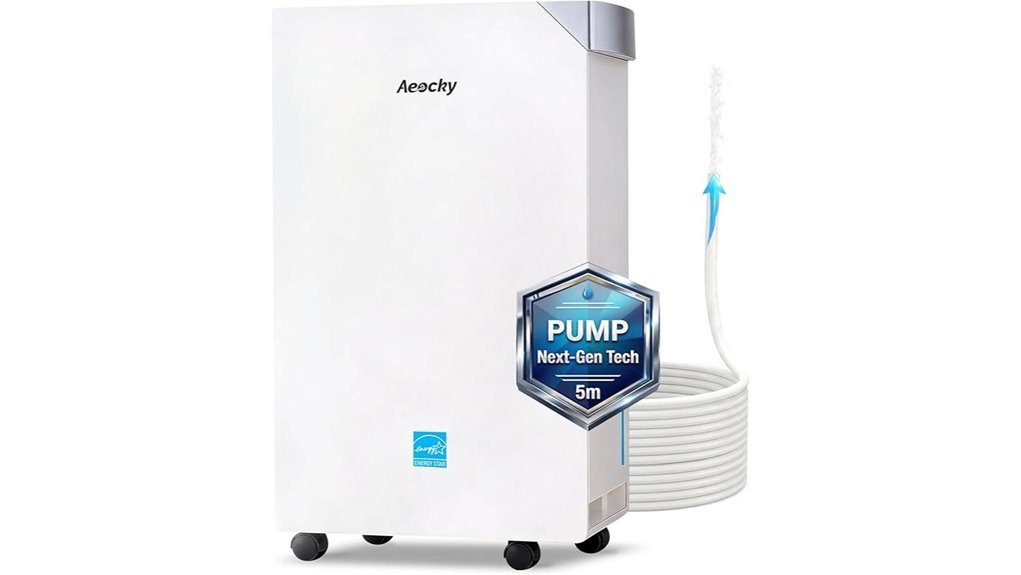
Our Pick: Best Overall with a Pump
The AEOCKY LEO-001 is a strong fit when gravity drainage is inconvenient. Its built-in pump is designed to move collected water upward by as much as 5 meters, giving you more placement freedom in a basement, laundry area, or large room. The Amazon listing promotes a maximum of up to 80 pints per day in hot, highly humid conditions, while the ENERGY STAR product record for the LEO-001 family lists a standardized capacity of 24.5 pints per day. That difference is normal across different test conditions, but it is important when comparing models.
Why You’ll Like It: The pump solves a real installation problem, and the model combines automatic humidity control, low-temperature operation features, power-off memory, and a drain hose.
Best For: Buyers who need a large-room dehumidifier that can pump water to a sink, window, or elevated drain instead of relying only on gravity.
Who Should Avoid It: Buyers with a nearby floor drain who do not need a pump may get better value from a simpler gravity-drain model.
Pros:
- Built-in pump supports upward drainage up to the seller-stated 5-meter limit.
- ENERGY STAR certification can be matched to the LEO-001 model family.
- Automatic humidity control, power-off memory, wheels, and hose drainage improve day-to-day convenience.
Cons:
- The marketed 80-pint maximum is not the same as the standardized 24.5-pint capacity.
- Pump systems add complexity and require correct hose routing.
- Confirm the exact LEO-001 model number and current certification before ordering.
hOmeLabs Wi-Fi Dehumidifier 7,000 Sq Ft 50 Pint
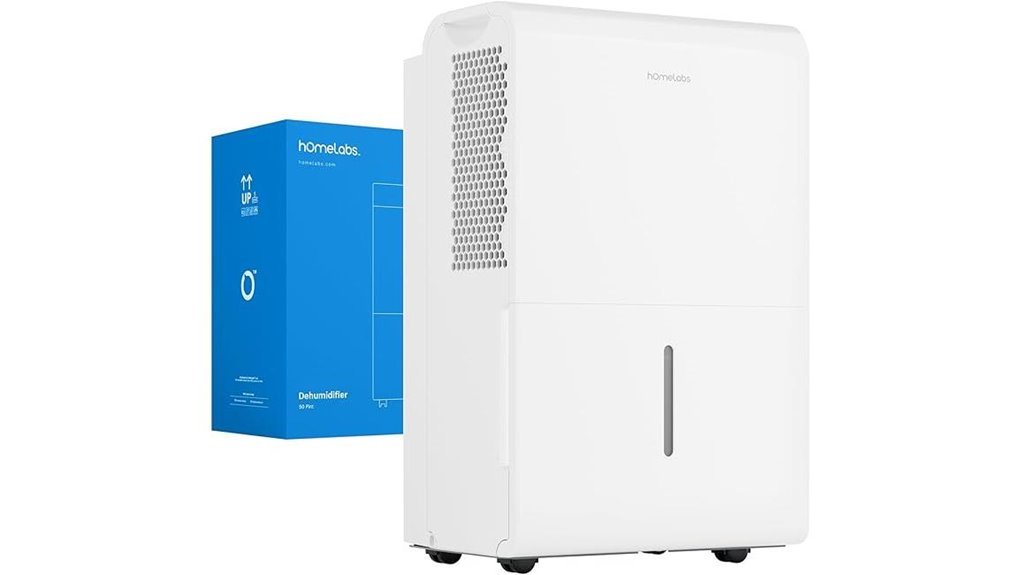
Our Pick: Best Smart-Control Option
The hOmeLabs Wi-Fi Dehumidifier is useful when you want to check humidity or adjust settings without visiting the unit each time. The listing describes a 50-pint rating and a maximum of up to 120 pints per day at 95°F and 90% relative humidity, with coverage marketed up to 7,000 square feet. Treat the coverage figure as a broad seller estimate because walls, doors, temperature, airflow, and moisture load can change real-world performance.
Why You’ll Like It: Wi-Fi control, automatic shutoff, a digital humidistat, turbo airflow, wheels, and handles make it easier to manage a large open area.
Best For: Homeowners or small-business users who value app control and want to monitor a basement, office, garage, or open living space remotely.
Who Should Avoid It: Buyers who need a built-in condensate pump should choose a pump-equipped model instead.
Pros:
- Wi-Fi app control allows remote adjustments and status checks.
- High seller-listed coverage suits large, open layouts when airflow is adequate.
- Turbo mode, wheels, handles, and automatic shutoff improve usability.
Cons:
- The 7,000-square-foot claim should not replace a capacity-based sizing check.
- Confirm whether the current bundle includes a drain hose.
- At about 41 pounds, it may be awkward to carry between floors.
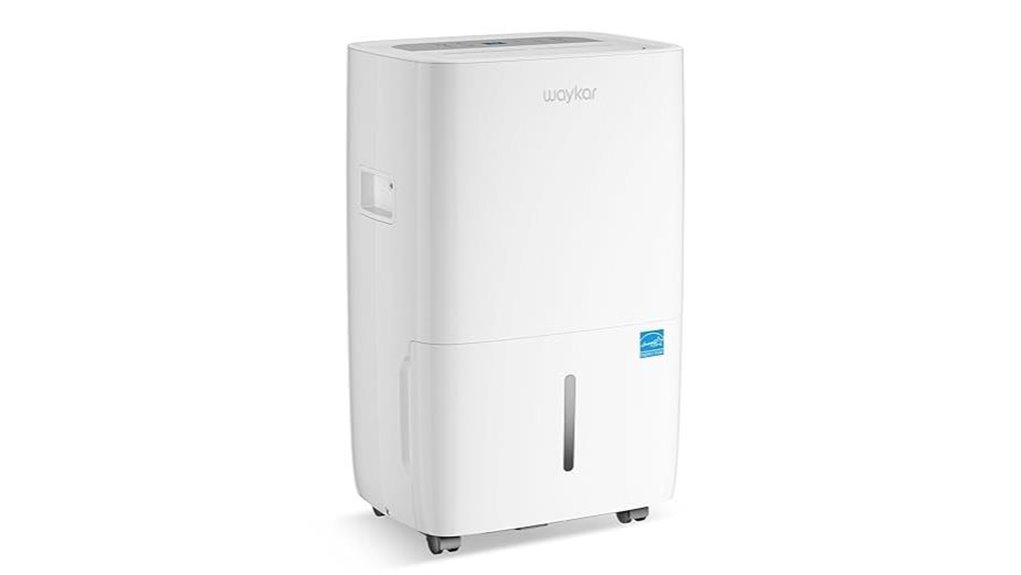
Waykar 120 Pint Energy Star Dehumidifier
Our Pick: Best for Heavy Dampness
The Waykar 120 Pint model is aimed at very damp basements, garages, workshops, and other large spaces. The seller advertises up to 120 pints per day under hot, very humid conditions and coverage up to 6,000 square feet. It also includes a drain hose and a visible water tank, making it practical for either manual collection or continuous gravity drainage.
Why You’ll Like It: Adjustable humidity control, multiple fan settings, directional airflow, a timer, and continuous drainage give you more control than a basic on-and-off unit.
Best For: Large, open areas with a high moisture load and access to a low drain.
Who Should Avoid It: Small rooms, lightly damp spaces, and locations without enough clearance for airflow.
Pros:
- High maximum capacity claim for demanding humidity conditions.
- Seller-listed coverage up to 6,000 square feet.
- Includes a drain hose and supports tank drainage.
Cons:
- The 120-pint figure is a maximum-condition claim, not necessarily the standardized basement rating.
- A high-output unit can be larger, heavier, and louder than a medium-capacity model.
- Continuous drainage requires a suitable downhill route unless a separate pump is used.
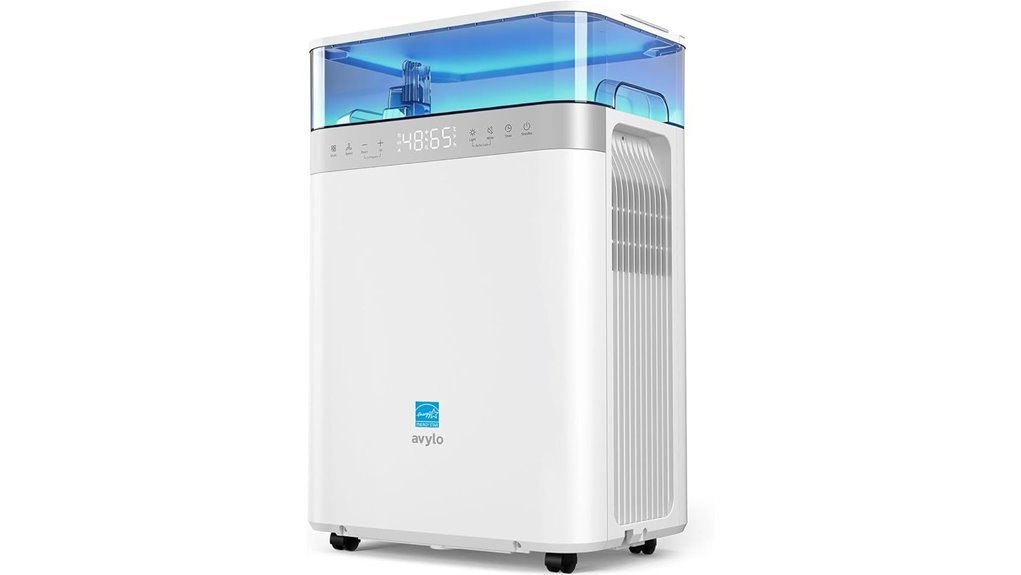
Avylo Basement Dehumidifier with Pump and Drain Hose
Our Pick: Best Large Tank and Pump Combination
The Avylo ADC018 combines a built-in pump with a large 2.11-gallon top-mounted tank. Current seller pages for the same ASIN vary between roughly 4,500 and 5,000 square feet of coverage, so confirm the live Amazon title before buying. The maximum 90-pint claim is based on high-temperature, high-humidity conditions rather than a typical cool-basement test.
Why You’ll Like It: The pump can lift water through the included hose, while the large tank gives you more time between manual emptying when a drain is not available.
Best For: Large basements, garages, and living spaces where water must travel upward or across the room.
Who Should Avoid It: Buyers who prefer a simple front-access tank or do not need pump drainage.
Pros:
- Built-in pump and included hose support hands-off drainage.
- Large top-mounted tank reduces emptying frequency.
- Seller-listed quiet operation, child lock, auto-defrost, and auto shutoff add convenience.
Cons:
- Coverage claims vary across current listing versions.
- The 90-pint figure is a maximum-condition rating.
- Top-tank access may be less convenient under shelving or a low counter.
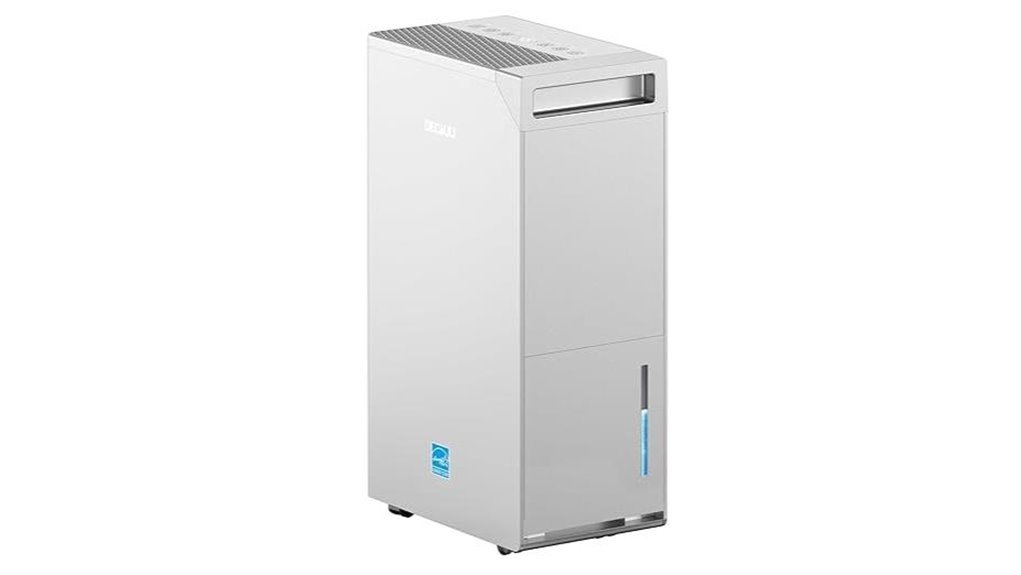
DECIUU 100 Pint Dehumidifier with Drain Hose
Our Pick: Best Drainage Flexibility
The DECIUU model gives you three practical water-removal choices: its tank, the included drain hose, or a garden-hose connection. The Amazon listing markets up to 100 pints per day in extreme humidity and coverage up to 5,000 square feet. The ENERGY STAR record associated with model DER32S01-50 lists a standardized capacity of 32 pints per day, so compare it with other units using the same test basis.
Why You’ll Like It: Smart humidity control, automatic restart, a washable filter, child lock, wheels, and several drainage methods make it adaptable to changing room layouts.
Best For: Large basements or garages where you want flexible drainage without committing to only one setup.
Who Should Avoid It: Buyers who need an integrated pump to move water uphill.
Pros:
- Tank, drain hose, and garden-hose connection provide flexible water removal.
- ENERGY STAR certification is verifiable for the associated model family.
- Adjustable humidistat, timer, washable filter, wheels, and child lock support everyday use.
Cons:
- The marketed 100-pint maximum differs substantially from the 32-pint standardized rating.
- The listing’s “Most Efficient 2024” wording is a historical designation, not proof of a current 2026 award.
- No built-in pump is described for this exact ASIN.
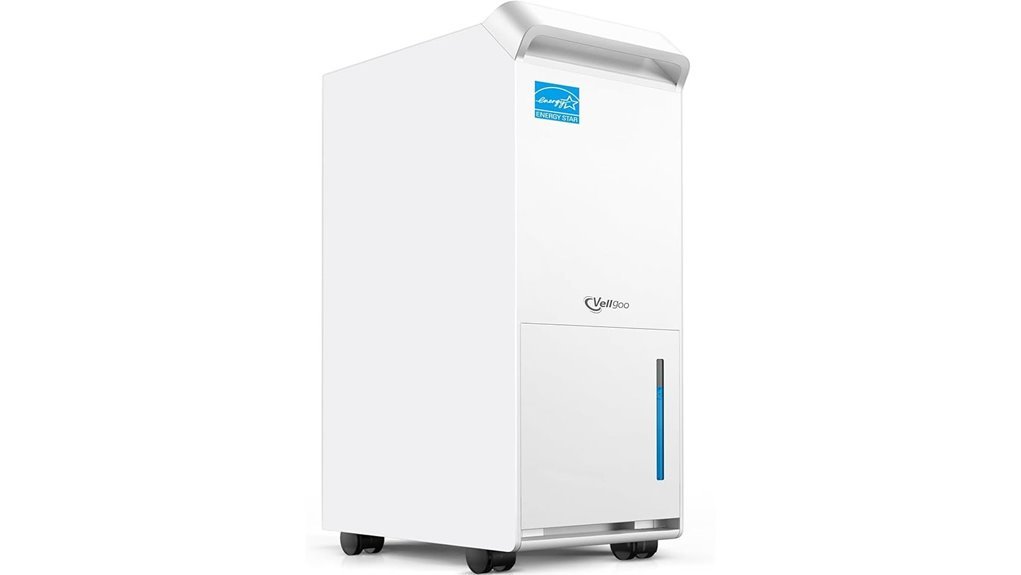
Vellgoo 64 Pint Dehumidifier with Smart Humidity Control
Our Pick: Best Balanced Feature Set
The Vellgoo DryTank listing for this ASIN currently emphasizes up to 4,000 square feet of coverage and a maximum of 64 pints per day. It is a sensible middle option for buyers who want more capacity than a 2,000-square-foot model but do not need Wi-Fi or an integrated pump. Smart humidity control cycles the compressor around your selected target instead of running continuously without regard to room conditions.
Why You’ll Like It: Three drainage choices, automatic restart, auto-defrost, a washable filter, and mobility features make it easy to adapt to a basement, garage, or large room.
Best For: Buyers seeking a balanced large-space dehumidifier with flexible gravity drainage.
Who Should Avoid It: Buyers who need app control or pumped upward drainage.
Pros:
- Seller-listed for up to 4,000 square feet.
- Tank, drain hose, and garden-hose options reduce drainage limitations.
- Humidity control, auto-defrost, auto-restart, and wheels improve convenience.
Cons:
- The maximum 64-pint claim should be compared using the same test conditions as competing models.
- The “Most Efficient 2024” reference is an older model-year designation.
- No Wi-Fi or integrated pump is listed for this model.
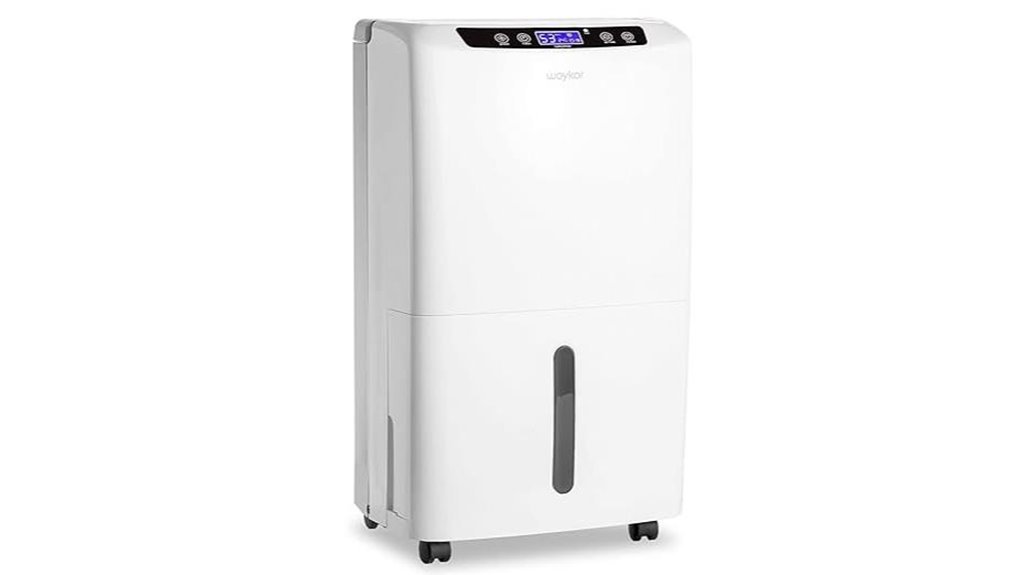
Waykar 34-Pint Energy Star Dehumidifier with Drain Hose
Our Pick: Best for Up to 2,000 Sq. Ft.
The Waykar 34-Pint model is the better fit when the room is large but does not need a heavy-duty 5,000- or 6,000-square-foot unit. The seller advertises up to 34 pints per day at 95°F and 90% relative humidity, coverage up to 2,000 square feet, a 0.66-gallon tank, and an included drain hose.
Why You’ll Like It: Adjustable humidity from 30% to 80%, two fan speeds, a 24-hour timer, wheels, handles, and automatic restart make it straightforward for everyday home use.
Best For: Medium to large rooms, apartments, finished basements, laundry rooms, and garages with moderate dampness.
Who Should Avoid It: Very wet spaces, broad multi-room layouts, or buyers who need upward pump drainage.
Pros:
- More appropriately sized for rooms up to the seller-listed 2,000 square feet.
- Includes both a tank and continuous drain hose.
- Timer, adjustable fan, automatic restart, and washable filter support easy use.
Cons:
- The 0.66-gallon tank can fill quickly in humid conditions.
- The 34-pint maximum is measured under hot, humid conditions.
- It lacks Wi-Fi and a built-in pump.
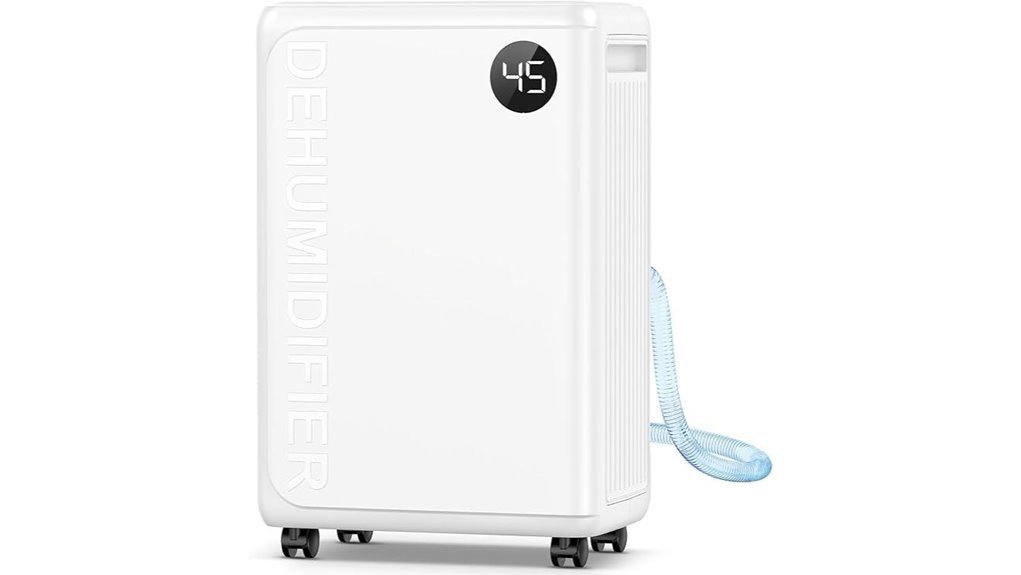
PLUSCENT 32 Pint Dehumidifier for 2500 sq.ft Home
Our Pick: Best Value-Focused Option
The PLUSCENT 32 Pint model targets spaces up to 2,500 square feet and offers three useful modes: normal dehumidification, continuous operation, and clothes-drying support. It includes a 2-liter tank and a 39.4-inch drain hose, so it works best when you can use continuous drainage during humid weather.
Why You’ll Like It: A 24-hour timer, auto-stop, automatic restart, auto-defrost, child lock, washable filter, wheels, and handles cover the main features most buyers need without adding app controls.
Best For: Budget-conscious buyers who want a practical dehumidifier for a bedroom suite, laundry area, basement zone, or medium-to-large living space.
Who Should Avoid It: Very wet whole-basement applications or anyone who needs a pump, Wi-Fi, or a large collection tank.
Pros:
- Seller-listed coverage up to 2,500 square feet.
- Three operating modes and a 24-hour timer improve flexibility.
- Includes a drain hose, washable filter, child lock, wheels, and handles.
Cons:
- The 2-liter tank may need frequent emptying without continuous drainage.
- The 32-pint claim should be checked against the current listing’s test conditions.
- No integrated pump or Wi-Fi control.
Factors to Consider When Choosing a Large Area Dehumidifier
Choose a large-area dehumidifier by matching its standardized capacity, drainage design, temperature range, and airflow needs to your space. Square-foot claims are useful for rough screening, but they are not enough by themselves.
Coverage Area and Room Layout
Measure the area you actually need to dry and consider whether it is open or divided by walls and closed doors. A portable unit can work well in an open basement, but one machine may not move dry air effectively through several closed rooms. For a multi-level or tightly divided home, a ducted whole-home dehumidifier or more than one portable unit may be more appropriate.
Standardized Capacity vs. Maximum Capacity
Capacity is measured in pints of water removed in 24 hours, but sellers may show different numbers for the same machine. A large “maximum” figure is often measured in hot, very humid air. DOE and ENERGY STAR ratings use standardized conditions that better represent a cooler basement. Compare standardized capacities whenever possible, and treat maximum-condition figures as supplemental information rather than direct proof that one model is stronger.
Energy Efficiency
Look for an exact model match in the current ENERGY STAR product database rather than relying only on a logo or an older “Most Efficient” year in a marketplace title. The key efficiency metric is the Integrated Energy Factor (IEF), expressed in liters of water removed per kilowatt-hour. Higher IEF values indicate more moisture removed for the electricity used.
Drainage Options
A removable tank is simple but may fill several times a day in a wet basement. Continuous gravity drainage is easier if a floor drain is lower than the dehumidifier outlet. A built-in pump is more useful when water must travel upward to a sink, window, or elevated drain. Secure every hose connection and make sure the route does not kink, freeze, or create a trip hazard.
Operating Temperature and Auto-Defrost
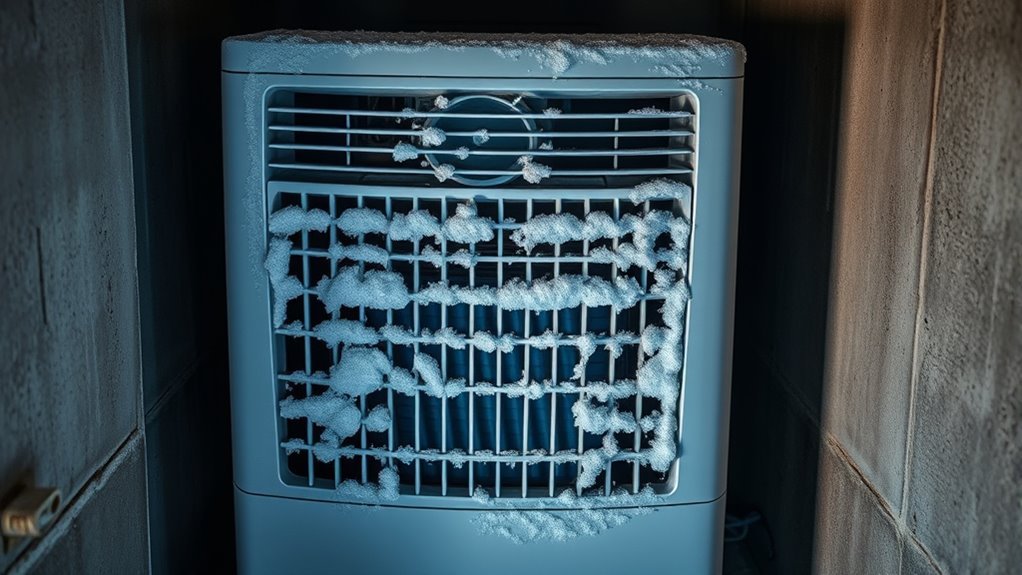
Cool basements can reduce moisture-removal performance and cause frost on the coils. Check the manufacturer’s minimum operating temperature and look for automatic defrost if the unit will run in a chilly basement, garage, or crawl-space-adjacent room.
Noise Level
Noise claims are useful only when measured under comparable settings. High fan speeds and compressor cycles will usually sound louder than sleep or low-fan modes. For bedrooms, offices, and living rooms, choose a model with adjustable fan speed and place it on a level surface away from rattling furniture.
Controls and Smart Features
A dependable humidistat, automatic restart, full-tank shutoff, timer, and filter reminder are more important than novelty features. Wi-Fi is useful for a remote basement or rental property, while a simple control panel may be better for buyers who want fewer setup steps.
Portability, Tank Access, and Size
Check the product’s dimensions, weight, handle position, wheel design, and tank location. A top-mounted tank may be easy to lift in an open area but inconvenient under shelving. Wheels help on one floor, but they do not make a heavy unit easy to carry up stairs.
Warranty and Replacement Support
Confirm the written warranty, registration requirements, return window, replacement-part availability, and customer-support contact before buying. Marketplace brand names and model listings can change, so save the order page, manual, and model label for future service.
Before You Buy Checklist
- Measure the damp area and note whether doors stay open or closed.
- Compare standardized pint capacity, not only maximum-condition claims.
- Decide between tank, gravity hose, or pump drainage.
- Check the minimum operating temperature and auto-defrost.
- Confirm the exact model’s current ENERGY STAR status.
- Verify hose length, tank size, dimensions, warranty, and noise setting.
Safety Note
Use the dehumidifier on a level surface with the required airflow clearance. Plug it into a properly grounded outlet, keep the cord and controls away from standing water, and follow the manual for extension cords, transport, cleaning, filter care, and drainage. A dehumidifier controls airborne moisture; it does not repair leaks, flooding, foundation seepage, or existing mold damage.
Frequently Asked Questions
What Humidity Level Is Ideal for Large Indoor Spaces?
A practical target for most homes is about 30% to 50% relative humidity. In a damp basement, many people start around 45% to 50% and adjust for comfort, condensation, and seasonal conditions. Avoid setting the unit unnecessarily low because that can increase run time and energy use.
Why Do Some Dehumidifiers Have Two Different Pint Ratings?
The higher number is often a maximum measured in hot, very humid air, while the lower standardized rating is measured under cooler DOE test conditions. Both may describe the same machine, but they should not be mixed in a comparison table without identifying the test conditions.
Can One Portable Dehumidifier Dry a Whole Home?
Sometimes, but only when air can move freely through an open layout. Closed bedrooms, multiple floors, long hallways, and HVAC zoning can limit how far dry air travels. A ducted whole-home unit or multiple portable units may be more effective for divided spaces.
Can a Large Dehumidifier Run Continuously Overnight?
Many models are designed for extended operation, but follow the manual. Make sure the filter is clean, airflow is unobstructed, the tank shutoff works, and any drain hose is secure. Use a grounded outlet and do not operate the unit where it could contact standing water.
How Often Should a Large Dehumidifier’s Filter Be Cleaned?
Follow the model’s manual and filter indicator. Checking every two to four weeks is a reasonable starting point for frequent use, but homes with pets, dust, construction debris, or heavy daily operation may need more frequent cleaning.
Is a Built-In Pump Better Than a Drain Hose?
A pump is better only when water must move upward or across a long route. A gravity hose has fewer moving parts and is usually simpler when a nearby floor drain is lower than the unit. Choose the drainage method that matches the room rather than paying for a pump you will not use.
Do Large Dehumidifiers Increase Electricity Bills Significantly?
Operating cost depends on the unit’s wattage, local electricity rate, humidity target, room temperature, and daily run time. To estimate cost, multiply the wattage by hours used, convert to kilowatt-hours, and multiply by your utility rate. Correct sizing, clean filters, closed windows, and a realistic humidity setting can reduce unnecessary run time.
Conclusion
The best large-area dehumidifier is the one that fits your actual moisture load and drainage route. Choose the AEOCKY or Avylo when a built-in pump is the priority, the hOmeLabs when Wi-Fi control matters, and the Waykar 120 Pint for a very damp open space. The DECIUU and Vellgoo offer flexible gravity drainage, while the Waykar 34-Pint and PLUSCENT are more sensible for medium-to-large rooms that do not need an oversized machine.
Before ordering, verify the exact model number, standardized pint rating, current certification, included hose, tank size, warranty, and Amazon availability. That final check is more reliable than choosing only by the largest headline coverage claim.