Disclosure: As an Amazon Associate, we earn from qualifying purchases. If you buy through links on this page, we may receive a commission at no extra cost to you.
If you are tackling damp air, musty smells, condensation, or humid rooms in 2026, the right dehumidifier can make moisture control easier. This guide compares compact semiconductor models for bedrooms, bathrooms, closets, and RVs, stronger compressor models for basements, laundry areas, and larger rooms, plus commercial-style units for crawl spaces, job sites, and demanding humidity problems. Focus on room size, moisture-removal capacity, drainage, noise, temperature range, portability, and electrical compatibility rather than simply choosing the largest advertised coverage number.
Quick Verdict
Best for small rooms: CLEVAST and NeedDuck are easy to place in bathrooms, closets, bedrooms, and RVs.
Best for quiet daily use: UBBO, CLEVAST, and the BREEZOME MCS008 60 OZ Dehumidifier are good choices when low noise matters.
Best for larger home spaces: Aiusevo, PLUSCENT, and VEAGASO offer stronger coverage for basements, living rooms, laundry areas, and larger rooms.
Best for heavy-duty moisture control: MOUNTO is the stronger fit for restoration and job-site drying, while Dri-Eaz is better for crawl spaces, equipment rooms, and ongoing humidity control.
| Product | Best For | Key Strength | Amazon |
|---|---|---|---|
| NineSky Dehumidifier with 95oz Tank | Bedrooms, bathrooms, and medium rooms | Large tank, auto shut-off, LED light | Check Price |
| UBBO 95oz Dehumidifier with Drain Hose | Quiet rooms and continuous drainage setups | 35 dB operation and included drain hose | Check Price |
| MOUNTO 150 Pint Commercial Dehumidifier | Large spaces, jobsites, and restoration work | High-capacity commercial moisture removal | Check Price |
| Aiusevo AS280 1500 Sq. ft Dehumidifier | Basements, large rooms, and RVs | 21-pint capacity and multiple modes | Check Price |
| BREEZOME MCS008 60 OZ Dehumidifier | Small rooms, kitchens, and bedrooms | Quiet sleep mode and timer | Check Price |
| Dri-Eaz PHD 200 Commercial Dehumidifier | Crawl spaces, basements, and equipment rooms | Built-in pump and remote monitoring | Check Price |
| PLUSCENT 32 Pint Dehumidifier | Large rooms, basements, bedrooms, and RVs | Custom humidity control and wheels | Check Price |
| CLEVAST Small Portable Dehumidifier | Closets, bathrooms, RVs, and small bedrooms | Very compact and quiet | Check Price |
| VEAGASO 2500 Sq.Ft Dehumidifier | Large residential spaces and laundry areas | 34-pint capacity and LED touch panel | Check Price |
| NeedDuck B-2 Quiet Portable Dehumidifier | Small spaces and quiet areas | 44 oz tank and smart timer modes | Check Price |
Electrical Compatibility Note
Before ordering any imported dehumidifier, verify the rated voltage, frequency, plug type, and local electrical requirements. Do not assume a model sold for one market is safe to use on another market’s mains supply. This matters especially with full-size compressor and commercial units.
NineSky Dehumidifier for Home with 95oz Tank
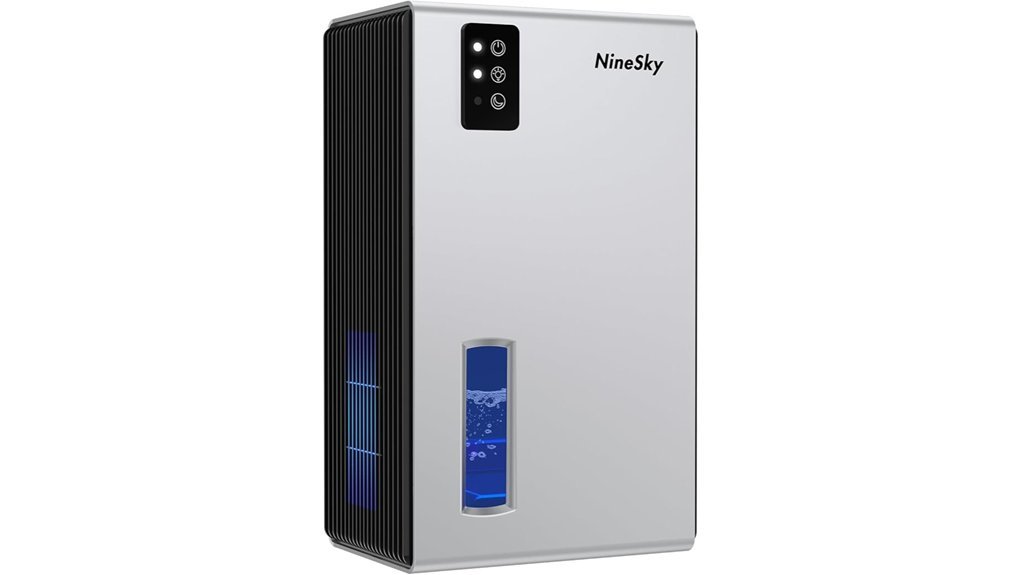
Best for: Bedrooms, bathrooms, closets, basements, and medium rooms where you want quiet moisture control without using a bulky appliance.
The NineSky Dehumidifier is a practical pick for anyone needing effective moisture control in spaces up to 1,000 sq. ft. With a generous 95 oz tank, it helps reduce the need for constant emptying compared with many smaller portable models. Its compact design, measuring 8.3 x 5.7 x 14 inches, fits easily in bedrooms, bathrooms, laundry corners, wardrobes, and other damp-prone spaces. You’ll appreciate the smart auto shut-off feature, which helps prevent leaks by turning the unit off when the tank is full.
Why you’ll like it: This model is simple, compact, and easy to place. The seven-color LED ambient light can also work as a gentle night light, which makes it a nice fit for bedrooms or guest rooms. Its upgraded semiconductor technology is designed for quiet operation, so it is better suited to everyday comfort than heavy-duty water removal.
Who should buy this: Choose it if you want a plug-in dehumidifier for daily dampness, musty corners, or light condensation in a room where size and noise matter.
Who should avoid this: Skip it if you need fast drying after leaks, very high daily moisture removal, or coverage for a large open-plan area.
Pros:
- Smart Auto Shut-Off feature prevents leaks and ensures safer operation.
- Compact design fits easily into various spaces without taking up much room.
- Customizable 7-color LED ambient light enhances comfort and serves as a night light.
Cons:
- The tank may require frequent emptying in high humidity conditions.
- Limited coverage area may not be suitable for larger open spaces.
- Some users may find the noise level higher than expected in high-speed mode.
UBBO 95oz Dehumidifier for Home with Drain Hose
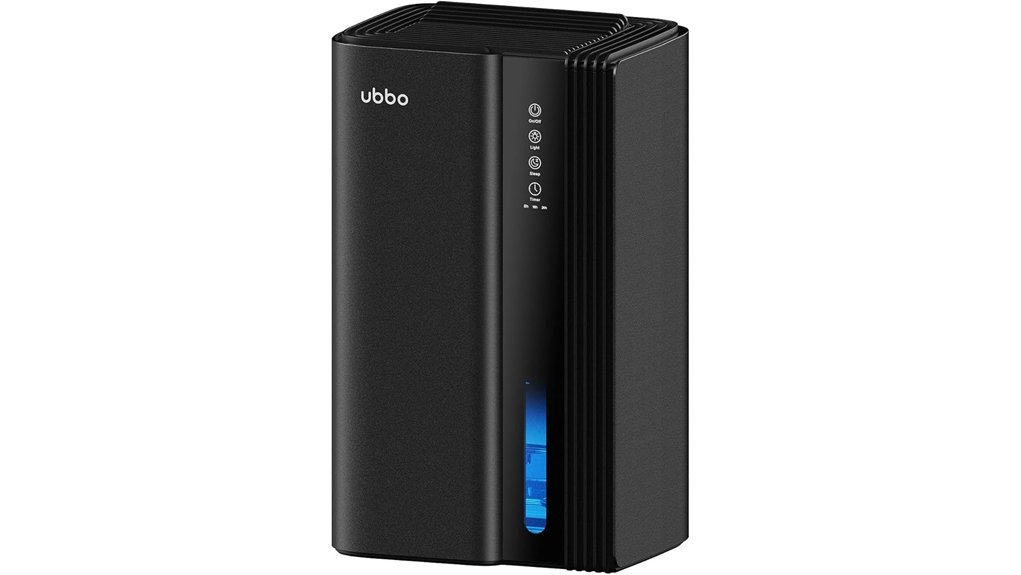
Best for: Bedrooms, living rooms, basements, and rooms where you want quiet operation plus the option for continuous drainage.
Looking for an efficient dehumidifier that does not feel complicated? The UBBO 95oz Dehumidifier is a strong choice for tackling humidity in spaces up to 1,000 sq. ft. With a daily moisture removal capacity of 1.2L, its dual semiconductor condensers work best under warm, humid conditions. You’ll appreciate its quiet operation at just 35 dB, making it a good fit for bedrooms, offices, and other quiet areas.
Why you’ll like it: The included drain hose gives this model a convenience advantage over many compact dehumidifiers. Instead of relying only on manual tank emptying, you can connect the hose for continuous drainage when the setup allows. The timer function and aromatherapy box also make it feel more lifestyle-friendly for everyday home use.
Who should buy this: Choose it if you want a quiet portable unit with both tank and hose drainage options.
Who should avoid this: Avoid it if your room is very large, extremely damp, or needs compressor-level drying power.
Pros:
- Quiet operation at just 35 dB, making it suitable for bedrooms and quiet areas.
- Auto shut-off feature prevents overflow by stopping operation when the water tank is full.
- Continuous drainage option allows for hassle-free moisture removal with the included drain hose.
Cons:
- Limited to optimal performance conditions (86°F, 80% RH) for maximum moisture removal.
- Plastic material may not be as durable as metal alternatives.
- Capacity of 1.2L/day may not be sufficient for larger or extremely humid spaces.
MOUNTO 150 Pint Commercial Dehumidifier with Pump
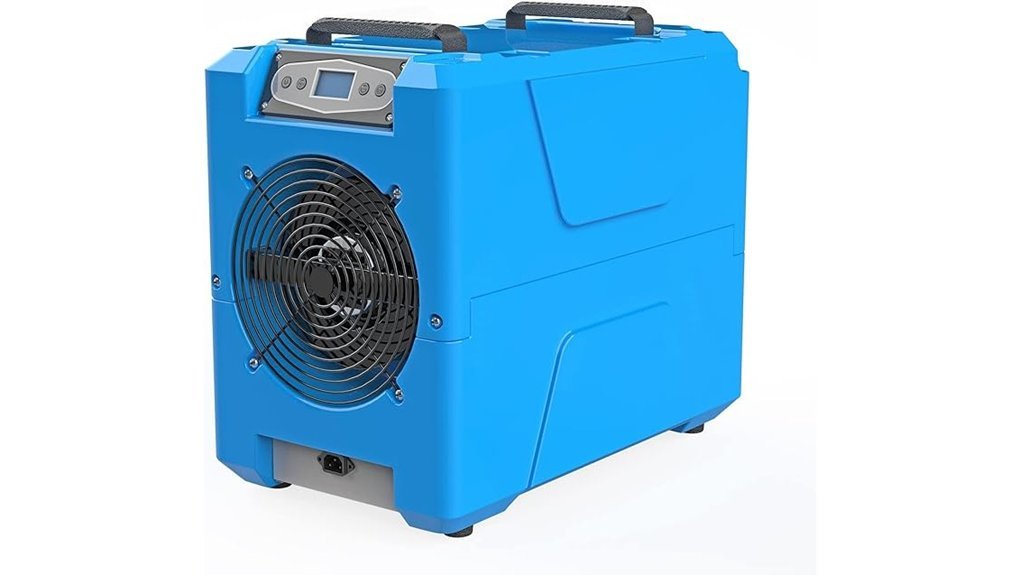
Best for: Job sites, water-damage restoration, construction areas, large basements, and demanding moisture problems where a small household dehumidifier is not enough.
The MOUNTO 150 Pint Commercial Dehumidifier is built for high-capacity drying rather than bedroom comfort. Its current product information lists about 80 pints per day at AHAM conditions and up to 150 pints per day at saturation, while the built-in pump supports continuous drainage when you need to move collected water to a drain or sink.
Why you’ll like it: The rotomolded commercial design, pump drainage, LED controls, and restart capability make it a more practical choice for restoration and job-site use than a small residential model. It is also stackable for transport and storage.
Who should buy this: Choose it if you need commercial-style moisture removal for restoration, construction, a large basement, or another demanding space.
Who should avoid this: Avoid it if you only need a quiet bedroom, bathroom, or closet dehumidifier.
Pros:
- About 80 pints/day at AHAM conditions and up to 150 pints/day at saturation for demanding drying jobs.
- Built-in pump supports continuous drainage and reduces manual water handling.
- Commercial rotomolded housing and stackable design suit transport and job-site use.
Cons:
- At about 65 pounds, it is much heavier than typical residential models.
- Commercial performance, size, and operating sound are unnecessary for most small rooms.
- The linked model is a North American 120V unit, so buyers elsewhere must verify electrical compatibility before purchase.
Aiusevo AS280 1500 Sq. ft Dehumidifier
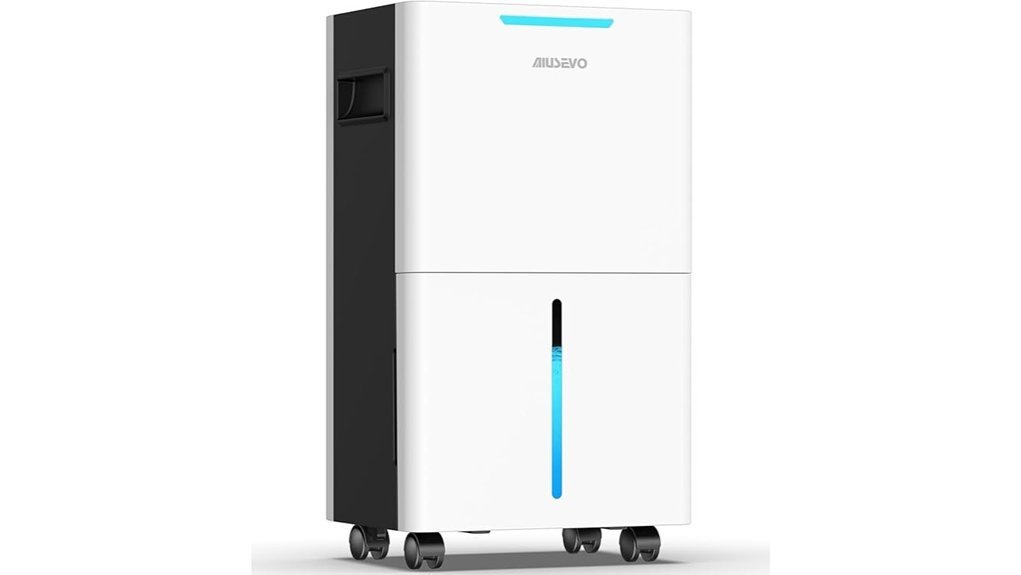
Best for: Basements, large rooms, laundry areas, RVs, and homeowners who want more power than a mini dehumidifier can provide.
For homeowners needing effective moisture control, the Aiusevo AS280 dehumidifier stands out with its impressive 1500 sq. ft. coverage. This versatile unit is designed for basements, large rooms, and even RVs. With a moisture removal capacity of 21 pints per day, it can handle more demanding dampness than tiny countertop-style models. You can choose from multiple modes, including a quick-dry option for laundry.
Why you’ll like it: The Aiusevo AS280 gives you a better balance between home-friendly size and stronger drying capacity. Maintenance is also easier thanks to the removable 2L tank and continuous drainage option. Its smart control system and modern design make it easy to use in visible living spaces without feeling overly industrial.
Who should buy this: Choose it if you need a step up from a mini dehumidifier for a basement, bedroom, laundry room, or multipurpose room.
Who should avoid this: Avoid it if your space is very small and you only need light moisture control for a closet or tiny bathroom.
Pros:
- Versatile coverage for areas up to 1500 sq. ft., making it suitable for various spaces.
- Multiple dehumidification modes including quick-dry and continuous operation for tailored humidity control.
- User-friendly features such as a removable water tank, automatic shutoff, and smart control system enhance convenience.
Cons:
- Capacity limited to 21 pints per day, which may not suffice for extremely humid environments.
- Weight of 15.3 pounds might make it less portable for some users.
- Requires regular maintenance for the water tank if not using continuous drainage.
BREEZOME MCS008 60 OZ Portable Dehumidifier
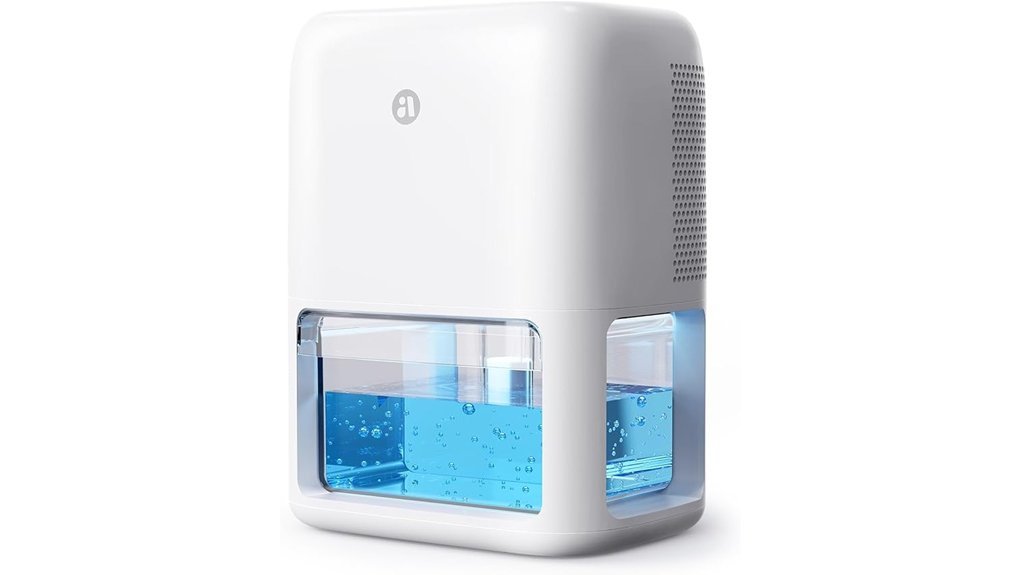
Best for: Bedrooms, bathrooms, kitchens, RVs, wardrobes, and other small spaces where portability and lower-noise operation matter more than heavy-duty drying.
The BREEZOME MCS008 pairs a 1.8L (60 oz) tank with dual semiconductor condensers, timer controls, sleep mode, auto shut-off, and automatic defrost. The current product listing identifies this model at about 0.56 L of dehumidification per day under its stated conditions and recommends it for spaces up to 350 square feet.
Why you’ll like it: This is a compact daily-use model rather than a basement workhorse. The 48W design, large tank for its class, timer, sleep mode, and color light make it easy to use in bedrooms or other small living spaces.
Who should buy this: Choose it if you want a portable semiconductor dehumidifier for light to moderate humidity in a small room.
Who should avoid this: Avoid it for whole-home dehumidification, flood cleanup, or a very wet basement where a compressor unit is more appropriate.
Pros:
- 1.8L tank reduces how often you need to empty it compared with many mini models.
- Sleep mode, timer, auto shut-off, and automatic defrost improve everyday convenience.
- Compact and lightweight enough to move between small rooms.
Cons:
- Semiconductor performance is much lower than full-size compressor dehumidifiers.
- Best suited to smaller spaces and lighter moisture problems.
- The decorative light may be unnecessary for buyers who want a simple appliance.
Dri-Eaz PHD 200 Commercial Dehumidifier (F515)
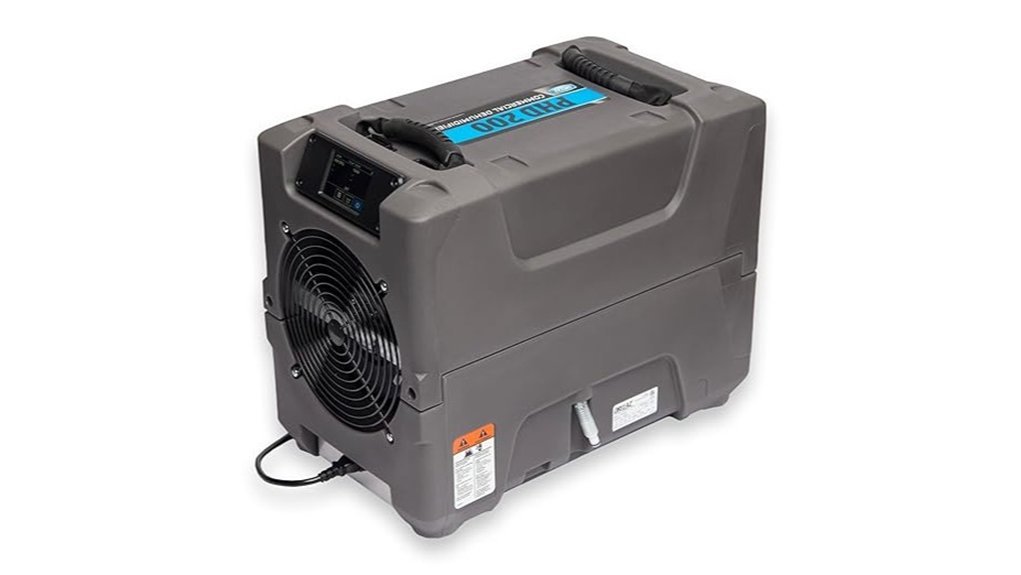
Best for: Crawl spaces, basements, equipment rooms, garages, and other moisture-prone areas that need ongoing humidity control with pump drainage and remote monitoring.
The Dri-Eaz PHD 200 is a compact commercial-grade dehumidifier designed for ongoing humidity control. The manufacturer rates water removal at 74 pints per day at 80°F/60% RH and up to 120 pints per day at 90°F/90% RH. Its automatic pump-out supports continuous operation, while the onboard Command Hub adds Bluetooth and Wi-Fi control through the Dri-Eaz Command Center Pro system.
Why you’ll like it: This model is especially useful when a crawl space, basement, or equipment room needs steady humidity management without constant tank emptying. The humidistat, automatic restart, pump-out, and remote monitoring are more important here than decorative features or bedroom-level quietness.
Who should buy this: Choose it if you manage a crawl space, basement, equipment room, or similar area that needs persistent humidity control and pump drainage.
Who should avoid this: Avoid it if you want an inexpensive mini dehumidifier or if your primary need is professional restoration drying; Dri-Eaz positions this model for humidity control rather than as its main restoration dehumidifier.
Pros:
- Manufacturer-rated 74 pints/day at AHAM conditions and 120 pints/day at high-humidity conditions.
- Automatic pump-out supports continuous drainage and can move water above the unit.
- Bluetooth/Wi-Fi Command Hub supports remote monitoring and control.
Cons:
- Higher upfront cost than ordinary residential dehumidifiers.
- At about 65 pounds, it is not a lightweight room-to-room option.
- Commercial controls and connectivity may be more than a typical bedroom or bathroom needs.
PLUSCENT 32 Pint Dehumidifier for Home
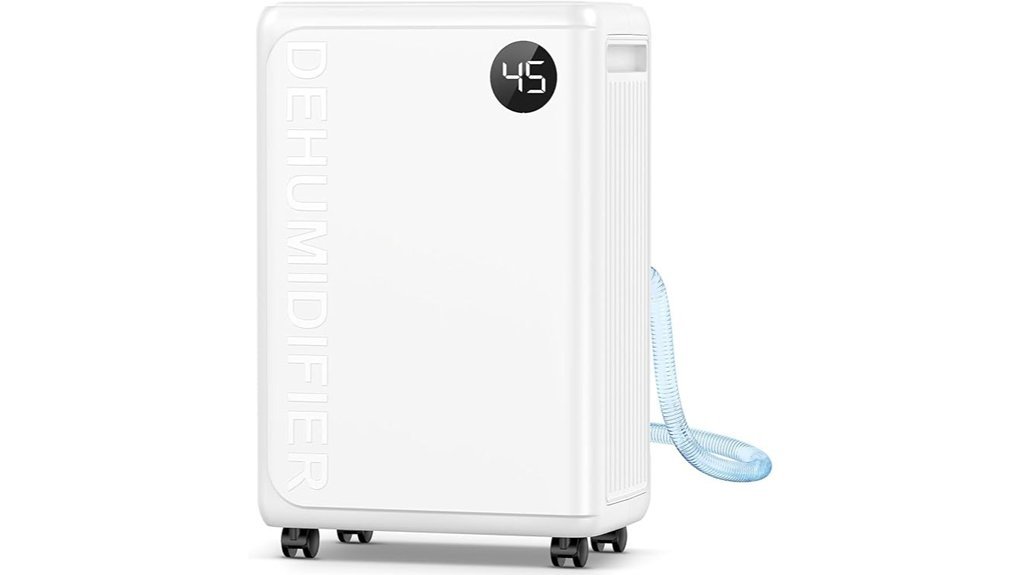
Best for: Basements, large bedrooms, living areas, RVs, and users who want a stronger home dehumidifier with easy movement.
If you need a reliable solution for damp spaces, the PLUSCENT 32 Pint Dehumidifier stands out. With a capacity of 32 pints per day, it covers areas up to 2,500 sq.ft, making it suitable for basements, bedrooms, living areas, and RVs. You’ll appreciate its customizable humidity settings and quiet operation, especially if you plan to run it during evening or nighttime hours.
Why you’ll like it: This model gives you more control than basic mini units. The auto-defrost feature helps maintain efficiency in cooler conditions, while the programmable 24-hour timer supports easier energy management. With its 39.4-inch gravity hose for continuous drainage, 360° wheels, and ergonomic handles, it is easier to move and maintain than heavier commercial options.
Who should buy this: Choose it if you want a full-size home dehumidifier with good coverage, humidity control, and easier portability.
Who should avoid this: Avoid it if you need a tiny, ultra-light unit for a small closet or occasional bathroom use.
Pros:
- Customizable humidity settings allow for tailored comfort (30%-80% RH).
- Quiet operation (39-42 dB) makes it suitable for use during the night.
- Portable design with 360° wheels and ergonomic handles for easy movement.
Cons:
- Initial setup may require some time for optimal placement and drainage.
- Limited coverage of 2,500 sq.ft may not be sufficient for larger areas.
- Manual water tank emptying is needed if continuous drainage is not used.
CLEVAST Small Portable Dehumidifier for Home
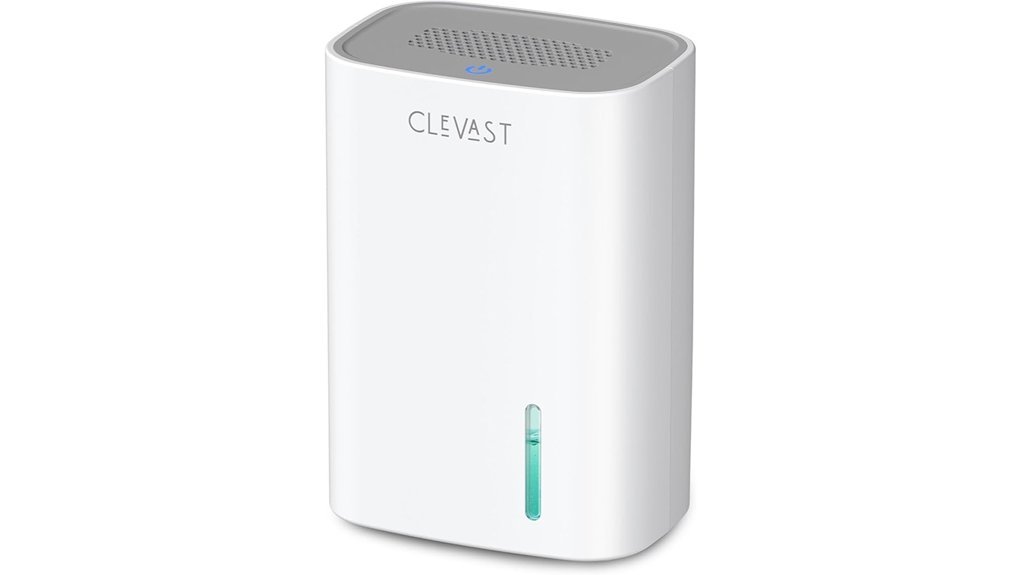
Best for: Bathrooms, bedrooms, closets, wardrobes, RVs, and other compact spaces where a full-size compressor unit would be unnecessary.
The CLEVAST CL-DH04 is a small semiconductor dehumidifier built around portability and simple daily moisture control. It weighs about 2.1 pounds and measures roughly 4.5 × 6.5 × 9.2 inches, so it is easy to place on a shelf, counter, or floor in a tight space.
Why you’ll like it: The main appeal is convenience. Its compact body, built-in carry handle, water tank, and auto shut-off make it easier to move and manage than a full-size dehumidifier. It is best treated as a light-duty option for small areas rather than a substitute for a compressor unit in a wet basement.
Who should buy this: Choose it if your main problem is mild dampness in a small room, bathroom, closet, or RV.
Who should avoid this: Avoid it if you need rapid drying, large-room coverage, or serious moisture removal.
Pros:
- Very compact and lightweight for easy placement and transport.
- Auto shut-off helps prevent overflow when the tank is full.
- Simple design is easy to use in small spaces.
Cons:
- Light-duty semiconductor performance is not suitable for large or very damp rooms.
- Small tank requires more frequent emptying than full-size models.
- Fewer advanced controls than larger compressor dehumidifiers.
VEAGASO 2500 Sq.Ft Dehumidifier with Drain Hose
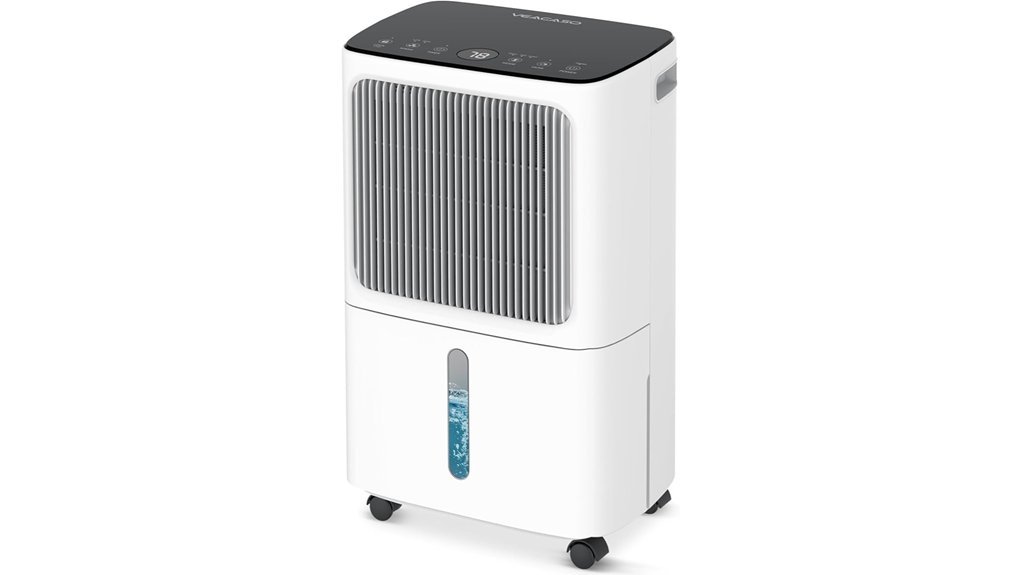
Best for: Large home spaces, basements, laundry areas, living rooms, and users who want clear digital controls with multiple modes.
The VEAGASO 2500 Sq.Ft Dehumidifier is designed for anyone needing efficient moisture control in larger spaces. With a capacity of 34 pints per day, it handles humidity in areas up to 2,500 sq. ft. You’ll appreciate its intuitive LED touch panel, which lets you adjust settings and monitor humidity levels more easily.
Why you’ll like it: The VEAGASO is flexible. You can choose from various modes, including DEHU for living areas, DRY for laundry, and CONT for continuous operation. The included drain hose supports hassle-free drainage, while the quiet operation and portable design make it easier to use in different rooms.
Who should buy this: Choose it if you want a large-room dehumidifier with digital controls, drainage flexibility, and multiple moisture-control modes.
Who should avoid this: Avoid it if you only need a tiny dehumidifier for a cabinet, closet, or small bathroom shelf.
Pros:
- Intuitive LED touch panel for easy settings adjustment and real-time humidity monitoring.
- Multiple operating modes tailored for different needs, including laundry drying and continuous operation.
- Quiet operation at ≤40dB ensures minimal disturbance in living areas.
Cons:
- The 0.53-gallon tank may require frequent manual emptying if not using the continuous drainage option.
- Limited to a maximum coverage area of 2,500 sq. ft., which may not suffice for larger spaces.
- Plastic material may not be as durable as metal alternatives.
NeedDuck B-2 44OZ Quiet Portable Dehumidifier
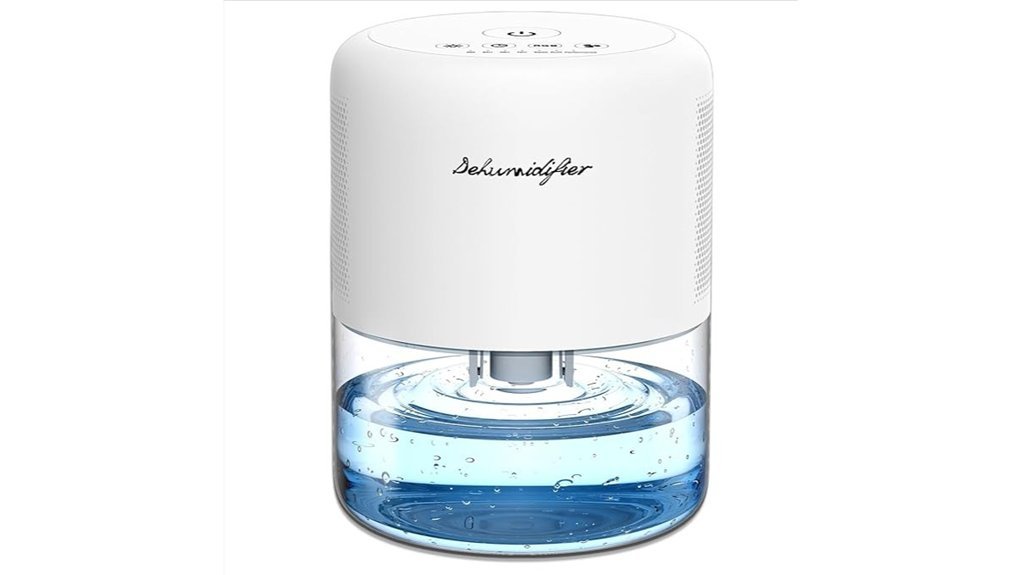
Best for: Small bedrooms, offices, bathrooms, closets, and quiet spaces where you want light moisture control.
For those seeking a compact solution to humidity, the NeedDuck B-2 stands out with its 44-ounce water tank. Weighing just 2.56 lbs and measuring 5.91 by 8.46 inches, it fits seamlessly into small spaces up to 215 square feet. Its gentle control feature gradually adjusts humidity, helping maintain comfort without sudden changes.
Why you’ll like it: This model is easy to live with. It operates quietly, making it suitable for bedrooms, offices, and other low-noise areas. With smart modes and customizable timer settings, you can tailor its use to your routine. The auto shut-off and defrost functions enhance safety, while the soothing light options add a personal touch to your room.
Who should buy this: Choose it if you need a lightweight, quiet, compact dehumidifier for a small space.
Who should avoid this: Avoid it if your main concern is a wet basement, water damage, or a large open room.
Pros:
- Energy efficient design consumes less power compared to larger models.
- Customizable settings with multiple timer options and smart modes for tailored operation.
- Quiet operation minimizes noise disturbances, making it ideal for bedrooms or offices.
Cons:
- Limited coverage of 215 square feet may not be suitable for larger rooms.
- 44-ounce tank requires regular emptying in high humidity conditions.
- Made from plastic, which may not appeal to those preferring more premium materials.
Factors to Consider When Choosing a Dehumidifier
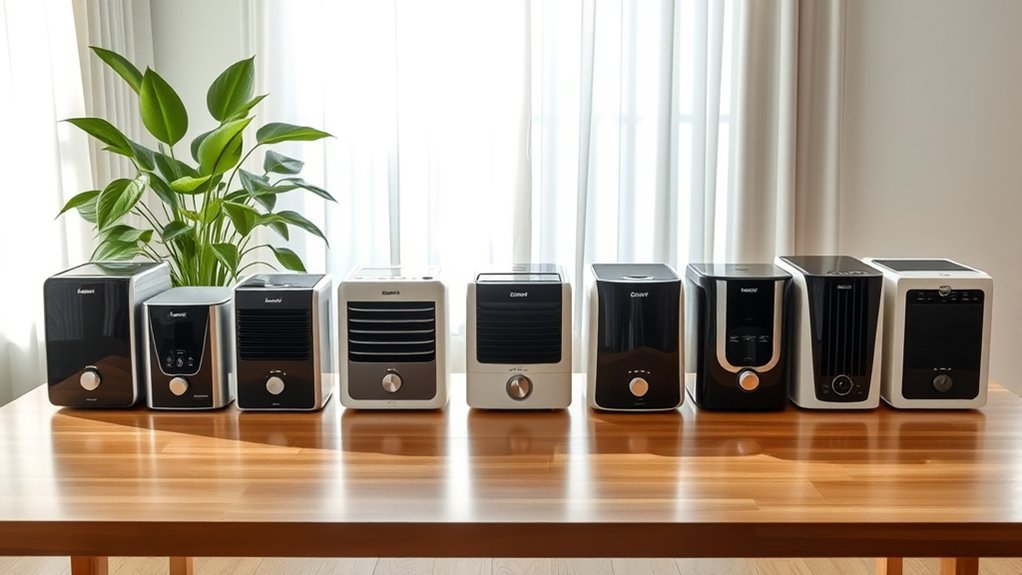
When you’re choosing a dehumidifier, consider factors like coverage area and moisture removal capacity to make sure it meets your needs. You’ll also want to think about noise levels, drainage options, tank size, portability, temperature range, and daily maintenance. Finally, keep energy efficiency ratings and power use in mind if you plan to run the unit often.
Before You Buy Checklist
- Measure the room: Match the dehumidifier’s coverage area to the actual space, not just the largest number on the box.
- Check the moisture problem: Light condensation needs less power than a wet basement, crawl space, or flood cleanup area.
- Choose the right drainage: Pick a removable tank for portability or a hose/pump setup for longer continuous use.
- Think about noise: Bedrooms and offices usually need quieter models than garages or utility rooms.
- Plan placement: Leave airflow space around the unit and keep it on a stable, level surface.
- Verify electrical compatibility: Check voltage, frequency, and plug type before ordering, especially if the dehumidifier is imported.
Coverage Area Requirements
Choosing the right dehumidifier involves understanding your space’s coverage area, since units vary considerably in capacity. Some dehumidifiers handle small areas around 200 to 300 square feet, while others can cover spaces as large as 2,500 square feet or more. Treat advertised floor-area coverage as a guide and make certain the unit’s moisture removal capacity matches your room size and dampness level; for medium-sized spaces, look for stronger home models that extract more moisture daily. Larger areas may need units capable of removing much more water per day for effective control. Also, consider the specific conditions of your space. Basements, laundry rooms, crawl spaces, or high-humidity rooms often require more powerful units than bathrooms, closets, or small bedrooms. Finally, confirm the dehumidifier fits comfortably in the area, allowing for easy movement and accessibility.
Moisture Removal Capacity
Understanding moisture removal capacity is essential for selecting the right dehumidifier, as it directly impacts how effectively you can manage humidity in your space. This capacity is usually measured in pints, ounces, gallons, milliliters, or liters per day, depending on the model and product listing. Small semiconductor models are usually best for light moisture control, while compressor and commercial models are better for larger spaces or heavier dampness. For most homes, choose based on room size, dampness level, tank size, drainage setup, and how often you are willing to empty the tank. If your area exceeds 1,500 square feet, a stronger home dehumidifier is usually more practical than a mini model. In commercial settings, high-capacity units are often the better match.
Noise Level Considerations
While you might prioritize moisture removal, noise level is another essential factor that can greatly affect your comfort. Dehumidifiers typically measure noise in decibels (dB), with quieter models operating around 24 to 35 dB, which is better for bedrooms, offices, and quiet spaces. If you plan to use your dehumidifier in living areas or work zones, higher dB levels can be distracting. Many units come with a “sleep mode” that minimizes noise during nighttime operation. Models using advanced semiconductor technology often run quieter than traditional compressor-based units, though they usually remove less moisture. To make an informed choice, check product details and user feedback for real-world noise performance before buying.
Drainage Options Available
When selecting a dehumidifier, the drainage options can greatly impact your convenience and maintenance routine. You typically have two choices: a manual water tank or a continuous drainage feature. Manual tanks can hold up to 95 oz or more, but you’ll need to empty them regularly based on humidity and usage. Fortunately, many models include an auto shut-off feature that activates when the tank is full, helping prevent overflow.
On the other hand, a continuous drainage system connects to a hose, allowing for easier operation without constant monitoring. Some advanced models even come with integrated pumps for automatic water removal, making them ideal for larger spaces or continuous use. Choose the option that best fits your lifestyle and needs.
Energy Efficiency Ratings
Choosing an energy-efficient dehumidifier can help lower electricity use and reduce your environmental impact. When selecting a unit, compare wattage, moisture removal capacity, smart humidity control, timer functions, and auto shut-off settings. A smaller low-wattage unit may be efficient for a closet or bedroom, but it may not be efficient if it runs nonstop in a large damp basement. Likewise, a stronger unit can use more power but may dry a large room faster. Look for models with features like auto shut-off, humidity targets, timers, and continuous drainage to optimize energy use. Always match the unit size to the room and moisture level for the best balance between performance and running cost.
Portability and Design
Energy efficiency is just one aspect of selecting the right dehumidifier; portability and design are equally important. When choosing, consider the weight and dimensions; lighter models around 2 to 8 lbs are easier to move between rooms or transport. Look for built-in handles or wheels that enhance portability, making it simpler to relocate your unit when needed. A streamlined design helps it fit into tight spaces like closets or bathrooms. Check the power cord length for flexible placement, and avoid unsafe extension cord setups. Finally, assess the water tank capacity; larger tanks mean less frequent emptying, which adds to your convenience and overall portability.
Safety Features Included
Safety features are essential for helping your dehumidifier operate smoothly and securely. Look for models with an auto shut-off feature that stops operation when the water tank is full or improperly positioned. Overheat protection is another helpful feature because it can shut down the unit during abnormal operation. Indicator alerts, like red lights or beeps, can notify you when the tank needs emptying or if operational issues arise. Additionally, consider dehumidifiers with defrost functions for better operation in cooler temperatures, as they help manage frost buildup. If you have children at home, a child lock feature on controls can add another layer of safety by preventing accidental adjustments.
Pro Tips for Better Results
Place your dehumidifier where air can move freely around the intake and outlet. Keep doors and windows closed while it runs, clean the filter as recommended, and empty or drain the tank before it becomes full. If one small unit is not reducing humidity enough, the issue may be room size, poor airflow, water intrusion, or a unit that is too small for the job.
Safety Note
A dehumidifier can help reduce excess moisture, but it does not fix leaks, flooding, roof issues, plumbing problems, or serious mold contamination. If you see visible mold spreading, smell strong mustiness, or notice recurring water damage, address the source of moisture first and consider professional help where needed. Also verify that any imported unit matches your local electrical supply before plugging it in.
Frequently Asked Questions
How Do I Maintain My Dehumidifier for Optimal Performance?
To maintain your dehumidifier, regularly clean the filter, empty the water tank, and check the coils or air vents for dust. Keep it in a well-ventilated area, avoid blocking the intake or outlet, and verify the humidity settings align with your needs. If your model supports continuous drainage, check the hose often to make sure it is not kinked or clogged.
Can Dehumidifiers Help With Allergens and Mold?
Yes, dehumidifiers can help create conditions that are less friendly to mold, mildew, dust mites, and damp-related odors by lowering excess moisture. They do not remove existing mold or replace proper cleaning, ventilation, leak repair, or professional remediation when a moisture problem is serious.
What Is a Good Indoor Humidity Target?
A comfortable indoor humidity range is often around 30% to 50%, though the best target can vary by climate, season, room type, and personal comfort. Keeping humidity in a moderate range can help reduce condensation, musty smells, and dampness while still keeping the air comfortable.
Are Dehumidifiers Energy-Efficient for Everyday Use?
Dehumidifiers can be energy-efficient for everyday use when the unit is properly sized for the room and includes features such as smart humidity control, timers, sleep mode, auto shut-off, and continuous drainage. A unit that is too small may run constantly, while a unit that is too large may cost more than needed for a small space.
How Loud Are Typical Dehumidifiers When Operating?
Typical dehumidifiers can range from very quiet mini models around the mid-20s to mid-30s dB to stronger compressor models that may sound closer to a fan or small appliance. If noise matters, look for sleep mode, low dB ratings, semiconductor technology, and real-world user feedback before choosing.
Should I Choose a Tank or Continuous Drainage?
Choose a tank if you want portability and plan to move the dehumidifier between rooms. Choose continuous drainage if the unit will stay in one place, such as a basement, laundry area, crawl space, or garage. A pump model is more useful when the water needs to move upward or across a longer distance.
What Size Dehumidifier Do I Need?
Match the dehumidifier to both the room size and the moisture level. Small portable units work best for bathrooms, closets, bedrooms, and RVs with light dampness. Larger 21 to 34 pint home units are better for basements, laundry areas, and large rooms. Commercial units are better for restoration work, crawl spaces, water damage, and serious dampness.
Final Recommendation
If you want a compact dehumidifier for a small room, start with the CLEVAST, NeedDuck, NineSky, UBBO, or BREEZOME MCS008 60 OZ Dehumidifier. If you need more power for a basement, laundry room, RV, or larger living area, the Aiusevo, PLUSCENT, or VEAGASO models are stronger choices. For restoration work and job sites, MOUNTO is the stronger fit. For crawl spaces, equipment rooms, and ongoing humidity control, Dri-Eaz is the more purpose-built option.
Conclusion
In a home where humidity can sneak into bedrooms, bathrooms, basements, closets, and laundry areas, choosing the right dehumidifier gives you a practical way to take back control. The best pick depends on your room size, dampness level, noise tolerance, drainage preference, electrical compatibility, and how much maintenance you want to handle. Whether you’re battling dampness in a cozy bedroom, managing musty air in a basement, or handling moisture in a larger work area, these dehumidifiers offer options for different needs. Compare the size, tank, drainage, and capacity carefully, then choose the model that fits your space instead of simply picking the biggest one.