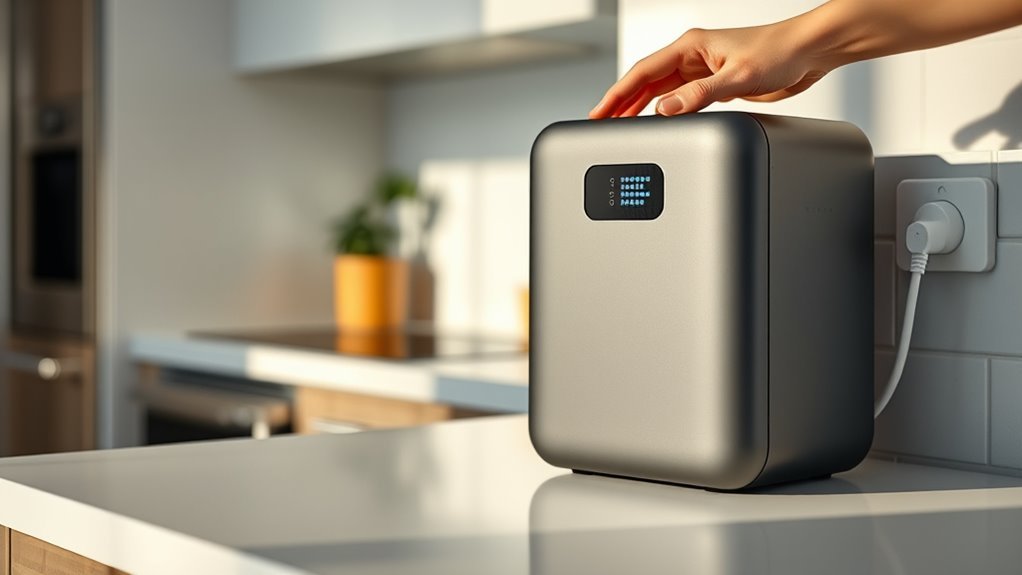
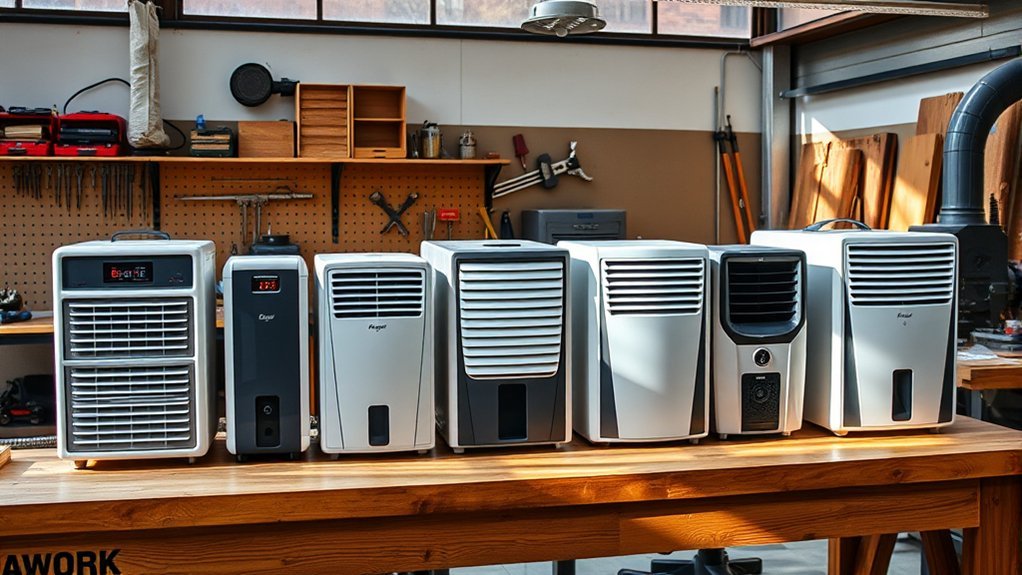
Choosing a domestic dehumidifier for an Australian home starts with electrical safety, room conditions, and the actual moisture problem. Compare technology type, litres removed per day, drainage, noise, low-temperature performance, energy use, and local warranty support before relying on an advertised room-size figure.
Electrical safety first: Buy an appliance only when the exact model label or manual confirms compatibility with Australian power, normally shown as 220–240V and 50Hz. It should also have an appropriate Australian plug and the required Australian compliance information, such as the Regulatory Compliance Mark where applicable.
A plug-shape adapter does not convert voltage or frequency. Do not connect a 115V or 120V dehumidifier directly to an Australian household outlet.
Quick Answer
For a warm bedroom, laundry, bathroom, or living area with regular moisture, a correctly sized compressor dehumidifier is usually the most practical starting point. For a cool garage, storage room, or winter space, compare desiccant models, which generally maintain better extraction at lower temperatures. Thermoelectric units suit only light condensation in small enclosed areas.
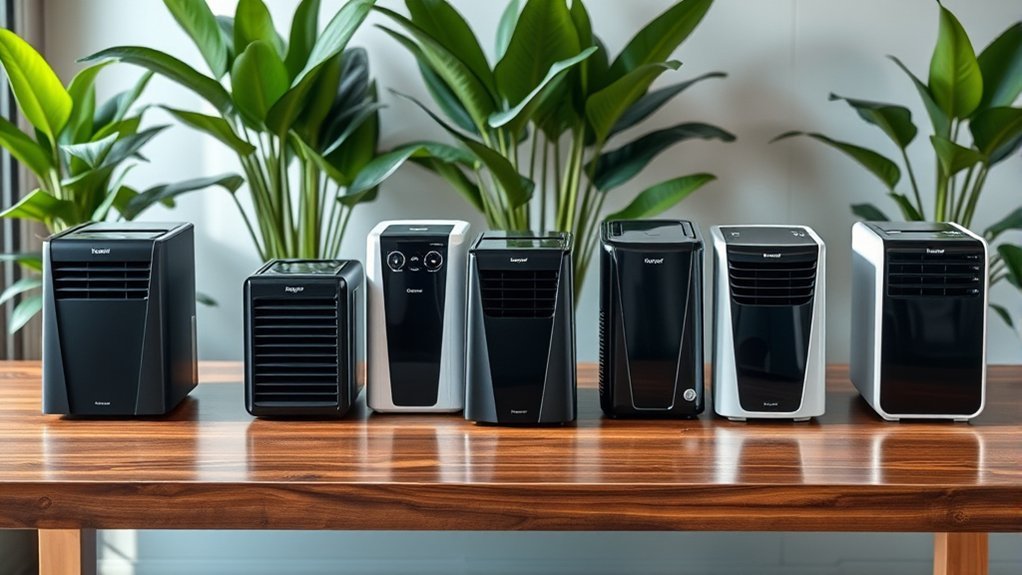
Quick Comparison of Domestic Dehumidifier Types
| Type | Best Use | Main Advantages | Important Limitations |
|---|---|---|---|
| Compressor or refrigerant | Bedrooms, laundries, living areas, bathrooms, and regularly damp rooms that stay reasonably warm | Removes substantially more water than most compact thermoelectric units and commonly supports humidistat control and hose drainage | Performance falls in cooler rooms; compressor and fan noise may be noticeable; automatic defrost and minimum operating temperature matter |
| Desiccant | Cool garages, storage rooms, winter operation, caravans, and spaces where refrigerant models frost or lose capacity | Generally maintains stronger extraction in low temperatures and produces warmer outlet air that can help with indoor clothes drying | Often uses more electricity and may make a warm room noticeably hotter |
| Thermoelectric or Peltier | Wardrobes, cupboards, small bedrooms, caravans, and other enclosed spaces with light condensation | Compact, simple, and usually quieter than a compressor model | Low moisture-removal capacity; weak performance in cooler conditions; unsuitable for serious damp, leaks, or whole-room drying |
| Ducted or whole-home | Several rooms, large homes, subfloor areas, or buildings with persistent whole-house humidity | Can manage humidity more evenly than moving one portable unit between closed rooms | Requires professional sizing, installation, drainage planning, and integration with the building or ventilation system |
Technology choice matters as much as the headline extraction figure. A small thermoelectric unit should not be compared directly with a compressor or desiccant model.
Australian Electrical Compatibility and Compliance
Check the electrical rating before comparing capacity, noise, or price. The exact rating plate should show a suitable input range, normally 220–240V and 50Hz, along with the correct plug and model number.
Australian household electrical equipment supplied through regulated channels must meet applicable safety requirements. The Electrical Equipment Safety System explains supplier and equipment obligations, while the Australian Communications and Media Authority explains the Regulatory Compliance Mark.
Do not rely on the product name alone: A manufacturer may sell different versions under similar names in different countries. Verify the voltage, frequency, plug, model number, compliance marking, and warranty on the exact appliance being delivered.
How Much Dehumidifier Capacity Do You Need?
Australian models commonly describe extraction in litres per day. This number is useful only when the test temperature and relative humidity are also known. A unit tested in very hot, saturated air may remove considerably less water in a cool bedroom or garage.
| Moisture Situation | Illustrative Starting Range | What to Check |
|---|---|---|
| Light condensation in a small enclosed room | About 5–10 litres per day | Room temperature, overnight condensation, noise, tank size, and whether the problem is genuinely light |
| Bedroom, home office, or small laundry | About 10–16 litres per day | Humidity control, sleep mode, automatic defrost, and realistic standard-condition extraction |
| Regular indoor clothes drying or a medium living area | About 16–25 litres per day | Laundry mode, airflow, tank capacity, continuous drainage, and heat released into the room |
| Large open area or persistent damp | About 25–35+ litres per day | Actual layout, open doors, moisture source, drainage, runtime, and whether building repairs are required |
These ranges are general starting points rather than guaranteed sizing rules. Climate, temperature, ceiling height, ventilation, water entry, indoor clothes drying, and the number of closed rooms can change the required capacity substantially.
Factors to Consider When Choosing a Domestic Dehumidifier in Australia
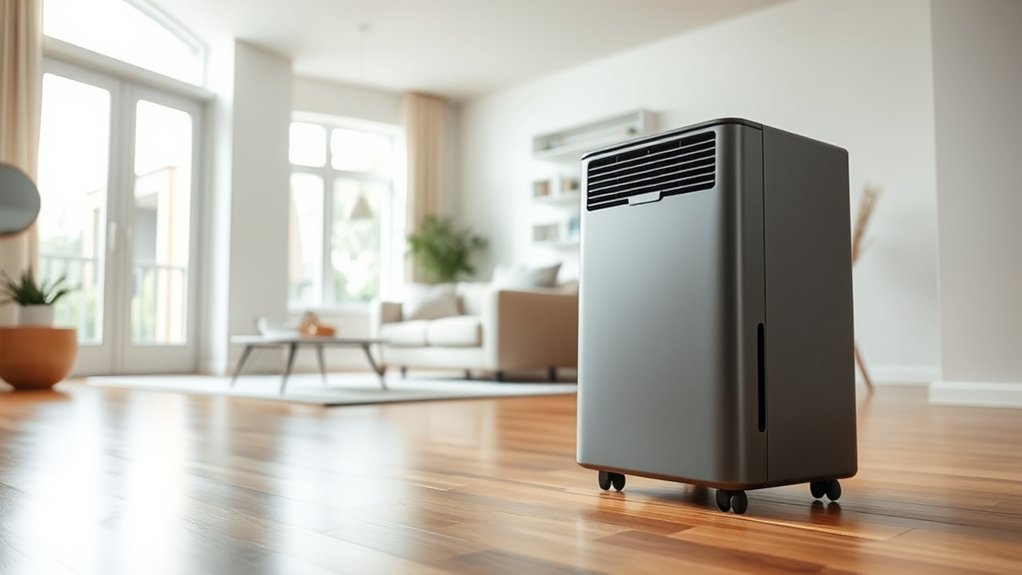
The best domestic dehumidifier is the one that safely matches the room temperature, moisture load, drainage setup, expected runtime, and local electrical requirements.
Room Temperature
Temperature strongly affects performance. Compressor models normally work best in warmer rooms, while their coils may frost or spend more time in defrost mode as the room becomes cooler. Check the manufacturer’s minimum operating temperature instead of assuming that automatic defrost makes every compressor model suitable for a cold garage.
A desiccant model may be more appropriate where winter temperatures regularly reduce compressor performance. Its warmer outlet air can also help with indoor clothes drying, although its energy consumption may be higher.
Room Size and Layout
Advertised coverage is a rough sorting tool, not a guarantee. Ceiling height, open stairways, closed doors, outdoor-air leakage, moisture sources, and furniture placement all influence the result.
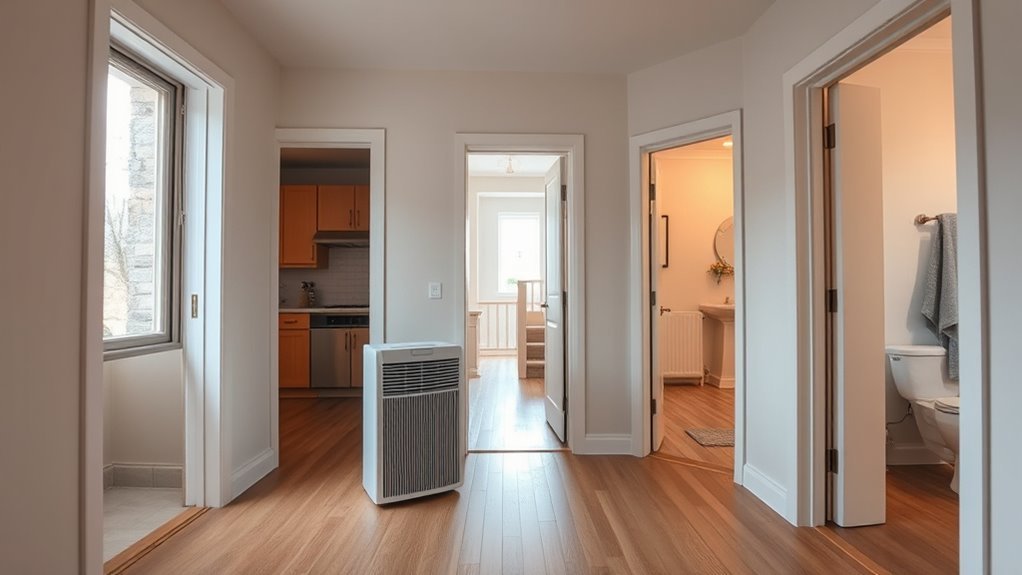
One large portable unit in a hallway may not control several closed bedrooms because the damp air cannot reach the appliance and the dry air cannot circulate evenly. For several separate rooms, compare multiple smaller units or obtain advice about a properly designed whole-home solution.
Drainage Options
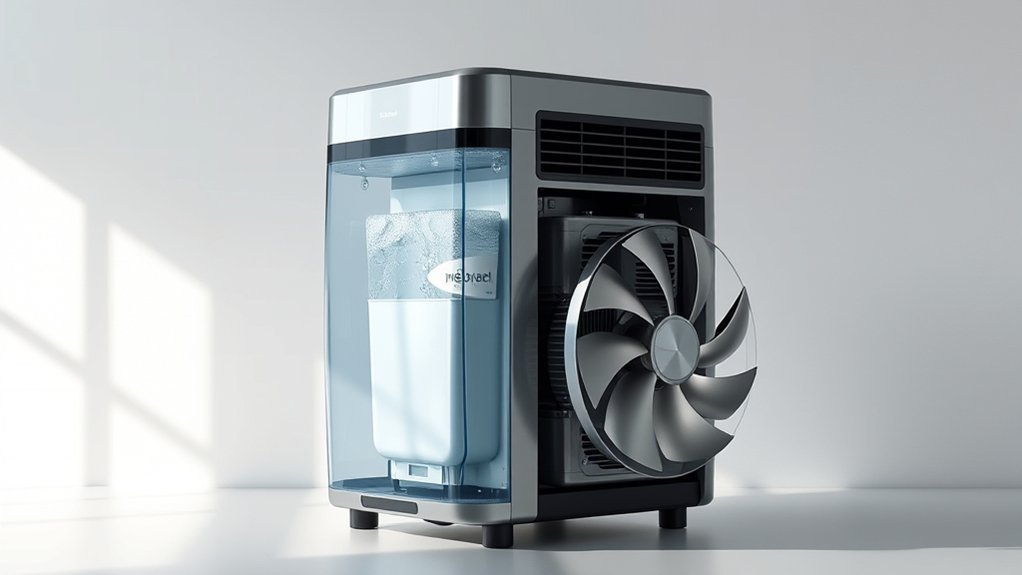
A removable tank is convenient for occasional operation, but a small tank may fill several times per day during wet weather or indoor clothes drying. Full-tank shutoff prevents overflow but also stops moisture removal until the tank is emptied.
For longer operation, look for a continuous-drain connection. A gravity hose must run continuously downhill without kinks or raised sections. If the drain is above the appliance, you need a model with an appropriate condensate pump or a separate approved drainage arrangement.
Noise Level
For bedrooms and home offices, compare the lowest fan setting, compressor cycling, sleep mode, display-light control, and the conditions used for the published decibel figure.
A slightly larger unit operating intermittently at a low fan speed may feel less intrusive than an undersized unit running at maximum speed throughout the night.
Energy Efficiency
Correct sizing and sensible humidity control usually matter more than a single marketing claim. Use a realistic humidistat setting, close windows and external doors while the appliance runs, clean the filter, and stop unnecessary continuous operation once the target humidity has been reached.
Compare watts, litres removed per kilowatt-hour where available, standby consumption, and likely daily runtime. Avoid fixed annual-savings promises because tariffs, climate, moisture load, and usage patterns vary between households.
Humidity Controls and Sensors
A built-in humidistat allows the unit to cycle automatically around a selected relative-humidity setting. Treat the display as a control guide rather than a laboratory instrument because the sensor measures air close to the appliance’s inlet.
A separate hygrometer positioned away from the outlet can help you understand humidity in the occupied part of the room. Compare readings over several hours rather than expecting two different sensors to show exactly the same number.
Filters and Maintenance
Choose a unit with a filter that is easy to remove, clean, dry, and reinstall. A clogged filter reduces airflow and may increase noise, runtime, and energy use.
Also check tank access, drain-port cleaning, hose inspection, coil maintenance instructions, and whether replacement filters or fittings are available locally.
Portability
Check the appliance’s weight, caster wheels, handles, cord storage, tank access, and the clearance required around its air inlet and outlet. Large-capacity units can be awkward to move upstairs even when they have wheels.
If you plan to move one unit between rooms, choose a size you can handle safely and remember that humidity may rise again in the room you leave behind.
Warranty and Local Support
Confirm who handles warranty claims in Australia, whether return shipping is covered, whether the compressor has separate coverage, and whether filters, tanks, hoses, and replacement fittings are available.
A warranty shown on an overseas product page may not apply when the appliance is exported or used outside its intended market.
Match the Dehumidifier to the Moisture Problem
Bedroom Condensation
Prioritise low fan noise, sleep mode, display-light control, automatic humidity control, and a tank that can last through the night. Investigate cold windows, blocked ventilation, drying laundry indoors, and furniture placed tightly against external walls.
Laundry and Indoor Clothes Drying
Choose meaningful extraction capacity, strong airflow, a laundry or continuous mode, and hose drainage where possible. Keep the room closed while drying, but maintain any ventilation required for gas appliances or other safety reasons.
The Australian Government’s YourHome appliance guidance notes that drying clothes indoors increases humidity and that a dehumidifier can help when outdoor drying or open-window ventilation is not practical.
Bathroom Moisture
A portable dehumidifier can reduce lingering moisture after a shower, but it does not replace a correctly vented exhaust fan. Keep the appliance away from water and wet zones, and follow all location and electrical-safety instructions in its manual.
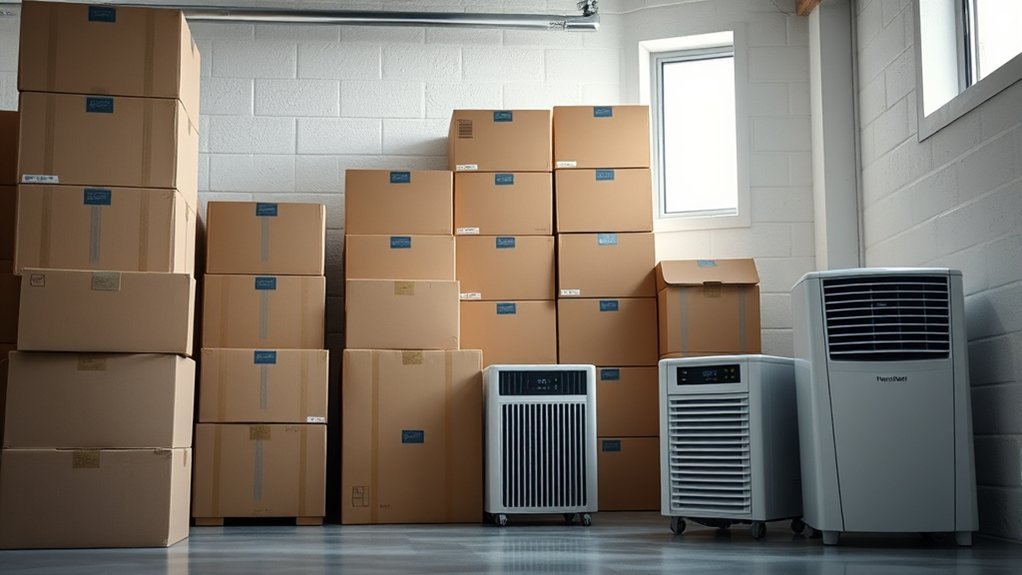
Garage or Cool Storage Room
Check the lowest operating temperature before buying. A desiccant model may be more dependable in a cool space, while a compressor unit needs effective automatic defrost and a suitable temperature range.
Do not use a domestic dehumidifier as the only response to roof leaks, rising damp, flooding, or water entering under a garage door.
Whole-Home Humidity
Persistent moisture across several rooms may indicate inadequate ventilation, plumbing leaks, water entry, subfloor damp, or a building-envelope problem. A portable dehumidifier may reduce symptoms without correcting the source.
For widespread or recurring dampness, consider a building inspection, plumbing assessment, ventilation improvements, or a professionally sized ducted system.
Mould, Condensation, and Moisture Control
A dehumidifier can make indoor conditions less favourable for mould, but it does not remove established mould or repair the moisture source. Fix leaks, improve ventilation, dry wet materials, and clean or remediate affected areas safely.
The Australian Government explains that mould commonly develops in damp, poorly ventilated areas affected by leaking roofs, plumbing problems, or condensation. NSW Health also recommends controlling leaks, dampness, and ventilation rather than relying on one appliance alone.
- Australian Government information about mould and environmental health
- NSW Health mould guidance
- YourHome guidance about condensation
Before You Buy Checklist
- Confirm the exact appliance is rated for 220–240V and 50Hz.
- Check for an appropriate Australian plug and required compliance information.
- Verify the exact model number on the listing, manual, carton, and rating plate.
- Compare litres-per-day ratings measured under similar temperature and humidity conditions.
- Choose compressor, desiccant, or thermoelectric technology for the room temperature and moisture load.
- Measure the room and consider ceiling height, closed doors, and limited airflow.
- Check the minimum operating temperature and automatic-defrost system.
- Compare tank capacity with the expected daily extraction.
- Plan a safe gravity-drain route if continuous drainage is required.
- Compare low-speed noise, compressor cycling, sleep mode, and display-light controls.
- Check filter access, tank cleaning, and replacement-part availability.
- Confirm Australian warranty, return arrangements, and local service support.
- Investigate leaks, poor ventilation, rising damp, or building defects before depending on a dehumidifier.
Frequently Asked Questions
What Humidity Level Should I Use at Home?
Try to keep indoor relative humidity below 60%. Many households find a setting around 40% to 55% comfortable, although the best target depends on climate, condensation, temperature, and personal comfort. Avoid over-drying the room.
Can I Use a US Dehumidifier in Australia?
Only when the rating plate for the exact appliance confirms compatibility with Australian voltage and frequency and the product meets applicable local safety requirements. A model marked only 115V or 120V should not be connected directly to an Australian household outlet. A plug adapter changes only the plug shape.
Is a Compressor or Desiccant Dehumidifier Better?
A compressor model is usually more efficient in a reasonably warm bedroom, living area, or laundry. A desiccant model is often more effective in a cold garage, storage room, or winter environment. Compare room temperature, energy use, noise, and heat output before deciding.
How Often Should I Empty the Tank?
Empty it whenever the full-tank indicator appears. During humid weather or indoor clothes drying, a small tank may fill more than once per day. Continuous drainage reduces emptying when the manual permits it and the hose can run safely downhill.
Can a Dehumidifier Remove Mould?
No. It can reduce excess humidity that supports future mould growth, but it does not remove existing mould or repair leaks. Address the water source and clean or remediate affected materials safely.
Can One Dehumidifier Dry Several Rooms?
Only when air can circulate freely between those rooms. Closed doors and narrow hallways greatly reduce performance. Several separate damp rooms may need more than one portable unit or a properly designed whole-home system.
Can I Run a Dehumidifier Continuously?
Many models support continuous operation, but follow the manual. Maintain airflow clearance, clean the filter, inspect the drain hose, and use a humidistat so the room does not become unnecessarily dry.
Should Windows and Doors Be Open While It Runs?
For normal dehumidification, close external windows and doors so the appliance is not continually trying to dry humid outdoor air. Internal doors may be opened when you intentionally want air to circulate between connected spaces. Do not block ventilation required for gas appliances or other safety purposes.
Conclusion
The best domestic dehumidifier for an Australian home is not necessarily the model with the largest advertised room coverage. Start with the electrical rating and Australian compliance information, then match the technology, litres-per-day capacity, temperature range, drainage, noise, and controls to the actual room.
Final Recommendation
Buy from an Australian supplier that identifies the exact model, voltage, frequency, plug, compliance marking, and local warranty. Choose a compressor model for meaningful moisture removal in warmer rooms, consider a desiccant model for cool spaces, and reserve thermoelectric units for light condensation only. Fix leaks, ventilation faults, and building dampness rather than asking the dehumidifier to hide the underlying problem.