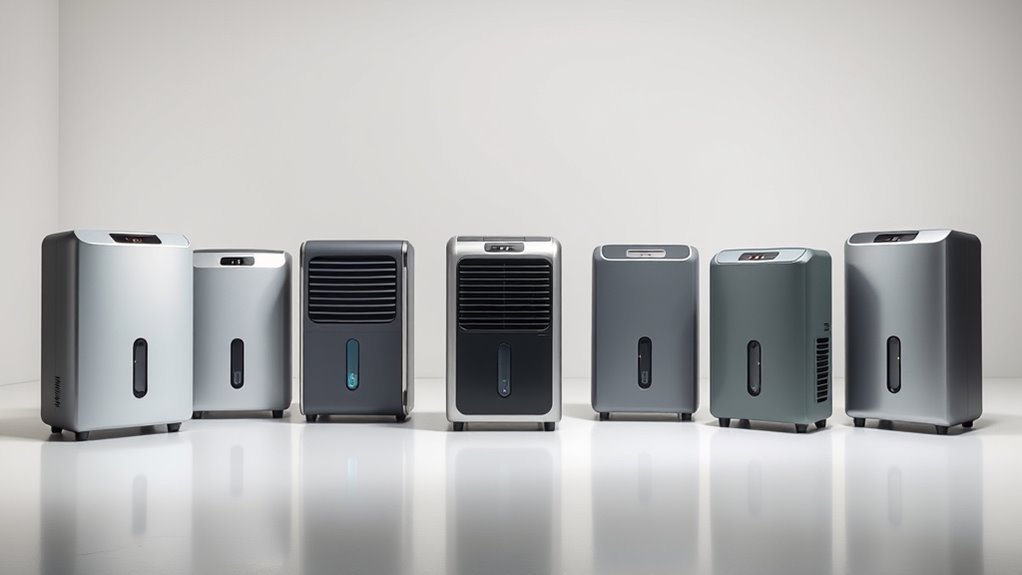
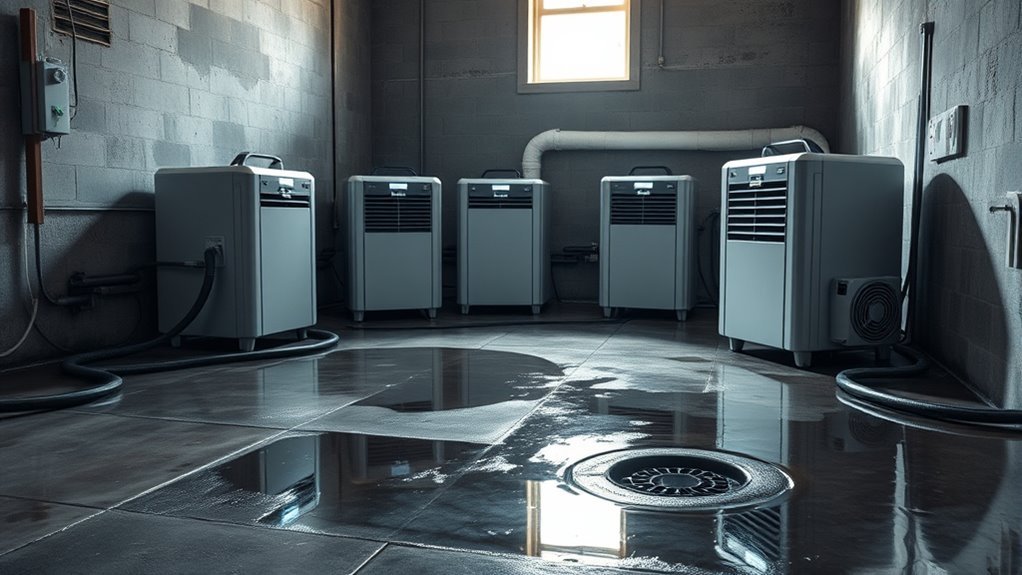
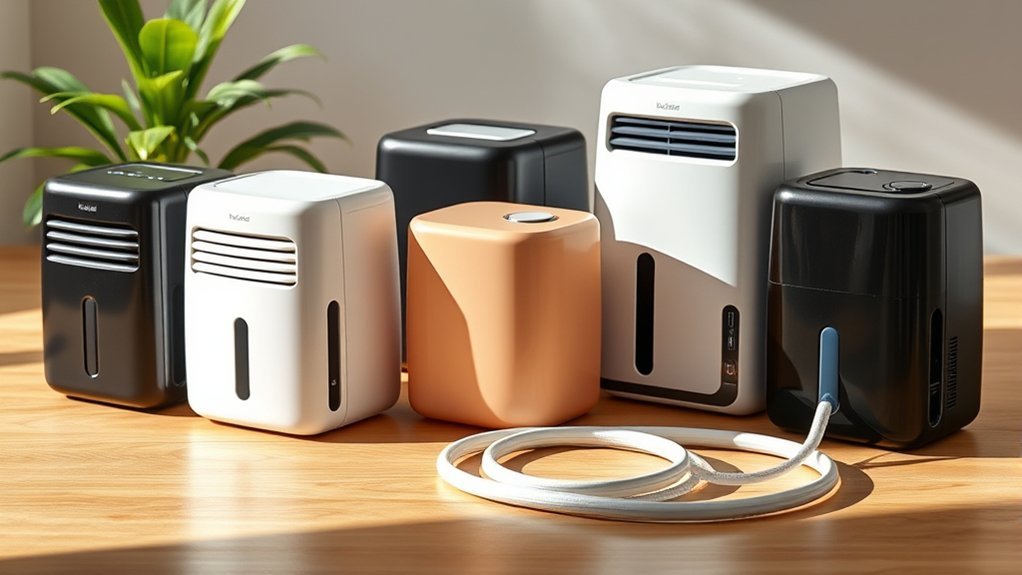
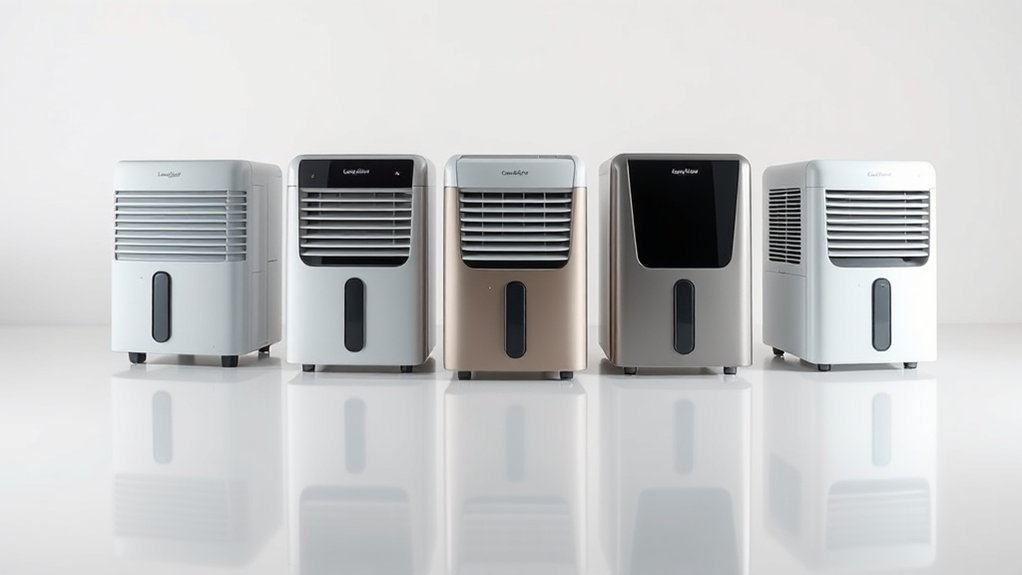
Hawaii’s warm, moisture-heavy air can make bedrooms, bathrooms, garages, and lower-level rooms feel damp even when the space is air-conditioned. The best dehumidifier depends less on the biggest advertised coverage number and more on the room size, measured humidity, drainage setup, and whether you need a quiet thermoelectric unit or a stronger compressor model. For large or persistently damp areas, the Yaufey 5000 Sq. Ft. Dehumidifier and hOmeLabs Wi-Fi Dehumidifier are the most practical choices in this roundup. For a bedroom, closet, RV, or other small enclosed area, the AlohaAir, TABYIK, and other compact models may be easier to place and quieter to run.
Affiliate disclosure: This article contains Amazon affiliate links. If you buy through a qualifying link, we may earn a commission at no extra cost to you.
Quick Answer
Best overall for a large, humid area: Yaufey 5000 Sq. Ft. Energy Star Dehumidifier.
Best for Wi-Fi control: hOmeLabs Wi-Fi Dehumidifier.
Best compact bedroom option: TABYIK 35 OZ Dehumidifier.
Best small-space night-light option: AlohaAir Small Dehumidifier.
Key Takeaways
- Choose the dehumidifier type first: Compressor models are generally better for large rooms and persistent humidity; thermoelectric models are better suited to small enclosed spaces and lighter moisture loads.
- Do not rely on coverage claims alone: Check moisture-removal capacity, room conditions, drainage, and operating temperature.
- Plan for drainage: In a humid home, continuous drainage can save significant time compared with repeatedly emptying a bucket.
- Measure indoor humidity: A separate hygrometer helps you confirm whether the machine is actually keeping the room in a comfortable range.
Quick Comparison of the Best Dehumidifiers for Hawaii
| Product | Best For | Type | Main Advantage | Main Limitation | Amazon |
|---|---|---|---|---|---|
| BEDRED 95 OZ Dehumidifier | Small to medium rooms needing a large tank and ambient light | Thermoelectric | 95-ounce tank, auto shutoff, and 7-color light | Not a substitute for a high-capacity compressor unit | Check Price |
| AlohaAir Small Dehumidifier | Bedroom, bathroom, closet, or RV | Thermoelectric | Compact, quiet, and easy to monitor | Limited to small spaces and lighter moisture loads | Check Price |
| Yaufey 5000 Sq. Ft. Dehumidifier | Large rooms, garages, and persistently humid areas | Compressor | High moisture-removal capability and continuous drainage | Larger, heavier, and more audible than mini units | Check Price |
| TABYIK 35 OZ Dehumidifier | Quiet bedroom or office use | Thermoelectric | Lightweight design, auto shutoff, and low-noise operation | Small tank and modest moisture removal | Check Price |
| Small Dehumidifier with Adjustable Color Lights | Small rooms where timers and lighting matter | Thermoelectric | Multiple modes, timer choices, and adjustable lights | Listing details may vary; verify current capacity | Check Price |
| hOmeLabs Wi-Fi Dehumidifier | Large homes, offices, or basements needing remote control | Compressor | Wi-Fi control and strong large-room performance | Heavy and not as quiet as a small thermoelectric unit | Check Price |
| ZUKBEN 75 OZ Dehumidifier | Bedroom, bathroom, RV, or other compact area | Thermoelectric | Large tank for a mini unit, timer, and ambient light | Coverage and extraction depend heavily on room conditions | Check Price |
Important: Advertised square-foot coverage is a general manufacturer guideline, not a guarantee. Room temperature, starting humidity, air leakage, ceiling height, and moisture sources can change real-world performance.
BEDRED 95 OZ Dehumidifier for Home with Ambient Light
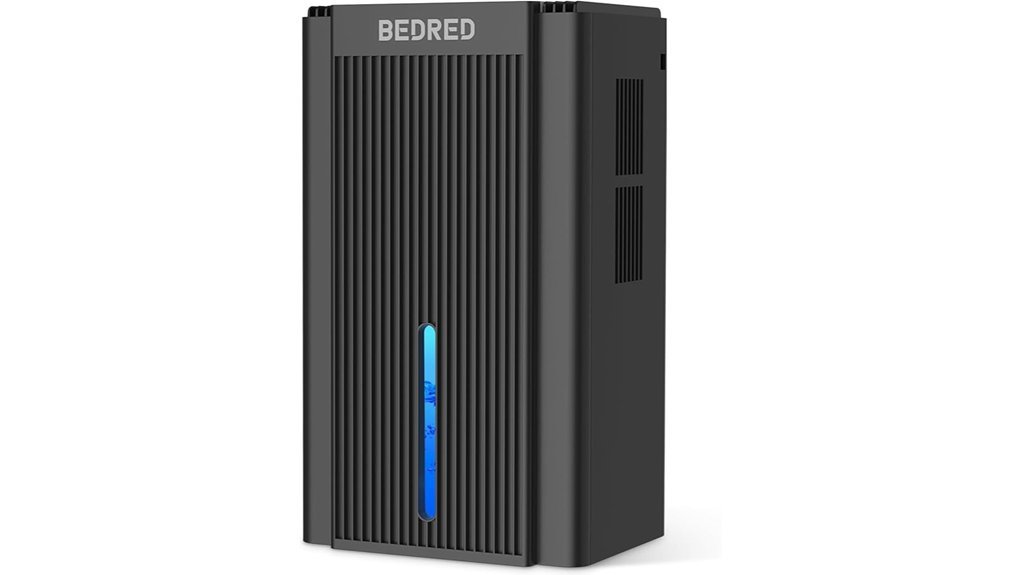
This 95-ounce BEDRED dehumidifier is designed for buyers who want a compact thermoelectric unit with a larger-than-average collection tank. Its auto-shutoff feature helps prevent overflow when the tank fills, while the seven-color ambient light can add a softer look in a bedroom or living area. The listing advertises coverage up to 1,000 square feet, but buyers should treat that number as a placement guideline rather than proof that a mini thermoelectric unit can control severe humidity across an entire large room.
Why You’ll Like It: The large tank means fewer trips to the sink than many mini models, and the light can be turned into a useful night-time accent.
Best For: Bedrooms, home offices, closets, or other enclosed areas with mild to moderate moisture.
Who Should Avoid It: Buyers dealing with persistent dampness, water intrusion, or a large open floor plan that needs compressor-level moisture removal.
Pros:
- Large 95-ounce tank for a compact dehumidifier.
- Auto shutoff helps reduce overflow risk.
- Seven-color ambient light and sleep-oriented operation.
Cons:
- Thermoelectric performance is more limited than a compressor dehumidifier.
- Actual coverage depends heavily on temperature and humidity.
- The tank may still need frequent emptying in Hawaii’s more humid rooms.
AlohaAir Small Dehumidifier with Night Light
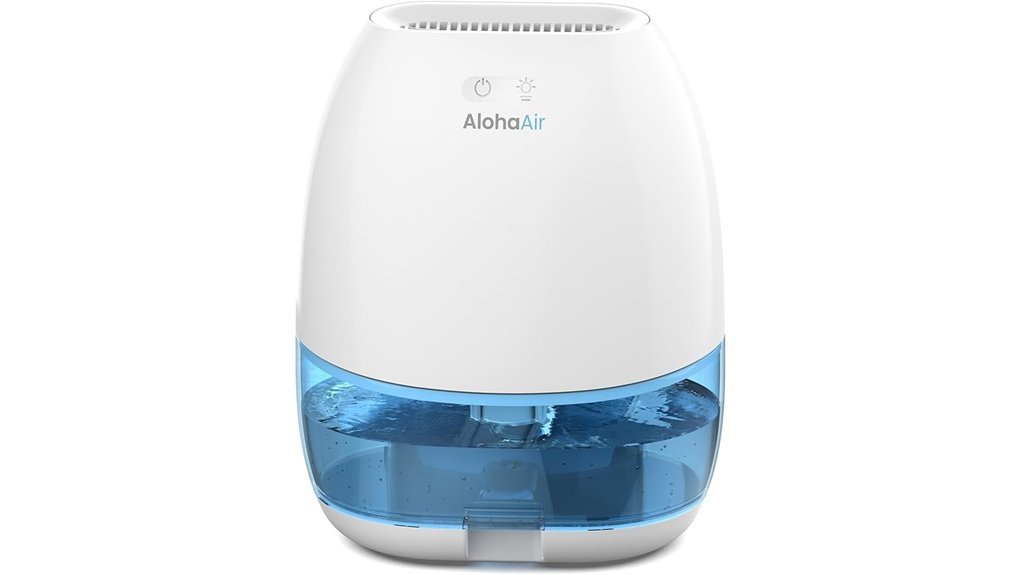
The AlohaAir Small Dehumidifier is built for compact areas such as bedrooms, bathrooms, closets, and RVs. Its listed 1,000 ml tank is easy to view, and the unit is rated to collect up to 280 ml of water per day under favorable conditions. It also includes auto shutoff, a seven-color night light, and operation advertised at about 35 dB.
Why You’ll Like It: It is simple to place, easy to monitor, and quiet enough for many sleeping areas.
Best For: A small enclosed room where portability and low noise matter more than maximum moisture removal.
Who Should Avoid It: Anyone expecting one compact unit to dry a large living area or solve a serious moisture problem.
Pros:
- Compact design with a transparent 1,000 ml tank.
- Auto shutoff and a separate seven-color night light.
- Low power demand compared with a full-size compressor unit.
Cons:
- Limited to small spaces and lighter humidity loads.
- Collected water must be emptied manually.
- Performance drops when the room is cool or only slightly humid.
Yaufey 5000 Sq. Ft. Energy Star Dehumidifier
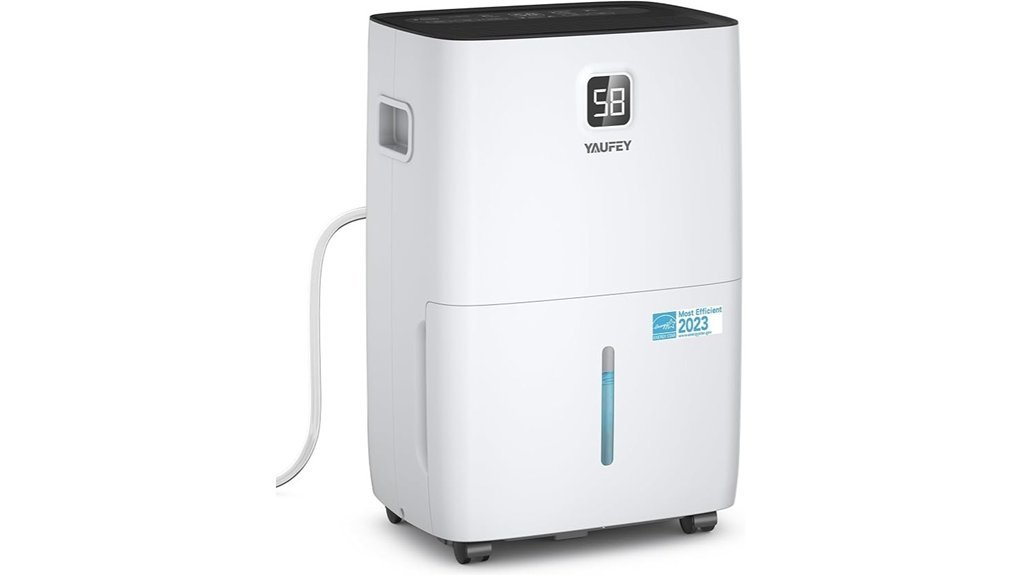
The Yaufey is the strongest fit in this roundup for a large room, garage, office, or other space with persistent humidity. Its listing advertises moisture removal of up to 80 pints per day in hot, very humid test conditions and coverage up to 5,000 square feet. It also offers adjustable humidity control, several operating modes, a reusable filter, wheels, a handle, a water bucket, and a drain hose for continuous gravity drainage.
Why You’ll Like It: Unlike a mini thermoelectric model, this compressor unit is designed to remove substantial moisture and maintain a selected humidity setting.
Best For: Large enclosed spaces, garages, living areas, and homes where a small dehumidifier cannot keep up.
Who Should Avoid It: Buyers who only need a nearly silent unit for a tiny bedroom or closet.
Pros:
- High moisture-removal capability for demanding spaces.
- Continuous drainage reduces manual bucket emptying.
- Adjustable humidistat, multiple modes, wheels, and a washable filter.
Cons:
- Advertised pint ratings may use different test conditions than standard DOE capacity ratings.
- Compressor and fan noise will be more noticeable than with a mini unit.
- Needs adequate clearance and a suitable drain location for hands-off operation.
TABYIK 35 OZ Dehumidifier for Bedroom
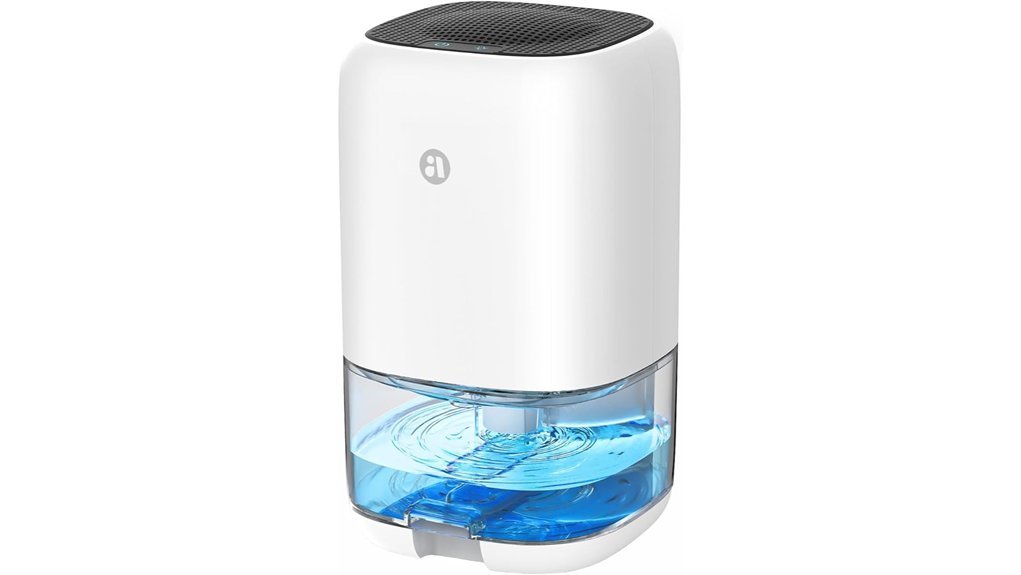
The TABYIK 35 OZ Dehumidifier is a lightweight thermoelectric model intended for small spaces. It has a transparent tank, a built-in handle, auto shutoff with a full-tank indicator, and a multicolor light. The listing advertises very quiet operation and coverage up to 280 square feet, making it more appropriate for a bedroom, bathroom, office, or RV than for a large open living area.
Why You’ll Like It: The simple controls, small footprint, and low-noise design make it easy to use near a bed or desk.
Best For: A small room with mild dampness where quiet operation is the priority.
Who Should Avoid It: Buyers who need continuous drainage, Wi-Fi control, or fast moisture removal after heavy rain or a leak.
Pros:
- Compact and easy to move with the built-in handle.
- Auto shutoff helps prevent tank overflow.
- Quiet operation and decorative light suit bedrooms.
Cons:
- Small tank requires manual emptying.
- Not designed for large rooms or severe humidity.
- No smart-home control or continuous drain connection.
Small Dehumidifier with Adjustable Color Lights
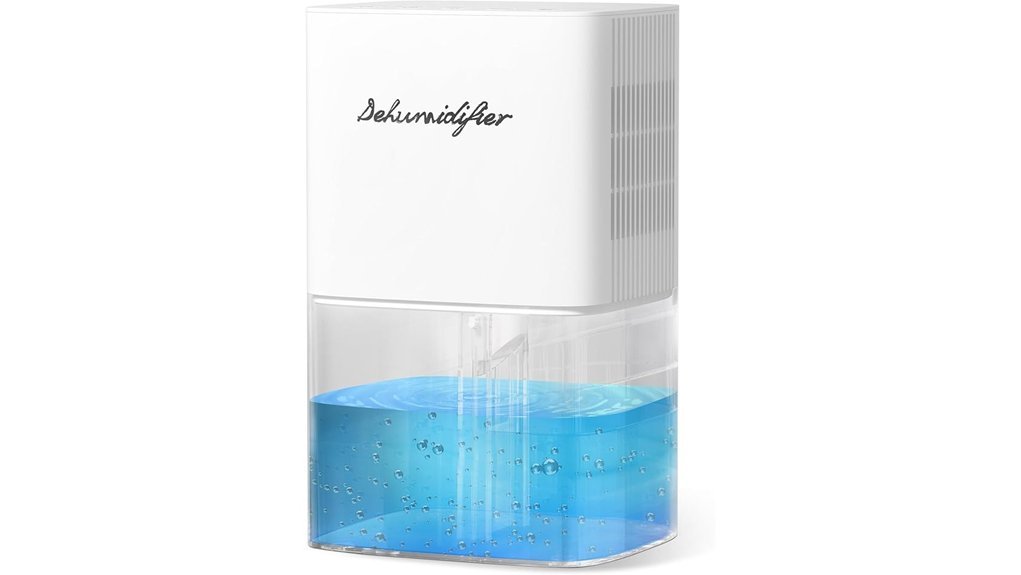
This compact thermoelectric dehumidifier focuses on convenience features: adjustable color lights, several timer choices, multiple operating modes, low-noise operation, and automatic shutoff. Current third-party listing data for this ASIN is inconsistent about the exact tank capacity, so buyers should confirm the latest Amazon specifications before ordering rather than relying on a single capacity number.
Why You’ll Like It: It offers more timer and light customization than many basic mini dehumidifiers.
Best For: A bedroom, bathroom, closet, or small office where scheduling and lighting controls are useful.
Who Should Avoid It: Anyone who needs clearly standardized moisture-removal performance or a compressor unit for a large area.
Pros:
- Multiple operating modes and timer settings.
- Adjustable color lighting can be used as a soft night light.
- Auto shutoff adds convenience when the tank fills.
Cons:
- Exact capacity details vary across current listings.
- Small-space thermoelectric performance is limited.
- No continuous drain option is clearly established.
hOmeLabs Wi-Fi Dehumidifier for Home and Office
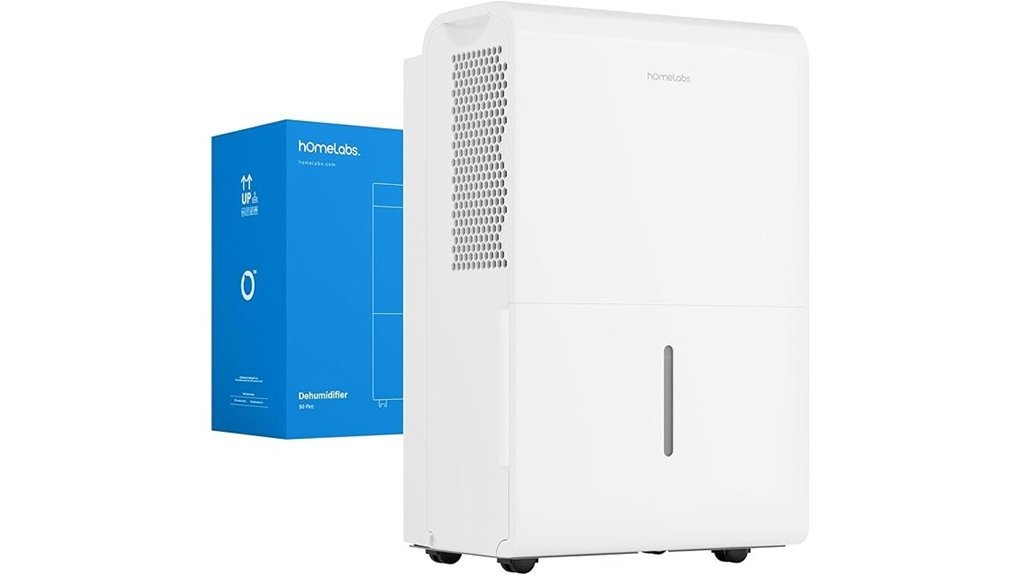
The hOmeLabs Wi-Fi Dehumidifier is a full-size compressor model for buyers who want stronger moisture removal and remote control. The current product description lists a 50-pint-per-day capacity at 80°F and 60% relative humidity, with higher maximum extraction under hotter and more humid conditions. It is advertised for spaces up to 7,000 square feet and includes Wi-Fi control, a removable bucket, a continuous-drain connection, wheels, and carrying handles.
Why You’ll Like It: Wi-Fi access can make it easier to adjust the target humidity or check the unit when it is placed in a garage, basement, office, or another less frequently visited room.
Best For: Large areas where remote monitoring and compressor-level performance are valuable.
Who Should Avoid It: Buyers seeking a tiny, nearly silent bedside unit.
Pros:
- Wi-Fi control for remote adjustments.
- 50-pint standard-condition rating and large-space coverage claim.
- Bucket and continuous-drain options support different setups.
Cons:
- Large and heavy compared with thermoelectric models.
- Compressor noise may be noticeable in a quiet bedroom.
- Confirm whether the exact Amazon package includes a drain hose.
ZUKBEN Dehumidifier with 75 OZ Water Tank and Timer
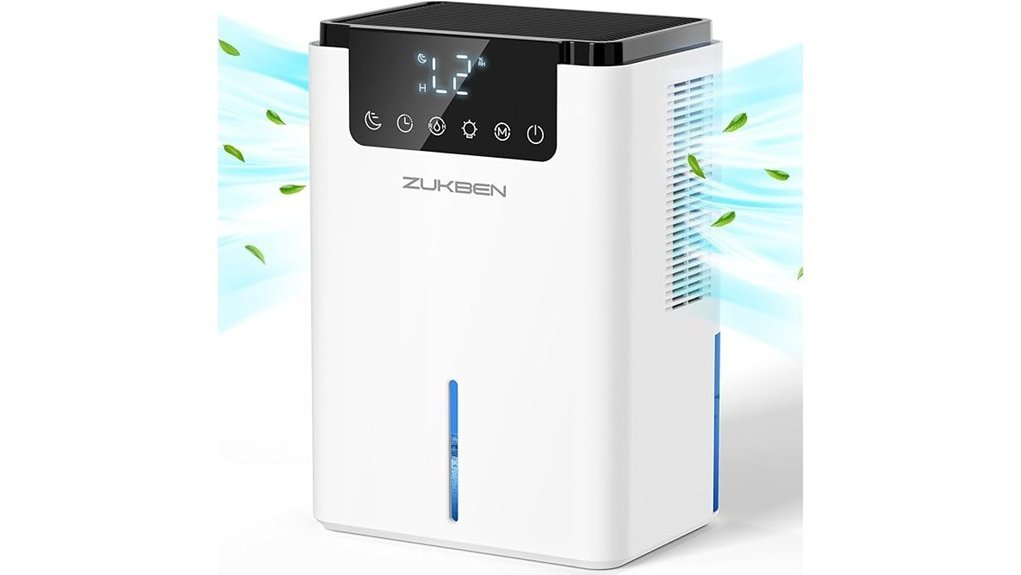
This ZUKBEN mini dehumidifier combines a 75-ounce water tank with a timer, auto shutoff, and seven-color ambient lighting. The listing advertises use in rooms up to 500 square feet, but—as with other thermoelectric products—real performance will be strongest in a smaller enclosed area with warm, humid air and limited outside air leakage.
Why You’ll Like It: The larger tank can reduce how often you empty the unit compared with many compact alternatives.
Best For: Bedrooms, bathrooms, RVs, closets, and other compact areas where a timer and night light are useful.
Who Should Avoid It: Buyers who need rapid, measurable moisture removal across a large room or whole floor.
Pros:
- 75-ounce tank is generous for a mini dehumidifier.
- Timer and auto shutoff support easier daily use.
- Seven-color lighting adds optional ambiance.
Cons:
- Manufacturer coverage claims may overstate practical whole-room performance.
- No clearly verified continuous drainage option.
- Not a replacement for a compressor model in severe humidity.
Factors to Consider When Choosing a Dehumidifier for Hawaii
Hawaii homes can have very different moisture conditions depending on elevation, rainfall exposure, ventilation, air conditioning, and how close the building is to the coast. Use the following checklist to match the machine to the actual room instead of choosing by a single headline specification.
Measure the Room Humidity First
Use a separate hygrometer to measure relative humidity before and after running the dehumidifier. The U.S. Environmental Protection Agency generally recommends keeping indoor relative humidity below 60%, ideally around 30% to 50%, when practical. A dehumidifier can help control moisture, but it should not replace repairs for plumbing leaks, roof leaks, poor drainage, or water-damaged materials. See the EPA mold and moisture guidance for additional context.
Choose Between Thermoelectric and Compressor Models
Thermoelectric dehumidifiers are compact, light, and usually quiet. They work best in small enclosed areas with mild moisture. Compressor dehumidifiers are larger and more audible, but they remove far more water and are generally the better choice for a large room, garage, basement, or persistently damp space.
Compare Moisture-Removal Capacity Carefully
Capacity is more useful than tank size when comparing performance. Full-size models commonly report pints removed per 24 hours, but the test conditions matter. A high “maximum” rating measured in very hot, humid air should not be compared directly with a standard-condition DOE rating. For mini units, daily collection claims are also highly dependent on room temperature and starting humidity.
Treat Coverage Area as a Starting Point
A square-foot number does not account for ceiling height, open doors, outside air leakage, showers, cooking, wet laundry, or water intrusion. For a large open area or humidity that stays above your target setting, choose a compressor unit with a humidistat and continuous drainage rather than relying on several small thermoelectric models.
Check Energy Efficiency and Certification
For a compressor dehumidifier that may run for hours each day, look for a current ENERGY STAR certification tied to the exact model number. ENERGY STAR states that certified dehumidifiers use more efficient components to remove the same amount of moisture with less energy than similarly sized conventional models. Mini thermoelectric models use less power in absolute terms, but they also remove much less water.
Match Noise to the Room
A mini thermoelectric unit is usually the better fit beside a bed or desk. A compressor model will produce fan and compressor noise, especially on a high setting. For a bedroom, compare the listed decibel level and look for a low-fan or sleep mode. For a garage or utility room, stronger moisture removal may matter more than low noise.
Consider Size, Weight, and Airflow Clearance
Compact models can fit on a shelf or counter, but full-size units need floor space and clear airflow around the intake and exhaust. Wheels and handles help, although a compressor model can still be heavy. Follow the manufacturer’s placement instructions and keep the unit away from direct water spray.
Choose the Right Drainage Setup
A bucket is simple but may fill quickly in a humid room. Continuous gravity drainage is more convenient when you have a nearby floor drain or another suitable low outlet. A built-in pump offers more placement flexibility, but not every model includes one. Confirm whether the drain hose is included and whether the outlet is gravity-fed or pump-assisted.
Plan for Maintenance
Empty and rinse the bucket regularly, clean reusable filters on the schedule in the manual, and keep the air intake free of dust. Inspect the drain hose for kinks or clogs. If the room remains damp despite regular operation, look for an undersized unit, blocked airflow, open windows, or an unresolved moisture source.
Before You Buy Checklist
- Measure the room’s square footage and current relative humidity.
- Decide whether you need quiet local control or high-capacity whole-room control.
- Confirm the moisture-removal rating and the conditions used for that rating.
- Check tank size, continuous drainage, hose inclusion, and pump capability.
- Review noise, dimensions, weight, operating temperature, and warranty terms.
- Verify the exact model number and current listing details before ordering.
Frequently Asked Questions
What Indoor Humidity Level Should I Target?
A practical goal is usually 30% to 50% relative humidity, while keeping the room below 60% when possible. Very low humidity can also feel uncomfortable, so use a hygrometer instead of running the machine continuously without checking the result.
How Often Should I Empty My Dehumidifier’s Water Tank?
Empty it whenever the full-tank indicator activates or before the water reaches the fill line. In a very humid room, a mini tank may need daily attention. A full-size unit connected to continuous drainage can run with much less hands-on maintenance.
Can a Dehumidifier Help With Mold Prevention?
It can help by lowering excess indoor moisture, but it does not remove existing mold or repair the source of water. Clean or remediate existing mold appropriately, dry wet materials promptly, and fix leaks or drainage problems.
What Size Dehumidifier Do I Need for My Space?
Match the unit to both the room size and the severity of the dampness. A small thermoelectric unit may be enough for a closet, RV, or compact bedroom with mild humidity. A large room, garage, or space that stays above 60% relative humidity will usually need a compressor dehumidifier with a meaningful pints-per-day rating.
Can a Mini Dehumidifier Handle a Whole House?
No. Mini thermoelectric models are best treated as local moisture-control devices. For multiple rooms or an entire home, consider a properly sized compressor unit, multiple room units, or a whole-home dehumidification system.
Are Dehumidifiers Energy-Efficient in Hawaii’s Climate?
Efficiency depends on sizing, settings, room leakage, and runtime. A properly sized model with a humidistat can cycle off after reaching the target humidity. For full-size compressor models, a current ENERGY STAR-certified option can reduce energy use compared with a similarly sized non-certified unit.
How Loud Are These Dehumidifiers During Operation?
The compact thermoelectric models in this roundup are generally marketed for quiet rooms, while compressor units will be more noticeable. Check the exact decibel specification for the current model and remember that high-fan or turbo settings are usually louder than sleep or low-fan modes.
Final Recommendation
Choose the Yaufey when your main problem is persistent humidity in a large room and you have a practical drainage location.
Choose the hOmeLabs Wi-Fi model when remote control is worth the extra size and cost.
Choose the TABYIK or AlohaAir when you need a quiet, compact machine for a bedroom, closet, bathroom, or RV.
Choose one of the larger-tank mini models only when convenience features such as a timer, ambient light, or less frequent bucket emptying matter more than maximum moisture removal.
Conclusion
The best dehumidifier for a Hawaii home is the one that matches the actual moisture load. Compact thermoelectric units are useful for small enclosed spaces, but they should not be presented as equal alternatives to full-size compressor models in a large or persistently damp room. Measure the humidity, choose the correct technology, plan the drainage, and verify the exact current model details before buying. That approach will give you a more comfortable space without relying on inflated coverage claims or unnecessary features.