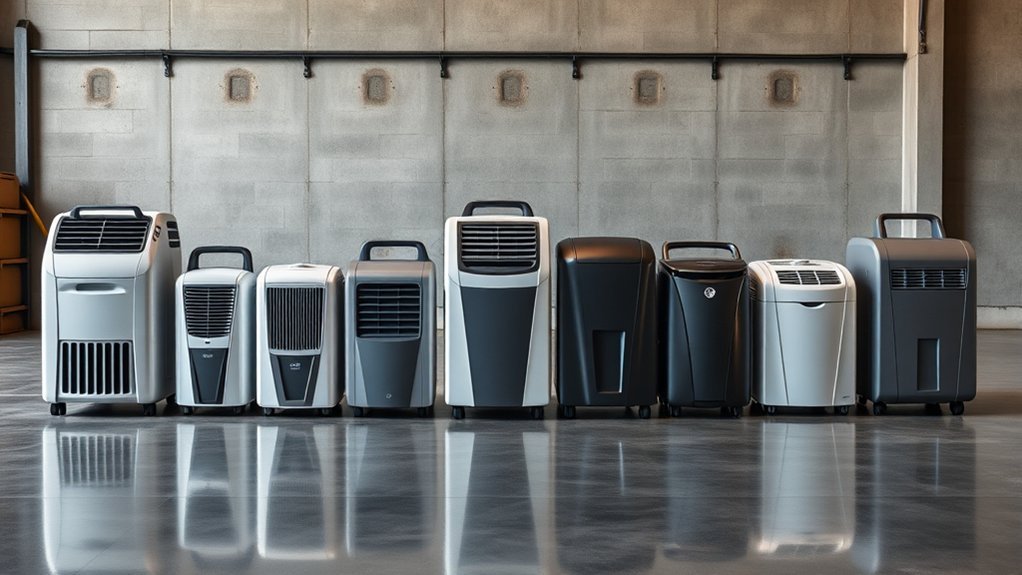
Best Dehumidifiers for Residential Crawl Spaces in 2026
Affiliate disclosure: As an Amazon Associate, we may earn from qualifying purchases. This does not change the price you pay and helps support our content.
Quick Verdict: If your crawl space smells musty, feels damp, or shows signs of condensation, a properly sized crawl space dehumidifier can help control moisture before it leads to mold, wood damage, or pest problems. For most small to medium crawl spaces, a 70-pint crawl-space-ready unit with a built-in pump is the easiest starting point. For larger, wetter, or basement-connected areas, a higher-capacity commercial-style model may be the better fit.
The best choice depends on your crawl space size, drainage setup, humidity level, access height, and how much moisture removal capacity you need. Below, you’ll find seven crawl space and basement-ready dehumidifiers, including compact 70-pint units, higher-capacity commercial models, and pump-equipped options for harder drainage setups.
Quick Comparison of the Best Crawl Space Dehumidifiers
| Product | Capacity Listed | Coverage Listed | Best Fit | CTA |
|---|---|---|---|---|
| Abestorm 70 Pints Portable Crawl Space Dehumidifier | 70 pints per day | Up to 1,000 sq. ft. | Small to medium crawl spaces needing pump drainage | Check Price |
| BaseAire Crawlspace Dehumidifier with Pump | 70 PPD | Up to 1,000 sq. ft. | Compact crawl spaces and small basements | Check Price |
| ARGENDON Commercial Dehumidifier | 145 PPD | Up to 1,800 sq. ft. | Larger damp crawl spaces and basements | Check Price |
| HBN 125 Pint Crawl Space Dehumidifier with Pump | 125 pints per day | Up to 5,900 sq. ft. | Large areas needing high-capacity moisture control | Check Price |
| ALORAIR Sentinel HD55 | 113 pints listed, 53 pints at AHAM | Up to 1,200 sq. ft. | Commercial-style crawl spaces, warehouses, and basements | Check Price |
| Waykar 70 Pint Energy Star Dehumidifier | 70 pints per day | Up to 5,000 sq. ft. | Large damp basements or crawl spaces where energy use matters | Check Price |
| ALORAIR 70 Pints Dehumidifier for Crawl Spaces | 70 pints per day | Up to 1,000 sq. ft. | Crawl spaces needing automatic functions and built-in pump drainage | Check Price |
Pro Tip: Before choosing by pint rating alone, decide where the water will go. In crawl spaces, drainage is often the deciding factor. A built-in pump is helpful when the drain line must move upward or across a longer route, while gravity drainage works best when a lower drain point is nearby.
Abestorm 70 Pints Portable Crawl Space Dehumidifier
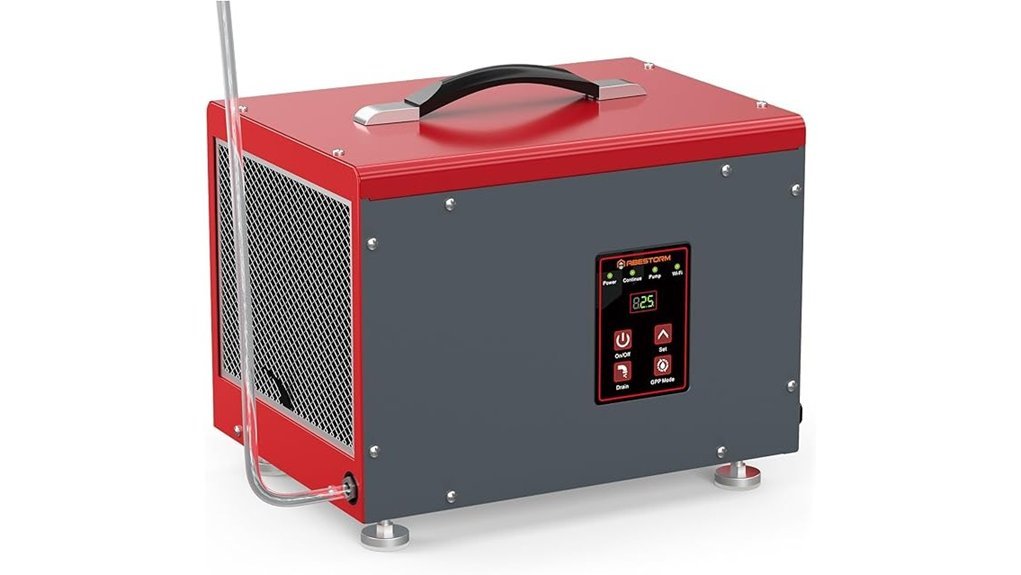
Best For: Small to medium crawl spaces that need pump-assisted drainage.
The Abestorm 70 Pints Portable Crawl Space Dehumidifier is a strong option for homeowners who need steady moisture control in spaces up to 1,000 sq. ft. It is listed to remove up to 70 pints of moisture per day, which makes it a practical choice for crawl spaces that stay damp after rain, seasonal humidity, or poor ventilation. Its automatic stop function helps reduce wasted runtime once the target humidity level is reached.
A major advantage is the flexible drainage setup. The built-in pump can lift water up to 19.6 ft, so you are not limited to gravity drainage only. That can be helpful if your crawl space drain is higher than the unit or if you need to route water away from the foundation. The automatic defrost feature also helps the unit continue working in lower temperatures, which matters in crawl spaces that cool down during winter.
Why You’ll Like It: This model solves one of the biggest crawl space problems: where to send the collected water. If you do not have a convenient low drain point, the pump gives you more installation flexibility.
Best For: Homeowners seeking an efficient and reliable dehumidifier for moisture control in crawl spaces or basements up to 1,000 sq. ft.
Why It Fits: This model is best for buyers who want a crawl space-ready unit with automatic drainage support, basic energy-saving behavior, and easy humidity control without choosing an oversized commercial machine.
Who Should Skip It: Skip this unit if your crawl space is much larger than 1,000 sq. ft. or if you need a heavy-duty commercial model for severe, ongoing moisture problems.
Pros:
- Energy-efficient design reduces electricity costs while effectively removing moisture.
- Flexible drainage options, including a built-in pump, allow for versatile water removal.
- User-friendly controls and automatic features simplify operation and maintenance.
Cons:
- Limited coverage area may not be suitable for larger spaces.
- Initial cost might be higher compared to basic dehumidifier models.
- Noise level could be noticeable in quiet environments during operation.
Before You Buy: Measure your crawl space and confirm where the drain hose will run. A pump-equipped unit is useful only if the hose route is practical and protected from kinks or freezing.
BaseAire Crawlspace Dehumidifier with Pump (70 PPD)
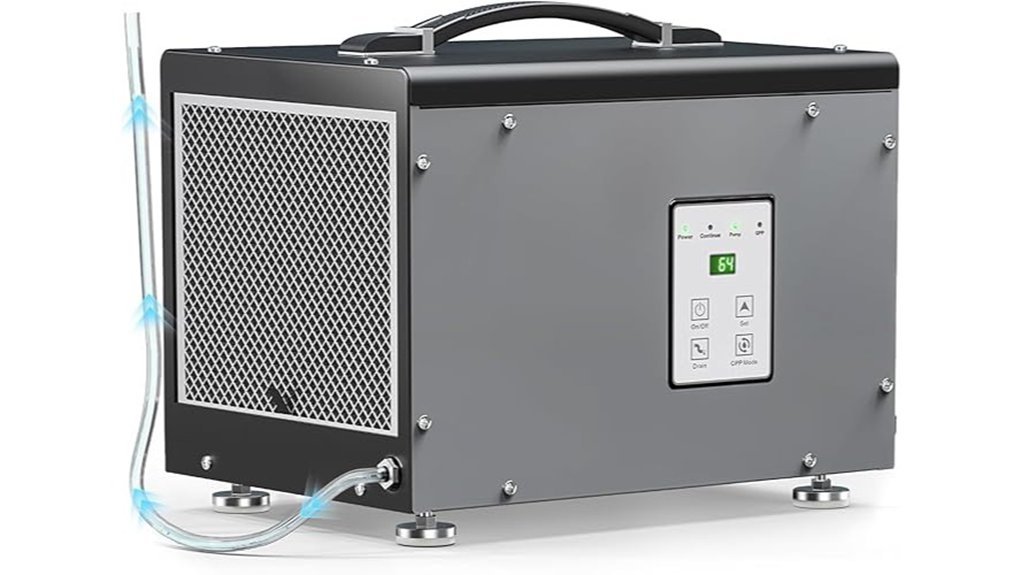
Best For: Tight crawl spaces where compact size, pump drainage, and digital humidity control matter.
If you need a compact solution for moisture control in your crawl space, the BaseAire Crawlspace Dehumidifier with Pump is worth comparing. With a listed capacity of 70 pints per day, it is designed for areas up to 1,000 square feet. Its compact body is useful in tight crawl spaces where a larger basement dehumidifier may be hard to position or service.
The built-in humidity sensor and digital controls help you set a target level instead of guessing. The automatic defrost feature can also help maintain efficiency when temperatures drop. At 38.2 pounds, it is still a serious appliance, but it should be manageable for many homeowners during setup. The listed 5-year warranty and lifetime tech support may also appeal to buyers who want long-term moisture management instead of a temporary fix.
Why You’ll Like It: This unit focuses on practical crawl space needs: controlled humidity, automatic drainage, and a body that is easier to place in tighter access areas than many bulky basement units.
Best For: Homeowners seeking an efficient and compact dehumidification solution for crawl spaces and small basements.
Why It Fits: This unit makes sense for crawl spaces where room is limited but pump drainage and digital humidity control are still important.
Who Should Skip It: Choose a larger-capacity model if your crawl space is very wet, much larger than 1,000 square feet, or connected to a large basement area.
Pros:
- High capacity of 70 PPD, effectively managing moisture in areas up to 1,000 square feet.
- Built-in pump allows for easy drainage, enhancing convenience during operation.
- User-friendly controls with a digital panel and humidity sensor for precise adjustments.
Cons:
- Limited coverage may not be suitable for larger spaces beyond 1,000 square feet.
- Weight of 38.2 pounds could make it less portable for some users.
- Initial cost may be higher compared to non-pump models.
Before You Buy: Check the height of your crawl space opening and make sure you can reach the filter, drain hose, and control panel after installation.
ARGENDON Commercial Dehumidifier for Crawlspace (145 PPD)
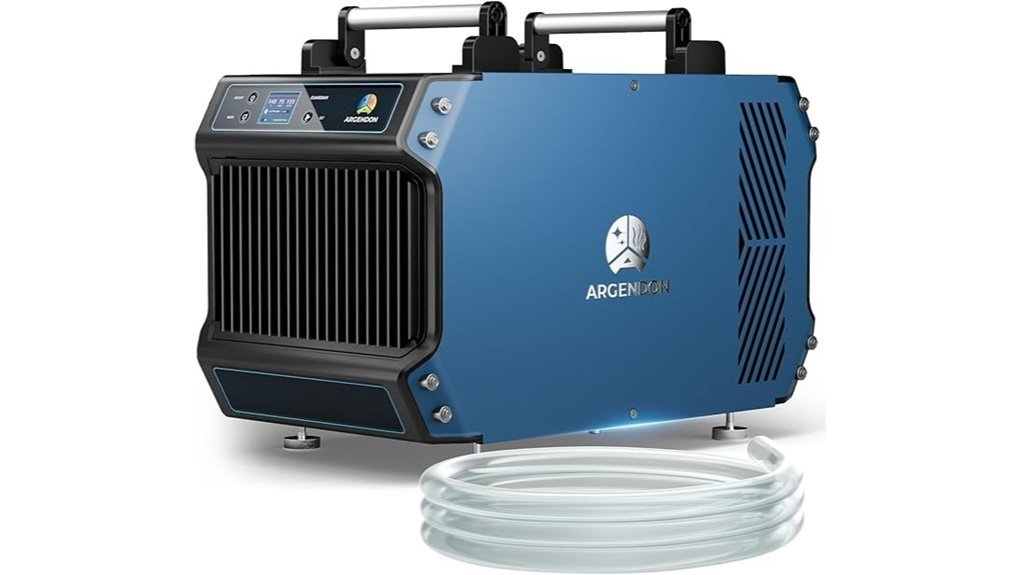
Best For: Larger damp crawl spaces, basements, and homeowners who need more moisture removal than a standard 70-pint unit.
For homeowners dealing with heavier moisture issues, the ARGENDON Commercial Dehumidifier offers a listed 145 pints per day capacity. It is designed for crawl spaces and basements and covers areas up to 1,800 square feet. That higher capacity may suit larger spaces, wetter climates, or homes where humidity returns quickly after a smaller unit shuts off.
The 165 CFM airflow helps move air through the space, while the MERV-1 filter is intended to catch larger airborne particles. It also includes two humidity modes and GPP mode for faster dehumidification. The plug-and-play setup and included drain hose make it easier to run continuously, which is often the best approach for crawl spaces with persistent moisture. It is also listed as meeting ETL safety standards and includes a 5-year warranty.
Why You’ll Like It: This model is positioned for heavier moisture control. If a smaller home dehumidifier struggles to keep up, the higher listed capacity and stronger airflow may make more sense.
Best For: Homeowners with crawl spaces or basements looking to effectively manage moisture and humidity levels.
Why It Fits: This model is best for buyers who need more capacity than a standard 70-pint crawl space unit and want continuous drainage for ongoing moisture control.
Who Should Skip It: It may be more dehumidifier than you need for a small, mildly damp crawl space. Smaller homes may be better served by a compact 70-pint option.
Pros:
- Powerful dehumidification capacity of 145 pints per day, ideal for large spaces.
- User-friendly design with easy plug-and-play setup and intuitive controls.
- Continuous drainage option with included drain hose for hassle-free operation.
Cons:
- Weight of 24.95 kilograms may make it challenging to move for some users.
- MERV-1 filter may not capture smaller particles compared to higher-rated filters.
- Initial cost may be higher than standard residential dehumidifiers.
Before You Buy: Confirm that your crawl space has enough clearance for placement and maintenance. Higher-capacity models can be more effective, but they still need proper airflow around the unit.
HBN 125 Pint Crawl Space Dehumidifier with Pump
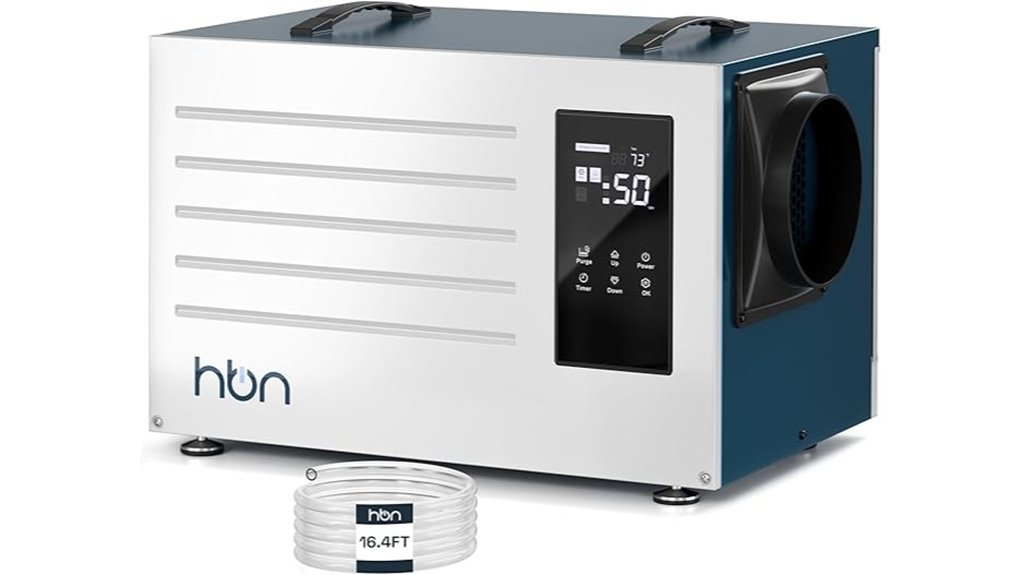
Best For: Large crawl spaces, damp basement areas, and setups that may need either gravity drainage or pump drainage.
Looking for powerful moisture control? The HBN 125 Pint Crawl Space Dehumidifier with Pump is built for buyers who need more capacity than a compact crawl space model. It lists a capacity of 125 pints per day and coverage for up to 5,900 sq. ft., making it one of the larger-coverage options in this roundup.
The dual drainage system gives you two ways to remove water. You can use the 6.6 ft gravity drain hose if you have a suitable low drain nearby, or use the auto-pump to lift water up to 16.4 ft. The adjustable humidity control and touchscreen panel make day-to-day settings easier to manage. Its durable metal design is also useful in crawl spaces where the appliance may face dust, bumps, and long operating hours. The article-listed 30-day money-back guarantee and lifetime technical support add another layer of buyer reassurance.
Why You’ll Like It: The dual drainage design helps reduce installation hesitation. You can use gravity drainage when the layout allows it or pump drainage when water needs to move upward.
Best For: Homeowners looking for effective humidity control in large crawl spaces or basements.
Why It Fits: This model is a better match for large spaces, high moisture loads, or homeowners who want both gravity drainage and pump drainage in one unit.
Who Should Skip It: If you only need moisture control for a small crawl space, this unit may be larger and more powerful than necessary.
Pros:
- High Capacity: Removes up to 125 pints of moisture daily, suitable for extensive areas up to 5,900 sq. ft.
- Dual Drainage Options: Offers both gravity drainage and an auto-pump for flexible water removal.
- User-Friendly Features: Intuitive touchscreen controls and remote operation enhance convenience.
Cons:
- Size and Placement: It may be less convenient to move and position than smaller home units.
- Initial Cost: Higher upfront investment compared to smaller dehumidifiers.
- Noise Level: May produce noticeable noise during operation, especially in quiet settings.
Before You Buy: Match the unit’s capacity to the actual crawl space size and moisture level. A powerful unit still needs correct placement, drainage, and access for filter cleaning.
ALORAIR 113 Pint Commercial Dehumidifier (Sentinel HD55)
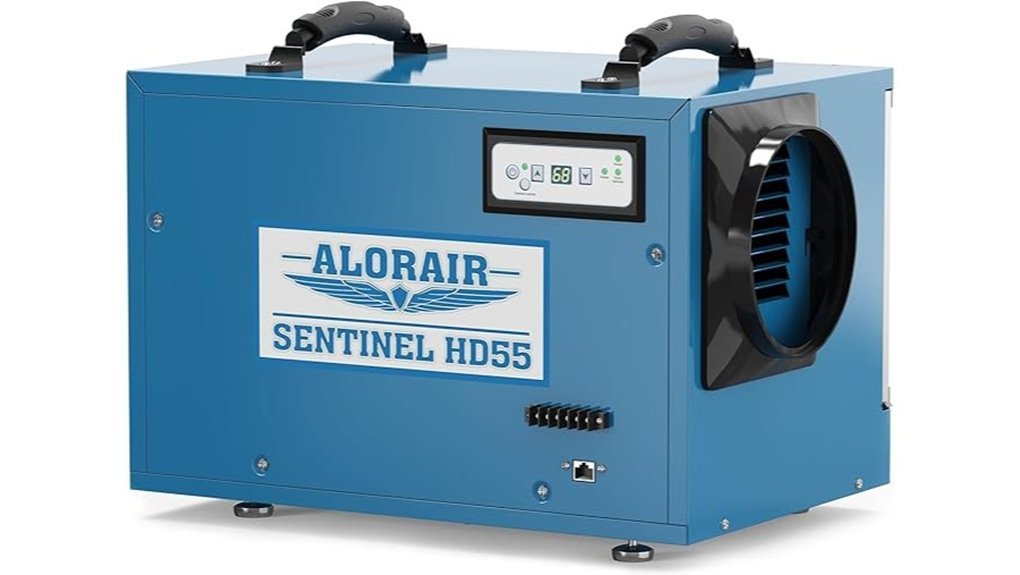
Best For: Crawl spaces, basements, warehouses, and commercial-style moisture control where automatic drainage is preferred.
The ALORAIR 113 Pint Commercial Dehumidifier (Sentinel HD55) is designed for crawl spaces, basements, warehouses, and other areas where automatic drainage and durable construction matter. It lists a capacity of 113 pints, with 53 pints per day at AHAM, and covers areas up to 1,200 sq.ft. That AHAM figure is useful because it reflects performance under a more standardized condition than maximum-capacity claims.
You won’t have to rely on manual bucket emptying because the unit drains automatically. At 41.7 pounds, it is portable enough to move when needed but still built like a serious crawl space appliance. The auto defrost system helps reduce frost buildup, which can protect efficiency and support longer service life. The durable metal casing and MERV-1 filter add protection in dusty or rougher environments. It is backed by a listed 6-year warranty.
Why You’ll Like It: This model gives readers a more serious crawl space option without jumping to an oversized unit. The AHAM rating also makes the capacity discussion clearer for buyers comparing maximum claims.
Best For: The ALORAIR 113 Pint Commercial Dehumidifier (Sentinel HD55) is best for businesses and commercial spaces needing efficient moisture control in areas like crawl spaces, basements, and warehouses.
Why It Fits: This model suits buyers who want a compact commercial-style unit with automatic drainage and a stronger warranty profile than many basic residential dehumidifiers.
Who Should Skip It: It may not be the best fit if you need coverage beyond 1,200 sq.ft. or if your crawl space cannot support a continuous drainage setup.
Pros:
- Automatic drainage eliminates the need for manual water disposal.
- Compact design makes it easy to transport and fit into tight spaces.
- Energy-efficient auto defrost system prevents frost buildup and extends the dehumidifier’s lifespan.
Cons:
- Higher upfront cost compared to residential models.
- Limited coverage area may not be suitable for larger spaces beyond 1,200 sq.ft.
- Requires continuous drainage setup, which may complicate installation in some locations.
Before You Buy: Check whether your space has a clear path for the drain hose. Automatic drainage is convenient, but only when the hose can be routed safely and kept clear.
Waykar 70 Pint Energy Star Dehumidifier for Basements
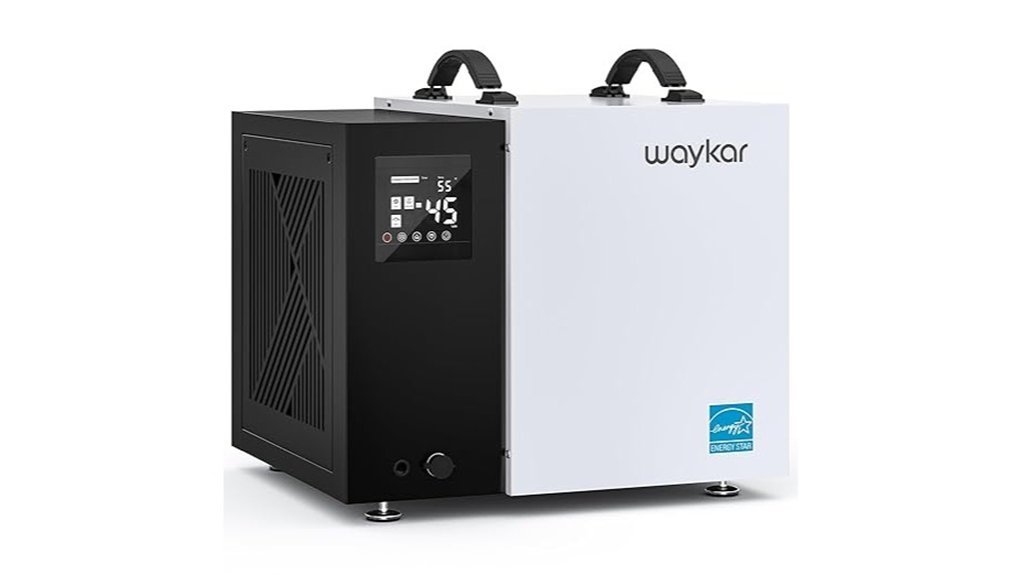
Best For: Large damp basements or crawl-space-adjacent areas where energy efficiency and broad coverage matter.
If you need an efficient solution for damp crawl spaces or basements, the Waykar 70 Pint Energy Star Dehumidifier is a strong option to consider. It is listed for areas up to 5,000 sq. ft. and removes up to 70 pints of moisture daily. That makes it useful for larger damp areas where energy use matters, especially if the unit will run for long periods during humid seasons.
The adjustable humidity control range from 10% to 90% RH gives you flexibility for different conditions. Its ENERGY STAR certification is a useful buying signal for shoppers who want lower energy consumption while still reducing excess moisture. The heavy-duty metal casing improves durability, while the touchscreen panel and optional remote make operation easier. The listed 5-year compressor warranty and lifetime technical support may also appeal to buyers looking for longer-term value.
Why You’ll Like It: This is a good comparison pick for buyers who care about electricity use and want a dehumidifier that can serve a basement or accessible crawl-space setup.
Best For: Those looking to effectively manage humidity in large damp spaces, such as basements or crawl spaces, while ensuring energy efficiency.
Why It Fits: This model is best for buyers who want broad coverage, Energy Star efficiency, and simple humidity control in a basement or crawl space environment.
Who Should Skip It: If you need a low-profile unit designed only for tight crawl space placement, compare its dimensions carefully before choosing it.
Pros:
- High Capacity: Removes up to 70 pints of moisture daily, suitable for areas up to 5,000 sq. ft.
- Energy Efficient: ENERGY STAR certified, optimizing power consumption during operation.
- Durable Design: Heavy-duty metal casing ensures resistance to corrosion and physical impacts.
Cons:
- Size and Weight: May be bulky for smaller spaces or difficult to move frequently.
- Initial Cost: Higher upfront investment compared to some lower-capacity models.
- Noise Level: Can be noisy during operation, potentially disturbing quiet environments.
Before You Buy: Since this is positioned for basements as well as damp crawl spaces, check clearance, drain access, and control-panel reach before installing it below the home.
ALORAIR 70 Pints Dehumidifier for Crawl Spaces
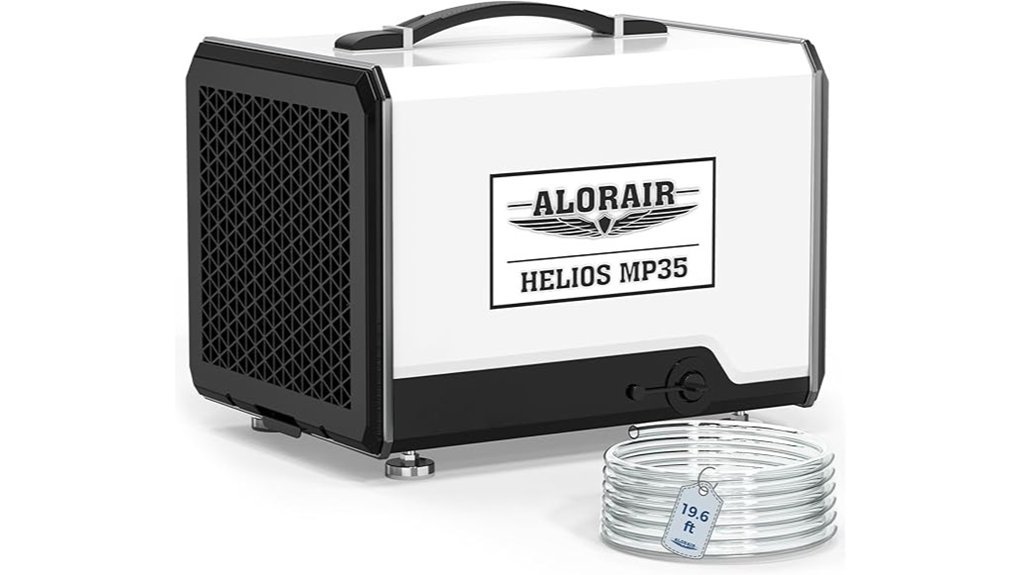
Best For: Crawl spaces needing a 70-pint unit with built-in pump drainage and automatic operating modes.
For homeowners seeking reliable moisture control, the ALORAIR 70 Pints Dehumidifier is made for crawl spaces, basements, and attics. It covers up to 1,000 sq. ft. and is listed to remove up to 70 pints of moisture daily. With its R32 system, it is designed to adapt across different environments and support consistent performance throughout the year.
The built-in pump allows vertical water discharge up to 19.6 ft, giving you more flexibility when a floor drain is not directly below the unit. Automatic features, including defrost and GPP modes, reduce the amount of manual attention needed. The 6-year warranty and customer support add confidence for homeowners who want a durable, corrosion-resistant model for long-term use.
Why You’ll Like It: This is a direct crawl-space-focused pick for homeowners who want pump drainage and automatic operation without moving into a much larger commercial unit.
Best For: Homeowners looking for effective moisture control in crawl spaces, basements, and attics.
Why It Fits: This is a direct crawl space option for buyers who want a 70-pint unit with pump drainage, automatic operating modes, and a longer warranty window.
Who Should Skip It: If your crawl space is larger than 1,000 sq. ft. or has severe standing water issues, consider a higher-capacity model and address drainage problems first.
Pros:
- Efficient dehumidification with a capacity of 70 pints per day, making it suitable for larger areas.
- Built-in pump allows for vertical water discharge, enhancing versatility in drainage options.
- Automatic functions like defrost and GPP modes simplify operation and improve usability.
Cons:
- Limited coverage area of 1,000 sq. ft. may not be sufficient for larger spaces.
- Higher wattage usage (323 watts) might lead to increased energy costs.
- Initial cost may be higher compared to basic dehumidifier models.
Before You Buy: Decide whether pump drainage is necessary for your setup. If gravity drainage is available, a pump is still useful, but it may not be essential.
Factors to Consider When Choosing Dehumidifiers for a Residential Crawl Space
When choosing a dehumidifier for your crawl space, look beyond the pint rating alone. Key performance metrics and energy efficiency ratings affect both moisture removal and operating cost. You should also compare drainage options, size, coverage area, airflow, and maintenance access before choosing a unit.
Before You Buy Checklist:
- Measure the crawl space square footage and access opening height.
- Decide whether you need gravity drainage or pump drainage.
- Check whether the filter, hose, and control panel will be reachable after installation.
- Look for automatic defrost if the crawl space gets cool.
- Address standing water, gutter issues, foundation leaks, and missing vapor barriers before relying only on a dehumidifier.
Key Performance Metrics
Choosing the right dehumidifier for your crawl space involves several key performance metrics. Start with moisture removal capacity, usually measured in pints per day (PPD). This helps you match the unit to your crawl space humidity level. Next, compare the coverage area, as the models above list spaces between 1,000 and 5,900 square feet depending on design and conditions. Features like automatic defrost cycles and built-in pumps can improve performance and make drainage easier. Adjustable humidity control settings, often ranging from 10% to 90% relative humidity, help you manage moisture levels more precisely and reduce the risk of mold and structural damage.
Energy Efficiency Ratings
Energy efficiency ratings are important because crawl space dehumidifiers may run for long periods during humid months. Look for models with ENERGY STAR certification when energy use is a major concern. Features like auto-stop/restart can help conserve power by turning the unit off when the target humidity level is reached, then restarting when humidity rises again. Pay attention to wattage, especially if the unit will operate daily. In high-humidity areas, a model designed for continuous operation may be a better choice than a basic portable unit. Intelligent humidity sensors can also help the unit run only when needed.
Drainage Options Available
Drainage is one of the most important crawl space buying factors. Many dehumidifiers offer gravity drainage, which lets water flow downward through a hose. This works well when a low drain point is nearby. A model with a built-in pump can lift water up to a listed height, such as 16.4 ft or 19.6 ft on some units above, giving you more flexibility when the drain route is higher or farther away. Continuous drainage is usually more convenient than emptying a tank because the unit can run without frequent manual water removal. Choose the drainage setup before you choose the product, not after.
Size and Coverage Area
When it comes to selecting a dehumidifier for your crawl space, size and coverage area matter. You need a unit that can manage moisture in the actual space you have, not just the number printed on the box. Listed coverage in this roundup ranges from 1,000 to 5,900 square feet. Capacity also varies, from 70 PPD to more than 125 PPD. Measure your crawl space, check the height of the access opening, and make sure the dehumidifier can physically fit where it needs to go. Also compare airflow capacity, measured in cubic feet per minute (CFM), because stronger airflow helps circulate air through larger or more divided crawl spaces.
Installation and Maintenance Ease
Choosing the right dehumidifier for your crawl space also means thinking about installation and upkeep. Look for compact designs if the crawl space is tight. Plug-and-play models reduce setup difficulty and can be easier for homeowners who do not want a complicated install. Flexible drainage options, like built-in pumps or gravity drains, make water removal simpler. User-friendly controls, including digital panels and automatic settings, help you monitor humidity without constant adjustment. Finally, look for accessible filters and clear maintenance reminders, since a dehumidifier that is hard to clean is less likely to be maintained properly.
What Humidity Level Should a Crawl Space Have?
Most homeowners aim to keep a crawl space dry enough to avoid musty odors, condensation, and mold-friendly conditions. A dehumidifier with adjustable humidity control lets you choose a target range instead of running the unit nonstop. If your crawl space still smells damp or shows condensation after the unit has been running, check for outside water intrusion, clogged drains, poor vapor barrier coverage, or air leaks.
Common Mistakes to Avoid
- Buying only by pint rating: Capacity matters, but drainage, airflow, access, and temperature range matter too.
- Ignoring drainage: A good unit can still be frustrating if you cannot route the drain hose properly.
- Choosing a unit too large to service: Make sure you can reach the filter and controls after installation.
- Skipping moisture source repairs: A dehumidifier helps control humidity, but it should not replace fixing leaks, standing water, or missing vapor barriers.
- Forgetting noise and vibration: Crawl spaces under bedrooms or living areas may need extra attention to placement.
Safety Note: A dehumidifier can help manage moisture, but it should not be used as the only solution for standing water, active leaks, sewage issues, or major foundation drainage problems. Fix the source of moisture first, then use a dehumidifier to help maintain a drier environment.
Frequently Asked Questions
How Do I Maintain My Crawl Space Dehumidifier?
To maintain your crawl space dehumidifier, regularly clean the filter, check for clogs, and inspect the drainage system. You should also monitor humidity levels and schedule professional maintenance at least once a year.
What Size Dehumidifier Do I Need for My Crawl Space?
To determine the right size dehumidifier for your crawl space, measure the square footage and assess humidity levels. Generally, a unit removing 30-70 pints per day suits many residential spaces, while larger or wetter crawl spaces may need a higher-capacity model.
Can a Dehumidifier Help Prevent Mold Growth?
Yes, a dehumidifier can help prevent mold growth. By reducing moisture levels in your crawl space, it creates a less favorable environment for mold. Regularly monitoring humidity helps your space stay dry and mold-resistant.
How Energy-Efficient Are Residential Crawl Space Dehumidifiers?
Residential crawl space dehumidifiers can be quite energy-efficient, especially when they include humidity sensors, auto-stop/restart functions, and ENERGY STAR certification. The most efficient model for your home depends on crawl space size, humidity level, runtime, and drainage setup.
What Are the Signs My Crawl Space Needs a Dehumidifier?
If you notice musty odors, condensation on surfaces, dampness, mold growth, or increased pest activity, your crawl space likely needs better moisture control. A dehumidifier can help, but you should also check for leaks, drainage problems, and missing vapor barrier coverage.
Is a Built-In Pump Worth It for a Crawl Space Dehumidifier?
A built-in pump is worth it when the water needs to move upward or across a longer route before it reaches a drain. If your crawl space has a low floor drain nearby, gravity drainage may be enough. If not, a pump-equipped unit can make installation much easier.
Can I Use a Basement Dehumidifier in a Crawl Space?
You can use some basement dehumidifiers in crawl spaces if they fit, drain properly, and can operate in the crawl space temperature range. However, crawl space-specific models are often more compact and better suited for tight access, continuous drainage, and rougher conditions.
Conclusion
The best dehumidifier for a residential crawl space is the one that matches your space size, drainage route, humidity level, and access limitations. For smaller crawl spaces, 70-pint models like the Abestorm, BaseAire, and ALORAIR 70 Pints options offer practical moisture control with pump support. For larger or wetter areas, the ARGENDON 145 PPD, HBN 125 Pint, ALORAIR Sentinel HD55, or Waykar 70 Pint Energy Star model may be a better fit depending on your coverage needs. Choose the unit that solves your actual moisture problem, then keep the filter clean, inspect the drain line, and monitor humidity so your crawl space stays dry year-round.
Final Recommendation: Choose a 70-pint pump-equipped crawl space model if your space is around 1,000 sq. ft. and you mainly need steady moisture control. Choose a higher-capacity commercial-style model if the space is larger, wetter, divided into multiple zones, or connected to a damp basement.
Best buying move: Measure first, plan the drainage route second, then compare capacity and maintenance access. That simple order helps you avoid buying a powerful unit that is hard to install or a compact unit that cannot keep up.