If you’re looking for the best battery-operated and rechargeable dehumidifiers for 2026, focus on compact moisture absorbers made for closets, cabinets, bathrooms, RVs, boats, cars, storage bins, and gun safes. These small-space dehumidifiers are not the same as large plug-in compressor units. Most use rechargeable silica gel beads or desiccant material to absorb excess moisture, then reactivate when plugged in or placed on a heating base. Below, you’ll find portable picks like the MAXSafes 2-in-1 Rechargeable Dehumidifier, the Afloia Rechargeable Cordless Dehumidifier, the 2 Pack Rechargeable Desiccant Dehumidifier, the SnapSafe Rechargeable Dehumidifier, and the Wisedry Fast Rechargeable Mini Dehumidifier. Keep reading to compare coverage, recharge style, best use cases, and buyer-friendly details before choosing the right moisture-control option for your space.
Quick Verdict: Which Rechargeable Dehumidifier Should You Choose?
Best Overall Small-Space Pick: MAXSafes 2-in-1 Rechargeable Dehumidifier with LED Light because it combines silica-gel moisture control with a useful motion-sensor light for dark closets, cabinets, and safes.
Best for Multi-Spot Use: Afloia Rechargeable Cordless Dehumidifier with Heating Base because the stick-style design makes it easy to rotate between bathrooms, rooms, cars, and storage areas.
Best Compact Pack: 2 Pack Rechargeable Desiccant Dehumidifier with USB-C Cable because the slim design fits into toolboxes, cabinets, drawers, electronics cases, and other tight spaces.
Best for Gun Safes: SnapSafe Rechargeable Dehumidifier because it is specifically positioned for firearm storage and enclosed safe humidity control.
Best Fast-Recharge Option: Wisedry Fast Rechargeable Mini Dehumidifier because it offers a quick recharge time and a convenient 2-pack setup for closets, cars, and safes.
| Product | Best For | Coverage / Capacity Mentioned | Recharge Style | Amazon |
|---|---|---|---|---|
| MAXSafes 2-in-1 Rechargeable Dehumidifier | Closets, bathrooms, cabinets, gun safes, and dark storage areas | Up to 450 cubic feet; 300g silica gel beads | Recharge when indicator shows moisture saturation | Check Price on Amazon |
| Afloia Rechargeable Cordless Dehumidifier | Rooms, bathrooms, vehicles, RVs, and portable moisture control | Up to 54 square feet; each stick captures up to 4 ounces | Heating base regeneration | Check Product Details on Amazon |
| 2 Pack Rechargeable Desiccant Dehumidifier | Toolboxes, drawers, cabinets, electronics, and small enclosed cases | Up to 90 cubic feet | USB-C reactivation | View Latest Deal on Amazon |
| SnapSafe Rechargeable Dehumidifier | Gun safes, firearm accessories, ammo storage, and enclosed safe spaces | Up to 500 cubic feet | 110V plug-in recharge | Check Current Amazon Availability |
| Wisedry Fast Rechargeable Mini Dehumidifier | Closets, cars, safes, storage bins, and multiple small damp spots | Up to 108 ft²; absorbs up to 200 ml per unit | Fast plug-in recharge | See Today’s Price on Amazon |
Affiliate Disclosure: As an Amazon Associate, this site may earn from qualifying purchases. Product details can change, so always confirm the latest specifications, safety guidance, and fit for your space on Amazon before buying.
MAXSafes 2-in-1 Rechargeable Dehumidifier with LED Light
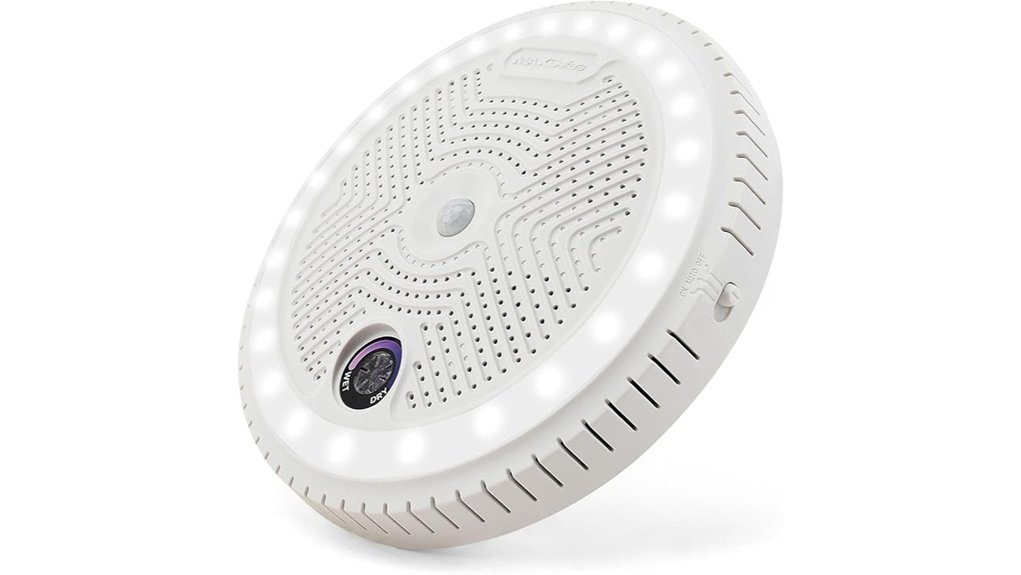
Best For: Small enclosed spaces where you want moisture control plus a built-in light, such as closets, cabinets, bathrooms, storage spaces, and gun safes.
If you’re looking for a compact solution to combat moisture in small spaces, the MAXSafes 2-in-1 Rechargeable Dehumidifier with LED Light is a strong choice. This ETL-approved device uses 300g silica gel beads to absorb humidity in areas up to 450 cubic feet, making it practical for closets, bathrooms, storage cabinets, and gun safes. Its biggest advantage is the motion-sensor LED light, which activates for 15 seconds and helps you see inside dark storage areas without needing a separate flashlight.
The clear performance indicator helps you know when it is time to recharge, which makes the unit easier to maintain than disposable moisture absorbers. Since this is a desiccant-style dehumidifier, it is best for enclosed or semi-enclosed spaces rather than large open rooms. It is also a good option if you want an eco-friendly reusable alternative to single-use moisture packets.
Why You’ll Like It: The MAXSafes model solves two problems at once: moisture buildup and poor visibility in dark storage spaces. That makes it especially useful for closets, cabinets, and safes where dampness and low light are both common annoyances.
Pros:
- Compact and lightweight design makes it easy to place in various small areas.
- Rechargeable and eco-friendly, reducing the need for disposable dehumidifiers.
- Motion-sensor LED light provides added convenience and visibility in dark spaces.
Cons:
- Limited to 450 cubic feet, which may not suffice for larger areas.
- Requires periodic recharging once the indicator shows the beads are saturated.
- Plastic material may not be as durable as heavier-duty metal options.
Who Should Buy This: Choose this model if you want a reusable dehumidifier for a closet, small bathroom, cabinet, RV compartment, or safe where the LED light can add real daily convenience.
Who Should Avoid This: Skip it if you need active dehumidification for a large bedroom, basement, laundry room, or very humid open area.
Afloia Rechargeable Cordless Dehumidifier with Heating Base
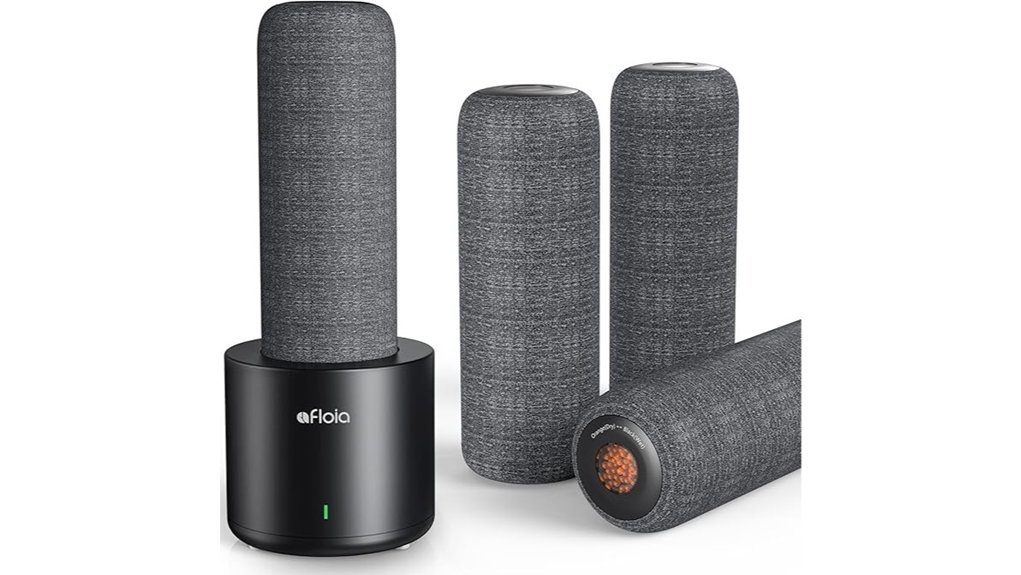
Best For: Buyers who want a reusable, cordless moisture absorber with a dedicated heating base for simple regeneration.
The Afloia Rechargeable Cordless Dehumidifier with Heating Base is a practical option for anyone seeking a portable, eco-friendly solution for moisture control. This mini, quiet device uses non-toxic silica gel beads to absorb moisture, making it useful for rooms, bathrooms, closets, cars, RVs, and other compact spaces. Each stick captures up to 4 ounces of moisture and covers areas up to 54 square feet, which makes it better suited to small, targeted spaces than full-room humidity control.
When the beads change color, you simply place the unit on the heating base for regeneration. That setup can feel easier than plugging a whole dehumidifier body directly into a wall outlet, especially if you like a tidy recharge station. The compact design and automatic shut-off feature also help make the regeneration process more convenient.
Why You’ll Like It: The separate heating base makes this model feel more organized. It is a good fit if you want to place the dehumidifier stick where moisture collects, then return it to the base when it needs reactivation.
Pros:
- Compact and portable design makes it easy to use in various settings, including cars and RVs.
- Renewable silica gel sticks can be regenerated, promoting sustainable use and reducing waste.
- Automatic shut-off feature helps support safer operation during the regeneration process.
Cons:
- Limited coverage area of up to 54 square feet may not be sufficient for larger rooms.
- Requires regeneration every time the silica gel changes color, which may be inconvenient for some users.
- Only absorbs a maximum of 4 ounces of moisture, which might not meet the needs of very humid environments.
Who Should Buy This: Choose the Afloia if you want a cordless, reusable dehumidifier that can move between small areas and recharge on a dedicated heating base.
Who Should Avoid This: Avoid it if your main problem is high humidity across a large room or basement, where a powered electric dehumidifier would usually be more appropriate.
2 Pack Rechargeable Desiccant Dehumidifier with USB-C Cable
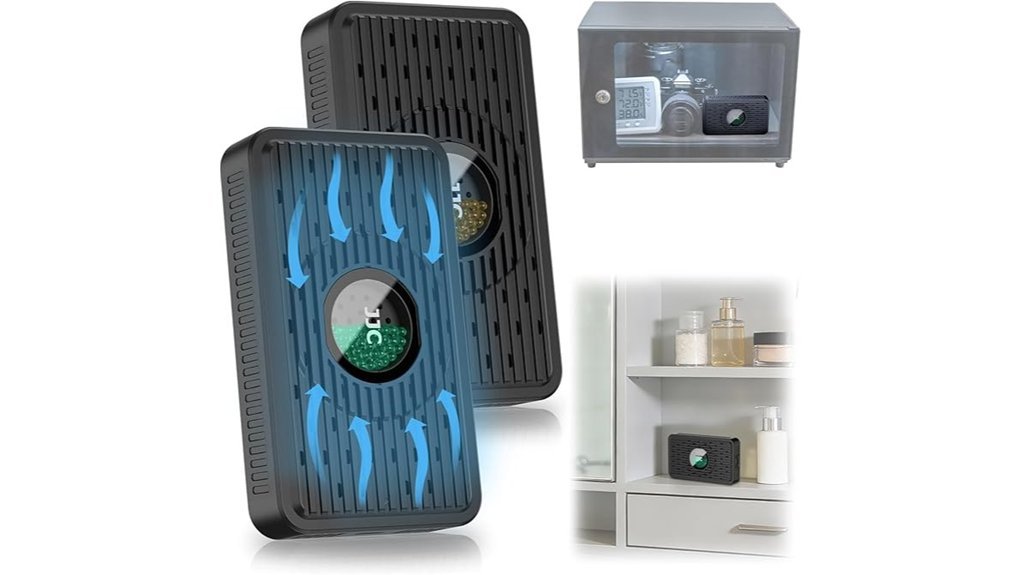
Best For: Tight spaces where a slim, rechargeable moisture absorber is easier to fit than a larger canister-style dehumidifier.
Looking for an efficient solution to combat humidity in small spaces? The 2 Pack Rechargeable Desiccant Dehumidifier is designed for buyers who need moisture control in compact areas like toolboxes, cabinets, drawers, small storage bins, electronics cases, and gear bags. Made from durable ABS, these compact units measure just 0.94D x 2.87W x 4.9H inches, covering up to 90 cubic feet.
The biggest appeal is the small profile. Each unit can slide into places where a rounded or bulky dehumidifier may not fit. The color indicator changes from orange to green, helping you know when it is time to recharge. When reactivation is needed, simply plug in the included USB-C cable for a 2-6 hour recharge cycle. Since this is a 2-pack, you can place one unit in a toolbox and another in a cabinet, or rotate one while the other is recharging.
Why You’ll Like It: The slim USB-C design is convenient for modern storage setups. It is especially useful for small containers, cases, and compartments where a standard dehumidifier would feel too bulky.
Pros:
- Compact Design: Easily fits in tight spaces while effectively covering up to 90 cubic feet.
- Rechargeable: Convenient USB-C charging allows for quick reactivation without the need for disposable units.
- Color Indicator: User-friendly moisture indicator provides a clear visual cue for when to recharge.
Cons:
- Limited Coverage: Best suited for small areas, so it may not be effective in larger spaces.
- Charging Restrictions: Cannot be used while charging, which may limit convenience during reactivation.
- Reactivation Time: Takes 2-6 hours to recharge, which may be inconvenient in urgent situations.
Who Should Buy This: Choose this 2-pack if you need moisture control in narrow storage spaces, small toolboxes, electronics cases, camera bags, closets, or drawers.
Who Should Avoid This: Skip it if you want a unit that can handle a larger room, or if you prefer a dehumidifier that keeps working while plugged in.
SnapSafe Rechargeable Dehumidifier for Gun Safes
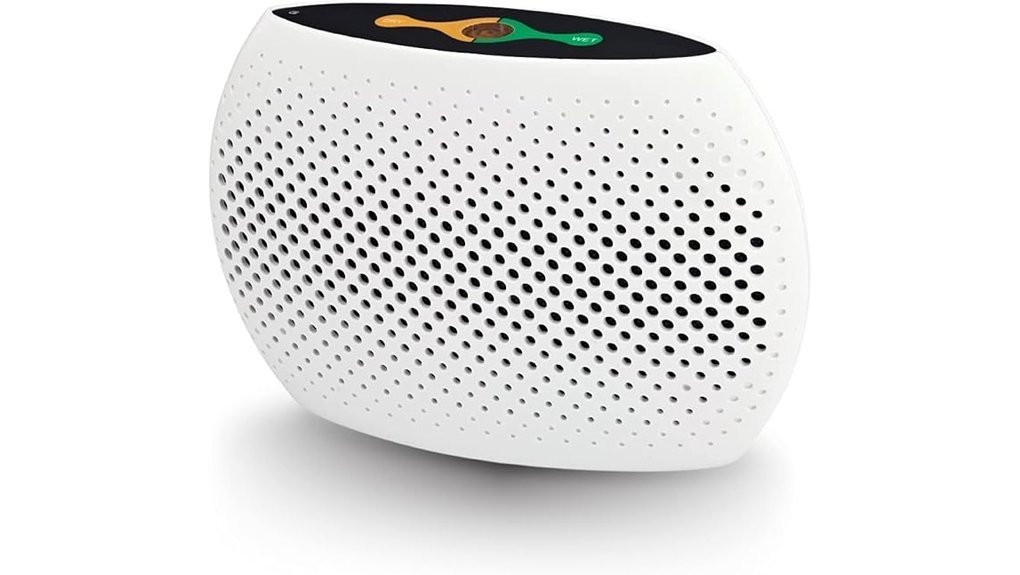
Best For: Firearm owners and safe owners who want a rechargeable humidity-control option for enclosed safes and storage cabinets.
For firearm owners seeking protection against moisture damage, the SnapSafe Rechargeable Dehumidifier is an ideal choice. This compact, portable unit is designed to help control humidity in spaces up to 500 cubic feet, which can help reduce the risk of rust and corrosion on firearms, tools, documents, and accessories stored in an enclosed safe. Made with highly absorbent silica gel, it requires no batteries or electrical equipment while it is actively absorbing moisture.
The humidity indicator changes from orange to green, letting you know when it is time to recharge. To reactivate it, plug it into a 110V outlet and allow it to dry out before returning it to your safe. This design is simple, low-maintenance, and well-suited for people who want moisture protection without running a cord inside the safe.
Why You’ll Like It: SnapSafe is the most purpose-specific option in this list for gun safes. It is easy to place, easy to monitor, and does not require a power cord inside the safe during normal use.
Pros:
- Effective at helping control humidity in enclosed areas up to 500 cubic feet.
- Contains no harmful chemicals and requires no batteries during use.
- Easy to recharge by simply plugging into a 110V outlet.
Cons:
- Limited to 500 cubic feet, which may not be suitable for larger spaces.
- Requires recharging periodically, so you need to pay attention to the humidity indicator.
- Not suitable for outdoor use, as it is designed for enclosed spaces only.
Who Should Buy This: Choose SnapSafe if your main goal is to protect firearms, ammo, accessories, documents, or valuables stored inside a gun safe or lockable storage cabinet.
Who Should Avoid This: Avoid it if you need a general household dehumidifier for a bedroom, garage, basement, or open living area.
Safety Note: A dehumidifier can help with moisture control, but it does not replace proper firearm storage practices. Always follow safe storage rules, lock firearms securely, and confirm that any dehumidifier you use fits safely inside your safe without blocking access or interfering with stored items.
Wisedry Fast Rechargeable Mini Dehumidifier (2-Pack)
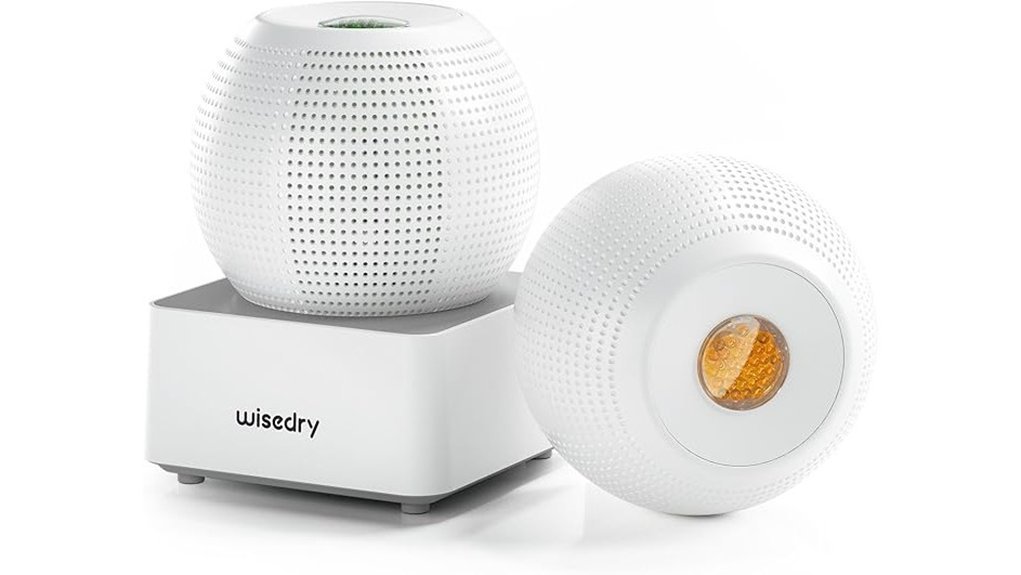
Best For: Buyers who want a fast-recharging 2-pack for closets, cars, safes, storage bins, and other damp small spaces.
If you need a compact solution for damp spaces, the Wisedry Fast Rechargeable Mini Dehumidifier is a convenient option. This wireless dehumidifier comes in a 2-pack, making it versatile for different areas like closets, cars, bathrooms, storage bins, and gun safes. With a quick 2-hour recharge time and an auto power-off feature, it is designed to reduce downtime and simplify routine moisture control.
Each unit absorbs up to 200 ml of moisture and covers areas up to 108 ft². The moisture indicator window lets you know when it is time to recharge, which makes maintenance easier. Because it comes as a 2-pack, you can place the units in two different locations or keep one active while the other is being refreshed.
Why You’ll Like It: The quick recharge time is the main selling point. If you dislike waiting many hours for a desiccant dehumidifier to reactivate, this Wisedry 2-pack may feel more practical for everyday use.
Pros:
- Compact and wireless design allows for easy placement in various locations without the clutter of cords.
- Quick 2-hour recharge time helps reduce downtime between uses.
- Moisture indicator window provides a clear visual cue for when it’s time to recharge, enhancing user convenience.
Cons:
- Limited coverage area of 108 ft² may not be sufficient for larger spaces.
- Absorption capacity of 200 ml per unit may require frequent recharging in very humid environments.
- Weight of 1.3 kg might make it less portable for some users looking for ultra-light options.
Who Should Buy This: Choose Wisedry if you want a rechargeable 2-pack for rotating between closets, vehicles, safes, cabinets, or storage areas.
Who Should Avoid This: Avoid it if you need continuous active dehumidification or if your space has heavy moisture that requires a larger electric unit.
Factors to Consider When Choosing a Battery Operated Dehumidifier
When choosing a battery operated or rechargeable dehumidifier, you’ll want to consider several key factors. Think about the size and coverage area, as well as the moisture absorption capacity to make sure it matches your space. Don’t overlook recharge time, portability, indicator features, and whether the product is meant for closets, safes, vehicles, cabinets, or small rooms.
Before You Buy Checklist
- Match the space: Use cubic feet or square feet guidance to avoid buying a unit that is too small.
- Check the recharge method: Some use wall plugs, some use USB-C, and others use a heating base.
- Look for a clear indicator: Color-changing beads or windows make maintenance easier.
- Know the limits: These products are best for small spaces, not wet basements or large rooms.
- Confirm placement: Make sure the unit fits without blocking drawers, doors, vents, or stored items.
- Plan a recharge routine: Very humid spaces may require more frequent reactivation.
Size and Coverage Area
Choosing the right size and coverage area for your battery-operated or rechargeable dehumidifier is essential, as it directly affects its efficiency in tackling moisture. Different models cover varying spaces. Some manage up to 450 cubic feet, while others are built for smaller zones such as drawers, toolboxes, closets, or cabinets. If you’re dealing with a compact area like a closet, a unit effective for 90 cubic feet may be ideal. Larger spaces typically require stronger absorption capabilities, which you can gauge by the dehumidifier’s moisture handling, often shown in ounces, milliliters, grams, square feet, or cubic feet. Also, consider the dimensions to make sure it fits well without blocking airflow or access.
Recharge Time and Efficiency
Recharge time and efficiency are essential factors to evaluate for rechargeable dehumidifiers. Some models can reactivate in about 2 hours, while others may take much longer. This time difference can impact how quickly you can use the unit again. Efficiency is measured by the moisture absorbed per recharge cycle. Some dehumidifiers can absorb up to 200 ml or several ounces of moisture before reactivation is needed. Look for units with indicator features, like color-changing beads, to know when it’s time to recharge. Also, consider the coverage area. A product made for a small toolbox will not perform the same as one designed for a larger closet or safe.
Moisture Absorption Capacity
Understanding moisture absorption capacity is essential for selecting the right battery-operated dehumidifier for your needs. This capacity is typically measured in grams of silica gel, ounces of moisture, or milliliters of moisture it can absorb. Smaller dehumidifiers might handle narrow spaces like drawers or electronics cases, while higher-capacity units are better for closets, safes, and cabinets. Remember, environmental conditions like temperature and relative humidity can influence performance, so consider these factors when making your choice. Regularly monitor the absorption capacity, as indicators will alert you when recharging or replacement is necessary to maintain consistent effectiveness.
Portability and Design
After evaluating moisture absorption capacity, it’s time to think about portability and design when selecting a battery-operated or rechargeable dehumidifier. Compact dimensions make these units easy to fit in tight spaces, while lightweight construction helps you move them between rooms, closets, safes, storage boxes, and vehicles. A wireless design means no power cord is needed while the unit is absorbing moisture, giving you the flexibility to place it in areas where an outlet is not available. Look for ergonomic features, like user-friendly recharge methods, which may include built-in plugs, USB-C charging, or a dedicated heating base. Finally, consider the overall look and shape if the unit will be visible in a bathroom, closet, or living area.
Indicator Features
When choosing a battery-operated dehumidifier, indicator features can greatly enhance your user experience. Look for color-changing beads that signal when it’s time to recharge, often shifting from orange to green or another color depending on the product. Performance indicators help you monitor moisture absorption, giving you a clear picture of when the dehumidifier needs attention. Some models include a window or LED display that shows whether the device is functioning correctly or needs reactivation. Advanced units may offer multiple operating modes, with indicators that specify which mode is active. Additionally, check for indicator lights that inform you of the charging status, helping support safer and more efficient operation.
Eco-Friendly Options
Many battery-operated and rechargeable dehumidifiers now offer eco-friendly options that make them a smart choice for both your home and the planet. By utilizing rechargeable silica gel beads, these models can reduce waste compared with disposable moisture absorbers. Eco-friendly designs often feature renewable components, allowing you to recharge instead of replace, which conserves resources over time. Many units use color-changing beads to indicate moisture levels, providing a simple way to monitor humidity without complex electronic sensors. Rechargeable dehumidifiers also tend to be low-energy compared with larger electric units, although they are designed for small spaces rather than whole-room dehumidification.
Versatile Applications
Choosing the right battery-operated dehumidifier can make a significant difference in how effectively you manage moisture in various settings. These units excel in enclosed spaces like gun safes, cabinets, closets, drawers, toolboxes, vehicles, boats, RV compartments, and storage bins, protecting sensitive items from moisture damage. Many models cover areas from small cubic-foot spaces to larger enclosed safe or closet zones, offering versatility for different applications. Their portability makes them helpful for cars, RVs, and boats, ensuring moisture control wherever you need it. Look for features like color-changing indicators that help you monitor humidity levels and recharge needs easily.
Battery-Operated vs Rechargeable Desiccant Units
The term battery-operated dehumidifier can be confusing because many compact products are not powered continuously by a battery while removing moisture. Instead, they work as rechargeable desiccant dehumidifiers. They absorb moisture passively with silica gel beads, then recharge or regenerate using electricity after the beads become saturated. This makes them quiet, cordless during use, and easy to place in small spaces. However, they do not pull pints of water from the air like a large compressor dehumidifier. For closets, safes, cabinets, and vehicles, rechargeable desiccant units can be very useful. For basements, whole rooms, leaks, or severe dampness, a larger plug-in electric dehumidifier is usually the better tool.
Pro Tips for Better Results
- Place the dehumidifier close to the moisture source, such as the back of a closet, inside a cabinet, or near stored gear.
- Keep doors or lids closed when possible so the unit can work in a controlled space.
- Do not block the moisture-absorbing surface with clothing, tools, bags, or boxes.
- Check the indicator weekly in humid seasons so the unit does not sit saturated for too long.
- Use more than one unit for long closets, large safes, RV compartments, or multiple storage bins.
Frequently Asked Questions
How Long Do Battery-Operated Dehumidifiers Typically Last on a Single Charge?
Battery-operated and rechargeable desiccant dehumidifiers vary by model, space size, and humidity level. Some may need recharging after several days in a damp area, while others may last longer in a dry, enclosed space. Instead of relying only on a fixed runtime, watch the moisture indicator. When the beads or display show saturation, it is time to recharge.
Can Battery-Operated Dehumidifiers Be Used Outdoors?
Most compact battery-operated or rechargeable desiccant dehumidifiers are best for enclosed indoor or protected spaces. You may use some models in covered areas like RV compartments, boats, sheds, or storage boxes, but only if the product instructions allow it. Avoid exposing them to rain, standing water, direct weather, or extreme outdoor conditions unless the manufacturer clearly says the unit is designed for that use.
Are There Any Maintenance Tips for Battery-Operated Dehumidifiers?
Keeping your dehumidifier working well is simple. Regularly check the color indicator or moisture window, recharge the unit when needed, keep the surface clear, and wipe off dust or residue. For units with a heating base, wall plug, or USB-C cable, follow the manufacturer’s recharge instructions and let the unit cool before placing it back into a tight enclosed space.
What Is the Ideal Humidity Level for Effective Dehumidification?
The ideal indoor humidity range is commonly considered around 30% to 50%. Keeping humidity in this range can help reduce musty odors, condensation, and mold-friendly conditions. A compact rechargeable dehumidifier can help in small enclosed spaces, but you may need a digital hygrometer to measure the actual humidity level accurately.
Are Battery-Operated Dehumidifiers Safe for Use in Enclosed Spaces?
Yes, battery-operated and rechargeable desiccant dehumidifiers are generally designed for enclosed spaces like closets, cabinets, safes, storage bins, and vehicles. For best results, follow the manufacturer’s guidelines, keep the unit away from direct water exposure, and do not recharge it in a cramped space where heat cannot dissipate. Always let the unit finish recharging before returning it to your storage area.
Do Rechargeable Dehumidifiers Remove as Much Water as Plug-In Dehumidifiers?
No. Rechargeable desiccant dehumidifiers are usually meant for small spaces and light moisture control. They are excellent for closets, safes, drawers, cars, RVs, and storage bins, but they do not remove large amounts of water like a full-size plug-in dehumidifier. If you have visible water, a wet basement, persistent condensation, or mold concerns, choose a larger electric dehumidifier and address the moisture source.
How Many Small Dehumidifiers Do I Need?
It depends on the size and humidity level of the space. One compact unit may be enough for a small drawer, cabinet, safe, or toolbox. A long closet, large safe, RV, boat cabin, or storage room may need two or more units. Use the product’s stated square-foot or cubic-foot coverage as a starting point, then monitor the indicator to see whether the unit saturates too quickly.
Can I Use These Dehumidifiers in a Car or RV?
Yes, many rechargeable dehumidifiers are useful in cars, RVs, campers, and boats because they work without a cord while absorbing moisture. Place the unit where condensation or musty smells tend to appear, such as near windows, storage compartments, closets, or under seats. Just avoid leaving it where it can slide around while driving or be exposed to direct water.
Final Recommendation
For most buyers, the best choice depends on where you plan to use the dehumidifier. Choose the MAXSafes 2-in-1 Rechargeable Dehumidifier if you want a practical all-around option with the bonus of an LED light. Choose the Afloia Rechargeable Cordless Dehumidifier if you like the convenience of a heating base. Choose the 2 Pack Rechargeable Desiccant Dehumidifier if you need slim USB-C units for tight spaces. Choose the SnapSafe Rechargeable Dehumidifier if your main concern is a gun safe. Choose the Wisedry Fast Rechargeable Mini Dehumidifier if you want a fast-recharge 2-pack for multiple moisture-prone spots.
The key is to match the unit to the space. These small rechargeable dehumidifiers work best in enclosed areas where moisture builds slowly. For large rooms or severe dampness, step up to a full-size electric dehumidifier.
Conclusion
When it comes to choosing the right battery-operated or rechargeable dehumidifier, you have options that fit various needs and spaces. Think of these devices as your small-space moisture-fighting allies, ready to tackle dampness in closets, cabinets, safes, vehicles, RVs, boats, and storage areas. By considering factors like size, capacity, recharge method, indicator design, and portability, you can find the best match for your home or gear storage needs. With the right choice, you’ll breathe easier, protect your belongings, and maintain a fresher environment without relying on disposable moisture absorbers. Don’t let humidity hold your storage spaces hostage.