Affiliate Disclosure: This article contains Amazon affiliate links. If you buy through these links, we may earn a small commission at no extra cost to you.
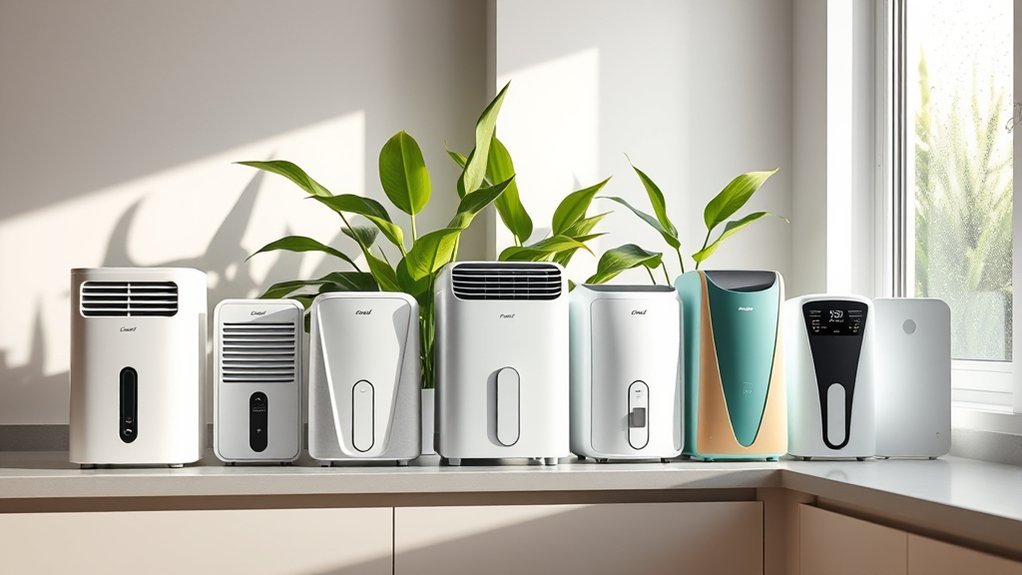
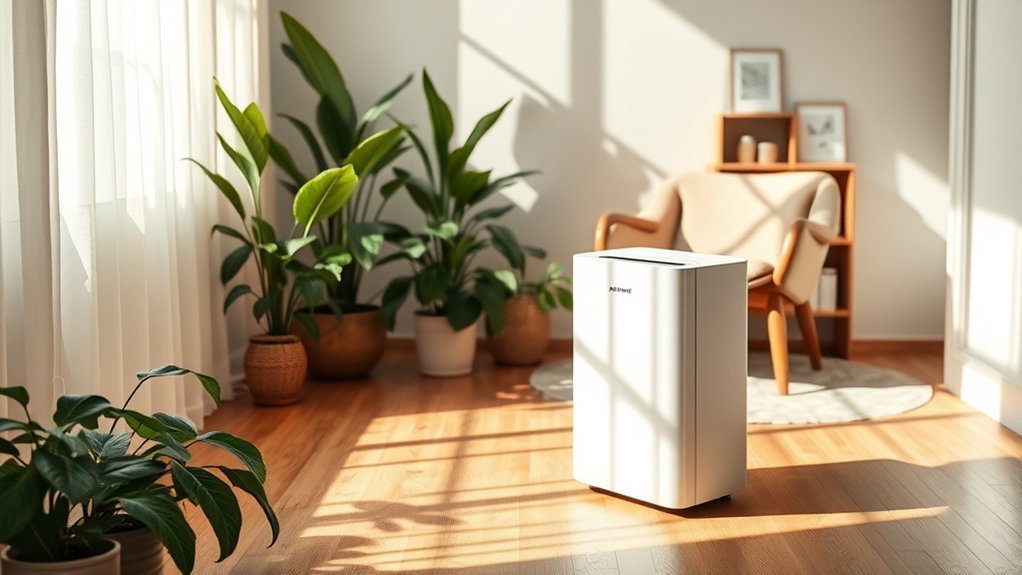
If you want to keep a small space dry in 2026, start with a compact, quiet dehumidifier that matches the room you actually need to treat. Bedrooms, bathrooms, closets, laundry rooms, RVs, and small basements all need different tank sizes, noise levels, and moisture-removal power. This guide compares small electric dehumidifiers, rechargeable moisture absorbers, larger 95 oz models, and fragrance-free absorber boxes so you can choose the best fit without overbuying.
For the easiest choice, look for auto shut-off, a tank size you can manage, a noise level under 30 dB for bedrooms, and coverage that matches your space. Keep reading to see which option makes the most sense for tight storage areas, quiet rooms, and medium-size damp spaces.
Quick Picks:
- Best quiet compact pick: CLEVAST Small Compact Mini Dehumidifier
- Best with timer controls: 44oz Small Portable Dehumidifier
- Best cordless option: Rechargeable Small Dehumidifier
- Best passive absorber: Vacplus Moisture Absorber Boxes
- Best larger-tank option: 95 oz dehumidifier models for bedrooms, bathrooms, closets, and moderate dampness
Quick Comparison of Small Air Dehumidifiers
| Product | Best Use | Tank / Capacity | Key Feature | Amazon |
|---|---|---|---|---|
| CLEVAST Small Compact Mini Dehumidifier | Small bedrooms, bathrooms, closets, RVs | 30 oz tank | 24 dB Sleep Mode and auto shut-off | Check Price |
| 44oz Small Portable Dehumidifier | Small rooms up to 215 sq. ft. | 44 oz / 1.3L tank | Three modes, timer, mood lights | Check Price |
| Rechargeable Small Dehumidifier | Closets, safes, lockers, tiny spaces | Silica gel beads | Cordless, silent, rechargeable design | Check Price |
| Vacplus Moisture Absorber Boxes | Closets, cars, bathrooms, laundry rooms | 6-pack absorber boxes | Fragrance-free passive moisture control | Check Price |
| ToLife 95 oz Dehumidifier | Bedrooms, bathrooms, basements, closets | 95 oz tank | Sleep mode under 30 dB | Check Price |
| CLEVAST Small Quiet Dehumidifier | Bedrooms, offices, bathrooms, closets | 30 oz tank | Lightweight 2.1 lb design | Check Price |
| Quiet Dehumidifier 95 oz | Bedrooms, RVs, closets, moderate basement dampness | 95 oz tank | Quiet sleep mode and handle | Check Price |
| NovaLivin 68 oz Dehumidifier | Bathrooms, bedrooms, living rooms, RVs | 68 oz tank | Auto humidity control | Check Price |
| TABYIK Small Bedroom Dehumidifier | Small bedrooms, bathrooms, dorms, RVs | 35 oz / 1000 ml tank | Clear tank and 28 dB operation | Check Price |
Before You Buy: Small dehumidifiers work best for light to moderate dampness in enclosed spaces. If you have standing water, wet walls, flooding, strong mold growth, or a very damp basement, fix the moisture source first and consider a larger compressor-style dehumidifier.
CLEVAST Small Compact Mini Dehumidifier with Auto Shut-Off
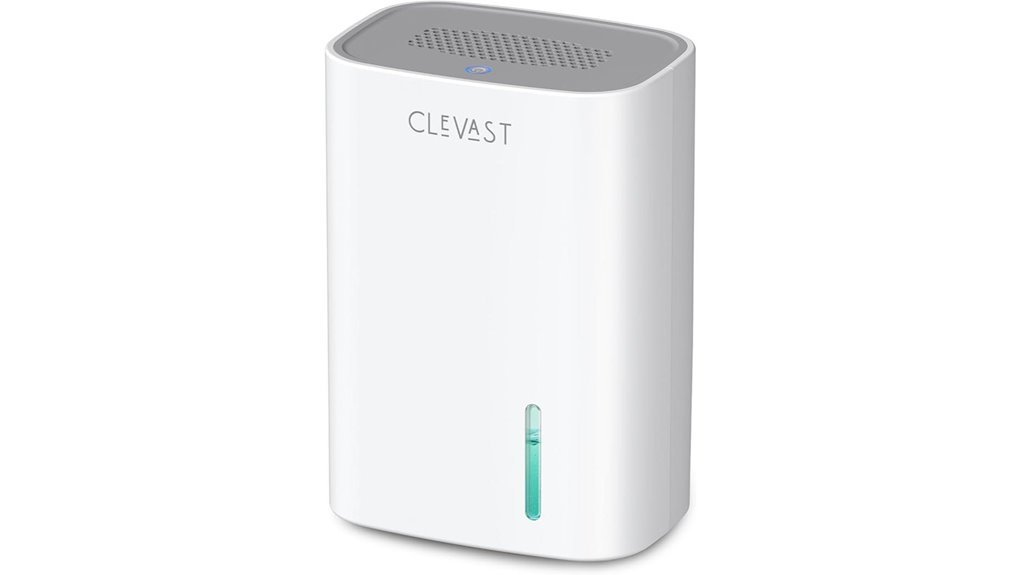
Best quiet compact pick: If you need a compact dehumidifier for a bedroom, bathroom, closet, RV, or office, the CLEVAST Small Compact Mini Dehumidifier is a smart pick. You get semiconductor condensation technology, so it removes moisture without chemical refrigerants or pollution. It can collect up to 10 oz of water in 24 hours, while its 30 oz tank and carry handle make it easy to move. You can choose Powerful or Sleep Mode, and Sleep Mode runs at just 24 dB. Auto shut-off stops overflow, and one-button controls keep operation simple.
Why you’ll like it: This model makes the most sense if you want low noise, simple controls, and light daily moisture control rather than heavy-duty basement drying. Place it in a smaller enclosed room with clear airflow around the vents for better results.
Who should buy this: Choose it if you want a low-noise unit for a bedroom, bathroom, office, closet, dorm room, or RV where space is limited.
Who should avoid this: Skip it if you need to dry a large basement, a wide open room, or a space with serious moisture problems.
Best For: People who need a compact, quiet, and easy-to-use dehumidifier for small spaces like bedrooms, bathrooms, closets, RVs, or offices.
Pros:
- Compact size with a built-in carry handle makes it easy to place and move around.
- Quiet Sleep Mode at 24 dB is suitable for bedrooms and other calm environments.
- Auto shut-off and simple one-button controls make it convenient and safe to use.
Cons:
- Best suited only for small enclosed spaces, not larger rooms.
- Requires regular emptying of the 30 oz water tank during humid conditions.
- Performance depends on being used within the recommended temperature range and with clear air vents.
Quick Verdict: Choose this CLEVAST model if your top priorities are quiet operation, simple controls, and a compact body for small daily dampness problems.
44oz Small Portable Dehumidifier for Home and Bedroom
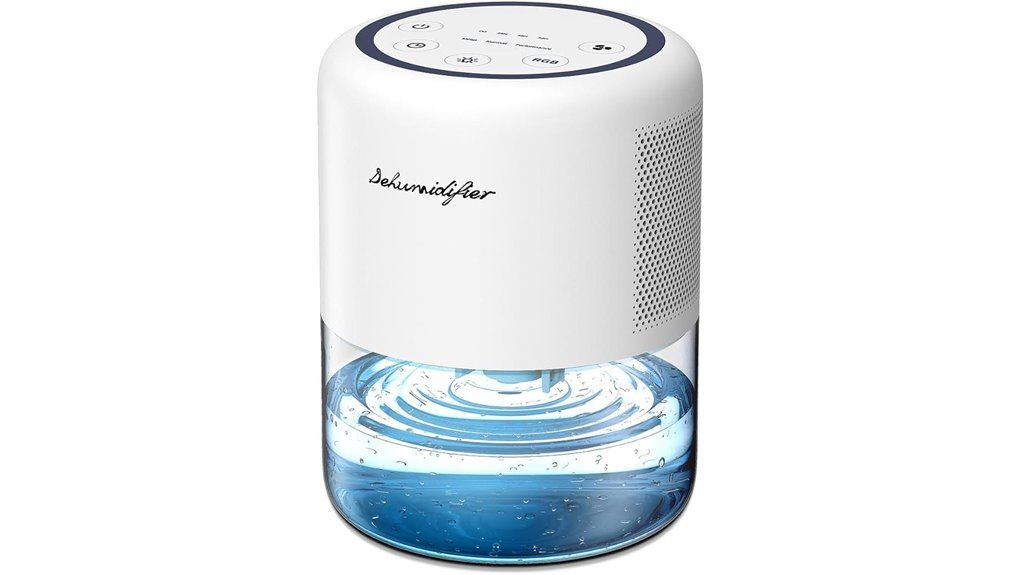
Best for timer control: The Windangel 44oz dehumidifier is a smart pick if you need quiet moisture control in small rooms. You can use it in spaces up to 215 sq. ft., and its 1.3L tank helps manage damp air without taking up much room. It removes up to 11.8oz of moisture a day, supports 45%-55% humidity, and runs at just 24W. Choose Sleep, Normal, or Performance mode to match your needs. You’ll also get auto shut-off, auto defrost, 10 mood lights, and timer settings for 24, 48, or 72 hours.
Why you’ll like it: This is a useful choice if you want more control than a basic one-button unit. The timer settings are helpful when you do not want the dehumidifier running nonstop, and the auto defrost feature can help in cooler indoor conditions.
Who should buy this: Choose it if you want a compact dehumidifier with more operating modes, a timer, and a larger tank than many mini units.
Who should avoid this: Avoid it if your room is much larger than the suggested coverage area or if you need high-capacity daily moisture removal.
Best For: People who want a compact, quiet dehumidifier for small spaces like bedrooms, bathrooms, or closets, especially in rooms up to 215 sq. ft.
Pros:
- Compact and lightweight design makes it easy to move and place in tight spaces.
- Three operating modes plus auto shut-off and auto defrost add convenience and flexibility.
- Includes 10 mood lights and multiple timer settings for added customization.
Cons:
- Best suited only for small rooms, so it may not be strong enough for larger spaces.
- 44oz tank capacity requires regular emptying in humid conditions.
- Removes a modest amount of moisture per day compared with larger dehumidifiers.
Quick Verdict: Pick this 44 oz model if you want a small dehumidifier with more modes, timer options, and a slightly larger tank than the smallest compact units.
Rechargeable Small Dehumidifier for Bathroom and Closet
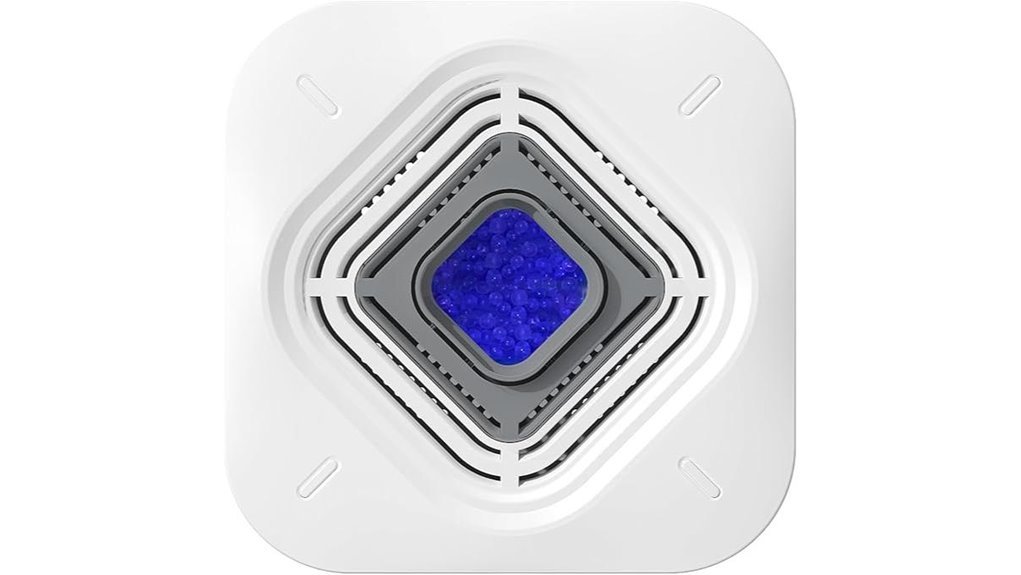
Best cordless pick: Need a no-fuss dehumidifier for tight spaces? You can use this rechargeable small dehumidifier in your bathroom, closet, or even a gun safe. It fits spaces up to 35 sq. ft. and its compact 5 x 5 x 1.38-inch design makes placement easy. Non-toxic silica gel beads absorb moisture quietly, dropping humidity from about 50% to 30%. It recharges in 16 hours and gives you up to 5 days of protection. Watch the beads shift from blue to pink, then hang it with the detachable hook anywhere you need dry, safe storage.
Why you’ll like it: Unlike an electric tank-style unit, this option is best for tiny enclosed spaces where cords, fans, and noise are inconvenient. It will not dry a full bedroom, but it can help protect small storage areas from stale air and excess dampness.
Who should buy this: Choose it for closets, safes, lockers, cabinets, RV storage, and small spaces where silent cordless use matters.
Who should avoid this: Avoid it if you expect room-wide moisture control or do not want to recharge the unit regularly.
Best For: People who need a quiet, rechargeable moisture-control solution for small spaces like bathrooms, closets, lockers, RVs, or gun safes.
Pros:
- Silent, fan-free operation makes it ideal for bedrooms, offices, and other quiet spaces.
- Compact and portable design with a detachable hook for flexible placement.
- Rechargeable silica gel beads provide up to 5 days of moisture protection per 16-hour recharge.
Cons:
- Effective only for very small areas, up to 35 sq. ft.
- Requires regular recharging, so it is not a set-and-forget solution.
- Lower moisture removal capacity than larger electric dehumidifiers.
Quick Verdict: Choose this rechargeable option for closets, lockers, small safes, or RV cabinets where silent, cordless moisture control matters more than high daily water removal.
CLEVAST Small Quiet Dehumidifier for Home and Bathroom
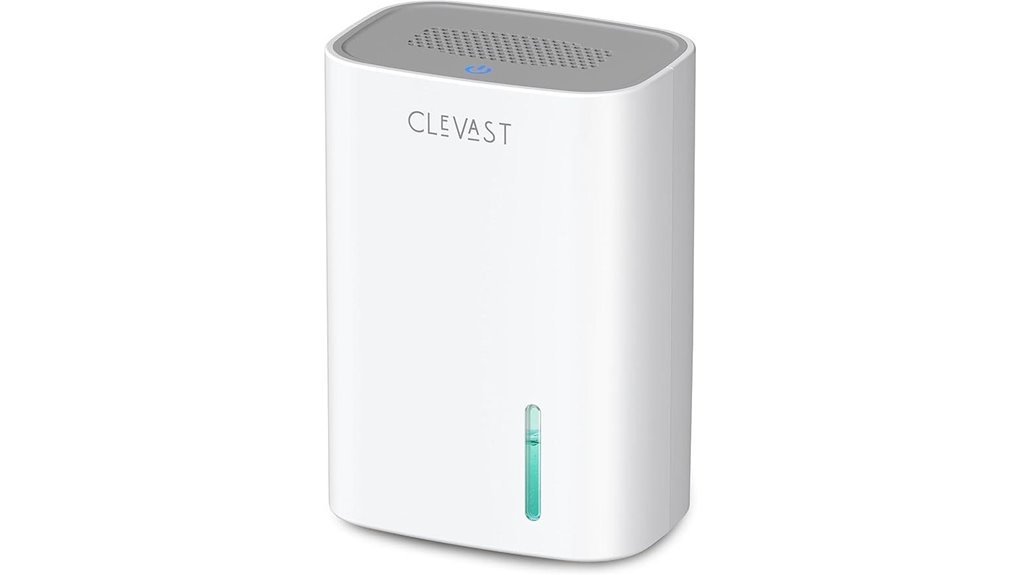
Best lightweight pick: CLEVAST’s 24 dB Quiet Mode makes it a smart pick for bedrooms, bathrooms, and other small spaces. You get a compact 4.5 × 6.5 × 9.2-inch unit that weighs just 2.1 pounds, so you can move it easily with the built-in handle. It uses 27 watts and covers up to 285 square feet, pulling moisture with semiconductor condensation. In warm, humid conditions, it can collect up to 10 oz in 24 hours. You can switch between Efficient and Quiet modes, and auto shut-off, overheat protection, and a tank full light help keep operation simple and safe.
Why you’ll like it: This model is a strong fit for people who want a light, portable unit they can move between a bathroom during the day and a bedroom at night. The 30 oz tank keeps the unit small, but it also means you should expect regular emptying in damp weather.
Who should buy this: Choose it if you want a very portable dehumidifier for small daily dampness problems and quiet nighttime use.
Who should avoid this: Skip it if you want a large tank, drain hose setup, or compressor-level basement performance.
Best For: People who need a compact, quiet dehumidifier for small spaces like bedrooms, bathrooms, closets, RVs, or offices.
Pros:
- Very quiet 24 dB Quiet Mode makes it suitable for sleeping areas and shared spaces.
- Compact and lightweight design with a built-in handle for easy portability.
- Helpful safety features like auto shut-off, overheat protection, and a full-tank indicator.
Cons:
- Best suited for small spaces, with coverage limited to up to 285 square feet.
- Modest dehumidification capacity may be less effective in very damp or larger rooms.
- Requires regular tank emptying since it has a relatively small 30 oz water tank.
Quick Verdict: This is a good match for small-room comfort, especially if you want quiet performance and safety features in a lightweight design.
Vacplus Moisture Absorber Boxes 6 Pack, Fragrance Free
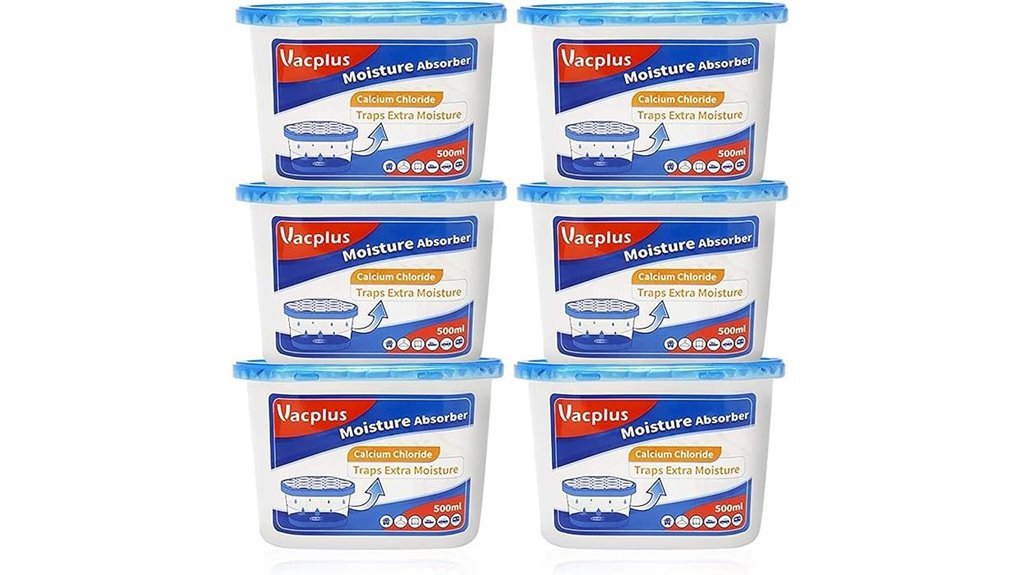
Best passive moisture absorber: Vacplus’s six fragrance-free absorber boxes suit you if you want simple moisture control in tight spaces. You can place them in your bathroom, closet, car, basement, kitchen, or laundry room, and they’ll quietly pull excess moisture from the air. Spherical calcium chloride boosts absorbing power, while the enlarged surface area helps dry the space longer. The lock-wet paper design helps stop leaks, and the clear water-collecting layer lets you watch progress. Because the particles work gradually, you’ll need patience, but you’ll get reliable, visible moisture control without added scent.
Why you’ll like it: These boxes are not a direct replacement for a powered dehumidifier in a damp room. They are better for enclosed spots, storage areas, and scent-sensitive spaces where passive moisture absorption is enough.
Who should buy this: Choose them for closets, shelves, cars, cabinets, bathrooms, and laundry spaces where you want a no-power moisture absorber.
Who should avoid this: Avoid them if you need fast active drying, a reusable electric unit, or room-wide humidity control.
Best For: People who want a simple, fragrance-free moisture absorber for small spaces like bathrooms, closets, cars, basements, kitchens, or laundry rooms.
Pros:
- Fragrance-free, making it a good choice for scent-sensitive spaces.
- Spherical calcium chloride and enlarged surface area help absorb moisture efficiently.
- Clear water-collecting layer makes it easy to see when it’s working.
Cons:
- Works gradually, so it may take time to notice results.
- Best suited for smaller or enclosed spaces rather than large rooms.
- Requires monitoring and eventual replacement once the water reservoir fills up.
Quick Verdict: Use these absorber boxes as a low-maintenance option for closets, cars, storage shelves, and other small enclosed areas where an electric unit would be too much.
ToLife Dehumidifier for Home, 1000 sq.ft, 95 OZ Tank
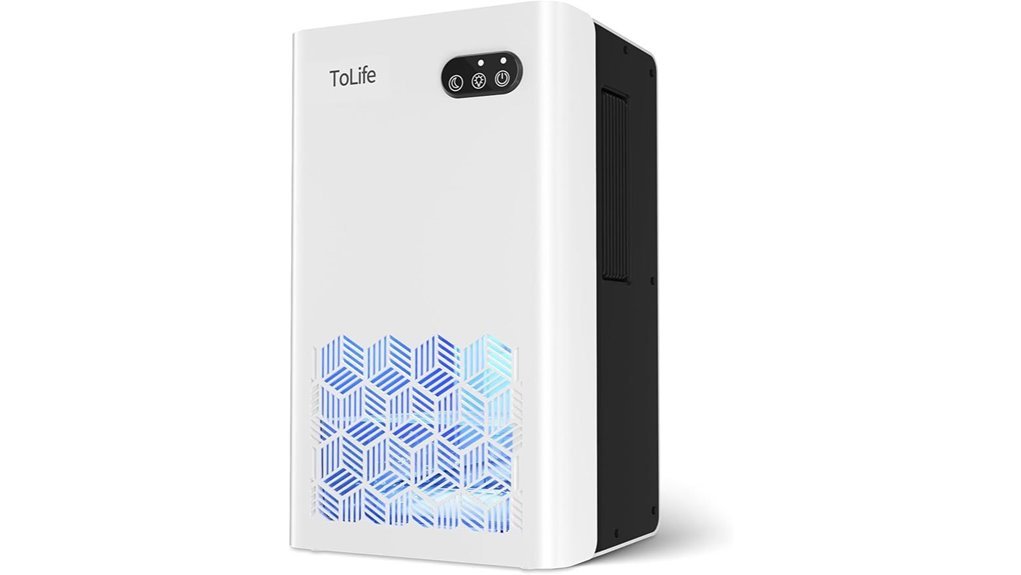
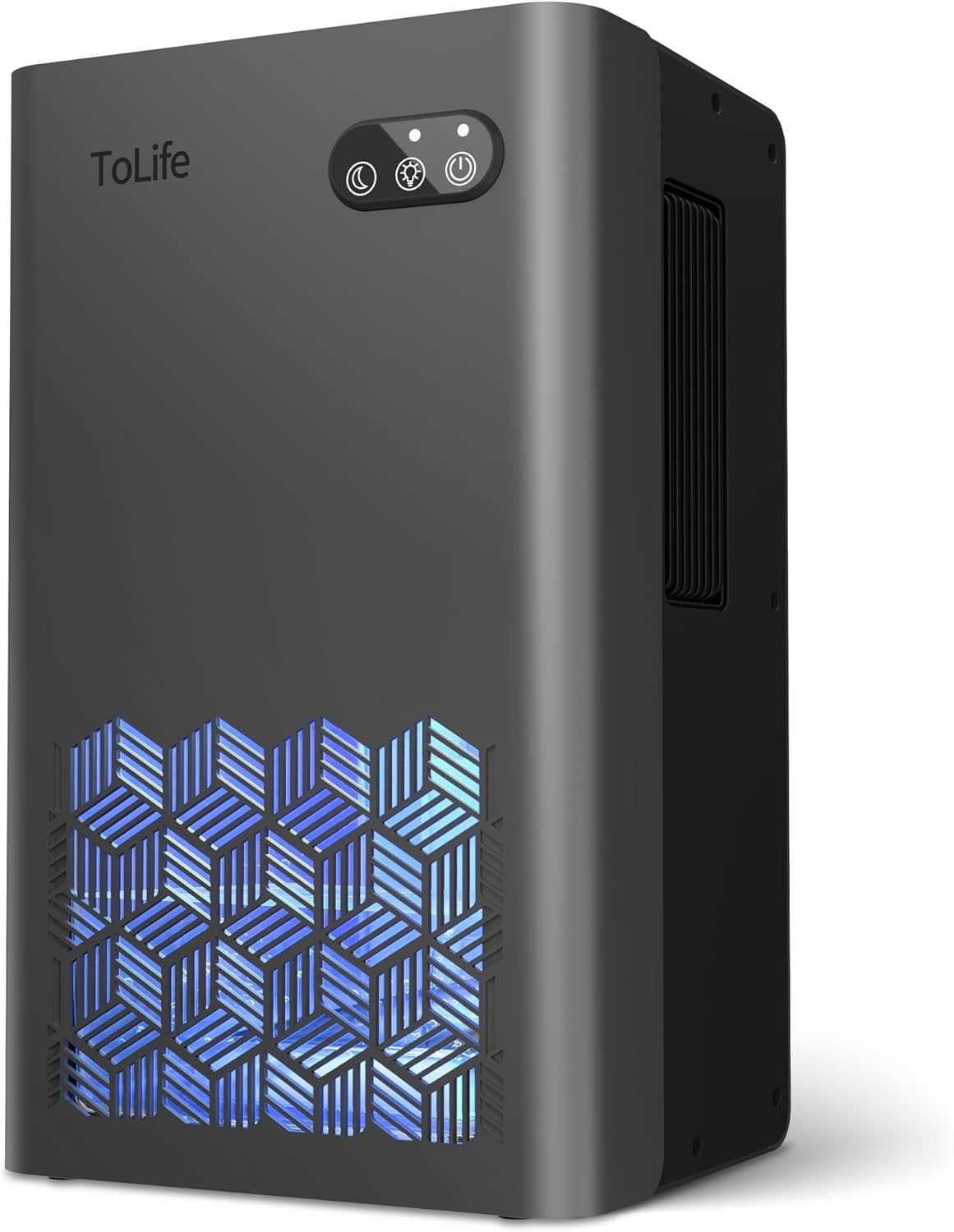
Best larger-tank pick: ToLife’s 95-ounce tank and 1,000 sq. ft. coverage make it ideal for medium-sized spaces. You can use it in bedrooms, bathrooms, basements, or closets, and its semiconductor condensation system helps keep humidity below 45%. Choose powerful mode when you want faster moisture removal, or switch to low-speed sleep mode for quiet operation under 30 dB. The compact 5.5-pound design includes handles, so you can move it easily. It also shuts off automatically when the tank fills or sits wrongly, and the seven-color light can work as a calming night light.
Why you’ll like it: This is one of the better fits in the roundup if your main issue is a larger damp bedroom, bathroom area, or small basement zone. The bigger tank means fewer emptying breaks compared with 30 oz and 35 oz models.
Who should buy this: Choose it if you want a portable dehumidifier with a larger tank for a bedroom, bathroom, closet, RV, or moderate basement area.
Who should avoid this: Avoid it if you need a heavy-duty compressor dehumidifier for wet walls, standing water, or severe basement humidity.
Best For: People looking for a compact, quiet dehumidifier for medium-sized rooms like bedrooms, bathrooms, basements, or closets.
Pros:
- Covers up to 1,000 sq. ft., making it suitable for medium-sized spaces.
- Quiet sleep mode under 30 dB with automatic shut-off for convenience and safety.
- Portable 5.5-pound design with handles and a 7-color night-light feature.
Cons:
- 95 oz tank may require frequent emptying in very humid conditions.
- Semiconductor condensation technology may be less powerful than compressor-based dehumidifiers.
- Best suited for smaller to medium spaces rather than very large or highly damp areas.
Quick Verdict: Choose this ToLife unit if you want a larger tank, quiet sleep mode, and a portable design for a medium-size room.
Quiet Dehumidifier for Home Bedroom Basement, 95oz Tank
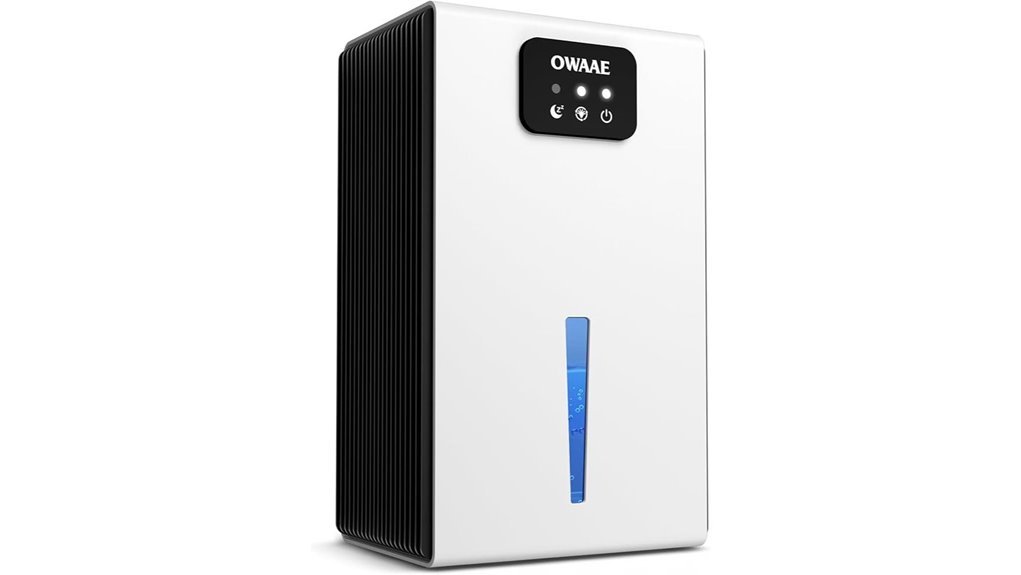
Best for quiet larger-tank use: If you want quiet moisture control for a bedroom or basement, the OWAAE Dehumidifier fits well. You get a compact 9 x 6.2 x 14-inch unit that covers up to 1,000 sq. ft. and holds 95 ounces of water. It removes about 1 liter of moisture per day while running quietly in sleep mode at under 30 dB, so you can rest without disruption. You also get automatic shut-off when the tank fills, a built-in handle for easy moving, and soft 7-color LED lighting. It’s practical for closets, bathrooms, and RVs too.
Why you’ll like it: The larger tank is the main reason to consider this model over smaller bedroom units. It should be especially useful if you dislike emptying a compact tank every day, but you still want something quieter and smaller than a traditional compressor dehumidifier.
Who should buy this: Choose it if you want a quiet 95 oz tank unit for a bedroom, RV, closet, bathroom, or moderately damp basement zone.
Who should avoid this: Avoid it if you need fast drying after leaks, flooding, or heavy moisture buildup.
Best For: People who want a quiet, compact dehumidifier for bedrooms, basements, bathrooms, closets, or RVs, especially in moderate humidity spaces up to 1,000 sq. ft.
Pros:
- Operates quietly in sleep mode at under 30 dB, making it suitable for bedrooms and light sleepers.
- Compact and portable with a built-in handle, plus a 95 oz tank and automatic shut-off for convenience and safety.
- Includes 7-color LED lighting and can handle a range of small to medium enclosed spaces.
Cons:
- Dehumidification capacity is only 1 liter per day, so it may be slow in very damp areas.
- Uses 220V AC, which may not be ideal for all households or regions.
- Best suited for moderate humidity rather than heavy-duty moisture removal.
Quick Verdict: This 95 oz unit is best for buyers who want quiet overnight use, a larger tank, and simple moisture control for moderate dampness.
Home Dehumidifier with Auto Humidity Control, 68 oz
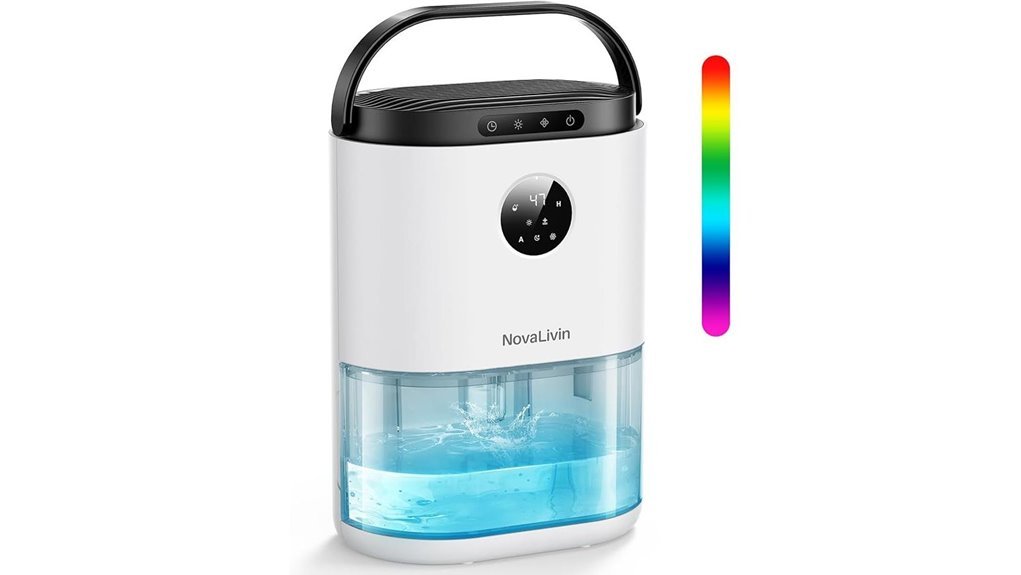
Best for automatic humidity control: NovaLivin’s 68 oz dehumidifier fits best in small rooms needing steady moisture control. You can place it in your bathroom, bedroom, or living room, and its compact ABS body slips into tight spots or even an RV. Auto mode keeps humidity under about 50% RH, while strong mode boosts drying power. It removes up to 34 oz of moisture a day, uses just 1.3 kWh, and runs quietly at 30 dB in sleep mode. The 48-hour timer, 7-color nightlight, and automatic shutoff make it easy to use and safer.
Why you’ll like it: This is a good middle ground if you want more moisture removal than tiny mini units but do not want a bulky appliance. The auto humidity control is helpful for people who prefer a set-it-and-check-it style of operation.
Who should buy this: Choose it if you want a 68 oz tank, auto mode, sleep mode, and timer features in a compact unit.
Who should avoid this: Avoid it if you only need closet moisture absorption or if you need high-powered drying for a large wet basement.
Best For: People looking for a compact, quiet dehumidifier for small spaces like bathrooms, bedrooms, living rooms, or RVs.
Pros:
- Auto mode helps keep humidity below about 50% RH for steady moisture control.
- Quiet sleep mode runs at 30 dB and uses only 1.3 kWh of energy.
- Compact design, 48-hour timer, nightlight, and automatic shutoff add convenience and safety.
Cons:
- Best suited for small rooms, so it may not be powerful enough for larger spaces.
- 68 oz tank may require frequent emptying in very damp conditions.
- Moisture removal rate is modest compared with larger dehumidifiers.
Quick Verdict: Pick this NovaLivin model if you want automatic humidity control, a 68 oz tank, and quiet sleep operation in a compact design.
ToLife Dehumidifier for Home, 1000 sq.ft, 95 OZ Tank
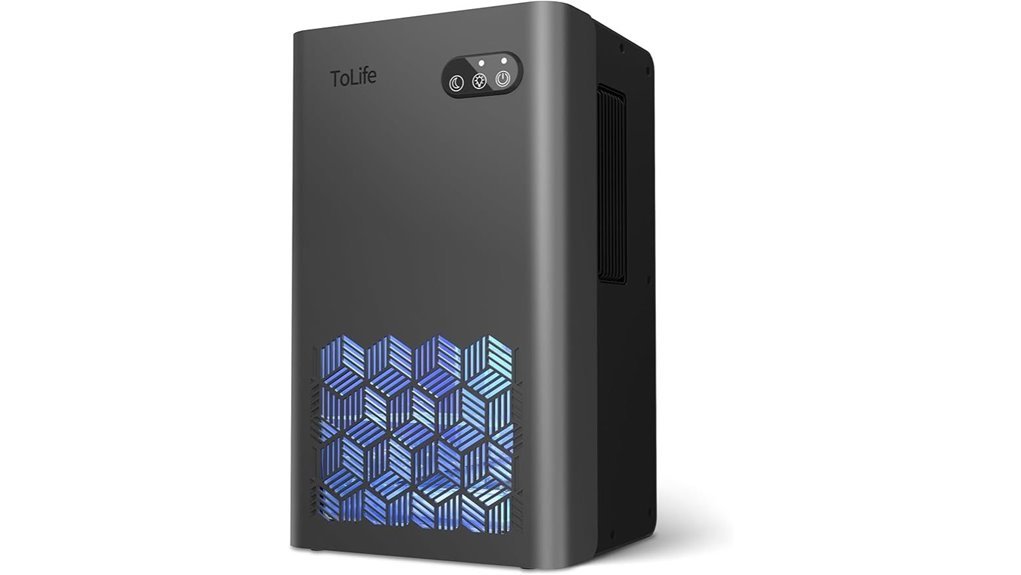
Best simple 95 oz option: The ToLife Dehumidifier suits you if you need compact moisture control for rooms up to 1,000 sq. ft. It uses semiconductor condensation to pull moisture from the air and help keep humidity below 45%. You can choose powerful mode for faster drying or sleep mode for quieter nights at under 30 dB. The 95-ounce tank and auto shut-off reduce overflow worries. Its 8.27 x 5.55 x 13.78-inch body weighs 2.64 kg, so you can move it easily. Seven-color lighting also works as a night light, but it isn’t smart-home compatible.
Why you’ll like it: This option works best for buyers who want a simple, portable 95 oz unit and do not need app controls or smart-home features. It is a practical fit for bedrooms, bathrooms, closets, RVs, and moderate basement humidity.
Who should buy this: Choose it if you prefer basic controls, quiet sleep mode, a larger tank, and a portable design.
Who should avoid this: Avoid it if you want smart-home features, app control, continuous drainage, or stronger compressor performance.
Best For: People who want a compact, quiet dehumidifier for small to medium rooms up to 1,000 sq. ft., especially bedrooms, bathrooms, basements, or closets.
Pros:
- Compact and portable design makes it easy to move between rooms.
- Quiet sleep mode under 30 dB is great for nighttime use.
- Auto shut-off and a 95 oz tank help reduce overflow concerns.
Cons:
- Not compatible with smart-home systems.
- 1 liter per day dehumidification capacity may be limited for very damp spaces.
- Seven-color lighting may be unnecessary for users who just want basic dehumidification.
Quick Verdict: Choose this ToLife model if you want quiet sleep mode, a larger tank, and basic controls without smart-home extras.
Small Bedroom Dehumidifier, 35 oz, Quiet Auto Shut-Off
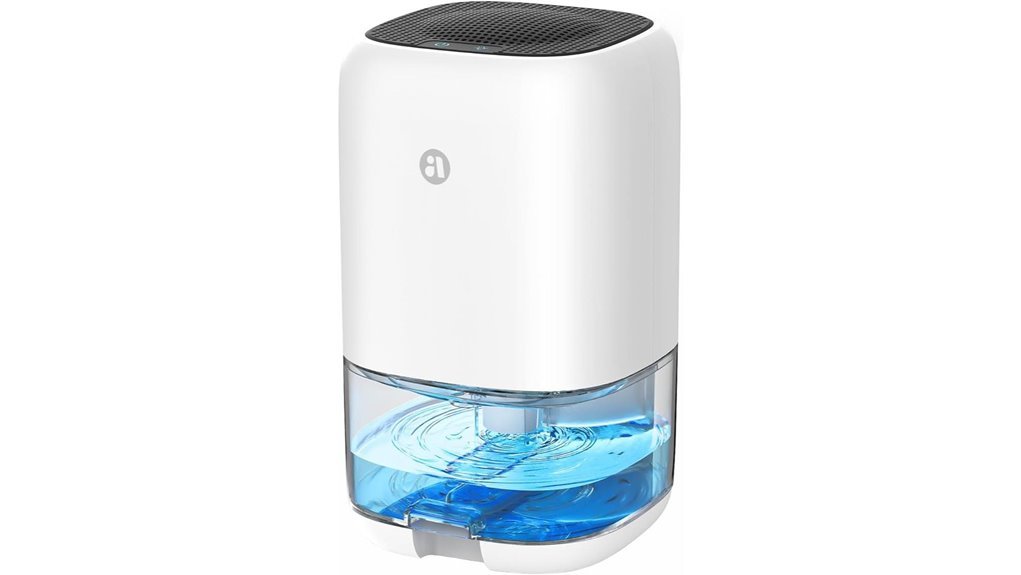
Best for small bedrooms: For quiet bedrooms, this 35 oz TABYIK dehumidifier keeps moisture down without disrupting sleep. You get a compact DH-CS01 unit that covers up to 280 sq. ft., so it works well in bedrooms, bathrooms, and RVs. It removes up to 16 oz of moisture in 24 hours, uses no more than 1 kWh daily, and runs at a whisper-quiet 28 dB. The 1000 ml tank has a clear design, and auto shut-off kicks in at 700-800 ml with a red light. You can also use the 7-color mood lights.
Why you’ll like it: This is a practical pick for a small bedroom, dorm room, bathroom, or camper where you want a compact unit that is easy to check at a glance. The clear tank is useful because you can quickly see when it is close to full.
Who should buy this: Choose it if you need a small, quiet, easy-to-check dehumidifier for a bedroom, bathroom, dorm, office, or RV.
Who should avoid this: Avoid it if you want a large tank or need to handle heavy dampness across a big room.
Best For: People looking for a compact, quiet dehumidifier for small bedrooms, bathrooms, or RVs that offers easy moisture control and auto shut-off.
Pros:
- Quiet 28 dB operation makes it suitable for sleep spaces.
- Compact design with a built-in handle is easy to move and fits small areas.
- Auto shut-off with a clear 1000 ml tank helps prevent overflow.
Cons:
- Best suited for small spaces, so it may not be powerful enough for larger rooms.
- Water tank capacity is modest and may require frequent emptying in humid conditions.
- Light features may be unnecessary for users who prefer a more minimal design.
Quick Verdict: Choose this TABYIK dehumidifier if you need a compact, quiet bedroom unit with a clear tank and simple overflow protection.
Factors to Consider When Choosing a Small Air Dehumidifier
When you choose a small air dehumidifier, look at how much moisture it can remove and whether its coverage area fits your room. You’ll also want to check tank size, since a larger tank means fewer emptying breaks. Don’t forget noise level and energy efficiency, especially if you plan to run it often.
Moisture Removal Capacity
Moisture removal capacity is one of the biggest factors to evaluate, since it tells you how much water a small dehumidifier can pull from the air each day—often anywhere from 10 oz to more than 30 oz, depending on the model and conditions. You should match that output to your room’s size and dampness. In warmer, wetter air, such as 86°F with 85% humidity, a unit usually collects more water. Smaller models work best in compact spaces up to about 215 sq. ft., while stronger options can handle much larger areas. Look for a unit that can keep humidity below 45% if you want better comfort and air quality. This helps you choose a dehumidifier that works efficiently.
Tank Size Matters
Once you’ve matched moisture removal capacity to your space, tank size becomes the next thing to check. You want a tank that fits how often you’re willing to empty it and how much moisture your room produces. A 30 oz tank fills quickly, so you’ll stop more often, while a 95 oz tank can run much longer before you need to empty it. If you’re treating a small bedroom or office, a tank around 35 oz may be enough. For basements, large rooms, or spaces over 1000 square feet, choose a larger tank so the unit can keep working without frequent interruptions. When the tank fills, the dehumidifier may shut off automatically, so a bigger reservoir helps you maintain steadier moisture control and less maintenance.
Noise Level Considerations
Noise matters more than you might think, especially in a small room where every hum stands out. You should check the decibel rating before you buy, because small dehumidifiers can run anywhere from 24 dB to 85 dB. If you want one for a bedroom, nursery, or office, aim for a quieter model around 24 to 30 dB. A sleep mode can help too, since it often drops noise below 30 dB and won’t wake light sleepers. You’ll usually hear less from semiconductor condensation units than from compressor-based models, so that tech can be a smart pick. In tight spaces, low noise keeps the room comfortable and lets you relax, work, or sleep without constant background disturbance.
Energy Efficiency Ratings
Energy efficiency matters because a small dehumidifier can run for hours each day, so you should check its kWh per day rating before you buy. That number tells you how much power the unit uses in a day, and a lower figure usually means a smaller electricity bill. A model rated around 0.55 kWh per day is typically more efficient than one that draws far more power. You should also compare moisture removal against energy use, since a good unit pulls plenty of water from the air without wasting electricity. Look for lower wattage models, often 24W to 30W, and use sleep mode when you want quieter, lighter operation. By focusing on these ratings, you’ll choose a dehumidifier that performs well while staying economical.
Coverage Area Fit
Coverage area is one of the most important factors to check, because a small dehumidifier only works well if it matches the space you plan to use it in. You should compare the unit’s rated square footage with your room size, since options can range from 35 sq. ft. for tiny closets to 1,000 sq. ft. for basements or open living areas. For a bedroom around 200 sq. ft., a compact model usually fits best. Also check how much moisture it can pull each day; some units collect up to 34 oz in very damp rooms. Make sure the design leaves enough room for airflow, and confirm the operating range, usually 68°F to 86°F, suits your environment.
Auto Shut-Off Safety
When the tank fills up, an auto shut-off feature keeps the dehumidifier from overflowing and causing water damage. You can let the unit run without worrying about spills, which makes it a smart choice for bedrooms, bathrooms, or any room you don’t watch closely. This safety feature also helps if you have kids or pets at home, since the appliance stops on its own instead of continuing to run unsafely. Many models add a clear warning light, like a blinking orange indicator, so you’ll know when it’s time to empty the tank. That reminder saves guesswork and keeps maintenance simple. Auto shut-off also avoids wasted electricity, because the unit stops drawing power once the tank is full.
Portability And Design
Beyond safety features like auto shut-off, portability and design can make a small air dehumidifier much easier to live with. You’ll want compact dimensions, since many models measure about 4.5 × 6.5 × 9.2 inches to 5.91 × 5.91 × 8.46 inches and fit neatly on shelves, counters, or inside closets. A lightweight unit, sometimes as little as 2.1 pounds, lets you move it without strain. Built-in carry handles make it easier to shift between bedrooms, bathrooms, and other damp spots. A transparent water tank helps you check moisture levels at a glance, so you know when to empty it. You can also choose a style, color, or integrated lighting feature that matches your space and still works well.
How to Choose the Right Size Small Dehumidifier
Match the dehumidifier to the smallest realistic area you want to dry. A rechargeable silica-gel unit works best inside a closet, safe, locker, or cabinet. A 30 oz to 44 oz electric unit is usually better for a small bathroom, bedroom, RV, or office. A 68 oz to 95 oz tank makes more sense if you want longer runtime or need to manage a larger room with moderate dampness.
Also think about how often you want to empty the tank. A small tank keeps the unit lightweight, but it fills faster. A larger tank takes up more space, but it can reduce daily maintenance. If the room smells musty, feels damp after showers, or has poor airflow, choose a model with auto shut-off and enough capacity to run for several hours at a time.
Pro Tips for Better Results:
- Keep doors and windows closed while the unit runs so it can treat the space more effectively.
- Leave open space around the air vents instead of pushing the unit tightly against a wall.
- Empty and clean the tank often to reduce odor and keep airflow fresh.
- Use a separate humidity gauge if you want a clearer room humidity reading.
- For bathrooms, run the exhaust fan along with moisture control after showers.
Frequently Asked Questions
How Do I Clean a Small Air Dehumidifier Properly?
You should unplug it, empty the tank, wash it with warm soapy water, and wipe the exterior. Clean the filter gently, dry every part completely, and reassemble it before you use it again.
What Signs Show a Dehumidifier Needs Replacement?
You’ll know it needs replacement when it won’t remove moisture, makes louder noises, leaks often, smells musty after cleaning, cycles constantly, or trips breakers. If repairs keep failing, it’s time to replace it.
Can Small Dehumidifiers Help Reduce Musty Odors?
Yes, you can use a small dehumidifier to reduce musty odors by lowering moisture, which discourages mold and mildew. You’ll notice fresher air, but you’ll need ventilation and cleaning too for lasting results.
How Much Electricity Do Compact Dehumidifiers Use?
You’ll usually use about 20 to 50 watts with compact dehumidifiers, so your electricity cost stays low. Bigger thermoelectric or compressor models draw more, but you can check the label to estimate usage easily.
Are Small Dehumidifiers Safe to Run Overnight?
Yes, you can usually run small dehumidifiers overnight if you keep them on a flat surface, empty the tank or use auto-drain, and choose a certified model. You’ll sleep safer with proper ventilation and clearance.
What Humidity Level Should I Aim for Indoors?
Many homes feel more comfortable when indoor humidity stays in a moderate range rather than feeling wet, sticky, or musty. Use your dehumidifier with a separate humidity gauge if you want a clearer reading.
Do Small Dehumidifiers Work in Basements?
Small dehumidifiers can help in a small or moderately damp basement area, but they are not ideal for severe moisture problems. For a very wet basement, you may need a larger compressor dehumidifier or a drainage-focused setup.
Where Should I Place a Small Dehumidifier?
Place it on a flat, stable surface with open space around the air vents. Keep it away from walls, towels, curtains, and clutter so air can move through the unit properly.
Is a Passive Moisture Absorber the Same as an Electric Dehumidifier?
No. A passive absorber is better for small enclosed areas like closets, cars, shelves, and cabinets. An electric dehumidifier is better when you need active moisture removal in a bedroom, bathroom, RV, office, or small basement area.
Should I Choose a 30 oz, 44 oz, 68 oz, or 95 oz Tank?
Choose a 30 oz or 44 oz tank for compact spaces and easy portability. Choose a 68 oz or 95 oz tank if you want longer runtime, less frequent emptying, or moisture control for a larger small-to-medium room.
Conclusion
When you choose the right small air dehumidifier, you’re really choosing a fresher, calmer space that feels easier to live in. For tiny storage spots, a rechargeable or passive moisture absorber may be enough. For bedrooms, bathrooms, RVs, and offices, a quiet electric unit with auto shut-off is usually more practical. For larger rooms or moderate basement dampness, a 68 oz or 95 oz tank can reduce how often you empty the unit.
Compare your room size, noise needs, tank capacity, and moisture level before you buy. A little smart choice now can spare you a lot of damp trouble later.
Final Recommendation: For a quiet bedroom or bathroom, start with a 24 dB to 30 dB electric dehumidifier with auto shut-off. For closets and storage areas, a rechargeable or passive absorber may be simpler. For a larger room or moderate dampness, choose a 68 oz or 95 oz tank so you are not emptying the unit too often.