Affiliate disclosure: This article contains Amazon affiliate links. We may earn a commission from qualifying purchases at no additional cost to you.
Updated August 2026
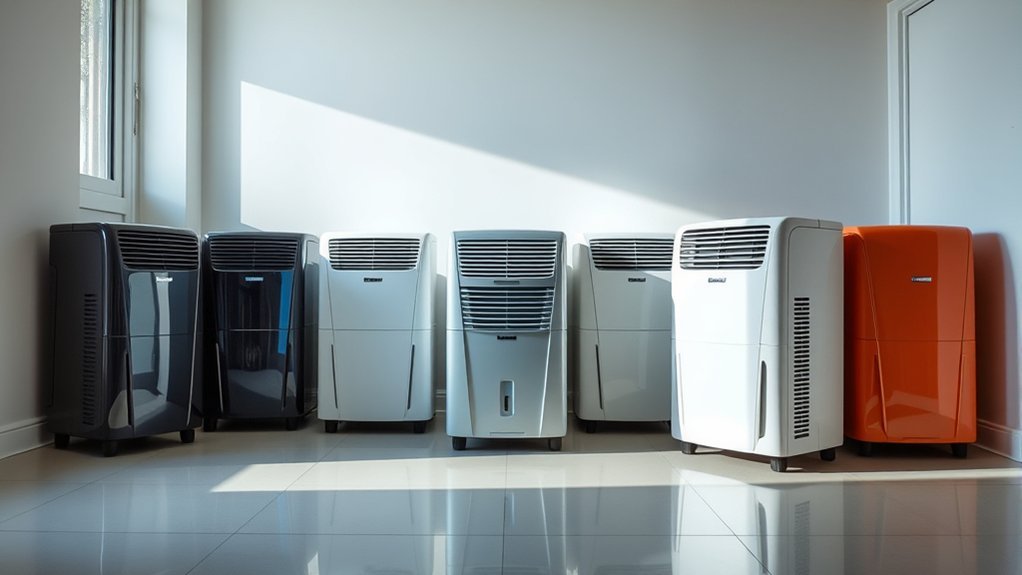
The best dehumidifier for an apartment depends less on the advertised coverage number and more on the size of the damp area, the severity of the moisture problem, acceptable noise, and whether continuous drainage is practical. For most apartments, the Midea 22-Pint EasyDry is the strongest all-around choice because it uses a compressor and provides meaningful room-size moisture removal. The AEOCKY RHEA-001 is better suited to a large, open-plan apartment, a basement apartment, indoor laundry drying, or persistent dampness. Compact thermoelectric models such as the SANVINDER, NeedDuck, BREEZOME, POOYUPPC, UBBO, and BeOkay are better for one small bedroom, bathroom, office, or other enclosed zone with mild humidity.
How These Apartment Dehumidifiers Were Evaluated
The products were compared by dehumidifier type, listed daily moisture removal, tank size, drainage options, noise-focused features, portability, room suitability, and the clarity of the available product information. Manufacturer coverage claims were treated as rough placement guidance rather than proof that a mini thermoelectric unit can perform like a compressor dehumidifier.
Quick Verdict
- Best Overall for Most Apartments: Midea 22-Pint EasyDry
- Best for Large or Very Damp Apartments: AEOCKY RHEA-001 4500 Sq.Ft Compressor Dehumidifier
- Best Compact Bedroom Pick: SANVINDER 25oz Dehumidifier
- Best Small Unit with Drain Hose: UBBO 95oz Dehumidifier
- Best Larger-Tank Mini Unit: BREEZOME 60 OZ
Quick Comparison of Apartment Dehumidifiers
| Product | Best Use | Type | Key Limitation | Amazon |
|---|---|---|---|---|
| Midea 22-Pint EasyDry | Whole rooms and moderate-to-heavy humidity | Compressor | Larger and louder than mini units | Check Price |
| AEOCKY RHEA-001 | Large open layouts and persistent dampness | Compressor | May be oversized for a small apartment | Check Price |
| NeedDuck B-2 | Small bedrooms, bathrooms, closets, or RVs | Thermoelectric | Not intended for heavy whole-room dampness | Check Price |
| SANVINDER 25oz | Quiet humidity control in compact rooms | Thermoelectric | Small tank and modest extraction rate | Check Price |
| BREEZOME 60 OZ | Small rooms needing a larger mini-unit tank | Thermoelectric | Performance drops in cool or mildly humid rooms | Check Price |
| POOYUPPC 95 OZ | Localized dampness with manual or hose drainage | Thermoelectric | Advertised coverage should not be treated as compressor-equivalent | Check Price |
| UBBO 95oz | Bedrooms or bathrooms where a drain hose helps | Thermoelectric | High extraction claims depend on test conditions | Check Price |
| BeOkay DH-A2 | Small spaces needing adjustable modes and a timer | Thermoelectric | Low daily moisture-removal capacity | Check Price |
Comparison note: Compressor and thermoelectric output figures are often measured under different test conditions. Use the table to narrow the use case, then compare the listed daily extraction, temperature, relative humidity, tank size, and drainage method.
Midea 22-Pint EasyDry Dehumidifier for Apartments
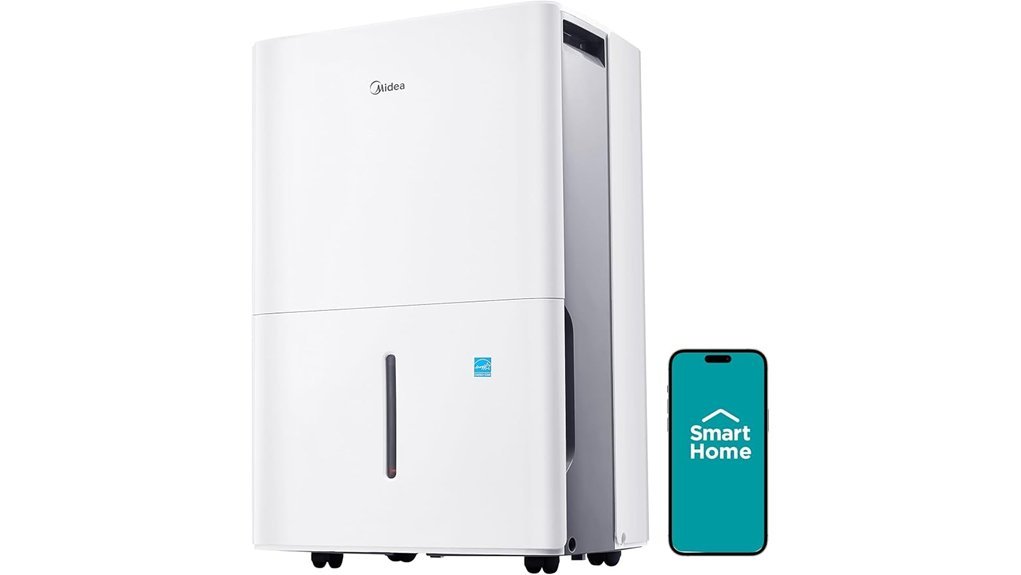
Best Overall for Most Apartments
The Midea 22-Pint EasyDry (MAD22C1AWS) is the most practical choice here for a full bedroom, living area, or moderately damp apartment. Unlike small thermoelectric units, this compressor model is rated to remove up to 22 pints of moisture per day and is listed for spaces up to 1,500 sq. ft. It includes adjustable humidity control, a timer, wheels, a reusable filter, auto defrost, auto restart, and gravity-fed continuous drainage when a compatible hose is connected.
Important accuracy note: The linked EasyDry model is not the same as Midea’s app-enabled Smart Access or Cube models. The manufacturer specification for MAD22C1AWS lists Smart Control: No, so buyers who need Wi-Fi or voice control should choose a different model number.
Best For: Renters who need capable room-size moisture removal in a bedroom, living room, basement apartment, or several connected areas.
Why You’ll Like It: It offers a stronger balance of extraction capacity, portability, humidity adjustment, and straightforward controls than the mini thermoelectric choices.
Who Should Avoid It: Anyone who needs a nearly silent bedside unit, has very little floor space, or cannot empty the bucket or route a gravity drain hose safely.
Pros:
- Compressor-based moisture removal is better suited to persistent apartment humidity.
- Rated for up to 22 pints per day and spaces up to 1,500 sq. ft.
- Wheels, timer, reusable filter, auto restart, and continuous-drain support improve everyday usability.
Cons:
- Larger and more audible than compact thermoelectric models.
- A standard garden hose for continuous drainage may need to be purchased separately.
- The linked model does not include app or voice control.
AEOCKY RHEA-001 4500 Sq.Ft Compressor Dehumidifier
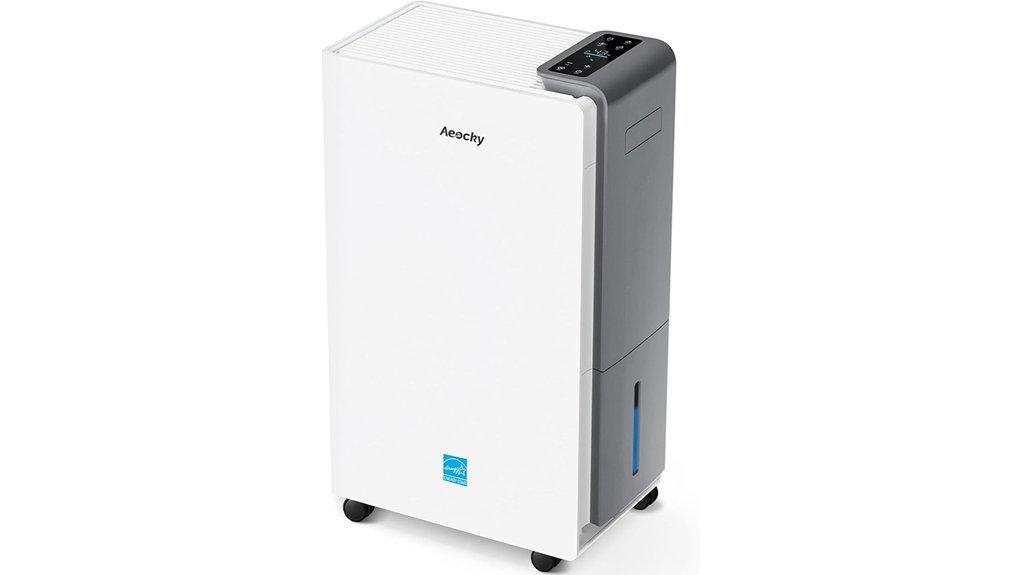
Best for Large or Persistently Damp Apartments
The AEOCKY RHEA-001 is the strongest compressor option in this roundup for a large open-plan apartment, a basement apartment, indoor laundry drying, or persistent dampness. The manufacturer lists moisture removal of about 56 pints per day at 86°F and 80% relative humidity, with an advertised maximum of 80 pints per day at 95°F and 95% relative humidity. It also includes an adjustable humidistat, auto defrost, a timer, several operating modes, a drain hose, and a garden-hose adapter.
Before You Buy: The 80-pint figure is measured in unusually hot, humid conditions and should not be compared directly with a DOE-rated 22-pint model. The current listing uses “smart” language for automatic controls, but buyers should not assume Wi-Fi or app control unless the exact listing and model number clearly confirm it. The unit is approximately 14.45 inches deep, 8.66 inches wide, and 24.09 inches high, so measure the intended location and leave the required airflow clearance.
Best For: Large layouts, high humidity, indoor laundry, or renters who want stronger compressor performance and continuous drainage.
Why You’ll Like It: It combines a narrow footprint with a humidistat, multiple modes, and higher listed moisture removal than the other products in this article.
Who Should Avoid It: Studio-apartment residents with mild seasonal humidity, limited storage, no safe drainage route, or strict noise limits.
Pros:
- High listed extraction under warm, humid conditions.
- Humidistat, timer, auto defrost, multiple modes, and included drainage accessories reduce manual oversight.
- Better suited than mini thermoelectric units to indoor laundry and persistent room-size humidity.
Cons:
- Likely excessive for a small studio or a single compact bedroom.
- Higher purchase cost and larger overall size than mini models.
- Maximum extraction and coverage claims depend heavily on temperature, relative humidity, and test method.
- “Smart” wording does not necessarily mean connected app or voice control.
NeedDuck Dehumidifier with Auto Defrost and Timer
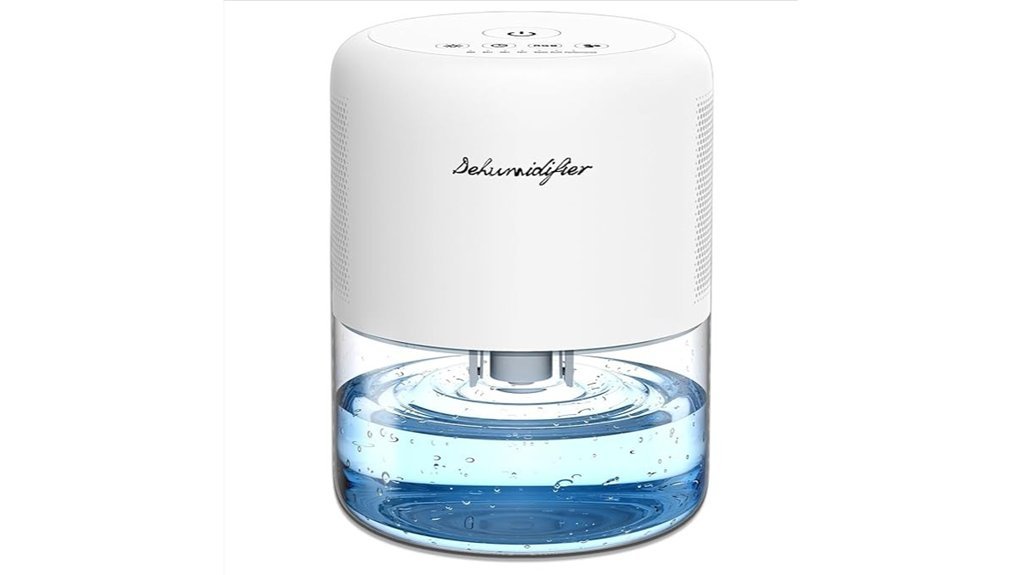
Best Compact Unit with Auto Defrost
The NeedDuck B-2 is a small thermoelectric dehumidifier intended for localized humidity in spaces such as a bedroom, bathroom, closet, or RV. Its 44 oz tank, auto shut-off, timer choices, three operating modes, and auto-defrost feature make it more flexible than a basic one-button mini unit.
Best For: Small enclosed areas with light condensation or musty air where quiet operation and simple controls matter more than high extraction capacity.
Who Should Avoid It: Buyers trying to dry a large room, manage a leak, or control severe humidity throughout an apartment.
Pros:
- Compact footprint for a nightstand, vanity, shelf, or RV counter.
- Timer, auto shut-off, and multiple modes improve convenience.
- Auto defrost may help protect performance when the condenser becomes too cold.
Cons:
- Thermoelectric performance is modest compared with a compressor dehumidifier.
- The 44 oz tank still needs regular emptying unless humidity is light.
- Coverage claims should be treated as a best-case guide, not a guarantee.
SANVINDER 25oz Dehumidifier for Home and Bedroom
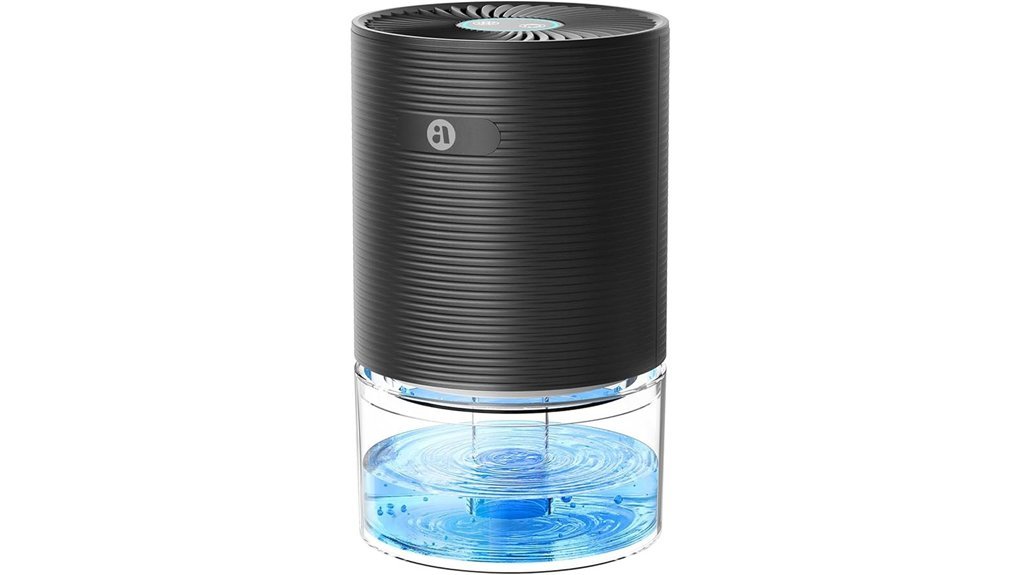
Best Quiet Compact Pick
The SANVINDER 25oz Dehumidifier is designed for small spaces where low noise and easy placement matter. The product information lists a 25 oz tank, automatic shut-off, noise below 35 dB, and moisture removal of up to about 16 oz per day at 86°F and 80% relative humidity. Its compact size makes it better suited to a small bedroom, bathroom, closet, or office than to an entire apartment.
Best For: Sleep areas and compact rooms with mild humidity, condensation, or musty odors.
Who Should Avoid It: Anyone who needs fast drying after water intrusion or wants a unit for several connected rooms.
Pros:
- Small, lightweight design is easy to move.
- Quiet operation is more bedroom-friendly than many compressor units.
- Auto shut-off helps prevent tank overflow.
Cons:
- Small tank may require frequent emptying during humid weather.
- Single-room performance only; it is not a whole-apartment solution.
- Extraction falls as room temperature and humidity decrease.
BREEZOME 60 OZ Quiet Portable Dehumidifier with Timer
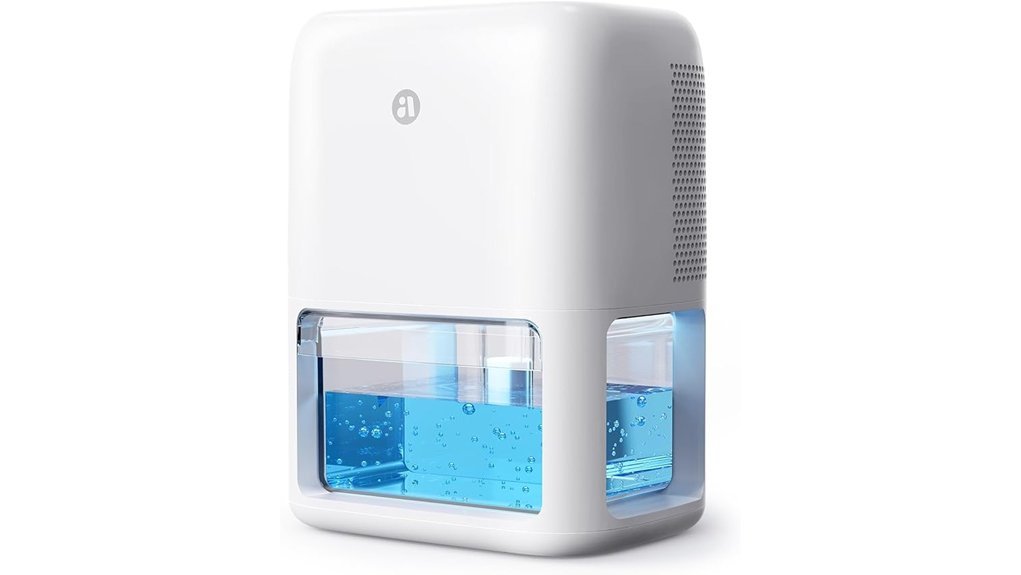
Best Larger-Tank Mini Dehumidifier
The BREEZOME MCS008 combines a 60 oz (1.8 L) tank with dual thermoelectric condensers, auto shut-off, a timer, auto defrost, and a quieter sleep setting. Its manual lists moisture removal of up to about 700 ml per day at 86°F and 80% relative humidity. It is marketed for areas up to 350 sq. ft., but buyers should treat that figure as placement guidance rather than compressor-equivalent coverage.
Best For: A small bedroom, bathroom, laundry corner, or RV where you want a larger tank than most mini models provide.
Who Should Avoid It: Buyers expecting compressor-level extraction or rapid control in a cold room.
Pros:
- 1.8 L tank reduces how often a compact unit must be emptied.
- Timer and sleep mode support overnight or scheduled use.
- Built-in handle makes room-to-room movement easier.
Cons:
- Still a thermoelectric unit with limited output in demanding conditions.
- Advertised maximum removal may not reflect normal apartment conditions.
- Ambient lighting may be unnecessary for buyers who prefer a dark bedroom.
POOYUPPC Dehumidifier with 95 OZ Water Tank
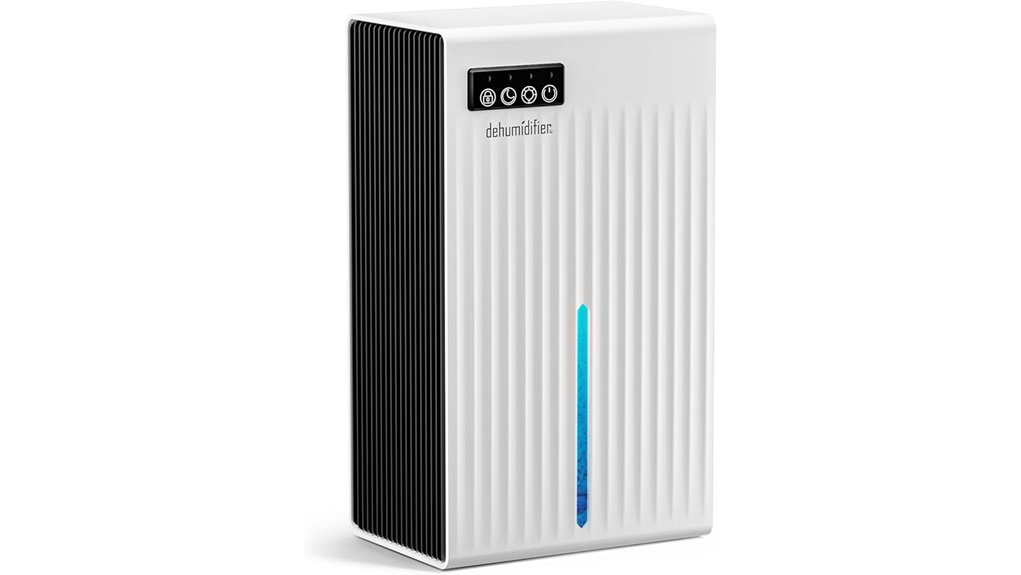
Best Large-Tank Thermoelectric Pick
The POOYUPPC 95 OZ Dehumidifier is a compact thermoelectric unit with a 95 oz tank, touch controls, child lock, sleep mode, automatic shut-off, and two drainage methods. The current product information lists an included drain hose. Although the listing advertises coverage up to 1,000 sq. ft., its stated daily removal of about 25 oz is more consistent with localized use in one room than whole-apartment control.
Best For: A bedroom, bathroom, office, or basement corner where a larger tank and optional continuous drainage reduce maintenance.
Who Should Avoid It: Buyers who need a verified whole-apartment capacity or fast moisture removal in a very damp space.
Pros:
- Large 95 oz tank for a compact thermoelectric unit.
- Drain hose, auto shut-off, sleep mode, and child lock add convenience.
- Lightweight design is easier to move than a compressor unit.
Cons:
- The 1,000 sq. ft. marketing claim should not be treated as equivalent to a compressor model’s rating.
- Normal mode may be noticeable in a very quiet bedroom.
- Daily extraction is modest for persistent dampness.
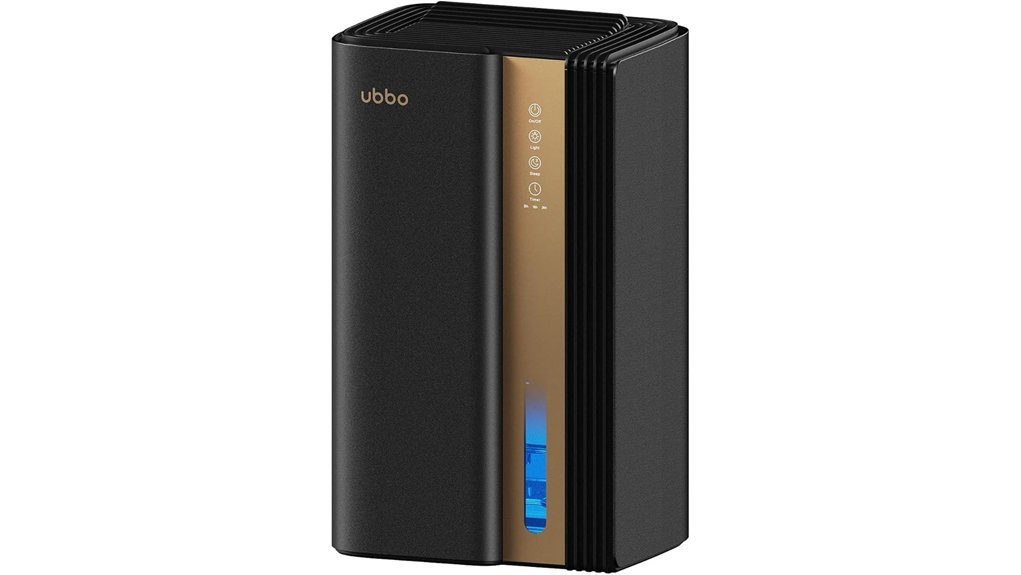
UBBO 95oz Dehumidifier for Home with Drain Hose
Best Compact Pick with Continuous Drainage
The UBBO 95oz Dehumidifier offers dual thermoelectric condensers, a 95 oz tank, automatic shut-off, 8-, 16-, and 24-hour timer settings, sleep mode, ambient lighting, and a supplied drain hose. The listing advertises moisture removal of up to 1.2 L per day at 86°F and 80% relative humidity, so buyers should expect lower output in cooler or less-humid rooms. Its practical appeal is the combination of a large mini-unit tank and continuous drainage for one small apartment zone.
Best For: Bedrooms, bathrooms, or laundry areas where you can route the hose safely to a lower drain.
Who Should Avoid It: Anyone who cannot position the hose with a continuous downward slope or who needs verified compressor-level output.
Pros:
- Drain hose can reduce daily tank-emptying chores.
- Sleep mode and timer support bedroom use.
- Large tank provides more buffer if manual drainage is used.
Cons:
- Advertised extraction depends on favorable test conditions.
- A hose can leak or stop draining if it is kinked, raised, or poorly positioned.
- Night-light features may not appeal to every sleeper.
BeOkay DH-A2 Small Dehumidifier with Adjustable Settings
Best Adjustable Mini Pick
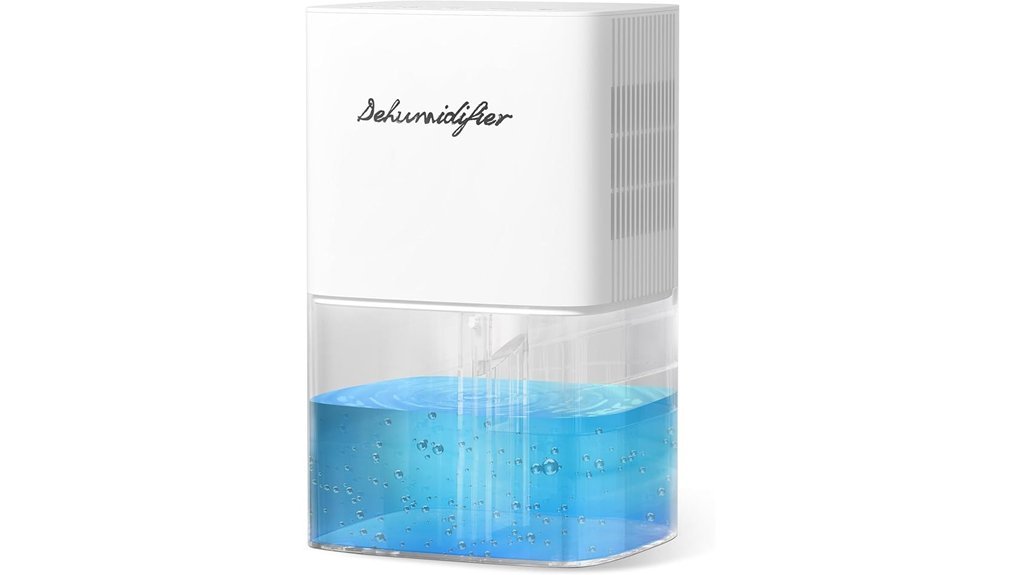
The BeOkay DH-A2 is a small thermoelectric dehumidifier with a listing-identified 1,657 ml tank, three operating modes, timer settings, sleep mode, automatic shut-off, and adjustable lighting. Its stated moisture-removal capacity is about 0.3 L per day, so it is best viewed as a compact solution for mild localized humidity rather than a substitute for a compressor model. Confirm the exact DH-A2/DH-AA2 variant and tank specification on the current listing before ordering.
Best For: Small bathrooms, bedrooms, closets, or living areas where adjustable modes and a low-power footprint are useful.
Who Should Avoid It: Buyers dealing with wet walls, recurring condensation across several rooms, or a known plumbing or building leak.
Pros:
- Three modes and timer settings provide more control than basic mini units.
- Auto shut-off helps prevent overflow.
- Lightweight design is easy to reposition.
Cons:
- Low daily extraction limits it to mild, localized moisture.
- Advertised coverage does not mean it can handle severe humidity throughout that entire area.
- Decorative lights may be unnecessary for some buyers.
Factors to Consider When Choosing a Dehumidifier for an Apartment
Apartment buyers should compare the dehumidifier type, daily moisture-removal capacity, room conditions, noise, drainage, physical size, and rental restrictions. Advertised square-foot coverage alone can be misleading, especially when comparing a thermoelectric mini unit with a compressor dehumidifier.
Compressor vs. Thermoelectric
Compressor dehumidifiers are generally the better choice for persistent humidity, larger rooms, indoor laundry drying, repeated window condensation, or damp basement apartments. Thermoelectric models are smaller and often quieter, but their extraction rate is much lower and drops in cooler or less-humid conditions. Choose a mini unit for one light-duty zone, not because its advertised square-foot number resembles a compressor model’s rating.
Daily Moisture-Removal Capacity
Do not confuse tank size with dehumidification capacity. A 95 oz tank describes how much water the reservoir can hold, not how much moisture the unit removes each day. ENERGY STAR explains that portable-dehumidifier capacity is measured in pints removed per 24 hours and should be selected according to both room size and dampness. Mini-unit claims may use warmer and more humid test conditions, so compare the stated test conditions as well as the headline number. See the ENERGY STAR dehumidifier sizing guidance.
Room Layout and Placement
A dehumidifier works best when air can circulate freely around its intake and outlet. Open-plan spaces are easier to treat than apartments divided by closed doors and hallways. For a small bedroom or bathroom with mild moisture, a compact model may be enough. For several connected rooms or heavy dampness, use a compressor model and keep interior doors open where practical.
Energy Efficiency
For compressor models that may run for many hours, verify the exact model number in the current ENERGY STAR directory and compare rated capacity with energy use. Avoid assuming a specific annual dollar saving because electricity rates, runtime, climate, and the humidity setting vary by household. Timers and humidistats can reduce unnecessary operation, but correct sizing is still the starting point.
Noise Level
Thermoelectric models are usually easier to tolerate near a bed, while compressor models normally create fan and compressor noise. Published decibel figures are useful, but test methods differ. Check the sleep mode, button sounds, full-tank alarm, vibration, and display brightness, especially when the unit will run overnight.
Tank or Continuous Drainage
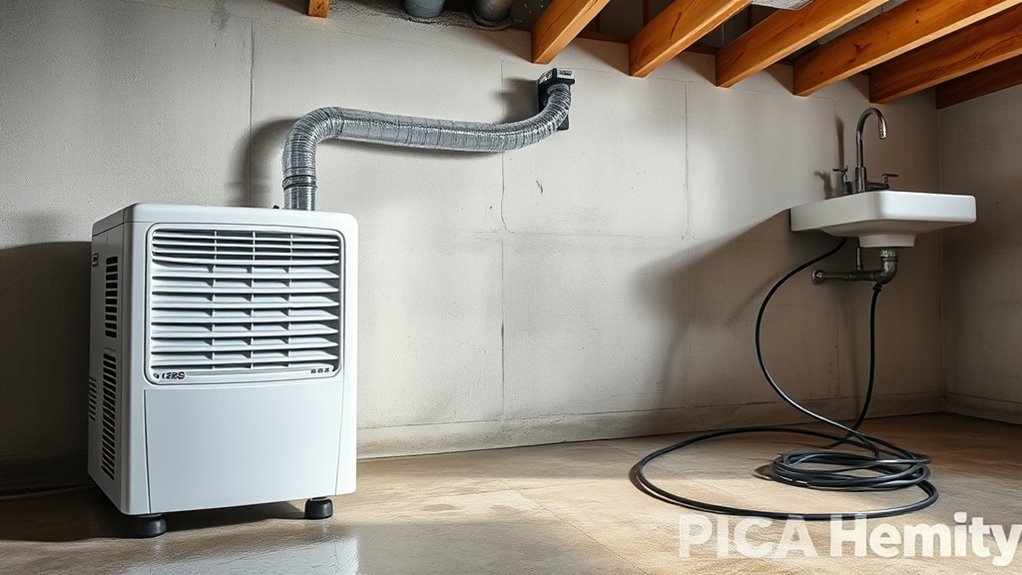
A collection tank is simplest for renters, but it must be emptied regularly. Continuous drainage is useful for persistent humidity if you have a safe drain lower than the outlet. The hose should slope downward without kinks, and the connection should be checked for leaks. Never route drainage across a walkway or where a leak could damage flooring, walls, or a neighboring unit.
Bathroom Use and Electrical Safety
Follow the product manual and keep the appliance, plug, and cord outside splash zones. Place the unit on a stable, level surface with the required airflow clearance. Do not operate it with wet hands, use a damaged cord, or rely on an extension cord unless the manufacturer explicitly permits one. Ventilation and an exhaust fan should remain the first line of control after showers.
Choose a Sensible Humidity Target
A separate hygrometer can help you judge whether the dehumidifier is working. The U.S. EPA generally recommends keeping home relative humidity around 30% to 50%. Avoid continuously over-drying the apartment, and remember that a dehumidifier does not repair leaks, failed ventilation, wet building materials, or water intrusion. See the EPA indoor humidity guidance.
Maintenance and Care
Empty and rinse the tank regularly, clean the reusable filter as directed, keep air openings free of dust, and inspect any drain hose for blockage or leaks. Before storage, unplug the unit, drain it fully, clean it, and allow all parts to dry. Follow the manufacturer’s manual for filter intervals, defrost behavior, and safe clearances.
Apartment safety note: A dehumidifier can manage airborne moisture, but it should not be used to hide a plumbing leak, roof leak, sewage issue, visible mold, or wet building material. Renters should photograph the problem, save written communication, and report building-related moisture promptly.
Frequently Asked Questions
What Size Dehumidifier Do I Need for an Apartment?
Choose by the size of the area that stays damp and the severity of the moisture, not by apartment square footage alone. A compressor model around the 20-pint class is a more realistic starting point for a full room or repeated humidity, while a thermoelectric mini unit is best limited to one small enclosed zone with mild dampness.
Can I Use a Dehumidifier in an Apartment Bathroom?
Only when the product manual permits the location and the unit can remain on a stable surface outside splash zones. Keep the plug and cord dry, do not handle the unit with wet hands, and continue using an exhaust fan or ventilation after showers. A mini unit may help with lingering mild humidity, but it should not replace proper ventilation or leak repair.
How Often Should I Empty the Dehumidifier’s Water Tank?
Empty it whenever the full-tank indicator appears or before the water reaches the maximum line. In humid weather, a small tank may fill daily or more often. Auto shut-off helps prevent overflow, but standing water should not be left in the tank for long periods.
Can Dehumidifiers Help Reduce Allergens in My Apartment?
A dehumidifier is not an air purifier and does not directly capture pollen, pet dander, or fine dust. However, keeping humidity in a moderate range can make the environment less favorable for mold growth and dust mites. Fix moisture sources and clean existing contamination rather than relying on the machine alone.
What Noise Level Should I Expect?
Compact thermoelectric units are often quieter but remove less moisture. Compressor models are more capable and usually produce noticeable fan and compressor sound. For a bedroom, check the sleep-mode specification, button sounds, display brightness, and return policy before committing.
Are Dehumidifiers Energy-Efficient for Long-Term Use?
They can be, especially when the unit is correctly sized, has a humidistat, and does not run after the target humidity is reached. ENERGY STAR certified compressor models use less energy than similarly sized conventional models, but actual cost depends on local rates and runtime.
Can a Mini Dehumidifier Handle My Whole Apartment?
Usually not. Thermoelectric mini units are best for one small enclosed area with mild humidity. For a full apartment, repeated window condensation, indoor laundry, or humidity that stays above the target range, a compressor model is normally the more realistic choice.
How Do I Maintain My Dehumidifier for Optimal Performance?
Clean the filter and air openings, empty and wash the tank, keep the unit level, and inspect the drain hose if used. Unplug the unit before cleaning and follow the manual for safe spacing, filter service, and storage.
Conclusion
For most apartments, the Midea 22-Pint EasyDry offers the best balance of real moisture-removal capacity, portability, and straightforward controls. Choose the AEOCKY when the apartment is large, open, or persistently damp. For a single compact bedroom, bathroom, or closet, a quieter thermoelectric model can be more convenient, but its lower extraction rate should be understood before buying. The right choice is the smallest unit that can reliably hold your target humidity without running continuously or demanding constant tank emptying.
Final Recommendation
Choose Midea for dependable room-size performance, AEOCKY for larger or persistently damp apartments, SANVINDER for quiet light-duty use, BREEZOME for a larger mini-unit tank, and UBBO when compact continuous drainage is the priority.
Before ordering, confirm the current product title, included accessories, dimensions, voltage, warranty, and seller information on Amazon because listings can change.