Affiliate disclosure: As an Amazon Associate, we may earn from qualifying purchases at no additional cost to you.
Last updated: August 19, 2026. This editorial comparison is based on manufacturer information, product-listing specifications, drainage features, and model-specific ENERGY STAR records where an exact match could be confirmed. It is not a claim of hands-on testing. Product specifications and Amazon availability can change.
Radiant cooling can make a room comfortable without moving large amounts of air, but it primarily handles sensible heat and may not remove enough moisture from the space. If a cooled floor, wall, or ceiling reaches the room’s dew-point temperature, condensation can form. A properly sized dehumidifier for radiant cooling can provide supplemental moisture control and lower the room’s dew point while the main system handles cooling.
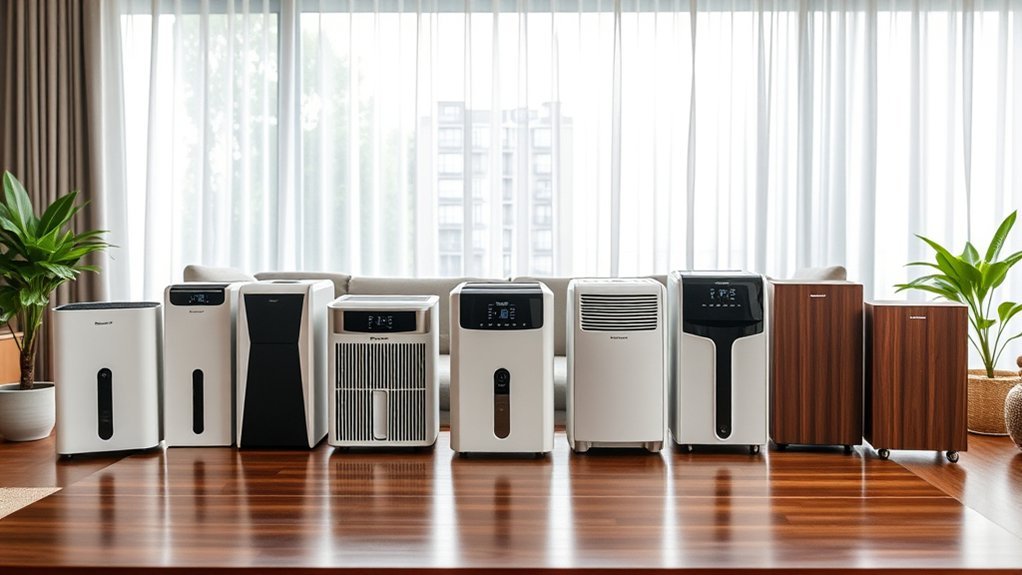
Our top overall portable option is the AEOCKY RHEA-001 Dehumidifier because it combines automatic humidity control, continuous gravity drainage, a relatively narrow cabinet, and a model-specific ENERGY STAR record. The Avylo ADC018 is the stronger choice when condensate must be pumped upward, while the Vellgoo VGE033A3BS is an efficiency-focused alternative with a verified model record. The Waykar, compact AEOCKY ARION-001, and BANABIE models serve different drainage, placement, and moisture-load needs.
Important radiant-cooling note
A portable dehumidifier is supplemental equipment. It does not replace the radiant system’s dew-point sensor, chilled-water temperature controls, ventilation equipment, or professional HVAC design. The radiant surface must remain safely above the room dew point according to the system manufacturer’s requirements.
Quick Verdict
- Best overall: AEOCKY RHEA-001 for one open zone with a nearby low drain.
- Best built-in pump: Avylo ADC018 when water must travel upward or to a distant drain.
- Efficiency-focused pick: Vellgoo VGE033A3BS with a model-specific ENERGY STAR record.
- Best compact cabinet: AEOCKY ARION-001 for tighter placement.
- Best for a medium zone: BANABIE 2500 Sq.Ft model when a larger appliance is unnecessary.
Quick Comparison
How to read the capacities: The “published maximum” is normally a manufacturer claim measured under hot, very humid conditions. The DOE/ENERGY STAR figure uses a standardized test procedure and is more useful for comparing exact certified models. Neither number guarantees how much water the unit will collect in your particular home.
| Product | Best Use | Published High-Condition Maximum | DOE / ENERGY STAR Capacity | Drainage | Details |
|---|---|---|---|---|---|
| AEOCKY RHEA-001 Best Overall |
One open zone or basement with a nearby low drain | Up to 80 pints/day at 95°F and 95% RH | 24.5 pints/day; ENERGY STAR Most Efficient 2025 | Tank or gravity hose | Check on Amazon |
| Avylo ADC018 Best Pump Option |
Basements without a nearby floor-level drain | Up to 90 pints/day at 95°F and 95% RH | 24.5 pints/day; ENERGY STAR Most Efficient 2025 | Tank, gravity hose, or built-in pump | Check on Amazon |
| Vellgoo VGE033A3BS Efficiency-Focused Pick |
Open rooms or basements with permanent gravity drainage | Up to 64 pints/day under manufacturer conditions | 24.5 pints/day; ENERGY STAR Most Efficient 2025 | Tank or continuous gravity drain | Check on Amazon |
| Waykar JD025CE-80 Large-Space Gravity-Drain Pick |
Open rooms or zones with a nearby low drain | Up to 80 pints/day at 95°F and 90% RH | 24.93 pints/day; ENERGY STAR certified, not Most Efficient | Tank or gravity hose | Check on Amazon |
| AEOCKY ARION-001 Best Compact Design |
Tighter spaces where a compact compressor unit is preferred | Up to 50 pints/day at 95°F and 95% RH | Exact standardized rating not confirmed | Tank or gravity hose | Check on Amazon |
| BANABIE 2500 Sq.Ft Best for Medium Zones |
Bedrooms, offices, and single zones with lighter moisture loads | Up to 32 pints/day at 95°F and 90% RH | Exact standardized rating not confirmed | Tank or gravity hose | Check on Amazon |
Capacity note: Actual water removal depends on room temperature, starting humidity, outdoor-air infiltration, building tightness, room layout, occupant activities, and the selected set point. Advertised square-foot coverage should not replace a moisture-load assessment.
AEOCKY RHEA-001 Dehumidifier
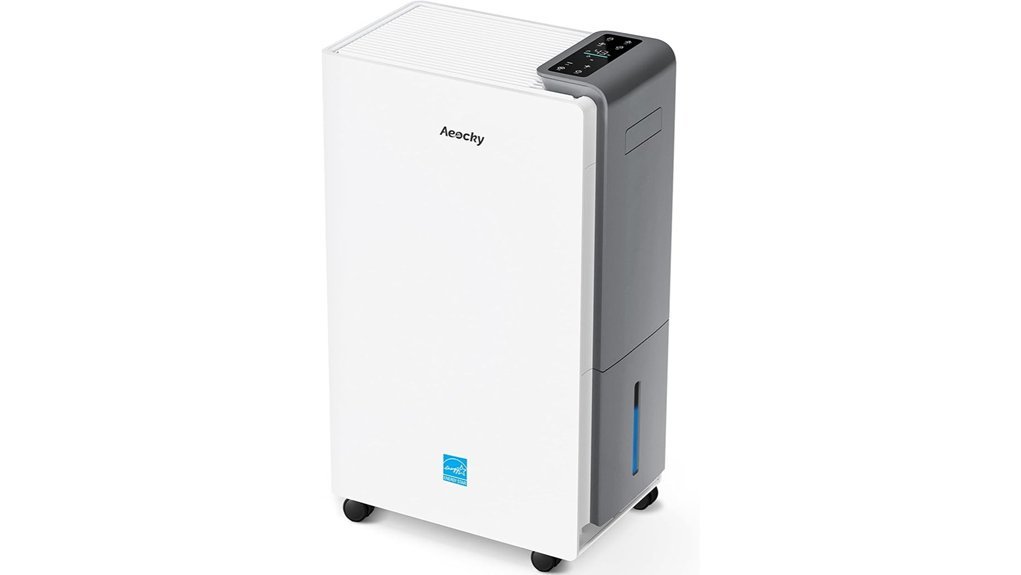
The AEOCKY RHEA-001 is the strongest all-around portable option in this guide for one open radiant-cooled zone when continuous gravity drainage is available. Current retail and manufacturer pages do not use one consistent square-foot coverage label, so this guide relies on the model number and capacity data instead. The manufacturer publishes a maximum extraction rate of up to 80 pints per day at 95°F and 95% RH. That high-condition figure should not be treated as its everyday home capacity.
For a more standardized comparison, the ENERGY STAR record associated with RHEA-001 reports 24.5 pints/day of water-removal capacity and identifies the certified model family as ENERGY STAR Most Efficient 2025. The large gap between standardized and high-condition figures shows why buyers should compare exact test conditions rather than marketing numbers alone.
The built-in humidistat can cycle the compressor around a selected setting, while the included drain hose and garden-hose adapter support continuous downhill drainage. That arrangement is valuable around radiant cooling because the unit can continue removing moisture without stopping whenever a small tank becomes full.
Why You May Like It: It combines automatic control, continuous drainage, a narrow upright cabinet, and clearly identifiable model information.
Who Should Buy This: Homeowners managing one open radiant-cooled living area, basement, or open floor with access to a floor drain or sump.
Who Should Avoid This: Buyers whose only drain is above the dehumidifier or whose radiant system serves several closed rooms that require centralized humidity control.
Pros:
- Automatic humidistat and continuous operating modes.
- Gravity-drain hose and garden-hose adapter.
- Model-specific ENERGY STAR information can be checked independently.
- Narrow cabinet uses less floor width than many large portable units.
Cons:
- The 80-pint claim is measured under unusually hot and humid conditions.
- No built-in condensate pump.
- A single portable unit may not control several closed rooms evenly.
- The warm exhaust air adds some sensible heat to the zone.
Avylo ADC018 Dehumidifier with Pump
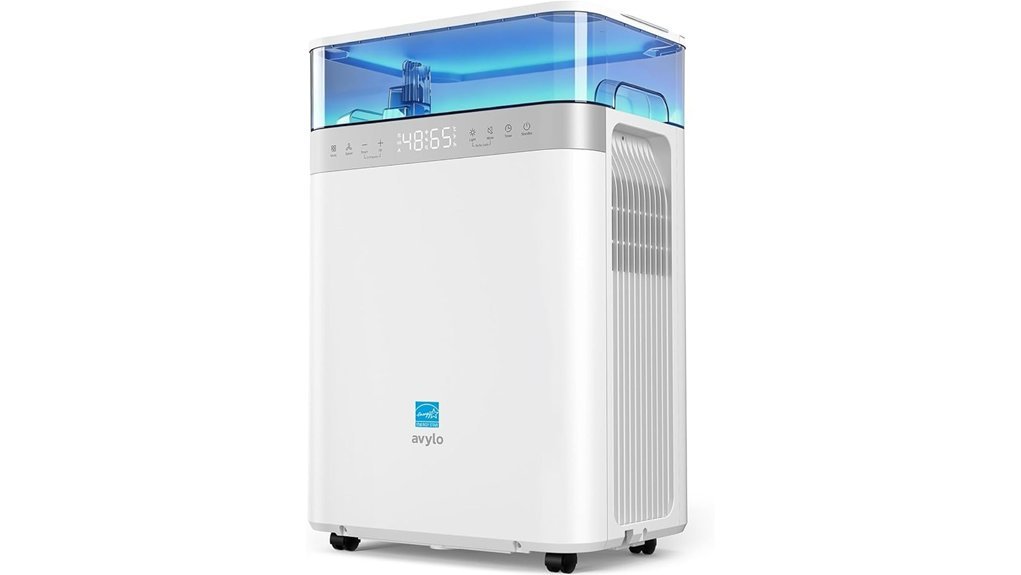
The Avylo ADC018 is the most convenient option in this list when condensate must travel upward or to a drain that is not directly beside the appliance. Its listing publishes a maximum removal rate of up to 90 pints per day under hot, humid conditions, while its standardized certification capacity is considerably lower.
The main advantage is the built-in condensate pump. The manufacturer states that it can lift water through the included hose by up to 15 feet. The appliance also supports tank collection and gravity drainage, giving buyers three practical ways to dispose of condensate.
Certification note: The current ENERGY STAR record lists Avylo ADC018 directly at 24.5 pints/day standardized water-removal capacity and identifies it as ENERGY STAR Most Efficient 2025. Use the exact model number when checking certification.
Why You May Like It: Pump drainage removes the need for a continuously downhill hose route and can support unattended operation after the installation has been tested.
Who Should Buy This: Buyers with a radiant-cooled basement, utility room, or mechanical area where the nearest suitable drain is elevated or several feet away.
Who Should Avoid This: Buyers who already have a convenient floor-level drain and prefer a simpler appliance with fewer pump components to inspect.
Pros:
- Built-in condensate pump with a stated lift of up to 15 feet.
- Tank, gravity-drain, and pump-drain options.
- Large top-mounted collection tank.
- Automatic humidity control, timer, and defrost functions.
Cons:
- The 90-pint figure is a high-condition manufacturer maximum.
- The pump, float controls, and longer hose add maintenance points.
- The full top-mounted tank may be heavy or awkward for some users.
- Pump drainage should be retested after moving the unit or changing the hose route.
Vellgoo VGE033A3BS Dehumidifier
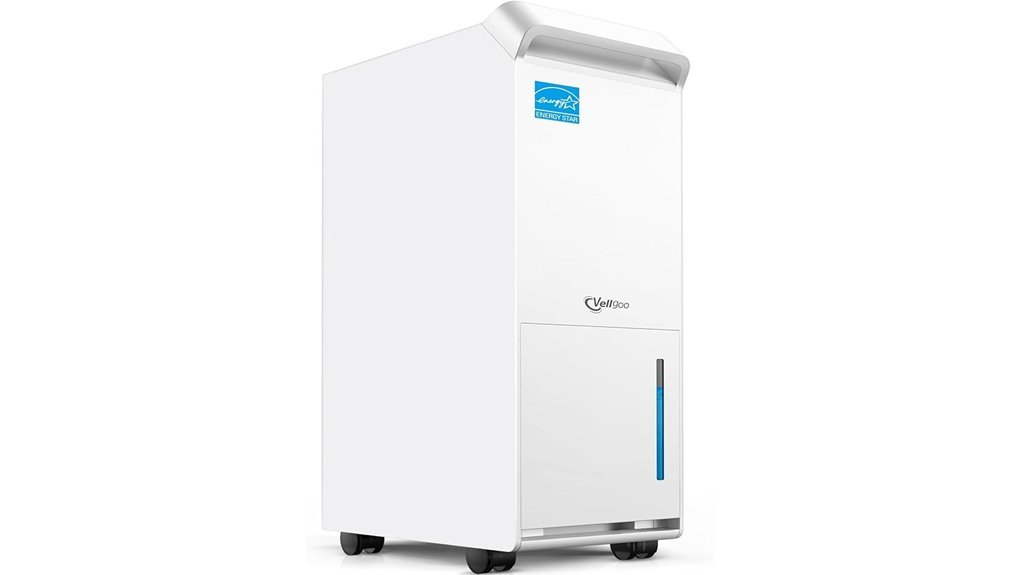
The Vellgoo VGE033A3BS is intended for buyers who want an identifiable ENERGY STAR model with automatic humidity control and continuous drainage. Its retail information publishes a maximum removal rate of up to 64 pints per day, while the matched ENERGY STAR record reports 24.5 pints/day standardized capacity and identifies the model family as ENERGY STAR Most Efficient 2025.
The unit can collect water in its tank or drain continuously through a downhill hose. For regular radiant-cooling support, the hose is usually the more dependable arrangement because a full bucket can stop dehumidification while the radiant system continues operating.
Why You May Like It: It provides model-specific efficiency information, a washable filter, automatic controls, and a straightforward continuous-drain arrangement.
Who Should Buy This: Buyers with one open room, basement, or radiant-cooled zone where a permanent gravity drain is available.
Who Should Avoid This: Buyers who need pumped drainage or who want the smallest possible cabinet.
Pros:
- Exact model information can be checked in certification records.
- Automatic humidity control and auto-restart functions.
- Continuous gravity-drain compatibility.
- Casters and a handle support easier repositioning.
Cons:
- The 64-pint maximum is not the standardized DOE capacity.
- No built-in pump for elevated drainage.
- The tank may require frequent emptying if a hose is not used.
- Compressor and fan noise may be noticeable in quiet living areas.
Waykar JD025CE-80 Dehumidifier
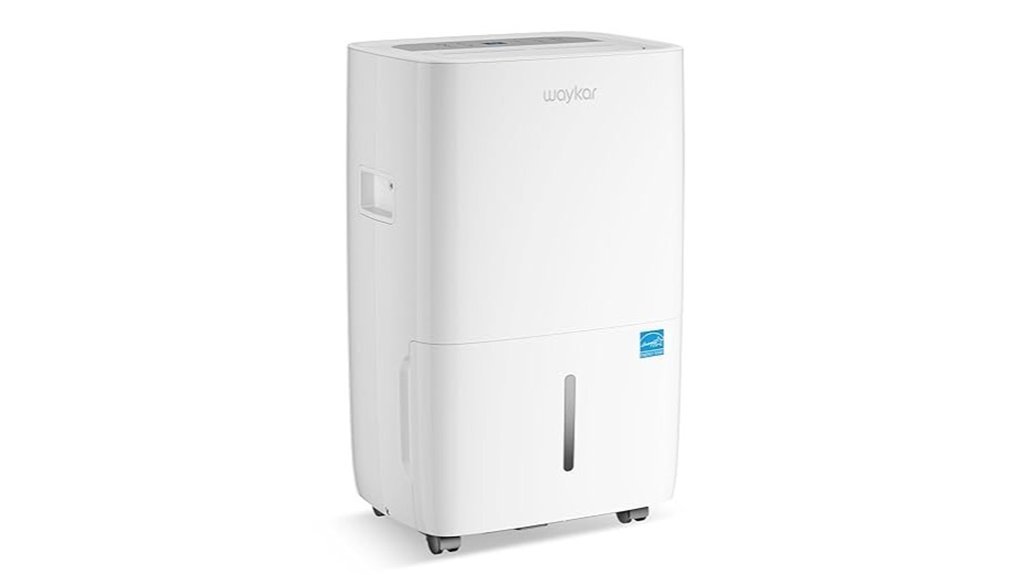
The Waykar JD025CE-80 is marketed for large rooms and publishes a maximum moisture-removal rate of 80 pints per day at 95°F and 90% RH. Its current ENERGY STAR record reports 24.93 pints/day standardized capacity and identifies it as ENERGY STAR certified, but not as a Most Efficient model.
The control panel allows the user to select a target humidity, fan setting, and timer. Water can be collected in the removable tank or discharged through a gravity hose. Casters make relocation easier, although radiant-cooling support normally works best when the appliance has one stable position with unrestricted airflow and a tested drain connection.
Why You May Like It: It offers a familiar control layout, model-specific certification information, and simple continuous drainage for an open zone.
Who Should Buy This: Buyers who need a movable portable unit and have a nearby floor-level drain.
Who Should Avoid This: Buyers whose hose must travel upward or whose floor plan contains several closed rooms.
Pros:
- Adjustable target humidity, fan setting, and timer.
- Tank or continuous gravity drainage.
- Casters and handles support relocation.
- Exact model has a current ENERGY STAR record.
Cons:
- The 80-pint claim is measured at 95°F and 90% RH.
- The matched model is not listed as ENERGY STAR Most Efficient.
- No built-in pump.
- Filter, tank, and drainage components require routine maintenance.
AEOCKY ARION-001 Compact Dehumidifier with Drain Hose
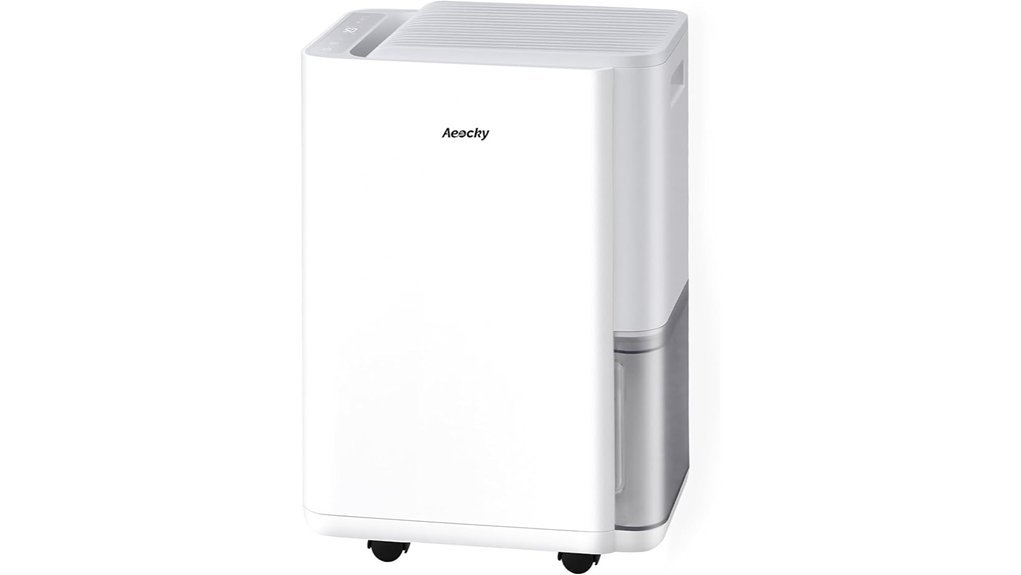
The linked AEOCKY ARION-001 is designed for buyers who want compressor-based moisture removal in a much smaller cabinet. Current retail and manufacturer pages use inconsistent square-foot coverage labels for this model, so this guide identifies it by model number rather than treating a coverage claim as part of the product name. The published maximum removal rate is up to 50 pints per day at 95°F and 95% RH. A directly matched standardized ENERGY STAR capacity was not confirmed for this exact listing, so the 50-pint figure should be treated as a manufacturer claim rather than an apples-to-apples DOE rating.
Its narrow body can fit into a tighter mechanical area or basement corner while the included hose supports continuous gravity drainage. The smaller collection tank is better viewed as a temporary backup than as the primary drainage method in a persistently humid radiant-cooled space.
Why You May Like It: It balances a narrower cabinet with compressor-based moisture removal and continuous drainage.
Who Should Buy This: Buyers with limited floor space, one room or open zone, and a low drain nearby.
Who Should Avoid This: Buyers who plan to depend entirely on the tank or who require pumped drainage.
Pros:
- Compact upright body for tighter placement.
- Included drain hose and garden-hose adapter.
- Automatic humidistat and tank-full shutoff.
- Handles and casters support movement between nearby zones.
Cons:
- The 50-pint claim uses hot, highly humid test conditions.
- Exact standardized capacity was not confirmed for this listing.
- The relatively small tank can fill quickly.
- No built-in pump for upward drainage.
BANABIE 2500 Sq.Ft Dehumidifier
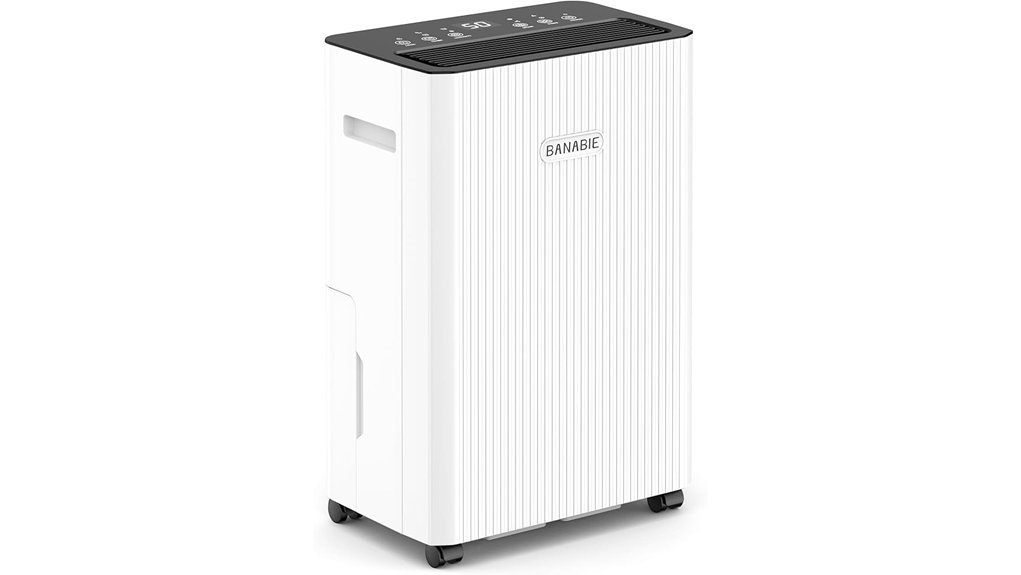
The BANABIE 2500 Sq.Ft Dehumidifier publishes a maximum removal rate of up to 32 pints per day at 95°F and 90% RH. It is more suitable for a bedroom, office, medium basement, or individual radiant-cooling zone than for an entire multiroom floor.
Its controls include automatic, continuous, and custom operating modes, along with a 24-hour timer. The listing also publishes a low operating-noise figure, but sound can vary with compressor cycling, fan speed, flooring, placement, and measurement distance. The collection tank includes automatic shutoff, while the included hose provides the more practical arrangement for continuous operation.
No exact standardized ENERGY STAR capacity was confirmed for this listing. Buyers should therefore compare it by room conditions, drainage requirements, tank size, and return policy rather than relying only on the advertised square footage or noise figure.
Why You May Like It: It offers automatic controls and continuous drainage in a smaller format than the large-zone options.
Who Should Buy This: Buyers managing one medium-size radiant-cooled room with a moderate moisture load.
Who Should Avoid This: Buyers with a wet basement, heavy outdoor-air infiltration, or several connected rooms.
Pros:
- More manageable size for a medium room or single zone.
- Automatic humidity control and multiple operating modes.
- Tank and gravity-drain options.
- Portable design for occasional repositioning.
Cons:
- May be undersized for severe humidity or a large open floor.
- Exact standardized capacity was not confirmed.
- The tank can fill quickly without continuous drainage.
- The published noise level remains a manufacturer claim.
How We Selected These Dehumidifiers
These portable dehumidifiers were compared according to the features most relevant to supplemental humidity control around radiant cooling. This was an editorial comparison, not a hands-on laboratory test.
- Product identity: Preference was given to models with a clear brand, model number, manual, or certification record.
- Comparable capacity: High-condition manufacturer claims were separated from standardized DOE or ENERGY STAR capacities where available.
- Humidity control: A built-in humidistat allows the appliance to cycle around a selected setting.
- Continuous drainage: A gravity hose or built-in pump is more dependable than manual tank emptying during long operating periods.
- Placement flexibility: Cabinet size, casters, handles, airflow clearance, and drain requirements affect installation.
- Efficiency information: Certification claims were retained only when a sufficiently clear model match could be identified.
- Honest limitations: Tank size, drainage restrictions, heat output, noise claims, and nonstandard maximum capacities were considered before assigning each label.
Factors to Consider When Choosing a Dehumidifier for Radiant Cooling
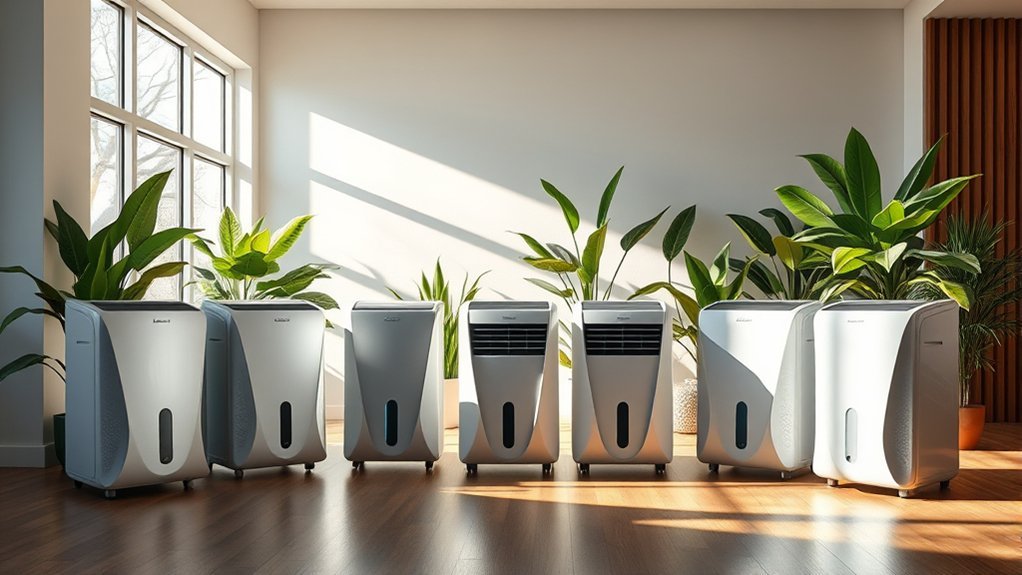
A portable dehumidifier used with radiant cooling should do more than match a room’s advertised square footage. Consider the moisture load, dew point, drainage route, standardized capacity, operating temperature, heat added to the room, and how the appliance will interact with the main HVAC controls.
1. Capacity and Moisture Load
A wet basement may require more moisture-removal capacity than a much larger but only mildly humid living area. Consider starting humidity, outdoor-air leakage, below-grade walls, occupants, laundry drying, cooking, bathrooms, open windows, and ventilation air.
Daily pint ratings depend heavily on test conditions. A unit advertised at 80 or 90 pints under hot, highly humid conditions may collect far less water in a conditioned room. Use standardized DOE capacity when available and treat advertised square footage as broad marketing guidance.
2. Dew-Point Control
For radiant cooling, dew point is more important than relative humidity alone. Condensation develops when the cooled floor, ceiling, or wall reaches the dew-point temperature of the surrounding air.
A common design approach is to maintain a small safety margin between the radiant-surface temperature and the room dew point. The exact margin and control sequence must come from the radiant-system designer or manufacturer. Do not lower the water temperature merely because the room’s relative humidity appears acceptable.
Safety note: Do not rely on a portable dehumidifier as the only condensation safeguard. If a radiant surface is sweating, feels wet, or approaches the measured dew point, reduce or stop radiant cooling and have the controls inspected.
3. Humidity Setting
Many homes are comfortable around 40% to 50% relative humidity, and indoor humidity should generally remain below 60%. However, no universal RH percentage guarantees condensation protection. The safe setting depends on room temperature, outdoor-air infiltration, and the coldest radiant-surface temperature.
Use a separate temperature-and-humidity monitor rather than trusting the dehumidifier’s display alone. Place it in the occupied zone but not directly in the dehumidifier’s warm exhaust stream.
4. Heat Added to the Room
A portable compressor dehumidifier normally releases slightly warmer air into the room. It removes latent moisture but adds sensible heat from the refrigeration process and electrical components.
This can still improve comfort by reducing humidity and lowering dew point, but the radiant system must remove the added heat. A continuously operating portable unit may therefore increase the cooling load, especially in a small or tightly sealed room.
5. Energy Efficiency
Dehumidifiers can run for long periods during humid weather, so efficiency matters. Look up the exact model number in the current ENERGY STAR Product Finder rather than relying only on a logo or year printed in a retail title.
Compare standardized capacity and Integrated Energy Factor where available. Actual operating cost will still depend on electricity rates, duty cycle, room temperature, moisture load, and the selected humidity setting.
6. Continuous Drainage
A full bucket causes most portable dehumidifiers to stop. That interruption can allow the room dew point to rise while radiant cooling continues. Continuous drainage is usually more dependable for regular radiant-cooling support.
- Gravity hose: Simple and reliable, but the entire hose route must remain downhill.
- Built-in pump: Useful when condensate must travel upward or across a longer distance.
- Tank: Suitable as a backup or for occasional operation, but it requires monitoring.
Route the hose without sharp bends, accidental upward sections in a gravity system, electrical hazards, or tripping risks. Test the full drainage cycle before leaving the appliance unattended.
7. Airflow and Placement
Place the dehumidifier where air can move freely through its intake and exhaust. Follow the manual’s clearance requirements and avoid blocking the unit with furniture, curtains, storage boxes, or dusty workshop equipment.
Keep exterior doors and windows closed during operation unless the building’s ventilation strategy requires otherwise. Humid outdoor air entering through open windows can quickly overwhelm a portable unit.
8. Portable Versus Whole-Home Dehumidification
A portable appliance is most suitable for one room, basement, or open zone. It will not distribute dry air evenly through several closed rooms.
A ducted whole-home dehumidifier or dedicated outdoor-air system is generally more appropriate when radiant cooling serves multiple rooms, receives substantial outdoor ventilation air, or must maintain a consistent dew point throughout the building. That type of system should be selected and installed by a qualified HVAC professional.
9. Noise Level
Published decibel figures can help with comparison, but they do not describe compressor tone, vibration, fan changes, or cycling. Flooring and room acoustics also affect perceived sound.
Keep the unit level, prevent the cabinet from touching nearby objects, and avoid placing it directly beside a bed, sofa, or work desk when noise sensitivity is important.
10. Operating Temperature and Defrost
Refrigerant dehumidifiers can lose capacity as room temperature falls, and frost may form on the evaporator coil. If the appliance will operate in a cool basement or mechanical room, confirm its permitted temperature range and automatic-defrost function in the manual.
Before You Buy Checklist
- Measure room temperature and relative humidity with a separate hygrometer.
- Determine the room dew point and compare it with the coldest radiant-surface temperature.
- Choose capacity according to moisture load, not advertised square footage alone.
- Compare standardized DOE capacity when an exact model record is available.
- Confirm that a gravity hose can remain continuously downhill or choose a pump model.
- Check the appliance’s operating-temperature range and defrost function.
- Confirm tank size, filter access, warranty terms, and exact model number.
- Allow for the heat the portable dehumidifier will release into the room.
- Use a grounded outlet that meets the appliance manual’s requirements.
- Keep the radiant system’s condensation controls active at all times.
Frequently Asked Questions
How Does Radiant Cooling Affect Humidity?
Radiant cooling mainly removes sensible heat by cooling room surfaces. It does not necessarily remove water vapor. As room temperature falls, relative humidity can rise even when the total moisture content remains unchanged. Condensation may form if a radiant surface reaches the room dew point.
Why Are Advertised and Standardized Pint Ratings So Different?
Many retail titles publish the amount of water collected under very hot and humid conditions, such as 95°F and 90% or 95% RH. DOE and ENERGY STAR capacity testing uses a standardized procedure intended to make certified models easier to compare. Cooler air contains less removable moisture, so the standardized number can be much lower.
Can a Dehumidifier Improve Radiant-Cooling Comfort?
Yes. Removing moisture can reduce a clammy feeling and lower the room dew point, giving the radiant system a safer operating margin. However, a portable unit should supplement rather than replace dew-point controls, ventilation, and proper system design.
Does a Portable Dehumidifier Cool the Room?
No. A typical portable compressor dehumidifier slightly warms the surrounding room while removing moisture. The lower humidity may improve comfort, but the radiant system must handle the additional sensible heat.
What Humidity Setting Is Best for Radiant Cooling?
Many homes are comfortable around 40% to 50% RH, but the safe setting depends on room temperature and the coldest radiant-surface temperature. Dew point, not a fixed RH percentage, should be the primary condensation-control reference.
Should I Use a Portable or Whole-Home Dehumidifier?
A portable unit can work for one room, basement, or open zone. A ducted whole-home dehumidifier or dedicated outdoor-air system is usually more suitable when the radiant system serves several rooms or must maintain uniform humidity throughout the building.
What Maintenance Is Required?
Clean the washable filter according to the manual, inspect the intake and exhaust grilles, wash the collection tank, and check the drain hose for blockage, algae, kinks, or leaks. Pump-equipped units also require inspection of the pump reservoir, float, and discharge hose.
How Often Should the Dehumidifier Run?
Use automatic humidistat mode rather than a fixed daily schedule. The appliance should cycle as needed to maintain the selected humidity or dew-point target. During very humid weather or high outdoor-air infiltration, it may run for long periods.
Can I Leave a Dehumidifier Running Unattended?
Only after installing it according to its manual and confirming that the grounded outlet, full-tank shutoff, hose connection, or pump works correctly. Run several complete drainage cycles and check for leaks before extended unattended use.
Does a Dehumidifier Replace a Dew-Point Sensor?
No. A dehumidifier lowers the amount of moisture in the air. A dew-point sensor and radiant controller protect the cooled surface by raising water temperature or stopping cooling when condensation risk increases. These are separate functions.
Final Recommendation
Best overall: Choose the AEOCKY RHEA-001 when you need automatic control and continuous gravity drainage for one open radiant-cooled zone.
Best when gravity drainage is impossible: Choose the Avylo ADC018 for its built-in pump and flexible water-disposal options.
Efficiency-focused alternative: Consider the Vellgoo VGE033A3BS when a clearly identifiable ENERGY STAR model and gravity drainage are priorities.
Best compact cabinet: Consider the AEOCKY ARION-001 when placement space is limited.
Best for a medium zone: Consider the BANABIE when the room and moisture load do not justify a larger appliance.
The right choice depends on the actual moisture load, standardized capacity, drainage route, operating temperature, floor plan, and coldest radiant-surface temperature. Do not select a dehumidifier by an advertised square-foot or high-condition pint figure alone.
Use a separate hygrometer, monitor dew point, allow for the heat released by the portable appliance, and keep the radiant system’s condensation controls active. For several rooms or a whole radiant-cooled home, have an HVAC professional evaluate a ducted dehumidifier or dedicated ventilation and dehumidification system.