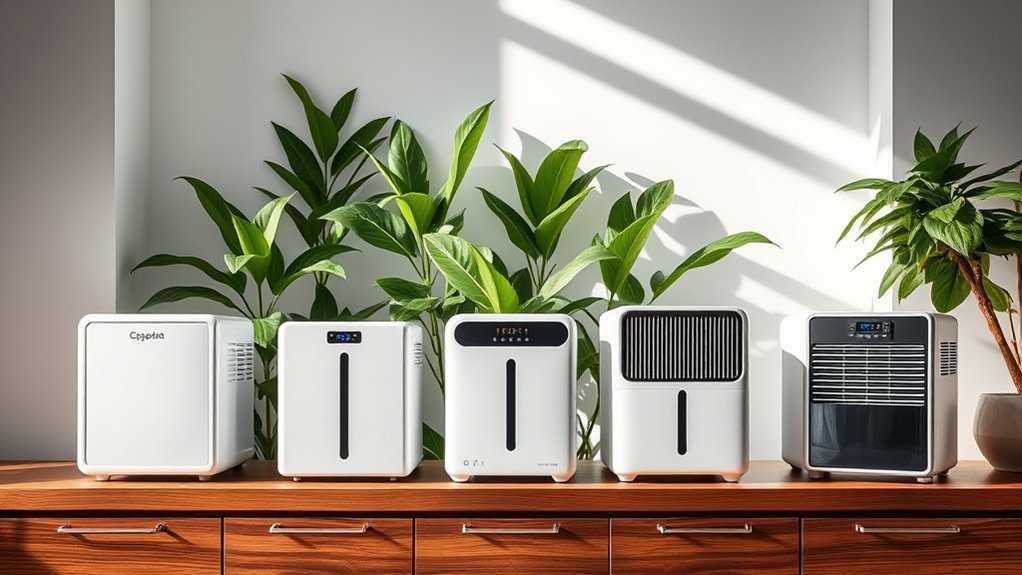
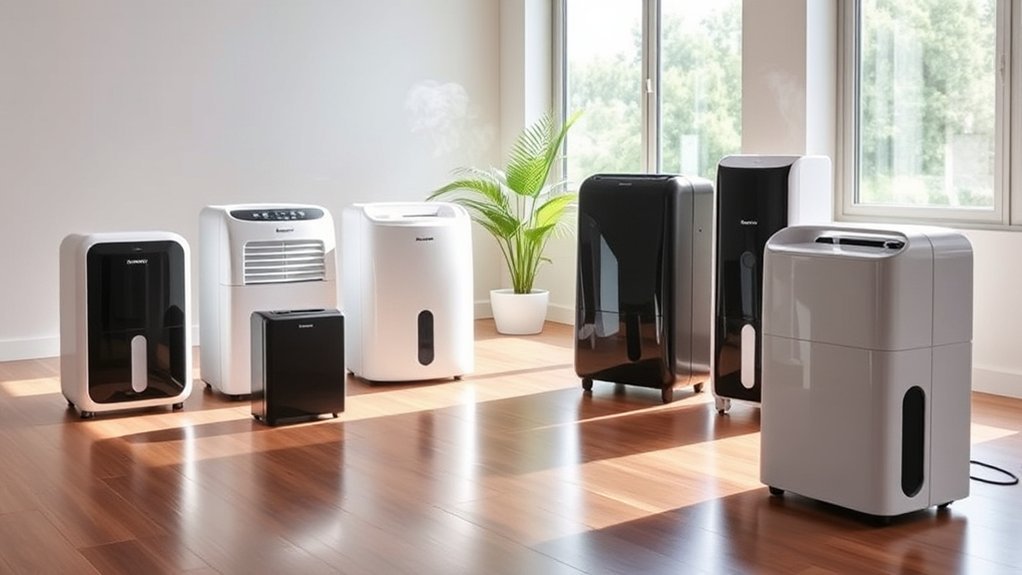
For an 800-square-foot room, basement, apartment, or open living area, a compressor dehumidifier in the 30- to 34-pint class is a practical starting point for typical damp conditions. The three models below offer stronger whole-room moisture removal than compact semiconductor units, along with useful features such as adjustable humidity control, automatic shutoff, washable filters, caster wheels, and continuous-drain options. Choose based on how damp the space is, where you can route a drain hose, and how much operating noise you can tolerate.
Quick Verdict
Best Overall: The KNKA 34-Pint Dehumidifier offers the strongest stated daily capacity here, three operating modes, a 3-liter tank, and an included drain hose.
Quietest Pick: The BANABIE 32-Pint Dehumidifier is the better fit when low stated operating noise and automatic humidity control matter most.
Best Value for Typical Dampness: The NEWBULIG 30-Pint Dehumidifier combines a compact footprint, a humidity indicator, sleep mode, and continuous drainage for everyday home use.
Quick Comparison
| Product | Best For | Stated Capacity | Tank | Drain Option | Stated Noise | Amazon |
|---|---|---|---|---|---|---|
| KNKA PD22SC-12 | Best overall | 34 pints/day | 3 L | Tank or included hose | 37 dB | Check Details |
| BANABIE 32-Pint | Quiet operation | 32 pints/day | 2.5 L | Tank or drain hose | 32 dB | Check Details |
| NEWBULIG 30-Pint | Typical home use | 30 pints/day | 0.53 gal | Tank or included hose | Under 38 dB | Check Details |
Coverage and noise figures above are manufacturer-stated values. Real performance varies with temperature, starting humidity, air circulation, doors, ceilings, and ongoing moisture sources.
KNKA 34-Pint Dehumidifier with Drain Hose — Best Overall
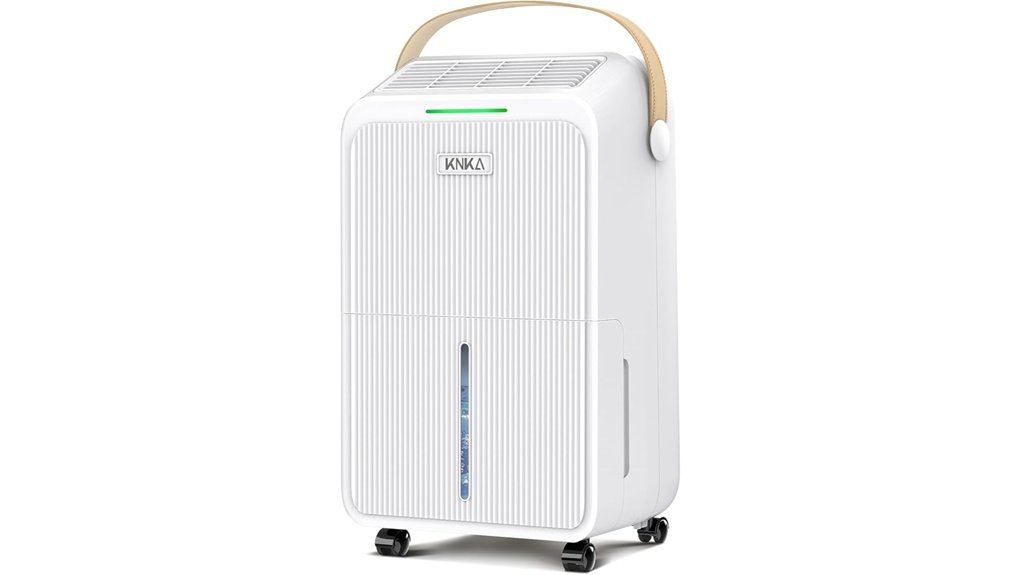
The KNKA PD22SC-12 is the strongest all-around choice in this group for an 800-square-foot area. Its stated moisture-removal capacity is 34 pints per day, and the three operating modes—DEHU, DRY, and CONT—make it easier to switch between automatic humidity control, laundry support, and continuous operation. The included 3.28-foot drain hose is useful when the unit can sit near a suitable floor drain or other approved gravity-drain location.
The 3-liter removable tank includes automatic shutoff, while the washable filter, automatic defrost, child lock, digital display, 24-hour timer, built-in handles, and 360-degree wheels improve everyday usability. Its stated 37 dB operation is appealing for a bedroom or home office, although actual sound can vary by fan setting and room acoustics.
Why You’ll Like It: It balances the highest stated capacity in this roundup with flexible controls and both manual and continuous drainage.
Who Should Buy This: Homeowners managing recurring dampness in an 800-square-foot basement, apartment, living area, or multi-room zone with reasonable air circulation.
Who Should Avoid This: Anyone without enough floor space for a compressor unit or without a safe downward drain route who does not want to empty a 3-liter tank.
Pros:
- 34-pint stated daily capacity provides useful headroom for an 800-square-foot area.
- DEHU, DRY, and CONT modes support different moisture-control needs.
- Includes a drain hose, washable filter, child lock, timer, and caster wheels.
Cons:
- The 3-liter tank may fill quickly during very damp conditions.
- Gravity drainage requires the hose to run continuously downhill to a suitable drain.
- The advertised maximum coverage should not replace capacity-based sizing.
BANABIE 32-Pint Dehumidifier with Smart Humidity Control — Quietest Pick
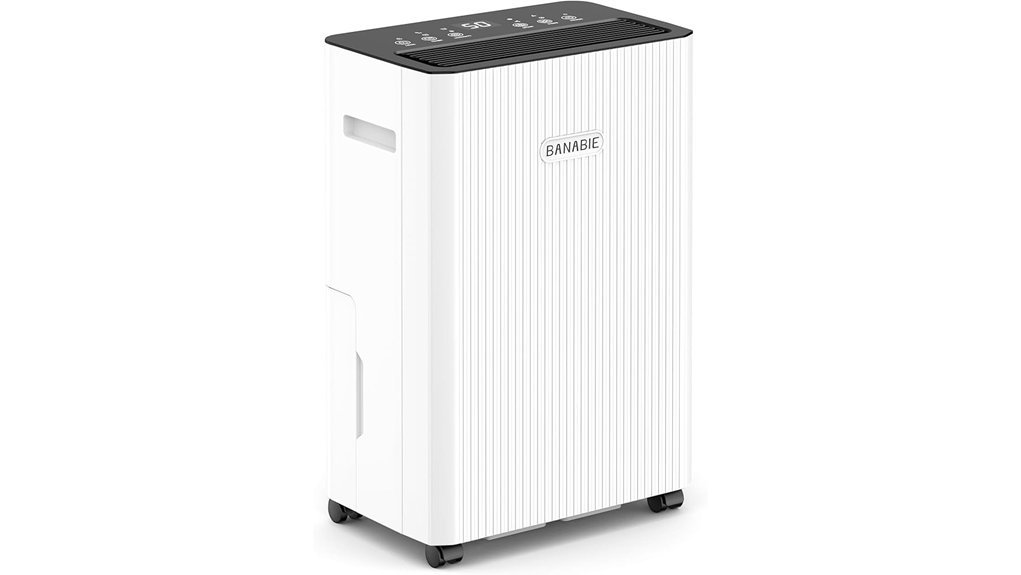
The BANABIE 32-Pint Dehumidifier is a good match for shoppers who want compressor-level moisture removal with low stated operating noise. It is advertised to remove up to 32 pints of moisture per day and to serve spaces up to 2,500 square feet, giving it adequate claimed capacity for an 800-square-foot room under typical household conditions.
Automatic humidity control is designed to cycle the compressor as needed around the selected target, while the 2.5-liter tank, full-tank shutoff, washable filter, timer, drain hose, built-in handles, and 360-degree wheels reduce day-to-day effort. The stated 32 dB noise level is lower than the other retained models, but treat that figure as a listing claim rather than a guaranteed in-room measurement.
Why You’ll Like It: It offers a useful mix of 32-pint capacity, automatic control, continuous drainage, and low advertised noise.
Who Should Buy This: Light sleepers, remote workers, or apartment residents who need whole-room humidity control but want to limit operating noise.
Who Should Avoid This: Buyers who need verified ENERGY STAR certification or app connectivity; confirm those details on the current listing before purchasing.
Pros:
- 32-pint stated daily capacity is suitable for many damp 800-square-foot spaces.
- Automatic humidity control can reduce unnecessary cycling once the target is reached.
- Supports both tank collection and continuous drainage.
Cons:
- The 2.5-liter tank is the smallest among the three retained compressor models.
- The 32 dB claim may not reflect sound at every setting or distance.
- Energy certification and connected-home features are not clearly established in the provided listing data.
NEWBULIG 30-Pint Dehumidifier for Home & Basement — Best Value
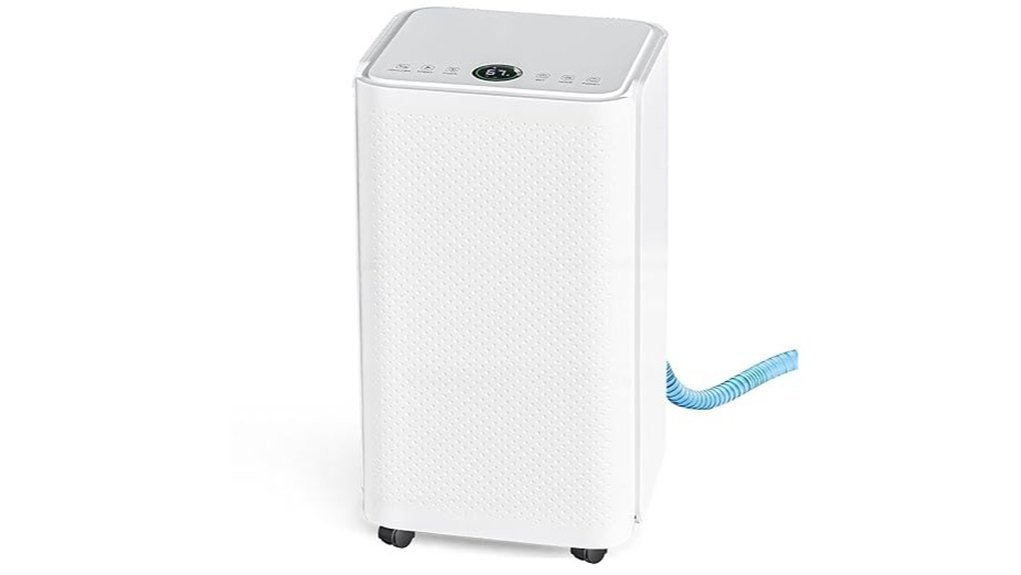
The NEWBULIG 30-Pint Dehumidifier is a practical choice for an 800-square-foot bedroom, living area, basement, or apartment with mild to moderate dampness. It is advertised to remove up to 30 pints of moisture per day and includes Auto, Drying, Sleep, and Fan-Only modes. A color-coded humidity ring offers an at-a-glance indication of whether the surrounding air is dry, comfortable, or humid.
The 0.53-gallon removable tank, automatic shutoff, washable filter, timer, automatic defrost, caster wheels, and included 3.28-foot drain hose cover the features most buyers need. Its under-38 dB stated noise level and sleep mode make it worth considering for living spaces, but the original claim of smart-home compatibility should not be relied on unless the current Amazon listing specifically confirms Wi-Fi or voice-assistant support.
Why You’ll Like It: It provides 30-pint compressor performance in a relatively compact design with straightforward humidity feedback.
Who Should Buy This: Buyers who want a balanced, easy-to-use unit for routine humidity control without paying for unverified connected features.
Who Should Avoid This: Homes with active water intrusion, standing water, or consistently extreme humidity that may require a higher-capacity unit and moisture-source repairs.
Pros:
- 30-pint stated capacity fits many slightly to moderately damp 800-square-foot areas.
- Color-coded humidity indicator simplifies at-a-glance monitoring.
- Includes sleep mode, automatic defrost, washable filter, wheels, and a drain hose.
Cons:
- The 0.53-gallon tank may need frequent emptying when humidity is high.
- Smart-home compatibility was not verified and should not be assumed.
- A 30-pint unit may be undersized for active seepage or very wet conditions.
How to Choose a Dehumidifier for 800 Square Feet
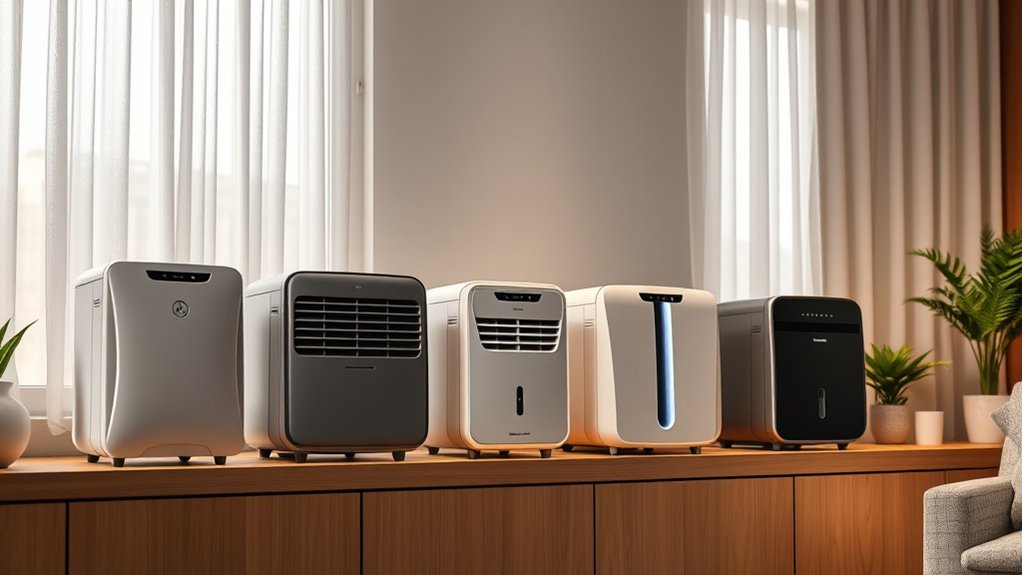
Square-foot coverage is only a starting point. The right portable dehumidifier also depends on the room’s starting relative humidity, temperature, ceiling height, air leakage, doors between rooms, laundry use, and whether water is entering through a leak or foundation problem.
1. Match Capacity to Dampness
For a typical 800-square-foot residential area, a 30- to 34-pint compressor dehumidifier gives useful capacity for mild or moderate dampness and some margin for changing weather. Choose more capacity when the area consistently smells musty, develops visible condensation, has damp walls, or receives moisture from laundry, showers, or seepage. A dehumidifier should manage airborne moisture; it is not a substitute for repairing plumbing leaks, drainage problems, or water intrusion.
2. Treat Coverage Claims as Estimates
A manufacturer’s “up to” coverage number assumes favorable conditions and does not guarantee that the unit will hold the same humidity throughout every 800-square-foot layout. Closed doors, poor air circulation, high ceilings, and divided rooms can reduce effectiveness. Compare pints per day first, then use the coverage claim as a secondary reference.
3. Compare Noise Carefully
Advertised noise ratings are useful for comparison, but the actual sound you hear depends on fan speed, compressor cycling, floor vibration, room furnishings, and distance from the unit. For a bedroom or office, prioritize a sleep mode, lower fan setting, stable placement, and enough clearance around the air intake and outlet.
4. Plan the Drainage Route
Manual tank collection gives you placement flexibility but requires regular emptying. Continuous gravity drainage reduces maintenance, provided the hose slopes downward without kinks and ends at a suitable drain. Do not route a gravity hose uphill. If the drain is above the unit, choose a model with a built-in pump or use a separate condensate solution approved for that setup.
5. Check Portability and Clearance
Caster wheels and built-in handles make a 20-pound-class compressor dehumidifier easier to move, but the unit still needs open space for airflow. Follow the current manufacturer instructions for wall clearance, filter access, upright storage, and the recommended waiting period before restarting after transport.
6. Review Energy Use and Certification
A dehumidifier may run for many hours during humid weather, so compare the current listing’s wattage, Integrated Energy Factor, and ENERGY STAR status when available. Do not assume certification from a generic “energy efficient” claim. A correctly sized unit that reaches the target humidity and cycles off can be a better choice than an undersized unit that runs continuously.
Before You Buy
- Measure the actual connected area and note whether doors normally stay open or closed.
- Use a separate hygrometer to confirm the starting humidity.
- Identify leaks, seepage, or standing water before relying on a dehumidifier.
- Confirm the tank size and whether a gravity drain route is available.
- Check the current Amazon listing for voltage, warranty, certification, dimensions, and included accessories.
Frequently Asked Questions
Is a 30-Pint Dehumidifier Enough for 800 Square Feet?
It can be enough for a slightly to moderately damp 800-square-foot area with reasonable air circulation. A very damp or wet basement, active seepage, frequent indoor laundry drying, or an unusually open layout may need more capacity. Base the choice on moisture conditions, not square footage alone.
What Humidity Level Should I Set?
A target around 40% to 50% relative humidity is practical for many homes. Keeping indoor humidity below 60% helps limit conditions that support mold and dust mites, while excessively dry air can also be uncomfortable. Use an independent hygrometer if accurate control matters.
How Often Should I Empty the Water Tank?
Emptying frequency depends on the tank size, starting humidity, temperature, moisture load, and runtime. In a damp basement, a small tank may fill more than once per day; in a mildly humid room, it may take much longer. Continuous drainage is the best option when frequent emptying becomes inconvenient.
Can a Dehumidifier Remove Mold or Allergens?
A dehumidifier does not remove existing mold and is not a replacement for an air purifier or proper cleanup. It can reduce excess moisture that supports mold growth and dust-mite activity. Fix the moisture source, clean contaminated materials safely, and use appropriate filtration when airborne particles are the concern.
Are Compressor Dehumidifiers Noisy?
They produce fan noise and periodic compressor sound. Models with lower advertised decibel ratings and sleep modes may be easier to live with, but placement on a level, solid floor and keeping the filter clean can also reduce vibration and airflow noise.
What Maintenance Does a Dehumidifier Need?
Clean the washable filter on the schedule in the manual, empty and rinse the tank, inspect the drain hose for kinks or buildup, keep the intake and outlet clear, and check the coils for dust. Unplug the unit before cleaning and follow the manufacturer’s instructions for storage and restarting.
Final Recommendation
For most 800-square-foot spaces, the KNKA 34-Pint Dehumidifier is the strongest overall choice because it combines the highest stated capacity here with flexible modes and an included drain hose.
Choose the BANABIE 32-Pint Dehumidifier when lower advertised noise is your priority, or the NEWBULIG 30-Pint Dehumidifier for balanced everyday moisture control and simple humidity feedback.
Whichever model you choose, confirm the current listing details, size the unit for the actual dampness level, and repair any ongoing water source rather than expecting the dehumidifier to solve structural moisture problems.