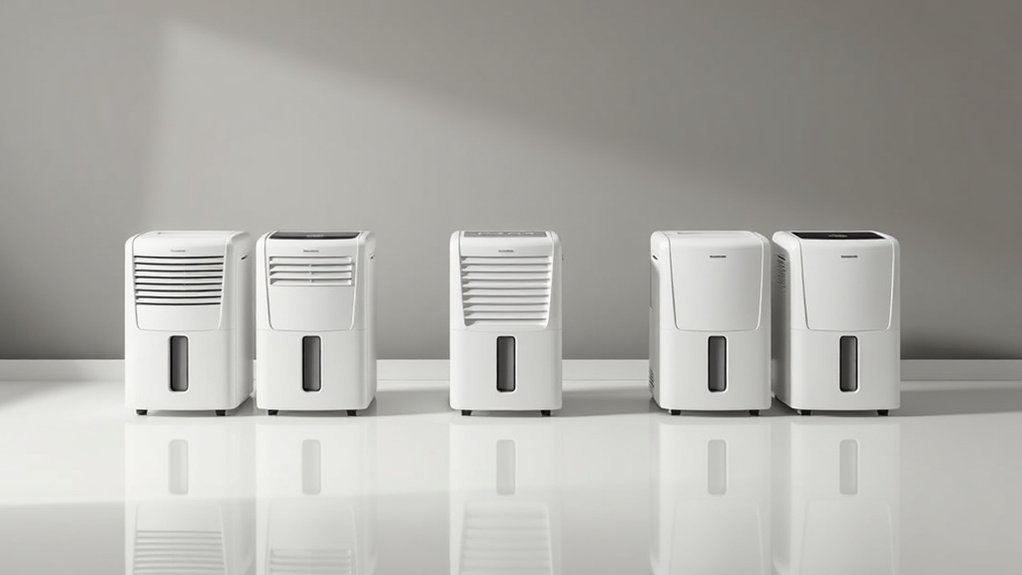
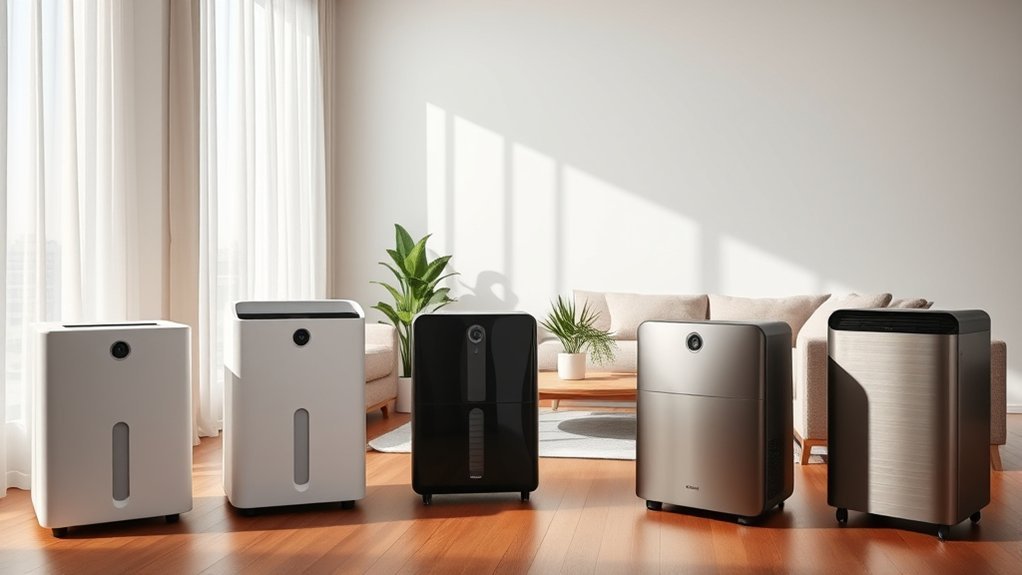
A good shop dehumidifier should do more than advertise a large coverage number. It needs enough moisture-removal capacity for your actual temperature and humidity, a practical drainage method, dependable low-temperature operation, and a filter you can service in a dusty workspace. The five models below suit different shop sizes and layouts, from compact workshops to larger enclosed work areas and crawl-space-style installations.
Quick Verdict
Best all-around shop pick: The DECIUU Max 100 Pint offers a useful balance of high seller-stated capacity, portable design, humidity control, and multiple drainage choices.
Best heavy-duty option: The Moiswell commercial crawl-space dehumidifier is the strongest fit for a larger enclosed workshop, basement shop, or drying area where continuous drainage and high airflow matter.
Best built-in pump: Choose the CADPXS 80 Pint when the drain is above or far from the unit.
Best for lower noise: The AEOCKY 4500 Sq.Ft model is the most attractive option for a shop connected to living or office space.
| Product | Best For | Capacity Note | Drainage | Main Trade-Off | Check Details |
|---|---|---|---|---|---|
| Moiswell Commercial Crawl-Space Dehumidifier | Large enclosed shops and drying areas | Commercial high-capacity listing; verify the current pint label and test conditions | Continuous hose drainage | Heavier and less convenient to move | Check Amazon Details |
| DECIUU Max 100 Pint | Most medium-to-large workshops | 100-pint maximum rating; lower under standardized conditions | Tank, hose, or garden-hose adapter | Large floor footprint | Check Amazon Details |
| AEOCKY 4500 Sq.Ft | Quieter shop or mixed work-office space | 80-pint maximum seller rating | Tank or continuous drain hose | Household-style design rather than a rugged restoration unit | Check Amazon Details |
| CADPXS 80 Pint with Pump | Small shop with difficult drain access | 80-pint saturation rating; 38 pints/day at AHAM conditions | Built-in pump or gravity drain | Smaller stated coverage area | Check Amazon Details |
| AEOCKY 3500 Sq.Ft | Compact or moderately damp workshop | 50-pint maximum seller rating | Tank or continuous drain hose | Not intended for severe water-damage drying | Check Amazon Details |
Moiswell Commercial Crawl-Space Dehumidifier
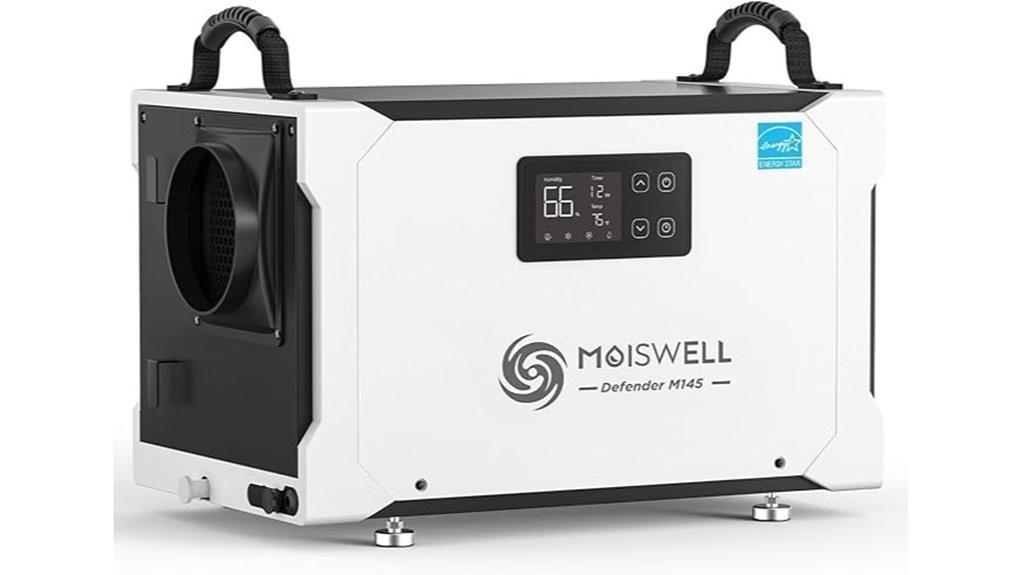
This commercial-style unit is the best fit in this group for a larger enclosed workshop, basement work area, storage shop, or drying space that stays damp for long periods. Its horizontal crawl-space design can fit under shelving or in a low-clearance area, and continuous hose drainage reduces the need to empty a bucket during long operating cycles.
The original listing describes strong airflow, automatic defrost, memory restart, automatic humidity cycling, and timer control. Those features are useful in a shop where temperatures fluctuate or the unit may restart after a power interruption. The product has appeared under different maximum-capacity labels across seller listings, so use the linked ASIN and verify the current model name, pint rating, power draw, dimensions, and included drain hose before ordering.
Why You’ll Like It
- Commercial layout: The low-profile body is easier to place in a crawl space, basement shop, or under-workbench area than a tall household unit.
- Continuous moisture control: Hose drainage supports long runtimes without frequent tank emptying.
- Useful shop features: Auto defrost and memory restart are valuable in cool or intermittently powered workspaces.
Best For: Larger enclosed shops, damp basements, storage areas, restoration-style drying, and buyers who prioritize airflow and continuous drainage.
Who Should Avoid It: Buyers who need a light, wheeled unit that moves between rooms every day or anyone without a practical drain location.
Pros:
- Commercial high-airflow design for demanding moisture problems.
- Low-profile form can fit where upright residential units cannot.
- Continuous drainage, auto defrost, and restart memory support unattended operation.
Cons:
- Capacity labeling varies across listings, so the exact current specification must be checked.
- Heavier and less convenient to reposition than a portable household model.
- May be more machine than a small, mildly humid workshop needs.
DECIUU Max 100 Pint Energy Star Dehumidifier
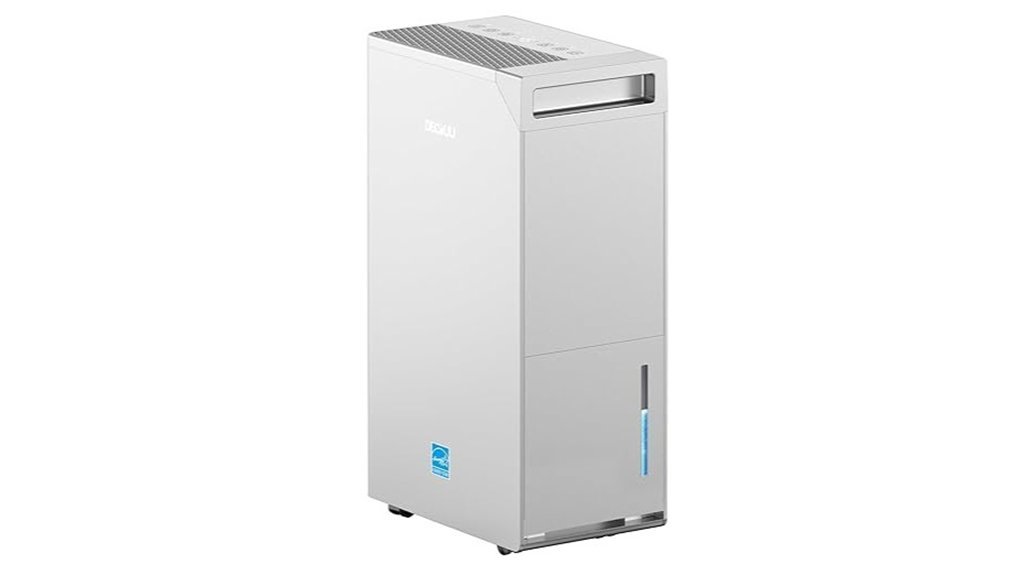
The DECIUU Max is the most balanced option for a typical garage workshop or medium-to-large shop. It combines a portable upright design with adjustable humidity control, automatic defrost, a washable filter, timer settings, wheels, and several drainage methods. That makes it easier to live with than a fixed commercial unit while still offering substantially more capacity than a small room dehumidifier.
The “100 pint” figure is a maximum rating measured under hot, humid conditions. The listing also uses a lower standardized capacity figure, which is the more useful number when comparing it with other portable dehumidifiers. Its advertised 5,000-square-foot coverage should be treated as a broad guide because ceiling height, open doors, wet materials, outdoor air leakage, and shop temperature can change the real workload.
Why You’ll Like It
- Flexible drainage: Use the internal tank, included drain hose, or garden-hose connection depending on your shop layout.
- Easy to move: Swivel wheels and a hidden handle help when you need to reposition the unit.
- Practical controls: Adjustable humidity, multiple fan speeds, a timer, and restart memory reduce day-to-day attention.
Best For: Woodworking shops, garage workshops, laundry-adjacent workspaces, and larger rooms that need portable continuous dehumidification.
Who Should Avoid It: Buyers who need a built-in condensate pump to lift water vertically or a rugged low-profile machine for crawl-space installation.
Pros:
- Strong balance of capacity, portability, and drainage choices.
- Adjustable humidity range helps avoid over-drying the workspace.
- Washable filter and automatic defrost support regular shop use.
Cons:
- The maximum pint rating can look larger than the standardized capacity.
- The tank still needs frequent emptying if continuous drainage is not used.
- The tall residential-style cabinet may be exposed to impacts in a busy shop.
AEOCKY 4500 Sq.Ft Smart Dehumidifier (80 Pint/Day)
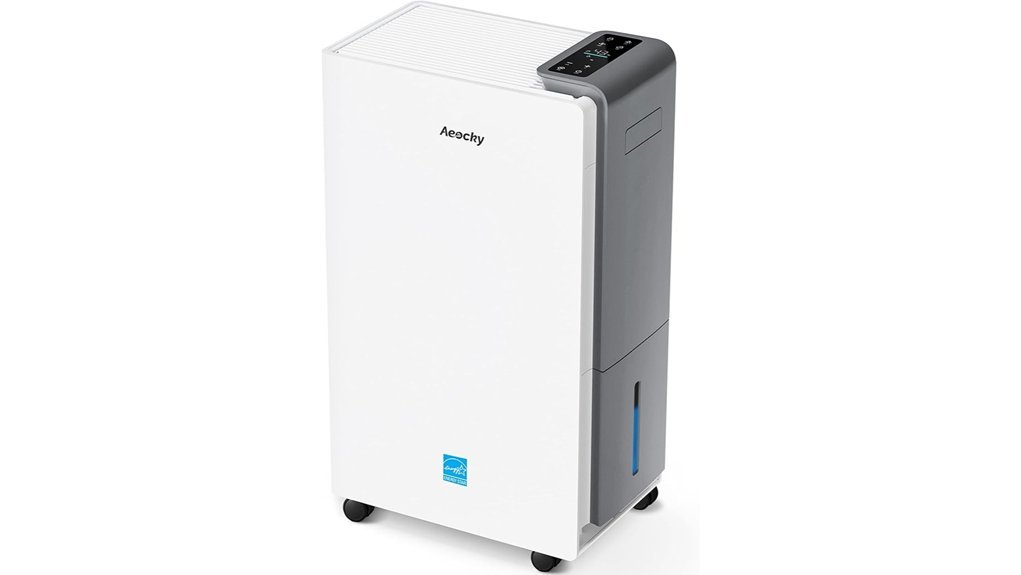
The AEOCKY 4500 Sq.Ft model is a strong choice when the shop is attached to a home, office, studio, or customer area. The seller highlights low-noise operation, intelligent humidity control, automatic modes, continuous drainage, and a compact footprint for its stated coverage class.
Its 80-pint figure is a maximum rating rather than a universal daily result. Actual extraction falls as the room becomes cooler or less humid. The linked model family has appeared in ENERGY STAR records, but buyers should match the exact model number on the current Amazon listing with the current certification directory instead of relying only on promotional wording or a year printed in the title.
Why You’ll Like It
- Lower-noise focus: Better suited to a workspace where conversations, calls, or precision work happen nearby.
- Automatic humidity control: The unit can cycle to maintain the selected setting instead of running continuously.
- Continuous drain option: A drain hose reduces routine bucket emptying.
Best For: Home workshops, studios, hobby rooms, office-connected shops, and buyers who value quieter operation.
Who Should Avoid It: Water-damage professionals or shops needing a rugged commercial cabinet, built-in pump, or high-impact protection.
Pros:
- Quiet-operation emphasis makes it easier to use near occupied rooms.
- Compact upright body provides substantial stated coverage without a large commercial footprint.
- Humidity controls, timer, child lock, and drain-hose support improve convenience.
Cons:
- The seller’s energy-savings estimate should not be treated as a guaranteed result.
- The maximum capacity depends on hot, humid test conditions.
- Household-style construction may need extra protection from dust, impacts, and overspray.
CADPXS 80 Pint Crawl Space Dehumidifier with Pump
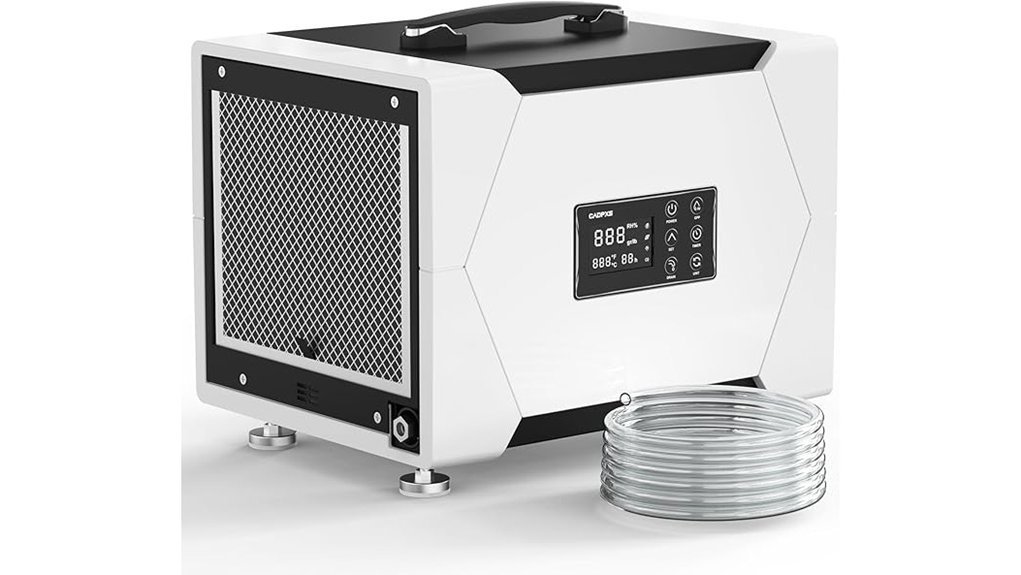
The CADPXS is the most useful option when your shop does not have a floor drain beside the dehumidifier. Its built-in pump can move condensate through the supplied pump hose and lift it to a higher drain point, reducing the installation limits of gravity-only systems.
The model is rated at up to 80 pints per day at saturation and 38 pints per day under AHAM conditions, which is a clearer comparison point than the headline number alone. It is designed for smaller enclosed areas, crawl spaces, basements, and similar locations rather than a very large open shop. The compact horizontal cabinet, automatic defrost, memory restart, timer, and washable filter make it practical for a dedicated installation.
Why You’ll Like It
- Built-in pump: Condensate can be sent to a drain that is not directly below the unit.
- Compact cabinet: The horizontal design fits under benches, shelving, or low-clearance areas.
- Clearer capacity data: The listing distinguishes the saturation rating from the AHAM rating.
Best For: Small enclosed workshops, basement shops, equipment rooms, and locations where gravity drainage is difficult.
Who Should Avoid It: Large shops that regularly open to outdoor air or buyers who need whole-building moisture removal.
Pros:
- Built-in condensate pump adds installation flexibility.
- Automatic defrost and memory restart suit cool or unattended spaces.
- Compact body and built-in handle help with placement.
Cons:
- The stated coverage is smaller than the other high-capacity options.
- At about 37 pounds, it is portable but not lightweight.
- Pump tubing and filters still require routine inspection and cleaning.
AEOCKY 3500 Sq.Ft Dehumidifier with Drain Hose
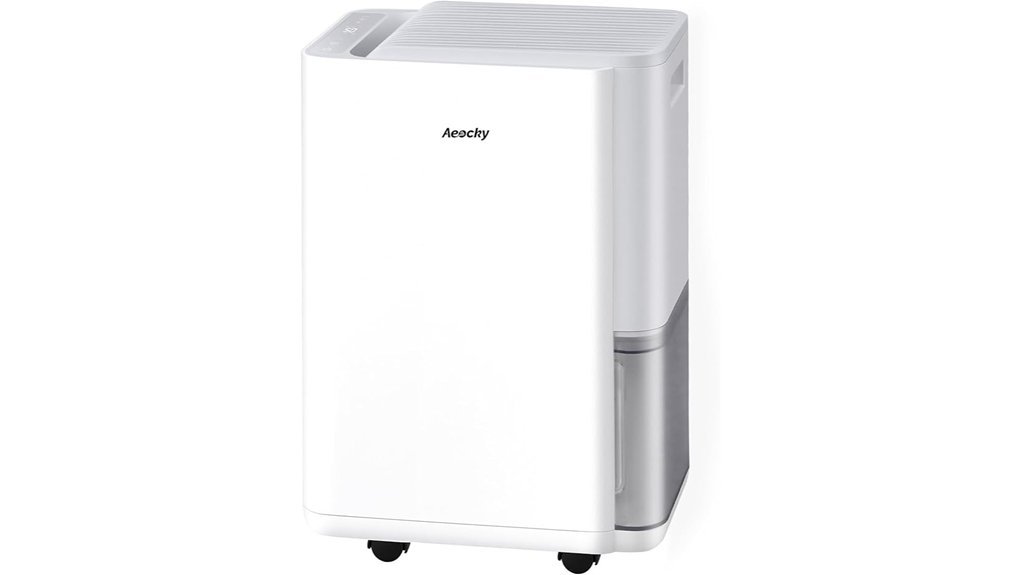
The AEOCKY 3500 Sq.Ft model is a better match for a compact shop or a space with moderate seasonal humidity than for severe water intrusion. Its upright design, automatic humidity control, drain-hose support, and smaller footprint make it easier to place in a garage workshop, hobby room, utility space, or RV work area.
The listing advertises up to 50 pints per day under demanding conditions. As with the other portable units, actual water removal will be lower in cooler or less humid conditions. This model makes the most sense when you need steady control of normal dampness, condensation, or musty air—not rapid structural drying after a leak or flood.
Why You’ll Like It
- Space-saving design: Easier to place beside a wall or workbench than a bulky commercial unit.
- Simple continuous drainage: The drain hose can reduce bucket-emptying chores.
- Good everyday fit: Automatic humidity control is convenient for seasonal shop moisture.
Best For: Small to medium workshops, hobby spaces, attached garages, and users dealing with moderate humidity rather than water damage.
Who Should Avoid It: Large industrial shops, very cold spaces, or projects requiring a pump and high-volume restoration performance.
Pros:
- Compact footprint for tight shop layouts.
- Automatic humidity modes and drain-hose support simplify daily use.
- Lower-capacity design may be more practical than an oversized commercial unit in a small room.
Cons:
- Not designed for heavy water-damage restoration.
- The maximum pint figure does not represent every room condition.
- Continuous drainage still requires a suitable downward-sloping route unless an external pump is added.
Factors to Consider When Choosing a Dehumidifier for Your Shop
A shop is usually harder to dehumidify than a bedroom or basement. Large doors may open often, tools and vehicles may bring in moisture, sawdust can clog filters, and winter temperatures can reduce compressor performance. Use the checklist below to match the machine to the real workspace.
Measure the Shop and Its Moisture Load
Start with floor area, ceiling height, and how well the shop is sealed. Then consider the moisture source. A mildly damp hobby room needs much less capacity than a garage with wet vehicles, a woodworking shop storing green lumber, or a work area with recurring leaks. Coverage numbers are only estimates, so choose extra capacity when doors open frequently or the shop has high ceilings.
Compare Pint Ratings Under the Same Conditions
Do not compare one product’s maximum hot-and-humid rating with another product’s standardized rating. Look for AHAM, DOE, or ENERGY STAR water-removal data when available. A unit advertised as 80 or 100 pints at extreme conditions may remove much less water in a cool workshop. The fairest comparison uses the same test temperature and relative humidity.
Check Energy Efficiency and Model Numbers
ENERGY STAR certification can help identify efficient portable dehumidifiers, but certification applies to specific model numbers. Match the exact model number on the Amazon listing and product label with the current ENERGY STAR directory. Avoid relying on broad statements such as “50% more efficient” or large annual savings promises unless the seller shows the assumptions behind the calculation.
Consider Noise and Shop Activity
A louder commercial machine may be acceptable in a detached shop but distracting in a studio, office-connected workshop, or customer-facing space. Sound ratings are usually measured under controlled conditions, so expect the room, floor, fan speed, and vibration to affect what you hear. Place the unit on a level surface and keep it away from loose panels that may rattle.
Choose the Right Drainage Method
Gravity drainage is simple and reliable when the hose can slope continuously downward to a floor drain. A built-in pump is better when water must travel upward or across the room. A bucket works for occasional use but requires regular emptying and may stop the unit when full. Check hose diameter, maximum lift, included accessories, and freeze risk before installation.
Plan Placement, Airflow, and Protection
Leave the manufacturer-required clearance around the inlet and outlet. Do not hide the unit behind stacked materials or under a bench if that blocks airflow. In a busy shop, protect the cabinet and cord from vehicle tires, welding sparks, grinding debris, paint overspray, and water splash. A wheeled upright unit is easier to move, while a horizontal crawl-space unit is usually better for a fixed location.
Account for Dust, Sawdust, and Metal Debris
Shop air can clog a filter much faster than household air. Inspect the filter frequently, especially during sanding, cutting, or grinding work. Do not use a dehumidifier as a dust collector, and do not operate it where flammable vapors, combustible dust, or explosive fumes may be present unless the equipment is specifically rated for that environment.
Check Low-Temperature Operation
Compressor dehumidifiers lose effectiveness as the air gets colder, and frost can form on the coil. Auto defrost helps, but it does not make every unit suitable for an unheated winter shop. Check the manual’s minimum operating temperature and consider a desiccant dehumidifier or safe space heating if the room stays below the compressor model’s operating range.
Frequently Asked Questions
How Often Should I Empty the Dehumidifier’s Water Tank?
Empty it whenever the full-tank indicator appears. In a very damp shop, that may be several times a day. Continuous hose drainage is usually the better choice for regular shop use, provided the hose has a clear route and cannot freeze, kink, or create a trip hazard.
Can I Use a Dehumidifier in Winter?
Yes, but only within the model’s stated operating-temperature range. A compressor unit may spend more time in defrost mode or remove very little water in a cold, unheated shop. Check the manual before leaving it running in winter.
What Maintenance Does a Shop Dehumidifier Need?
Inspect and clean the filter, check the intake and exhaust for dust buildup, clean the bucket, flush or inspect the drain hose, and look for leaks or unusual vibration. Unplug the unit before cleaning and follow the manual’s service schedule.
How Noisy Are Shop Dehumidifiers?
Portable household models are generally easier to tolerate near occupied rooms, while commercial units often produce more fan and compressor noise. Published decibel figures are useful for comparison, but room acoustics, fan speed, floor vibration, and placement can change the real sound level.
Are Dehumidifiers Safe Around Children and Pets?
They can be used safely when installed according to the manual, but the unit, cord, hot internal components, bucket, and drain hose should remain out of reach. Keep vents clear, prevent tipping, secure the hose, and do not allow children or pets to play near the controls or collected water.
What Humidity Level Is Best for a Workshop?
Use a moderate setting that prevents condensation, musty odors, swollen wood, and visible rust without making the room unnecessarily dry. A separate hygrometer can help confirm whether the dehumidifier’s built-in sensor reflects conditions across the whole shop.
Will One Dehumidifier Work With the Garage Door Open?
Not efficiently. An open door continuously brings in outdoor air, which can overwhelm the unit. Close doors and windows during operation, seal major air leaks where practical, and allow the dehumidifier time to lower the moisture level after vehicles or wet materials enter.
Final Recommendation
Choose the DECIUU Max 100 Pint for the best overall balance of portable shop capacity, controls, and drainage options.
Choose the Moiswell commercial unit for a larger enclosed or consistently damp shop where a fixed, high-airflow machine makes sense.
Choose the CADPXS 80 Pint with Pump when the drain location is the main installation challenge.
Choose an AEOCKY model for a smaller or quieter workspace where a residential-style upright dehumidifier is sufficient.
Before ordering, match the exact model number, standardized pint rating, minimum operating temperature, drainage method, electrical requirements, dimensions, and current warranty terms to your shop. That final check is more reliable than choosing by square-foot coverage or the largest headline capacity alone.