Affiliate disclosure: As an Amazon Associate I earn from qualifying purchases. This article contains paid affiliate links, and we may earn a commission at no extra cost to you.
If you need a small dehumidifier for a closet, focus on physical size, safe vent clearance, tank capacity, noise, controls, and realistic moisture-removal performance. The six electric models below are designed for closets and other compact spaces, but they are best for mild to moderate dampness. A mini thermoelectric dehumidifier will not fix a plumbing leak, wet wall, active mold problem, or serious whole-room humidity.
Quick Verdict
Best overall: The BeOkay DH-A2 combines a 1657 ml tank, three operating modes, five timer choices, and a compact footprint.
Best for adjustable controls: The NeedDuck model adds auto defrost, four timer choices, and three modes.
Best quiet pick: The TABYIK 35 OZ model has a manufacturer-listed 28 dB operating claim and a compact 35 oz tank.
Best for higher listed extraction: The MORFY model has the largest tank in this roundup and a manufacturer-listed maximum of 25 oz per day under warm, very humid test conditions.
Best for a very small closet: The Bangnics mini dehumidifier is listed for spaces up to 130 sq. ft. and has a simple, low-noise design.
Quick Comparison of Small Closet Dehumidifiers
| Product | Best For | Tank | Listed Coverage | Listed Daily Removal | Dimensions | Standout Feature | Amazon |
|---|---|---|---|---|---|---|---|
| BeOkay DH-A2 | Best overall | 1657 ml / 58 oz | Up to 230 sq. ft. | 0.3 L/day | 4.96D x 5.89W x 9.53H in. | Three modes and five timer choices | View on Amazon |
| NeedDuck Dehumidifier | Adjustable operation | 44 oz | Up to 215 sq. ft. | Not verified | 5.91D x 5.91W x 8.46H in. | Auto defrost and four timer choices | View on Amazon |
| Deyagoo 1500ML | Simple large-tank use | 1500 ml / 50 oz | Up to 300 sq. ft. | Up to 300 ml/day at 86°F and 80% RH | 5.91D x 4.72W x 9.84H in. | Transparent tank and 30 dB claim | View on Amazon |
| TABYIK 35 OZ | Quiet operation | 35 oz / 1000 ml | Up to 280 sq. ft. | Up to 16 oz/day at 86°F and 80% RH | 5.9D x 5.9W x 10.1H in. | 28 dB manufacturer claim | View on Amazon |
| MORFY Small Dehumidifier | Higher listed extraction | 1800 ml / 60 oz | Small rooms and closets | Up to 25 oz/day at 86°F and 80% RH | 6.3D x 5.3W x 11.4H in. | Large tank, Sleep Mode, and auto defrost | View on Amazon |
| Bangnics Mini Dehumidifier | Very small closets | 17 oz listed tank | Up to 130 sq. ft. | Up to 14 oz/day at 86°F and 80% RH | 3.93D x 6.29W x 9.44H in. | Power-off memory and under-30 dB claim | View on Amazon |
Important: Coverage, noise, and daily water-removal figures are manufacturer- or seller-listed estimates. Maximum extraction figures are often measured in a closed space at 86°F and 80% relative humidity, so actual collection can be much lower in a cool or only mildly humid closet. Product specifications were checked against accessible listing data in August 2026, but Amazon listings can change.
BeOkay DH-A2 Small Dehumidifier
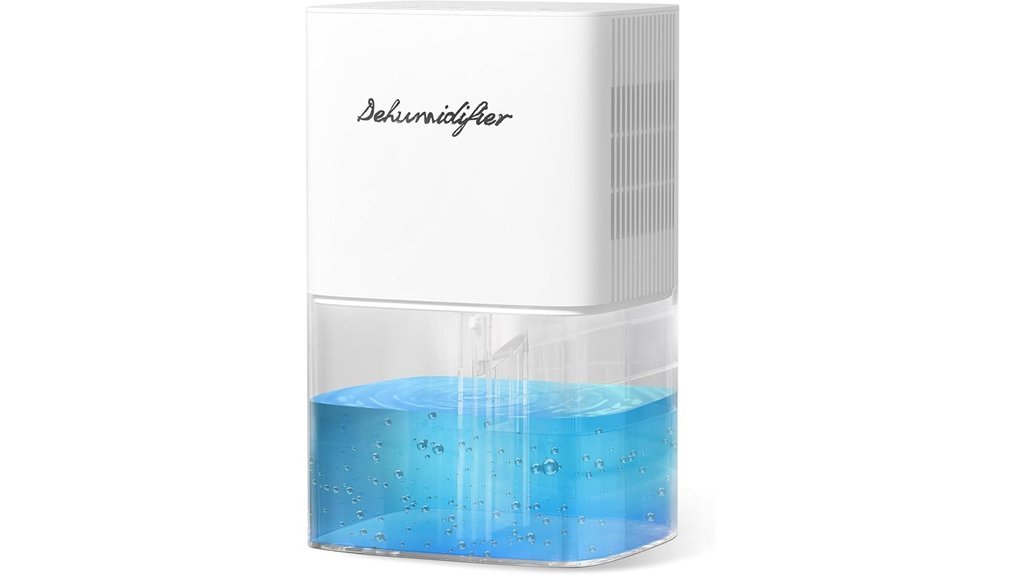
Best Overall for Most Closets
The BeOkay DH-A2 is a balanced choice for a closet that needs steady moisture control without a bulky appliance. Its 1657 ml tank, listed coverage of up to 230 sq. ft., three operating modes, five timer choices, and compact 4.96D x 5.89W x 9.53H-inch body make it easier to place on a stable shelf or closet floor. The listing identifies a 0.3-liter-per-day dehumidification capacity.
Why You’ll Like It: You can switch between Sleep, Normal, and Performance modes instead of running one fixed setting all day. The timer choices include 24, 48, 72, and 96 hours plus continuous operation. The removable tank, auto shutoff, and separate light controls also simplify routine use.
Who Should Buy This: Buyers with a reach-in closet, bedroom closet, bathroom, or storage area who want flexible controls and a relatively large tank in a mini unit.
Who Should Avoid This: Buyers dealing with wet walls, leaks, persistent condensation, or whole-room humidity that requires a higher-capacity compressor dehumidifier.
Pros:
- Large tank for a compact thermoelectric unit.
- Three modes and five timer choices improve control.
- Compact, lightweight design is easy to reposition.
- Auto shutoff helps prevent tank overflow.
Cons:
- Listed extraction is modest compared with full-size compressor models.
- Needs open space around the air inlet and outlet.
- Color lighting may be unnecessary inside a closet.
NeedDuck Dehumidifier With Auto Defrost and Timer
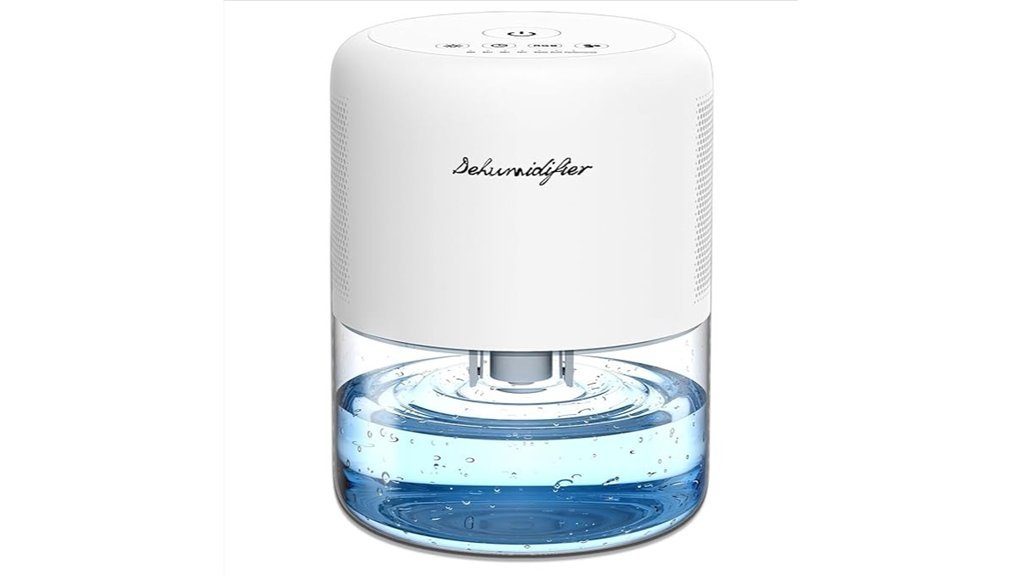
Best Adjustable Pick
The NeedDuck Dehumidifier is sized for small spaces and has a 44 oz water tank, listed coverage of up to 215 sq. ft., 28W power use, and dimensions of 5.91D x 5.91W x 8.46H inches. Its auto-defrost function is useful when frost starts to form internally, while the Continuous, 24-hour, 48-hour, and 72-hour timer choices let you match operation to your routine.
Why You’ll Like It: Sleep, Auto, and Performance modes give you more control than a basic one-speed unit. The listing also includes automatic shutoff protection for a full, detached, tilted, or fallen tank.
Who Should Buy This: Buyers who want timer controls, multiple modes, auto defrost, and a shorter body that may fit beneath a closet shelf.
Who Should Avoid This: Anyone who wants a humidistat display with a precise target-humidity setting or a clearly published daily water-removal rate.
Pros:
- Four timer choices and three operating modes.
- Auto defrost supports more consistent operation when frost develops.
- Compact footprint works well in closets, RVs, and bathrooms.
- Auto shutoff and tilt-related protection add convenience.
Cons:
- 44 oz tank may need regular emptying during humid weather.
- Seller-listed coverage should not be confused with high-capacity extraction.
- No precise digital humidity target or verified daily extraction rate was found in accessible listing data.
Deyagoo 1500ML Small Dehumidifier
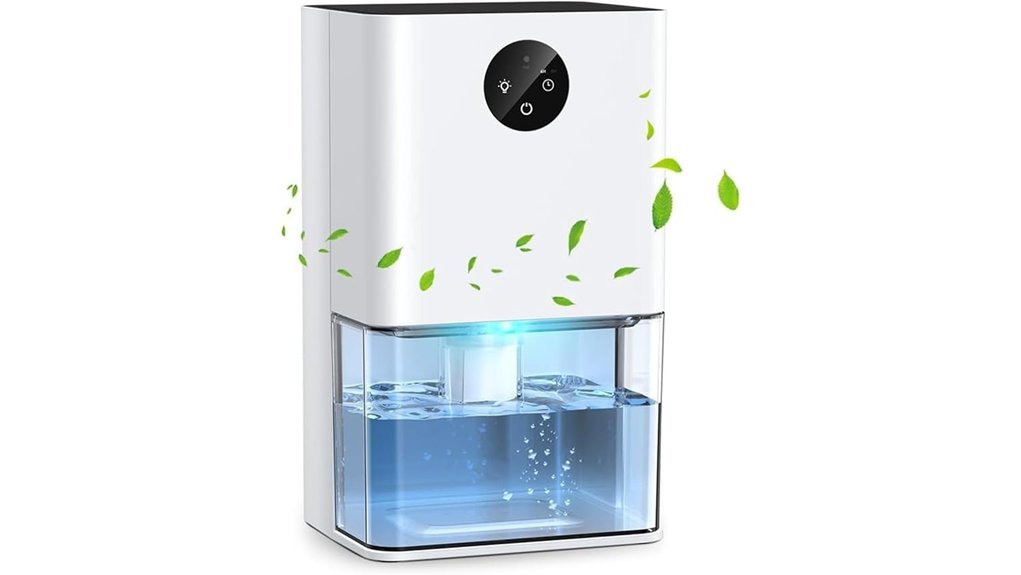
Best Simple Large-Tank Pick
The Deyagoo 1500ML dehumidifier uses a 1500 ml transparent tank and is listed for spaces up to 300 sq. ft. Under the manufacturer’s rated test conditions of 86°F and 80% relative humidity, it can collect up to 300 ml of water in 24 hours. Its compact 5.91D x 4.72W x 9.84H-inch body, 30 dB noise claim, seven-color light, and auto shutoff make it straightforward to use in a closet, bathroom, bedroom, or RV.
Why You’ll Like It: The transparent tank makes the water level easy to check, while the simple controls suit buyers who do not need several modes or timer schedules.
Who Should Buy This: Buyers who want a visible 1500 ml tank and basic one-button operation for a small closet or storage area.
Who Should Avoid This: Buyers who want auto defrost, multiple fan modes, programmable timer controls, or a target-humidity setting.
Pros:
- 1500 ml transparent tank is easy to monitor.
- Compact size suits shelves and tight floor spaces.
- Auto shutoff helps prevent overflow.
- Low-noise claim suits bedrooms and nearby closets.
Cons:
- Maximum daily extraction is based on warm, highly humid test conditions.
- Single-mode design offers less control than adjustable models.
- Air inlet and outlet must remain clear for proper operation.
TABYIK 35 OZ Dehumidifier for Small Spaces
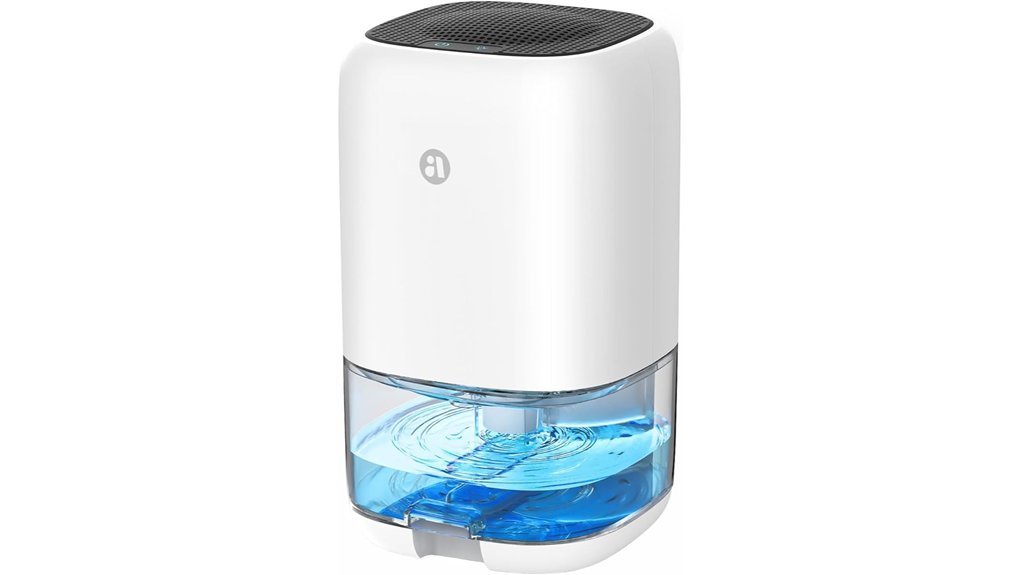
Best Quiet Pick
The TABYIK 35 OZ Dehumidifier is designed for small rooms, closets, bathrooms, and RVs. It has a 1000 ml transparent tank, listed coverage up to 280 sq. ft., a 28 dB noise claim, seven-color lighting, and automatic shutoff. Under rated conditions of 86°F and 80% relative humidity, the manufacturer lists a maximum collection of 16 oz in 24 hours.
Why You’ll Like It: Its low listed noise level and simple controls make it a convenient choice for a bedroom closet or another compact space near where you sleep. A rear handle also makes it easy to move.
Who Should Buy This: Buyers who prioritize low listed operating noise, simple controls, and easy tank monitoring.
Who Should Avoid This: Anyone expecting the maximum 16 oz daily collection in a cool or only mildly humid closet.
Pros:
- 28 dB manufacturer noise claim.
- Transparent tank and automatic shutoff simplify maintenance.
- Compact design with a built-in handle.
- Separate light control lets you turn off the decorative lighting.
Cons:
- Actual extraction will drop below the maximum in cooler or drier conditions.
- 35 oz tank can require frequent checks during humid periods.
- No adjustable target humidity is listed.
MORFY Small Dehumidifier
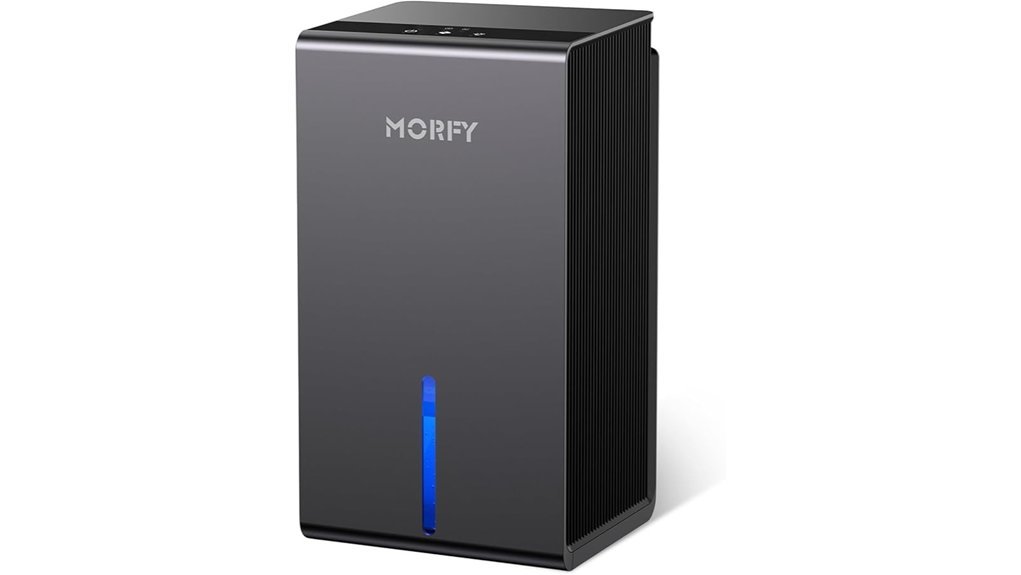
Best Higher-Extraction Pick
The MORFY Small Dehumidifier measures 6.3D x 5.3W x 11.4H inches and uses an 1800 ml transparent tank. The manufacturer lists removal of up to 25 oz of moisture per day in a sealed small room at 86°F and 80% relative humidity. It also lists 48W power use, approximately 35 dB operation in Sleep Mode, automatic defrost, and automatic shutoff when the tank is full.
Why You’ll Like It: Its larger tank and higher manufacturer-listed daily extraction may suit a closet that stays noticeably damp, while Sleep Mode helps reduce noise and auto defrost helps manage internal frost.
Who Should Buy This: Buyers who value tank size and rated daily extraction more than having the smallest possible unit.
Who Should Avoid This: Buyers with very limited shelf height or those who need verified high-capacity performance in cool conditions.
Pros:
- 1800 ml tank reduces how often you may need to empty it.
- Highest manufacturer-listed daily extraction in this roundup.
- Sleep Mode supports quieter operation.
- Automatic defrost and shutoff add convenience.
Cons:
- Daily extraction figure depends on warm, very humid test conditions.
- Taller body may not fit beneath low closet shelves.
- No verified real-world closet performance should be assumed from the maximum rating alone.
Bangnics Mini Dehumidifier for Small Closets
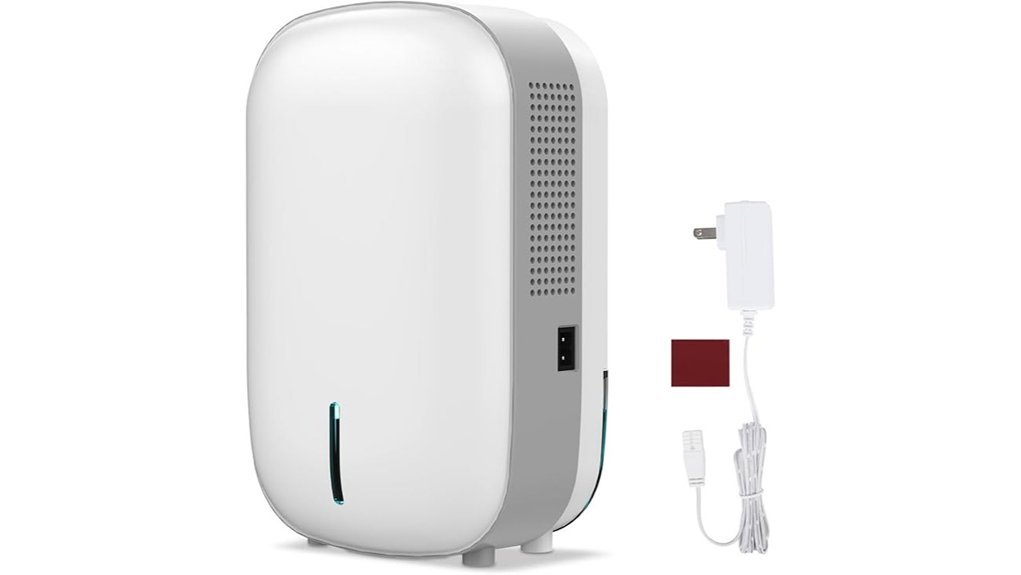
Best for Very Small Closets
The Bangnics mini electric dehumidifier is listed for areas up to 130 sq. ft. and has a listed 17 oz tank. It can collect up to 14 oz (420 ml) of water per 24 hours under rated conditions of 86°F and 80% relative humidity. It uses 25W, operates at a manufacturer-listed noise level below 30 dB, and includes auto shutoff plus power-off memory, which can restart the unit after power is restored.
Why You’ll Like It: The smaller coverage target and narrow body make it easier to match this model to a compact closet, safe, pantry, RV, or storage nook without buying a taller unit.
Who Should Buy This: Buyers with a very small closet or storage space and mild condensation or musty air.
Who Should Avoid This: Buyers with a large walk-in closet, frequent wet surfaces, or ongoing water intrusion.
Pros:
- Compact design targets small enclosed spaces.
- Under-30 dB manufacturer noise claim.
- Auto shutoff reduces overflow risk.
- Power-off memory can work with a compatible smart plug.
Cons:
- 17 oz listed tank is the smallest in this roundup.
- Maximum extraction is measured in warm, highly humid conditions.
- Requires a nearby power outlet and clear airflow around the vents.
Factors to Consider When Choosing a Small Dehumidifier for a Closet
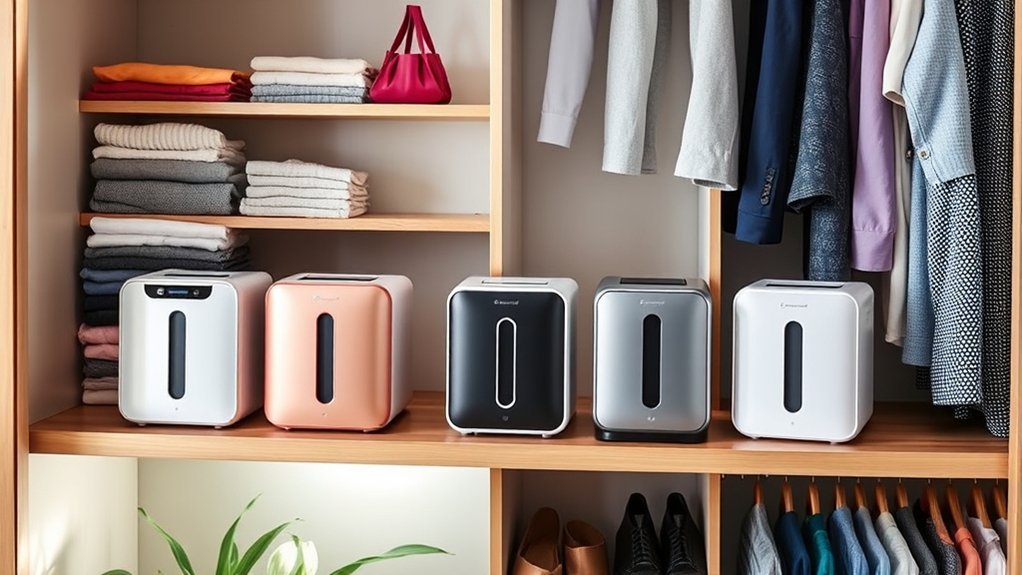
The best closet dehumidifier is not simply the model with the largest advertised coverage number. Match the unit to your closet size, humidity level, temperature, available outlet, tank-emptying routine, and the amount of open space around its vents.
Size, Tank Capacity, and Shelf Clearance
Measure the exact placement area before buying. Most mini electric dehumidifiers are narrow but roughly 8 to 12 inches tall, so a low shelf can be more limiting than floor space. A larger tank reduces emptying frequency, but it also increases the unit’s height and weight when full. Leave enough room to remove the tank without moving clothing or storage boxes.
Daily Water Removal Matters More Than Coverage Alone
Advertised square-foot coverage is useful only as a rough placement guide. The more meaningful comparison is how much water the unit is listed to remove in 24 hours and the temperature and humidity used for that test. A unit rated at 86°F and 80% relative humidity will usually collect less water in a cooler, drier closet.
Noise Level
Manufacturer-listed noise ratings can help you compare models, especially for a bedroom closet. Still, the sound may seem louder inside a hard, enclosed space. A Sleep Mode or lower-speed setting can help, but do not cover the vents or surround the unit with fabric to reduce sound.
Energy Use
Check the listed wattage, then estimate cost using your local electricity rate and expected daily runtime. Timer controls, auto shutoff, and appropriately sized operation can reduce wasted energy. Do not assume that a larger coverage claim automatically means better efficiency.
Safety and Placement
Choose a stable, level surface away from hanging clothes, paper, and anything that could block airflow. Auto shutoff is important when the tank is full. Tilt or fall protection is useful when listed. Keep the cord dry, avoid overloaded extension cords, and follow the manufacturer’s clearance instructions.
Design and Portability
A built-in handle, transparent tank, simple controls, and front-access water reservoir make a mini unit easier to use in a closet. Consider whether decorative lights can be switched off and whether the tank can be removed without spilling.
Modes, Timers, and Defrost
Sleep, Auto, and Performance modes can help you balance noise and moisture removal. Timers are useful when you do not want continuous operation. Auto defrost can help when frost forms internally, but these compact units still tend to collect less water in cooler or less humid conditions.
When a Mini Dehumidifier Is Not Enough
Move up to a compressor dehumidifier for the surrounding room when a walk-in closet stays above your target humidity, condensation returns quickly, the tank collects very little despite persistent dampness, or moisture is entering from a bathroom, basement, exterior wall, or HVAC problem. Fix leaks and wet building materials before relying on any appliance.
Before You Buy Checklist
- Measure the closet and planned placement area.
- Confirm a safe nearby power outlet.
- Leave the air inlet and outlet unobstructed.
- Compare listed daily water removal, not only square-foot coverage.
- Decide how often you are willing to empty the tank.
- Check whether lights, timers, and modes can be adjusted independently.
- Use a hygrometer to confirm the closet’s relative humidity.
- Check the current seller warranty, return policy, and included accessories.
- Repair leaks or water intrusion before relying on a dehumidifier.
Frequently Asked Questions
How Do I Maintain My Small Dehumidifier?
Unplug the unit before cleaning. Empty and rinse the water tank regularly, dry it before reinstalling, and wipe dust from the air inlet and outlet with a soft cloth or brush. Do not immerse the powered section in water, and follow the product manual for filter-cleaning instructions if the model has a serviceable filter.
Can I Use a Dehumidifier in a Closet Without Ventilation?
You can operate a properly sized mini dehumidifier in a closet, but the unit still needs open space around its intake and exhaust. Do not pack clothes against it or seal it inside a cabinet. Check the closet periodically for heat buildup, condensation, and tank fill level.
What Size Dehumidifier Do I Need for My Closet?
For a standard reach-in closet with mild dampness, a compact thermoelectric model may be enough. For a large walk-in closet, persistent condensation, or humidity spreading from the room, a higher-capacity compressor dehumidifier placed in the surrounding room may be more effective. Compare physical dimensions, tank size, daily extraction, controls, and operating conditions rather than relying only on advertised square footage.
What Humidity Level Should a Closet Have?
A practical target is generally within the EPA’s recommended indoor range of about 30% to 50% relative humidity. Use a separate hygrometer because most mini closet dehumidifiers in this roundup do not provide a precise humidistat setting.
Are Small Dehumidifiers Energy-Efficient?
Mini thermoelectric dehumidifiers usually draw less power than full-size compressor units, but they also remove much less water. Efficiency depends on how much moisture the unit removes for the electricity used, so compare wattage and rated daily extraction together when both figures are available.
How Often Should I Empty the Water Tank?
Check the tank daily during the first week. Emptying frequency depends on humidity, temperature, tank size, and runtime. Auto shutoff helps prevent overflow, but regular checks keep the tank clean and the unit ready to operate.
Will a Small Dehumidifier Prevent Mold?
Lower humidity can make a closet less favorable for mold growth, but a dehumidifier cannot remove existing mold or repair a leak. Clean affected materials safely, improve airflow where practical, and correct the moisture source.
Final Recommendation
Choose the BeOkay DH-A2 if you want the most balanced combination of tank size, modes, timers, and compact placement.
Choose the NeedDuck model if auto defrost, a shorter body, and adjustable timer settings are your priorities.
Choose the Deyagoo 1500ML if you prefer a simple control layout and a large transparent tank.
Choose the TABYIK 35 OZ if low listed noise is most important near a bedroom.
Choose the MORFY model if you want the largest tank and highest manufacturer-listed daily extraction in this comparison.
Choose the Bangnics mini model for a very small closet with mild moisture rather than a serious dampness problem.
Whichever model you choose, give it clear airflow, monitor the tank, and use a hygrometer to judge results. If the closet has wet surfaces, recurring mold, or a hidden leak, solve that underlying problem instead of relying on a mini dehumidifier alone.