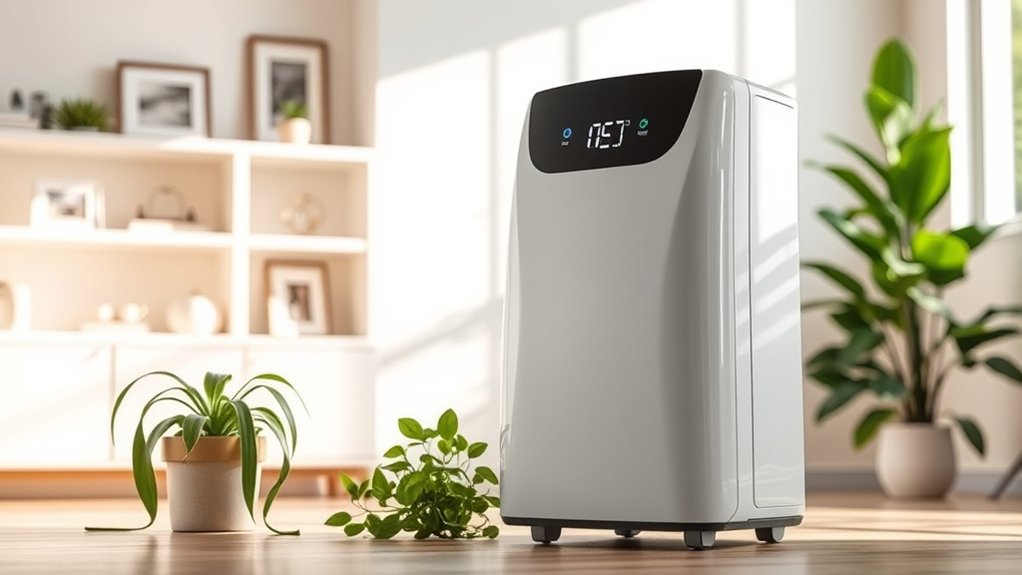
Choosing an energy-efficient dehumidifier requires more than comparing the largest pint or square-foot claim. The right model should match your room size, moisture level, drainage setup, noise tolerance, and preferred controls. It is also important to compare each product’s seller-advertised maximum with its lower standardized moisture-removal capacity. This guide focuses on three relevant compressor dehumidifiers with verifiable ENERGY STAR status: the high-capacity Vellgoo Max, the portable Waykar PD160B-PRO, and the compact Kesnos CTH30B.
Quick Verdict
- Best for large, persistently damp spaces: Vellgoo Max 140-Pint
- Best portable option for smaller rooms: Waykar PD160B-PRO
- Best compact ENERGY STAR-certified option: Kesnos CTH30B
Important capacity note: Seller maximums are usually measured in unusually hot and humid air. ENERGY STAR standardized capacities are measured under controlled test conditions and are more useful for comparing products. Square-foot coverage is also a seller estimate rather than a guarantee of performance in every room.
How These Picks Were Evaluated
Each retained product was checked for category relevance, exact model identification, ENERGY STAR status, moisture-removal capacity, drainage options, controls, portability, and honest use-case fit. Products with conflicting or unverifiable model and certification information were removed rather than retained with a warning.
Quick Comparison of Energy-Efficient Dehumidifiers
| Product | Best For | Seller Maximum | Standardized Capacity | Efficiency Status | Amazon |
|---|---|---|---|---|---|
| Vellgoo Max 140-Pint | Large, persistently damp basements and utility areas | Up to 140 pints/day at 95°F and 95% RH | 45 pints/day | ENERGY STAR certified and Most Efficient | Check Price |
| Waykar PD160B-PRO | Bedrooms, offices, laundry rooms, and smaller basements | Up to 30 pints/day | 10.16 pints/day | ENERGY STAR certified and Most Efficient | Check Price |
| Kesnos CTH30B | Bedrooms, living areas, and smaller moisture-control jobs | Up to 30 pints/day | 9.2 pints/day | ENERGY STAR certified; not Most Efficient | Check Price |
Vellgoo Max 140 Pint Dehumidifier for Basement
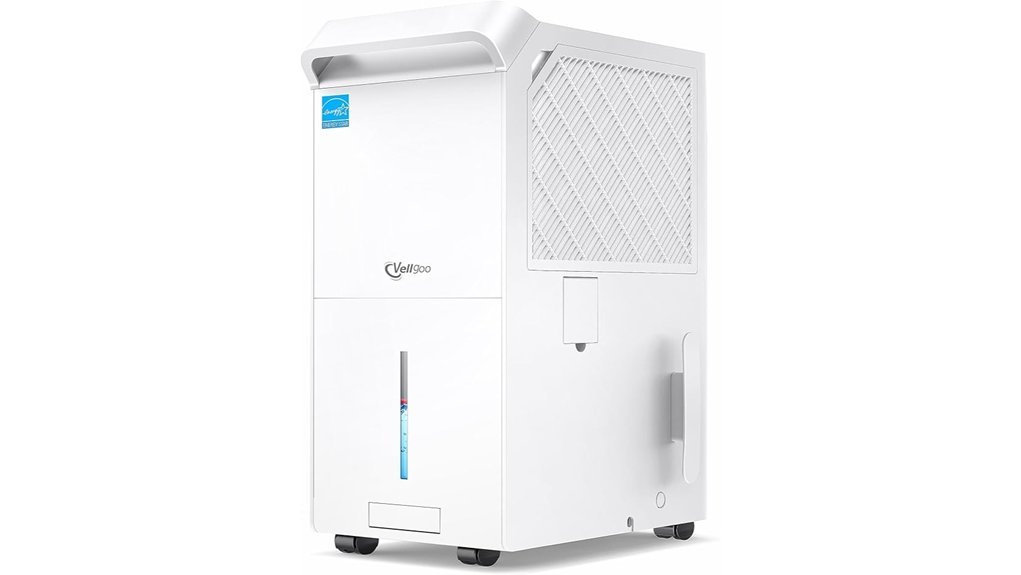
The Vellgoo Max is the strongest retained option for a large basement, garage, laundry area, or open residential space with persistent moisture. Its seller advertises removal of up to 140 pints per day at 95°F and 95% relative humidity and coverage up to 6,000 sq. ft. The exact TAURUS PRO-RCS50(Y)-N4-3-25 model has a lower 45-pint standardized capacity, which is the more useful figure when comparing it with other certified dehumidifiers.
Why You’ll Like It: The 1.65-gallon tank is larger than the tanks in the other retained models, and the included drain hose supports continuous gravity drainage. It also includes adjustable humidity control, automatic defrost, automatic restart, automatic shutoff, a timer, caster wheels, handles, and a washable filter.
Best For: Large or persistently damp basements, garages, storage spaces, and laundry areas where a compact unit would need to run almost continuously.
Who Should Avoid It: Buyers with a small bedroom, limited floor space, light seasonal humidity, or no suitable drainage location may find it unnecessarily large and power-hungry.
Pros:
- Highest seller-advertised maximum in the retained lineup.
- Verified 45-pint standardized capacity.
- ENERGY STAR certified with Most Efficient recognition.
- Large 1.65-gallon tank and continuous-drain support.
- Automatic defrost, restart, shutoff, and humidity control.
Cons:
- Its 140-pint figure applies only to extreme test conditions.
- Approximately 47 pounds, making stairway transport difficult.
- 600-watt listed power input is higher than the smaller models.
- No built-in condensate pump is identified, so gravity drainage requires a lower drain.
Buying Tip: Choose this model for sustained basement moisture rather than for its 6,000-sq.-ft. claim alone. Room layout, temperature, air leakage, and moisture sources can reduce real-world coverage.
Waykar PD160B-PRO Energy Star Dehumidifier
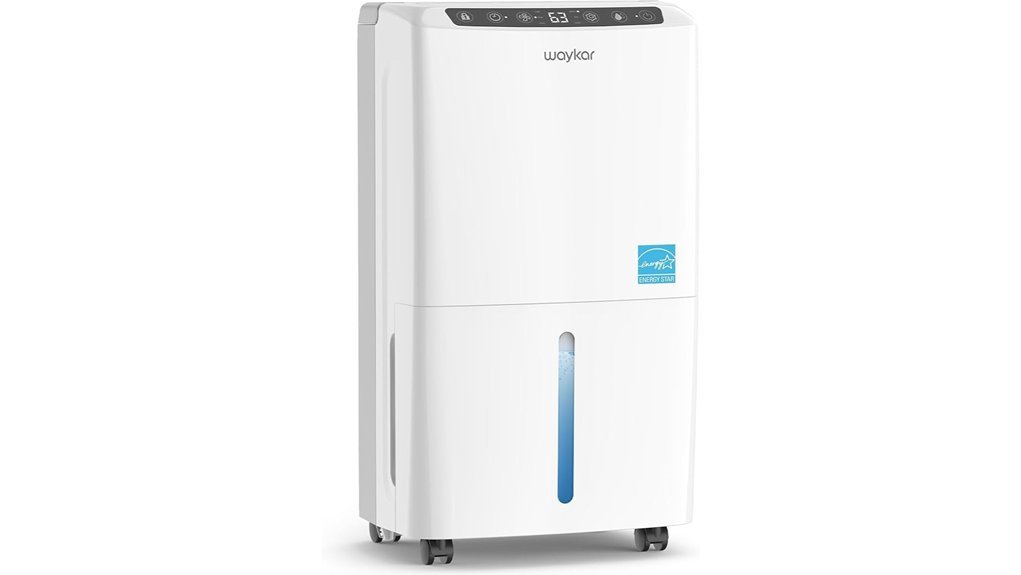
The Waykar PD160B-PRO is better suited to bedrooms, offices, living areas, laundry rooms, and smaller basements than the large Vellgoo model. The current seller information advertises up to 30 pints per day and coverage up to 1,500 sq. ft. Its verified ENERGY STAR standardized capacity is 10.16 pints per day.
Why You’ll Like It: At about 22 pounds with a narrow body and carrying handle, it is easier to move and position than a full-size basement unit. It provides adjustable humidity control from 30% to 80%, two fan speeds, automatic defrost, automatic shutoff, memory restart, a timer, a washable filter, and continuous drainage.
Best For: Bedrooms, offices, laundry rooms, smaller finished basements, and buyers who want a portable ENERGY STAR Most Efficient model.
Who Should Avoid It: The 0.62-gallon tank and modest standardized capacity make it unsuitable for a severely wet or very large basement unless the moisture load is low and continuous drainage is available.
Pros:
- ENERGY STAR certified with Most Efficient recognition.
- Compact body and approximately 22-pound weight.
- Adjustable humidity, two fan speeds, and multiple operating modes.
- Manual collection and continuous gravity-drain options.
- Automatic defrost and memory restart.
Cons:
- The seller’s 30-pint maximum is not the standardized capacity.
- Small tank may require frequent emptying in humid conditions.
- Not intended for major water intrusion or severe whole-basement moisture.
- No built-in drain pump is identified.
Buying Tip: This is the most practical retained choice when portability and placement matter more than maximum moisture-removal capacity.
Kesnos Energy Star Dehumidifier for Home & Basement
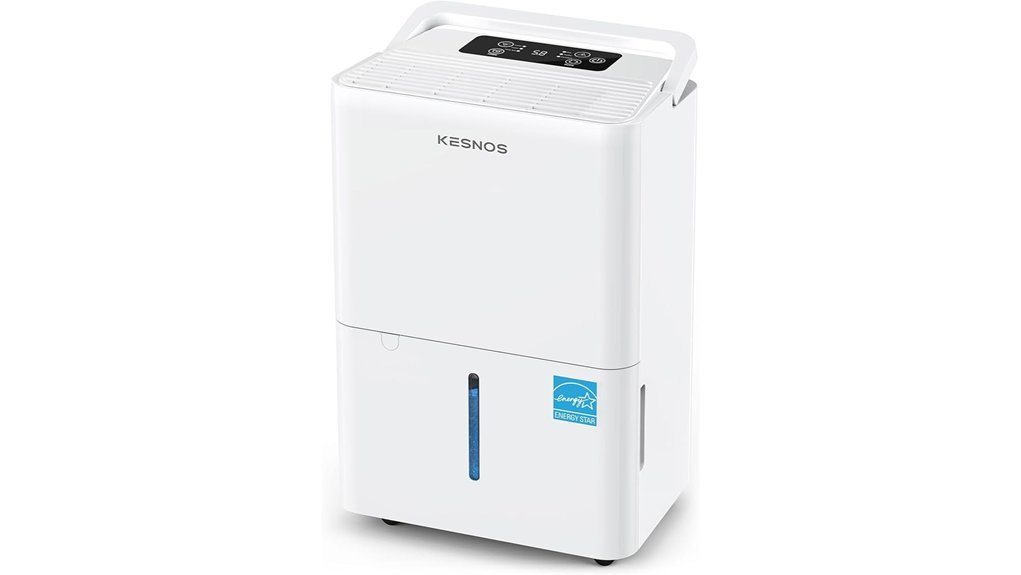
The Kesnos CTH30B is a compact ENERGY STAR-certified compressor dehumidifier for bedrooms, living areas, offices, laundry rooms, and smaller moisture-control jobs. Seller materials advertise up to 30 pints per day and coverage up to 2,500 sq. ft., while its ENERGY STAR standardized capacity is 9.2 pints per day.
Why You’ll Like It: Comfort, Dry, Continuous, and Turbo modes provide more flexibility than a basic single-mode appliance. The unit also includes a 30% to 80% adjustable humidistat, automatic shutoff, automatic defrost, memory restart, two fan speeds, caster wheels, a washable filter, and manual or continuous drainage.
Best For: Bedrooms, living spaces, home offices, laundry areas, and small basements where a compact certified unit is more practical than a large-capacity machine.
Who Should Avoid It: The 0.39-gallon tank and 9.2-pint standardized capacity make it a poor choice for a severely damp basement, active leak, or large open area.
Pros:
- Verified ENERGY STAR certification.
- Compact dimensions and several operating modes.
- Adjustable humidistat and two fan speeds.
- Manual collection and continuous-drain options.
- Automatic defrost, shutoff, and memory restart.
Cons:
- Not an ENERGY STAR Most Efficient model.
- Small 0.39-gallon tank may fill quickly.
- Advertised coverage is a seller estimate, not guaranteed performance.
- Lower standardized capacity than the other retained models.
Buying Tip: Select the Kesnos when compact placement and flexible modes matter more than high moisture-removal speed.
Factors to Consider When Choosing an Energy Efficient Dehumidifier for Home
Start with verified efficiency and standardized capacity, then match the unit to your actual moisture problem. A correctly sized dehumidifier can cycle off after reaching the target humidity, while an undersized model may run for long periods without adequately drying the space.
Verify the Exact ENERGY STAR Model
An ENERGY STAR-certified dehumidifier meets efficiency requirements based on standardized testing. Most Efficient is a higher recognition given to qualifying models. Match the model number on the appliance or listing with the exact model in the EPA Product Finder. Do not assume that every product sold under the same brand has the same certification.
Compare Standardized Pint Ratings
Seller maximums may be measured at temperatures and humidity levels that are much higher than normal indoor conditions. Standardized pint ratings provide a more consistent comparison. A product advertised as a 140-pint machine may have a standardized capacity closer to that of a conventional 45- or 50-pint dehumidifier.
Match Capacity to the Moisture Load
A mildly damp bedroom needs less capacity than a basement with condensation, wet laundry, frequent door openings, or a history of water intrusion. Choose additional capacity when the room stays well above the target humidity or connects to other damp areas. A dehumidifier should not be used as a substitute for repairing a leak or drainage problem.
Treat Square-Foot Coverage as an Estimate
Square-foot claims can help with an initial comparison, but they do not account for ceiling height, temperature, room divisions, air leaks, open doors, moisture sources, or airflow. A large divided basement may require better air circulation or more than one unit even when its total floor area falls within the seller’s estimate.
Consider Where the Unit Will Run
Compressor and fan noise is less disruptive in an unfinished basement than in a bedroom or office. Manufacturer decibel figures can be useful, but they may not reflect compressor cycling, high-fan operation, floor vibration, or room acoustics. Place the unit on a stable, level surface and avoid contact with loose furniture or walls that may amplify vibration.
Plan the Drainage Route
Manual tank collection is suitable for light or occasional use, but small tanks may fill quickly. Continuous gravity drainage is more convenient when the hose can slope downward to a floor drain without loops, kinks, or upward sections. When the drain is higher than the outlet, use a model with a built-in pump or an approved external condensate pump.
Use the Humidistat Instead of Running Nonstop
An adjustable humidistat allows the compressor to cycle as the room approaches its target. A setting around 45% to 55% relative humidity is a practical starting range for many homes. Selecting a much lower target can increase runtime, noise, and electricity use without solving an underlying leak or water-intrusion problem.
Check Dimensions, Weight, and Clearance
Measure the intended location and follow the manual’s airflow-clearance requirements. Handles and caster wheels help on a level floor, but a 40- to 50-pound appliance can still be difficult to move on stairs. A compact unit may be easier to place but usually has a smaller tank and lower moisture-removal capacity.
Look for Automatic Defrost in Cool Basements
Compressor dehumidifiers remove less moisture as room temperature falls. Frost can form on the evaporator coil in cool conditions, reducing airflow and performance. Automatic defrost helps manage this problem, but buyers should still confirm the model’s permitted operating-temperature range.
Estimate Operating Cost Honestly
Actual operating cost depends on wattage, runtime, humidity load, target setting, filter condition, room temperature, and local electricity rates. ENERGY STAR certification can indicate better efficiency than a comparable non-certified model, but it does not guarantee a specific annual dollar saving in every home.
Before You Buy Checklist
- Match the exact model number with the ENERGY STAR database.
- Compare standardized capacities instead of seller maximums alone.
- Measure the room and available floor space.
- Identify the main source of moisture before buying.
- Choose between tank drainage, gravity drainage, and pump drainage.
- Check tank size if you cannot use a hose.
- Confirm automatic defrost for a cool basement.
- Review dimensions, weight, airflow clearance, and operating-temperature limits.
- Confirm current warranty and seller-support terms.
Frequently Asked Questions
What Is the Difference Between Maximum and Standardized Pint Capacity?
A seller maximum is often measured in unusually hot and humid conditions that allow the machine to collect more water. Standardized capacity is measured under controlled conditions and gives buyers a more consistent basis for comparing different models.
How Often Should I Clean a Dehumidifier Filter?
Inspect the filter about every two to four weeks during regular use. Clean it more often around pets, construction dust, lint, or reduced airflow. Follow the product manual because some filters can be rinsed while others should only be vacuumed.
Can I Use a Dehumidifier in a Cold Basement?
Yes, but choose a model rated for the basement’s temperature and look for automatic defrost. Compressor dehumidifiers become less effective as the air gets colder, and frost may form on the coils.
Do Dehumidifiers Help Reduce Mold and Mildew Odors?
They can reduce excess moisture that supports mold and mildew growth, which may help control musty odors. A dehumidifier does not remove existing mold, repair water damage, or stop a leak. Correct the moisture source and clean affected materials safely.
Is It Safe to Run a Dehumidifier Overnight?
Dehumidifiers are generally designed for extended operation when installed and maintained according to the manual. Keep the air intake and outlet clear, use a grounded outlet, place the appliance on a level surface, and confirm that the tank or drain hose is installed correctly.
What Humidity Level Should I Set?
A setting around 45% to 55% relative humidity is a practical starting point for many homes. A lower setting may increase runtime and energy use. If condensation or damp materials continue, inspect the room for leaks, poor airflow, or inadequate dehumidifier capacity.
Is Continuous Drainage Better Than a Tank?
Continuous drainage is usually more convenient in a basement or other high-moisture area because the unit can operate without frequent tank emptying. A tank is more flexible when no drain is nearby or when the dehumidifier is moved between rooms.
Does a Gravity Drain Hose Pump Water Upward?
No. A gravity hose must run continuously downward from the dehumidifier outlet to a lower drain. If the water must travel upward or across an area without enough slope, use a compatible condensate pump or a dehumidifier with a built-in pump.
What Maintenance Extends a Dehumidifier’s Lifespan?
Clean the filter, wash and dry the tank, keep the intake and exhaust clear, inspect the drain hose, and remove dust from accessible grilles. Do not open or attempt to service the sealed refrigeration system. Follow the manufacturer’s storage and service instructions.
Final Recommendation
Choose the Vellgoo Max 140-Pint when you need the highest verified standardized capacity in this lineup for a large or persistently damp space.
Choose the Waykar PD160B-PRO when portability, compact placement, and Most Efficient recognition matter more than maximum capacity.
Choose the Kesnos CTH30B for smaller rooms where a compact ENERGY STAR-certified design and multiple operating modes are the priorities.
Conclusion
The best energy-efficient dehumidifier is the model that reaches your target humidity without running continuously or creating unnecessary drainage work. The Vellgoo Max 140-Pint is the strongest retained option for large and persistently damp areas, the Waykar PD160B-PRO offers a more portable Most Efficient option for smaller rooms, and the Kesnos CTH30B is the most compact certified choice. Before purchasing, compare standardized pint capacity, verify the exact ENERGY STAR model number, plan the drainage route, and treat seller coverage figures as estimates rather than guaranteed performance.