Choosing a dehumidifier for a warm basement, moderately cool garage, crawl space, or water-damage project requires more than comparing the largest pint number. Compressor dehumidifiers generally remove less moisture as temperatures fall, and an automatic-defrost feature does not automatically make a machine suitable for freezing conditions. Capacity figures can also be misleading when one product uses hot, saturated test conditions and another uses an AHAM rating. The models in this guide are best treated as residential, crawl-space, commercial, or restoration dehumidifiers for spaces that stay within each unit’s approved operating range, not as verified below-freezing machines.
The four models below cover residential humidity control, crawl-space operation, large-property moisture management, and professional restoration work. They are not interchangeable. Match the unit to your actual temperature range, moisture load, drainage setup, electrical supply, and required drying speed.
Temperature reality check: None of these products should be assumed to operate below freezing. Use each machine only within the temperature range stated in its current manual. For a consistently cold, unheated location, choose a desiccant or low-temperature model specifically approved for that environment.
- Advertised capacity and the conditions used to produce that rating
- Residential, crawl-space, commercial, or restoration use
- Automatic defrost and temperature-range transparency
- Tank, gravity-drain, and condensate-pump options
- Portability, noise expectations, controls, and electrical demands
- Honest limitations that could affect real-world suitability
Quick Comparison
| Product | Best For | Capacity Context | Cool-Temperature Guidance | Drainage | Amazon |
|---|---|---|---|---|---|
| AEOCKY 50 Pint Best Overall for Home |
Warm basements, bedrooms, bathrooms, living rooms, and general home humidity | Up to 50 PPD at 95°F and 95% RH; seller materials also list 38 PPD at 86°F and 80% RH | Marketed as effective at 59°F; not intended for freezing conditions | Removable tank or continuous gravity drainage | Check Availability |
| PLUSCENT 32 Pint Best for Lighter Home Use |
Bedrooms, offices, storage rooms, smaller basements, and moderate humidity | Up to 32 PPD at 95°F and 90% RH | Automatic defrost is included, but no verified below-freezing rating was found | 2-liter tank or included 39.4-inch gravity-drain hose | Check Availability |
| Airzentti 155 Pints Commercial Best for Crawl Spaces |
Crawl spaces, large basements, garages, workshops, and persistent property humidity | 155 PPD at saturation; approximately 70 PPD under AHAM conditions | Automatic defrost; verify the exact minimum temperature in the current manual | Built-in pump with up to 16.4-foot lift plus gravity drainage | Check Availability |
| MOUNTO 310 Pints LGR Best for Restoration |
Flood recovery, carpet drying, construction sites, and major commercial moisture loads | 310 PPD at saturation; 165 PPD under AHAM conditions | LGR design supports demanding drying work, but the current manual must be checked for temperature limits | Built-in condensate pump with a 15-foot lift head | Check Availability |
Availability note: Retailer offers can change. Use the Amazon buttons to confirm the current seller, included accessories, warranty terms, and whether the exact ASIN is available before ordering.
AEOCKY 50 Pint Dehumidifier for Home and Basement
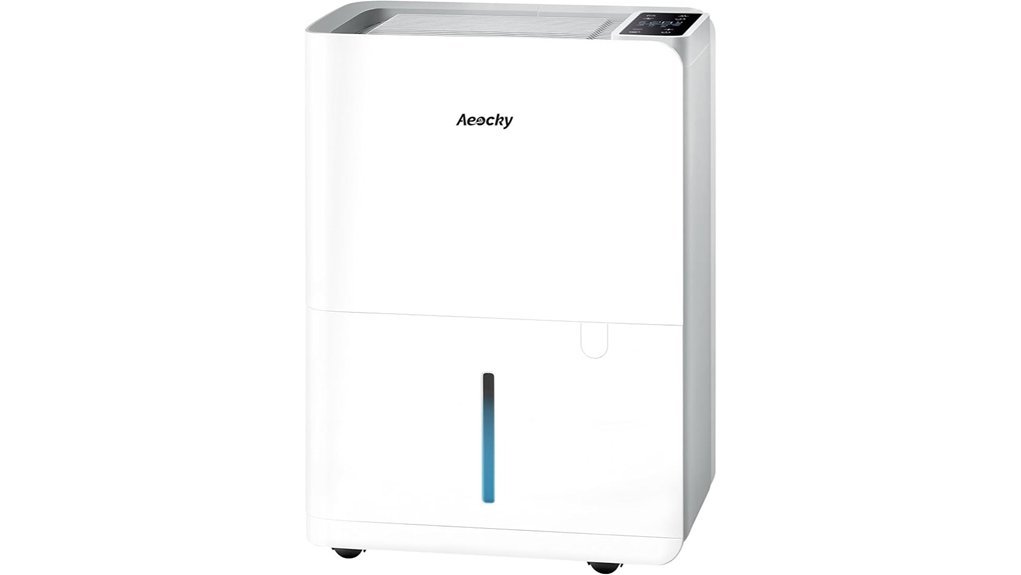
Best Overall for Home: The AEOCKY 50 Pint Dehumidifier is the most balanced option here for homeowners managing ordinary humidity in a basement, bedroom, bathroom, storage area, or living space. It is marketed for rooms up to 3,500 square feet, although actual coverage depends heavily on temperature, humidity, ceiling height, air leakage, and the moisture source.
Capacity in Context: The maximum 50-pint figure is based on very hot, humid conditions of 95°F and 95% relative humidity. Seller materials associated with this model also list approximately 38 pints per day at 86°F and 80% relative humidity. Output will be lower in a cooler or less humid room, so do not treat the 50-pint headline as a cool-basement rating.
Why You’ll Like It: The combination of an adjustable humidistat, removable 0.8-gallon tank, continuous-drain support, timer, child lock, fan controls, casters, and compact residential design makes it easier to live with than a large commercial machine. Seller materials advertise noise around 40 dB, but actual sound depends on fan speed, room acoustics, placement, and measurement distance.
Temperature Guidance: AEOCKY markets this model as effective at temperatures down to 59°F. That can be useful in a moderately cool basement, but 59°F is well above freezing. Confirm the approved operating range in the manual before placing it in an unheated garage, crawl space, or seasonal building.
Who Should Buy It: Homeowners who want adjustable humidity control, portable room-to-room use, and the option to connect a continuous gravity drain.
Who Should Avoid It: Restoration contractors, buyers drying a flooded structure, and anyone whose space regularly falls below the approved temperature range.
Pros:
- Balanced Residential Performance: Suitable for common household humidity without the bulk of professional restoration equipment.
- Two Useful Capacity References: Seller materials provide output figures for both very hot conditions and a more typical warm, damp environment.
- Flexible Drainage: Supports bucket collection and continuous gravity drainage.
- Home-Friendly Controls: Includes humidity adjustment, timer functions, fan control, and child lock.
Cons:
- Maximum Rating Needs Context: The 50-pint figure does not represent performance in a cool basement.
- Not a Freezing-Temperature Unit: Its low-temperature marketing claim stops at 59°F.
- Advertised Noise Is Not Guaranteed: Real-world sound can be higher than the headline specification.
- Gravity Drainage Has Limits: The hose must run downward to a suitable drain unless a separate pump is used.
PLUSCENT 32 Pint Dehumidifier for Large Rooms
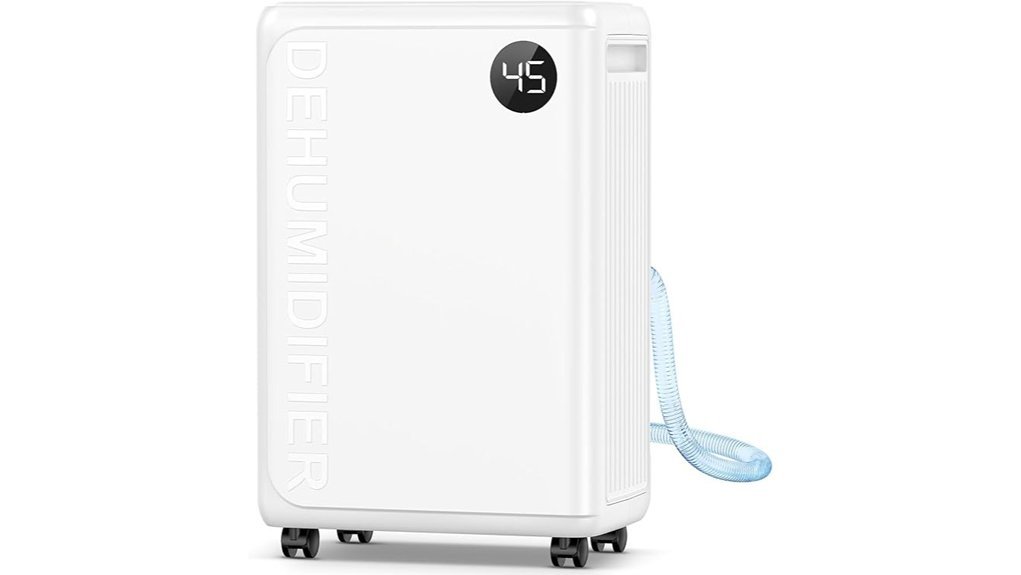
Best for Lighter Residential Moisture: The PLUSCENT 32 Pint Dehumidifier is a practical middle ground between a very small thermoelectric unit and a larger 50-pint residential model. It is marketed for spaces up to 2,500 square feet, but it is better judged by the room’s actual humidity, temperature, air leakage, and moisture load.
Capacity in Context: Its maximum 32-pint daily output is measured at 95°F and 90% relative humidity. It will remove less water in a cool basement, bedroom, or storage area.
Why You’ll Like It: Three operating modes, adjustable humidity from 30% to 80% RH, a 24-hour timer, automatic restart, automatic defrost, a washable filter, and a child lock provide useful everyday control. The 2-liter tank has automatic shutoff, while the included 39.4-inch hose supports unattended gravity drainage when a lower drain is nearby. The current listing advertises approximately 39–42 dB, but treat that as a seller specification rather than a guaranteed in-room sound level.
Temperature Guidance: Automatic defrost helps manage coil frost during approved operation, but it is not proof that the machine can run near or below freezing. Check the current manual for the exact minimum temperature.
Who Should Buy It: Buyers dealing with moderate humidity in a bedroom, home office, storage room, bathroom, smaller basement, or similar residential area.
Who Should Avoid It: Anyone handling serious water intrusion, a large open crawl space, rapid structural drying, or temperatures outside the manufacturer’s approved range.
Pros:
- Useful Everyday Controls: Includes three modes, humidity adjustment, timer settings, child lock, and automatic restart.
- Continuous Drain Option: The included hose reduces the need to empty the small bucket manually.
- Automatic Defrost: Helps manage ordinary frost buildup during cooler operation within the approved range.
- Smaller Residential Format: Easier to place in living areas than a crawl-space or restoration unit.
Cons:
- Small Water Tank: A 2-liter bucket can fill quickly when the room is very damp.
- Hot-Condition Capacity Rating: The 32-pint figure should not be expected in a cool room.
- No Verified Extreme-Cold Rating: Auto-defrost does not make it a below-freezing dehumidifier.
- Short Gravity-Drain Hose: The included hose may not reach a distant floor drain without a suitable extension approved by the manufacturer.
Airzentti 155 Pints Commercial Dehumidifier with Pump and Drain Hose
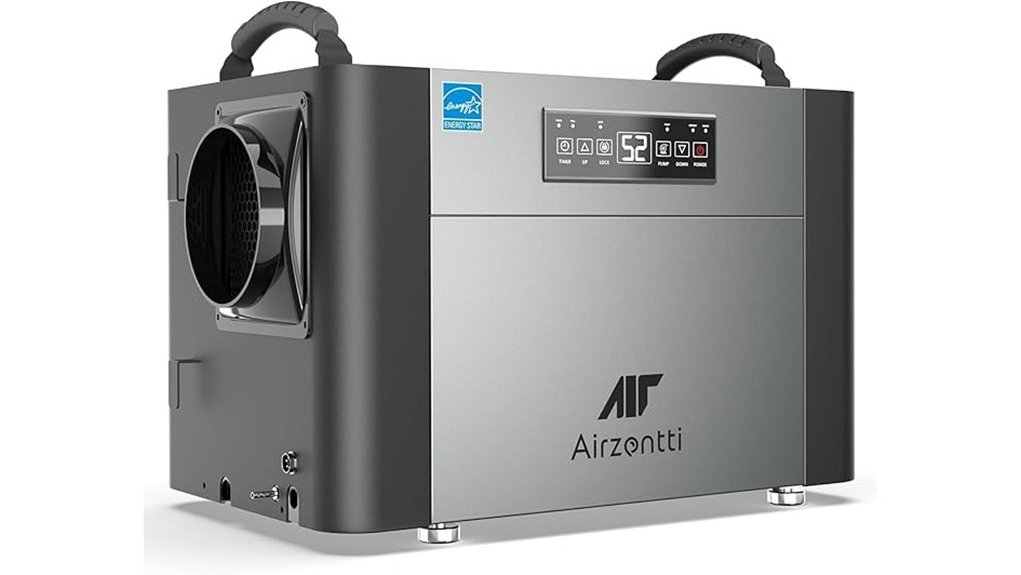
Best for Crawl Spaces and Large Properties: The Airzentti 155 Pints Commercial Dehumidifier is designed for crawl spaces, large basements, garages, workshops, warehouses, and other areas where a small bucket-style home unit would require too much attention.
Capacity in Context: Its headline rating is up to 155 pints per day under nearly saturated conditions. The more useful comparison figure is approximately 70 pints per day under AHAM conditions. These numbers describe the same machine under different temperature and humidity test environments.
Why You’ll Like It: Approximately 220 CFM of airflow, adjustable humidity settings, a timer, automatic defrost, gravity-drain support, and a built-in condensate pump make this unit suitable for longer-term moisture management. The current listing states that the pump can move condensate upward by as much as 16.4 feet and includes a 6.56-foot gravity-drain hose, giving buyers more routing flexibility than a bucket-only design.
Temperature Guidance: Automatic defrost can help the unit recover when frost begins forming within its approved range. It should not be treated as permission to operate the machine below the minimum temperature stated in the current manual.
Who Should Buy It: Property owners, crawl-space contractors, facility managers, and buyers who need pump drainage or more continuous moisture removal than a residential unit can provide.
Who Should Avoid It: Bedroom users, buyers with limited floor or storage space, and anyone who needs only mild seasonal humidity control.
Pros:
- Useful AHAM Rating: The 70-PPD AHAM figure makes comparison with other commercial models more meaningful.
- Built-In Pump: Can discharge condensate upward when a lower gravity drain is unavailable.
- Crawl-Space Format: The horizontal commercial design is better suited to low-clearance areas than many upright home models.
- Continuous Controls: Includes automatic drainage, humidity settings, defrost, and timer functions.
Cons:
- Heavy Commercial Equipment: At approximately 60 pounds, it is less convenient to move than a normal home dehumidifier.
- Capacity Labels Can Confuse: The 155-pint saturation number should not be compared directly with a residential rating measured under different conditions.
- Not Intended for Quiet Living Areas: Commercial airflow and compressor noise may be distracting in a bedroom or office.
- Temperature Range Requires Confirmation: The exact minimum and maximum operating limits should be checked before installation.
MOUNTO 310 Pints Commercial Dehumidifier with Pump
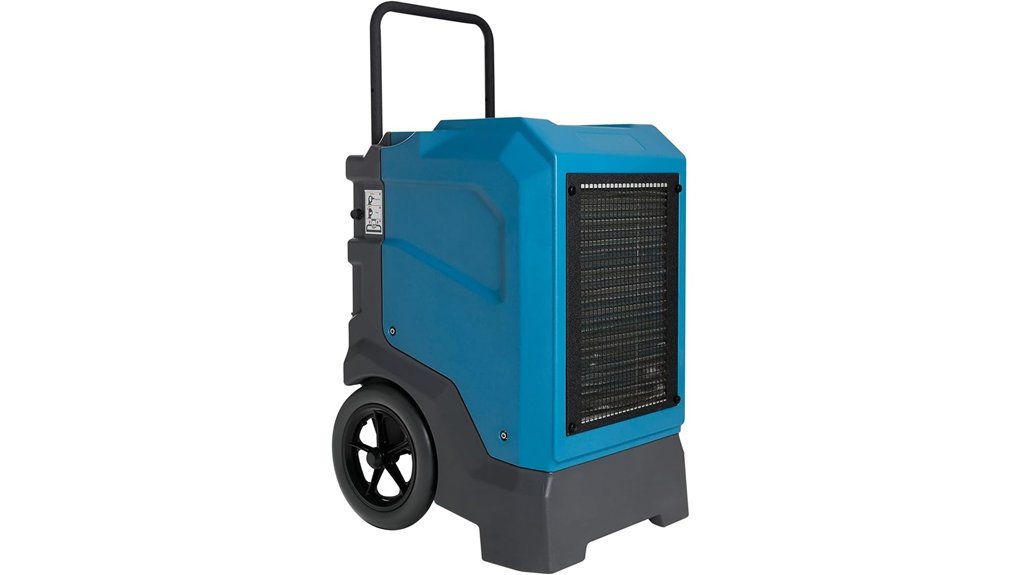
Best for Professional Restoration: The MOUNTO 310 Pints LGR Commercial Dehumidifier is intended for flood recovery, carpet drying, construction work, structural drying, and other high-moisture jobs. It is the highest-capacity and most specialized option in this comparison.
Capacity in Context: MOUNTO lists up to 310 pints per day at saturation and 165 pints per day under AHAM conditions. For comparison shopping, the 165-PPD AHAM figure is the more useful number because it reflects a standardized temperature and humidity environment.
Why You’ll Like It: A built-in condensate pump with a 15-foot lift head supports continuous drainage from basements and below-grade work areas. The current listing also specifies approximately 550 CFM of airflow, 120-volt operation, and large wheels for job-site mobility. Digital controls display inlet and outlet temperature and relative humidity, helping contractors monitor drying progress. Automatic restart and memory allow the unit to resume its previous settings following a power interruption.
Temperature Guidance: Low Grain Refrigerant technology is designed for demanding drying conditions and can continue extracting moisture at lower humidity levels than a typical home unit. It is still a refrigerant-based machine, so the current operating-temperature limits must be followed.
Who Should Buy It: Restoration contractors, carpet-cleaning businesses, property managers, construction crews, and organizations dealing with major water intrusion or large moisture loads.
Who Should Avoid It: Typical homeowners controlling mild seasonal humidity, buyers with limited storage space, and anyone without a suitable electrical circuit and safe drainage route.
Pros:
- High AHAM Capacity: The 165-PPD standardized rating is appropriate for demanding drying projects.
- Powerful Pump Drainage: A 15-foot lift head provides more installation flexibility than gravity drainage alone.
- Professional Monitoring: Inlet and outlet temperature and humidity readings help track job-site conditions.
- Automatic Restart: Memory functions support extended drying jobs after brief power interruptions.
- Wheeled Commercial Design: Built for movement around job sites despite its substantial size.
Cons:
- Excessive for Ordinary Rooms: Its capacity, airflow, size, and cost are difficult to justify for normal household humidity.
- Higher Electrical Demand: The listed 10.5-amp draw requires an appropriate grounded circuit and careful job-site planning.
- Large and Difficult on Stairs: The current listing puts the unit at approximately 125 pounds, so wheels help on level surfaces but transportation, stairs, and storage still require planning.
- Commercial Noise: Drying speed and airflow take priority over bedroom-friendly sound levels.
- Temperature Limits Must Be Verified: LGR technology is not the same as a below-freezing approval.
Which Dehumidifier Should You Choose?
Choose the AEOCKY 50 Pint if: You need a portable residential unit for a warm basement, living area, bathroom, or bedroom and your space remains within its approved operating range.
Choose the PLUSCENT 32 Pint if: Your moisture problem is moderate, you prefer a smaller residential machine, and a 2-liter tank or short gravity-drain hose fits your setup.
Choose the Airzentti 155 Pints if: You need a crawl-space format, approximately 70 PPD at AHAM conditions, and a pump that can move condensate upward.
Choose the MOUNTO 310 Pints LGR if: You are drying a water-damaged property, carpet, construction area, or commercial job site and need professional capacity and monitoring.
Factors to Consider for Hot, Cool, and Temperature-Variable Spaces
The right choice depends on the lowest and highest room temperature, relative humidity, moisture source, drainage setup, air leakage, electrical supply, and how quickly the area must dry. Work through the following checks before relying on a headline pint number or square-foot claim.
Compressor, LGR, and Desiccant Dehumidifiers
Standard residential and crawl-space compressor dehumidifiers cool an evaporator coil so moisture condenses from the air. They tend to work best in warm, humid conditions, and their water-removal rate generally falls as temperatures decline.
An LGR dehumidifier is also refrigerant-based, but it is designed to continue removing moisture efficiently as a drying project reaches lower humidity levels. This makes LGR equipment valuable for restoration work, but it does not automatically make the machine suitable for freezing temperatures.
A desiccant dehumidifier removes moisture using a moisture-absorbing material rather than relying on a cold evaporator coil in the same way. A properly rated desiccant model may be the better choice for consistently cold garages, workshops, storage buildings, or other spaces that approach freezing.
Temperature Operating Range
Do not assume that “automatic defrost” means a unit can run below freezing. Defrost temporarily pauses or changes compressor operation when the coil begins to ice, but every machine still has an approved minimum and maximum temperature.
Measure the coldest overnight temperature and the hottest daytime temperature in the intended location. Compare those readings with the current manual, not only the retailer’s headline description. Leave the required clearance around the intake and exhaust so the machine can release heat safely.
Moisture-Removal Capacity
Capacity labels are not directly comparable unless they use the same test conditions. Residential listings may advertise maximum output measured around 95°F with very high relative humidity. Commercial products often show a larger saturation figure and a lower AHAM figure.
Use AHAM capacity when available for a more standardized comparison. Remember that actual daily extraction changes with temperature, relative humidity, airflow, and how much moisture is entering the space.
Room Size and Moisture Source
Square-foot coverage is only a starting point. A closed bedroom with mild seasonal humidity is easier to manage than a leaky crawl space, flooded basement, laundry area, or garage that frequently exchanges air with the outdoors.
Repair active plumbing leaks, exterior water intrusion, drainage problems, and foundation seepage before expecting a dehumidifier to provide a permanent solution. Water-damage projects may also require air movers, controlled ventilation, moisture measurements, and professional remediation.
Drainage Options
A removable tank works for occasional operation, but it may fill quickly in a damp space. Continuous gravity drainage is more convenient when a floor drain is lower than the dehumidifier and the hose can maintain a steady downward slope.
A built-in condensate pump is useful when the discharge point is above the machine or located farther away. Check the supported lift height, hose length, routing restrictions, and pump-maintenance instructions before installation.
Energy Use and Electrical Setup
Compare efficiency using a current Energy Star record, energy factor, or pints removed per kilowatt-hour when verified data is available. Amperage alone does not show efficiency because a large restoration machine also removes much more water than a residential unit.
Check voltage, amperage, plug type, grounding requirements, extension-cord restrictions, and whether other high-draw equipment shares the circuit. Commercial equipment may need a dedicated or lightly loaded outlet.
Noise Level
Noise ratings depend on measurement distance, fan speed, flooring, wall reflections, and room acoustics. A home unit with multiple fan settings is normally more suitable near a bedroom or office. Commercial crawl-space and LGR machines prioritize airflow and drying speed rather than quiet operation.
Portability and Placement
Check machine weight, dimensions, handles, wheels, duct connections, stair access, and required operating clearance. Small casters may struggle on thick carpet or uneven flooring, while large restoration equipment can require ramps or two-person handling.
Keep the intake and exhaust unobstructed. After transporting a compressor dehumidifier on its side, allow it to stand upright for the period stated in the manual before switching it on.
Humidity Controls and Monitoring
An adjustable humidistat allows the machine to cycle instead of running continuously after the target humidity is reached. For ordinary living spaces, many buyers aim for a moderate indoor humidity level rather than the lowest possible setting.
Restoration work is different. Contractors may monitor inlet and outlet humidity, temperature, material moisture levels, and daily extraction to determine whether structural components are actually drying.
Safety and Maintenance
Useful protections include automatic tank shutoff, compressor-delay protection, automatic restart, child lock, error detection, and automatic defrost. These features improve convenience but do not replace the operating and electrical instructions in the manual.
Clean the filter on schedule, inspect the drain hose for kinks or buildup, test the pump when fitted, and keep the power connection dry. Stop using the machine if it leaks, overheats, smells burned, repeatedly trips a breaker, or develops unusual mechanical noise.
- Measure the coldest and hottest temperatures in the actual room.
- Confirm the minimum and maximum operating limits in the current manual.
- Compare AHAM capacity when it is available, not only the largest advertised pint figure.
- Identify whether the capacity rating was measured at AHAM or saturation conditions.
- Choose gravity drainage only when the hose can run continuously downhill.
- Choose a pump when condensate must move upward to a sink or discharge point.
- Check dimensions, weight, handles, wheels, noise, voltage, amperage, and airflow clearance.
- Confirm which drain hoses, adapters, filters, and accessories are included.
- Check current warranty, return, and service terms before ordering.
- Use a specifically rated desiccant or low-temperature unit for consistently cold spaces.
Frequently Asked Questions
How Do Dehumidifiers Perform in Very Low Temperatures?
Standard compressor dehumidifiers normally remove less water as the air gets colder, and frost can form on the evaporator coil. Automatic defrost may manage temporary frost within the approved operating range, but it does not make the machine suitable for freezing temperatures. Choose a desiccant or specially rated low-temperature model when the space regularly becomes very cold.
Can I Use a Dehumidifier in an Unheated Garage?
Yes, but only if the coldest garage temperature remains within the unit’s approved range. Measure overnight winter temperatures instead of relying on daytime readings. The AEOCKY model in this comparison is marketed as effective down to 59°F, which may still be too warm for many unheated garages.
Does Automatic Defrost Mean a Dehumidifier Works Below Freezing?
No. Automatic defrost detects or responds to frost on the coil during operation, but the dehumidifier still has a minimum approved ambient temperature. Running it outside that range can reduce performance, cause repeated icing, or damage the machine.
Do High Temperatures Affect Dehumidifier Performance?
Warm, humid air can increase moisture-removal output, which is why many maximum-capacity claims are measured under hot test conditions. Operating above the manufacturer’s maximum temperature can still cause overheating, poor performance, or protective shutdown. Maintain the required airflow clearance and follow the manual.
How Do I Compare Pint Ratings?
Look for the test conditions behind each number. A saturation rating measured in hotter and more humid air can be much higher than an AHAM rating. Compare the same standard whenever possible. When a commercial product lists both numbers, the AHAM figure is normally more useful for side-by-side shopping.
What Is the Difference Between an LGR and a Desiccant Dehumidifier?
An LGR machine is an advanced refrigerant dehumidifier designed for efficient structural drying and continued moisture removal at lower humidity levels. A desiccant model uses moisture-absorbing material and may be better suited to consistently cold environments. LGR does not automatically mean below-freezing operation.
Which Dehumidifier Is Best for a Crawl Space?
The Airzentti commercial model is the strongest crawl-space-focused option in this comparison because it combines a low-profile format, approximately 70 PPD at AHAM conditions, automatic defrost, and pump drainage. The correct choice still depends on crawl-space temperature, area, air leakage, drainage access, and the amount of moisture entering the structure.
When Do I Need a Built-In Pump?
A pump is useful when the nearest drain or sink is above the dehumidifier or when a gravity hose cannot maintain a continuous downward slope. Follow the stated lift-height and hose-length limits. A pump adds convenience but also requires periodic inspection and cleaning.
How Do I Know the Right Size Dehumidifier for My Space?
Start with the manufacturer’s coverage guidance, then adjust for temperature, humidity, ceiling height, outdoor-air exchange, water intrusion, and how tightly the space is sealed. Choose more capacity for a crawl space, active leak, flood-recovery project, or frequently opened garage. A smaller unit may be sufficient for a closed bedroom with mild humidity.
Can a Home Dehumidifier Handle Water Damage?
A residential unit may help with a minor damp area after the water source has been stopped, but it is not a substitute for professional structural drying after major flooding. Serious water damage can require high-capacity LGR equipment, air movers, moisture meters, removal of damaged materials, and professional remediation.
What Maintenance Is Required in Challenging Conditions?
Clean the air filter, inspect the coil for frost or dirt, check the drain hose for kinks, test the condensate pump when fitted, and keep the intake and exhaust clear. Dusty crawl spaces and restoration sites may require more frequent filter service. Dry the water system before long-term storage and follow the manufacturer’s maintenance schedule.
Conclusion
The best dehumidifier depends on the environment and the job rather than the largest advertised capacity. The AEOCKY 50 Pint Dehumidifier is the strongest all-around home choice here for warm basements and normal residential humidity. The PLUSCENT 32 Pint Dehumidifier is easier to place when the moisture load is moderate and a smaller machine is sufficient. Neither should be treated as a verified below-freezing solution.
For crawl spaces, workshops, and large properties, the Airzentti 155 Pints Commercial Dehumidifier provides approximately 70 PPD under AHAM conditions and adds flexible pump drainage. The MOUNTO 310 Pints LGR Dehumidifier is the clear professional option for flood recovery, carpet drying, construction work, and major restoration projects.