
Affiliate disclosure: This article contains Amazon affiliate links. If you buy through a qualifying link, we may earn a commission at no extra cost to you.
A purpose-built crawl space dehumidifier should fit low-clearance areas, support continuous drainage, and provide enough moisture-removal capacity for the size and condition of your space. The strongest options in this guide include compact 35-pint AHAM models for crawl spaces around 1,000 square feet, a Wi-Fi model for remote monitoring, and a 70-pint AHAM unit for larger or wetter areas. Compare AHAM capacity, maximum or saturated-condition capacity, airflow, drainage type, operating temperature, dimensions, noise, filter access, and warranty terms before choosing.
Quick Verdict
- Best Overall Smart Pick: ALORAIR Sentinel HD55S Wi-Fi for app-based monitoring and medium-size crawl spaces.
- Best Compact Pump Value: MOISWELL Defender ME-7S for a built-in pump and straightforward controls.
- Best for High-Lift Drainage: ARGENDON Shield 35P for pump drainage up to 19.6 feet.
- Best for Large Crawl Spaces: MOISWELL Defender M145 for higher airflow and commercial-grade moisture removal.
- Best Simple Gravity-Drain Pick: ALORAIR Sentinel HS35 for owners who do not need Wi-Fi or a pump.
How We Compared These Models
The shortlist focuses on low-profile crawl-space designs with continuous drainage. Rankings weigh comparable moisture-removal ratings, drainage practicality, airflow, cabinet size, remote-control options, operating limits, maintenance access, and honest use-case fit. Manufacturer coverage claims are treated as estimates, not guarantees.
Quick Comparison of Crawl Space Dehumidifiers
| Model | Best For | Rated Capacity | Coverage | Drainage | Amazon |
|---|---|---|---|---|---|
| ALORAIR Sentinel HD55S Wi-Fi | Remote monitoring | 120 PPD saturation; 55 PPD AHAM | Up to 1,300 sq. ft. | Gravity drain hose | Check Price on Amazon |
| MOISWELL Defender ME-7S | Compact pump drainage | 70 PPD saturation; 35 PPD AHAM | Up to 1,000 sq. ft. | Built-in pump | Check Price on Amazon |
| ARGENDON Shield 35P | High vertical drain lift | 70 PPD saturation; 35 PPD AHAM | Up to 1,000 sq. ft. | Pump and gravity | Check Price on Amazon |
| Waykar 70 Pint | Lightweight, higher-airflow gravity drainage | 70 PPD at 95°F/90% RH | Manufacturer-stated up to 5,000 sq. ft. | Gravity drain hose | Check Price on Amazon |
| MOISWELL Defender M145 | Large or very damp spaces | 155 PPD saturation; 70 PPD AHAM | Up to 6,000 sq. ft. | Gravity drain hose | Check Price on Amazon |
| Airecoler Stellar SP10 | Remote control panel | 70 PPD saturation; 34 PPD AHAM | Up to 1,000 sq. ft. | Built-in pump | Check Price on Amazon |
| ALORAIR Sentinel HS35 | Simple gravity drainage | 70 PPD saturation; 35 PPD AHAM | Up to 1,000 sq. ft. | Gravity drain hose | Check Price on Amazon |
| ALORAIR Helios MP35 | Compact pump installation | 70 PPD saturation; 35 PPD AHAM | Up to 1,000 sq. ft. | Pump and gravity | Check Price on Amazon |
Important: Pint ratings are not always measured under the same temperature and humidity conditions. Compare AHAM figures with AHAM figures, and treat ratings measured at 95°F and 90% relative humidity as maximum-condition output rather than everyday performance. The Waykar listing does not publish a directly comparable AHAM figure, so its stated coverage should be interpreted cautiously.
Listing note: Product variants, included accessories, certifications, and warranty terms can change. Verify the selected Amazon variant and current manufacturer manual before purchase.
ALORAIR Sentinel HD55S Wi-Fi Crawl Space Dehumidifier
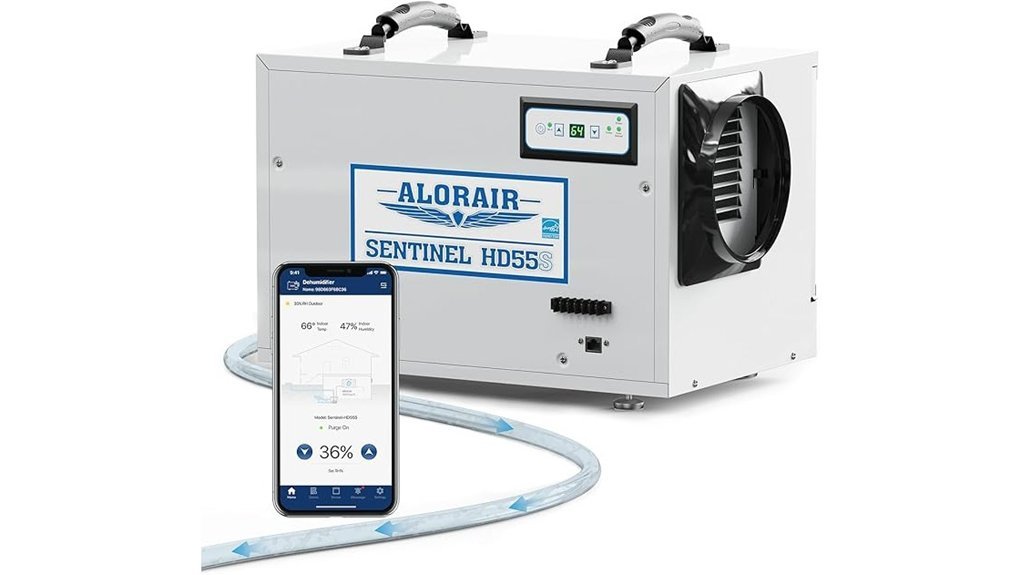
The ALORAIR Sentinel HD55S Wi-Fi is a strong choice when the dehumidifier will sit in a hard-to-reach crawl space and you want to check humidity without crawling under the house. It is rated for up to 1,300 square feet and removes up to 120 pints per day in saturated conditions or 55 pints under AHAM conditions. App control, automatic defrost, a compact horizontal cabinet, and corrosion-protection features make it better suited to crawl-space use than a tall portable room unit.
Best For: Homeowners or property managers who want remote humidity monitoring for a medium-size crawl space or basement.
Why You’ll Like It: The app can reduce routine trips into the crawl space, while the higher AHAM capacity gives it more headroom than most 35-pint AHAM models in this roundup.
Before You Buy: The linked HD55S Wi-Fi model uses continuous gravity drainage and does not include a built-in condensate pump. Confirm that the hose can maintain a downward slope, and check app and Wi-Fi compatibility before ordering.
Pros:
- Remote app monitoring and control for a difficult-to-access installation.
- Rated for 120 PPD at saturation and 55 PPD under AHAM conditions.
- Automatic defrost and a low-profile cabinet support crawl-space use.
Cons:
- At about 41.7 pounds, positioning the unit may be easier with two people.
- Wi-Fi setup adds complexity compared with a basic knob-controlled unit.
- Gravity drainage limits placement when the discharge point is higher than the unit.
MOISWELL 70-Pint Commercial Dehumidifier with Pump
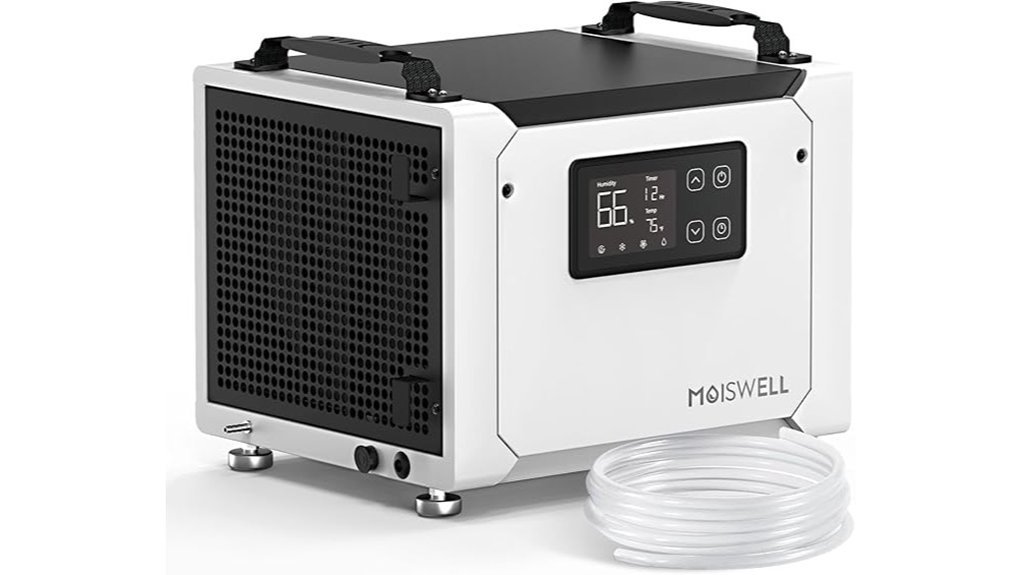
The MOISWELL Defender ME-7S solves a common crawl-space problem: the nearest drain may be above or far from the unit. Its built-in condensate pump can lift water up to 16.4 feet, allowing more flexible drain-line routing. The unit is rated for up to 1,000 square feet, 70 pints per day at saturation, 35 pints under AHAM conditions, and about 120 CFM of airflow.
Best For: Homeowners or contractors who need a compact crawl-space dehumidifier with automatic pump drainage.
Why You’ll Like It: It combines a metal cabinet, pump drainage, automatic defrost, auto restart, adjustable humidity control, and a manageable 40-pound weight.
Who Should Avoid It: Buyers with a much larger or severely wet crawl space may need a higher-AHAM-capacity model.
Pros:
- Built-in pump supports a vertical drain lift up to 16.4 feet.
- Compact horizontal design is easier to place in low-clearance spaces.
- Automatic defrost, restart, and humidity control reduce routine attention.
Cons:
- Its 35-pint AHAM rating is intended for smaller or moderately damp spaces.
- The pump, hose route, and outlet still require careful installation.
- A commercial-style metal unit can cost more than a basic portable model.
ARGENDON Shield 35P Crawlspace Dehumidifier with Pump
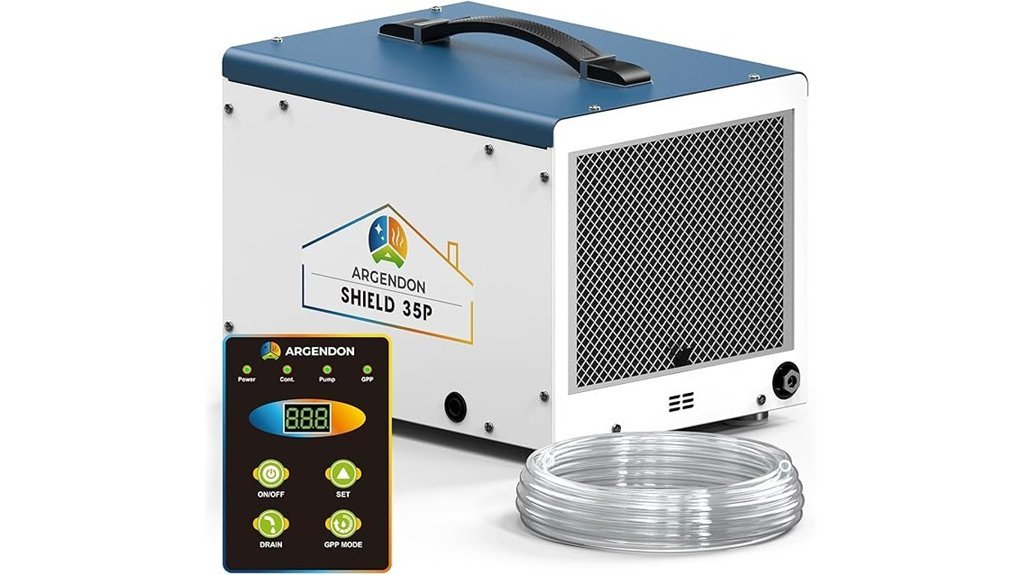
The ARGENDON Shield 35P crawl-space dehumidifier is designed for areas up to 1,000 square feet and offers both gravity drainage and a built-in pump. The pump can move condensate vertically up to 19.6 feet, which is useful when a floor drain is unavailable. Its rated output is up to 70 pints per day at saturation and 35 pints under AHAM conditions, with approximately 115 CFM airflow.
Best For: Installations that need a compact unit and a higher vertical pump lift.
Why You’ll Like It: Dual drainage gives you a fallback option if the preferred drain route changes, while automatic operation, defrost, and restart reduce manual work.
Before You Buy: Plan the full drain route, secure the hose, and confirm that the pump outlet can reach the intended discharge point without kinks.
Pros:
- Pump drainage up to 19.6 feet adds installation flexibility.
- Gravity drainage remains available when a nearby downward-sloping drain is present.
- Compact design and 115 CFM airflow suit many residential crawl spaces.
Cons:
- Coverage is limited to about 1,000 square feet.
- A basic MERV-1 filter mainly protects the machine rather than providing fine air filtration.
- The pump system creates more service points than a gravity-only setup.
Waykar 70 Pint Energy Star Crawlspace Dehumidifier with Hose
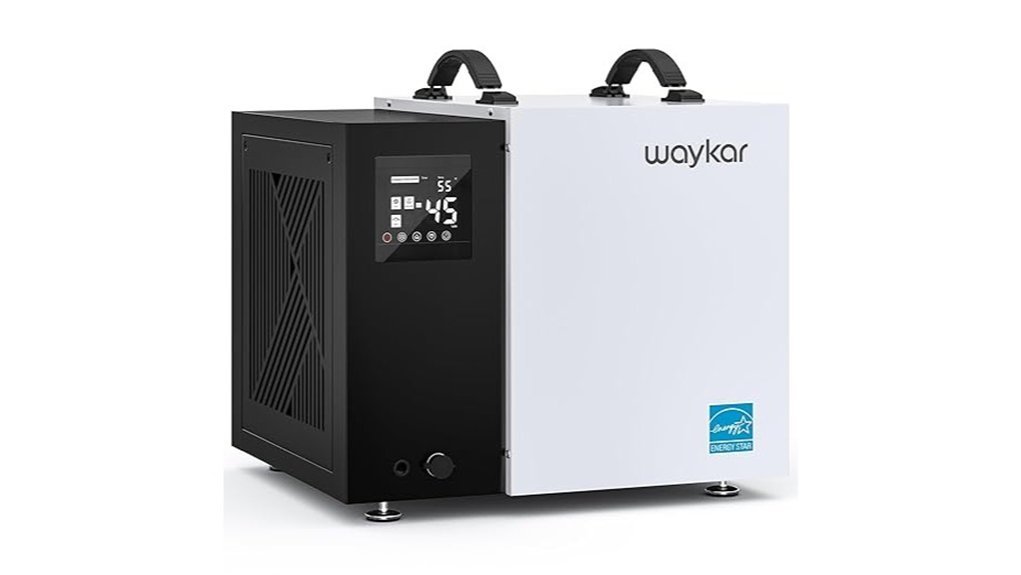
The linked Waykar 70 Pint crawlspace dehumidifier is marketed for spaces up to 5,000 square feet and is rated to remove 70 pints per day at 95°F and 90% relative humidity. It weighs about 31.9 pounds, moves approximately 158 CFM, and uses a continuous gravity drain hose. Because the listing does not publish a directly comparable AHAM capacity, use the coverage claim as a starting point rather than assuming it outperforms a 35-pint AHAM model.
Best For: Buyers who want a relatively lightweight, higher-airflow gravity-drain unit and have a reliable downward-sloping discharge route.
Why You’ll Like It: The unit supports continuous drainage, has a wide adjustable humidity range, and can work with an optional wired controller for hard-to-reach installations.
Before You Buy: The linked ASIN is the non-pump 70-pint variant. A pump-equipped version is a separate selection, so confirm the selected variant, included hose, and optional controller compatibility before ordering.
Pros:
- Higher airflow than many compact 1,000-square-foot crawl-space units.
- Continuous hose drainage reduces manual maintenance.
- Optional remote control can make a hidden installation easier to manage.
Cons:
- The 70-pint figure is measured under hot, highly humid conditions, not AHAM conditions.
- The linked ASIN is gravity-drain only; the pump version is a separate variant.
- Coverage claims should be adjusted for crawl-space layout, air leakage, and moisture load.
MOISWELL Defender M145 155 Pint Commercial Dehumidifier
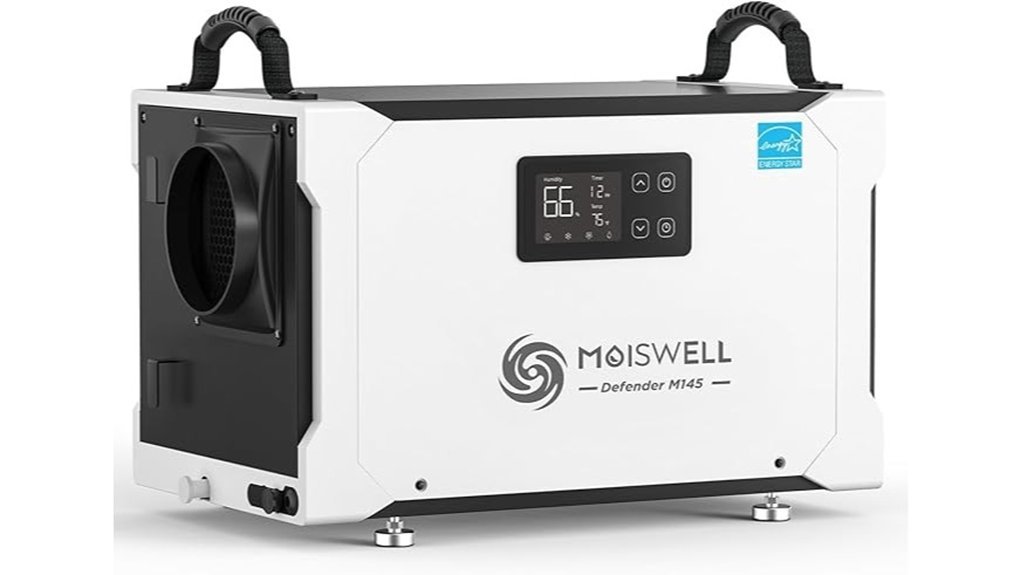
The MOISWELL Defender M145 is the higher-capacity option in this roundup. It is rated for up to 155 pints per day at saturation, 70 pints under AHAM conditions, 265 CFM airflow, and areas up to 6,000 square feet. Its horizontal cabinet can be installed on the floor or suspended overhead, helping it fit low-clearance crawl spaces and other confined areas.
Best For: Large, very damp, or light-commercial crawl spaces that need more airflow and daily moisture removal than a 35-pint AHAM model can provide.
Why You’ll Like It: The higher AHAM rating provides more moisture-removal headroom in demanding conditions, while auto defrost, auto restart, a timer, and continuous gravity drainage support unattended operation.
Who Should Avoid It: Owners of small crawl spaces may find its roughly 65-pound weight, larger cabinet, power use, and capacity unnecessary.
Pros:
- 70-pint AHAM capacity and 265 CFM airflow for demanding moisture loads.
- Horizontal cabinet supports floor or overhead installation.
- Includes a drain hose for continuous gravity drainage.
Cons:
- No built-in pump, so the drain line must slope downward or use a separate approved condensate solution.
- Heavier and bulkier than the compact 70-pint saturation models.
- Its published operating range starts above freezing, so it is not intended for a freezing crawl space.
Airecoler Stellar SP10 Commercial Dehumidifier with Pump
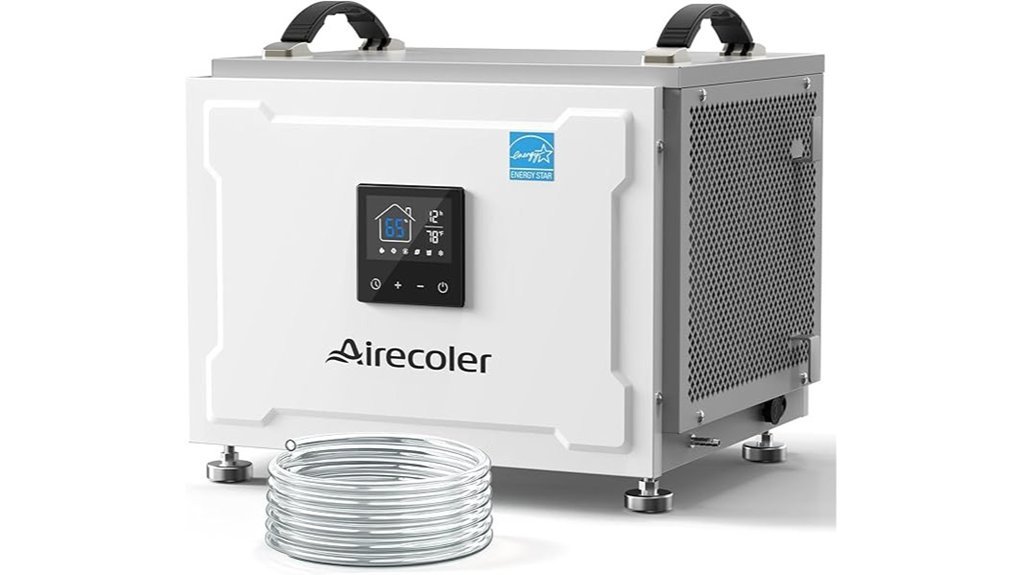
The Airecoler Stellar SP10 is rated for up to 1,000 square feet, 70 pints per day at saturation, and 34 pints under AHAM conditions. Its built-in pump can lift condensate up to 16.4 feet, while the detachable control panel lets you adjust settings without reaching the unit itself when installed with the appropriate control cable.
Best For: Homeowners who want automatic pump drainage and easier control of a dehumidifier installed in a low or awkward location.
Why You’ll Like It: Standard, continuous, and timer modes provide practical control, and the compact metal cabinet is designed for crawl spaces and basements.
Before You Buy: The control panel is detachable, but placing it away from the cabinet requires a compatible signal cable that may be sold separately. Confirm package contents and current warranty terms before ordering.
Pros:
- Built-in pump with up to 16.4 feet of vertical lift.
- Detachable control panel can simplify a hidden installation.
- Compact cabinet and automatic defrost suit low-clearance areas.
Cons:
- Its 34-pint AHAM rating is slightly lower than several competing compact models.
- Remote placement of the detachable panel may require a separately sold signal cable.
- Coverage remains limited to about 1,000 square feet.
ALORAIR Sentinel HS35 70 PPD Crawl Space Dehumidifier
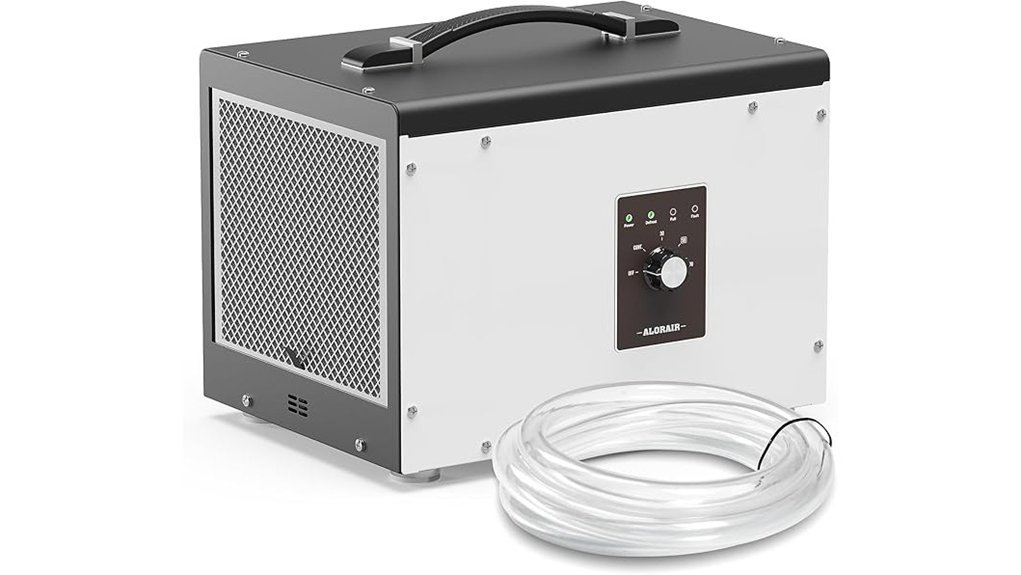
The ALORAIR Sentinel HS35 is a practical choice when you have a nearby floor drain and do not need Wi-Fi or a built-in pump. It removes up to 70 pints per day at saturation and 35 pints under AHAM conditions, moves about 115 CFM, and is rated for spaces up to 1,000 square feet. The low-profile body, 6.5-foot gravity drain hose, automatic defrost, memory restart, and manual humidity control keep operation simple.
Best For: Homeowners who want straightforward moisture control with fewer electronics and a reliable downward-sloping drain route.
Why You’ll Like It: Its 37.8-pound weight, ergonomic handle, washable MERV-1 filter, and simple control knob make setup and maintenance less complicated.
Who Should Avoid It: Choose a pump model instead if the drain point is higher than the unit or the hose cannot maintain a continuous downward slope.
Pros:
- Simple controls reduce setup complexity.
- Published operation below 50 dB may help when the crawl space is near living areas.
- Automatic defrost and memory restart support unattended operation.
Cons:
- Gravity drainage limits placement compared with a pump model.
- Manual knob control is less precise than a digital display or app.
- The MERV-1 filter is intended mainly to protect internal components.
ALORAIR Helios MP35 70 Pint Crawl Space Dehumidifier with Pump
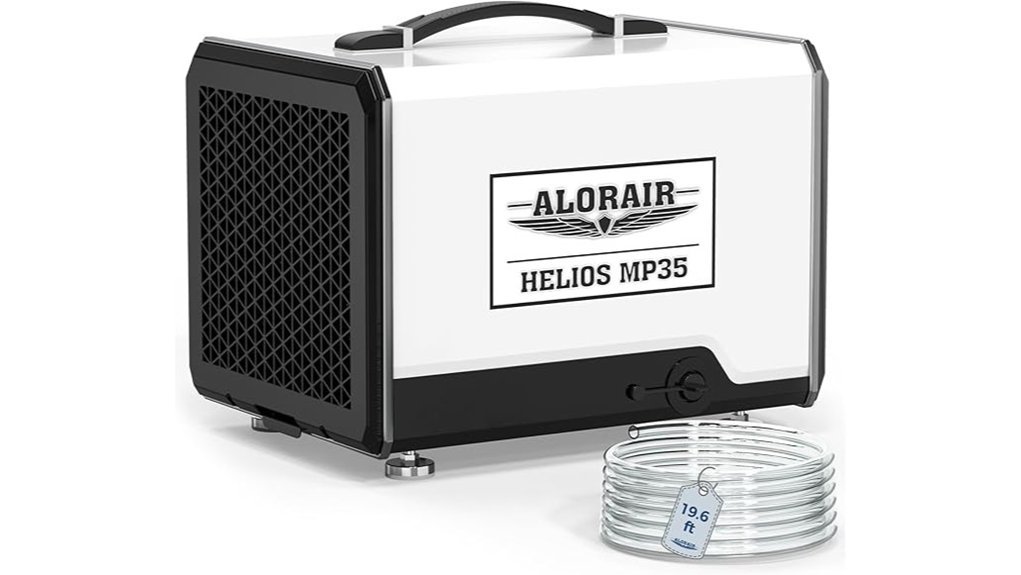
The ALORAIR Helios MP35 is designed for crawl spaces up to 1,000 square feet and combines a compact 16.1 x 11.8 x 13.1-inch cabinet with pump and gravity drainage. It is rated for up to 70 pints per day at saturation and 35 pints under AHAM conditions. The built-in pump can lift water up to 19.6 feet, helping when the discharge point sits above the crawl-space floor.
Best For: Buyers who want an ALORAIR pump model in a compact cabinet with flexible drainage.
Why You’ll Like It: Automatic defrost, power-loss memory, pump mode, GPP mode, and a corrosion-resistant casing support low-maintenance use in damp environments.
Before You Buy: The pump and gravity hoses require different routing. Follow the manual closely and test the drain system before leaving the unit unattended.
Pros:
- Dual drainage with up to 19.6 feet of pump lift.
- Compact dimensions help it fit tight crawl-space installations.
- Automatic operating features reduce routine adjustments.
Cons:
- Its 35-pint AHAM capacity may be too small for a very wet or oversized space.
- Pump maintenance adds another task compared with gravity-only drainage.
- The metal cabinet can still be awkward to position in a confined area.
Factors to Consider When Choosing a Crawl Space Dehumidifier
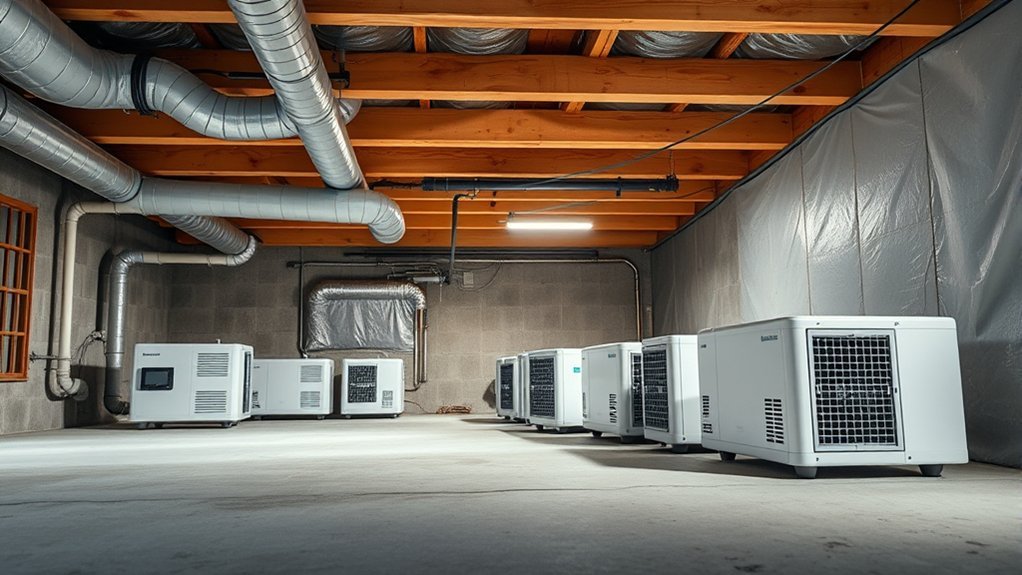
A crawl-space dehumidifier should be selected for the actual moisture load and installation conditions, not square footage alone. Measure the space, inspect standing water and air leaks, confirm the drain route, and check the unit’s dimensions before ordering.
AHAM Capacity Versus Saturation Capacity
Manufacturers may publish a higher capacity measured in very warm, extremely humid air and a lower figure measured under standardized conditions. For everyday comparison, the AHAM figure published by these manufacturers is usually more useful. A unit rated at 70 PPD under maximum or saturated conditions may be listed at only about 34 to 35 PPD under AHAM conditions, while a larger commercial model may deliver 70 PPD under AHAM conditions. Do not compare two models unless the ratings use the same test conditions.
Coverage Area
Use the stated coverage as a starting point rather than a guarantee. An encapsulated 1,000-square-foot crawl space with controlled air leakage may need less capacity than a smaller space with wet soil, open vents, plumbing leaks, or poor drainage. When the space is unusually damp, choose more AHAM capacity and address the moisture source instead of relying on the dehumidifier alone.
Drainage Options
A gravity drain is simple and dependable when the hose can slope continuously downward to an approved drain. A built-in pump is better when water must travel upward or across a longer route. Check the maximum vertical lift, included hose length, outlet size, and cleaning instructions. Never route condensate where it can damage the foundation, create standing water, or freeze at the discharge point.
Dimensions and Clearance
Measure the crawl-space access opening, the final installation platform, and the service clearance needed to remove the filter or side panel. A unit that fits through the hatch may still be difficult to rotate, level, or maintain. Leave the manufacturer-required clearance around the intake and exhaust so airflow is not restricted.
Operating Temperature and Defrost
Automatic defrost helps a refrigerant dehumidifier work in cooler conditions, but it does not make every model safe for freezing temperatures. Check the published operating range for the exact model. If the crawl space regularly falls below the minimum rating, improve insulation, close uncontrolled vents where appropriate, or choose equipment specifically designed for that environment.
Energy Efficiency
Compare AHAM capacity, wattage, and integrated energy factor when available. An ENERGY STAR certification can help identify a more efficient model, but actual operating cost also depends on air leakage, humidity setting, temperature, drainage, and how many hours the compressor runs. Correct sizing and moisture-source control usually matter more than marketing claims about maximum savings.
Controls and Remote Monitoring
Wi-Fi or a wired remote controller is valuable when the unit is difficult to reach. Before buying, confirm that the app supports your phone, the crawl space receives a stable signal, and any remote cable is included or readily available. A simple manual humidistat may be more reliable for owners who prefer fewer electronics.
Noise Levels
Noise matters when the crawl space is below a bedroom, office, or quiet living area. Compare published dBA ratings, but also reduce vibration by placing the unit on a firm, level surface or an approved hanging system. Keep drain hoses and duct collars from touching framing, which can transmit vibration into the home.
Build Durability
A corrosion-resistant metal or coated cabinet is better suited to damp crawl-space conditions than a typical portable-room shell. Check filter availability, coil access, pump service instructions, refrigerant type, and whether replacement parts can be purchased. Safety listings such as ETL address electrical compliance, but they do not guarantee long-term reliability.
Warranty Coverage
Read the current warranty rather than relying only on the headline duration. Some plans provide full parts-and-labor coverage for a shorter period and limited compressor or coil coverage afterward. Check who pays shipping, whether registration is required, what maintenance records must be kept, and whether the warranty applies when the unit is suspended or used commercially.
Installation and Safety Note
Use a grounded outlet that meets the manufacturer’s electrical requirements. Keep the unit level, maintain intake and exhaust clearances, secure the drain hose, and test the full drainage route before unattended operation. A dehumidifier should maintain humidity after bulk water, plumbing leaks, grading problems, and ground-vapor entry have been addressed.
Before You Buy Checklist
- Measure the crawl-space floor area, height, access opening, and service clearance.
- Confirm whether you need gravity drainage or a pump.
- Compare AHAM capacity rather than only the larger saturation rating.
- Check the minimum operating temperature for the exact model.
- Plan a grounded electrical outlet and a safe condensate discharge point.
- Verify filter, remote-controller, duct-kit, and hanging-kit availability.
- Fix plumbing leaks, grading problems, and standing water before relying on a dehumidifier.
Frequently Asked Questions
What Humidity Should a Crawl Space Be Kept At?
Many sealed crawl spaces are managed near 50% relative humidity, with roughly 45% to 55% used as a practical starting range. Keep humidity below 60%, avoid setting the humidistat unnecessarily low, and adjust for climate, wood moisture, condensation, and guidance from a qualified crawl-space professional.
How Often Should Crawl Space Dehumidifier Filters Be Cleaned?
Inspect the filter monthly at first. Clean or replace it according to the manufacturer’s instructions whenever dust buildup restricts airflow. Crawl spaces with exposed soil, renovation dust, or frequent access may require more frequent maintenance than sealed spaces.
Can a Dehumidifier Run Safely in Freezing Crawl Space Temperatures?
Do not assume that automatic defrost makes a model suitable for freezing air. Operate the unit only within the temperature range stated in its manual. If the space drops below that minimum, address insulation and air leakage or use equipment specifically rated for colder conditions.
Is a Pump or Gravity Drain Better for a Crawl Space Dehumidifier?
Choose gravity drainage when the hose can run continuously downhill to an approved discharge point. It is simpler and has fewer moving parts. Choose a built-in pump when condensate must travel upward or when a downward-sloping route is not practical. The pump’s rated lift and hose-routing limits must match the installation.
What Size Drainage Hose Works Best for Crawl Space Units?
Use the hose size and connector specified by the manufacturer. An oversized or improvised hose can leak, interfere with a pump, or fail to seal correctly. For gravity drainage, keep the hose continuously sloped, supported, kink-free, and protected from freezing.
How Do I Reduce Dehumidifier Noise in a Crawl Space?
Set the unit on a stable, level platform or use an approved hanging kit. Tighten loose panels, isolate hoses and ducts from framing, clean the filter, and maintain the required airflow clearance. Do not wrap the unit in insulation or block its intake and exhaust.
Should Crawl Space Dehumidifiers Run Continuously Year-Round?
The fan or compressor does not need to run nonstop if the humidistat can maintain the target level. In humid climates, the unit may cycle throughout much of the year; in colder or drier seasons, it may run less or need to be shut down if temperatures fall below its operating range. Monitor humidity instead of following a one-size-fits-all schedule.
Can a Dehumidifier Fix Standing Water or a Plumbing Leak?
No. A dehumidifier manages moisture in the air, but it does not repair a leak, correct poor grading, replace a sump system, or remove standing water. Fix the source first, dry the area safely, and then use the dehumidifier to maintain humidity.
Final Recommendation
For most crawl spaces around 1,000 square feet, start by deciding between gravity drainage and a built-in pump. The ALORAIR Sentinel HS35 is the simplest gravity-drain option, while the MOISWELL Defender ME-7S, ARGENDON Shield 35P, Airecoler Stellar SP10, and ALORAIR Helios MP35 provide pump drainage for more difficult installations. Choose the ALORAIR Sentinel HD55S Wi-Fi when remote monitoring matters, and consider the MOISWELL Defender M145 when the space is much larger, wetter, or needs substantially more AHAM capacity.
Measure carefully, compare ratings under the same test conditions, verify the exact linked variant and warranty, and correct water-entry problems before expecting any dehumidifier to protect the crawl space by itself.


[…] Best Crawl Space Dehumidifier Picks for 2026 Compared […]