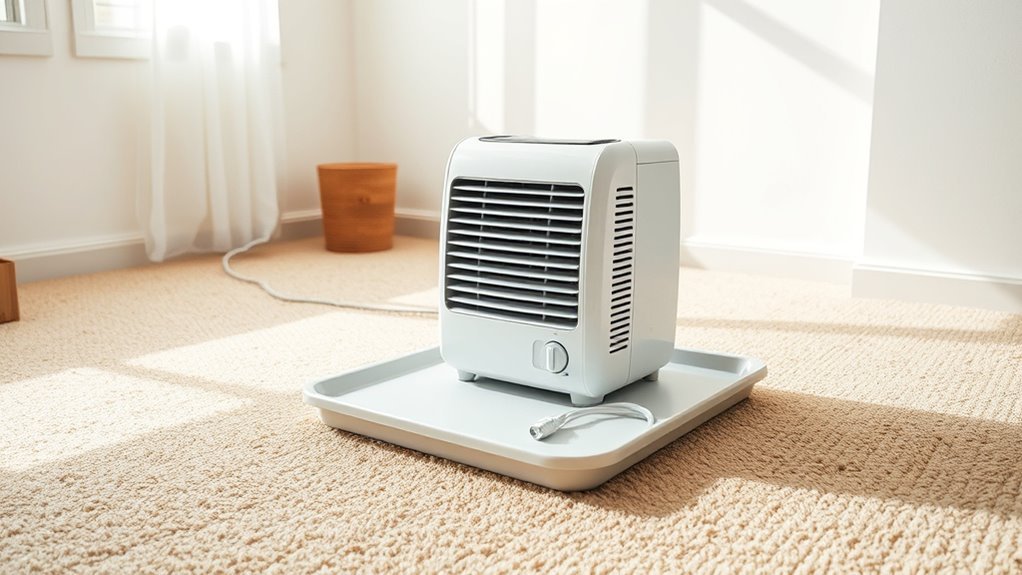
Can you use dehumidifier water for plants? Appliance manufacturers generally say no, warning that collected tank water is not clean and should go down the drain. Still, many indoor gardeners reuse fresh condensate on hardy, non-edible houseplants because it lacks the dissolved calcium, magnesium, fluoride, and chlorine found in municipal tap water.
If you decide to reuse it, treat the water as untested greywater rather than pure distilled water. Follow the manufacturer warnings, plant restrictions, and tank-cleaning rules below to protect both your plants and your household.
Quick Answer
Yes, you can use dehumidifier water on established, non-edible houseplants if it comes fresh from a clean electric unit. However, manufacturers advise discarding it because tank condensate can pick up mold spores, bacteria, and trace metals from coils. Never use it on edible crops, seedlings, stressed plants, or from disposable salt dehumidifiers.
Dehumidifier Water for Plants: Quick Answer
Appliance manuals advise against reusing tank water because manufacturers cannot guarantee the cleanliness of internal parts or your room air. If you still choose to water ornamental plants with condensate, use it the same day it collects from a scrubbed bucket.
- Breville warning: The Breville All Climate dehumidifier manual states: “Do not drink this water, and do not serve to animals or use to water plants.”
- Honeywell warning: Honeywell’s portable dehumidifier manual warns that collected water is not clean, must be discarded, and cannot be used for drinking.
- Safe target plants: Limit reuse to established, non-edible ornamental houseplants such as pothos, philodendrons, monsteras, spider plants, and ferns.
- Strict off-limits list: Never use condensate on herbs, vegetables, fruit, sprouts, microgreens, seedlings, or fresh cuttings.
- Manual check: Read your specific model’s manual first. If it instructs you to discard the water, pouring it down the drain is the safest choice.
What Is Dehumidifier Water?
Dehumidifier water is atmospheric condensate collected when warm, damp room air passes over cold evaporator coils. Because the moisture starts as water vapor, it typically has near-zero hardness and very low total dissolved solids (TDS), often measuring under 20 parts per million (ppm).
Low mineral content does not mean the water is sterile or pure. Unlike steam distillation, which boils water to kill microbes, a dehumidifier condenses room-temperature air across metal fins, plastic drip trays, hoses, and collection buckets. Along the way, the water can pick up:
- Microorganisms: Airborne dust, fungal spores, and bacteria settle on wet internal surfaces. UMass Amherst’s Environmental Health and Safety office notes that dirty dehumidifier filters and water-using appliances can harbor mold and potentially harmful microorganisms.
- Trace metals: As moisture condenses on heat exchangers, it can leach trace amounts of aluminum, copper, or zinc from coils and galvanized frames.
- Household residues: Cooking grease, pet dander, volatile organic compounds (VOCs), and cleaning sprays in indoor air can dissolve into or coat the collection tank.
For a full breakdown of how appliance condensate differs from laboratory or bottled water, see is dehumidifier water the same as distilled water.
Warning: Never water plants with liquid from disposable dehumidifier tubs or hanging moisture-absorber bags. These non-electric products use calcium chloride salts that dissolve into a concentrated brine, which will severely burn plant roots and ruin potting soil.
When Dehumidifier Water Is a Bad Idea
Dehumidifier condensate is unsafe to use whenever the tank is dirty, the water has sat stagnant, or the target plant is edible or vulnerable. Skip the bucket and use clean tap, rain, or filtered water in the four situations below.
A Dirty Tank
If the bucket shows pink or clear slime (biofilm), green algae, brown sediment, a musty odor, or visible mold spots, pour the water down the drain and scrub the unit. The Centers for Disease Control and Prevention (CDC) advises cleaning and maintaining water-using devices exactly as manufacturers recommend because waterborne germs multiply rapidly inside biofilm.
Edible Plants
Do not apply dehumidifier water to basil, mint, parsley, lettuce, tomatoes, peppers, strawberries, sprouts, microgreens, or root vegetables. Trace metals from metal coils can accumulate in potting media, and splashing or handling can transfer bacteria and mold onto leaves and stems you eat raw.
Note: Because appliance condensate is untreated non-potable water, anyone with a weakened immune system or open skin cuts should avoid handling stagnant tank water and follow public health hygiene guidelines when cleaning the reservoir.
Sick or Young Plants
Avoid using condensate on seedlings, unrooted cuttings, and plants recovering from root rot, leaf spot, powdery mildew, or fungus gnats. Young roots lack established defenses, and fungal spores trapped from indoor air can trigger damping-off disease or worsen root decay.
Stored Water
Water sitting in a warm dehumidifier bucket for 24 hours or longer carries the highest microbial load. Stagnant room-temperature water allows bacteria and fungi to multiply before you pour it onto your potting mix.
If You Choose to Use It: Safety Checklist
If your electric dehumidifier runs in a clean living space and you want to reuse the water on tough ornamentals, follow a strict hygiene routine. Treat every bucket as perishables that must pass visual and smell checks first.
- Read your owner’s manual. Check whether the manufacturer explicitly bans plant use or requires specific tank cleaners that leave chemical residue.
- Confirm it is an electric refrigerant or Peltier unit. Never reuse liquid from chemical salt (calcium chloride) moisture traps.
- Inspect the bucket before pouring. Discard water that looks cloudy, slimy, dusty, rusty, or moldy, or smells musty.
- Use the water fresh within 24 hours. Empty the reservoir daily and let cold water reach room temperature before watering tropical plants.
- Pour directly at soil level. Keep condensate off leaves, crowns, and flowers to prevent foliar fungal spots.
- Restrict use to hardy, non-edible ornamentals. Good candidates include pothos, philodendrons, spider plants, peace lilies, dracaenas, and Boston ferns.
- Test on a single plant first. Monitor for 2 to 3 weeks and switch back to clean water if leaves yellow, tips brown, growth stalls, or the potting mix smells sour.
- Maintain your regular fertilizer schedule. Condensate contains almost no calcium, magnesium, nitrogen, phosphorus, or potassium, so plants still need balanced houseplant fertilizer during active growth.
| Plant type | Verdict | Why |
|---|---|---|
| Established ornamental houseplants (pothos, philodendron, spider plant, fern) | Possible, at your own risk | Not eaten; low mineral content helps avoid tap-water salt and fluoride tip burn when used fresh from a clean unit |
| Herbs, vegetables, fruit, sprouts, microgreens | No | Microbes, biofilm, and trace metals from coils can contaminate edible plant parts |
| Seedlings and unrooted cuttings | No | Tender tissue is highly vulnerable to damping-off fungi and waterborne pathogens |
| Diseased, root-rotted, or stressed plants | No | Fungal spores and bacteria in untreated condensate can worsen existing root or leaf infections |
| Orchids and carnivorous plants | Caution (safer alternatives preferred) | They need low-TDS water, but trace metals or coil residues can harm sensitive roots; rainwater or distilled is safer |
| Aquatic plants, terrariums, and aquariums | No | Trace copper or zinc from condenser coils can be toxic to fish, shrimp, and closed aquatic systems |
Do Plants Need Low-Mineral Water?
Some indoor plants struggle with hard tap water or municipal treatment additives, which is why gardeners look for low-mineral alternatives. For example, Clemson Cooperative Extension notes that fluoride and chlorine in tap water can cause brown leaf tips on sensitive houseplants such as spider plants, calatheas, prayer plants, peace lilies, and dracaenas.
Epiphytes and bog plants are even stricter about dissolved minerals:
- Orchids: The American Orchid Society (AOS) notes that orchids thrive on soft water with low total dissolved solids (TDS), recommending rainwater, reverse osmosis (RO), or distilled water over hard tap water. AOS also warns against using water from household salt-exchange water softeners without testing, as added sodium damages orchid roots, and advises keeping irrigation water lukewarm (above 50°F / 10°C).
- Carnivorous plants: Bog species such as Venus flytraps (Dionaea muscipula), pitcher plants, and sundews cannot tolerate mineral buildup in their root zone. The International Carnivorous Plant Society recommends water under 90 ppm TDS, strongly favoring distilled, reverse osmosis, or clean rainwater.
Over time, hard tap water and heavy fertilizing leave a white mineral crust on potting soil and pot rims. According to Iowa State University Extension, sensitive plants suffer salt injury above 2 mmhos/cm of electrical conductivity in the soil. University of Maryland Extension recommends leaching large salt-crusted pots by pouring clear water through the potting mix until it drains from the bottom, repeating several times with at least a pot-sized volume of water each time, or repotting small containers into fresh mix.
Pro Tip: If you use low-mineral water such as clean condensate, rainwater, or distilled water on ordinary foliage plants, alternate with tap water every few waterings or use a complete fertilizer that includes calcium and magnesium so new leaves do not develop mineral deficiencies.
How to Clean the Dehumidifier First
A clean collection system is the single biggest factor in keeping dehumidifier water free of slime and mold spores. Breville’s manual instructs users to clean the water tank once a week during regular operation, while Honeywell recommends washing the tank with a soft cloth and a drop of mild dish detergent every 1 to 2 weeks.
- Unplug the appliance first: Always turn off and unplug the dehumidifier before pulling out the bucket or filter.
- Empty the bucket daily: Do not wait for the float switch to shut the unit off if water sits in a warm room. The US Environmental Protection Agency advises emptying and wiping water tanks daily in portable indoor water devices to limit microbial growth.
- Wash with warm soapy water: Scrub the tank walls, corners, and float area with warm water and mild dish soap, then rinse thoroughly with clean tap water.
- Air-dry completely: Let the bucket dry before reinstalling it to disrupt damp biofilm formation.
- Clean the air filter every 2 weeks: Vacuum or rinse the removable dust filter under running water, let it dry in a shaded spot, and reinstall it so dust and spores do not blow onto the wet coils.
Avoid harsh bleach mixtures, scented disinfectants, or bathroom cleaners inside a tank if you plan to pour the next batch of water onto houseplants. Even small amounts of leftover detergent or chemical cleaner can damage fine root hairs.
Storing Dehumidifier Water
Using dehumidifier water the same day it condenses is much safer than storing it. Because condensate contains no residual chlorine to stop microbes from multiplying, bacteria and fungi grow quickly once the water sits at room temperature.
If you must hold the water briefly, pour it into a clean, opaque container with a tight-fitting lid, label it clearly as “Non-Potable — Do Not Drink,” store it away from direct sunlight and heat sources, and use or discard it within 24 hours.
Should You Test the Water?
You do not need to test every bucket for tough foliage plants like pothos, but an inexpensive digital TDS and pH meter set (typically $15 to $25) is useful if you grow sensitive ornamentals. Dehumidifier condensate usually reads between 0 and 25 ppm on a TDS meter and slightly acidic (around pH 5.5 to 6.5) because it absorbs carbon dioxide from room air.
Keep in mind what home meters cannot show: neither TDS nor pH detects mold spores, bacteria, or specific toxic metals like copper or lead. If a TDS reading climbs unexpectedly high or the water smells musty, stop using it on plants and clean the unit.
Better Water Options for Plants
When you want safe, predictable hydration without worrying about dirty coils or tank biofilm, match your water source to your plant group. The table below compares common household water options.
| Water Source | Typical Mineral Level (TDS) | Best Plant Match | Key Watch-Out |
|---|---|---|---|
| Potable tap water | 50–400+ ppm (varies by city) | Most vegetables, herbs, and hardy houseplants | Hard water or fluoride can burn sensitive leaf tips; never use sodium-softened tap water |
| Clean rainwater | 5–30 ppm | Orchids, carnivorous plants, calatheas, spider plants | Collect in clean containers; roof runoff can pick up bird droppings or shingle grit |
| Distilled or reverse osmosis (RO) water | 0–15 ppm | Seedlings, cuttings, orchids, carnivorous plants | Contains no calcium or magnesium; pair with diluted complete fertilizer for houseplants |
| Dehumidifier condensate | 5–25 ppm | Established non-edible ornamentals only (at your own risk) | Can harbor mold spores, bacteria, and trace metals from coils; never use on edibles |
For other practical ways to reuse or dispose of household condensate safely, see what to do with water from a dehumidifier.
Related Guides
Explore our companion guides on dehumidifier maintenance, water quality, and indoor humidity control:
- What to do with water from a dehumidifier
- Do you put water in a dehumidifier?
- Are plants natural dehumidifiers?
- Is dehumidifier water safe to drink?
- Is dehumidifier water the same as distilled water?
Frequently Asked Questions
Is it okay to water plants with water from a dehumidifier?
Manufacturers generally advise against it, and brands such as Breville explicitly state not to use tank water on plants. If you choose to reuse it, limit it to healthy, non-edible ornamentals, use it within 24 hours from a clean electric unit, pour at soil level, and stop if you notice musty soil or yellowing leaves.
Can dehumidifier water be used for anything else?
Yes, fresh condensate is often reused for non-food, non-body-contact chores such as flushing toilets or rinsing outdoor garden tools. Never use it for drinking, cooking, pets, aquariums, CPAP machines, humidifiers, food surfaces, or edible plants, and check your appliance manual first.
Is dehumidifier water the same as distilled water?
No, dehumidifier water is unboiled room-air condensate rather than sterile distilled water. Although both are low in dissolved minerals, dehumidifier water can pick up dust, mold spores, bacteria, and trace metals from the air, cooling coils, drain hose, and bucket.
Can I use dehumidifier water on orchids?
Orchids need soft, low-TDS water, but dehumidifier water carries microbial and trace-metal risks that make clean rainwater, reverse osmosis, or distilled water safer choices. If you test condensate on an orchid, make sure the tank is scrubbed weekly, let the water warm above 50°F (10°C), and watch roots closely.
Can I use dehumidifier water on seedlings or cuttings?
No, you should avoid using dehumidifier water on seedlings and unrooted cuttings. Young plant tissues are highly susceptible to damping-off fungi and bacterial rot carried in untreated tank water, so use clean tap, filtered, or bottled distilled water instead.
Can I use water from a disposable dehumidifier on plants?
Never use liquid from disposable dehumidifier tubs or hanging closet bags on any plant. Those products absorb moisture using calcium chloride crystals, creating a concentrated salt brine that rapidly dehydrates and kills plant roots.
Does dehumidifier water contain heavy metals?
Dehumidifier condensate can contain trace amounts of aluminum, copper, or zinc leached from the metal heat-exchanger coils and drip frame. Because these metals are unmeasured and can accumulate in soil, condensate should never be used on edible crops or in fish tanks.
Sources
- Breville dehumidifier instruction manual: Manufacturer warning against using tank water for drinking, animals, or watering plants, plus weekly tank cleaning instructions.
- Honeywell dehumidifier manual: Manufacturer warning to discard collected dehumidifier water and wash the tank every 1 to 2 weeks to prevent mold.
- UMass Amherst EHS: Humidifiers and Dehumidifiers: Guidance on microbial growth in water-using devices, catch basin emptying, and regular dehumidifier filter maintenance.
- CDC: Preventing Waterborne Germs at Home: Public health guidance on biofilm growth and cleaning household devices that hold water.
- American Orchid Society: Indoor Orchid Care: Orchid water quality requirements, low-TDS water recommendations, and warnings against hard or salt-softened water.
- University of Maryland Extension: Fertilizer Toxicity or High Soluble Salts in Indoor Plants: Identifying white mineral crusts and flushing excess soluble salts from indoor plant containers.
- Clemson Cooperative Extension: Houseplant Diseases & Disorders: Sensitivity of indoor plants to fluoride and chlorine in tap water and reducing soluble salt injury.
- International Carnivorous Plant Society: Growing Dionaea muscipula: Maximum 90 ppm TDS water threshold and safe water sources for carnivorous plants.
- Iowa State University Extension: Salt Tolerance of Selected Garden Plants: Electrical conductivity thresholds (2 mmhos/cm) for soluble salt injury in sensitive plants.
- US EPA: Use and Care of Home Humidifiers: Daily tank emptying, wiping surfaces dry, and controlling microorganism buildup in indoor water reservoirs.