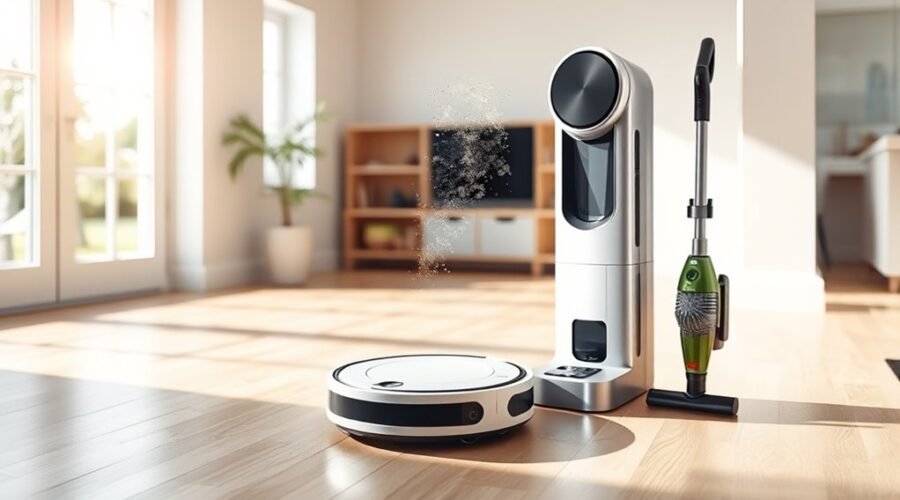
A self-empty robot vacuum is a cleaning device that empties its own dustbin into a larger bin in the charging dock after each run. That design can reduce manual upkeep for weeks at a time, but the real value depends on how it handles suction, navigation, and maintenance. It is not always the best choice for every home, and the differences from a regular robot vacuum can matter more than expected.
What Is a Self-Empty Robot Vacuum?
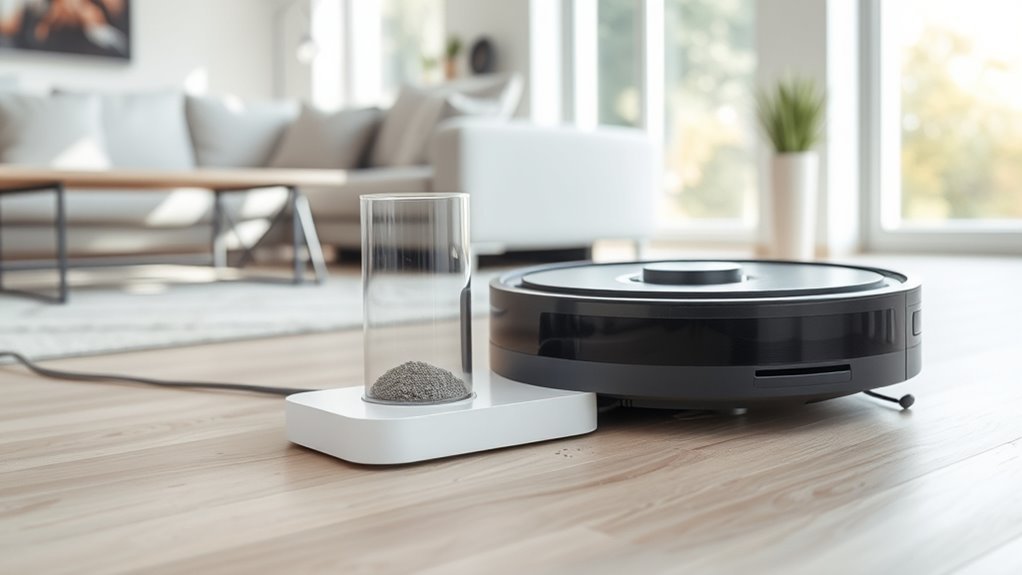
A self-empty robot vacuum is a cleaning appliance that automatically transfers dirt and debris from its internal dustbin into a larger bag in the docking station, enabling weeks of hands-free use.
Self-Emptying Robot Vacuums reduce routine chores by limiting how often the bin must be emptied. For people seeking more freedom from upkeep, this design supports hands-free cleaning with less interruption.
Many models combine powerful suction with obstacle avoidance, helping them cover hard floors and carpets while steering around furniture and clutter. Some versions also include self-cleaning mop pads, adding another layer of convenience.
Sealed systems can trap allergens, which matters for allergy sufferers and pet owners dealing with hair and dander.
Entry-level options begin near $249, while advanced units can exceed $1,099. The result is a practical appliance that lowers manual effort and keeps floors maintained with less daily involvement.
How Self-Empty Robot Vacuums Work
Inside a self-empty robot vacuum, dirt and debris are carried from the robot’s dustbin to a larger bag in the dock through a high-suction channel, cutting down on frequent emptying. This process lets the self-emptying robot vacuum keep working with little interruption, which supports a more liberated routine.
LiDAR navigation helps the unit map rooms, identify obstacles, and choose efficient cleaning paths without constant oversight. Many models also learn floor layouts over time, adjusting cleaning patterns for carpet, tile, or wood to keep results consistent.
LiDAR navigation maps rooms, avoids obstacles, and adapts cleaning paths for steady results across different floor types.
In self-cleaning versions, automated mop cleaning adds another layer of convenience by washing and drying mop pads with hot water and warm air. Together, these functions reduce manual effort and extend cleaning cycles.
The result is hands-free operation for weeks at a time, making the system practical for households that want steady cleaning without daily chores or repeated maintenance.
What the Dock Does
The dock manages the parts of the cleaning process that the robot cannot handle alone. In a self-empty system, the dock receives the robot after a run and pulls debris from the internal dustbin into a larger bag or container. A high-suction channel helps align the vacuum and move dirt quickly, so the transfer is efficient and controlled.
This lets cleaning continue for weeks with little manual effort, giving users more time and less upkeep. Many docks use sealed dust bags that lock in dust and allergens, making disposal more hygienic and reducing exposure during emptying.
Some advanced docks also clean and dry mop pads, preparing them for the next cycle. The dock often acts as a charging station as well, keeping the vacuum powered, reducing clutter, and supporting a more independent cleaning routine.
Self-Empty Robot Vacuums vs Regular Robot Vacuums
Self-empty robot vacuums reduce maintenance by moving dirt into the dock automatically, while regular models still need frequent manual emptying.
They often add stronger convenience features such as smart navigation, scheduling, and even self-cleaning mops, though the cleaning results can be similar depending on the model.
The choice usually comes down to cost and household needs, with self-empty units fitting busier homes and regular vacuums suiting simpler budgets.
Convenience And Maintenance
Although regular robot vacuums usually need to be emptied after every cleaning session, self-emptying models automatically transfer dirt into a larger base bin, reducing hands-on maintenance to almost nothing.
This self-emptying design delivers clear convenience and reduced upkeep for households seeking less routine work.
- Weeks of use without intervention
- Less manual emptying after cleaning
- Lower weekly maintenance time
- Sealed bags can better contain dust
- Freed-up time for other tasks
Cleaning Power Comparison
Cleaning convenience is only part of the appeal, since self-empty robot vacuums also tend to deliver stronger, more consistent cleaning performance than regular models.
Their self-emptying design uses a high-suction channel to move debris into a larger dust bag, so cleaning stays effective for weeks without interruption. Many units pair strong suction, sometimes reaching 18,000Pa, with advanced navigation such as LiDAR, which helps them avoid obstacles and cover floors more thoroughly.
Some models add automatic mop washing, keeping pads cleaner and improving wet cleaning results. Regular robot vacuums can still handle basic jobs, but they often need more manual maintenance and less often sustain the same level of efficiency.
For users seeking more freedom from household labor, the difference in performance can be practical and immediate.
Cost And Best Fit
When weighing cost against convenience, self-empty robot vacuums usually demand a higher upfront investment, often starting around $249 and climbing past $1,099, while regular robot vacuums may begin near $150.
For households seeking freedom from repeated upkeep, the self-emptying option can reduce labor for weeks or months.
- Higher cost, less maintenance
- Budget-friendly models suit smaller spaces
- Advanced navigation helps larger homes
- Powerful suction aids pet owners
- Extra features, like mopping, add value
Regular units remain practical when cleaning needs are modest and convenience is secondary.
Self-emptying models fit users who want less hands-on care, stronger automation, and a more liberated routine.
Are Self-Empty Robot Vacuums Worth It?
Self-empty robot vacuums are often worth it for households that want less daily upkeep and more consistent cleaning. Self-emptying robot vacuums can run for weeks before needing attention, which creates real freedom from routine chores. Their sealed bins help contain pet dander and fine dust, supporting cleaner air and less mess during emptying.
| Benefit | Result |
|---|---|
| Larger dustbin | Fewer interruptions |
| Smart features | Easier scheduling |
| Mopping combo | Better cleaning efficiency |
| Sealed design | Less allergen exposure |
The higher upfront price is balanced by time savings, often exceeding 30 minutes each week. App control and smart navigation add convenience by letting cleaning happen on a set schedule with minimal oversight. Models with vacuuming and mopping in one unit can simplify floor care further. For many homes, the value is clear: less maintenance, more control, and a cleaner space with less effort.
Who Should Buy One?
Self-empty robot vacuums are a strong fit for pet owners, since they help keep up with constant shedding and reduce daily cleanup.
They also suit allergy sufferers because sealed disposal systems can limit the release of dust and allergens.
Busy households benefit as well, thanks to the hands-free operation and low-maintenance routine.
Pet Owners
For pet owners, a self-emptying robot vacuum can be a practical upgrade that cuts down daily upkeep by automatically transferring pet hair into a larger base bin, often allowing for weeks of hands-free cleaning.
This self-emptying setup supports freedom from constant sweeping and makes routine floor care easier to manage. Models with advanced navigation can move around toys, bowls, and furniture with fewer interruptions, while tangle-resistant brushes reduce maintenance.
HEPA filters add another layer of performance by helping trap fine debris inside the system. The real appeal is convenience: cleaning can be scheduled around pets’ routines, so floors stay presentable without constant attention.
- Less daily emptying
- Better pet hair pickup
- Fewer brush tangles
- Smarter obstacle handling
- Easier scheduled cleaning
Allergy Sufferers
Allergy sufferers are among the best candidates for a self-emptying robot vacuum, since sealed dust bags help trap allergens and reduce exposure during disposal. For allergy sufferers, this design limits contact with dust and supports a cleaner routine with less effort.
Models with high-efficiency filters, such as the iRobot Roomba j9+ and Ecovacs Deebot X8 Pro Omni, capture fine particles and help improve indoor air quality. Because the vacuum can run for weeks without manual emptying, it reduces the chances of stirring up allergens.
Automated cleaning also removes the burden of frequent upkeep, giving users more control over their homes without constant chores. For those seeking relief from dust and a more independent daily rhythm, a self-emptying model is a practical, low-touch choice.
Busy Households
Busy households gain the most from a self-emptying robot vacuum because it cuts weekly upkeep from a recurring chore to almost nothing. For busy households, self-emptying models deliver hands-free cleaning that keeps floors presentable without daily attention.
The dock stores debris for weeks, so larger homes can be covered with fewer interruptions. Many units add pet-friendly design features, such as tangle-free brushes, which help manage pet hair with less effort. Sealed bags also improve allergen control, supporting cleaner air while reducing contact with dust.
This is a practical choice for people who want freedom from constant chores.
- Saves time every day
- Reduces manual emptying
- Handles pet hair well
- Supports allergen control
- Works well in large homes
Common Drawbacks to Know
Several practical drawbacks can come with self-emptying robot vacuums. Their emptying cycle can be loud, sometimes sounding like a handheld vacuum, so it may interrupt work, calls, or rest.
The base station also has a bulky design, taking more floor space than a standard dock and making placement harder in smaller homes. These self-emptying vacuums still require maintenance needs: dustbins and filters must be checked and cleaned to reduce clogs and odors.
A higher cost is another issue, since the convenience can add a noticeable premium over simpler models. Some units also come with limited features, lacking stronger navigation or deeper smart home integration.
For people seeking more freedom with less effort, these tradeoffs matter. A model may still save time, but it should fit the space, budget, and cleaning needs available.
Self-Emptying vs Self-Cleaning Vacuums
Self-emptying and self-cleaning robot vacuums solve different cleanup problems.
Self-emptying vacuums move debris from the robot into a larger dock bin, supporting weeks of hands-free cleaning and reducing the need to lift a lid after every run. They rely on strong suction channels, which helps with dust-heavy homes, though the emptying cycle can be noisy.
Self-cleaning vacuums, by contrast, focus on mop hygiene. Models like Narwal Flow wash and dry mop pads with hot water and airflow, limiting odors and bacteria after each cycle. That makes them useful where quieter operation and lighter upkeep matter.
- Self-emptying vacuums handle dry debris well.
- Self-cleaning vacuums maintain cleaner mop pads.
- Self-emptying models suit larger homes.
- Self-cleaning models suit smaller spaces.
- Both reduce routine chores and free time.
How to Choose the Right Model
Choosing the right self-empty robot vacuum starts with matching the machine to the home, since floor types, room size, and pet hair all affect performance.
A buyer should compare cleaning needs first: multi-surface homes may suit self-emptying models such as the Ecovacs Deebot X8 Pro Omni, while pet owners may prefer the iRobot Roomba j9+ for stronger suction.
Budget matters too, because options range from the affordable TP-Link Tapo RV30 Max Plus under $300 to the premium Deebot X8 Pro Omni near $1,099.99.
Features and functionality should be checked closely, including app control, obstacle avoidance, and self-cleaning mop pads.
Maintenance requirements also differ; some units, like the Deebot X9 Pro Omni, reduce manual upkeep with automatic mop cleaning.
Finally, user reviews and ratings can reveal real-world battery life, reliability, and cleaning efficiency, helping buyers choose a model that supports more freedom with less effort.
Frequently Asked Questions
Is a Self-Emptying Robot Vacuum Worth It?
Yes, for many households, a self-emptying robot vacuum is worth it. In performance comparison, smart features and cleaning efficiency often justify the cost, while user reviews and maintenance tips show less hassle, more freedom, and cleaner floors.
What Are the Downsides of Using a Robotic Vacuum Cleaner?
Robot vacuums can struggle with cleaning efficiency in corners, tight spaces, and pet hair, while battery life limits coverage. Noise levels may be irritating, and robot vacuum maintenance remains necessary to prevent clogs, odors, and reduced performance.
Which Self-Emptying Robot Vacuum Is the Best?
The Ecovacs Deebot X8 Pro Omni emerges best, after features comparison and performance analysis. User reviews praise its cleaning freedom, while maintenance tips stay simple. Brand recommendations still favor iRobot for pets and budget-conscious buyers.
What Is the Most Affordable Self-Emptying Robot Vacuum?
The most affordable self-emptying robot vacuum is the iRobot Roomba i3+ EVO, about $299. Among budget options, features comparison and user reviews highlight solid suction power, low maintenance costs, and reliable self-emptying convenience.
Conclusion
Ultimately, a self-empty robot vacuum offers a smart blend of convenience, cleanliness, and consistency. By quietly collecting debris, then quickly clearing its own dustbin into a sealed dock, it reduces daily duties and dust exposure. For busy households, allergy-sensitive users, and anyone seeking simpler sweeping, the benefits can be substantial. Still, cost, dock size, and bag replacement should be weighed carefully before purchase. Practical, powerful, and polished, it is a purposeful cleaning upgrade.