Affiliate disclosure: This article contains Amazon affiliate links. We may earn a commission from qualifying purchases at no extra cost to you.
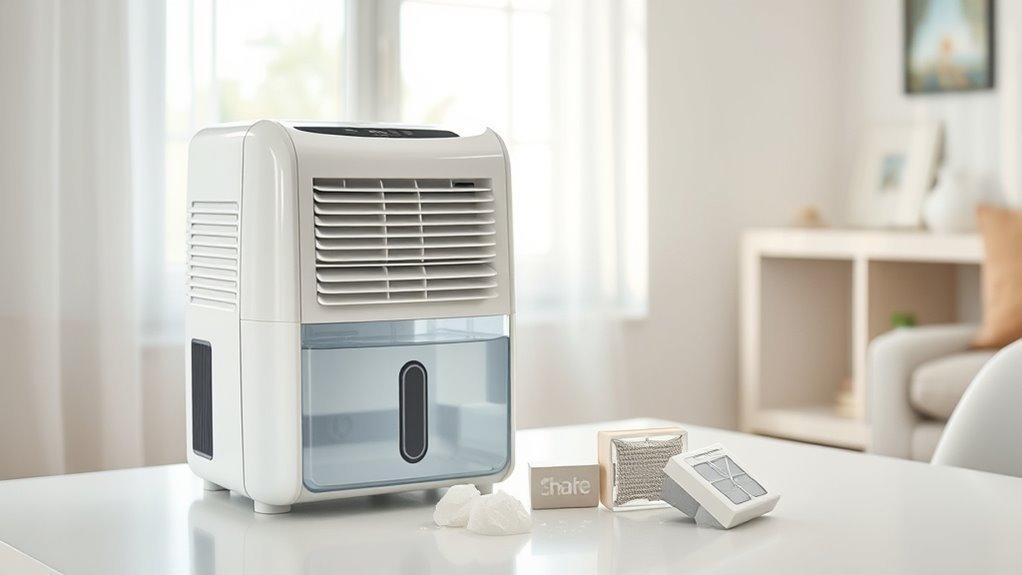
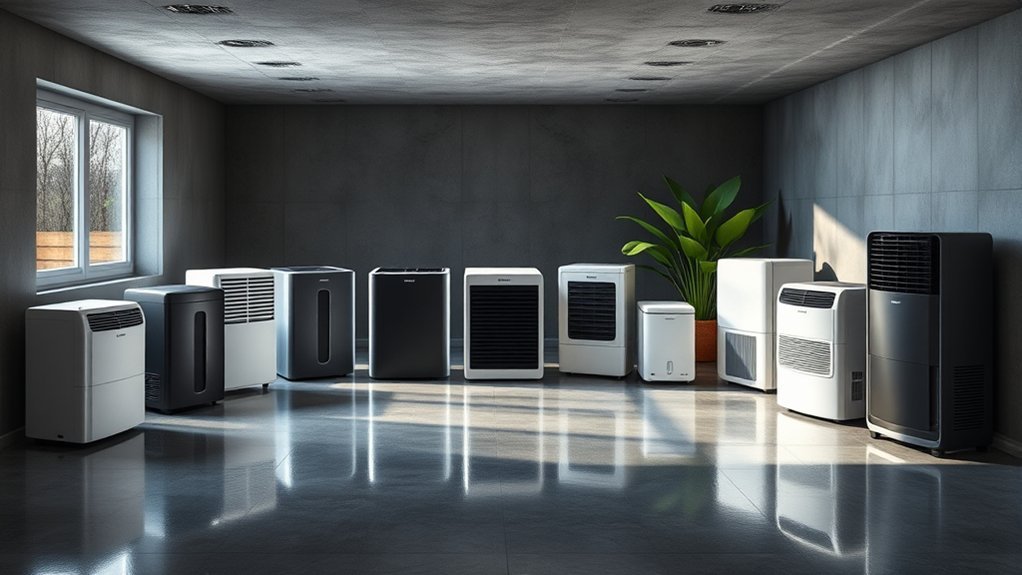
A good dorm dehumidifier should be compact, quiet, easy to empty, and suitable for light moisture in a small enclosed room. The strongest options here include the BREEZOME MCS008 for its balanced tank size and controls, the CLEVAST CL-DH04 for its low seller-listed quiet-mode noise, and the TABYIK 35 OZ for simple, portable operation.
These are mini thermoelectric, or semiconductor, dehumidifiers. They generally work best in warm, humid conditions and are intended for everyday muggy air, mild condensation, and musty enclosed spaces. They are not substitutes for building repairs, mold remediation, or a full-size compressor dehumidifier.
How We Compared: The recommendations are based on current listing information, tank capacity, compactness, seller-listed noise, operating controls, automatic shutoff, portability, and realistic dorm-room suitability. Performance figures are manufacturer or seller claims rather than independent hands-on test results, and listing details can change over time.
Quick Verdict
- Best Overall: BREEZOME MCS008 for its 60 oz tank, dual-semiconductor design, sleep mode, timer, and auto shutoff.
- Quietest Seller-Listed Option: CLEVAST CL-DH04 with a listed 24 dB quiet mode.
- Best Compact Pick: TABYIK 35 OZ for simple controls, a visible tank, and easy portability.
- Best Automatic Humidity-Control Pick: NovaLivin 68 OZ for its larger tank, two operating speeds, and automatic humidity control.
- Best Large-Tank Pick: ZUKBEN 75 OZ for its larger reservoir, sleep mode, and timer of up to 12 hours.
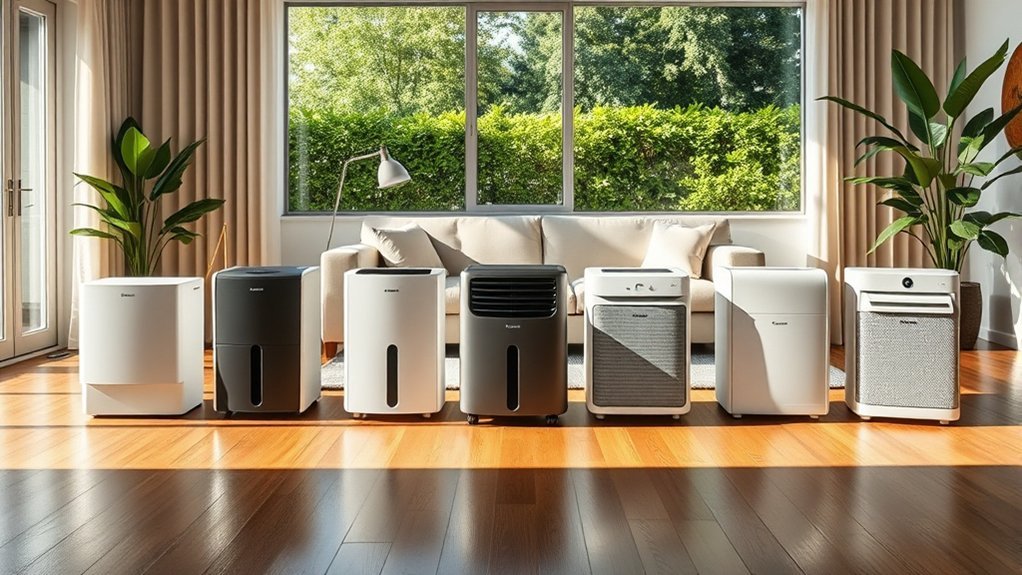
| Product | Best For | Tank | Seller-Listed Noise | Key Feature | Amazon |
|---|---|---|---|---|---|
| BREEZOME MCS008 | Best overall balance | 60 oz | 35 dB sleep mode | Dual condensers and 12-48 hour timer | View on Amazon |
| CLEVAST CL-DH04 | Light sleepers and study spaces | 30 oz | 24 dB quiet mode | Two modes and compact footprint | View on Amazon |
| TABYIK 35 OZ | Compact, simple operation | 35 oz | 28 dB | Clear tank and carry handle | View on Amazon |
| NeedDuck 44 OZ | Flexible modes and timers | 44 oz | Sleep mode; exact dB not confirmed | Three modes and four timer options | View on Amazon |
| NovaLivin 68 OZ | Automatic humidity control | 68 oz | 30 dB sleep mode | Two speeds and automatic humidity control | View on Amazon |
| AlohaAir DH001 | Basic small-room moisture control | 34 oz | Quiet operation; exact dB not confirmed | One-button use and night light | View on Amazon |
| ZUKBEN 75 OZ | Larger tank and longer run time | 75 oz | Under 30 dB sleep mode | Timer of up to 12 hours | View on Amazon |
Before You Buy: Check your dorm’s appliance policy, outlet rules, and available surface space. Follow the manufacturer’s required vent clearances and consider using a separate hygrometer to monitor the room. Confirm the exact model and current listing details before ordering because seller information can change. These compact units cannot repair leaks, dry saturated building materials, remove existing mold, or correct a building-wide ventilation problem.
BREEZOME MCS008 60 Oz Quiet Dehumidifier
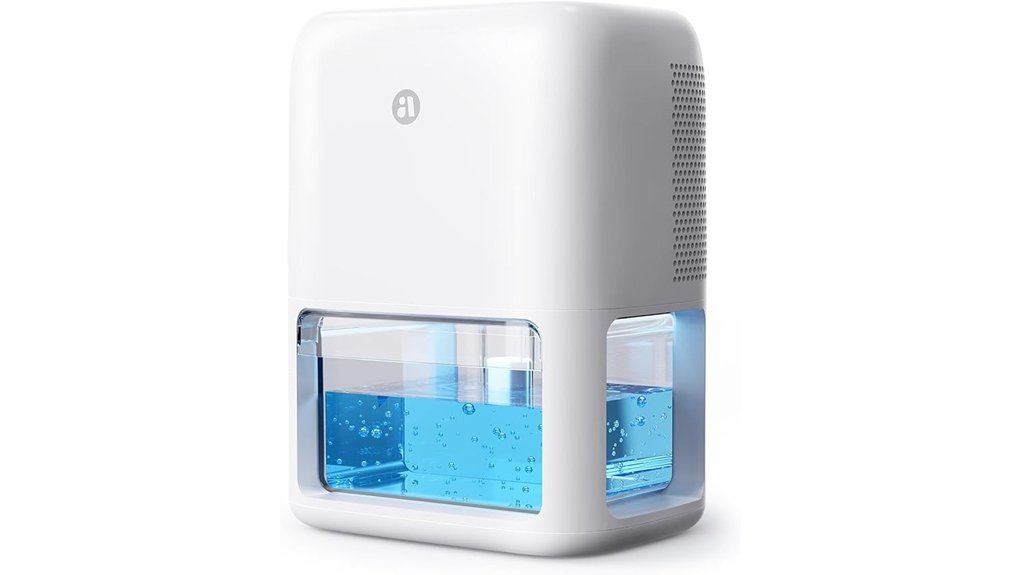
Best Overall: The BREEZOME MCS008 offers a useful mix of tank size, portability, operating modes, and timer control for a dorm room. Its 60 oz tank is larger than many mini units, while the dual-semiconductor design is advertised to collect up to 700 ml of moisture per day at 86°F and 80% relative humidity.
That extraction figure represents warm, highly humid test conditions rather than a result every dorm room will achieve. The unit includes a seller-listed 35 dB sleep mode, automatic shutoff, a built-in handle, and 12-, 24-, 36-, and 48-hour timer choices.
Why You’ll Like It: It offers more tank capacity and scheduling control than a basic one-button tabletop model without moving into a bulky compressor design.
Who Should Buy It: Students who want a larger mini-dehumidifier tank, timer control, and easy room-to-room portability.
Who Should Avoid It: Skip it if your room has a leak, recurring wall dampness, cold-weather condensation, or a severe humidity problem.
Pros:
- 60 oz tank reduces how often you need to empty it.
- Dual-semiconductor design provides more advertised output than many single-condenser mini units.
- Sleep mode, four timer choices, auto shutoff, handle, and night light add convenience.
Cons:
- Maximum extraction is based on warm, highly humid conditions.
- The 35 dB sleep-mode figure is seller-listed rather than independently measured.
- The listing does not advertise continuous drainage, so plan on tank emptying.
CLEVAST CL-DH04 Small Quiet Dehumidifier
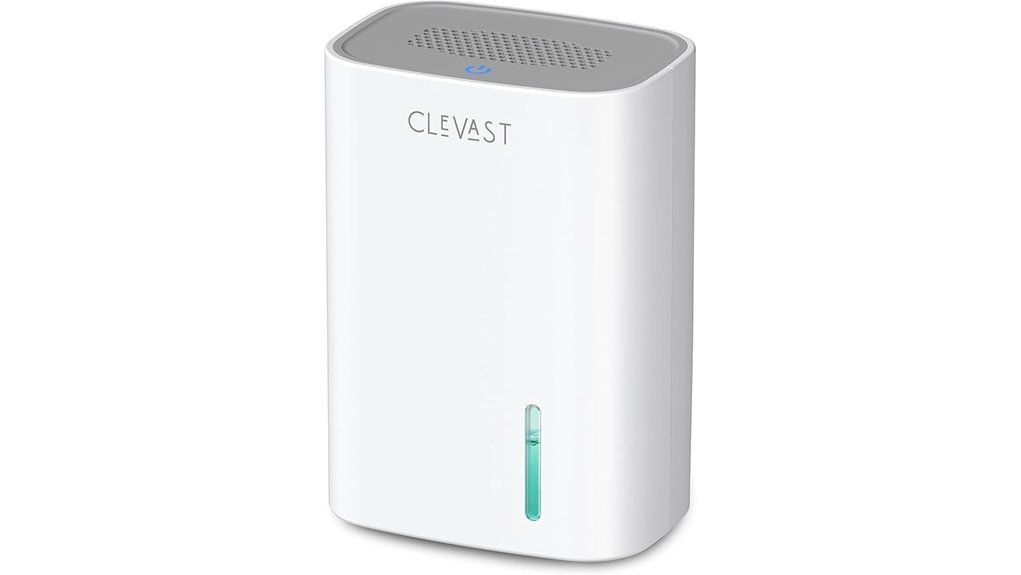
Quietest Seller-Listed Option: The CLEVAST CL-DH04 is a strong fit for light sleepers, late-night study sessions, and shared dorm rooms. It has a 30 oz tank and uses a compact semiconductor system intended for small enclosed spaces.
The seller lists quiet mode at 24 dB. Its higher-output mode is advertised to collect up to about 10 oz of water per day in a closed space at 86°F and 85% relative humidity. Actual collection will normally decrease as the room becomes cooler or less humid.
Why You’ll Like It: It is easy to place on a desk, shelf, or counter and does not add complicated controls to a small room.
Who Should Buy It: Students who prioritize low seller-listed noise and a compact footprint over a large reservoir.
Who Should Avoid It: Its small tank and light-duty extraction make it a poor choice for a persistently wet room or a space with constant outside airflow.
Pros:
- Seller-listed 24 dB quiet mode suits sleep and study.
- Compact design is easy to position in a crowded dorm.
- Two modes, auto shutoff, overheat protection, and a removable tank improve usability.
Cons:
- 30 oz tank may need regular emptying in muggy weather.
- Works best in warm, enclosed rooms.
- The listing does not advertise a numerical humidistat, app control, or continuous drainage.
TABYIK 35 OZ Quiet Dehumidifier
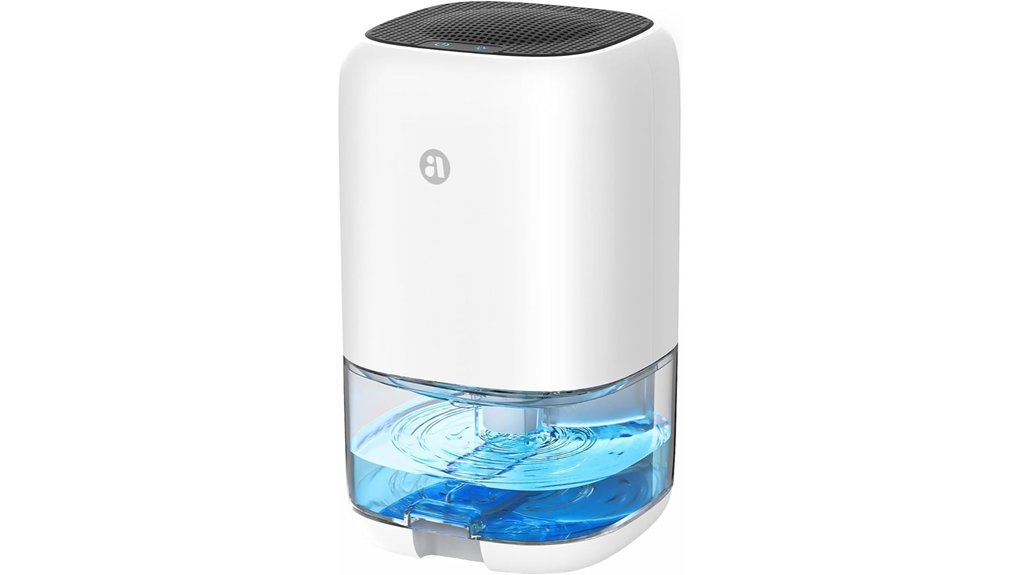
Best Compact Pick: The TABYIK 35 OZ is easy to understand and move, making it a practical choice for a small dorm room. It is advertised to collect up to 16 oz of water per day at 86°F and 80% relative humidity, with actual output varying by room temperature and humidity.
The transparent 35 oz tank lets you see the water level, and automatic shutoff helps prevent overflow. Its seller-listed 28 dB operation, built-in handle, and separate seven-color light make it suitable for a nightstand, desk, shelf, or bathroom counter.
Why You’ll Like It: It has simple plug-in operation without a complex menu, and the listing does not advertise app control or continuous drainage.
Who Should Buy It: Students who want straightforward controls, a visible reservoir, and a compact vertical design.
Who Should Avoid It: It is not a substitute for a full-size compressor dehumidifier in a severely damp room or an area with water damage.
Pros:
- Compact design with a built-in handle.
- Clear tank and automatic shutoff make daily use easier.
- Seller-listed 28 dB operation is suitable for many dorm settings.
Cons:
- Best for small, closed spaces and light moisture.
- Performance drops in cooler or less humid rooms.
- Tank may need frequent emptying during muggy weather.
NeedDuck 44 OZ Dehumidifier
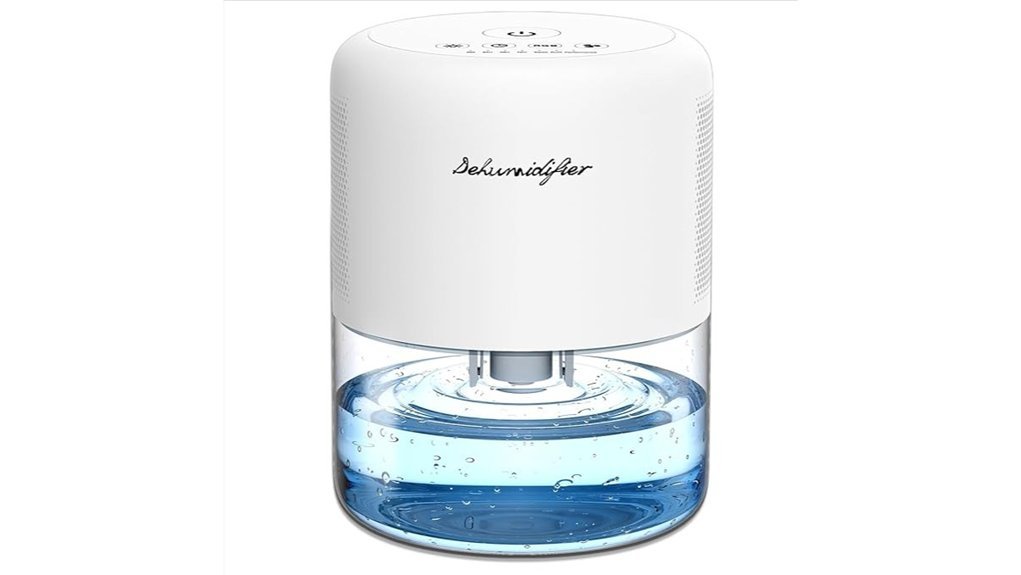
Best for Flexible Controls: The NeedDuck dehumidifier combines a 44 oz tank with three operating modes and four timer choices. It is designed for gradual moisture removal in bedrooms, bathrooms, closets, RVs, and similarly small enclosed areas.
The available modes include Sleep, Auto, and Performance, while the timer options are Continuous, 24, 48, and 72 hours. Automatic shutoff and defrost protection help with routine operation. The control options are more flexible than those on a basic one-button unit, which is useful if you want quieter operation at night and stronger operation during the day.
Why You’ll Like It: It gives you more control over operating mode and run time without requiring much floor space.
Who Should Buy It: Students who want several mode and timer choices in a compact unit.
Who Should Avoid It: Students who want the simplest possible controls may not need the extra modes, timers, and ambient lighting.
Pros:
- Three operating modes and four timer options.
- 44 oz tank offers a middle ground between compactness and capacity.
- Automatic shutoff and defrost protection add convenience.
Cons:
- The listing does not advertise continuous drainage.
- Exact sound output and real-room extraction depend on operating conditions.
- Ambient lights may be unnecessary for some users.
NovaLivin 68 OZ Dehumidifier with Automatic Humidity Control
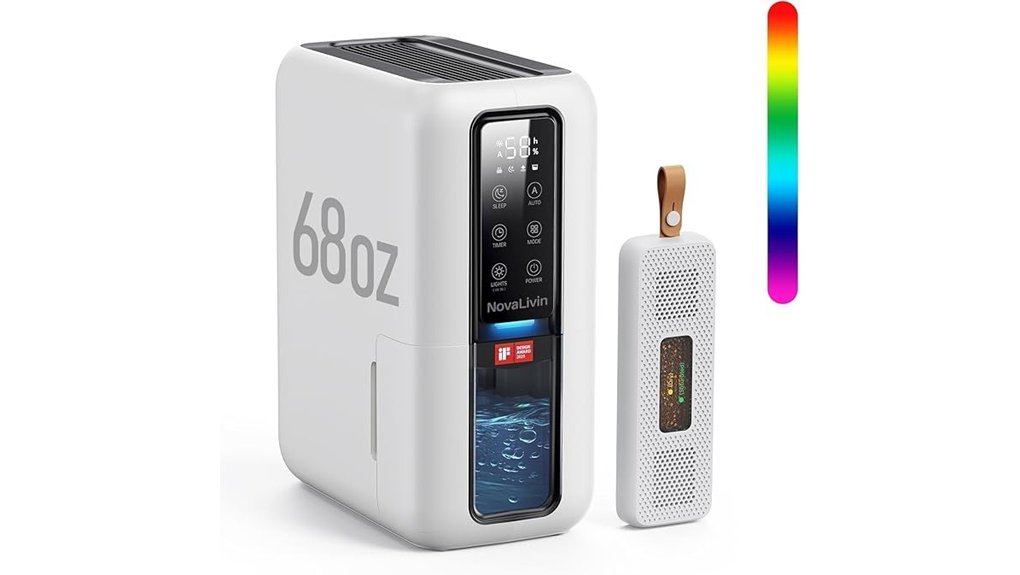
Best for Automatic Humidity Control: The NovaLivin model combines a 68 oz tank with automatic humidity control, two operating speeds, a seller-listed 30 dB sleep mode, automatic shutoff, and a transparent reservoir. These controls may be useful when dorm-room comfort changes with the weather.
The seller advertises moisture collection of up to 34 oz per day at 86°F and 80% relative humidity using dual semiconductor condensers. Treat that figure as a best-case listing claim rather than an everyday result.
Why You’ll Like It: It offers a larger tank and more automatic control than many simple tabletop dehumidifiers.
Who Should Buy It: Students who want a larger reservoir and automatic humidity-related operation without buying a full-size compressor unit.
Who Should Avoid It: Buyers who need independently certified capacity or precise whole-room control should choose a different class of dehumidifier. If continuous drainage is essential, confirm that feature on the exact listing before buying.
Pros:
- Automatic humidity control and two operating speeds.
- Large 68 oz tank for a compact semiconductor unit.
- Transparent tank and automatic shutoff simplify maintenance.
Cons:
- Advertised extraction is based on warm, very humid conditions.
- The 30 dB sleep-mode figure is seller-listed rather than independently measured.
- The listing emphasizes a removable tank; confirm drainage options if continuous draining matters to you.
AlohaAir DH001 Small Dehumidifier
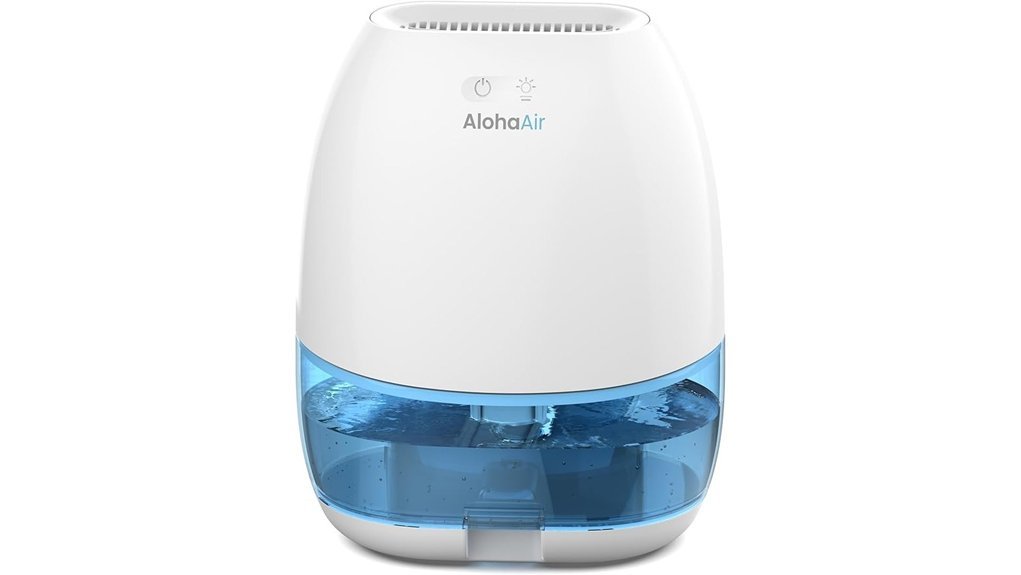
Best Simple Night-Light Pick: The AlohaAir DH001 is designed for bedrooms, bathrooms, closets, RVs, and other small areas. It has a 34 oz transparent tank and is advertised to remove up to 280 ml of moisture per day under suitable conditions.
The unit includes automatic shutoff with a full-tank indicator. Its separate seven-color light can work as a soft night light, but it can be switched off if you prefer a darker room. The current listing describes quiet operation but does not clearly publish an exact dB figure.
Why You’ll Like It: The controls are basic, the tank is visible, and the compact footprint is suitable for a shelf or counter.
Who Should Buy It: Students who want simple one-button moisture control and an optional ambient light.
Who Should Avoid It: It is not the best choice if you need precise humidity settings, a timer, or a high daily extraction rate.
Pros:
- Simple operation for small enclosed spaces.
- Transparent 34 oz tank and automatic shutoff.
- Compact design with an optional night light.
Cons:
- Modest moisture-removal capacity.
- The listing does not advertise a timer or numerical humidity target.
- No clearly confirmed exact noise rating in the current accessible listing.
ZUKBEN 75 OZ Quiet Dehumidifier
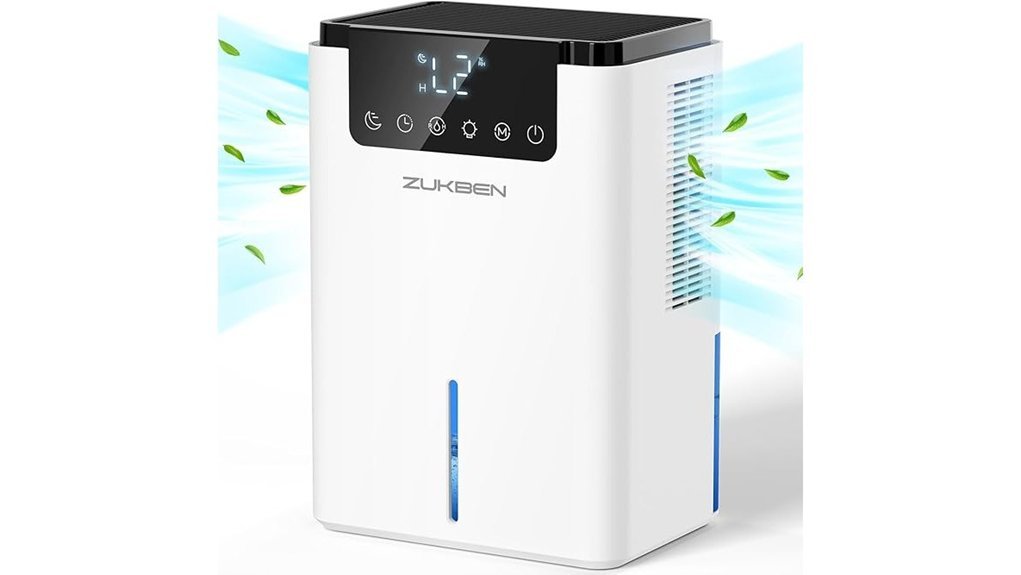
Best Large-Tank Pick: The ZUKBEN dehumidifier has a 75 oz tank and is advertised for spaces up to 500 square feet. Its semiconductor system is listed to collect up to 23 oz of moisture per day at 86°F and 60% relative humidity, while sleep mode is rated below 30 dB.
Treat the advertised coverage as a broad seller estimate rather than proof that this compact unit can control severe humidity throughout a 500-square-foot open room. The timer can be set for up to 12 hours, while automatic shutoff, a full-tank indicator, and defrost protection support routine operation.
Why You’ll Like It: It combines the largest reservoir in this roundup with sleep mode and timer control.
Who Should Buy It: Students with enough surface space who prefer fewer trips to empty the tank.
Who Should Avoid It: Do not choose it solely because of the 500-square-foot claim if the room has severe dampness, water intrusion, or unrestricted airflow.
Pros:
- 75 oz tank is the largest in this roundup.
- Seller-listed under-30 dB sleep mode.
- Timer of up to 12 hours, automatic shutoff, and defrost protection.
Cons:
- The large coverage claim may overstate real-world performance in an open or persistently damp space.
- The listing does not advertise a continuous drain hose.
- Maximum daily extraction depends on warm and humid conditions.
Factors to Consider When Choosing a Dehumidifier for a Dorm
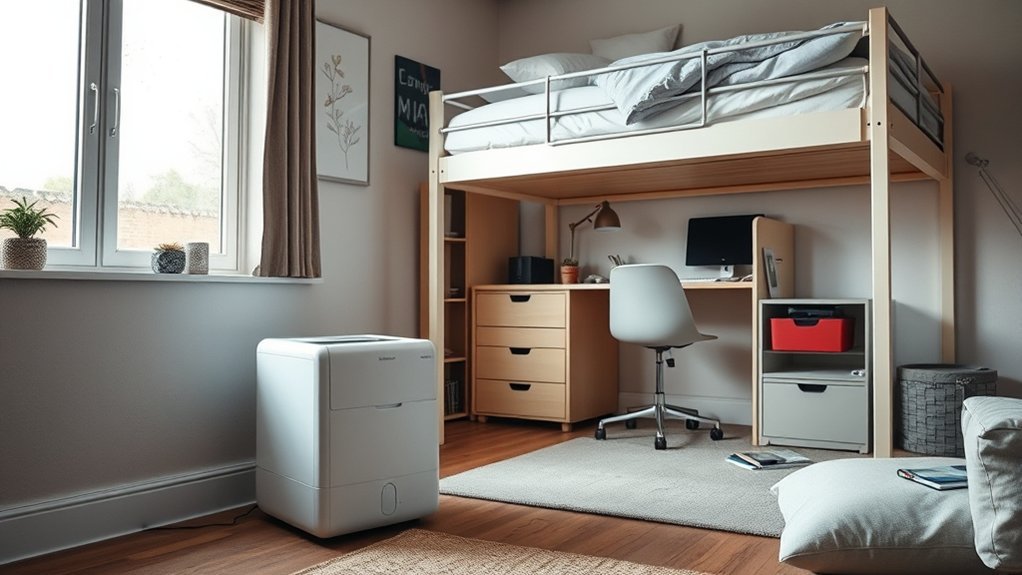
Choose a dorm dehumidifier by looking at realistic room use, tank size, seller-listed noise, power draw, controls, maintenance, and safety features. Mini semiconductor models are compact and often quieter than compressor models, but their output changes sharply with room temperature and relative humidity.
Room Size and Real-World Performance
Do not rely on the advertised floor-area number alone. A model promoted for 300 or 500 square feet may still struggle if the door stays open, outdoor air frequently enters, or the room is cool. For a dorm, prioritize a unit that fits the available surface, can operate with clear airflow around it, and is intended for light moisture rather than severe dampness.
Tank Capacity
The compact models in this roundup use tanks from 30 to 75 oz. A 30-to-44-oz tank saves space, while a 60-to-75-oz tank may reduce emptying. Tank size is not the same as daily extraction. A larger reservoir does not automatically mean the machine removes moisture faster.
Noise Level
Compare seller-listed quiet or sleep-mode figures when available, but remember that manufacturer measurements may use different testing methods. Your experience will also depend on fan tone, vibration, placement, and the surface under the unit. Set the dehumidifier on a firm, level surface and keep it away from the bed if you are sensitive to sound.
Humidity Monitoring
A separate hygrometer can show whether the room is actually becoming less humid. A commonly recommended indoor target is roughly 30% to 50% relative humidity, although comfort and condensation conditions vary. Do not judge performance only by the amount of water visible in the tank.
Energy Use
Check the rated wattage on the exact product and power adapter rather than relying only on broad “energy-saving” claims. A timer can reduce unnecessary run time, but switching the unit off too early may also limit moisture collection. Dorm electricity and appliance rules vary, so confirm the housing policy before use.
Auto Shut-Off
Automatic shutoff is one of the most useful dorm features because it stops collection when the tank is full. A transparent tank or full-tank indicator also makes maintenance easier. Empty, rinse, and dry the reservoir regularly according to the manual so standing water does not develop odors or residue.
Portability and Placement
A built-in handle and a lightweight body make a unit easier to move. Leave the air inlet and outlet clear, keep the machine upright on a stable surface, and follow the manual’s clearance requirements. Avoid placing it directly against bedding, curtains, clothing, or other items that can block airflow.
Temperature and Humidity
Mini thermoelectric dehumidifiers usually collect the most water in warm, humid rooms. Their output can fall sharply in cooler or drier conditions. Seller-listed maximum extraction figures should not be treated as guaranteed everyday performance.
When to Contact Dorm Maintenance
Report wet walls, ceiling stains, plumbing leaks, repeated window condensation, persistent musty odors, water-damaged materials, or visible mold to dorm management. A tabletop dehumidifier may reduce airborne moisture, but it cannot repair the source of a building problem or remove mold that is already present.
Dorm Safety Checklist
- Confirm that your dorm permits plug-in dehumidifiers.
- Read the manual and follow its placement and clearance instructions.
- Use a stable, level surface and keep all air vents clear.
- Plug the unit into a suitable wall outlet unless its manufacturer specifically permits another setup.
- Keep the dehumidifier and adapter away from sinks, showers, and places where they may be splashed.
- Empty the tank before leaving for an extended period.
- Stop using the unit if the cord, adapter, tank, or housing is damaged.
Frequently Asked Questions
How Noisy Are Dorm Dehumidifiers During Sleep?
Some mini models list quiet-mode noise in the mid-20 dB range, while others provide only a general sleep-mode claim. Even a low listed number does not describe fan tone or vibration, so use a firm surface and place the unit several feet from your bed when possible.
What Tank Size Works Best for a Shared Dorm Room?
A 30-to-44-oz tank saves surface space, while a 60-to-75-oz tank usually needs less frequent emptying. Choose based on the available placement area, ease of carrying the tank to a sink, and expected moisture level rather than capacity alone.
Are Dorm Dehumidifiers Safe to Run Overnight?
Only run a model overnight if the manufacturer’s instructions and your dorm rules permit overnight or unattended use. Automatic shutoff is helpful, but it does not replace proper placement, clear vents, an undamaged power adapter, and safe distance from water or flammable materials.
Do Dorm Dehumidifiers Use Much Electricity?
Small semiconductor models generally use less power than full-size compressor units, but actual electricity use depends on the rated wattage and number of hours operated. Check the label on the exact unit or adapter instead of relying only on advertising terms such as “energy efficient.”
Can I Use a Dehumidifier in a Dorm Without Much Floor Space?
Yes. A compact vertical model can sit on a sturdy desk, shelf, or counter as long as the surface is level, the unit cannot be knocked over, and the air inlet and outlet have the clearance required by the manual.
Will a Mini Dehumidifier Stop Mold?
No dehumidifier can guarantee that mold will stop or remove mold that already exists. A mini unit may help reduce excess airborne moisture, but leaks, damp building materials, poor ventilation, and visible mold must be reported to dorm management and addressed at the source.
Should I Use a Hygrometer with a Dorm Dehumidifier?
Yes, especially when the unit does not display the room’s relative humidity. A separate hygrometer helps you see whether humidity is falling and whether running the dehumidifier is making a meaningful difference.
Final Recommendation
For most dorm rooms with light moisture, the BREEZOME MCS008 offers the best balance of tank capacity, operating modes, timer control, and portability. Choose the CLEVAST CL-DH04 when low seller-listed noise is your main concern, or the TABYIK 35 OZ when you want a smaller and simpler unit.
The NovaLivin 68 OZ is the more suitable choice when automatic humidity control matters, while the ZUKBEN 75 OZ has the largest tank in this comparison.
Whichever model you choose, keep expectations realistic and monitor the room with a hygrometer when possible. A mini dehumidifier can help with muggy air and mild small-space condensation, but serious dampness, leaks, water damage, or recurring mold require dorm maintenance and correction of the moisture source.