Affiliate disclosure: This article contains Amazon affiliate links. If you buy through a link, we may earn a commission at no extra cost to you.
The best quiet dehumidifier depends on whether you need gentle moisture control in a bedroom or higher-output humidity control in a basement. The AEOCKY compressor model has the highest seller-listed moisture-removal figure in this roundup and offers a humidistat plus hose drainage. For light moisture in a small room, the Natrogix has the lowest listed sleep-mode sound claim, while the compact TABYIK is designed for spaces up to 280 square feet.
We compared seller-listed noise, moisture removal, tank size, drainage, controls, portability, and practical limitations. Decibel, pint-per-day, ounce-per-day, and coverage claims are not always measured under the same conditions, so treat them as screening information rather than laboratory-equivalent results. Confirm the exact model number, current specifications, warranty, and included accessories on Amazon before ordering.
Quick verdict
- Best overall for large rooms: AEOCKY 50-Pint Compressor Dehumidifier
- Best mid-size compressor pick: Kesnos 30-Pint Dehumidifier
- Best low-noise compressor claim: BANABIE 32-Pint Smart Humidity Dehumidifier
- Lowest listed sleep-mode noise: Natrogix 106-Ounce Dehumidifier
- Best compact bedroom option: TABYIK 35-Ounce Dehumidifier
Quick Comparison of the Best Quiet Dehumidifiers
| Model | Type | Listed moisture removal | Listed noise | Details |
|---|---|---|---|---|
| AEOCKY 50-Pint Compressor Dehumidifier Best Overall for Large Rooms |
Compressor | Up to 50 pints/day, seller listed | About 40–43 dB, seller listed | View on Amazon |
| Kesnos 30-Pint Dehumidifier for Home and Basement Best Mid-Size Compressor Pick |
Compressor | Up to 30 pints/day under seller-stated test conditions | About 35–36 dB, seller listed | View on Amazon |
| BANABIE 32-Pint Smart Humidity Dehumidifier Best Low-Noise Compressor Claim |
Compressor | Up to 32 pints/day, seller listed | 32 dB, seller listed | View on Amazon |
| Natrogix 106-Ounce Large-Tank Dehumidifier Lowest Listed Sleep-Mode Noise |
Dual-semiconductor/Peltier | Up to 40 oz/day at 86°F and 80% RH | 20 dB in sleep mode, seller listed | View on Amazon |
| TENKER 77-Ounce Dual-Semiconductor Dehumidifier Best Dual-Peltier Pick |
Dual-semiconductor/Peltier | Up to 35 oz/day at 86°F and 80% RH | Under 30 dB in sleep mode, seller listed | View on Amazon |
| BEDRED 95-Ounce Dehumidifier with Ambient Light Best Large-Tank Mini with Ambient Light |
Thermoelectric/Peltier | Not stated | Not stated | View on Amazon |
| Onsekin CS08 Dehumidifier with Aromatherapy Diffuser Best Aromatherapy Feature |
Dual-semiconductor/Peltier | Up to 37 oz/day | Below 45 dB, seller listed | View on Amazon |
| NeedDuck 44-Ounce Compact Dehumidifier Best Ultra-Compact Controls |
Thermoelectric/Peltier | Not stated | Not stated | View on Amazon |
| TABYIK 35-Ounce Small Bedroom Dehumidifier Best Budget-Size Bedroom Pick |
Thermoelectric/Peltier | Up to 16 oz/day at 86°F and 80% RH | 28 dB, seller listed | View on Amazon |
Comparison note: Compressor “pints per day” and thermoelectric “ounces per day” are not directly interchangeable, and seller maximums may use different temperature and humidity conditions. Choose by technology and real moisture load first, then compare noise, tank size, and convenience features within the same product type.
How we selected these picks
We prioritized products that match quiet-home-dehumidifier search intent, have an identifiable Amazon ASIN, include a quiet-operation claim or sleep mode, and provide enough information to compare output, tank size, drainage, and room use. We separated compressor models from thermoelectric models and treated unsupported coverage or sound claims cautiously.
AEOCKY 50-Pint Compressor Dehumidifier
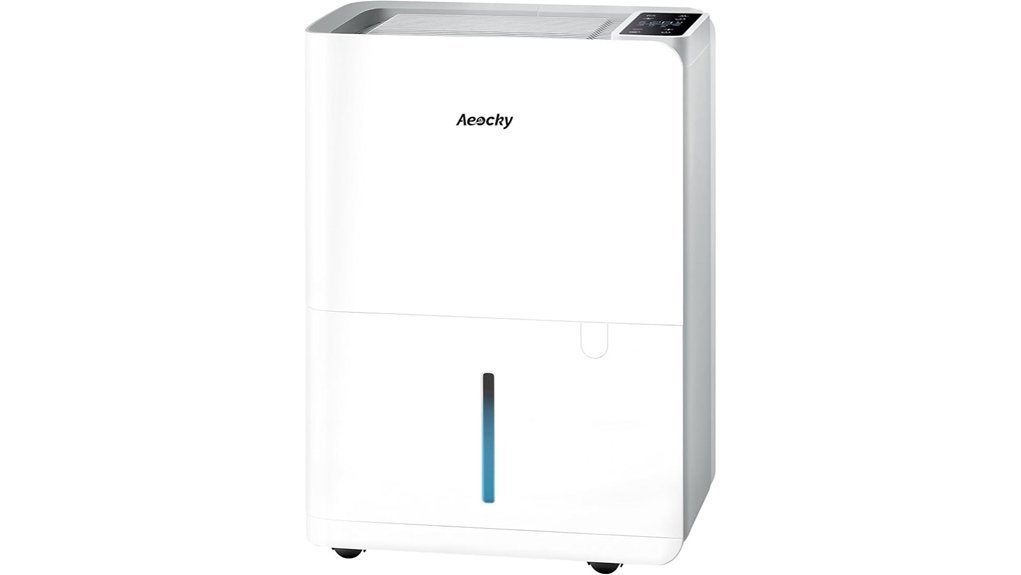
A strong first choice when you need real moisture removal in a basement, laundry area, or larger living space without stepping up to a whole-home system.
Quick specs from the seller listing reviewed
- Seller-listed maximum: Up to 50 pints per day
- Seller-listed coverage: Up to 3,500 sq. ft.
- Seller-listed noise: About 40–43 dB
- Tank: 0.8 gallon
- Drainage: Tank or included drain hose
- Type: Compressor
Seller-listed figures are not independent test results. Actual extraction and sound can vary with room temperature, humidity, placement, and fan setting.
Why You’ll Like It
Unlike small thermoelectric models, this compressor unit is built for sustained humidity control in larger or persistently damp rooms. Its humidistat, drain-hose option, child lock, casters, and listed 50-pint capacity make it the most complete all-around option in this roundup.
Best for: Homeowners dealing with persistent humidity in basements, open living areas, laundry rooms, or other larger spaces.
Who should avoid it: Very small bedrooms, closets, or buyers who only need light moisture control and want the smallest possible appliance.
Pros:
- Higher listed moisture-removal capacity than the compact Peltier models
- Humidistat and continuous-drain option reduce daily attention
- Caster wheels and handle make a larger unit easier to move
- Seller lists three-year warranty coverage; verify registration and terms
Cons:
- Larger and heavier than thermoelectric models
- Compressor sound is more noticeable than the quietest sleep-mode mini units
- The 0.8-gallon tank can still fill quickly in damp conditions
- Annual energy-savings claims depend on use pattern and local electricity cost
Kesnos 30-Pint Dehumidifier for Home and Basement
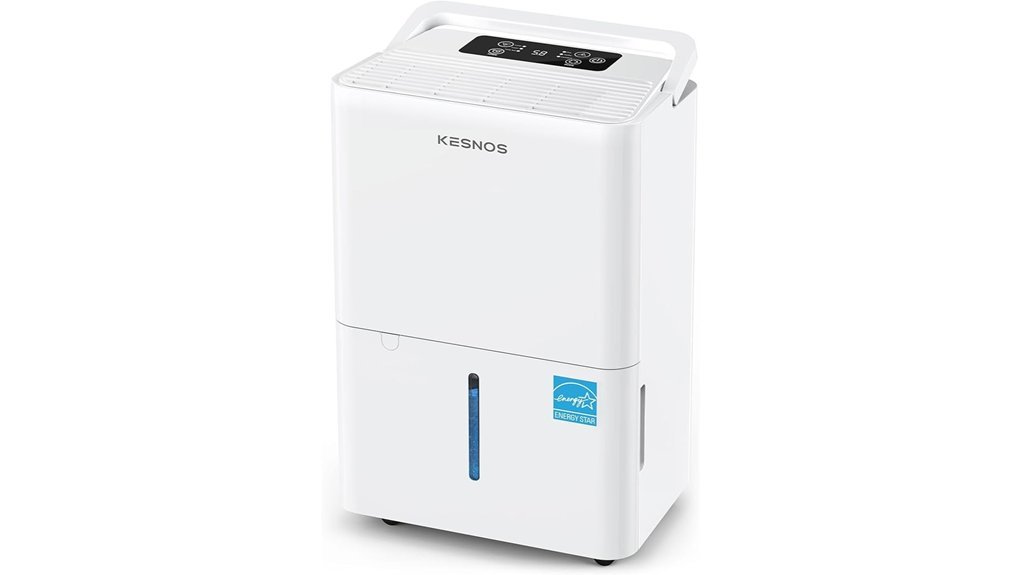
A mid-size compressor-style choice for bedrooms, offices, and moderately damp rooms when you want automatic humidity control, hose drainage, and a lower seller-listed noise figure.
Quick specs from the seller listing reviewed
- Seller-listed maximum: Up to 30 pints per day under favorable test conditions
- Seller-listed coverage: Up to 2,500 sq. ft.
- Seller-listed noise: About 35–36 dB
- Tank: 0.39 gallon
- Drainage: Tank or drain hose
- Type: Compressor
- Certification check: Match the exact model suffix on the unit to the EPA ENERGY STAR database
Seller-listed figures are not independent test results. Actual extraction and sound can vary with room temperature, humidity, placement, and fan setting.
Why You’ll Like It
The listing combines a relatively low stated sound level with automatic defrost, multiple modes, and continuous drainage. It is a practical middle ground between high-capacity basement units and low-output desktop dehumidifiers.
Best for: Bedrooms, offices, medium-size basements, and buyers who want compressor performance with a lower listed noise level.
Who should avoid it: Buyers who dislike emptying a small tank and cannot route the included hose to a suitable drain.
Pros:
- Lower listed noise than many compressor dehumidifiers
- Multiple modes, timer, auto defrost, and drain-hose support
- Seller markets the unit as energy efficient; exact ENERGY STAR status depends on the model suffix
- Suitable balance of capacity and portability
Cons:
- Small 0.39-gallon tank encourages hose drainage in damp rooms
- The Amazon title and EPA model-family naming may not match character for character, so verify the label before purchase
- Coverage claims should not replace sizing by moisture-removal capacity
- Heavier than mini thermoelectric units
BANABIE 32-Pint Smart Humidity Dehumidifier
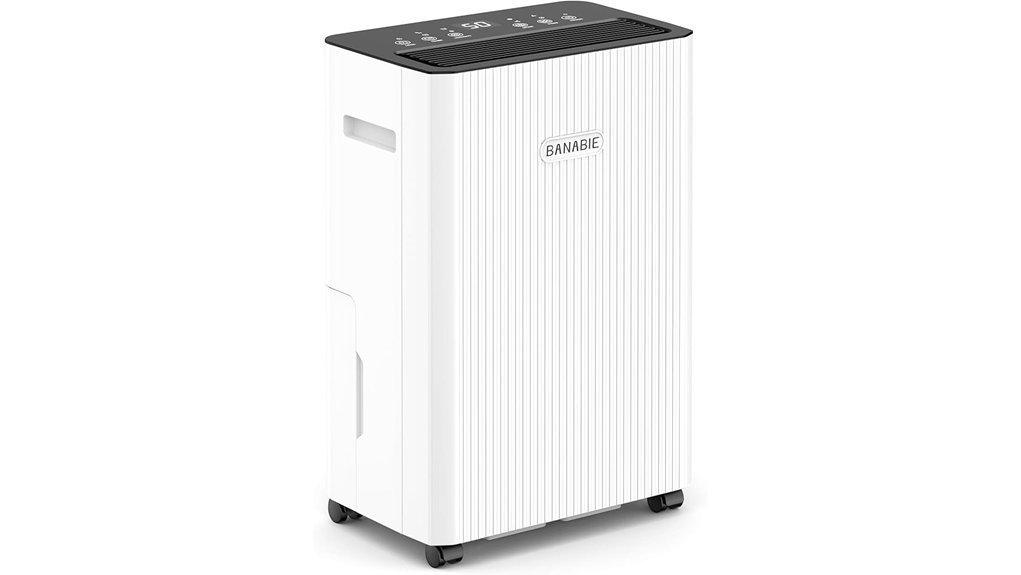
A feature-rich option for buyers who want automatic humidity control, a drain hose, and one of the lowest seller-listed compressor sound figures in this roundup.
Quick specs from the seller listing reviewed
- Seller-listed maximum: Up to 32 pints per day
- Seller-listed coverage: Up to 2,500 sq. ft.
- Seller-listed noise: 32 dB
- Tank: 2.5 L
- Drainage: Tank or 3.28-ft hose
- Type: Compressor
Seller-listed figures are not independent test results. Actual extraction and sound can vary with room temperature, humidity, placement, and fan setting.
Why You’ll Like It
Its combination of auto, continuous, and custom humidity modes makes it easier to manage a damp basement or laundry room. The 24-hour timer, child lock, power-outage memory, wheels, and gravity drain add convenience.
Best for: Medium-size rooms where you want compressor output but are especially sensitive to appliance noise.
Who should avoid it: Rooms without a lower drain point if you intend to use continuous drainage, or buyers who want a proven long warranty.
Pros:
- Strong listed capacity for medium-size spaces
- Smart humidity control and multiple operating modes
- Gravity drain hose and 2.5 L tank
- Wheels, handle, timer, and child lock
Cons:
- The 32 dB figure is a seller claim, not an independent lab result
- Gravity drainage requires a continuously downward hose route
- Less established product history than long-running models
- Tank may need frequent emptying without hose drainage
Natrogix 106-Ounce Large-Tank Dehumidifier
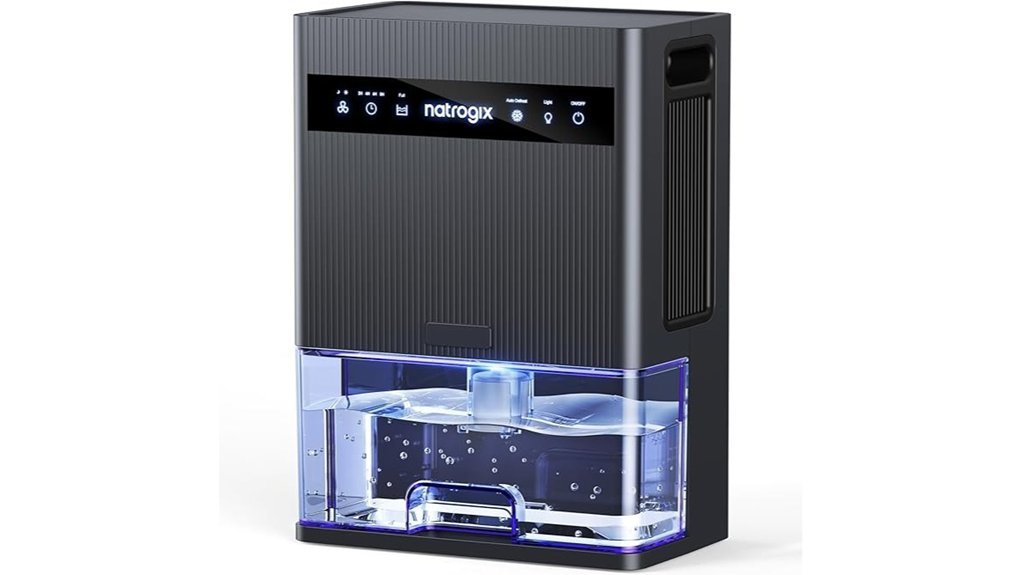
A large-tank thermoelectric model for bedrooms, bathrooms, RVs, and other small enclosed spaces where low sleep-mode noise matters more than whole-room compressor performance.
Quick specs from the seller listing reviewed
- Seller-listed extraction: Up to 40 oz/day at 86°F and 80% RH
- Tank: 106 oz
- Seller-listed sleep noise: 20 dB
- Modes: Power and Sleep
- Drainage: Manual tank
- Type: Dual-semiconductor/Peltier
Seller-listed figures are not independent test results. Actual extraction and sound can vary with room temperature, humidity, placement, and fan setting.
Why You’ll Like It
The 106-ounce tank reduces emptying frequency, while the listing’s 20 dB sleep-mode claim is the lowest in this roundup. It also includes a timer, smart defrost, auto shut-off, and switchable ambient light.
Best for: Light humidity in bedrooms, bathrooms, RVs, offices, and other smaller enclosed areas.
Who should avoid it: Cold basements, severe dampness, or buyers expecting a true 30- to 50-pint compressor dehumidifier.
Pros:
- Largest tank among the thermoelectric picks
- Very low seller-listed sleep-mode noise
- Auto shut-off, timer, defrost, and lights-off sleep mode
- Compact enough for room-to-room use
Cons:
- The 40 oz/day result is based on warm, highly humid test conditions
- Thermoelectric output drops in cooler or drier rooms
- No continuous drain hose is listed
- Coverage marketing can overstate practical performance
TENKER 77-Ounce Dual-Semiconductor Dehumidifier
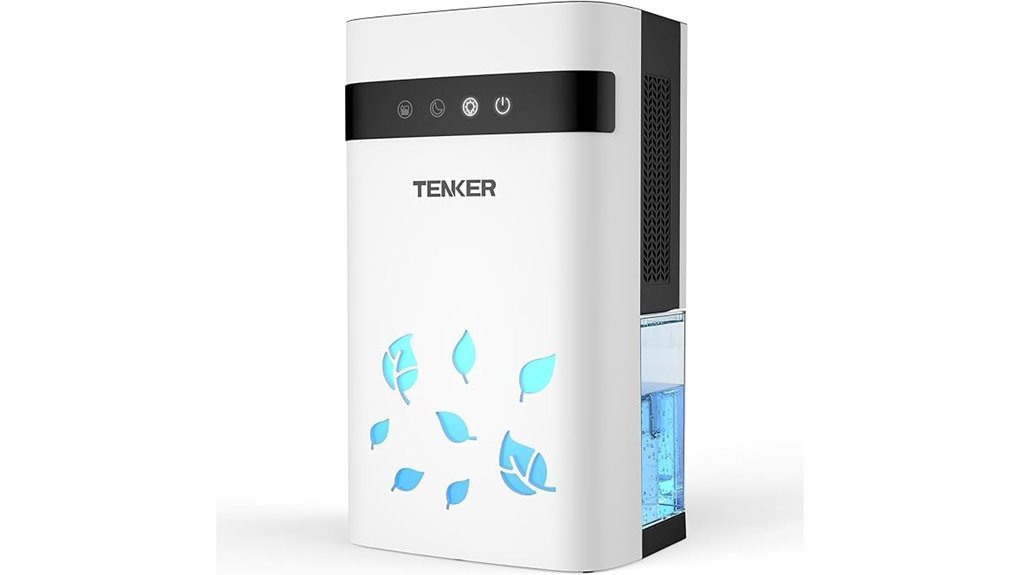
A compact model with dual fans and dual semiconductor condensers for buyers who want more extraction than a basic mini dehumidifier without compressor noise.
Quick specs from the seller listing reviewed
- Seller-listed extraction: Up to 35 oz/day at 86°F and 80% RH
- Tank: 77 oz / 2,200 ml
- Seller-listed sleep noise: Under 30 dB
- Modes: High speed and Sleep
- Drainage: Manual tank
- Type: Dual-semiconductor/Peltier
Seller-listed figures are not independent test results. Actual extraction and sound can vary with room temperature, humidity, placement, and fan setting.
Why You’ll Like It
Its larger tank and dual-condensation design suit small bathrooms, bedrooms, closets, and RVs. Sleep mode, automatic shut-off, a removable tank, and selectable LED lighting make it easy to live with.
Best for: Small enclosed rooms with mild to moderate moisture and buyers who prefer quiet operation over maximum extraction.
Who should avoid it: Large open areas or cool basements with persistent high humidity.
Pros:
- Dual-fan, dual-semiconductor design
- Under-30 dB seller-listed sleep mode
- Large tank for a compact thermoelectric unit
- Auto shut-off and removable tank
Cons:
- Maximum extraction is measured in warm, very humid conditions
- Amazon listing shows inconsistent floor-area figures, so use it for small rooms rather than relying on the headline coverage
- No continuous drainage option is listed
- Ambient lighting may be unnecessary for some buyers
BEDRED 95-Ounce Dehumidifier with Ambient Light
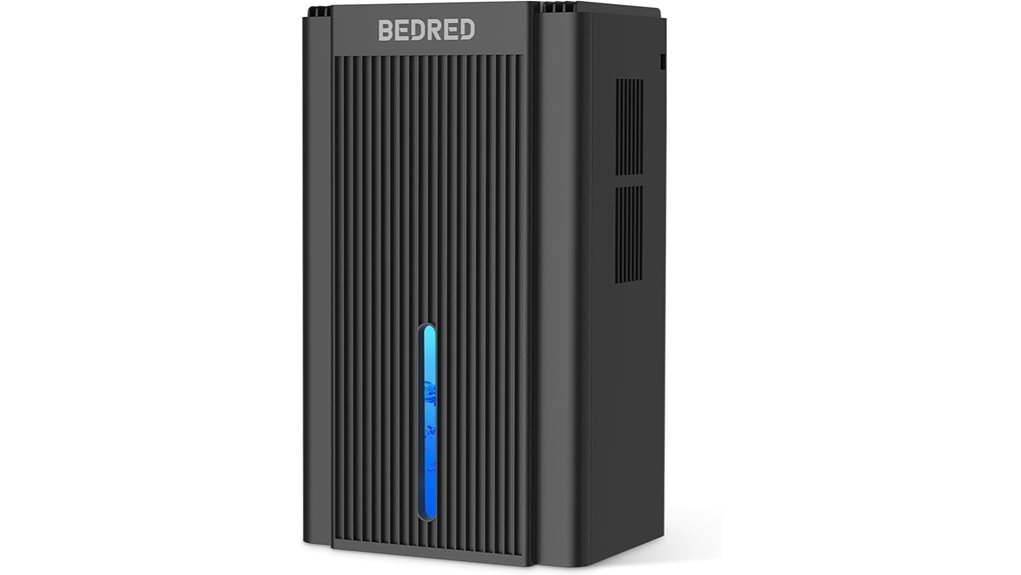
A large-tank mini dehumidifier for people who want gentle moisture control, sleep mode, and a selectable night-light in a bedroom or small living area.
Quick specs from the seller listing reviewed
- Tank: 95 oz
- Seller-listed coverage: Up to 1,000 sq. ft.; practical use is better limited to small enclosed areas
- Lighting: 7 colors
- Safety: Auto shut-off
- Modes: Standard and Sleep
- Type: Thermoelectric/Peltier
Seller-listed figures are not independent test results. Actual extraction and sound can vary with room temperature, humidity, placement, and fan setting.
Why You’ll Like It
The 95-ounce transparent tank, sleep mode, automatic shut-off, and seven-color light make it easy to use in visible living spaces. It is best treated as a quiet small-room appliance rather than a substitute for a high-capacity basement unit.
Best for: Bedrooms, bathrooms, closets, RVs, and buyers who appreciate mood lighting.
Who should avoid it: Very wet basements, flood drying, or anyone who needs verified pint-per-day capacity.
Pros:
- Large 95-ounce tank
- Sleep mode and selectable seven-color lighting
- Automatic shut-off when the tank is full
- Compact polypropylene housing
Cons:
- The listing does not provide a clear verified decibel figure
- No continuous drain hose is listed
- Practical coverage is likely smaller than the headline square-foot claim in damp conditions
- Thermoelectric performance is temperature dependent
Onsekin CS08 Dehumidifier with Aromatherapy Diffuser
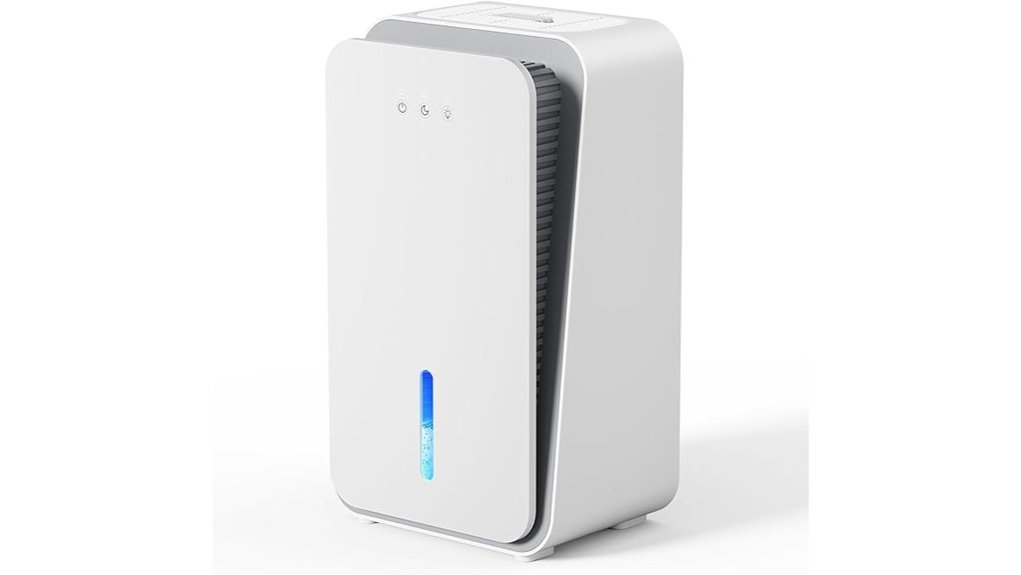
A compact dehumidifier that combines light moisture removal, a built-in aroma area, sleep mode, and LED lighting for bedrooms and small living spaces.
Quick specs from the seller listing reviewed
- Seller-listed extraction: Up to 37 oz/day; test conditions are not clearly standardized
- Seller-listed coverage: Up to 1,000 sq. ft.; practical performance depends on room conditions
- Seller-listed sleep noise: Below 45 dB
- Lighting: 7 colors
- Safety: Full-tank and misaligned-tank shut-off
- Type: Dual-semiconductor/Peltier
Seller-listed figures are not independent test results. Actual extraction and sound can vary with room temperature, humidity, placement, and fan setting.
Why You’ll Like It
This model stands out for its built-in aromatherapy feature. It also provides automatic shut-off, sleep mode, a portable handle, and a removable tank.
Best for: Buyers who want gentle dehumidification plus fragrance and ambient lighting in a bedroom, bathroom, or office.
Who should avoid it: People sensitive to fragrance, households with pets or children where essential oils may be unsuitable, or anyone needing high-capacity basement drying.
Pros:
- Built-in aromatherapy feature
- Auto shut-off if the tank is full or incorrectly seated
- Sleep mode and seven-color lighting
- Compact, portable design
Cons:
- Below-45 dB is not as quiet as the lowest listed sleep modes here
- Fragrance use requires extra care around children, pets, and sensitivities
- Seller extraction conditions are not clearly stated, so the number is difficult to compare
- Coverage claim should be treated cautiously
NeedDuck 44-Ounce Compact Dehumidifier
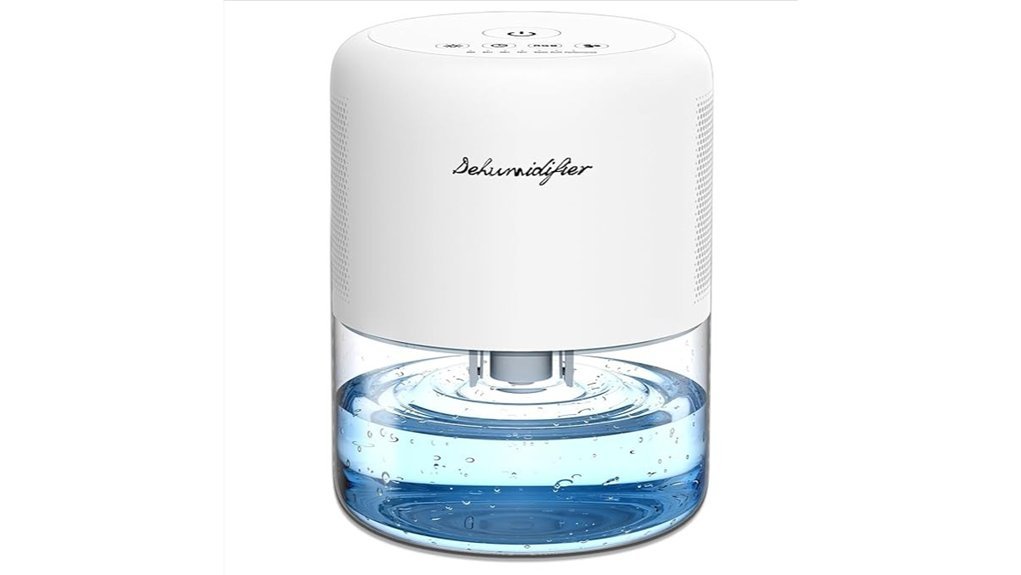
A light, narrow mini unit for desks, closets, bathrooms, RVs, and other tight areas where timer controls and portability are more important than high extraction.
Quick specs from the seller listing reviewed
- Tank: 44 oz
- Seller-listed coverage: About 215 sq. ft.
- Weight: About 2.6 lb
- Dimensions: About 5.91 in D × 5.91 in W × 8.46 in H
- Modes: Sleep, Auto, Performance
- Timers: 4 options
- Type: Thermoelectric/Peltier
Seller-listed figures are not independent test results. Actual extraction and sound can vary with room temperature, humidity, placement, and fan setting.
Why You’ll Like It
At about 2.6 pounds, this is one of the easiest units to move. The three modes, four timer settings, auto defrost, shut-off protection, and ten light colors offer more control than many basic mini dehumidifiers.
Best for: Small bathrooms, closets, campers, dorm rooms, and people who want a very portable unit.
Who should avoid it: Large rooms, cold basements, or users who want a drain hose and high daily moisture removal.
Pros:
- Very light and compact
- Three modes and four timer options
- Auto defrost and automatic shut-off
- Ten selectable light colors
Cons:
- No decibel figure is stated on the current listing
- Small tank and low-output technology limit heavy-duty use
- No continuous drainage option is listed
- Lighting may add little value for some buyers
TABYIK 35-Ounce Small Bedroom Dehumidifier
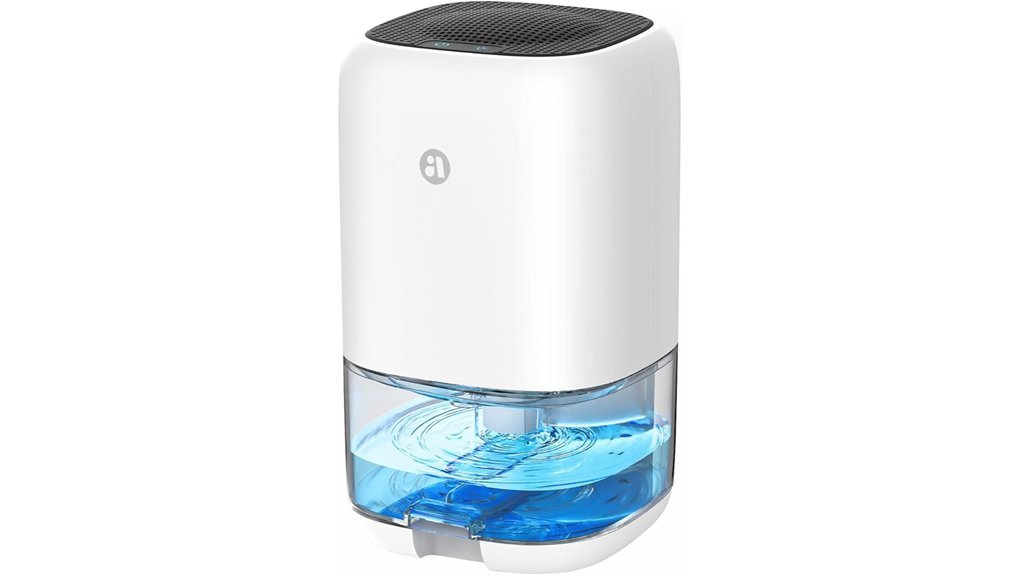
A simple compact choice for small bedrooms, bathrooms, closets, and RVs when you need low noise and basic automatic shut-off.
Quick specs from the seller listing reviewed
- Seller-listed extraction: Up to 16 oz/day at 86°F and 80% RH
- Tank: 35 oz
- Seller-listed noise: 28 dB
- Seller-listed coverage: Up to 280 sq. ft.
- Lighting: 7 colors
- Type: Thermoelectric/Peltier
Seller-listed figures are not independent test results. Actual extraction and sound can vary with room temperature, humidity, placement, and fan setting.
Why You’ll Like It
The TABYIK is smaller and simpler than the large-tank Peltier options. Its listed 28 dB operation, visible tank, low power use, and automatic shut-off make it suitable for light, localized humidity control.
Best for: Small bedrooms, closets, RVs, and bathrooms with modest moisture.
Who should avoid it: Basements, large rooms, low-temperature spaces, or anyone who needs fast drying.
Pros:
- Compact footprint and 35-ounce tank
- Seller-listed 28 dB operation
- Auto shut-off and visible tank
- Low listed power consumption
Cons:
- Only up to 16 ounces per day under warm, humid test conditions
- Small coverage and tank size
- Performance falls as temperature and humidity decrease
- Not a replacement for a compressor dehumidifier
Factors to Consider When Choosing a Quiet Dehumidifier for Home
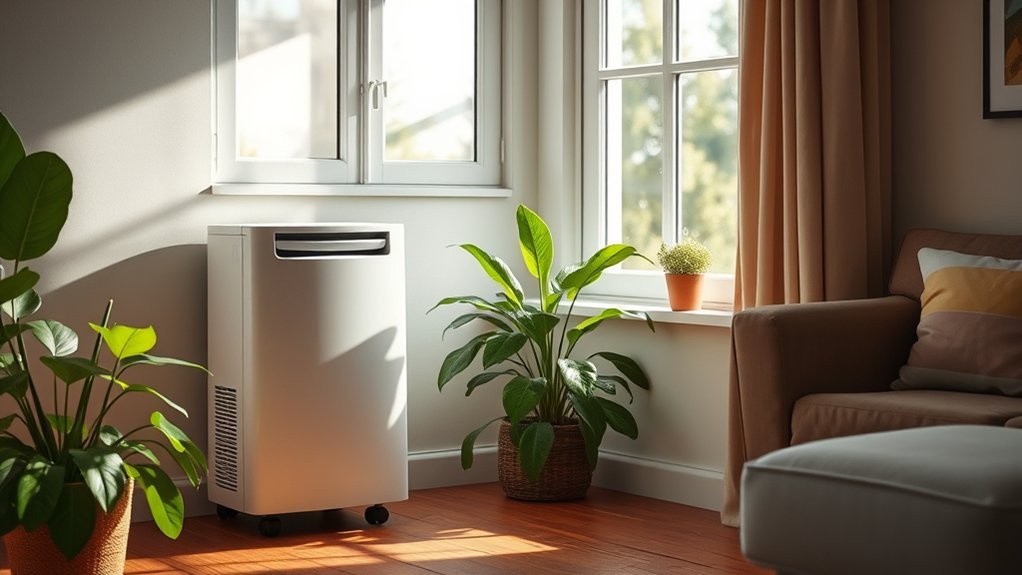
A quiet model still needs enough capacity for the job. Start with the technology type and moisture-removal rating, then compare noise, drainage, tank size, controls, and room temperature.
Compressor vs. Thermoelectric Dehumidifiers
Compressor dehumidifiers are usually the better choice for basements, laundry rooms, and persistent humidity because they remove much more water per day. They are larger and may produce compressor cycling noise, but a drain hose and humidistat make them suitable for continuous control.
Thermoelectric or Peltier dehumidifiers are compact and often quieter because they do not use a conventional compressor. They work best in small, enclosed, warm rooms with light moisture. Their output can fall sharply in cooler or less humid conditions, so a large square-foot coverage claim does not mean compressor-level performance.
Noise Level Ratings
Noise is measured in decibels, but seller figures are not always tested at the same distance, fan speed, or room conditions. A 3 dB increase represents roughly double the acoustic energy, not double the perceived loudness. Compare ratings only when the operating mode is stated. For bedrooms, look for a sleep mode that lowers fan speed and lets you turn display or LED lights off.
Also consider the character of the sound. A steady fan can be easier to tolerate than compressor starts, rattling tanks, or vibration against a wall. Place the unit on a level surface and leave the airflow clearance required by the manual.
Moisture-Removal Capacity and Coverage
Do not confuse tank size with daily extraction capacity. A 106-ounce tank only tells you how much water the bucket holds. It does not mean the unit removes 106 ounces per day.
Compressor models are commonly compared in pints per day, but a seller’s “maximum” rating may use warmer and wetter conditions than an official standardized capacity test. Small Peltier models often advertise ounces per day measured around 86°F and 80% relative humidity, which is a favorable environment. In a cooler bedroom or basement, actual collection may be much lower.
Choose a Sensible Humidity Target
The U.S. EPA recommends controlling indoor moisture and generally keeping relative humidity between 30% and 50% when practical. A hygrometer helps you confirm whether the dehumidifier is making a meaningful difference instead of relying only on the amount of water visible in the tank.
Tank Capacity and Drainage
A larger tank means fewer trips to the sink, but it also becomes heavier when full. For a damp basement, continuous drainage is usually more convenient. Most included hoses use gravity, so the hose must slope downward without kinks to a floor drain or other safe outlet. A gravity-drain model cannot push water uphill unless it includes a pump.
Energy Efficiency
For compressor dehumidifiers, match the exact model number and suffix on the appliance or packaging to the official ENERGY STAR Product Finder. ENERGY STAR says certified dehumidifiers use more efficient refrigeration components to remove moisture with less energy than comparable non-certified models. Avoid fixed annual-dollar savings claims unless the calculation states electricity rate, runtime, humidity load, and comparison model.
Auto Shut-Off, Defrost, and Safety
A full-tank auto shut-off helps prevent overflow. Some models also stop when the tank is removed or misaligned. Auto defrost is useful in cooler rooms because frost can build on the cold surface and reduce moisture removal.
Before using any dehumidifier, check the model number against current recall information, plug it directly into a suitable wall outlet unless the manual explicitly permits another setup, keep the intake and exhaust clear, and stop using the unit if the plug, cord, or housing becomes unusually hot.
Useful Operating Modes
- Auto or humidistat mode: Cycles the unit to maintain a selected humidity level.
- Sleep mode: Lowers fan speed and may dim or disable lights.
- Continuous mode: Runs without targeting a humidity set point and is best paired with hose drainage.
- Timer: Limits runtime, but should not replace a humidistat when stable humidity is the goal.
- Laundry mode: Uses higher airflow for damp clothes or a laundry area; it is not a clothes dryer.
Portability and Maintenance
For room-to-room use, compare weight, handle design, caster wheels, and whether a full tank is easy to remove without spilling. Clean the filter on the schedule in the manual, wash and dry the tank regularly, inspect the drain hose, and leave enough clearance for airflow. A dirty filter can reduce performance and increase fan noise.
Which Quiet Dehumidifier Should You Choose?
| Your situation | Best technology | What to prioritize |
|---|---|---|
| Large or persistently damp basement | Compressor | Standardized capacity, humidistat, auto defrost, hose drainage |
| Bedroom with moderate humidity | Quiet compressor or capable thermoelectric model | Sleep-mode noise, lights-off control, target-humidity setting |
| Closet, RV, small bathroom, or localized moisture | Thermoelectric/Peltier | Tank size, auto shut-off, warm-room performance, compact footprint |
| Cold room or serious water intrusion | Purpose-sized compressor unit or professional remediation | Low-temperature operation, drainage, source repair, drying speed |
Before You Buy: Quick Checklist
- Measure the room, but prioritize pints or ounces per day over headline square footage.
- Choose a compressor model for persistent or basement-level humidity.
- Choose a Peltier model only for small, warm, enclosed spaces with lighter moisture.
- Confirm whether the quoted dB figure applies to sleep mode or full power.
- Check whether lights can be turned off for bedroom use.
- Plan a downward drain-hose route if you want continuous drainage.
- Match exact model numbers for ENERGY STAR certification and warranty coverage.
- Check current recall notices and read the latest Amazon listing before ordering.
Frequently Asked Questions
What Is the Quietest Type of Dehumidifier?
Small thermoelectric dehumidifiers are often quieter because they do not use a conventional compressor. However, they also remove much less moisture. For a bedroom with light humidity, a Peltier model may be enough. For a damp basement, a quiet compressor model is usually the better choice even if its sound level is higher.
How Often Should I Empty the Dehumidifier Tank?
Empty it whenever the full-tank indicator activates. In very humid conditions, that may be daily or more often. A continuous drain hose can reduce maintenance, but the hose must be routed correctly and checked for clogs or leaks.
Are Quiet Dehumidifiers Energy-Efficient?
Noise and energy efficiency are separate features. A low fan speed may reduce noise, but moisture removal may also slow. For compressor units, look for an exact model match in the ENERGY STAR database rather than assuming every quiet model is efficient.
Can I Use a Quiet Dehumidifier in a Basement?
Yes, but choose a compressor model with enough pint-per-day capacity, automatic defrost, and preferably continuous drainage. Small thermoelectric models are usually inadequate for a large, cool, or persistently damp basement.
What Humidity Level Should I Set?
A target around 45% to 50% RH is a practical starting point for many homes. The EPA advises keeping indoor relative humidity below 60% and ideally between 30% and 50% when possible. Avoid making the room excessively dry.
Can a Small Dehumidifier Really Cover 1,000 Square Feet?
A small unit may be marketed for a large floor area, but practical performance depends on room temperature, starting humidity, air exchange, and daily extraction. For a genuinely damp 1,000-square-foot area, compare pint capacity and use a compressor model rather than relying on square-foot marketing alone.
Do I Need a Drain Hose?
A hose is helpful for basements, laundry rooms, and any area where the tank fills frequently. It is less important for a small bedroom unit that collects only a modest amount of water. Confirm that the drain is lower than the outlet unless the model has a built-in pump.
What Maintenance Do Dehumidifiers Require?
Empty and wash the tank, clean or replace the filter as directed, keep the intake and exhaust clear, inspect the cord and plug, and check drain hoses for leaks or buildup. Unplug the unit before cleaning and follow the manufacturer’s manual.
Can I Run a Dehumidifier While Sleeping?
Many models are designed for overnight operation, but follow the manual, place the unit on a stable surface with proper airflow, and use auto shut-off or hose drainage correctly. A bedroom model should have a tolerable sound profile and controls that let you dim or turn off lights.
How Can I Make a Dehumidifier Quieter?
Place it on a level, rigid surface, keep the tank fully seated, clean the filter, maintain the required airflow clearance, and prevent the cabinet or hose from touching a wall. Sleep mode may reduce fan noise, but it can also slow moisture removal.
Safety and Reference Sources
- U.S. EPA guidance on indoor humidity and moisture control
- ENERGY STAR dehumidifier buying and efficiency guidance
- ENERGY STAR certified dehumidifier database
- U.S. CPSC dehumidifier recall information
Final Recommendation
Choose the AEOCKY 50-Pint Compressor Dehumidifier when you need the best overall balance of seller-listed output, controls, drainage, and mobility for a larger damp room. The Kesnos 30-Pint and BANABIE 32-Pint models are alternatives when a lower seller-listed compressor noise figure matters, but verify the exact model specifications and certification details before buying.
For a bedroom, closet, bathroom, or RV with lighter moisture, the Natrogix 106-Ounce model has the lowest listed sleep-mode noise and a large tank, while the TABYIK 35-Ounce model is the simpler compact choice. Treat all seller-listed sound, coverage, and extraction figures as comparison points rather than guaranteed real-world results.
Best buying rule: match the technology to the moisture problem. A quiet mini unit is convenient for a small warm room, but a damp basement usually needs a compressor dehumidifier with a humidistat and continuous drainage.