Affiliate disclosure: This article contains Amazon affiliate links. We may earn a commission from qualifying purchases at no extra cost to you.
Marketplace and power note: The product links below point to Amazon.com. Check the supplied plug, input voltage, adapter type, warranty coverage, and vehicle-use instructions before ordering. A product described as using a 12V adapter may still include a household wall adapter rather than a cigarette-lighter plug.
If you want to reduce condensation, dampness, and musty odors inside a car, choose a dehumidifier that matches how the vehicle is stored and powered. Compact tank models actively collect water but normally need external power and stable placement in a parked vehicle. Rechargeable desiccant models work silently without a cord inside the car, although they remove moisture more slowly. The five options below are the most relevant choices from the original list for light vehicle humidity and storage use in 2026.
Quick Verdict
Choose the Small Portable Mini Dehumidifier with 12V Adapter when you want active water collection and have a safe external power setup. Choose the Eva-Dry E-333 when you prefer silent, cordless moisture control with no liquid tank inside the vehicle. The Eva-Dry EDV-1100 and Ivation IVADM10 are better suited to a parked or stored car near a household outlet.
Vehicle safety note: Do not operate a loose tank-style dehumidifier while driving. Use powered models only in a parked vehicle on a stable, level surface with protected cords, clear airflow, and a manufacturer-approved power source. Do not run a dehumidifier from the starter battery with the engine off unless the vehicle and product manuals specifically confirm that setup is safe.
Quick Comparison
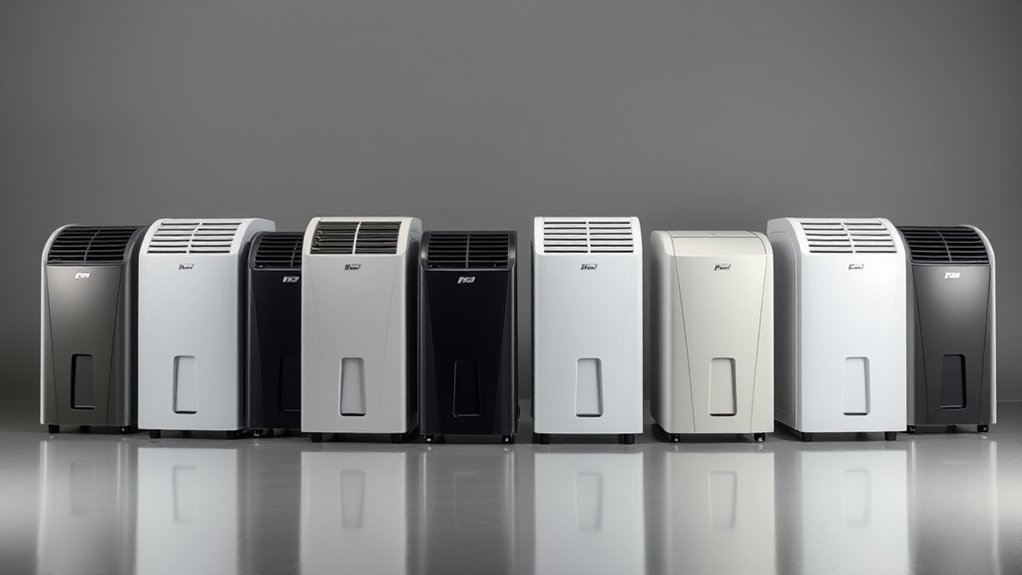
| Product | Type | Best Use | Main Limitation | Amazon |
|---|---|---|---|---|
| Small Portable Mini Dehumidifier | Powered Peltier unit with tank | Active collection in a parked car, RV, or small room | Needs power and performs poorly in cold conditions | Check Details |
| Afloia Rechargeable Mini Dehumidifier | Renewable desiccant with heating base | Cordless maintenance in small enclosed areas | Slow removal; not for wet carpets or major leaks | Check Details |
| Eva-Dry E-333 | Renewable silica-gel absorber | Silent, cordless use in a car or storage compartment | Requires periodic plug-in renewal | Check Details |
| Eva-Dry EDV-1100 | Powered Peltier unit with tank | Stored vehicle near a safe 110–120V outlet | Not intended to operate loose while driving | Check Details |
| Ivation IVADM10 | Powered Peltier unit with tank | Parked cars, RVs, boats, and small storage spaces | Needs external power and manual tank emptying | Check Details |
Small Portable Mini Dehumidifier with 12V Adapter
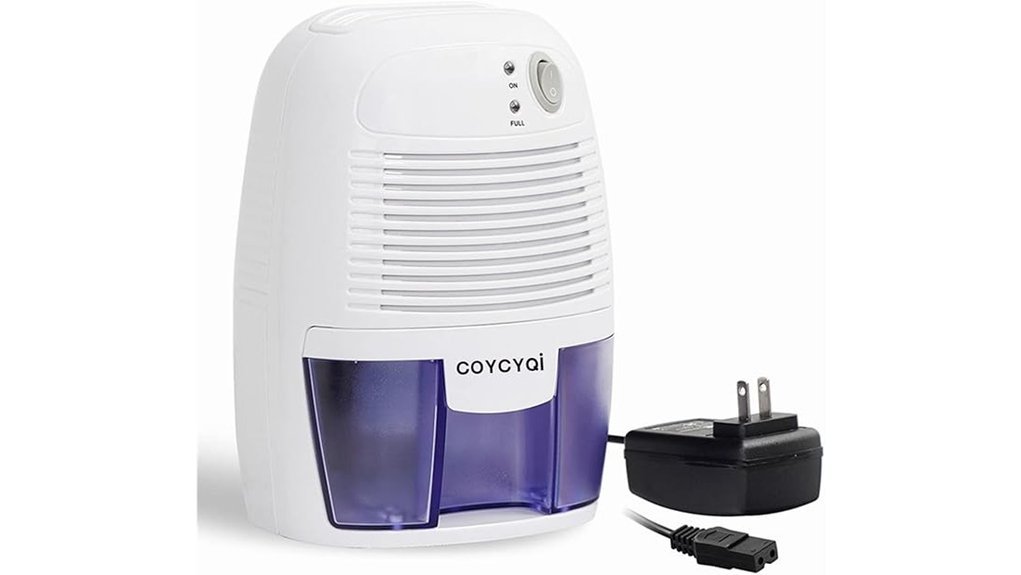
Best Compact Powered Option
This small Peltier dehumidifier is the strongest match when you want a compact appliance that actively pulls moisture into a removable tank. The product listing specifies a 17-ounce reservoir, approximately 36W of power draw, automatic shutoff, and an included 12V/3A adapter. Its compact dimensions make it easier to position in a parked car, RV, closet, or similarly small area.
Do not assume that “12V adapter” means the product plugs directly into a vehicle accessory socket. Check the connector and included power supply before ordering. Like most thermoelectric units, it will work best in relatively warm, humid conditions and may collect very little water in a cold vehicle.
Best For: Buyers who want visible water collection in a parked vehicle and have access to a safe, compatible power source.
Why You’ll Like It: Unlike passive absorbers, it collects liquid in a tank and shuts off when that tank is full.
Who Should Avoid It: Drivers who need a completely cordless product, regularly park in freezing conditions, or cannot provide stable placement and external power.
Pros:
- Actively collects moisture in a removable 17-ounce tank
- Automatic shutoff helps reduce overflow risk
- Compact design is easier to position in small spaces
Cons:
- The supplied adapter may require a household outlet rather than a vehicle socket
- Thermoelectric performance falls as temperatures drop
- The tank must be emptied before the vehicle moves
Afloia Rechargeable Cordless Mini Dehumidifier with Heating Base
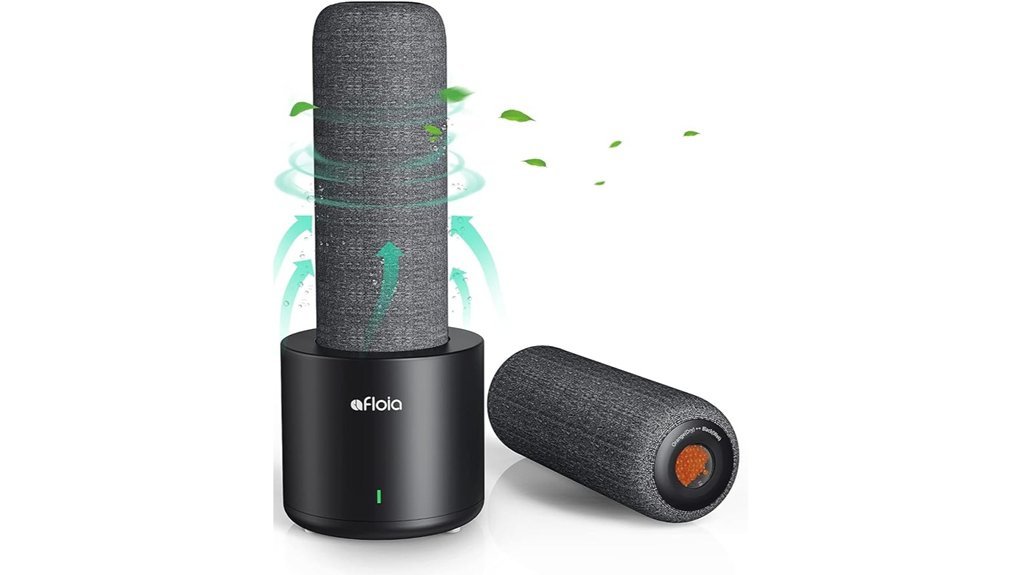
Best Cordless Rechargeable Option
The Afloia unit uses renewable desiccant beads to absorb moisture while it sits unplugged inside a small enclosed space. When the indicator shows that the beads are saturated, the cylinder is placed on its heating base to release the collected moisture and prepare it for reuse.
This design avoids carrying an open liquid tank in the vehicle and makes the unit easier to move between a car, RV, closet, cabinet, or storage compartment. Its 360-degree inlet also exposes the desiccant to air from multiple directions. However, it is intended for gradual humidity maintenance rather than quickly drying soaked seats or carpeting.
Best For: Drivers who want a reusable, cordless absorber without disposable refill tablets or a liquid collection tank.
Why You’ll Like It: The moisture-absorbing cylinder works without a cable inside the car and can be renewed on the included base.
Who Should Avoid It: Anyone dealing with standing water, a serious leak, soaked carpet, or a large vehicle that needs rapid active drying.
Pros:
- Cordless operation while absorbing moisture
- No liquid reservoir to empty before driving
- Renewable beads reduce the need for disposable refills
Cons:
- Removes moisture more slowly than a powered tank model
- Must be returned to the heating base when saturated
- Best for small enclosed areas and light moisture control
Eva-Dry Wireless Mini Dehumidifier, White (E-333)
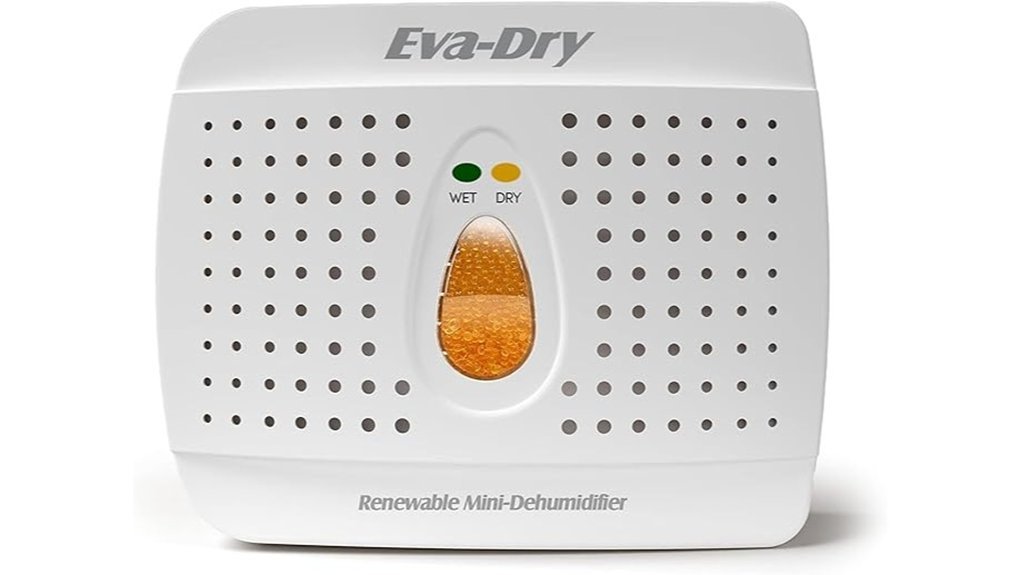
Best Low-Maintenance Pick
The Eva-Dry E-333 is a silent renewable dehumidifier designed for small enclosed spaces up to 333 cubic feet. It uses silica-gel desiccant rather than a fan, compressor, or water tank, so it works without a cord or battery while placed inside the vehicle.
Color-changing beads show when renewal is needed. You then remove the unit from the car and plug it into a standard 110–120V outlet for approximately 10 to 12 hours. This makes it convenient for stored cars, glove-box areas, trunks, gym bags, and small cargo compartments where gradual moisture absorption is more important than fast extraction.
Best For: Drivers who want silent, spill-resistant moisture control that can remain in the vehicle without a power cable.
Why You’ll Like It: It is compact, cordless during use, and does not leave a container of collected liquid inside the car.
Who Should Avoid It: Buyers who need rapid drying after flooding, a leaking roof, or heavily soaked upholstery.
Pros:
- Silent operation with no fan or moving parts
- Rated for enclosed spaces up to 333 cubic feet
- Renewable design avoids disposable refill packs
- Five-year manufacturer warranty is listed for the product line
Cons:
- Works gradually rather than actively pumping water into a tank
- Needs approximately 10 to 12 hours of plug-in renewal when saturated
- May not keep up if wet items continually add moisture to the cabin
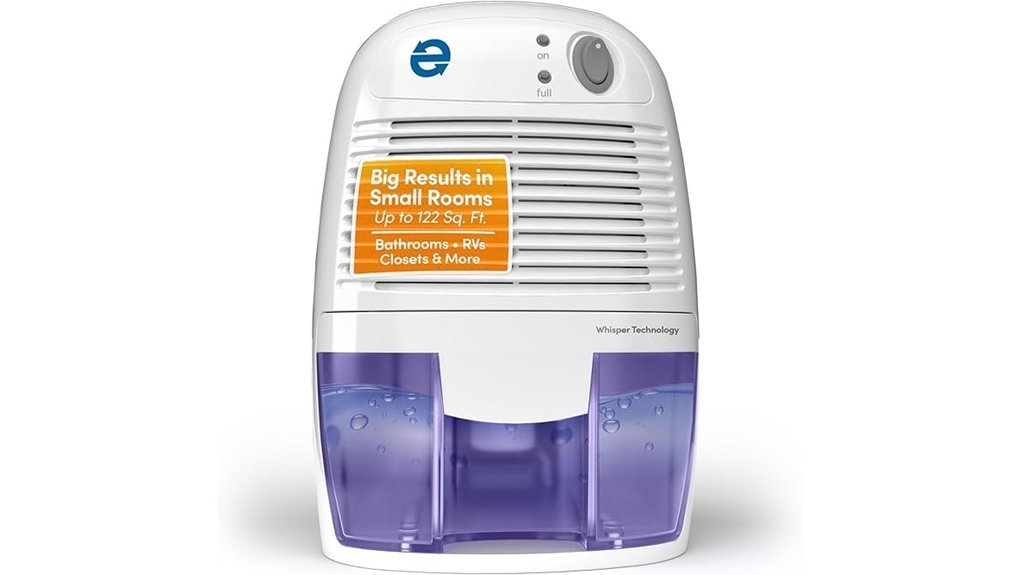
Eva-Dry EDV-1100 16 oz Dehumidifier for Small Spaces
Best for a Stored Car Near an Outlet
The Eva-Dry EDV-1100 is a compact plug-in electric dehumidifier with an internal reservoir and automatic shutoff. Manufacturer specifications list approximately 22W power consumption, a noise level near 33 dB, 110–120V input, and coverage of up to 1,100 cubic feet.
It can be useful in a parked collector car, garage-kept vehicle, RV, or small storage area where a safe household outlet is available. Because it collects liquid in a tank, place it on a stable, level surface and empty the reservoir before moving the vehicle.
Best For: Stored vehicles that remain parked near a properly installed 110–120V outlet.
Why You’ll Like It: It provides continuous active moisture collection without waiting for a desiccant renewal cycle.
Who Should Avoid It: Commuters looking for a product to run while driving or anyone without a protected external power source.
Pros:
- Quiet operation at approximately 33 dB
- Low listed power consumption of approximately 22W
- Automatic shutoff when the reservoir is full
- Compact footprint for smaller storage spaces
Cons:
- Requires a 110–120V power source
- Reservoir must be emptied manually
- Not suitable for loose operation in a moving vehicle
- Thermoelectric performance is limited in cold conditions
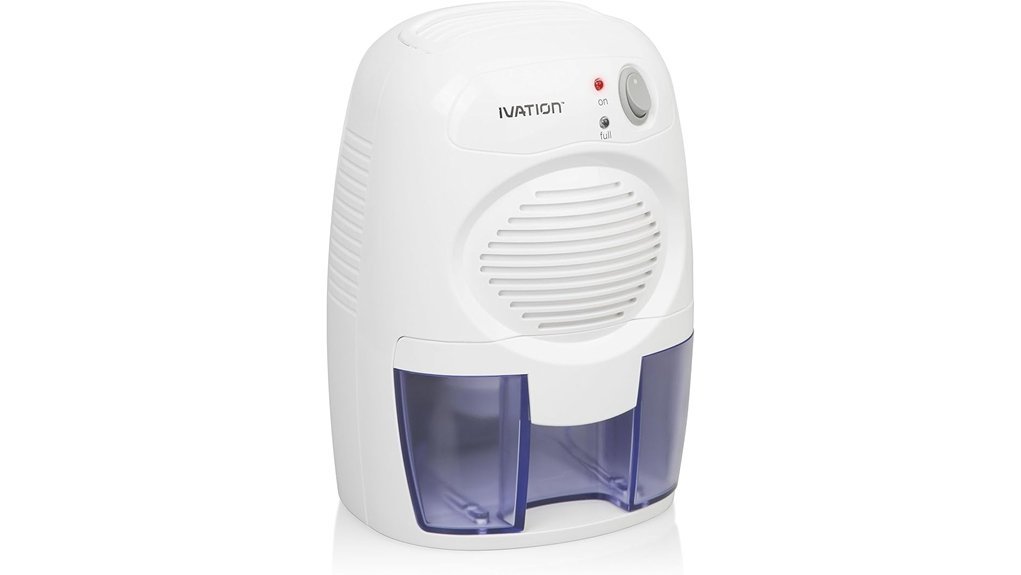
Ivation Small Thermo-Electric Dehumidifier for Small Spaces
Best Ivation Alternative
The Ivation IVADM10 is another compact Peltier dehumidifier for small rooms, stored cars, RVs, and boats. Manufacturer specifications list a 17-ounce removable tank, automatic shutoff, washable filter, dimensions of approximately 6.1 x 5.1 x 8.7 inches, and moisture collection of up to 6 ounces per day under favorable test conditions.
Its compact housing and low listed power draw make it easier to use in a parked vehicle than a full-size compressor model. Real collection will vary with temperature, relative humidity, airflow, and how often damp air enters the car.
Best For: Buyers who want a recognizable compact powered model for a parked car, RV, boat, cupboard, or storage area.
Why You’ll Like It: The removable tank, washable filter, full-tank indicator, and automatic shutoff make routine maintenance straightforward.
Who Should Avoid It: Anyone who needs cordless operation or plans to leave the appliance unsecured while the vehicle is moving.
Pros:
- Compact dimensions fit many small storage areas
- 17-ounce removable water reservoir
- Automatic shutoff and full-tank indicator
- Washable filter reduces routine replacement needs
Cons:
- Needs external electrical power
- Tank must be emptied before moving the car
- Collection rate drops in cool or moderately humid conditions
- Not powerful enough for serious water intrusion
Factors to Consider When Choosing an Electric Dehumidifier for Car
The best car dehumidifier depends on whether you need active water collection or slow, cordless moisture maintenance. Power compatibility, temperature, vehicle movement, spill risk, and the source of the dampness matter more than a large room-coverage number.
Active Electric vs. Rechargeable Desiccant
An active Peltier dehumidifier uses electricity continuously and collects liquid in a reservoir. It can remove moisture faster than a small silica-gel absorber, but it needs a safe power source and must remain level. A renewable desiccant unit absorbs moisture without power while it sits in the car, then uses electricity during a separate renewal cycle. Choose an active unit for a parked vehicle with external power and a renewable unit for quiet, cordless maintenance.
Power Source and Connector
Read the electrical specifications carefully. A device described as having a 12V adapter may include a household power supply that converts 110–120V AC to 12V DC. That does not automatically mean it includes a plug for the car’s accessory socket. Never substitute an adapter, splice a cord, or connect a unit to a vehicle battery unless the manufacturer approves the exact voltage, polarity, connector, and current rating.
Vehicle Battery Drain
Even a low-wattage dehumidifier can discharge a starter battery if it runs long enough while the engine is off. A 36W appliance draws roughly 3 amps at 12V before conversion losses. Use shore power, a properly sized portable power station, or another manufacturer-approved source rather than relying on the starter battery for extended operation.
Tank and Spill Risk
Tank-style units must remain upright and level. Empty the reservoir before driving, and do not place the appliance where sudden braking could send it into the pedals, seats, glass, or passengers. A renewable silica-gel unit has no liquid tank, but it should still be secured so it cannot become a projectile.
Temperature and Humidity
Small Peltier models generally collect the most water in warm, humid conditions. Their output can fall sharply in a cold winter vehicle. A low collection amount does not necessarily mean the unit is defective; the air may be too cool or contain too little removable moisture. Renewable desiccants also work gradually and should not be judged as rapid drying equipment.
Coverage Area
Do not choose solely by square-foot coverage. Cars are better compared by enclosed air volume, moisture entry, ventilation, and the amount of wet material inside. A manufacturer’s coverage rating is normally measured under controlled conditions and does not guarantee the same result in a leaky or frequently opened vehicle.
Source of Moisture
A dehumidifier can help with light condensation and storage humidity, but it cannot repair a clogged sunroof drain, damaged door seal, leaking heater core, wet floor insulation, or open body seam. If carpets or seats are soaked, remove standing water, extract moisture from the fabric, increase ventilation, and repair the leak before relying on a small dehumidifier.
Before You Buy
- Confirm whether the unit is active electric or renewable desiccant.
- Check the exact input voltage, plug, adapter, and connector.
- Decide where the unit can sit securely and level.
- Check whether it is approved for unattended or continuous operation.
- Plan how you will empty the tank or renew the desiccant.
- Repair leaks and dry wet materials before expecting humidity control.
Frequently Asked Questions
Can I Run an Electric Dehumidifier While Driving?
A loose tank-style dehumidifier should not operate while the car is moving. Water can spill, the unit can tip, and the cord or appliance can become a hazard during sudden braking. Use it while the vehicle is parked unless the manufacturer specifically provides an approved in-motion installation.
Will a Car Dehumidifier Drain the Battery?
It can. Any continuously powered appliance may discharge the starter battery when the engine is off. Do not rely on the vehicle battery for extended operation unless the product and vehicle manuals approve the setup. Cordless desiccant units do not draw battery power while absorbing moisture.
How Often Should I Empty or Recharge It?
Empty a tank whenever the full indicator appears and always before moving the vehicle. Renew a desiccant unit when its color indicator shows saturation. The interval may range from days to several weeks depending on humidity, temperature, cabin size, ventilation, and moisture entering the car.
Do Dehumidifiers Work Better With Windows Closed?
A powered dehumidifier normally works more efficiently in a mostly closed, parked vehicle because it is not constantly treating new outdoor air. However, ventilation can be more effective when drying soaked carpet, wet clothing, or breath-related condensation. Choose the method that matches the moisture source and weather conditions.
Will a Mini Dehumidifier Stop Foggy Windows?
It may reduce stored moisture that contributes to fogging, but it cannot guarantee clear windows. Wet floor mats, snow-covered shoes, blocked vents, recirculation mode, leaks, and rapid temperature changes can all cause condensation. Use the vehicle’s defroster and air conditioning when visibility is affected.
Can a Car Dehumidifier Fix Wet Carpet?
No small car dehumidifier should be the main solution for soaked carpet. Extract the water, lift or dry the padding, ventilate the cabin, and repair the leak. A compact dehumidifier can assist after the bulk water has been removed.
What Humidity Level Is Best Inside a Car?
There is no single number that remains practical in every vehicle because cabin humidity changes quickly with weather, passengers, heating, and ventilation. Focus on avoiding persistent condensation, damp fabrics, musty odors, and repeated moisture buildup rather than expecting a small unit to hold an exact percentage.
Are Car Dehumidifiers Safe to Leave Overnight?
Only leave a powered model operating when the manufacturer allows unattended use and the vehicle is parked, the unit is level, the cord is protected, airflow is unobstructed, and the power source is appropriate. A renewable desiccant unit should be unplugged from its renewal outlet before being placed in the car.
Conclusion
A compact dehumidifier can help manage light vehicle condensation, storage humidity, and musty odors, but the right type matters. The Small Portable Mini Dehumidifier is the best fit when you want active collection and have a safe power arrangement. The Eva-Dry E-333 is the easiest choice for silent, cordless moisture maintenance, while the Afloia offers a reusable cylinder-and-base design. The Eva-Dry EDV-1100 and Ivation IVADM10 make more sense for parked or stored vehicles near an outlet.
Final Recommendation
For everyday cordless use, start with the Eva-Dry E-333. For active moisture collection, choose a compact tank model only after confirming its plug, voltage, safe placement, and power source. Whichever type you select, repair leaks and dry soaked materials first—a mini dehumidifier should support moisture control, not replace the underlying repair.