Choosing a dehumidifier for a home in Saudi Arabia starts with voltage and frequency compatibility. Saudi Arabia is gradually moving from older 127/220V residential supplies to the 230/400V standard, and the national grid frequency is 60Hz. Check the exact outlet and appliance label instead of relying on plug shape alone.
This guide focuses on one compact, broad-voltage dehumidifier for small enclosed spaces. The TENKER 77oz model may suit light moisture in a bedroom, closet area, small bathroom or storage room, but it should not be treated as a whole-home or large-room compressor dehumidifier.
Quick verdict
Choose the TENKER only for mild humidity in one small enclosed space. Its Amazon specifications list a 100–240V input, but the listing does not clearly state the supported frequency. Before use in Saudi Arabia, inspect the delivered electrical label and confirm that it supports 60Hz. A plug adapter changes only the plug shape; it does not convert voltage or frequency.
TENKER at a Glance
| Product | Best use | Tank | Seller-listed input | Claimed extraction | Main limitation |
|---|---|---|---|---|---|
| TENKER Dehumidifier | Small enclosed rooms with light moisture | 77oz / 2.2L | 100–240V, 88W; verify 60Hz on the delivered label | Up to about 35oz / 1L per day at 30°C and 80% RH | Not suitable for large rooms, severe dampness or continuous drainage |
TENKER Dehumidifier with 77oz Water Tank
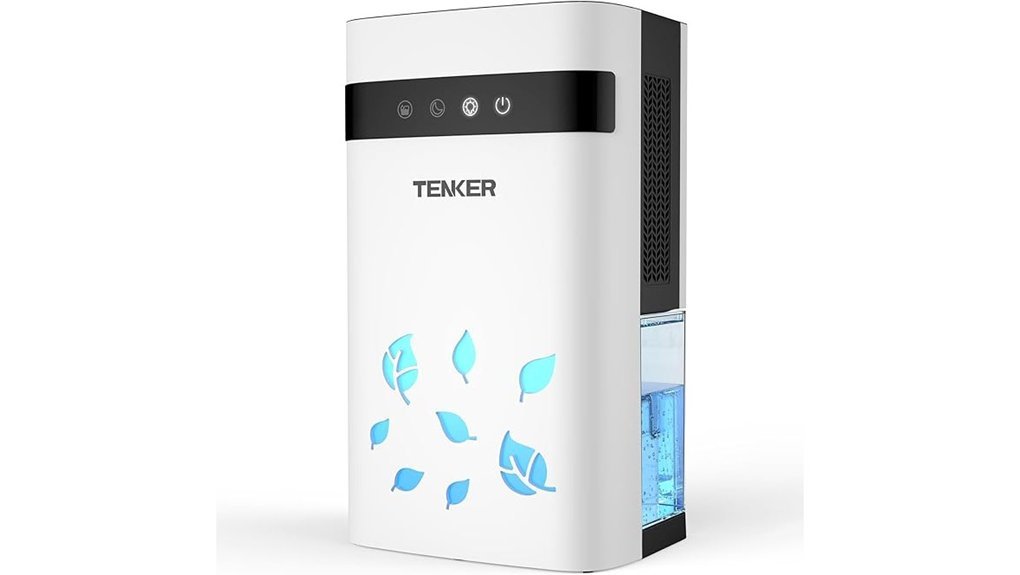
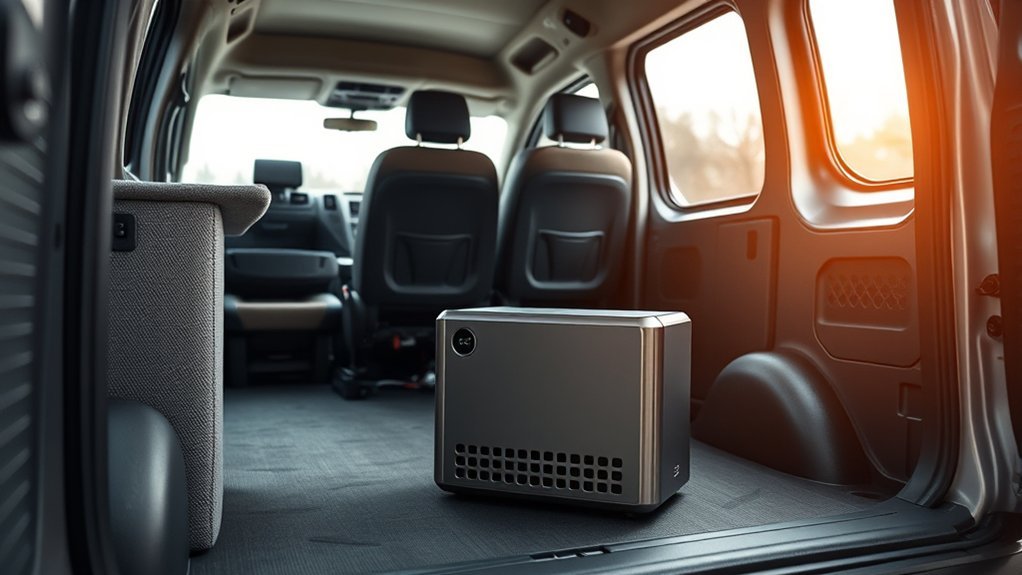
The TENKER uses thermoelectric semiconductor condensation rather than a conventional compressor. That design keeps the unit relatively compact and supports a lower-noise sleep mode, but it also limits how much moisture it can remove compared with a full-size compressor dehumidifier.
The seller lists a 2.2L tank and a maximum collection rate of about 35oz / 1L per day at 30°C and 80% relative humidity. Real-world collection will vary with room temperature, airflow, starting humidity, door position and room size.
Key seller-listed specifications
- 77oz / 2.2L removable water tank
- 100–240V listed input; confirm 60Hz support on the delivered electrical label
- 88W listed power
- Up to approximately 35oz / 1L per day at 30°C and 80% RH
- Detailed listed operating area of approximately 10–30m²
- Approximate dimensions of 35 × 14 × 20cm
- Approximate listed weight of 2.71kg
- High-speed and sleep modes
- Automatic shutoff when the tank is full
- Recessed carrying handle and optional seven-colour ambient light
Why You’ll Like It
The broad seller-listed voltage range is the main reason this model remains in the guide. Its compact body is easier to move and store than a compressor unit, while the removable tank and full-tank shutoff simplify routine use. Sleep mode and a switchable ambient light may also make it more practical in a bedroom.
Who Should Buy This
- People managing mild humidity in one small enclosed room
- Apartment residents who need a compact, portable unit
- Users who value lower noise and easy movement more than maximum extraction
- Buyers who can confirm 100–240V input and 60Hz support on the delivered label
Who Should Avoid This
- Anyone trying to dehumidify a large living area or an entire home
- Homes with active leaks, flooding, widespread mold or severe condensation
- Users who need continuous hose drainage or a built-in humidistat
- Buyers who cannot verify voltage, frequency, plug compatibility and return terms
Pros:
- Seller lists a broad 100–240V input range.
- Compact design is easier to carry between small rooms.
- Automatic full-tank shutoff helps reduce overflow risk.
- Sleep mode is intended for lower-noise operation.
Cons:
- The listing does not clearly state frequency compatibility.
- Coverage figures are inconsistent across the Amazon listing.
- Maximum extraction is based on warm, highly humid test conditions.
- The tank must be emptied manually, and continuous drainage is not listed.
How to Choose a Dehumidifier for a Saudi Home
A dehumidifier should be selected according to measured indoor humidity, room size, moisture source, drainage needs and electrical supply. A large advertised coverage number does not guarantee useful performance in every room.
1. Verify Voltage, Frequency and Plug
Saudi Electricity Company guidance states that new developments use 230V and that the national frequency remains 60Hz, while some existing properties may still have older 127/220V arrangements during the transition. Verify the exact outlet before connecting an imported appliance.
A plug adapter changes only the physical plug shape. It does not convert voltage or frequency. Never connect a 110–120V-only appliance directly to a 220–230V outlet.
2. Choose Thermoelectric or Compressor Technology
Thermoelectric or semiconductor dehumidifiers are compact and usually quieter. They work best in smaller enclosed spaces with mild moisture.
Compressor dehumidifiers remove substantially more water and are better for large rooms, laundry areas, persistent condensation and high moisture loads. They are generally larger, heavier and noisier.
For a living room, open-plan area or seriously damp space, do not rely on a desktop-style unit simply because its listing advertises a large square-foot figure.
3. Measure the Room and Moisture Load
Measure the room’s length and width and consider whether doors remain open. A unit intended for one enclosed room may perform poorly when humid air constantly enters from hallways or adjoining rooms.
The required capacity also increases when:
- Laundry dries indoors
- The bathroom lacks effective exhaust ventilation
- Windows or air-conditioning ducts develop condensation
- The room has a leak or water intrusion
- Outdoor air frequently enters the space
4. Check the Extraction Test Conditions
Dehumidifier capacity is normally expressed as the amount of water removed in 24 hours. Compact-unit sellers often report maximum performance in warm, highly humid test conditions.
A unit rated at 30°C and 80% relative humidity will usually collect less water in a cooler room or after humidity has fallen. Compare products only when their test conditions are reasonably similar.
5. Choose a Realistic Humidity Target
The U.S. Environmental Protection Agency recommends keeping indoor relative humidity between approximately 30% and 50%. A separate digital hygrometer can show whether a dehumidifier is needed and whether it is keeping up with the moisture load.
6. Consider Drainage and Tank Access
A larger tank reduces how often you need to empty the unit, but tank volume does not indicate extraction power.
For frequent or continuous use, a compressor model with gravity drainage may be more convenient. Confirm that you have a safe drain below the hose outlet and that the hose will not kink or create a trip hazard.
7. Check Noise and Placement
Place the dehumidifier on a stable, level surface with clear space around its air inlet and outlet. Do not push it against curtains, furniture or a wall unless the manufacturer specifically permits that placement.
For bedrooms, compare normal and sleep-mode noise specifications. Compressor cycling and fan noise may be more noticeable at night than a single advertised decibel figure suggests.
8. Look for Useful Safety Features
Helpful features include:
- Automatic shutoff when the tank is full
- Automatic defrost on compressor models
- Overheat or overload protection
- Child lock
- Automatic restart after a power interruption
- A washable or replaceable air filter
These features improve convenience, but they do not replace correct electrical compatibility, safe placement or routine maintenance.
9. Check Local Support, Shipping and Warranty
An imported Amazon product may not include local service, spare parts or a warranty that is practical to use from Saudi Arabia. Before ordering, confirm current offer availability, shipping eligibility, return terms, plug type, electrical rating and whether support is available in your location.
Before You Buy: Quick Checklist
- I measured the room instead of relying only on advertised coverage.
- I checked the room with a hygrometer.
- The delivered electrical label supports my outlet voltage and 60Hz frequency.
- I understand that a plug adapter does not convert voltage or frequency.
- The dehumidifier technology matches the moisture load.
- I can empty the tank or safely route a drainage hose.
- The unit will have enough airflow clearance.
- I checked current availability, shipping, returns, warranty and local support.
- I have repaired any active leak or water intrusion.
Frequently Asked Questions
Does Every Home in Saudi Arabia Need a Dehumidifier?
No. Indoor moisture varies by city, season, building, ventilation and air-conditioning performance. Measure the room with a hygrometer before buying. A dehumidifier is more useful when humidity remains high, condensation appears or a room develops a persistent damp smell.
Can I Use a 120V Dehumidifier in Saudi Arabia?
Do not connect a 120V-only dehumidifier to a 220–230V outlet. Some properties may still have older supply arrangements, but you must verify the exact outlet voltage and appliance label. When uncertain, consult a qualified electrician.
Will a Plug Adapter Convert the Voltage?
No. A plug adapter changes only the plug shape. It does not reduce 220–230V electricity to 110–120V and does not change frequency. A broad-input appliance must still be checked for explicit 60Hz compatibility.
Should I Use a Transformer with a Dehumidifier?
A correctly engineered transformer may operate some appliances, but compressor dehumidifiers can have demanding startup loads. A poorly sized converter can overheat or fail. A native 220–240V, 60Hz model with local support is generally the better choice.
What Is the Ideal Indoor Humidity?
A practical target for most homes is approximately 30% to 50% relative humidity. If the room feels uncomfortably dry, raise the target. If humidity stays high despite continuous operation, investigate ventilation, leaks, room size and dehumidifier capacity.
Can a Dehumidifier Remove Allergens?
A dehumidifier is not an air purifier. Lower humidity can make conditions less favourable for mold and dust mites, but the appliance does not remove every allergen or clean existing mold. Repair moisture sources and clean affected surfaces appropriately.
How Do I Maintain a Dehumidifier?
Empty and rinse the tank regularly, clean any filter according to the manual, wipe dust from the air inlet and outlet, and inspect a drainage hose for blockage where applicable. Unplug the appliance before cleaning.
Where Should I Place a Dehumidifier?
Use a stable, level location with enough clearance for airflow. Keep the unit away from direct splashes, bathtubs, showers and other places where water could reach electrical components.
Is the Collected Water Safe to Drink?
No. Dehumidifier condensate can collect dust, microorganisms and residues from the appliance. Do not use it as drinking or cooking water.
Will a Dehumidifier Fix a Water Leak?
No. It may help dry the air after the source is controlled, but it cannot repair plumbing, roof leaks, damaged seals or groundwater intrusion. Fix the water source first.
Final Recommendation
Best fit in this guide: TENKER 77oz Dehumidifier
Consider it only for a small enclosed room with mild moisture. Confirm that the delivered label supports your exact outlet voltage and Saudi Arabia’s 60Hz frequency before use.
For a large room, persistent dampness, indoor laundry or heavy moisture removal, buy a locally supported 220–240V, 60Hz compressor dehumidifier rather than adapting a US 110–120V model.