Affiliate disclosure: This article contains affiliate links. We may earn a commission at no extra cost to you if you buy through a link.
Choosing a dehumidifier for Saudi Arabia starts with electrical compatibility, not tank size or an advertised floor-coverage number. Saudi Arabia normally uses a 230V, 60Hz electrical supply with Type G plugs. Many appliances sold through Amazon.com are intended for 110–120V North American outlets, and a plug-shape adapter does not convert voltage.
This guide focuses on one compact imported model with published model-family information indicating wide-voltage input. However, specifications can differ between sellers, adapters, and production runs. Check the rating label on the exact dehumidifier and its power adapter before ordering or connecting it.
The retained product is a compact semiconductor dehumidifier for an enclosed bathroom, closet, laundry area, bedroom, RV, or storage space. It is not a substitute for a locally supported 220–240V compressor dehumidifier when you need to control persistent humidity in a large apartment, villa, open-plan room, basement, garage, or commercial area.
Quick Verdict
- Conditional Compact Option: The UBBO 95oz Dehumidifier offers a large tank, drain-hose support, sleep mode, timer controls, and automatic shutoff. Buy it only after confirming that the exact unit is labeled for 100–240V input and 60Hz operation.
- Best for a Small Enclosed Space: Consider it for localized moisture control in a bathroom, closet, laundry area, bedroom, RV, or storage space.
- Best for Large Rooms: Choose a locally sold 220–240V compressor dehumidifier with a documented daily extraction rating, Saudi-compatible plug, suitable drainage system, and local warranty support.
Product Compatibility Snapshot
| Product | Best For | Tank | Key Features | Saudi Compatibility Check | Amazon |
|---|---|---|---|---|---|
| UBBO 95oz Z18 | Small enclosed rooms where continuous gravity drainage is useful | 95 oz, approximately 2.8 liters | Drain hose, washable filter, sleep mode, 8/16/24-hour timer, auto shutoff, ambient light | Model-family data lists 100–240V input. Confirm the exact unit and adapter are marked for 100–240V and 60Hz before use. A compliant Type G connection may also be required. | Check Current Availability |
Electrical safety note: Never connect a 110–120V-only dehumidifier directly to a 220–230V outlet. A travel plug adapter changes only the plug shape. It does not reduce the voltage. Verify the appliance input voltage, 60Hz compatibility, plug type, grounding, adapter rating, warranty conditions, and applicable Saudi conformity requirements before use.
Saudi standards reference: Saudi standards distinguish higher-voltage grounded plugs from legacy lower-voltage outlets, and the modern electrical system is transitioning to 230V. Review the Saudi Standards, Metrology and Quality Organization guidance before using an imported appliance.
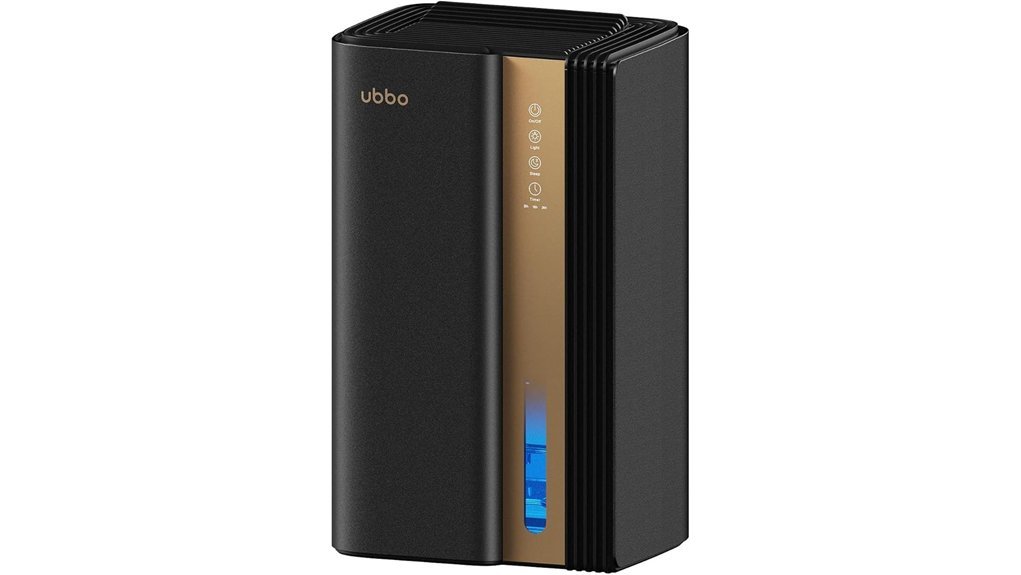
UBBO 95oz Dehumidifier for Home with Drain Hose
Conditional Compact Option
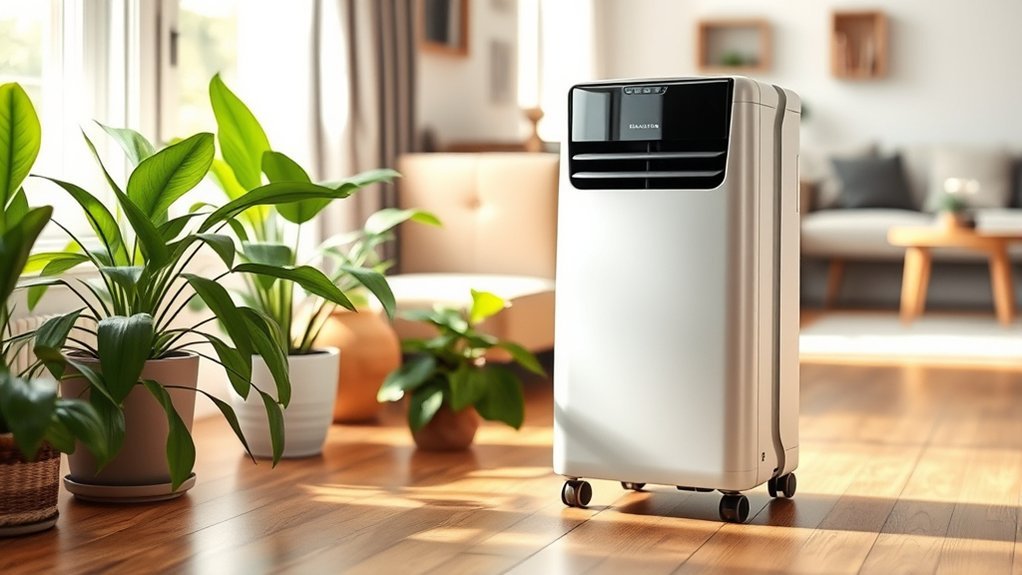
The UBBO 95oz Z18 Dehumidifier is a compact thermoelectric model for localized moisture control. Its main features include a 95-ounce collection tank, continuous gravity-drain connection, washable filter, sleep mode, automatic shutoff, ambient lighting, and timer settings of 8, 16, or 24 hours.
Model-family documentation claims moisture removal of up to 1.2 liters per day at approximately 86°F and 80% relative humidity. This is a favorable test environment, not a guaranteed result in every home. Actual collection can be much lower in a cool air-conditioned room, at moderate humidity, with open doors, or in a space that is too large for the appliance.
Published retailer information for the Z18 model family lists 100–240V input. That does not eliminate the need to inspect the exact appliance and adapter. Confirm that the unit delivered to you clearly states 100–240V input and 60Hz compatibility. Do not connect it to a 230V outlet if its label shows only 110V, 115V, or 120V.
Why You’ll Like It
The drain-hose connection can reduce manual tank emptying when a suitable lower drain is nearby. The washable filter simplifies routine maintenance, while sleep mode and timer controls make it easier to schedule the unit for a bedroom, bathroom, closet, laundry area, or storage space.
Who Should Buy This
Consider the UBBO if you need gradual moisture control in one small enclosed area, want a large tank for the compact category, and can verify the exact electrical label before use. It is most appropriate where mild or localized humidity is the main problem.
Who Should Avoid This
Skip it if you need fast drying after water damage, whole-apartment humidity control, verified Saudi warranty service, or high-capacity performance in a large open room. A native 220–240V compressor dehumidifier purchased through a Saudi retailer is the safer choice for those situations.
Pros:
- Large 95-ounce tank for a compact thermoelectric unit.
- Continuous gravity-drain option can reduce manual emptying.
- Includes sleep mode, timer settings, automatic shutoff, and ambient lighting.
- Washable filter helps maintain airflow when cleaned regularly.
- Model-family information indicates wide-voltage input.
Cons:
- The voltage and frequency must be verified on the exact unit and adapter.
- Not powerful enough for a whole apartment, villa, or large open-plan room.
- The claimed daily extraction applies under warm, highly humid test conditions.
- Advertised coverage should not be treated as a standardized performance rating.
- International shipping, returns, replacement parts, and warranty support may be inconvenient.
Before clicking: Review the current Amazon listing, seller, shipping destination, return terms, plug configuration, and product-label photographs. Do not rely only on the product title or a generic model description.
How to Choose a Dehumidifier for Saudi Arabia
A useful dehumidifier must match the electrical supply, room size, moisture load, temperature, drainage arrangement, and level of local product support. Complete the checks below before buying an imported appliance.
1. Check Voltage, Frequency, and Plug Type First
Saudi Arabia normally uses 230V at 60Hz with Type G plugs. Read the permanent rating label on the appliance and its power adapter rather than relying only on the online product title.
A label showing “100–240V, 50/60Hz” normally indicates that the electrical input can operate on the Saudi supply, although a properly rated Type G connection may still be needed. A label showing only “110V,” “115V,” or “120V” is not suitable for direct connection to a 230V outlet.
A step-down transformer may be possible in some situations, but it must be correctly sized for the appliance. Compressor motors can have higher startup demand than their normal running wattage. For simplicity, grounding, warranty protection, and safer long-term use, a native 220–240V appliance is usually preferable.
2. Separate Moisture Removal From Tank Size
A 95-ounce tank tells you how much collected water the machine can hold. It does not tell you how quickly the machine can lower the humidity. Compare the daily extraction rating, wattage, dehumidification technology, and test conditions.
Warm air can hold more water than cool air, so thermoelectric units normally collect more moisture in warm, highly humid conditions than in a cool air-conditioned bedroom. Treat laboratory-style maximums as comparison figures rather than guaranteed daily results.
3. Choose the Right Dehumidifier Technology
Semiconductor or thermoelectric dehumidifiers are compact, light, and generally quieter. They are most useful for gradual moisture control in a small enclosed space.
Compressor dehumidifiers are larger and usually noisier, but they can remove substantially more moisture. They are generally the better choice for large bedrooms, open living areas, villas, heavy coastal humidity, persistent condensation, wet laundry rooms, or water-damage drying.
4. Treat Floor-Coverage Claims Carefully
An advertised square-foot figure is not a universal performance standard. Ceiling height, open doors, air leakage, shower use, wet clothing, air-conditioning cycles, outside humidity, and the number of occupants all affect the moisture load.
For a compact thermoelectric unit, start with one enclosed room. Close doors and windows during operation and use a separate hygrometer to confirm whether the humidity is actually falling.
5. Set a Practical Humidity Target
A practical target for many homes is approximately 30% to 50% relative humidity, while keeping the level below 60% where possible. Comfort and condensation conditions vary, so avoid making the room excessively dry.
Humidity control does not replace repairing leaks, drying wet materials, cleaning existing mold, using bathroom exhaust ventilation, or maintaining the air-conditioning system. See the EPA moisture and mold guidance for additional information.
6. Decide Between Tank and Continuous Drainage
Tank collection is simple, but the tank may need regular emptying during humid weather. Continuous gravity drainage is more convenient when the hose can run continuously downward to a floor drain or lower container.
A gravity hose cannot push water uphill. Avoid sharp bends, raised sections, pinched tubing, loose connections, and a hose end that is submerged in standing water.
7. Consider Noise, Airflow, and Placement
Noise claims are often measured under the quietest mode. Place the unit upright on a firm, level surface and maintain the clearance specified in the manual around the air intake and outlet.
Do not place the dehumidifier inside a closed cabinet, against curtains, beside a heat source, on an unstable shelf, or where water can splash onto the appliance, cable, adapter, or outlet.
8. Check Maintenance, Returns, and Local Support
Clean a washable filter according to the manual and allow it to dry completely before reinstalling it. Empty and clean the tank regularly to prevent stagnant water and residue.
Before ordering, confirm who handles international returns, whether the warranty applies outside the original sales country, and whether replacement adapters, filters, tanks, and drain hoses are available in Saudi Arabia.
Before You Buy: Saudi Arabia Checklist
- Confirm the exact appliance and adapter input voltage on the permanent rating label.
- Confirm that the appliance supports Saudi Arabia’s 60Hz frequency.
- Check whether a properly rated Type G connection is included or required.
- Make sure grounding is preserved when using an adapter.
- Do not confuse the water-tank volume with daily moisture-removal capacity.
- Check the temperature and humidity conditions used for the extraction rating.
- Use a compact thermoelectric unit only for gradual control in a small enclosed area.
- Choose a native 220–240V compressor model for large rooms or persistent humidity.
- Confirm that a gravity drain hose can run continuously downward.
- Review international shipping, customs, returns, replacement parts, and warranty terms.
- Check the current Amazon page because sellers, specifications, and availability can change.
Frequently Asked Questions
Can I Use a 120V Dehumidifier in Saudi Arabia?
Not directly on a 220–230V outlet. A plug adapter does not convert voltage. A correctly sized step-down transformer may be possible, but it adds cost and complexity and may affect warranty coverage. A native 220–240V dehumidifier is usually safer and easier.
How Do I Know Whether a Dehumidifier Is Dual Voltage?
Inspect the rating label on the appliance and power adapter. Wording such as “Input: 100–240V, 50/60Hz” normally indicates wide-voltage compatibility. Do not rely only on the online title, seller description, plug shape, or packaging photograph.
What Humidity Level Should I Target?
A common indoor target is approximately 30% to 50% relative humidity. Try to keep humidity below 60% where possible, especially when condensation or musty odors are present. Use a hygrometer to measure the room rather than guessing from how the air feels.
Can This Compact Model Dehumidify a Whole Apartment?
No. It is better suited to one small enclosed room or moisture-prone zone. A whole apartment, villa, large basement, or commercial space normally requires a higher-capacity 220–240V compressor dehumidifier with a clearly documented extraction rating.
Can I Use a Dehumidifier in a Bathroom?
Only when the manufacturer permits that use and the appliance can be placed away from showers, tubs, sinks, direct splashes, and wet floors. Use a properly grounded outlet, follow the required electrical safety zones, and never touch the plug or controls with wet hands.
Does a Dehumidifier Remove Existing Mold?
No. A dehumidifier can help control the excess moisture that supports mold growth, but it does not remove existing mold or repair the source of water. Leaks, condensation, damaged materials, and visible mold must be addressed separately.
Does a Dehumidifier Cure Allergies?
No. A dehumidifier is not a medical treatment. Reducing excessive humidity may make conditions less favorable for mold and dust mites, but it does not remove every allergen and should not replace cleaning, ventilation, filtration, moisture repairs, or medical advice.
How Often Should I Clean the Filter?
Follow the manufacturer’s maintenance schedule and inspect the filter more frequently in dusty rooms. Restricted airflow can reduce moisture collection and increase operating time. Allow a washed filter to dry completely before reinstalling it.
Conclusion
The most important buying factor for Saudi Arabia is verified electrical compatibility. A product title, plug adapter, or generic model description is not enough. The exact appliance and power adapter should be marked for the local voltage and 60Hz frequency before use.
Final Recommendation
Consider the UBBO 95oz Z18 only as a compact, conditional option for one small enclosed area and only after verifying the rating label on the exact unit. For a large room, apartment, villa, persistent coastal humidity, or serious condensation problem, choose a locally supported 220–240V compressor dehumidifier with a documented extraction rating, Saudi-compatible connection, suitable drainage, and local warranty coverage.