Disclosure: As an Amazon Associate, we may earn from qualifying purchases at no extra cost to you.
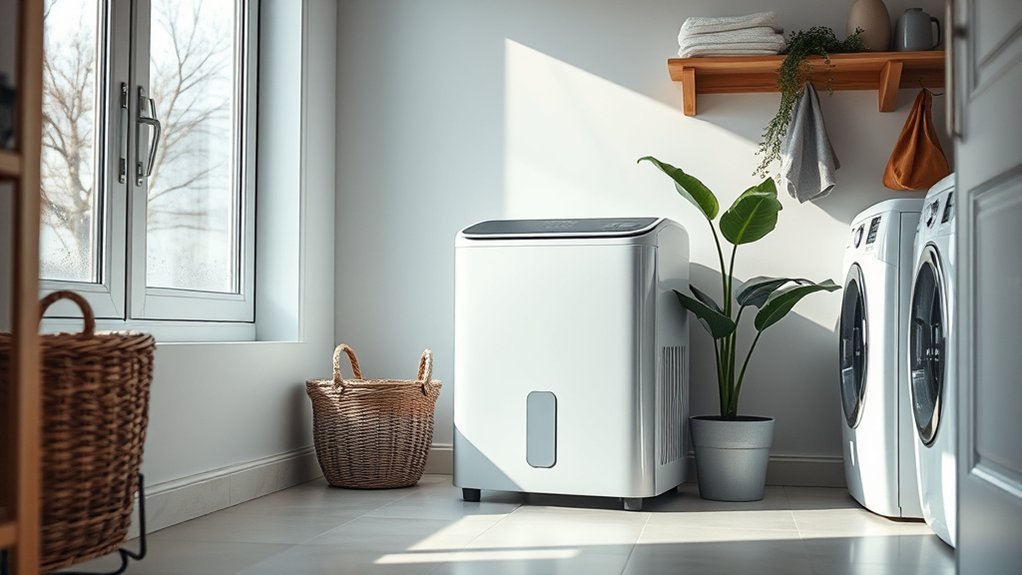
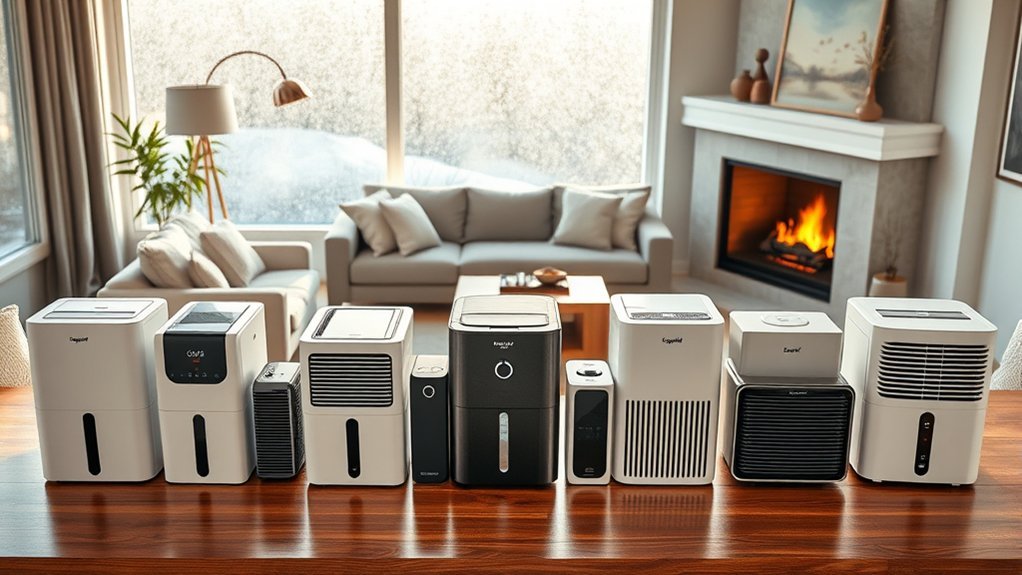
The best electric dehumidifier depends on the size and condition of your space. For a large, persistently damp basement, the AEOCKY Rhea-001 offers the strongest compressor-based moisture removal in this roundup. The Waykar 34-Pint, Aiusevo AS280, and PLUSCENT PD10 provide more manageable capacity for medium or large rooms, while the Eva-Dry EDV-1100, Onsekin CS08, NeedDuck B-2, and SANVINDER CS03 are better for small enclosed areas. Compare drainage, rated capacity, noise, and operating temperature before choosing.
Quick Answer
- Best overall for large spaces: AEOCKY Rhea-001
- Best balanced compressor model: Waykar 34-Pint
- Best value for up to 1,500 sq. ft.: Aiusevo AS280
- Best for very small spaces: Eva-Dry EDV-1100
Quick Comparison
| Product | Best Use | Advertised Capacity | Drainage | Check Details |
|---|---|---|---|---|
| AEOCKY Rhea-001 | Large basements and open areas | 56 pints/day under standard conditions; up to 80 pints/day in extreme conditions | Tank or hose | Check Amazon |
| Waykar 34-Pint | Medium-to-large rooms | Up to 34 pints/day | 2.5L tank or hose | Check Amazon |
| Aiusevo AS280 | Bedrooms, living areas, and moderate basements | Up to 21 pints/day at warm, humid test conditions | 2L tank or 3.28-ft hose | Check Amazon |
| PLUSCENT PD10 | Large rooms with flexible modes | Up to 32 pints/day | 2L tank or 39.4-in hose | Check Amazon |
| Eva-Dry EDV-1100 | Closets, small rooms, RVs, and storage areas | Small-space electric moisture control | Internal reservoir | Check Amazon |
| Onsekin CS08-Cream | Small bedrooms, bathrooms, and closets | Thermoelectric small-space unit | Tank or hose | Check Amazon |
| NeedDuck B-2 | Desks, closets, bathrooms, and RVs | 44-oz tank; 28-watt thermoelectric design | Tank | Check Amazon |
| SANVINDER CS03 | Small bedrooms, offices, and closets | Up to 450 ml/day in warm, humid conditions | 25-oz tank | Check Amazon |
Important: Compressor and thermoelectric dehumidifiers are not equal. Compressor models remove far more water and are better for basements and larger rooms. Small thermoelectric units are mainly for localized moisture in enclosed spaces.
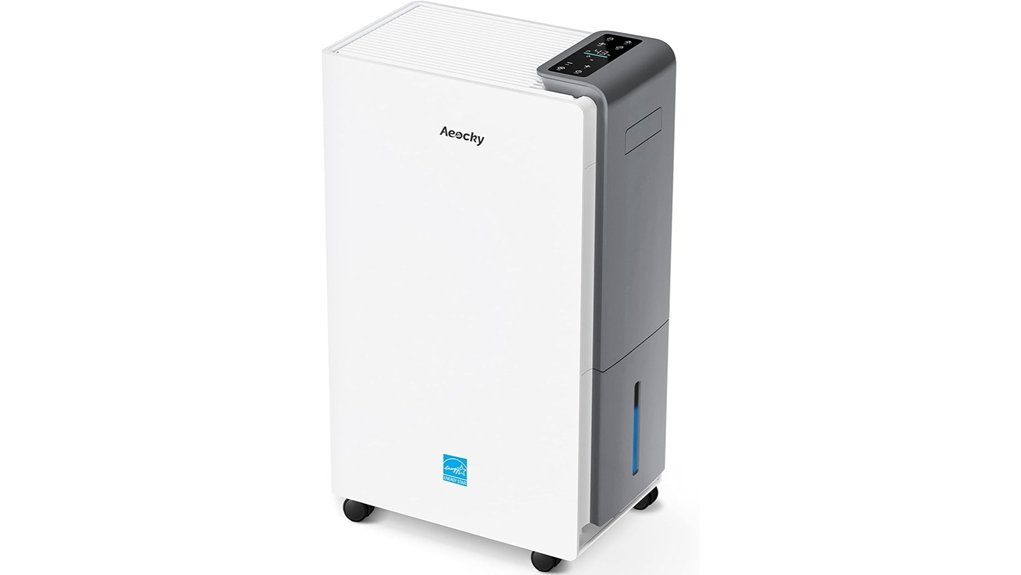
AEOCKY Rhea-001 4500 Sq.Ft Dehumidifier
Best Overall for Large Spaces
The AEOCKY Rhea-001 is the strongest option here for a large basement, open floor, or other persistently damp area. Its standard-rated capacity is about 56 pints per day, while the advertised 80-pint figure applies to hotter and more humid test conditions. The brand lists this model for spaces up to 4,500 sq. ft., but actual performance still depends on temperature, starting humidity, airflow, and how well the space is sealed.
You get an intelligent humidistat, automatic restart, automatic defrost, a removable tank, and continuous-drain support. The brand also promotes quiet operation and a multi-year warranty, but you should confirm the exact warranty terms and included drain accessories on the current Amazon listing before buying.
Best For: Buyers who need a high-capacity compressor dehumidifier for a large basement or open living area and want automatic humidity control.
Why You’ll Like It: It offers the highest practical moisture-removal capacity in this roundup without moving into a permanently installed whole-home system.
Who Should Avoid It: Anyone treating a closet, tiny bedroom, or lightly humid space where a smaller unit would be easier and less expensive to run.
Pros:
- High capacity for large, damp spaces.
- Continuous drainage and automatic humidity control reduce daily maintenance.
- Automatic restart and defrost are useful in basements and during long operating periods.
Cons:
- The maximum 80-pint claim is based on extreme test conditions, not typical household conditions.
- Heavier and more expensive than small-room models.
- Coverage claims should not replace proper sizing for the room’s moisture load.
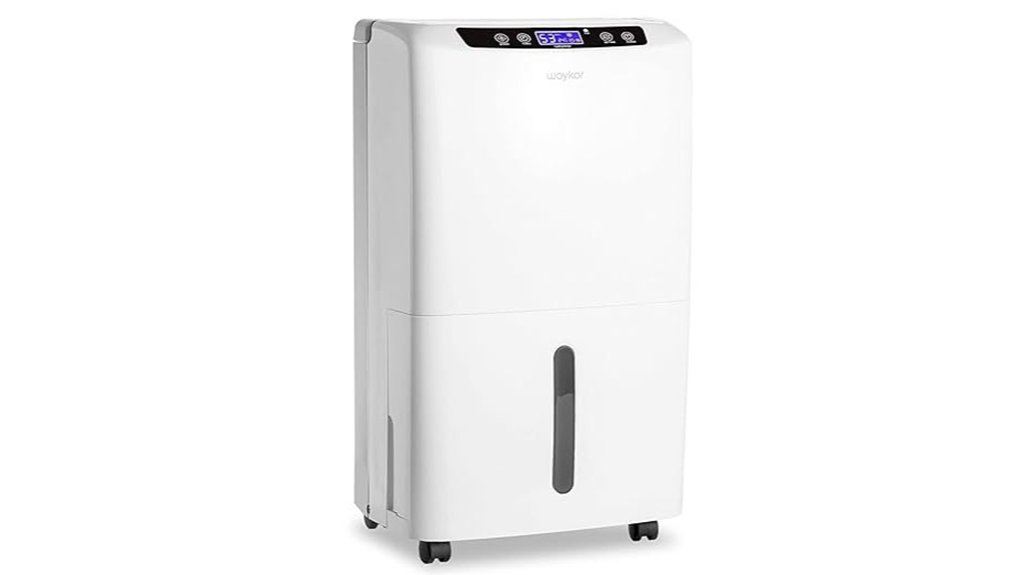
Waykar 34-Pint Dehumidifier
Best Balanced Compressor Pick
The Waykar 34-Pint is a practical middle option for buyers who need more than a mini dehumidifier but do not require the largest machine in the roundup. It is marketed for spaces up to 2,000 sq. ft. and includes adjustable humidity control, two fan speeds, a washable filter, a removable 2.5L tank, and a drain hose for continuous gravity drainage.
The key advantage is balance: it has enough capacity for many bedrooms, garages, living areas, and moderate basements while remaining easier to move and manage than a high-capacity unit. However, advertised square-foot coverage assumes favorable conditions, so choose by moisture load as well as room size.
Best For: Medium-to-large rooms where you want adjustable humidity, two drainage methods, and portable compressor performance.
Why You’ll Like It: It combines useful capacity with straightforward controls and lower maintenance when connected to a drain.
Who Should Avoid It: Buyers with a very cold basement or severe water intrusion that requires remediation rather than dehumidification alone.
Pros:
- Up to 34 pints of advertised daily moisture removal.
- Adjustable humidity control and two fan speeds.
- Tank and continuous-drain options.
Cons:
- The 2.5L tank may fill quickly in very damp conditions.
- Gravity drainage requires the hose to slope continuously toward a lower drain.
- Certification and warranty details should be checked on the current listing.
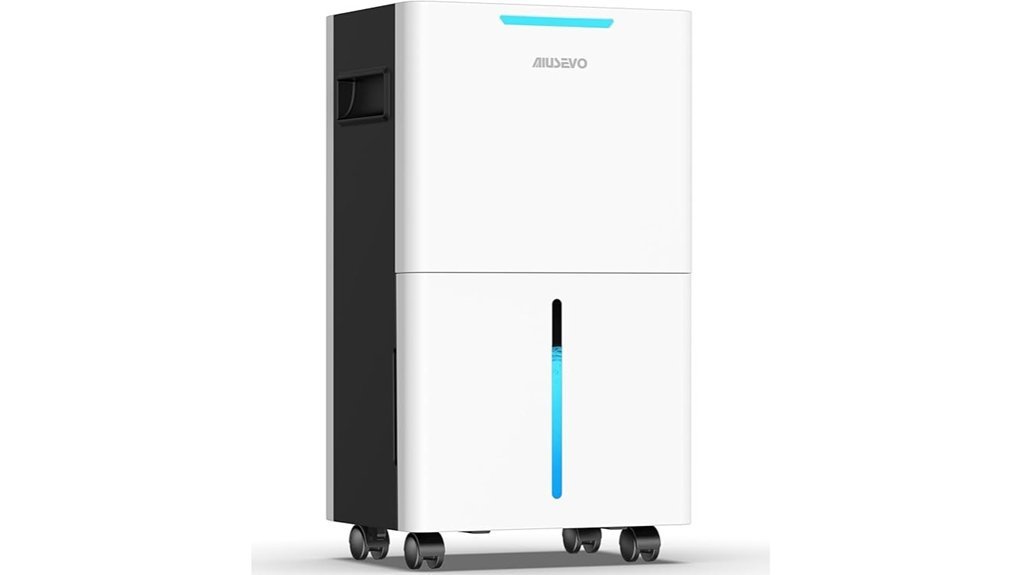
Aiusevo AS280 1500 Sq. Ft. Dehumidifier with Drain Hose
Best Value for Everyday Rooms
The Aiusevo AS280 is designed for spaces up to 1,500 sq. ft. and is advertised to remove up to 21 pints per day at warm, humid test conditions. It offers DEHU mode for target humidity, DRY mode for laundry, and CONT mode for nonstop operation. The 30% to 80% humidity setting range gives you more control than a basic mini unit.
You can collect water in the 2L tank or connect the included 3.28-foot hose for continuous gravity drainage. Handles, caster wheels, a washable filter, automatic shutoff, automatic defrost, and a timer make it suitable for bedrooms, living rooms, RVs, and moderate dampness in basements.
Best For: Buyers who want a portable compressor dehumidifier with multiple modes and an included drain hose.
Why You’ll Like It: It provides the core features most people need without the size and capacity of a large-basement model.
Who Should Avoid It: Buyers expecting 21 pints every day in cool or only mildly humid conditions; extraction falls as temperature and humidity drop.
Pros:
- Three useful operating modes and adjustable humidity.
- Includes a drain hose for lower-maintenance operation.
- Portable design with wheels, handles, timer, and washable filter.
Cons:
- Advertised capacity is measured under warm, humid conditions.
- The 2L tank may need frequent emptying without a drain connection.
- Not the best choice for a very large or severely wet basement.
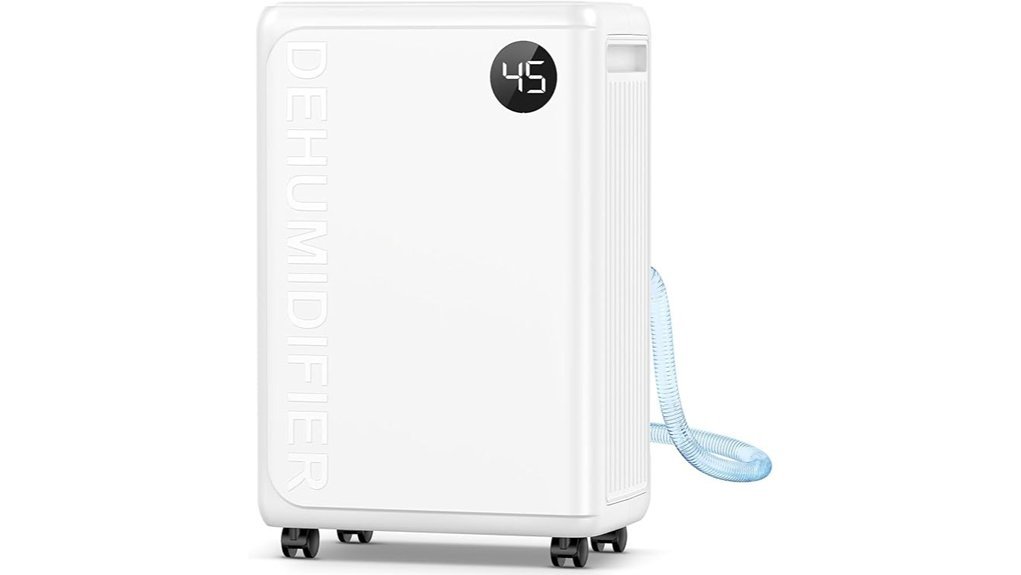
PLUSCENT PD10 32-Pint Dehumidifier for Large Rooms
Best for Flexible Operating Modes
The PLUSCENT PD10 is marketed for rooms up to 2,500 sq. ft. and up to 32 pints of daily moisture removal. It includes DEHU, CONT, and DRY modes, adjustable humidity from 30% to 80%, two fan speeds, and a 24-hour timer. This feature set makes it useful for a basement, bedroom, bathroom, laundry area, or RV when you need more control than a one-button mini unit provides.
Water can collect in the 2L tank or drain through the included 39.4-inch hose. Automatic shutoff, automatic restart, automatic defrost, a washable filter, child lock, handles, and wheels improve everyday convenience. As with other compressor models, the published capacity is a maximum figure and will vary with room conditions.
Best For: Buyers who want a portable compressor model with several operating modes and both manual and continuous drainage.
Why You’ll Like It: It offers a strong feature set for users who switch between normal humidity control, nonstop operation, and laundry drying.
Who Should Avoid It: Anyone who cannot place the unit near a lower drain but also does not want to empty a small tank regularly.
Pros:
- Three operating modes and adjustable humidity.
- Includes automatic restart, defrost, child lock, and timer.
- Compact footprint for its advertised coverage class.
Cons:
- Small tank relative to the advertised daily extraction capacity.
- Performance will be lower in cooler or less humid rooms.
- Coverage should be treated as a maximum marketing figure, not a guarantee.
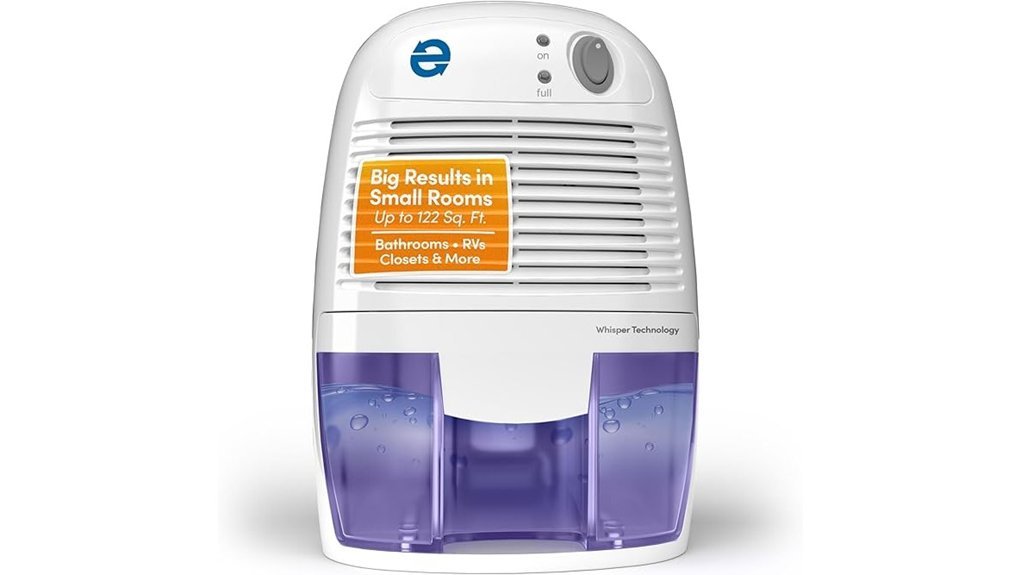
Eva-Dry EDV-1100 Petite Electric Dehumidifier
Best for Very Small Spaces
The Eva-Dry EDV-1100 is a compact electric dehumidifier for small enclosed areas such as closets, small bedrooms, bathrooms, RVs, boats, and storage spaces. Eva-Dry rates it for up to 1,100 cubic feet, with approximately 33 dB operation and 22-watt power use. It automatically shuts off when the internal reservoir is full.
This is a thermoelectric small-space model, so it is quieter and easier to place than a compressor dehumidifier but removes far less water. It works best in warm, humid conditions and should not be treated as a basement or whole-room solution when moisture is severe.
Best For: Localized humidity in a closet, small bathroom, RV, vehicle, boat, or compact living area.
Why You’ll Like It: Setup is simple, operating noise is low, and the power draw is modest.
Who Should Avoid It: Buyers trying to dry a large room, cold basement, or space with an active leak.
Pros:
- Compact and easy to place.
- Approximately 33 dB and 22 watts according to the manufacturer.
- Automatic shutoff helps prevent tank overflow.
Cons:
- Much lower extraction capacity than compressor models.
- Best performance requires warm, humid conditions.
- The reservoir must be emptied manually.
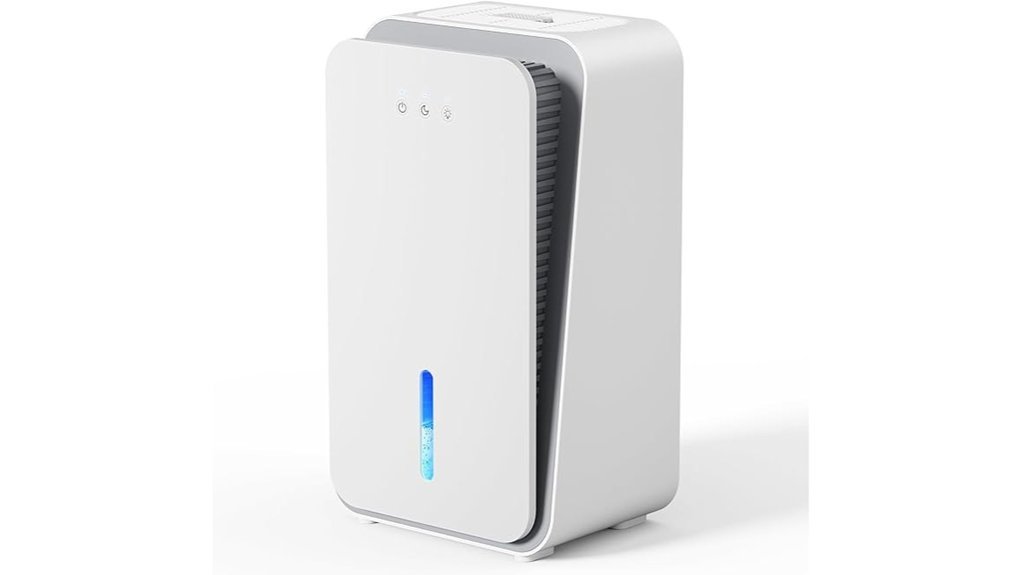
Onsekin CS08-Cream Dehumidifier with Aromatherapy Diffuser
Best Small-Space Ambiance Pick
The Onsekin CS08-Cream combines thermoelectric moisture collection with an aromatherapy compartment and seven-color LED lighting. Night Mode is advertised below 45 dB, and the unit includes automatic shutoff when the tank is full or incorrectly positioned. A drain-hose option can reduce the need for manual emptying when the setup allows gravity drainage.
Although some listings promote large square-foot coverage, its thermoelectric design is better understood as a localized solution for a small bedroom, bathroom, closet, or RV. Keep doors and windows closed during operation and do not expect it to perform like a 20- to 50-pint compressor model.
Best For: Buyers who want gentle moisture control, low noise, LED lighting, and an aromatherapy feature in a small enclosed area.
Why You’ll Like It: It combines basic dehumidification with comfort-focused features not found on most compressor units.
Who Should Avoid It: Buyers with a large basement, heavy condensation, or visible water intrusion.
Pros:
- Quiet Night Mode and simple controls.
- Automatic shutoff and optional drain hose.
- LED lighting and aromatherapy add ambiance.
Cons:
- Thermoelectric performance is limited compared with compressor models.
- Large-area coverage claims may create unrealistic expectations.
- Extra lighting and scent features may not matter to buyers focused only on moisture removal.
NeedDuck B-2 Small Dehumidifier with 44oz Tank
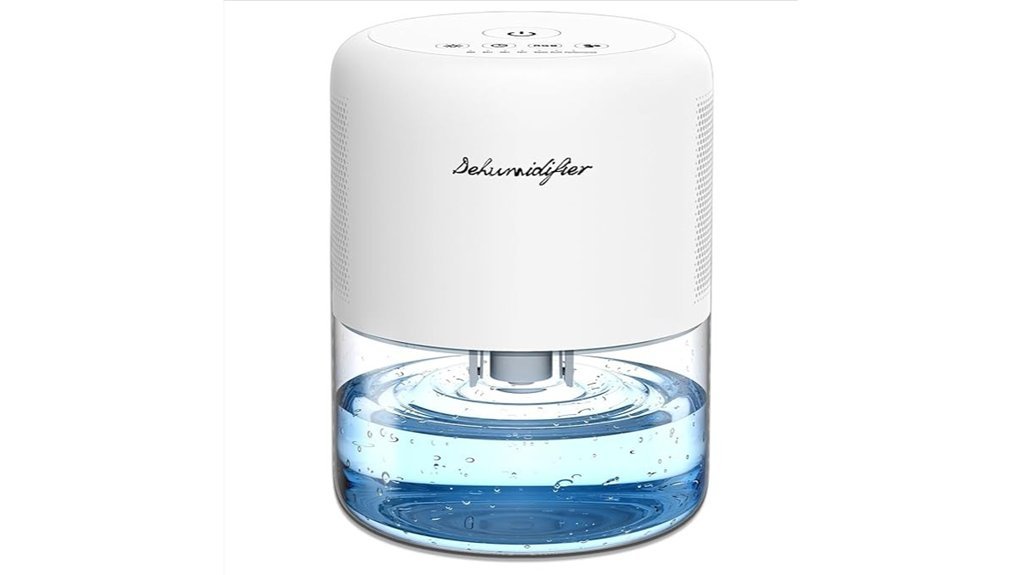
Best Compact Timer Pick
The NeedDuck B-2 is a 28-watt thermoelectric dehumidifier with a 44-ounce tank, three operating modes, automatic shutoff, automatic defrost, four timer options, and ten light colors. Its compact 5.91-by-5.91-inch footprint and 2.56-pound weight make it easy to place on a desk, shelf, bathroom counter, or RV surface.
The listing advertises coverage up to 215 sq. ft., but performance will be most noticeable in a small, enclosed space rather than an open room. Choose it for mild localized humidity, not for drying a wet basement or keeping an entire floor at a precise target humidity.
Best For: Small bathrooms, closets, desks, RVs, and bedrooms where compact size and timer control matter.
Why You’ll Like It: It is light, simple to move, and offers more timer and lighting choices than many mini models.
Who Should Avoid It: Buyers who need fast moisture removal or automatic percentage-based humidity control.
Pros:
- Compact, light, and easy to relocate.
- Auto shutoff, auto defrost, timer, and multiple modes.
- Low 28-watt rated power draw.
Cons:
- Limited to mild small-space moisture control.
- The 44-ounce tank still requires manual emptying.
- Decorative lighting adds little to dehumidification performance.
SANVINDER CS03 Dehumidifier for Home, Bedroom and Office
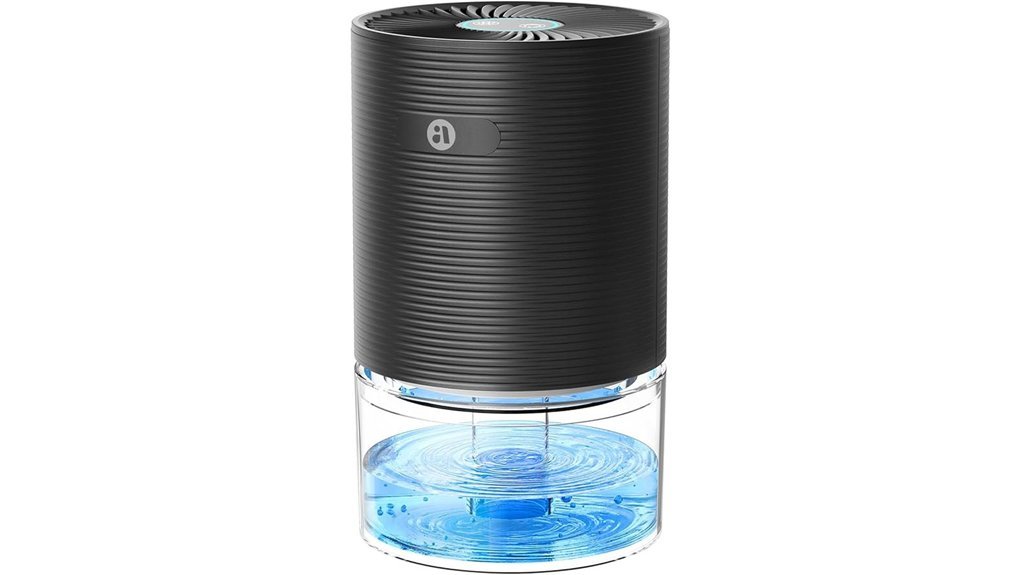
Best Lightweight Peltier Pick
The SANVINDER CS03 is a small thermoelectric dehumidifier with a 25-ounce tank and advertised extraction of up to 450 ml, or about 16 ounces, per day under warm and humid test conditions. Its small footprint and light weight make it suitable for a bedroom, office, closet, bathroom, or RV where a full-size compressor model would be inconvenient.
Automatic shutoff stops operation when the tank is full. Retailer listings vary on the claimed coverage area, so it is safer to choose this model for a small enclosed space and judge results with a separate hygrometer rather than relying on the largest square-foot claim.
Best For: Mild localized humidity in small enclosed rooms, closets, offices, or RVs.
Why You’ll Like It: It is compact, quiet, and simple to operate.
Who Should Avoid It: Buyers who need continuous drainage, high extraction, or reliable control across a large room.
Pros:
- Small and lightweight for easy placement.
- Automatic shutoff when the tank fills.
- Thermoelectric design is quieter than many compressor units.
Cons:
- Low extraction compared with compressor dehumidifiers.
- Coverage claims differ across listings.
- Manual tank emptying is required.
Factors to Consider When Choosing an Electric Dehumidifier
Start with the moisture problem, not just the advertised square footage. A small thermoelectric unit can help in a closet or compact bathroom, while a damp basement usually needs a compressor model with a meaningful pint-per-day rating. Compare drainage, operating temperature, target-humidity control, tank size, noise, portability, and maintenance before buying.
Compressor vs. Thermoelectric
Compressor dehumidifiers use refrigerant coils and a fan to remove larger amounts of water. They are the better choice for basements, laundry rooms, garages, and medium or large living areas. Thermoelectric, or Peltier, models are smaller and quieter but remove much less moisture. Use them for mild humidity in small enclosed spaces rather than serious dampness.
Coverage Area
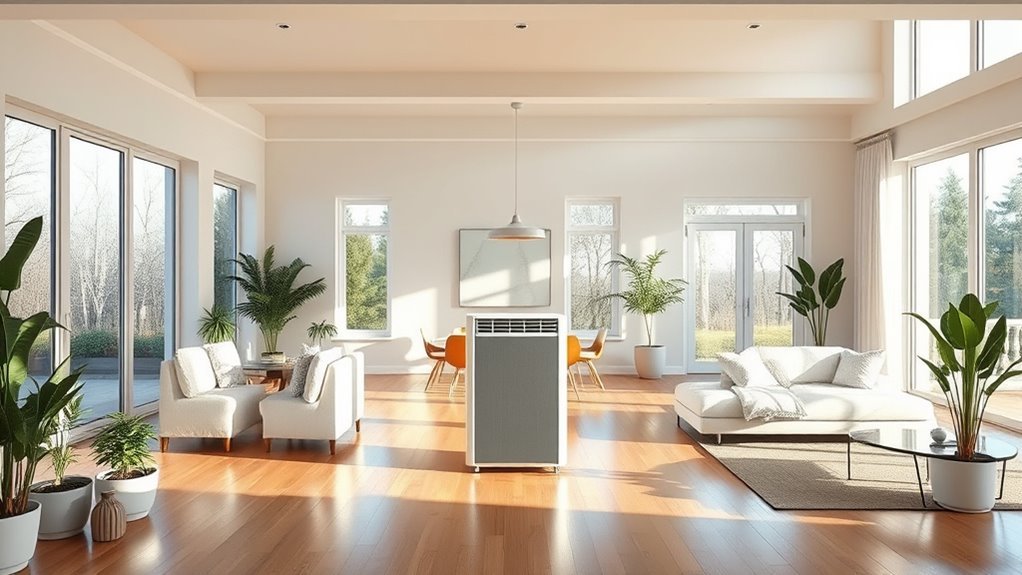
Coverage numbers are useful for rough comparison, but they are not standardized guarantees of real-world performance. Two rooms with the same square footage can have very different moisture loads because of leaks, outdoor humidity, airflow, ceiling height, temperature, and building materials. When in doubt, choose capacity based on how damp the room is and whether the unit can drain continuously.
Moisture Removal Rate
For compressor models, compare the rated pints removed per 24 hours and look at the test conditions. Some listings show a standard-condition rating and a larger maximum figure measured in extreme heat and humidity. Small thermoelectric units may use ounces or milliliters per day instead. Do not compare those numbers as though they were measured under identical conditions.
Energy Efficiency
For a compressor model that will run often, look for a current ENERGY STAR certified dehumidifier. ENERGY STAR states that certified models use about 20% less energy than comparable conventional units while removing the same amount of moisture. Also compare the integrated energy factor when it is available instead of relying only on wattage.
Noise Level
Noise matters in bedrooms, nurseries, and home offices. Mini thermoelectric models are often quieter, but their extraction is much lower. Compressor models usually produce more fan and compressor noise, so compare listed decibels, fan speeds, and sleep-mode behavior. Remember that seller noise figures may be measured at a particular speed or distance.
Drainage Options
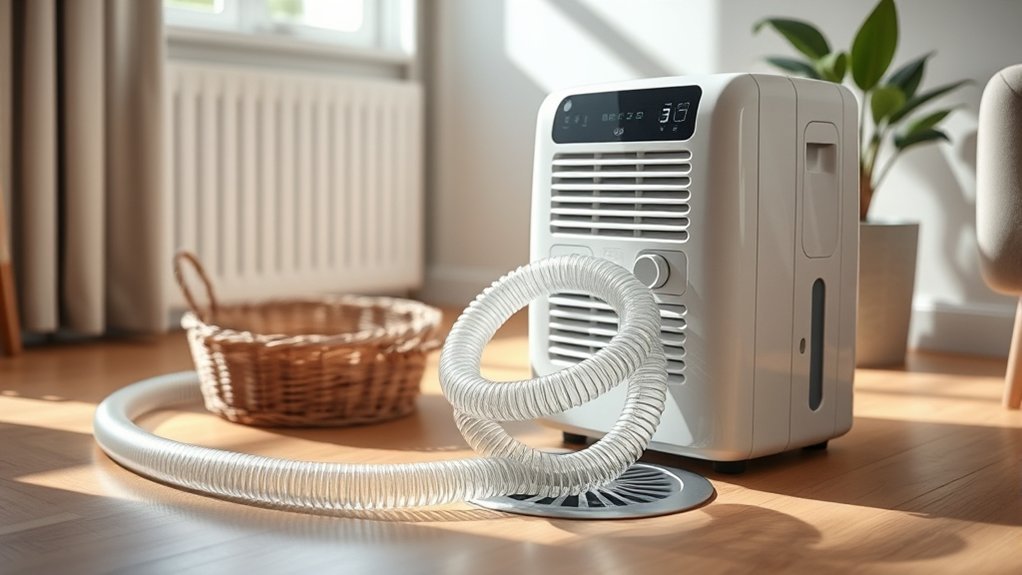
A tank is simple but requires regular emptying. A gravity hose is more convenient, but the hose must slope downhill without kinks. If the drain is above the unit, you need a built-in pump or a separate condensate pump. Automatic shutoff is important for tank use, but it does not fix an incorrectly installed hose.
Humidity Control
The U.S. EPA recommends keeping indoor relative humidity below 60% and ideally around 30% to 50%. A built-in humidistat can cycle a compressor model on and off around your target, but a separate hygrometer is helpful for checking accuracy. A dehumidifier can control moisture, but it cannot repair a plumbing leak, foundation seepage, or poor ventilation.
Cold-Room Performance
Compressor dehumidifiers lose capacity as room temperature drops and may ice up without effective defrost control. Check the manufacturer’s minimum operating temperature before using one in a cold basement or garage. A desiccant dehumidifier may work better in consistently cold conditions, although none of the products reviewed here is a full-size desiccant model.
Portability and Maintenance
For a compressor unit, look for caster wheels, handles, an accessible washable filter, and a tank you can remove without spilling. For a mini unit, check the footprint, cord length, and how easily the reservoir lifts out. Clean the filter and tank as directed, keep the air intake clear, and place the unit upright on a stable surface.
Before You Buy
- Measure the room and identify the moisture source.
- Decide whether you need compressor-level extraction or localized thermoelectric control.
- Confirm the rated pint capacity and test conditions.
- Check the minimum operating temperature.
- Plan where the water will drain.
- Verify current warranty terms, included hose length, and certification on the live listing.
Frequently Asked Questions
How Often Should I Clean a Dehumidifier Filter?
Check the filter about every two to four weeks during regular use, or more often in a dusty room. Follow the manufacturer’s instructions, let a washable filter dry fully before reinstalling it, and clean the tank periodically to reduce odor and residue.
Can Dehumidifiers Eliminate Mold?
No. A dehumidifier can lower moisture and make conditions less favorable for mold, but it does not remove existing mold or fix the source of water. Clean affected materials safely, repair leaks, improve ventilation, and seek professional help for extensive growth.
When Do I Need a High-Pint Dehumidifier?
Choose higher capacity for a large basement, open floor plan, laundry area, or any room that stays very damp. Room size matters, but starting humidity, temperature, air leakage, and water intrusion can matter just as much.
Do Dehumidifiers Work Well in Cold Basements?
Some do, but compressor models generally remove less moisture as temperatures fall. Check the minimum operating temperature and auto-defrost feature. For a consistently cold space, a desiccant model may be more suitable.
How Much Electricity Does a Dehumidifier Use?
Power use varies widely by type and capacity. Mini thermoelectric units may draw only a few dozen watts, while compressor models use several hundred watts when running. Your actual cost depends on wattage, runtime, humidity setting, and local electricity rates.
Can I Use an Extension Cord with a Dehumidifier?
Use a grounded wall outlet and follow the manufacturer’s safety instructions. Many compressor-dehumidifier manuals advise against extension cords or adapters because of overheating and voltage-drop risks.
Conclusion
Final Recommendation
Choose the AEOCKY Rhea-001 when you need the most capacity for a large, damp space. The Waykar 34-Pint, Aiusevo AS280, and PLUSCENT PD10 are better-balanced choices for everyday rooms and moderate basements. For a closet, RV, compact bathroom, or other small enclosed area, choose a thermoelectric model such as the Eva-Dry EDV-1100, Onsekin CS08, NeedDuck B-2, or SANVINDER CS03.
Whichever model you select, size it for the moisture problem, confirm the live product specifications, and fix leaks or ventilation issues instead of relying on a dehumidifier alone.