Affiliate disclosure: This article contains Amazon affiliate links. We may earn a commission from qualifying purchases at no extra cost to you.
Last updated: August 2026
Houston’s humid conditions can leave bedrooms, bathrooms, laundry areas, garages, and other enclosed spaces feeling damp or musty. The right dehumidifier depends less on tank size or a broad coverage claim and more on daily moisture-removal capacity, room size, dampness level, drainage options, noise, and whether you need a full-size compressor unit or a compact thermoelectric model.
For sustained moisture control in a larger or persistently damp room, the Frigidaire 50 Pint Dehumidifier with WiFi is the stronger choice in this guide. The BREEZOME 60 OZ Dehumidifier belongs in a different performance class and is better treated as a compact option for mild, localized dampness in smaller enclosed spaces such as bathrooms, closets, RVs, or compact bedrooms.
How We Compared These Models
We prioritized stated moisture-removal capacity, room suitability, drainage, humidity controls, maintenance, and honest limitations. Tank capacity was treated only as storage volume, not proof of faster dehumidification. Because these two models use different technologies and different rating methods, they should be compared primarily by intended use rather than by tank size.
Quick Verdict
- Best Overall: Frigidaire 50 Pint Dehumidifier with WiFi for larger, persistently damp rooms and regular humidity control.
- Best Compact Pick: BREEZOME 60 OZ Dehumidifier for mild localized dampness in bathrooms, closets, RVs, and small bedrooms.
Quick Comparison
| Product | Best For | Type | Listed Moisture Removal | Key Advantage | Amazon |
|---|---|---|---|---|---|
| Frigidaire 50 Pint with WiFi | Larger damp rooms and frequent use | Compressor | 50 pints per day under standardized test conditions | High capacity, humidistat control, continuous drainage, and app control | Check Availability |
| BREEZOME 60 OZ | Bathroom, closet, RV, or small bedroom | Thermoelectric | Seller advertises up to 700 ml per day at 86°F and 80% RH; listing data is not fully consistent | Compact design, 1.8-liter tank, timer, and quiet sleep mode | Check Availability |
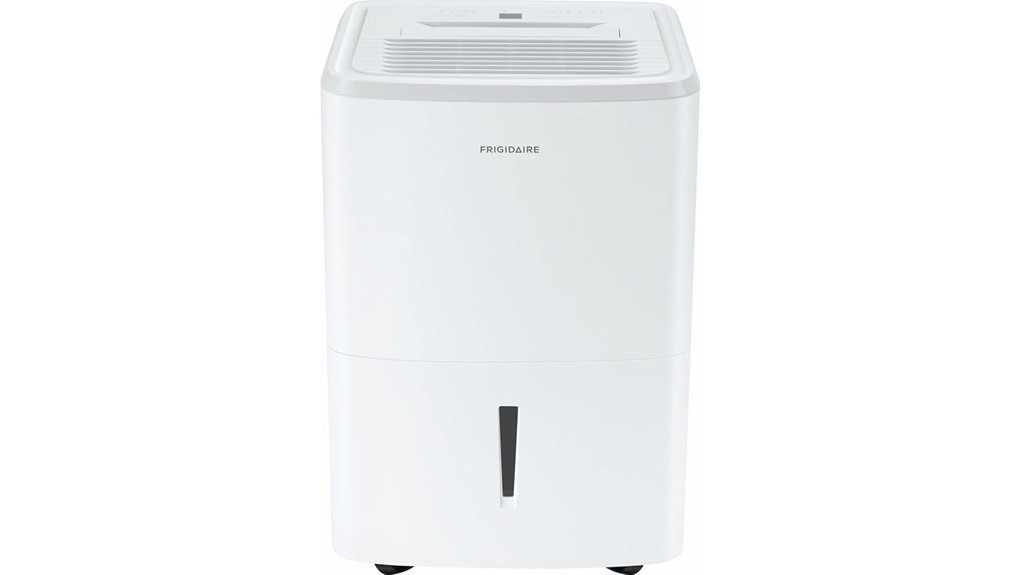
Frigidaire 50 Pint Dehumidifier with WiFi
Best Overall
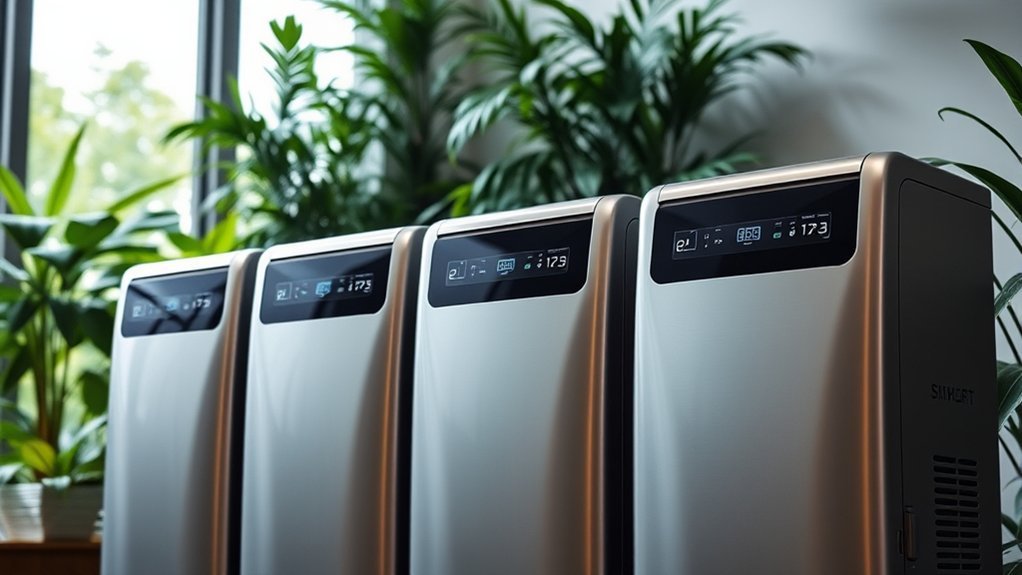
The Frigidaire 50 Pint Dehumidifier with WiFi, model FHDD5034Y1, is the more suitable choice here for a larger room with recurring humidity. Its rated 50-pint daily capacity puts it in a substantially higher moisture-removal class than compact thermoelectric models, making it better suited to sustained humidity control rather than occasional spot use.
The ENERGY STAR model includes custom humidity control, continuous-drain support, WiFi connectivity through the compatible Frigidaire app, three fan speeds, and a 2.7-gallon collection tank. The manufacturer also lists a one-year warranty. Remote control can be useful when the unit runs in a laundry room, garage, storage room, or another enclosed area you do not check frequently.
Why You’ll Like It: It offers the capacity, humidistat control, drainage flexibility, and connected features expected from a full-size room dehumidifier.
Who Should Buy This: Homeowners who need regular humidity control in a larger enclosed room or a space that repeatedly becomes damp.
Who Should Avoid This: Buyers who only need a tiny, lightweight unit for a closet, RV, or very small enclosed area.
Pros:
- Rated to remove up to 50 pints of moisture per day under standardized test conditions.
- ENERGY STAR positioning makes efficiency easier to compare with other full-size models.
- WiFi connectivity supports remote monitoring and control through the compatible app.
- Custom humidity control and continuous-drain support simplify routine use.
- Three fan speeds provide more flexibility for different room conditions.
- Better suited to demanding humidity conditions than compact thermoelectric models.
Cons:
- Larger and heavier than compact countertop-style dehumidifiers.
- Compressor and fan noise may be noticeable in a quiet bedroom.
- The bucket and air filter still require routine maintenance unless continuous drainage reduces bucket use.
- A gravity drain setup needs a suitable downhill path unless a separate pump solution is used.
- App setup and remote features depend on a compatible, stable WiFi network.
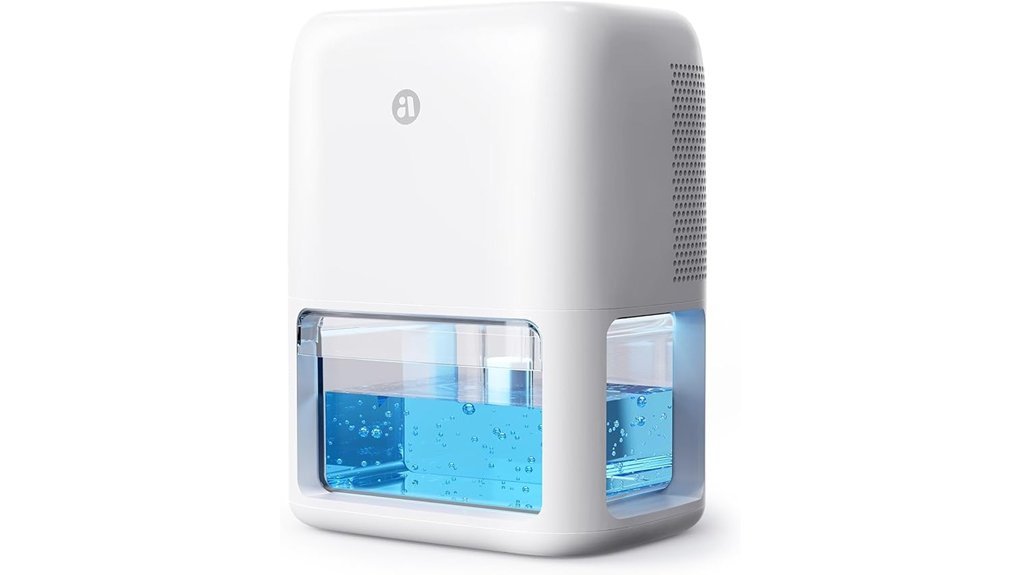
BREEZOME 60 OZ Quiet Portable Dehumidifier
Best Compact Pick
The 60 OZ BREEZOME Quiet Portable Dehumidifier is designed for small enclosed spaces such as bathrooms, closets, RVs, and compact bedrooms. Its dual-semiconductor design is advertised to collect up to 700 ml of moisture per day at 86°F and 80% relative humidity. That is a seller-listed best-case figure rather than a standardized full-size dehumidifier rating, and Amazon’s product data also displays a lower 0.56-liter-per-day figure. Treat the extraction claim cautiously and expect actual collection to vary with temperature, humidity, room size, airflow, and the moisture source.
The 1.8-liter tank reduces how often you need to empty it compared with smaller mini models. Auto shut-off helps prevent overflow when the tank is full, while the seller lists a 35 dB sleep mode, 12/24/36/48-hour timer settings, a built-in handle, automatic defrost, and adjustable lighting. Its compact dimensions also make it easier to place where a full-size compressor model would be inconvenient.
Why You’ll Like It: It combines a compact footprint with a relatively large tank and useful bedroom-friendly controls.
Who Should Buy This: Buyers targeting mild, localized dampness in a small and reasonably enclosed space.
Who Should Avoid This: Anyone expecting whole-room performance comparable to a full-size 25-, 35-, or 50-pint compressor dehumidifier.
Pros:
- Compact and easy to move between small spaces.
- 1.8-liter tank with automatic shut-off.
- 35 dB seller-listed sleep mode and adjustable light support bedroom use.
- 12/24/36/48-hour timer gives more control over runtime.
- Automatic defrost helps protect operation when frost forms on the semiconductor components.
- Useful for mild localized humidity where a full-size compressor unit would be excessive.
Cons:
- Not intended for a large open room or severe moisture problem.
- The listing presents inconsistent daily extraction figures, so the advertised 700 ml/day should be treated as a best-case claim.
- Performance can drop significantly in cooler or less humid conditions.
- The tank and intake area need regular cleaning.
- It does not replace leak repair, ventilation correction, or a properly sized HVAC system.
Which Type Is Right for Your Houston Room?
Choose the Frigidaire if: humidity is persistent, the room is larger, you want automatic humidity control, or you need substantially higher daily moisture removal.
Choose the BREEZOME if: the problem is mild and localized, the space is small and enclosed, portability matters, and you understand that a thermoelectric unit removes moisture much more slowly.
Factors to Consider When Choosing a Dehumidifier for Houston
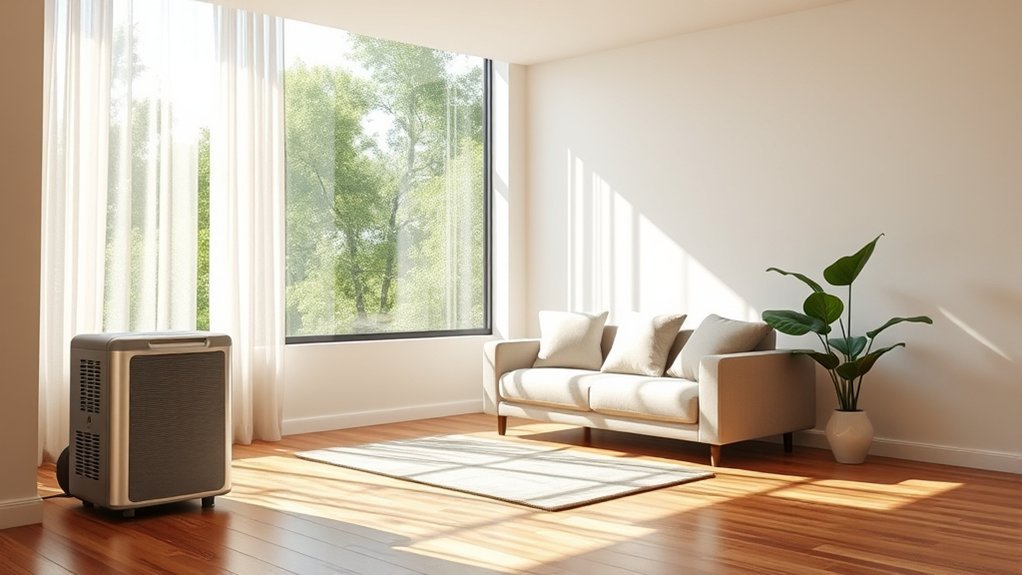
The best dehumidifier is the one that matches the room’s actual moisture load. Measure the space, check the relative humidity with a hygrometer, identify the source of the dampness, and compare rated moisture-removal capacity rather than relying on tank size or advertised coverage alone.
Humidity Level and Moisture Source
Use a hygrometer to measure indoor relative humidity instead of judging only by how the room feels. A dehumidifier can help control airborne moisture, but it will not repair plumbing leaks, roof leaks, poor exterior drainage, air-conditioning condensate problems, or water intrusion. Fix the moisture source first whenever possible.
Room Size and Rated Capacity
Full-size compressor dehumidifiers are commonly compared by how many pints of water they remove in 24 hours under standardized test conditions. Compact thermoelectric units may instead list milliliters or ounces per day under manufacturer-selected conditions. These figures are not interchangeable with tank capacity: a large tank only stores more collected water and does not prove faster moisture removal.
For a larger or persistently damp room, prioritize a clearly stated pint-per-day capacity. For a small closet, bathroom, RV, or localized damp corner, a compact unit may be adequate if expectations are realistic. The ENERGY STAR dehumidifier guide recommends sizing by both room area and the severity of the dampness.
Compressor vs. Thermoelectric
- Compressor dehumidifiers: Better for larger rooms, higher moisture loads, and sustained use. They are usually heavier and noisier than mini units, but they remove much more water.
- Thermoelectric dehumidifiers: Compact, simple, and often quieter, but much slower. They work best in smaller enclosed spaces and generally perform better under warmer, more humid conditions.
Noise Level
A bedroom or home office may benefit from a sleep mode or lower fan setting. However, a low sound claim should not be the only deciding factor. A quieter unit that is too small for the room may need to run continuously without achieving the desired humidity.
Energy Efficiency
For compressor models, look for ENERGY STAR certification and compare the Integrated Energy Factor (IEF), which expresses moisture removal relative to energy use. A humidistat, timer, and properly matched capacity can also reduce unnecessary runtime. Clean the filter and keep the air inlet unobstructed to maintain performance.
Drainage Options
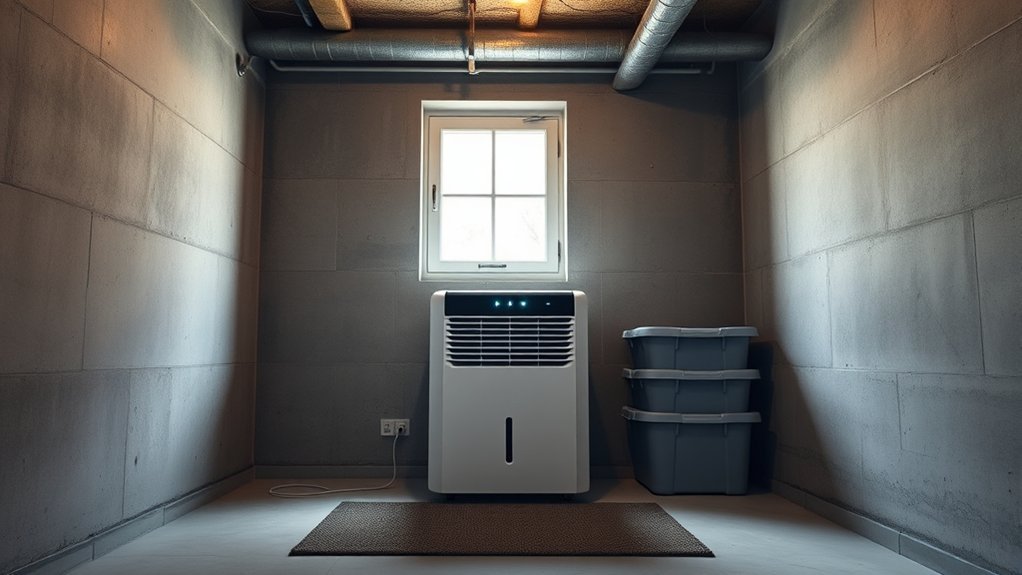
A continuous drain connection can save time in a humid room. Confirm whether the system relies on gravity or includes a pump. Gravity drainage requires the hose to run downhill to a suitable drain without kinks. If you use the bucket, make sure the unit has auto shut-off and place it on a stable, level surface.
Placement and Airflow
Leave the manufacturer-recommended clearance around the air intake and exhaust. Keep doors and windows closed while the unit runs unless ventilation is intentionally part of the moisture-control plan. Do not place the unit where the cord, plug, or body can be exposed to splashing water, and do not use an extension cord unless the manufacturer specifically allows it.
Before You Buy Checklist
- Measure the room and note whether it is slightly damp, very damp, or wet.
- Measure relative humidity with a hygrometer if possible.
- Check the rated moisture-removal capacity, not only the tank size.
- Choose compressor technology for a larger or persistently humid room.
- Treat compact coverage claims cautiously unless a daily extraction rate and test conditions are clearly stated.
- Confirm drainage requirements, hose placement, and whether any pump must be purchased separately.
- Review filter cleaning, tank cleaning, operating-temperature, and warranty requirements.
- Verify that replacement parts and customer support are available when those factors matter to you.
Frequently Asked Questions
What Indoor Humidity Level Should I Target?
A practical goal for many homes is approximately 30% to 50% relative humidity. Keeping indoor humidity below 60% also helps reduce conditions that support mold growth. Comfort and condensation risk vary by season, room temperature, and building design.
What Size Dehumidifier Do I Need for My Home?
Choose capacity based on both room size and how damp the space is. A compact thermoelectric unit may suit a closet or small bathroom with mild moisture, while a larger, persistently damp room usually needs a compressor model with a clearly stated pint-per-day rating. Standardized sizing guidance is more reliable than a broad square-footage claim by itself.
Can a Small Dehumidifier Handle a Large Houston Room?
Usually not. A mini unit may collect water, but that does not mean it can maintain the desired relative humidity in a large, open, or air-leaky room. For larger spaces, compare rated daily capacity, airflow, humidistat control, drainage options, and the room’s actual moisture source.
Is a Compact Thermoelectric Dehumidifier Enough for Houston?
It can be useful for mild localized dampness in a small enclosed space, but it should not be treated as a substitute for a properly sized compressor dehumidifier when humidity is persistent or affects a larger room. Check the room with a hygrometer rather than judging effectiveness only by whether water appears in the tank.
Can Dehumidifiers Help With Allergies and Asthma?
Reducing excess humidity may make indoor conditions less favorable for mold and dust mites, which can be triggers for some people. A dehumidifier is not a medical treatment, and existing mold or water damage still needs proper cleanup and repair. Seek medical advice for persistent respiratory symptoms.
How Often Should I Clean My Dehumidifier?
Follow the manufacturer’s schedule. In general, inspect the filter regularly, wash or replace it as directed, rinse the bucket periodically, and check any drain hose for buildup or blockage. Unplug the unit before cleaning.
How Often Should I Empty the Water Tank?
Empty it whenever the full-tank indicator activates. In very humid conditions, that may be daily or more often. A continuous drain setup can reduce manual emptying, but the hose must be installed correctly and checked periodically.
Will a Dehumidifier Fix a Water Leak?
No. It may lower airborne humidity or help dry an area after the source is stopped, but it cannot repair a plumbing leak, roof leak, foundation problem, drainage failure, or failed air-conditioning condensate line. Fix the cause first.
Conclusion
Final Recommendation
Choose the Frigidaire 50 Pint Dehumidifier with WiFi for a larger Houston room with recurring or persistent humidity and when meaningful daily moisture removal is the priority. Choose the BREEZOME 60 OZ only for mild localized dampness in a compact enclosed space where portability and quieter operation matter more than high extraction capacity.
Before ordering, measure the space, check the current relative humidity, identify any leak or drainage problem, and confirm the rated daily extraction capacity. Choosing by real moisture-removal ability rather than tank size or broad coverage language will lead to a more reliable result.